
Hello everyone,
I want to keep this brief, as I might otherwise go into too much detail.
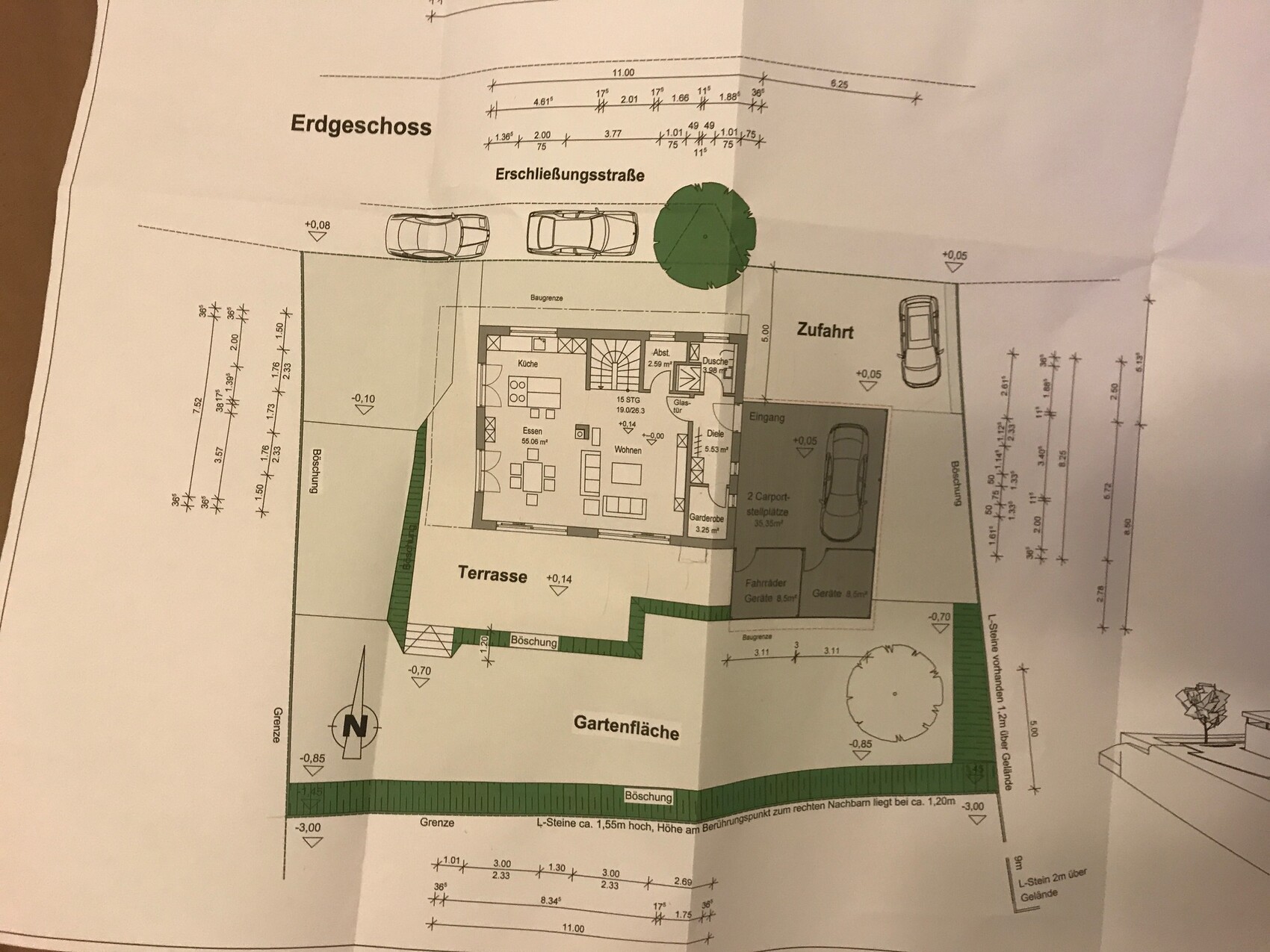
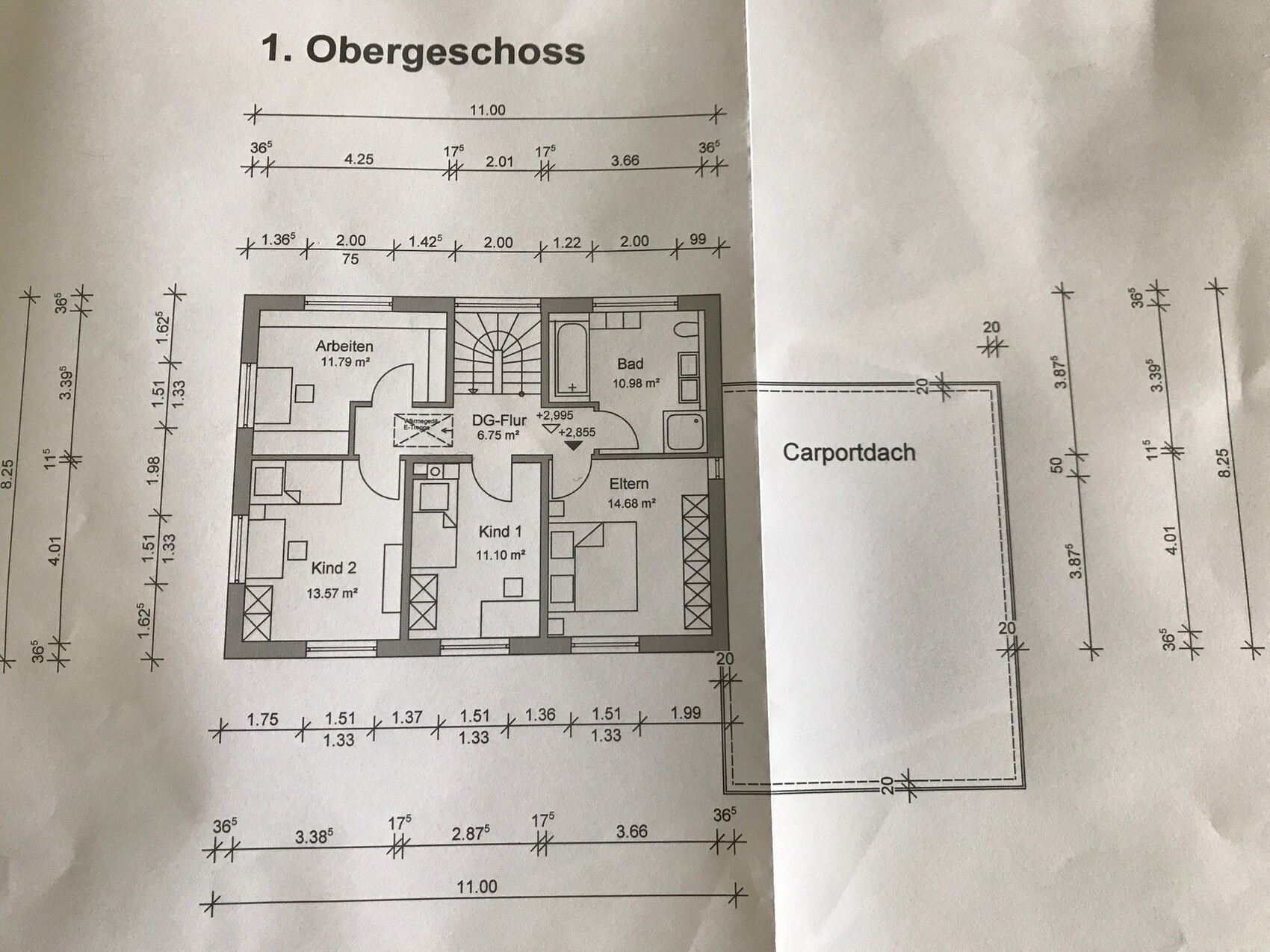
Today, we received a second design from our architect based on our requirements. My goal is to catch any major mistakes in the room and window planning that might not be obvious at first or second glance. We are personally very satisfied with our floor plan.
Conditions and requirements:
- 2 children (4 and 6 years old). No more strollers will be added
- 2 full floors
- Living area on the ground floor larger than 50 sqm (540 sq ft) with few walls
- Hallways/entrances as small as possible on both floors
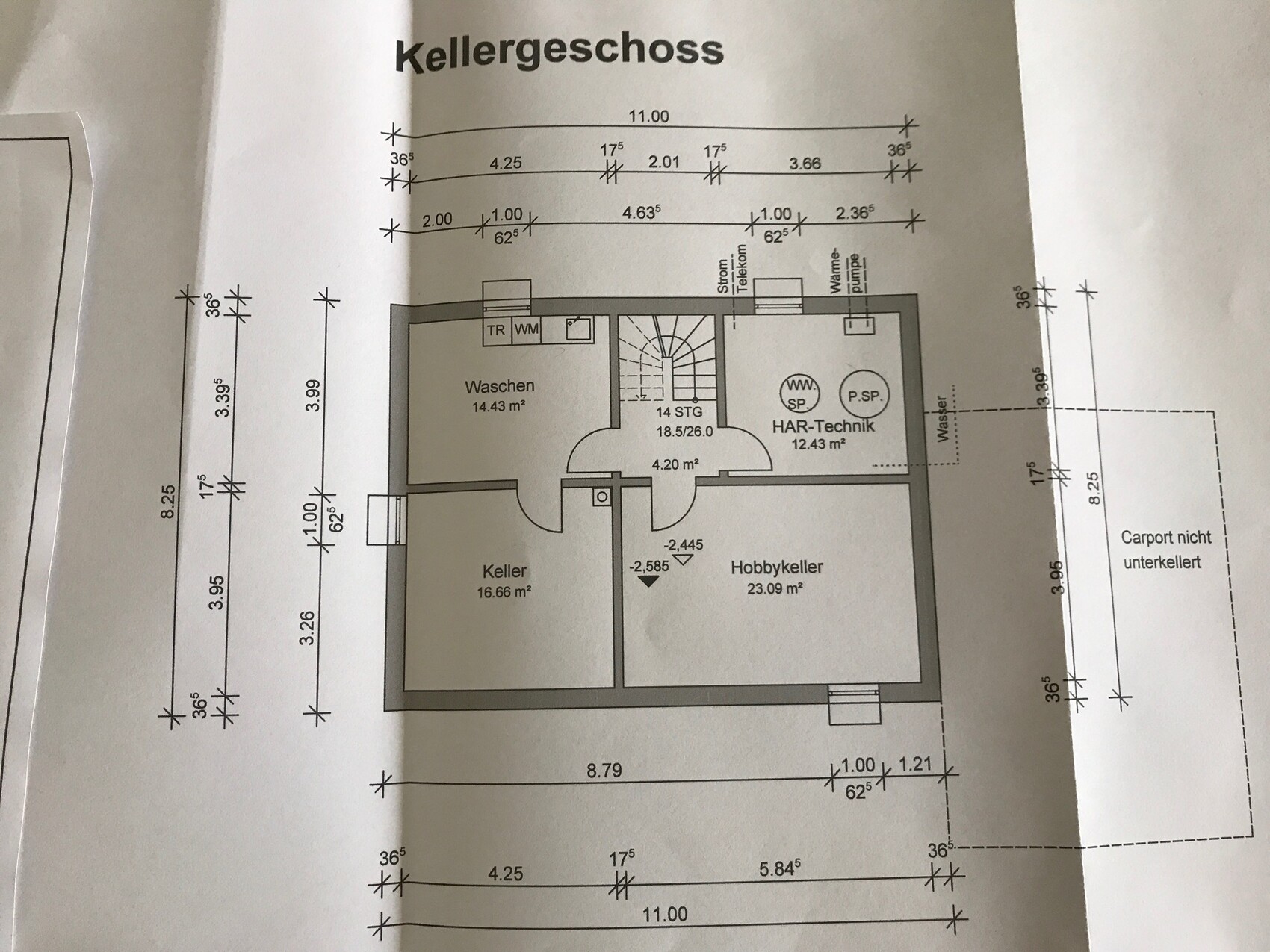
- The first design was 147 sqm (1582 sq ft) without a basement. Since the second design required a basement (we underestimated the slope), the house had to be smaller, now about 137 sqm (1474 sq ft) plus a basement of 69 sqm (742 sq ft)
- A third bedroom for a potential unplanned child, otherwise used as an office, hobby room, etc.
- Pantry
- Shower in the guest bathroom for when everyone needs to get ready at the same time in the morning
- Cloakroom for storing "out of sight, out of mind" items
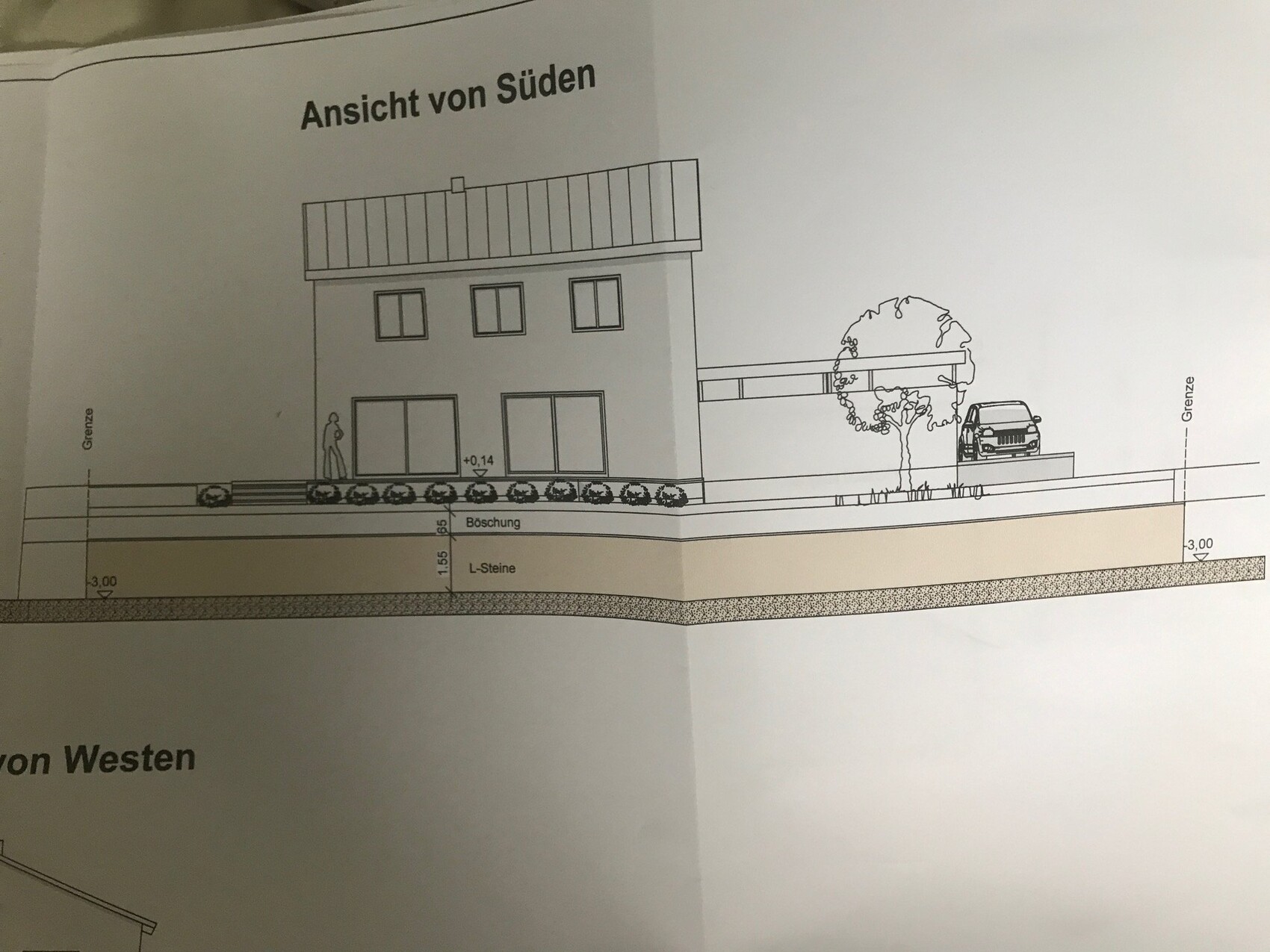
- 2 sliding lift-and-slide doors, each 3 meters (10 feet) wide, as per our wish. Although the architect mentioned that this would affect the window symmetry on the south side, which is currently the only "unattractive" aspect. Perhaps 1.76-meter (5.8 feet) wide windows above would be a solution?
Nothing else comes to mind at the moment...
I am looking forward to your feedback.
I want to keep this brief, as I might otherwise go into too much detail.
Today, we received a second design from our architect based on our requirements. My goal is to catch any major mistakes in the room and window planning that might not be obvious at first or second glance. We are personally very satisfied with our floor plan.
Conditions and requirements:
- 2 children (4 and 6 years old). No more strollers will be added
- 2 full floors
- Living area on the ground floor larger than 50 sqm (540 sq ft) with few walls
- Hallways/entrances as small as possible on both floors
- The first design was 147 sqm (1582 sq ft) without a basement. Since the second design required a basement (we underestimated the slope), the house had to be smaller, now about 137 sqm (1474 sq ft) plus a basement of 69 sqm (742 sq ft)
- A third bedroom for a potential unplanned child, otherwise used as an office, hobby room, etc.
- Pantry
- Shower in the guest bathroom for when everyone needs to get ready at the same time in the morning
- Cloakroom for storing "out of sight, out of mind" items
- 2 sliding lift-and-slide doors, each 3 meters (10 feet) wide, as per our wish. Although the architect mentioned that this would affect the window symmetry on the south side, which is currently the only "unattractive" aspect. Perhaps 1.76-meter (5.8 feet) wide windows above would be a solution?
Nothing else comes to mind at the moment...
I am looking forward to your feedback.

I also think the floor plan is really well done. A few tiny details:
- The shower downstairs is practically located outside the living area – more or less in the entrance hall. Does anyone really use the shower there?
- The bedroom isn’t really in line with feng shui principles. You enter and immediately face the bed. There are hardly any alternative layouts possible.
- The shower downstairs is practically located outside the living area – more or less in the entrance hall. Does anyone really use the shower there?
- The bedroom isn’t really in line with feng shui principles. You enter and immediately face the bed. There are hardly any alternative layouts possible.
I generally like the floor plan.
However, its success really depends on the decision to have the staircase in the living area without a good reason. I would never accept that with the exterior dimensions. The staircase belongs in the hallway, except in a 5m (16 feet) terraced house where there is simply no alternative.
You don’t get much use out of a >50m² (540 sq ft) living room if someone is constantly passing through it.
However, its success really depends on the decision to have the staircase in the living area without a good reason. I would never accept that with the exterior dimensions. The staircase belongs in the hallway, except in a 5m (16 feet) terraced house where there is simply no alternative.
You don’t get much use out of a >50m² (540 sq ft) living room if someone is constantly passing through it.
H
Hausbauer129 Jun 2017 13:34My first thought was that the rooms on the upper floor are all quite small. 10 m² (107 ft²) for a study and 15 m² (161 ft²) for the master bedroom might still be acceptable, but only 11–13 m² (118–140 ft²) for the children’s rooms… One should not forget that children grow and don’t just sleep in their rooms—they spend a large part of their lives there. Rooms around 15–20 m² (161–215 ft²) would be much more comfortable.
It might be possible to design the house a bit larger and then move the study to the ground floor or the basement, allowing the bedrooms upstairs to be bigger. Depending on the roof pitch, a study could also be located in the attic. In my opinion, that would even have a certain charm.
It might be possible to design the house a bit larger and then move the study to the ground floor or the basement, allowing the bedrooms upstairs to be bigger. Depending on the roof pitch, a study could also be located in the attic. In my opinion, that would even have a certain charm.
Didn’t notice at all. Yes, I wouldn’t make a children’s room of 11 sqm (120 sq ft) either; it’s simply outdated and not very comfortable for the kids. Better to put the office downstairs and avoid small storage rooms upstairs.
In this layout, the staircase would be a no-go for most anyway.
In this layout, the staircase would be a no-go for most anyway.

matte1987 schrieb:
Where does the misconception come from that having as many windows as possible the same size is much cheaper? Not a misconception, I used to work for a window manufacturer.
Zaba12 schrieb:
I think it’s because the explanation why it’s hardly more expensive sounds plausible at first (less wall, insulation, plaster, no window sills, possibly no French balcony since the lower part is fixed, etc.) I wasn’t referring to the trade-off between window area and wall area, nor between standard sill height and floor-to-ceiling windows.
Moreover, I wasn’t talking only about the economic aspect but also the architectural one. Some rooms have views in multiple directions, and from the outside you can see two facades at once from many angles. So you might see, for example, eleven windows simultaneously. If seven of them have different sizes, it’s impossible to create a sense of “order” in the design — it just ends up looking “colorful” like a Haribo Colorado candy mix.
For example, on the garden side here, the grid spacing of the sliding door windows is one and a half times — so inversely proportional to two to three units — coordinated with the grid spacing of the upper windows. Then there’s coordination of the center point at the top aligning with the edge at the bottom. It looks “random” but this was thoughtfully planned.
Technically, a window is not just a window. Different widths require different lintel widths, as the reinforcements need to be calculated accordingly. This only adds a small cost per case, but it adds up. Where a different size is explicitly desired, I wouldn’t recommend avoiding it. But out of carelessness, without intention or a perceived benefit, I wouldn’t dimension windows differently. By the way, each size here occurs only three times on average — so it’s not excessive uniformity.
matte1987 schrieb:
Every window has its price, which depends on the frame length in linear meters, the glass area in m2, and the installation. If the window is smaller, it’s cheaper. You’re right here, many window suppliers have now switched to this pricing method. What can make sense — assuming standard window types — is to deliberately choose “common stock sizes.” For example, single-leaf windows in “110” (cm).
Zaba12 schrieb:
But we also decided against floor-to-ceiling windows upstairs because, in our view, a child’s room shouldn’t have floor-to-ceiling windows. Personally, I find floor-to-ceiling windows sometimes feel like a “hop-on-the-trend” product that can even deprive a house of its unique character.
apokolok schrieb:
I generally like the floor plan. However, it really depends on the decision to have the staircase in the living space without necessity. I would never accept that given the exterior dimensions. The staircase belongs in the hallway, except maybe in a 5m (16 feet) row house where there’s no other option. I read the “criticism” against the open living room with staircase here as a compliment, meaning the house’s footprint is not immediately obvious. In that sense, it’s not a row house, but it’s more like a semi-detached house.
Besides: if they have to go through the living room, you’ll still regularly see the kids even in their teenage years.
https://www.instagram.com/11antgmxde/
https://www.linkedin.com/company/bauen-jetzt/
Similar topics