
Hello everyone,
We have been refining the plans for our house for quite some time now and have finally reached a point where we believe everything has been taken into account. We would now like to hear your opinions on what might still be adjusted.
I have attached the draft plans.
Thank you in advance for your advice!
We have been refining the plans for our house for quite some time now and have finally reached a point where we believe everything has been taken into account. We would now like to hear your opinions on what might still be adjusted.
I have attached the draft plans.
Thank you in advance for your advice!

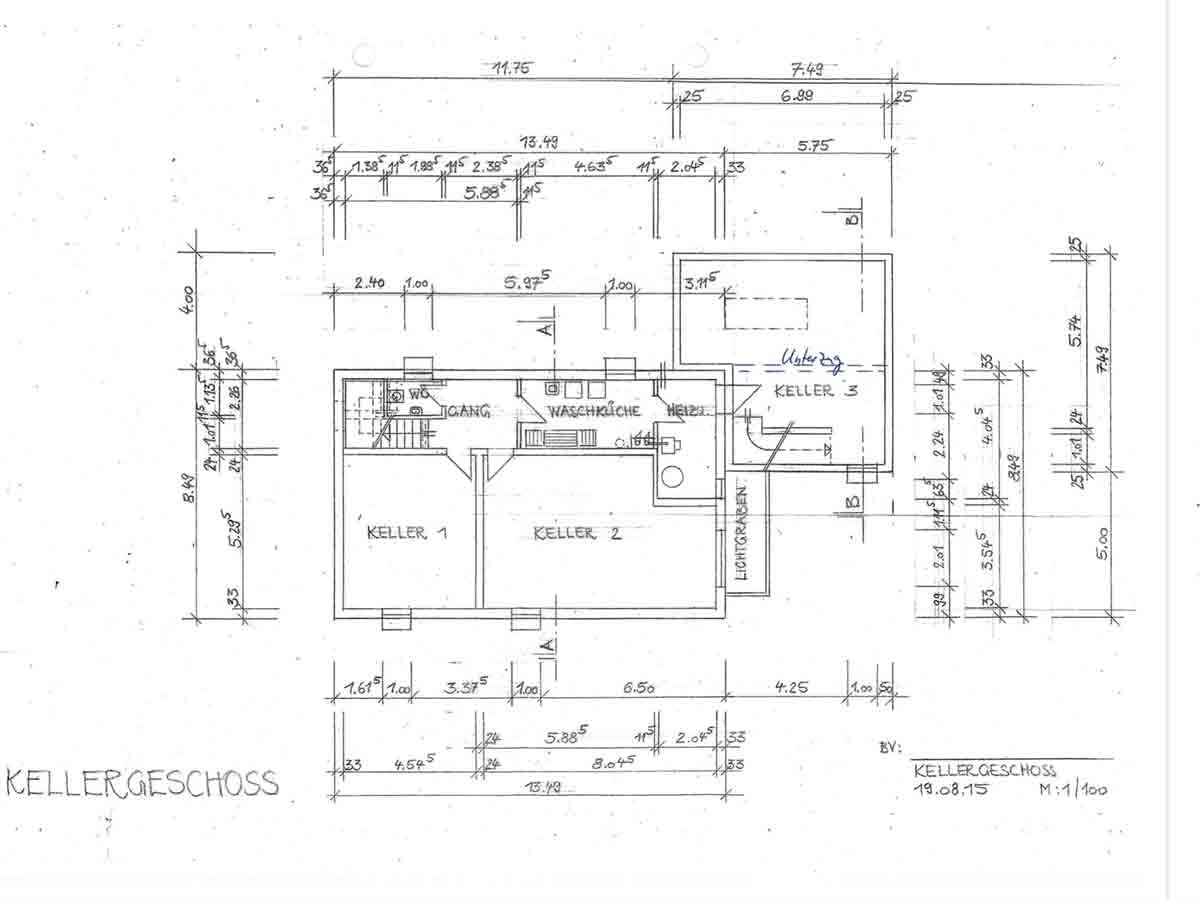
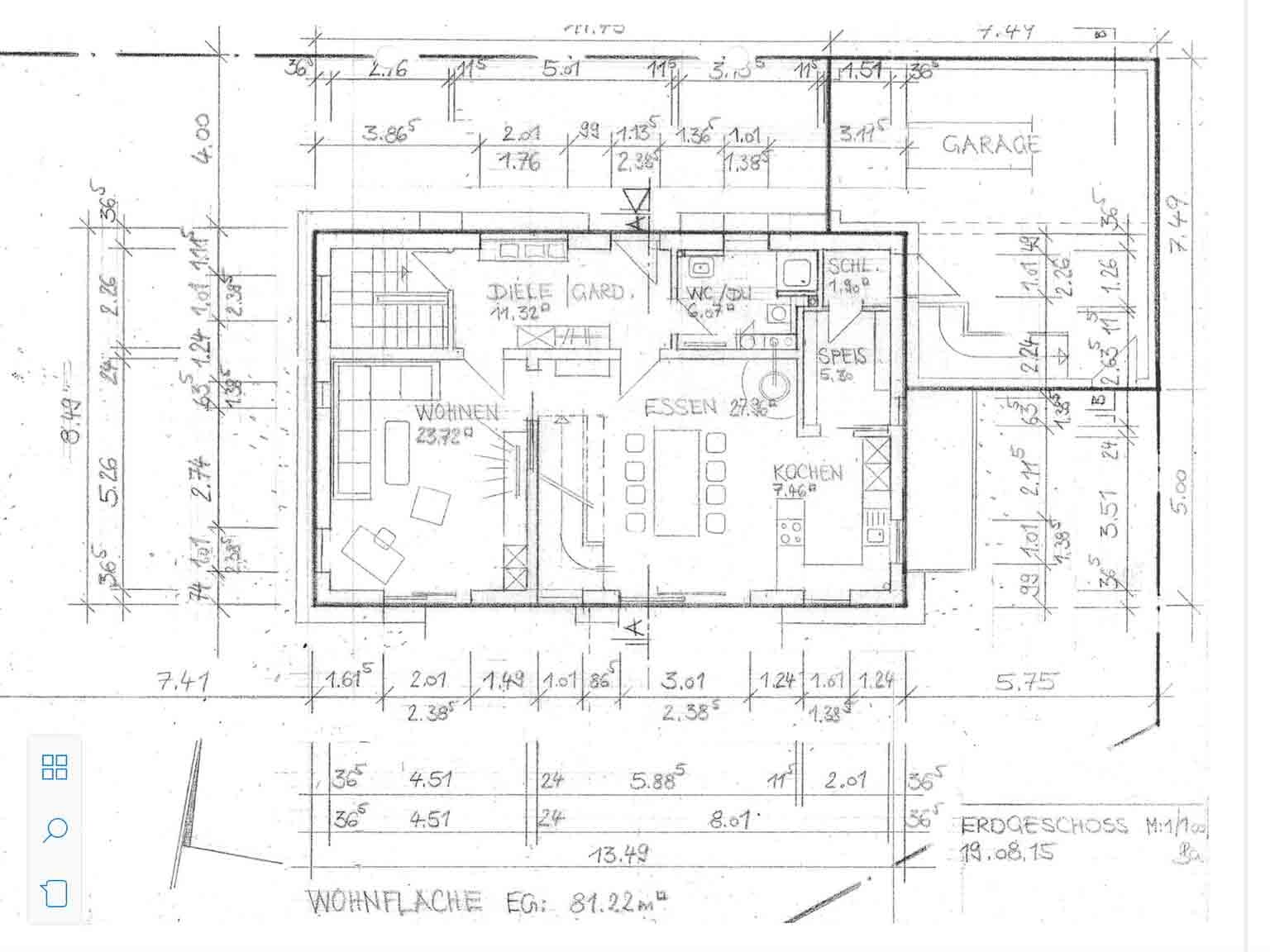
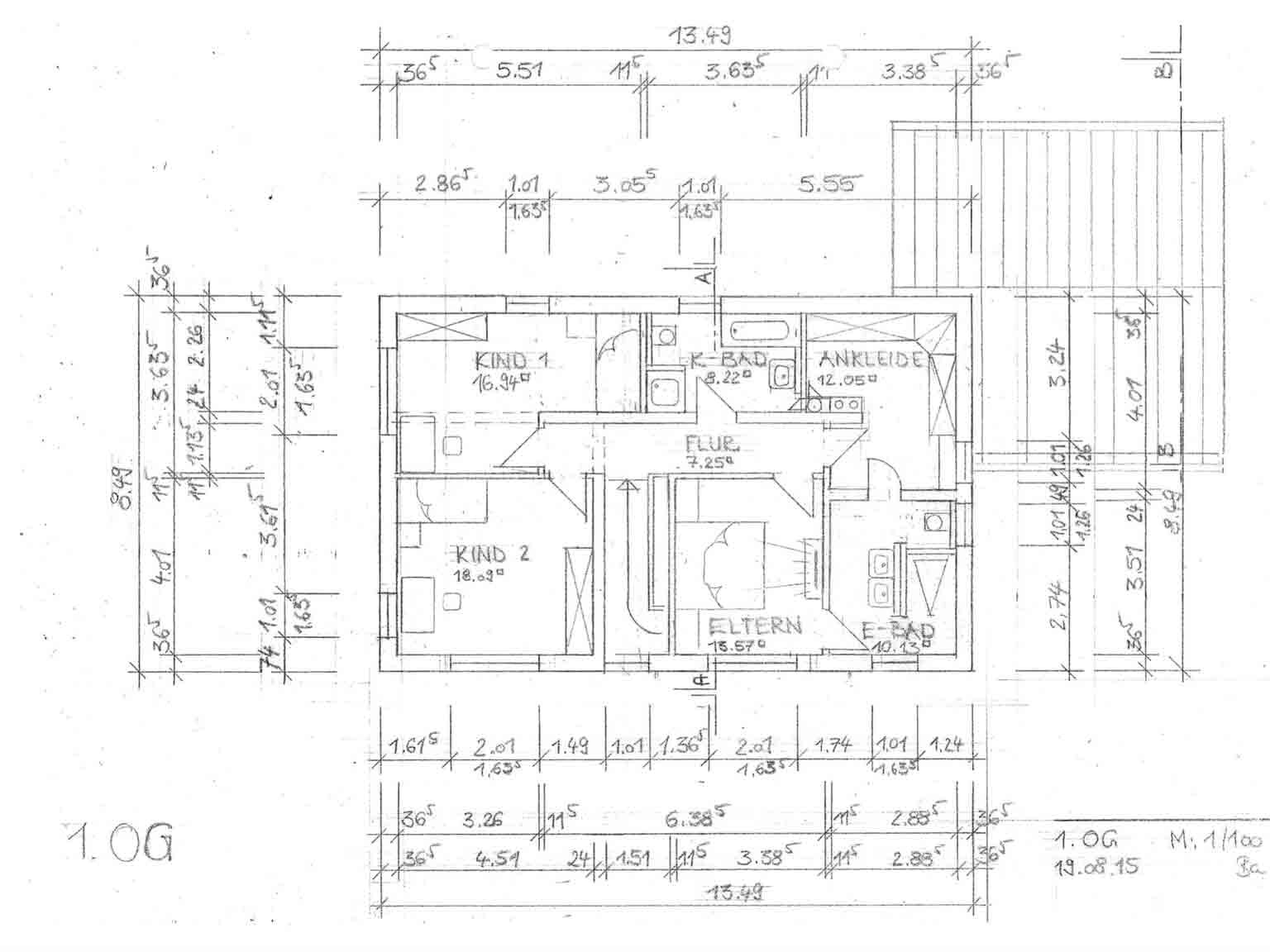
Actually quite nice! Remove the shower on the ground floor, and if anything, place it in the basement if a guest room or sauna is planned there. Get rid of the airlocks! Pantry should be as wide as the bathroom. So straighten everything out in the top right corner and plan a nice kitchen with an island! Upstairs, in the kids’ bathroom, I would also reconsider the layout due to noise issues. On the wall facing the children’s bedroom, place a sink and bathroom furniture, keep the bathtub, enlarge the bathroom slightly towards the anteroom, and plan the shower and toilet along the right wall. Enlarge the anteroom towards the master bathroom and slightly redesign the master bathroom as well. I would position the sink on the wall facing the bedroom and design the shower deeper but shorter. I hope you understand what I mean.

Hello,
I also find the floor plan very nice. However, I have three comments:
I also find the floor plan very nice. However, I have three comments:
- I would omit the shower on the ground floor. You have two showers on the upper floor, which is sufficient for four residents. Since there is no guest room on the ground floor, in my opinion, you don’t need a shower there either.
- I think you have a lot of doors. Almost every room has at least two. This significantly limits your usable space. I would reconsider the typical walking routes and where you actually need a door or a vestibule.
- The stairs initially confused me. I understand that you don’t want the basement stairs in the living room. But do you really need a basement stairway both in the garage and in the hallway? I would look for an alternative solution to use the space more efficiently.

I would fundamentally revise the floor plan:
- Having three staircases, especially located in different places, is impractical, expensive, and divides the layout. In my opinion, the second staircase from the basement to the garage is unnecessary.
- I would align the basement-to-ground floor and ground floor-to-upper floor staircases vertically in the same location and limit the clear width to 2.01 m (6 ft 7 in), for example as a half-turn staircase without a landing, with a 90 cm (35 inch) tread width and a 20 cm (8 inch) stairwell. This is sufficient for a single-family home and saves space. Having the two staircases in the same location has the advantage of keeping the living area free of internal traffic; this becomes especially practical when children reach their teenage years and want to come and go at unusual times without disturbance.
- On the upper floor, I would place both children’s bedrooms and the master bedroom on the right side. I do not consider two bathrooms absolutely necessary; instead, one bathroom could be made slightly larger.
- In principle, the kitchen and bathrooms should be arranged close to each other to minimize the length of installation runs. As they are currently positioned, the plumbing layout will become very complicated or might not even work once examined in detail. Drain pipes are usually installed in service walls or ceiling cavities, not exposed under the ceiling in living spaces. Also, the location of the soil stack extending to the basement—and therefore the arrangement of bathrooms and kitchen—depends significantly on the position of the sewer connection at the property boundary. The connection into the house should always be as straight and as short as possible.
- The arrangement of sanitary fixtures in the bathrooms and kitchen should aim for supply and drainage pipes to have as short routes as possible and be concealed where feasible. Positioning fixtures on many different walls or wall sections is always impractical.
- The floor plan currently lacks a utility or service room in the basement.
- All drainage points in the basement (shower, toilet, washing machine, floor drains, etc.) may lie below the backflow prevention level (street surface or the level of the nearest manhole cover downstream) and must be equipped with backwater valves (including for wastewater containing fecal matter: electronic systems, which are expensive) or use sump pumps to discharge above the backflow level.
- If I were in your position, I would first obtain the existing sewer connection plan, contact the utility companies to find out the locations of the power, gas, and water supply lines at the property boundary, and then base the installation planning accordingly.
When designing the floor plan, the question of installation routing plays a central role from both a technical and economic perspective (unfortunately).
- Having three staircases, especially located in different places, is impractical, expensive, and divides the layout. In my opinion, the second staircase from the basement to the garage is unnecessary.
- I would align the basement-to-ground floor and ground floor-to-upper floor staircases vertically in the same location and limit the clear width to 2.01 m (6 ft 7 in), for example as a half-turn staircase without a landing, with a 90 cm (35 inch) tread width and a 20 cm (8 inch) stairwell. This is sufficient for a single-family home and saves space. Having the two staircases in the same location has the advantage of keeping the living area free of internal traffic; this becomes especially practical when children reach their teenage years and want to come and go at unusual times without disturbance.
- On the upper floor, I would place both children’s bedrooms and the master bedroom on the right side. I do not consider two bathrooms absolutely necessary; instead, one bathroom could be made slightly larger.
- In principle, the kitchen and bathrooms should be arranged close to each other to minimize the length of installation runs. As they are currently positioned, the plumbing layout will become very complicated or might not even work once examined in detail. Drain pipes are usually installed in service walls or ceiling cavities, not exposed under the ceiling in living spaces. Also, the location of the soil stack extending to the basement—and therefore the arrangement of bathrooms and kitchen—depends significantly on the position of the sewer connection at the property boundary. The connection into the house should always be as straight and as short as possible.
- The arrangement of sanitary fixtures in the bathrooms and kitchen should aim for supply and drainage pipes to have as short routes as possible and be concealed where feasible. Positioning fixtures on many different walls or wall sections is always impractical.
- The floor plan currently lacks a utility or service room in the basement.
- All drainage points in the basement (shower, toilet, washing machine, floor drains, etc.) may lie below the backflow prevention level (street surface or the level of the nearest manhole cover downstream) and must be equipped with backwater valves (including for wastewater containing fecal matter: electronic systems, which are expensive) or use sump pumps to discharge above the backflow level.
- If I were in your position, I would first obtain the existing sewer connection plan, contact the utility companies to find out the locations of the power, gas, and water supply lines at the property boundary, and then base the installation planning accordingly.
When designing the floor plan, the question of installation routing plays a central role from both a technical and economic perspective (unfortunately).
 Masipulami19 Nov 2015 12:39
Overall, it’s a nice floor plan, but in my opinion, the hallway on the upper floor is much too narrow.
If I’m reading it correctly, it’s only about 1.13m (3 ft 8 in) wide. If these are rough construction measurements, you have to deduct a few centimeters for plaster as well.
How are the furniture supposed to fit around the corner by the stairs? I don’t see the transport of the parents’ bed into the bedroom as feasible. It gets even more challenging with "Child 2".
If I’m reading it correctly, it’s only about 1.13m (3 ft 8 in) wide. If these are rough construction measurements, you have to deduct a few centimeters for plaster as well.
How are the furniture supposed to fit around the corner by the stairs? I don’t see the transport of the parents’ bed into the bedroom as feasible. It gets even more challenging with "Child 2".
Wow, thank you very much for your suggestions. I will definitely take some of them into consideration. The hallway, for example, is absolutely right and hadn’t occurred to me before. The shower on the ground floor is just a placeholder. We’d like to keep the airlock, as when entering through the garage, damp clothing or shoes can be taken off right away and thus not brought into the pantry where the food is stored.
What do you think about the price?
What do you think about the price?
Similar topics