
ᐅ Floor plan single-family house with 2 full stories plus basement, approximately 130 m² of living space
Created on: 22 Nov 2021 10:47
H
HeinzzLöwe
Hello everyone,
my wife and I are currently planning our house. We have already visited several construction companies and have now decided on one. The company is a manufacturer of prefabricated solid construction. The project will take place in the suburban area of Stuttgart.
Development Plan / Restrictions
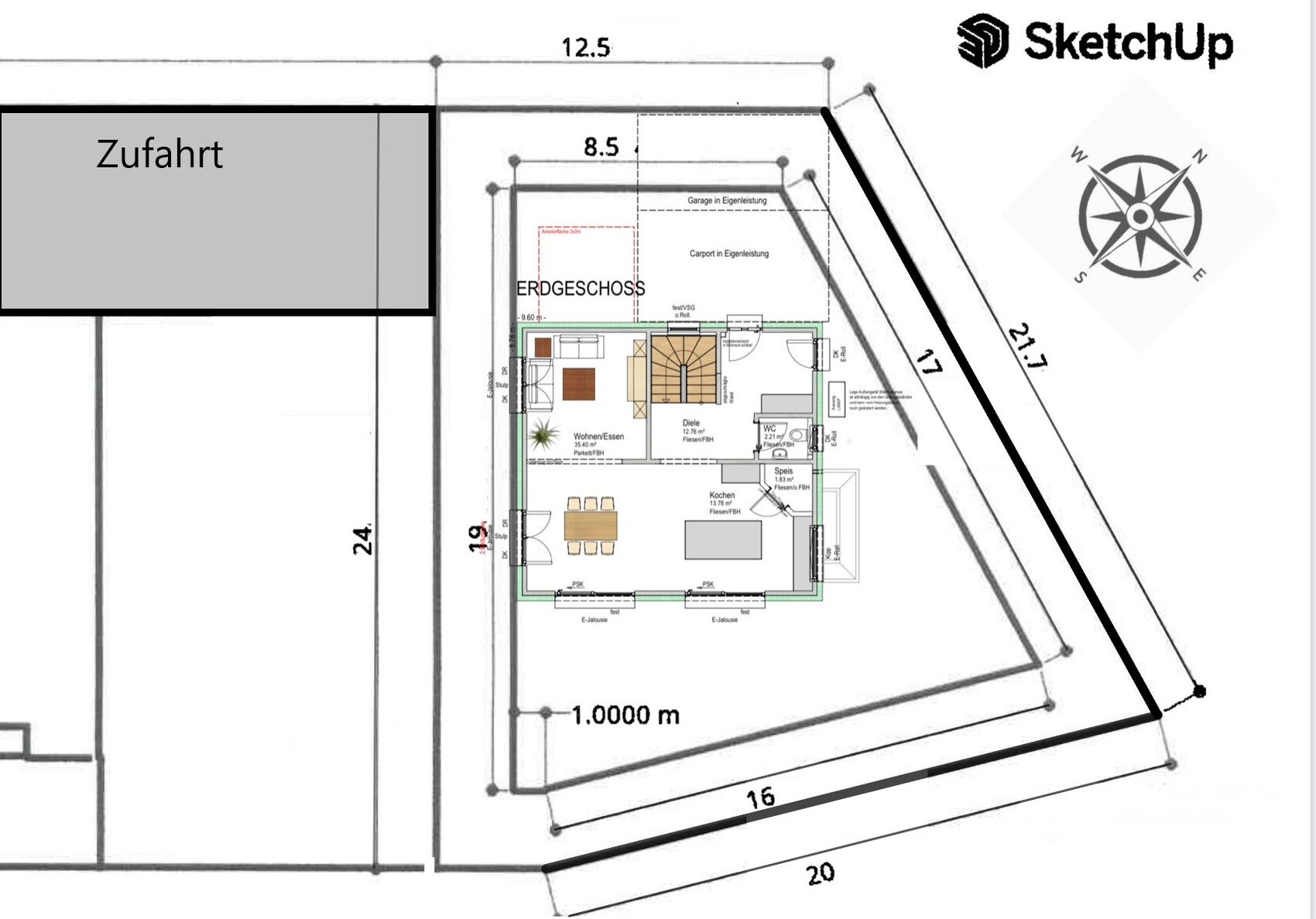
Plot size: approx. 400m² (4,306 sq ft)
Sloping site
Site coverage ratio
Floor area ratio
Building window, building line, and boundary: 2.5m (8 feet) distance to neighbors
Edge development: only for garage
Number of parking spaces: 2
Number of floors:
Roof type: gable roof
Architectural style
Orientation
Maximum heights / limits
Additional specifications: Construction allowed according to §34
Homeowners’ Requirements
Architectural style, roof type, building type: gable roof
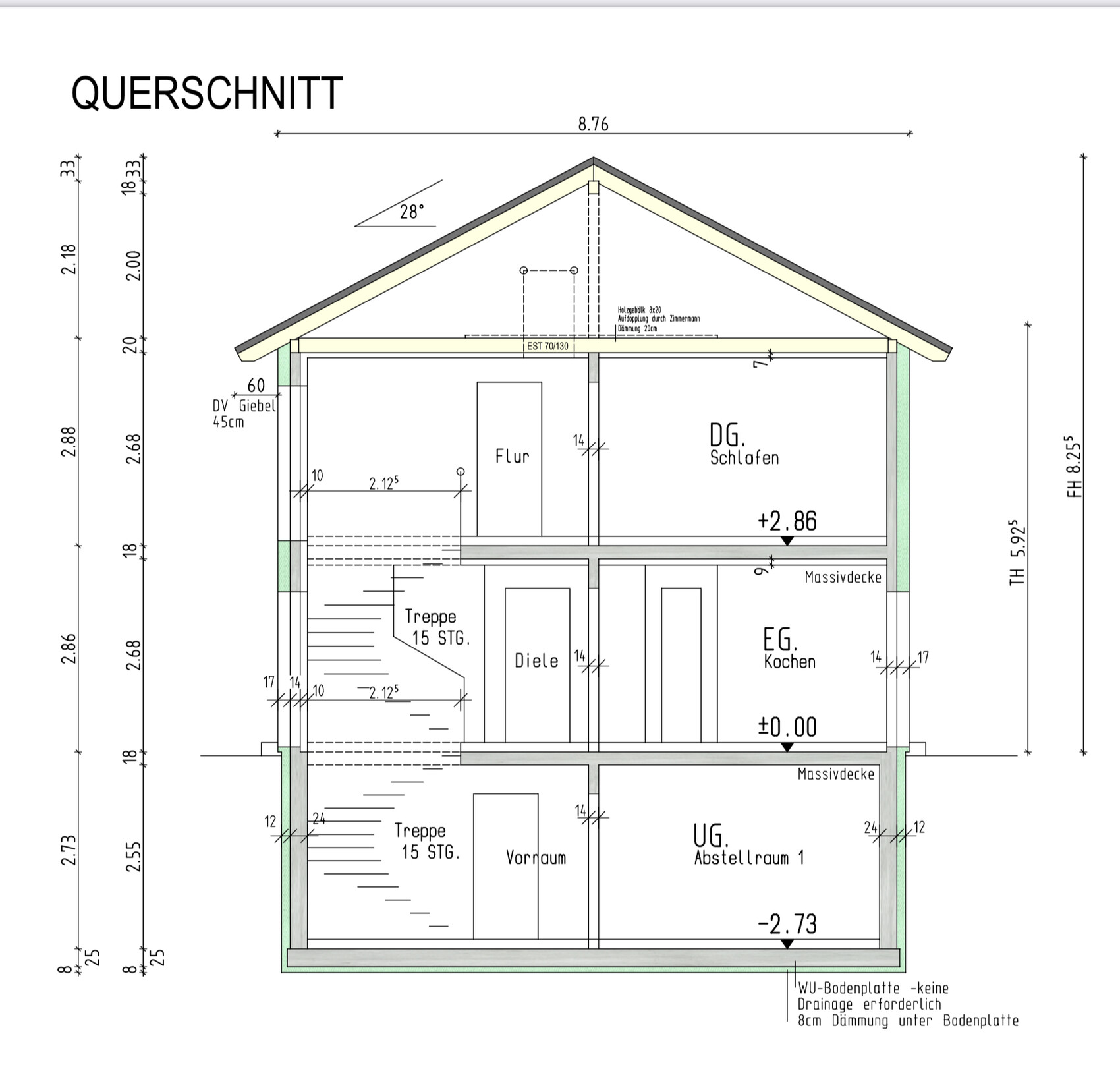
Basement, floors: 2 floors + basement
Number of occupants, ages: currently 2 people, 31 and 26 years old; first child on the way and definitely planning another. Space for a third child should still be possible.
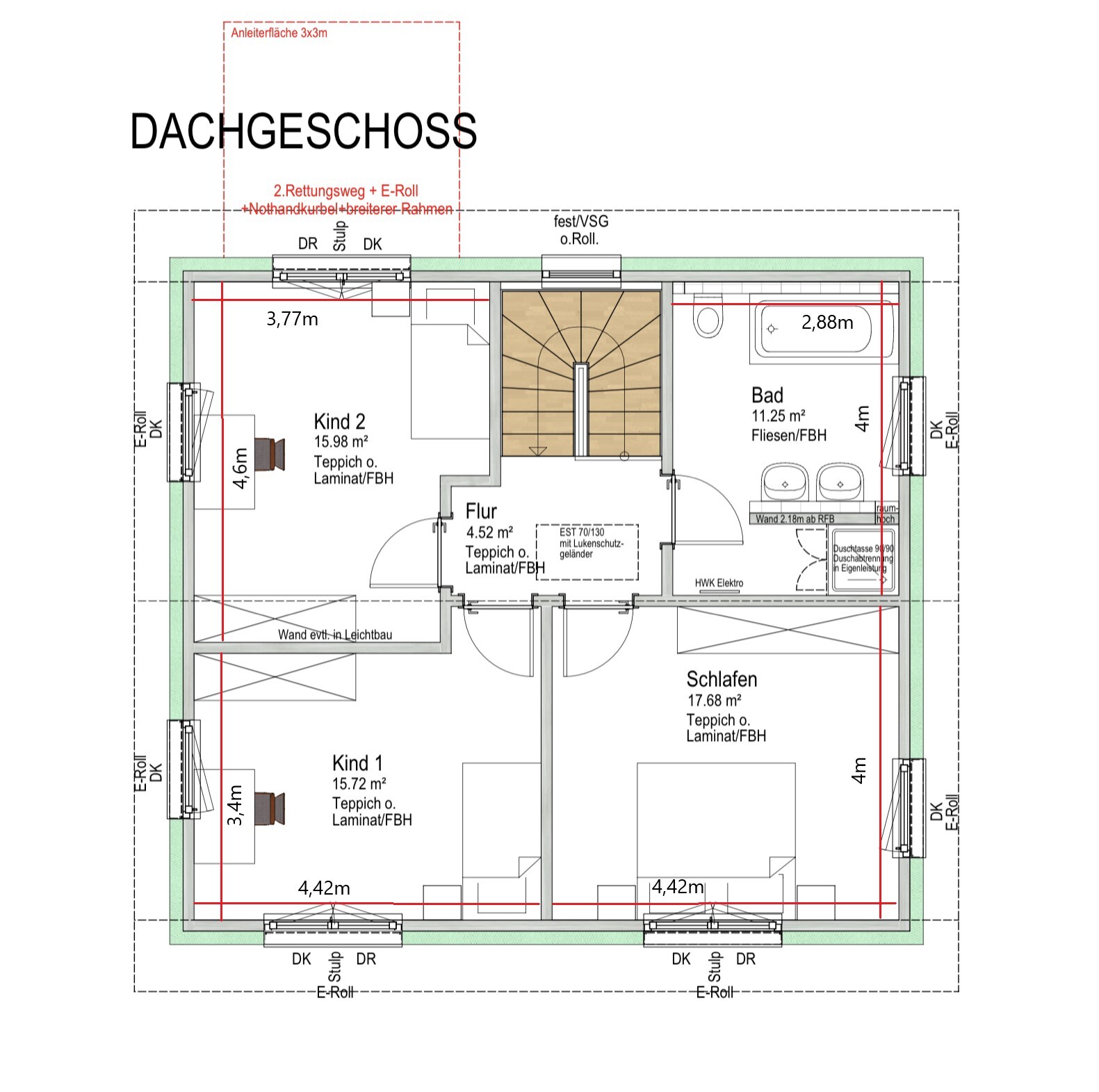
Room requirements on ground floor and upper floor: On the ground floor space for kitchen, living, dining, guest toilet; on the upper floor: 2 children’s rooms, master bedroom, large bathroom; in the basement a room for office/guest room/or third child’s room if needed
Office: family use or home office? No home office
Number of overnight guests per year:
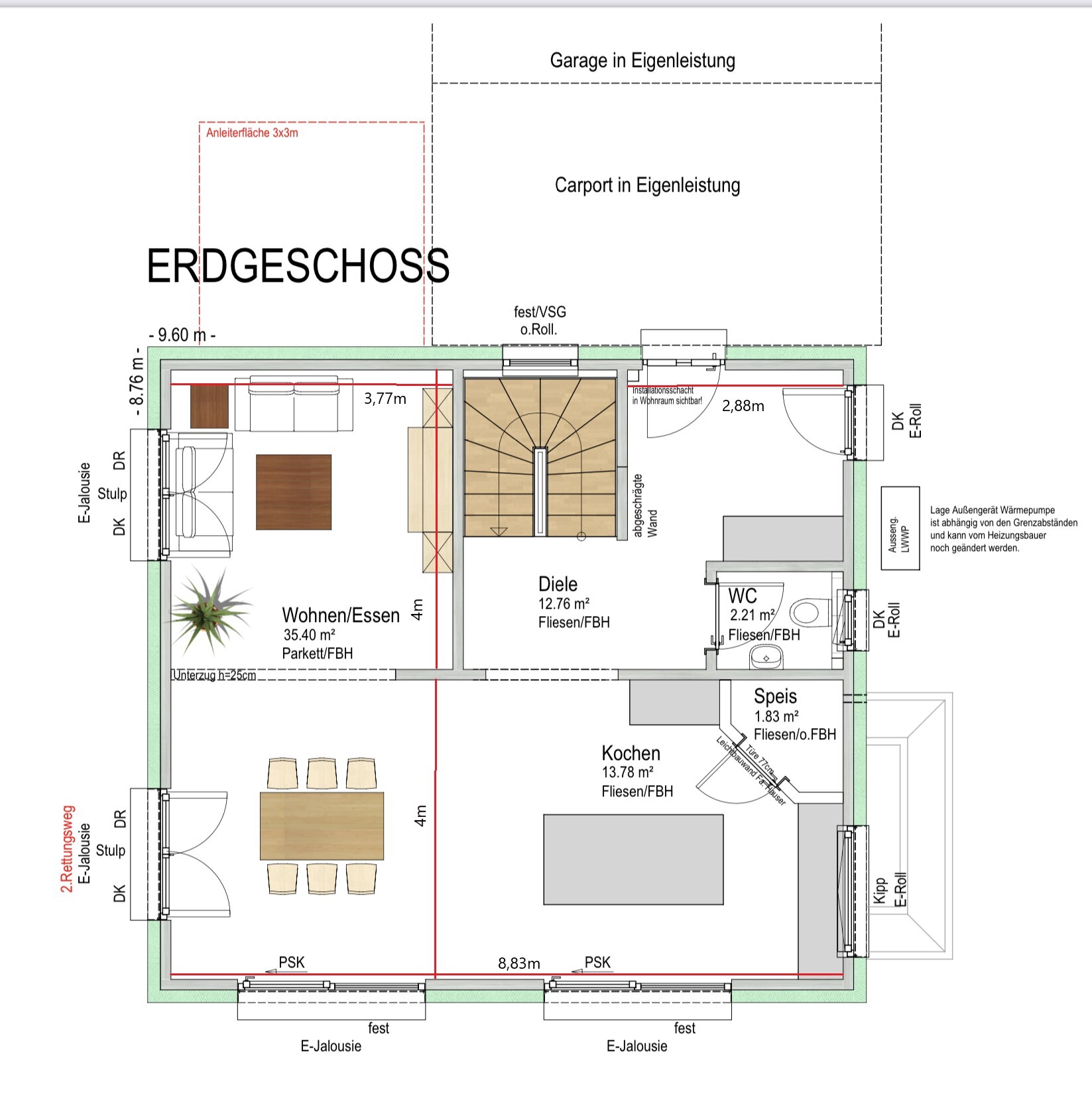
Open or closed layout: on the ground floor, living room, dining room, and kitchen are open, but the hallway has a door
Conservative or modern construction style
Open kitchen, kitchen island: currently a kitchen island in the floor plan, but it takes too much space and requires reconsideration to design the kitchen as a U-shape
Number of dining seats: 6 with extension option
Fireplace: not planned
Music / stereo wall
Balcony, roof terrace: not planned
Garage, carport: in the plan but depends on cost
Kitchen garden, greenhouse
Additional wishes / special features / daily routine, also reasons why certain things are preferred or not
House Design
Planner: the plan is from the construction company’s planner
-Architect
-Do-it-Yourself
What do you like most? Why? Overall, we like the planning well
What do you dislike? Why?
The kitchen uses too much space with the island and offers too little workspace; sliding door in the kitchen should be replaced by a regular window to place a kitchen cabinet below it.
In the living room, we are uncertain about the full-height window. The sofa will be placed on the wall next to the staircase, at least initially, as the sofa is currently an inverted L-shape. We consider changing the window to two narrow full-height windows positioned further apart.
On the upper floor, we would appreciate suggestions for the bathroom, as it currently doesn’t feel quite right.
Price estimate according to architect/planner: 460,000€ (without additional construction costs and without excavation disposal). Basement finishing will be done by ourselves.
Personal price limit for the house, including fittings: 550,000 to 600,000€
Preferred heating technology: the offer includes an air-to-water heat pump and photovoltaic system with battery storage.
If you have to give up something, which details or expansions
-can you live without: kitchen island, although the floor plan is already reduced to the essentials
-can you absolutely not live without: For us it is more about arranging the rooms cleverly and getting ideas about what makes sense.
Why did the design end up like it is now? For example
Standard design from the planner? Revised standard design
Which wishes were implemented by the architect?
A mix of many examples from various magazines...
What makes it particularly good or bad in your opinion? Overall we are very satisfied but look forward to suggestions of what might not be clever and what could be improved.
What is the most important / fundamental question about the floor plan in 130 characters?
Can the space be used better or differently organized? Initially, living room and kitchen were swapped, which gave us a too small kitchen. Kitchen and dining room are the most important rooms for us.
Can the bathroom on the upper floor also be arranged differently?
Thank you in advance for your suggestions. If you have any questions or if we have forgotten something, please let us know.
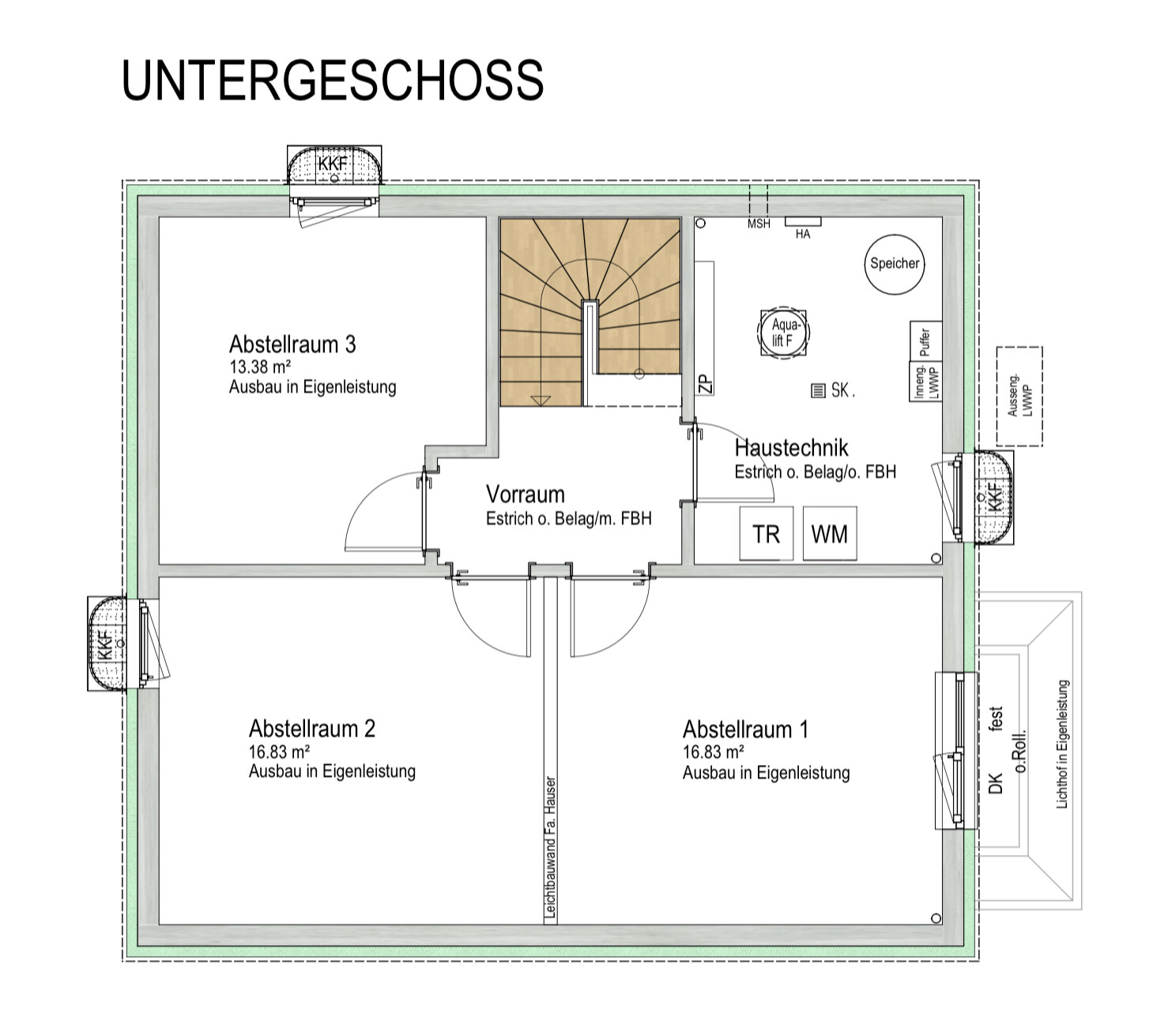
my wife and I are currently planning our house. We have already visited several construction companies and have now decided on one. The company is a manufacturer of prefabricated solid construction. The project will take place in the suburban area of Stuttgart.
Development Plan / Restrictions
Plot size: approx. 400m² (4,306 sq ft)
Sloping site
Site coverage ratio
Floor area ratio
Building window, building line, and boundary: 2.5m (8 feet) distance to neighbors
Edge development: only for garage
Number of parking spaces: 2
Number of floors:
Roof type: gable roof
Architectural style
Orientation
Maximum heights / limits
Additional specifications: Construction allowed according to §34
Homeowners’ Requirements
Architectural style, roof type, building type: gable roof
Basement, floors: 2 floors + basement
Number of occupants, ages: currently 2 people, 31 and 26 years old; first child on the way and definitely planning another. Space for a third child should still be possible.
Room requirements on ground floor and upper floor: On the ground floor space for kitchen, living, dining, guest toilet; on the upper floor: 2 children’s rooms, master bedroom, large bathroom; in the basement a room for office/guest room/or third child’s room if needed
Office: family use or home office? No home office
Number of overnight guests per year:
Open or closed layout: on the ground floor, living room, dining room, and kitchen are open, but the hallway has a door
Conservative or modern construction style
Open kitchen, kitchen island: currently a kitchen island in the floor plan, but it takes too much space and requires reconsideration to design the kitchen as a U-shape
Number of dining seats: 6 with extension option
Fireplace: not planned
Music / stereo wall
Balcony, roof terrace: not planned
Garage, carport: in the plan but depends on cost
Kitchen garden, greenhouse
Additional wishes / special features / daily routine, also reasons why certain things are preferred or not
House Design
Planner: the plan is from the construction company’s planner
-Do-it-Yourself
What do you like most? Why? Overall, we like the planning well
What do you dislike? Why?
The kitchen uses too much space with the island and offers too little workspace; sliding door in the kitchen should be replaced by a regular window to place a kitchen cabinet below it.
In the living room, we are uncertain about the full-height window. The sofa will be placed on the wall next to the staircase, at least initially, as the sofa is currently an inverted L-shape. We consider changing the window to two narrow full-height windows positioned further apart.
On the upper floor, we would appreciate suggestions for the bathroom, as it currently doesn’t feel quite right.
Price estimate according to architect/planner: 460,000€ (without additional construction costs and without excavation disposal). Basement finishing will be done by ourselves.
Personal price limit for the house, including fittings: 550,000 to 600,000€
Preferred heating technology: the offer includes an air-to-water heat pump and photovoltaic system with battery storage.
If you have to give up something, which details or expansions
-can you live without: kitchen island, although the floor plan is already reduced to the essentials
-can you absolutely not live without: For us it is more about arranging the rooms cleverly and getting ideas about what makes sense.
Why did the design end up like it is now? For example
Standard design from the planner? Revised standard design
A mix of many examples from various magazines...
What makes it particularly good or bad in your opinion? Overall we are very satisfied but look forward to suggestions of what might not be clever and what could be improved.
What is the most important / fundamental question about the floor plan in 130 characters?
Can the space be used better or differently organized? Initially, living room and kitchen were swapped, which gave us a too small kitchen. Kitchen and dining room are the most important rooms for us.
Can the bathroom on the upper floor also be arranged differently?
Thank you in advance for your suggestions. If you have any questions or if we have forgotten something, please let us know.
H
hampshire23 Nov 2021 10:59HeinzzLöwe schrieb:
Yes, basically we feel the same about the lighting. Next to the house is my wife’s parents’ home, and the street is behind that. HeinzzLöwe schrieb:
According to our current layout, on the left side in front, so between the parents’ house and ours, there is still a 10m (33 feet) garden that we can share. Those are very good conditions to create a nice view to the outside with floor-to-ceiling windows. When planning the garden, you can take this into account. Nothing extravagant—just make sure to plant some greenery that offers color throughout the year and varies in height. Whether you arrange it organically or geometrically is a matter of personal taste. By the way, vegetable raised beds really look nice when arranged with care.
HeinzzLöwe schrieb:
We also thought about having a shower on the ground floor, but we’re concerned it might feel very cramped? Consider how often and for what purposes you will use the shower on the ground floor. I personally have not found a use that would justify that expense.
HeinzzLöwe schrieb:
It’s not quite clear to me why you would take away a few square meters from every room upstairs for storage space? It’s quite practical to have some space upstairs for household devices like a vacuum cleaner. On the other hand, it’s not a big deal to walk a bit more sometimes. In your case, I would skip the storage room upstairs and accept a bit more walking instead.
HeinzzLöwe schrieb:
Of course, my wife would also like more closet space in the bedroom. But it was important for us that the children’s rooms don’t become too small. It’s quite difficult for us to assess what is sufficient. The need for closet space varies a lot from person to person. However, not all clothing has to be stored in the bedroom closets. You have a basement, so you could manage by swapping out seasonal clothing twice a year if the available closet space isn’t enough. This way, everything relevant is always in the bedroom, and nothing has to be crammed in. Another advantage is that you tend to sort through your belongings better and avoid keeping things in the closet that you no longer wear.
I think it’s a very good idea to prioritize the size of the children’s rooms. What constitutes a “sufficient” size depends on expectations. Fundamentally, children thrive where parents get along, love their children, and where family life is not overshadowed by major concerns. Having a separate room and its size become important much later in a child’s hierarchy of needs. So you can relax about that for now, because the most important factors are not architectural. Teenagers need the most space (unless they are overloaded with toys from a young age…). A place to sleep, a place for clothes, a place for belongings, a place to study and write, and some space to hang out with friends—this is ideal. These spaces often overlap, so a bed, a desk chair, and a rug already provide enough room for six people happily creating breathtaking indoor air quality behind closed windows. The size you have planned is well balanced relative to the house size. If you create a play area in the garden for your children that is designed so it can later be converted into a second terrace with privacy screening, you will provide your children with another attractive living space outdoors.
H
hampshire23 Nov 2021 11:30Here’s another idea regarding the children’s rooms: If you extend the children’s rooms all the way up to the roof, you create space for a wonderful loft sleeping area or a separate desk area. Once the children are older, this provides significantly more space and surface area for them. We used this design detail for our children. Each boy has a loft sleeping area that also includes a desk with a computer.
Since you also have a basement, losing attic space should not be too much of a problem. If you design the attic access from your bedroom with a space-saving staircase, you gain a lot of extra closet space “upstairs.” It’s certainly unusual but worth considering.
Since you also have a basement, losing attic space should not be too much of a problem. If you design the attic access from your bedroom with a space-saving staircase, you gain a lot of extra closet space “upstairs.” It’s certainly unusual but worth considering.
HeinzzLöwe schrieb:
Are you referring to the lighting situation only for the ground floor? I’m attaching a picture of the entire plot. My wife is receiving the building plot from her parents. Currently, it’s their garden. According to our current house layout, there is still a 10m (33 feet) garden area to the left in front, between the parents’ house and ours, which we will also be able to use jointly. That sounds great. I mean it in general terms. Before I have to consider the structural support against a house wall (even if it’s a bit farther away—10 meters (33 feet) isn’t far), I’d rather look diagonally into the garden. Light from the southwest definitely reaches a bit more than if a house to the west blocks the low sun.
One should not forget that a plot, even if gifted within the family, must be viewed independently. Let me put it this way: there is no reason not to orient the house along the eastern boundary.

HeinzzLöwe schrieb:
I’m attaching a picture of the entire property. What’s on the east side, or what’s there?
H
HeinzzLöwe23 Nov 2021 12:29hampshire schrieb:
These are very good conditions to create a nice view outside with floor-to-ceiling windows. You can take this into account when planning your garden layout as well. Nothing too extravagant—just make sure to plant a few things that provide color throughout the year and have some variation in height. Whether you design it organically or geometrically is a matter of taste. By the way, vegetable raised beds look really nice if you set them up with care.
Consider how often and on what occasions you will use the shower on the ground floor. I personally have not found a use for it that would justify the investment.
It’s quite practical to have some space upstairs for household appliances like a vacuum cleaner. On the other hand, it’s not a big problem to go up and down occasionally. In your case, I would skip the storage room upstairs and accept a bit more walking instead.
The need for closet space is very individual. However, not all clothing has to fit in the bedroom closet. You have a basement and can easily manage swapping seasonal clothes twice a year if you don’t have enough closet space. That way, all relevant clothing is in the bedroom when needed and nothing has to be crammed in. It also encourages better sorting and avoids keeping items you no longer want to wear.
I think prioritizing the size of the children’s rooms is a very good idea. What is considered an “adequate” size depends on personal expectations. Fundamentally, children do well when their parents get along, love their children, and there are no major worries overshadowing daily life. Having a private room and its size comes much later in a child’s hierarchy of needs. So you can relax about that initially, since the most important factors are not architectural. Most space is really needed by teenagers (unless children are already overwhelmed by toys at a young age...). A place to sleep, a place for clothes, a place for belongings, a place to study and write, and some room to gather with friends—that’s ideal. These areas overlap, so a bed, a desk chair, and a rug can already accommodate six people who happily produce stunningly poor air quality with the windows closed. The size you planned is well balanced with the overall house size. If you set up a play area in the garden for your children that can later be converted into a second patio with privacy screens, you will create an additional attractive living space for your children outdoors.hampshire schrieb:
One more thought about the children’s rooms: If you extend their rooms all the way up to the roof, you create space for a wonderful loft sleeping area or a separate study area. Once the children are older, this will give them significantly more room and usable space. We solved this detail for our children in the same way. The boys each have a loft bedroom that also includes a desk with a computer.
Since you also have a basement, losing some attic storage shouldn’t be too painful.
If you design access to the attic from your bedroom with a space-saving staircase, you’ll gain a lot of closet space “up there.” Certainly unusual, but worth considering.Alright, thanks for the encouragement and your tips. We will see which of this works for us.
P
pagoni202023 Nov 2021 12:30HeinzzLöwe schrieb:
We also considered the shower on the ground floor, but we’re concerned it might feel too cramped? Don’t get me wrong. I’m not saying there has to be a shower there. I just wanted to suggest considering it, especially in relation to your own habits and needs. I have to admit I overlooked the fact that you’re building a basement; having a shower there would make sense, particularly for future internal moves of the kids within the house.
HeinzzLöwe schrieb:
I don’t quite understand why you would want to take a few more square meters from each room on the upper floor to create storage space? Again, I hadn’t fully taken into account that there is a basement, sorry. We recently built a bathroom of 9.5 sqm (102 sq ft) and it definitely doesn’t feel too small to us. Your bathroom could still be redesigned, and if 1–2 sqm (11–22 sq ft) were added to the bedroom, I don’t think that would be a disadvantage; that’s what I meant. The almost 16 sqm (172 sq ft) per kids’ room seems well-sized to me; I find 14 sqm (150 sq ft) adequate, less than that not so much. Ultimately, it depends on personal perspective—often people worry about spaces being too small and just make them bigger as a precaution, without real added benefit. We just moved in, and there were some areas where I was unsure about the dimensions and spacing, while my wife felt confident about them. Now that I’m living with it, she was right… that can happen 🤨.
Of course, the kids should have comfortable rooms, but as adults, in my opinion, we shouldn’t forget our own needs. For children, room size usually matters less; that’s more in our heads. Perhaps it could be an idea to position the dividing wall between the two kids’ rooms slightly off-center, so each side has a niche where a wardrobe can fit; kids’ wardrobes are usually not very wide.
I really like the idea mentioned above of an open area on the upper floor. Kids will love that; you can place a loft bed or create a sleeping platform with manageable costs. Who didn’t enjoy having a hideout or a little den as a child? That would be something very special, plus it’s a huge gain in living space. I generally don’t like to use the attic for storage; the basement is better suited for that.
Similar topics