
ᐅ Floor Plan Design – Two-Family House / Single-Family House with Basement or In-Law Apartment
Created on: 3 Jan 2021 13:11
P
patrick_01
Hello everyone! Basically, it’s about a two-family house, but the second living unit should be on one level with about 75m² (800 ft²).
Development Plan / Restrictions
Plot size: rural area with 45m x 45m (2025m² (21,800 ft²))
Slope: no
Site occupancy index: -
Floor area ratio: -
Building window, building line, and boundary: -
Edge development: none
Number of parking spaces: -
Number of floors: -
Roof shape: -
Architectural style: -
Orientation: house can be freely rotated; currently entrances face north / northwest
Maximum heights/limits: -
(few restrictions due to rural area)
Client Requirements
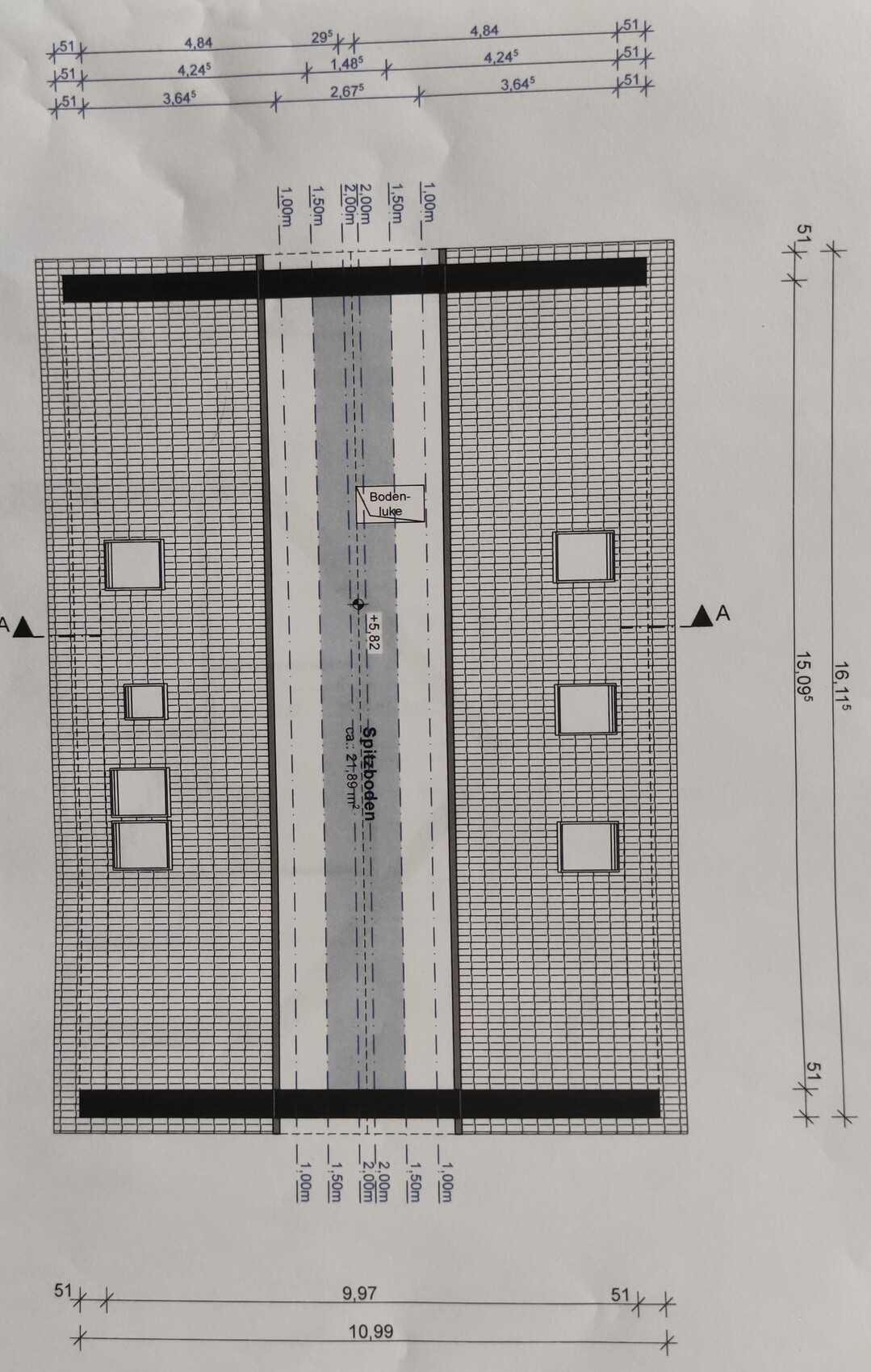
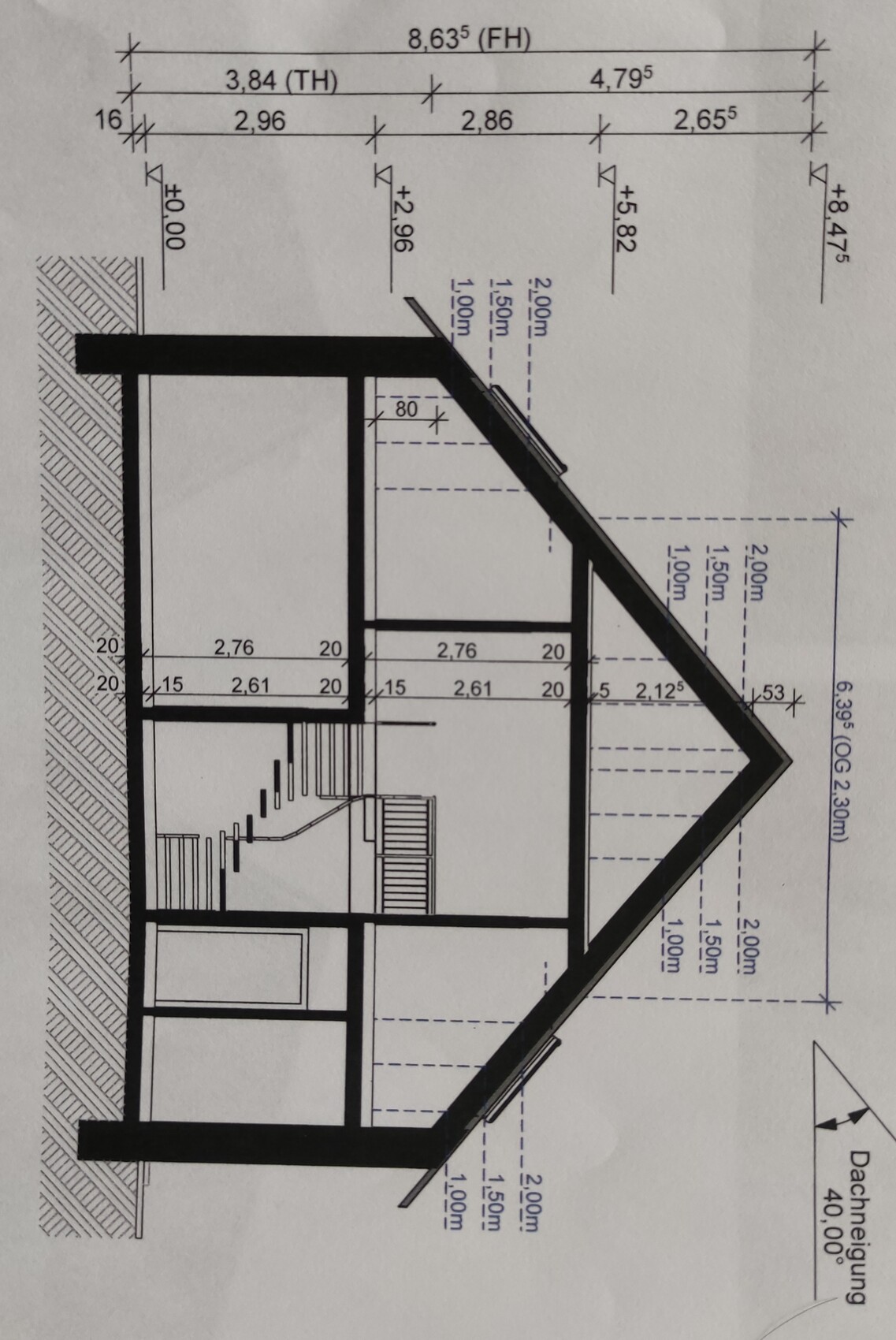
Architectural style, roof shape, building type: rectangular floor plan with simple gable roof, no dormers/gables etc. due to economic reasons, style is plain country house, KfW 55 standard
Basement, floors: no basement for economic reasons, 1.5 floors
Number of occupants, age: 4 (30, 30, 60, 60 + up to 2 children)
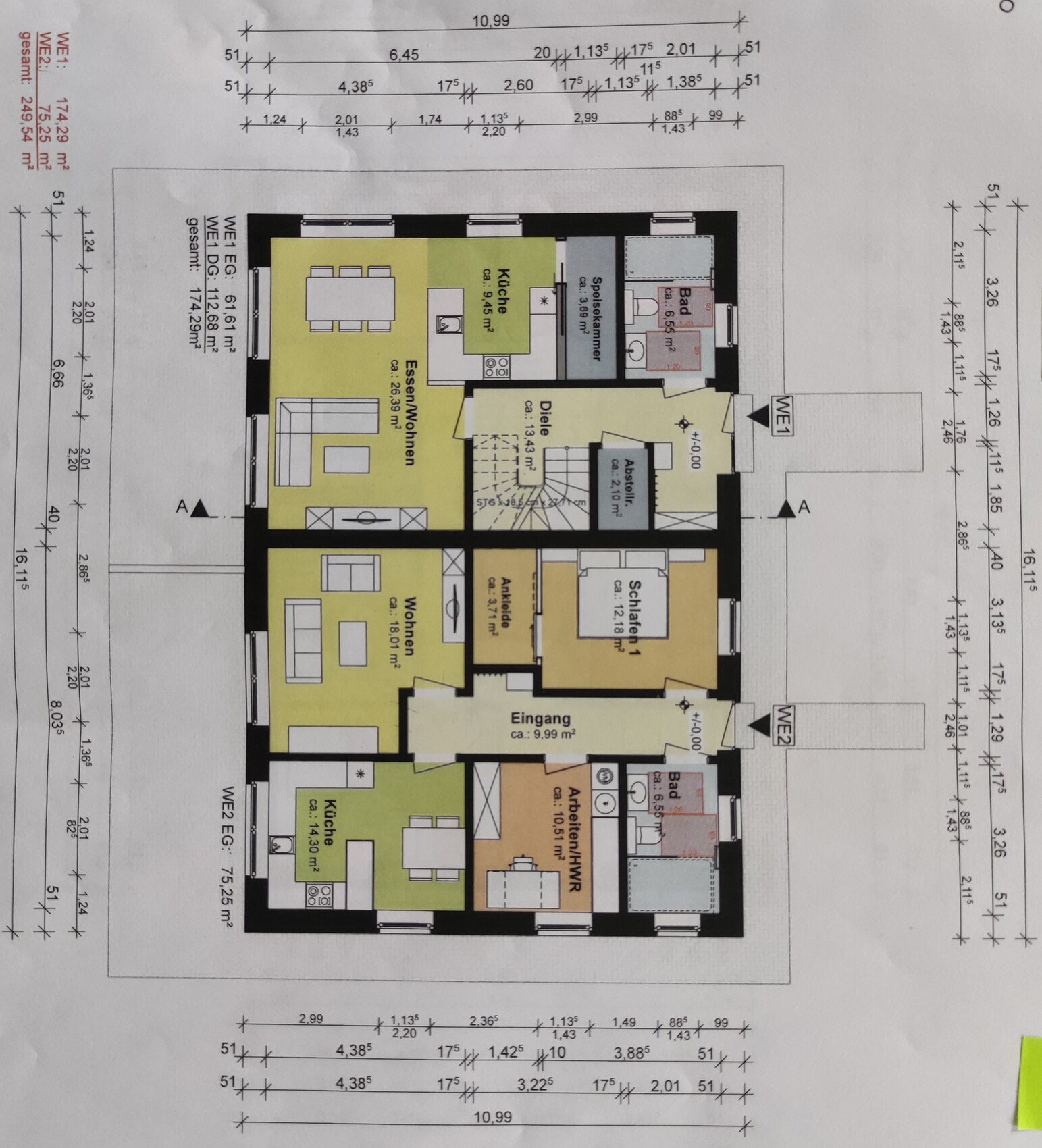
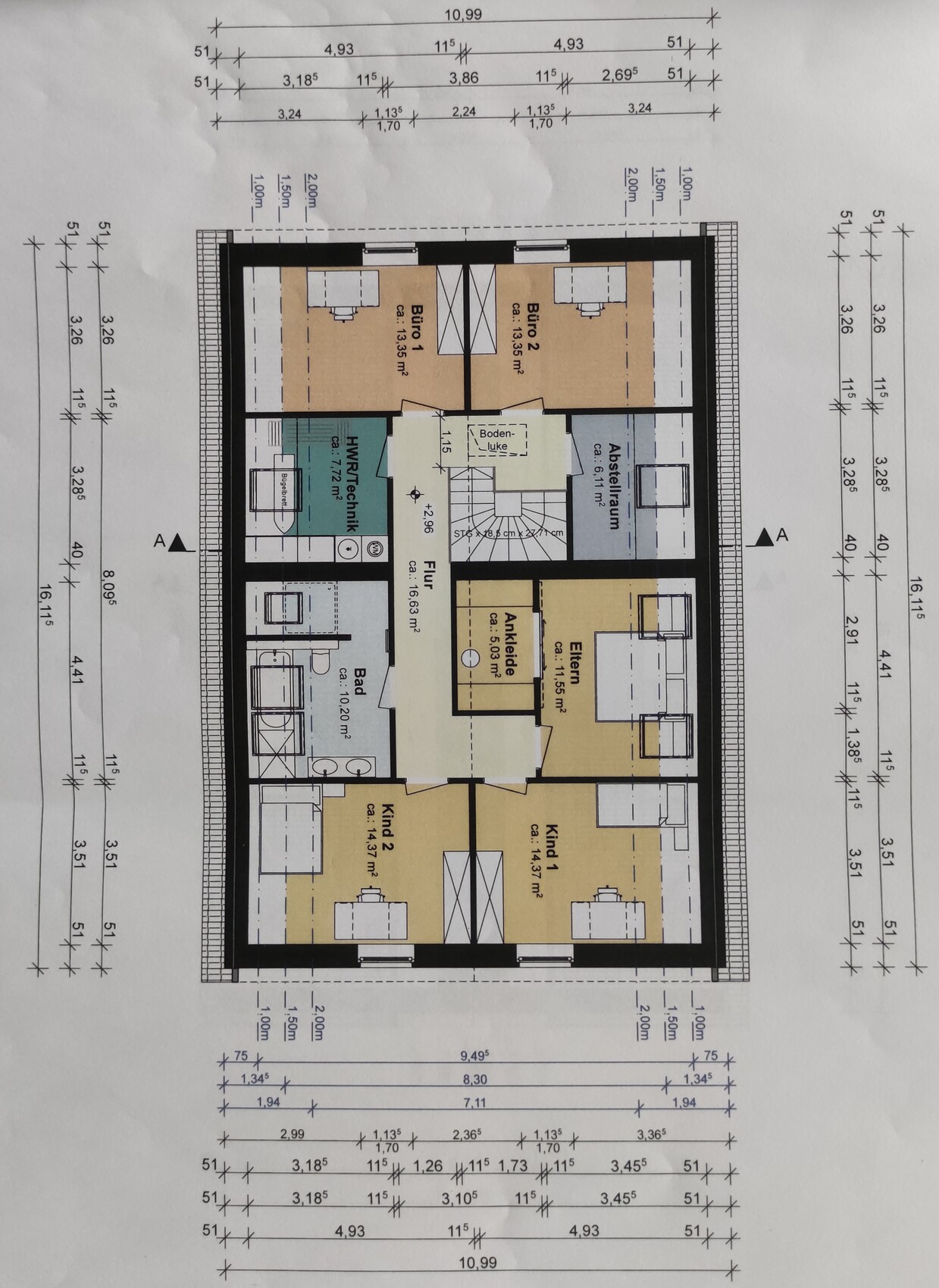
Space requirements on ground and upper floors: ground floor second unit completely single level with about 75m² (800 ft²) of living space; main unit with ground + upper floor at least 150m² (1600 ft²) living space, a bit more preferred
Office: home office for 2 people
Overnight guests per year: none
Open or closed layout: tendency towards open
Conservative or modern construction: tendency towards conservative, country house style
Open kitchen, cooking island: open kitchen, cooking island optional but not a must
Number of dining seats: 6
Fireplace: highly desirable, chimney usable for both units if possible (therefore living rooms adjacent). However, not masonry; initially only the chimney. A freestanding wood stove would be added later.
Music/stereo wall: -
Balcony, roof terrace: roof terrace is definitely an option, since ground floor space is limited (about 62m² (670 ft²)) and upper floor has much more (about 113m² (1215 ft²)). The idea is to enlarge the floor plan (e.g. by 2m (6.5 ft)) and then create a roof terrace above.
Garage, carport: waived for economic reasons
Utility garden, greenhouse: -
In the attached plan, the current idea is to remove the pantry and simply add it to the kitchen, also giving about 1m² (11 ft²) from the bathroom to the kitchen. This moves the kitchen further back so it no longer extends so much into the living/dining area (and adds a door from the hallway to the kitchen). Still, we find the roughly 62m² (670 ft²) on the ground floor a bit small, so we’re considering at least 10.99m x 17.11m (36 ft x 56 ft) to benefit our main unit. But that worsens the problem of the upper floor becoming even larger (which we already think is too big). Hence also the consideration of the roof terrace.
What we like:
Living/dining area + kitchen in an open L-shape.
Shower in the ground floor bathroom (outdoor area: often coming into the house dirty)
Small storage room for beverage crates and similar items
Dedicated “corner” as a cloakroom area to immediately get rid of dirty clothes
Deliberately two separate entrances (so it’s not really a classic secondary unit), this is essential.
We are not yet satisfied with the upper floor. The utility/technical room must be upstairs as well as a second larger storage room. Also, a spacious walk-in closet is mandatory. There should be one double office, not two separate rooms. Office 1/2 could then become a “hobby room.”
House Design
Source of the design: preliminary draft by architect
Preferred heating technology: air-to-water heat pump (AWHP)
If you have to do without anything, which details or features
-cannot be done without: ground floor secondary unit with 75m² (800 ft²), shower in ground floor bathroom, cloakroom corner, two separate entrances.
Otherwise, we are quite flexible, especially regarding the layout upstairs.
Why is the design the way it is?
Preliminary draft by architect after discussion
What is the most important/basic question about the floor plan summarized in 130 characters?
The key questions are:
1) If we enlarge the ground floor and plan a (simple) roof terrace upstairs, is this economically sensible? Or is it cheaper just to build out? I.e., does the savings from the roof terrace upstairs offset the extra sqm on the ground floor?
2) How would you solve the problem that the main unit on the ground floor has rather little space and too much upstairs? The second unit must be single-level at about 75m² (800 ft²), and a basement is not an option. Also, the floor plan should remain as rectangular as possible for economic reasons.
3) A glazed extension on the ground floor to create space is conceivable. But is enlarging the floor plan more economical than adding about 15m² (160 ft²) via a glazed extension, e.g. in the dining area? The glazed extension would have to be fully insulated to be useful, which would increase costs significantly.
4) What’s your estimate of the construction costs? 🙂
Additional: The design of the second unit can be accepted as it is for now.
Thanks in advance...
Development Plan / Restrictions
Plot size: rural area with 45m x 45m (2025m² (21,800 ft²))
Slope: no
Site occupancy index: -
Floor area ratio: -
Building window, building line, and boundary: -
Edge development: none
Number of parking spaces: -
Number of floors: -
Roof shape: -
Architectural style: -
Orientation: house can be freely rotated; currently entrances face north / northwest
Maximum heights/limits: -
(few restrictions due to rural area)
Client Requirements
Architectural style, roof shape, building type: rectangular floor plan with simple gable roof, no dormers/gables etc. due to economic reasons, style is plain country house, KfW 55 standard
Basement, floors: no basement for economic reasons, 1.5 floors
Number of occupants, age: 4 (30, 30, 60, 60 + up to 2 children)
Space requirements on ground and upper floors: ground floor second unit completely single level with about 75m² (800 ft²) of living space; main unit with ground + upper floor at least 150m² (1600 ft²) living space, a bit more preferred
Office: home office for 2 people
Overnight guests per year: none
Open or closed layout: tendency towards open
Conservative or modern construction: tendency towards conservative, country house style
Open kitchen, cooking island: open kitchen, cooking island optional but not a must
Number of dining seats: 6
Fireplace: highly desirable, chimney usable for both units if possible (therefore living rooms adjacent). However, not masonry; initially only the chimney. A freestanding wood stove would be added later.
Music/stereo wall: -
Balcony, roof terrace: roof terrace is definitely an option, since ground floor space is limited (about 62m² (670 ft²)) and upper floor has much more (about 113m² (1215 ft²)). The idea is to enlarge the floor plan (e.g. by 2m (6.5 ft)) and then create a roof terrace above.
Garage, carport: waived for economic reasons
Utility garden, greenhouse: -
In the attached plan, the current idea is to remove the pantry and simply add it to the kitchen, also giving about 1m² (11 ft²) from the bathroom to the kitchen. This moves the kitchen further back so it no longer extends so much into the living/dining area (and adds a door from the hallway to the kitchen). Still, we find the roughly 62m² (670 ft²) on the ground floor a bit small, so we’re considering at least 10.99m x 17.11m (36 ft x 56 ft) to benefit our main unit. But that worsens the problem of the upper floor becoming even larger (which we already think is too big). Hence also the consideration of the roof terrace.
What we like:
Living/dining area + kitchen in an open L-shape.
Shower in the ground floor bathroom (outdoor area: often coming into the house dirty)
Small storage room for beverage crates and similar items
Dedicated “corner” as a cloakroom area to immediately get rid of dirty clothes
Deliberately two separate entrances (so it’s not really a classic secondary unit), this is essential.
We are not yet satisfied with the upper floor. The utility/technical room must be upstairs as well as a second larger storage room. Also, a spacious walk-in closet is mandatory. There should be one double office, not two separate rooms. Office 1/2 could then become a “hobby room.”
House Design
Source of the design: preliminary draft by architect
Preferred heating technology: air-to-water heat pump (AWHP)
If you have to do without anything, which details or features
-cannot be done without: ground floor secondary unit with 75m² (800 ft²), shower in ground floor bathroom, cloakroom corner, two separate entrances.
Otherwise, we are quite flexible, especially regarding the layout upstairs.
Why is the design the way it is?
Preliminary draft by architect after discussion
What is the most important/basic question about the floor plan summarized in 130 characters?
The key questions are:
1) If we enlarge the ground floor and plan a (simple) roof terrace upstairs, is this economically sensible? Or is it cheaper just to build out? I.e., does the savings from the roof terrace upstairs offset the extra sqm on the ground floor?
2) How would you solve the problem that the main unit on the ground floor has rather little space and too much upstairs? The second unit must be single-level at about 75m² (800 ft²), and a basement is not an option. Also, the floor plan should remain as rectangular as possible for economic reasons.
3) A glazed extension on the ground floor to create space is conceivable. But is enlarging the floor plan more economical than adding about 15m² (160 ft²) via a glazed extension, e.g. in the dining area? The glazed extension would have to be fully insulated to be useful, which would increase costs significantly.
4) What’s your estimate of the construction costs? 🙂
Additional: The design of the second unit can be accepted as it is for now.
Thanks in advance...
When looking at detached houses with a granny flat, I really like the concept of the Rensch House, Genua model, for example. In this design, the granny flat is not built over, and basically, you can combine a "normal" detached house with a "normal" small bungalow (flat roof) connected by a shared link with a utility room. This also creates better opportunities to have separate garden areas. And your plot is large enough, after all.
P
patrick_014 Jan 2021 17:34ypg schrieb:
Quick thoughts:
Good idea! I would slightly shorten the hallway and maybe make the storage room under the stairs accessible from the kitchen if it is going to replace the pantry.
I would handle that on the ground floor with a bay window along the side of the house, so the house is larger at the bottom, but without building over the plot boundary.
Is that right? *laughs* You take your boots off downstairs, then go to where new clothes are waiting for you, and across from that is already the bathroom for showering.
For both units? 😱
Try Homebyme, it works quickly online.A storage room under the stairs is a good space-saving idea!
I had initially ruled out bay windows because the extra square meters tend to be expensive, and you usually benefit from decreasing marginal costs per additional square meter by expanding the floor plan. But here it's surely an option, as the architect loves a glass extension, which is even more expensive. I'm currently just trying to keep things rectangular to reduce the price per square meter 😉
The shower on the ground floor is optional. I’d find it nice but it’s not absolutely necessary.
€500,000 for both units won’t be achievable, but we have to keep it under €750,000 for both. That’s the absolute maximum budget.
Homebyme looks intuitive at first glance. I have to play with it a bit.
kbt09 schrieb:
When looking at a single-family house with a granny flat, I really like the concept of Rensch-Haus, model Genua, for example. That is, the granny flat is not built over, and fundamentally you can combine a "normal" single-family house with a "normal" small bungalow (flat roof) connected by a joint link with a utility room. That also creates nicer possibilities to have separate garden areas. And your plot is big enough.I’ve also thought about options like this, similar to the attached example. It would basically solve the space problem (less downstairs, more upstairs). It’s a similar principle to the Rensch-Haus model Genua.
Ultimately, it also somehow corresponds to the current idea, except that the granny flat is not built over, as you said. Then the idea of a roof terrace comes back.
I think such a roof terrace would be cheaper than building over the granny flat, right?
Thanks already for the input 🙂 there are a lot of good ideas here.
patrick_01 schrieb:
Such a roof terrace should be cheaper than building over the granny flat, I think, right? You’ll still have costs for surface work, parapet walls, etc.
Go for a partial extension: walls on the left and right, and windows at the front. This can be done in a straightforward and relatively affordable way.
Similar topics