
ᐅ Floor Plan Design: Single-Family Home with Basement; 560 sqm Plot
Created on: 10 Mar 2024 13:26
J
JKHandler
Hello everyone,
so far we have only been silent readers in this forum and have already gained some interesting ideas this way. We are currently in the planning phase of a single-family house with a basement and have tried to put our wishes into a floor plan. Maybe some of you would like to give feedback on our first drafts. Important: The design is not yet complete. For example, light wells are still missing, the bathroom on the upper floor is not yet fully planned, outdoor areas, etc. Therefore, some changes are still possible, and we would welcome constructive criticism.
Development Plan / Restrictions
Homeowners’ Requirements
House Design
What do we particularly like? Why?
What do we not like? Why?
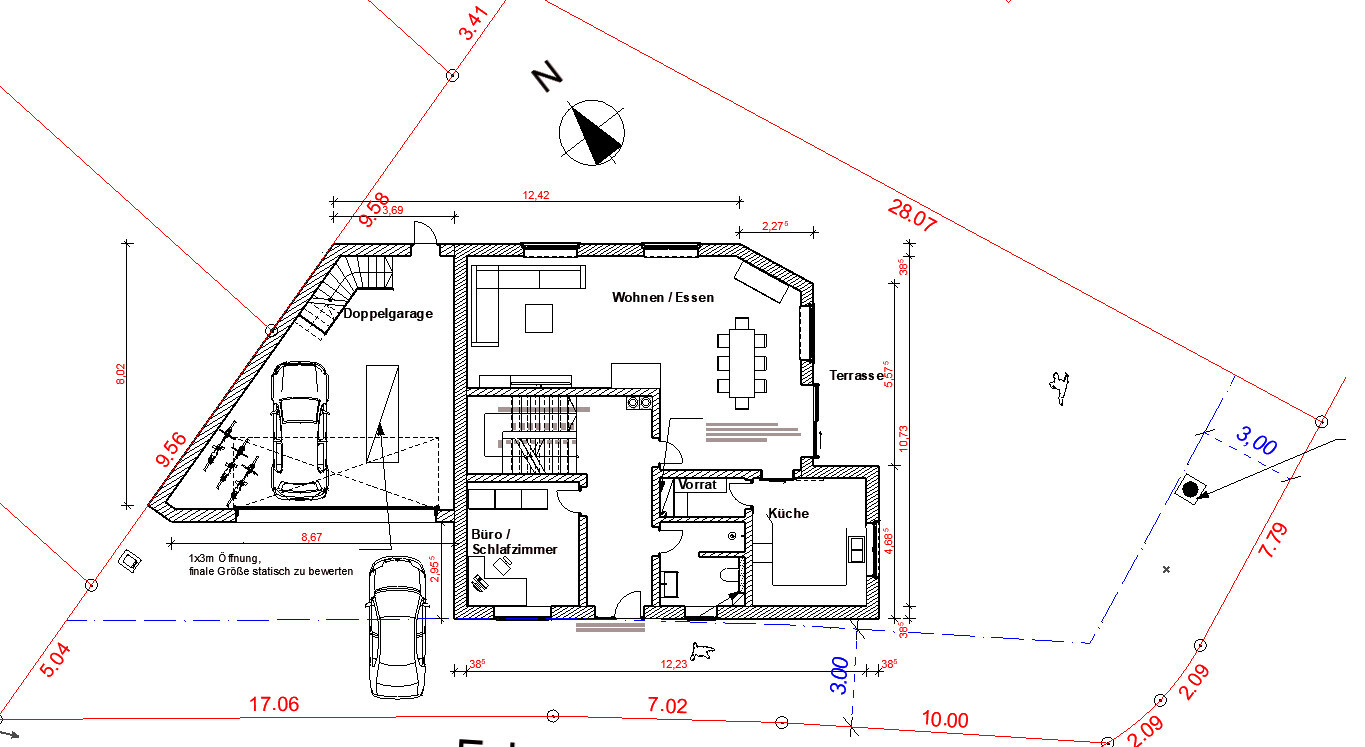
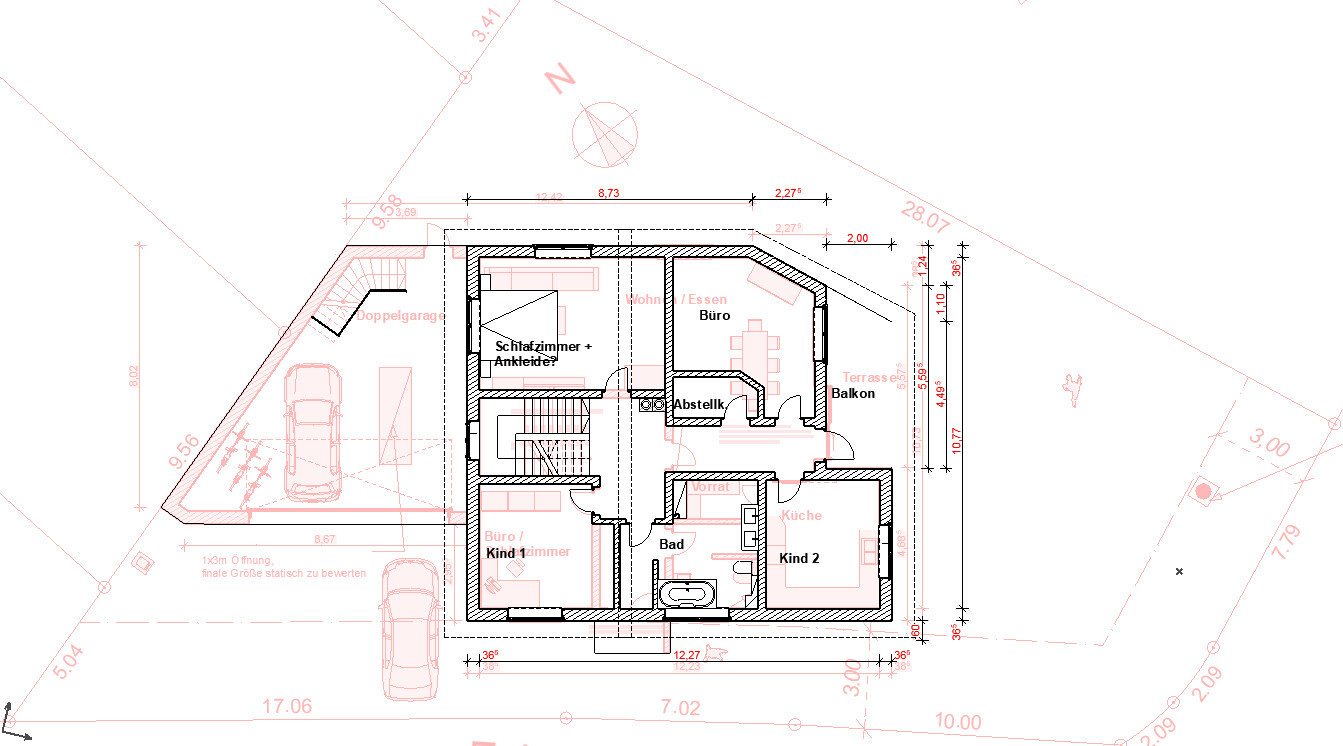
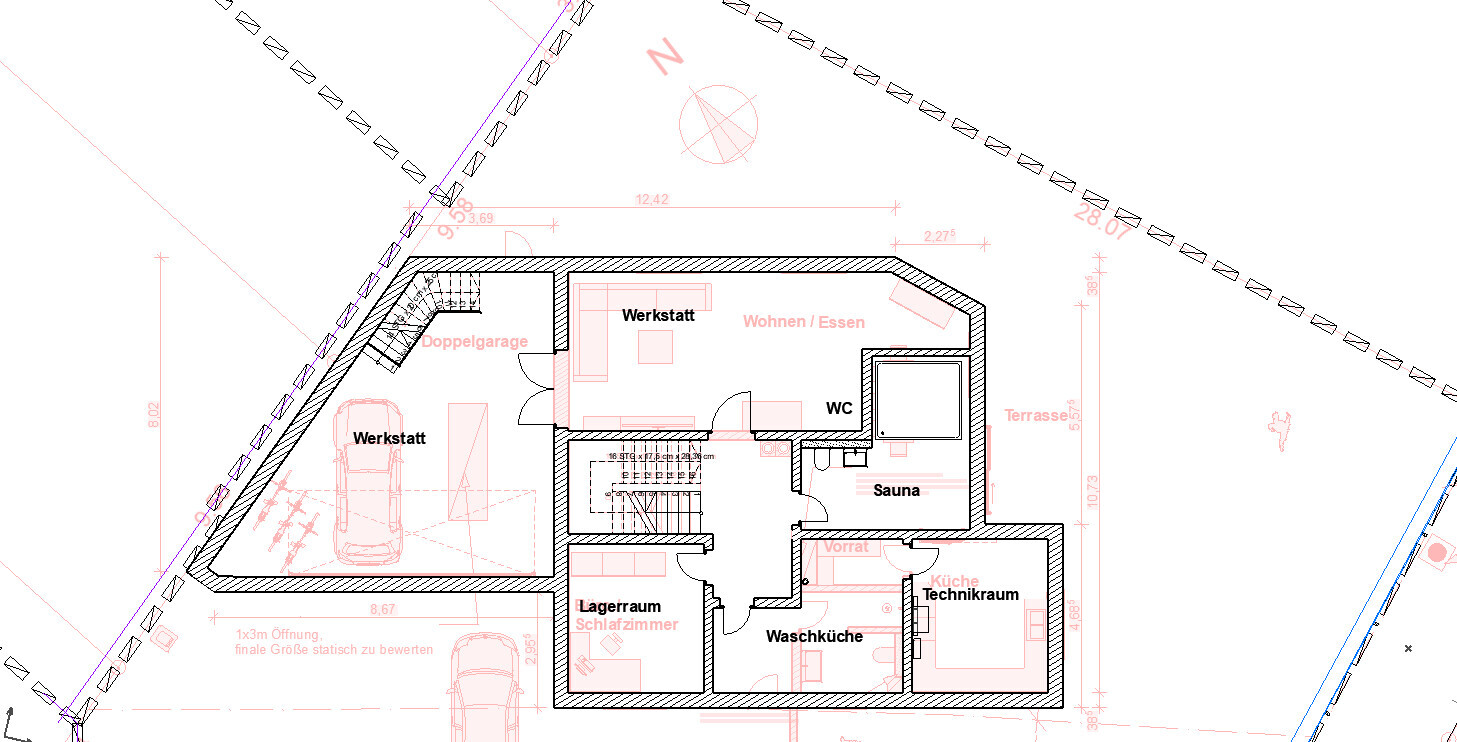
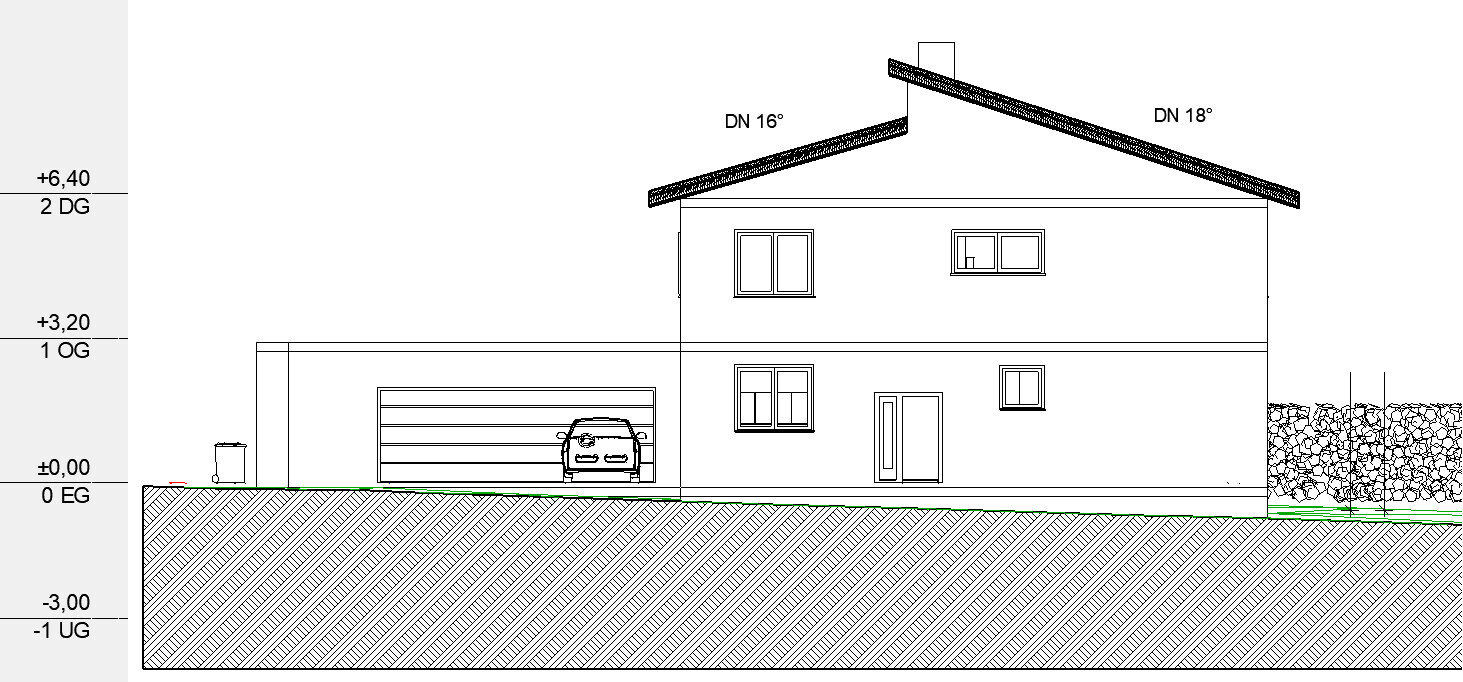
so far we have only been silent readers in this forum and have already gained some interesting ideas this way. We are currently in the planning phase of a single-family house with a basement and have tried to put our wishes into a floor plan. Maybe some of you would like to give feedback on our first drafts. Important: The design is not yet complete. For example, light wells are still missing, the bathroom on the upper floor is not yet fully planned, outdoor areas, etc. Therefore, some changes are still possible, and we would welcome constructive criticism.
Development Plan / Restrictions
- Size of the plot: 560m² (about 6,000 sq ft)
- Slope: slight, approx. 1m (3 ft) drop across the entire width of the plot
- Site occupancy index: 0.35
- Floor area ratio: 0.6
- Building envelope, building line and boundary: present
- Edge development: possible with garage
- Number of parking spaces: at least 2 required
- Number of floors: max. 2 full stories
- Roof type: no direct specification, except slope direction for shed roofs
- Architectural style: modern
- Orientation: no restrictions
- Maximum heights / limits: 7.5m (25 ft) eaves height, 10m (33 ft) ridge height
- Other requirements: should be considered, can be provided upon request/questions
Homeowners’ Requirements
- Architectural style, roof type, building type: staggered shed roof, preferably optimal orientation for photovoltaics or gabled roof
- Basement, floors: basement + 2 full stories
- Number of occupants, ages: 2 adults, 2 children (one toddler), possibly 3rd child
- Space requirements
- Ground floor, generally planned so two people can live comfortably on this level
- Hallway: as small as possible, as large as necessary. If no entrance area, space for shoes/coat storage etc. (cloakroom) must be provided
- Office: one of the parents works very often from home
- Large living room with separate kitchen and pantry
- Bathroom with shower and toilet
- Upper floor:
- Hallway: as small as possible, as large as necessary
- Office for home office in case both parents work from home
- Two children’s rooms
- Parents’ bedroom
- Larger (main) bathroom
- Small storage room for laundry, cleaning supplies, vacuum cleaner, etc.
- Office: family use or home office? Yes
- Guest stays per year: 5-8 overnight stays annually
- Open or closed layout: closed kitchen, open living-dining area, separate hallway
- Conservative or modern construction: modern
- Number of dining seats: at least 4, up to 12 for larger celebrations such as New Year’s Eve or Christmas
- Fireplace: yes
- Music/surround sound wall: surround system would be good and partially available
- Balcony, roof terrace: yes
- Garage, carport: yes, double garage
- Utility garden, greenhouse: no
House Design
- Designed by: architect in cooperation with us
What do we particularly like? Why?
- Laundry chute in both bathrooms
- Very wide and spacious staircase
- Wet rooms stacked above each other
- Nice large living room
- Kitchen with direct pantry and garden view
- Basement prepared for a possible sauna
- Large workshop
- Balcony on the upper floor
- Underground garage
What do we not like? Why?
- Garden is too small, but this is largely due to the plot, the required number of parking spaces, and building envelope restrictions and cannot really be changed
- Windows in the kitchen and second child’s room: windows facing the street were omitted for better furniture arrangement inside. Also, the view of the neighboring house is not to our liking. Unfortunately, the downside is that the exterior appearance of the house suffers from this. What do you think?
- We originally wanted direct access from the garage into the house on the ground floor. This could not be properly realized due to space constraints (staircase too small). That is why the staircase in the garage leads to the basement.

JKHandler schrieb:
A comparison sketch is now attached; the black line indicates the ridge (or gable strip in #1). You will also find the other corresponding ground floor plan attached. There is no gable there; you probably mean the stepped edge of the ridge offset.
JKHandler schrieb:
The layout was planned as follows:
- Basement: Workshop, storage, utility room, technical room
- Ground floor: Guest room/office, bathroom (shower and toilet), pantry, kitchen, dining and living room
- Upper floor: Child 1, Child 2, parents, bathroom
How does this relate to the previously quoted paragraph?
JKHandler schrieb:
What we are still missing is the puzzle piece for the transition in the form and orientation of the house on the plot. A few thoughts, detached from any drafts: The main garden would naturally be on the right side of the plot (south side), so the children's rooms would be arranged facing southeast, with the bathroom and parents’ bedroom then oriented according to the wet rooms' layout? On the ground floor, the kitchen ideally has access to the garden and short distances from the entrance. This would roughly correspond to a mirror image of the open-plan area from the current draft, then rotated 90° in the UZS—although an L-shaped layout for living room, kitchen, and dining area would also be possible, similar to the first draft. The building’s shape and its positioning on the plot are not a "missing puzzle piece" but fundamental prerequisites. Floor plans can be mirrored, but as described, rotating them would cause the sun to rise in the old plan’s northern direction. Unfortunately, due to the earth’s axial tilt, this does not result in a simple linear shift of the sun’s path by six hours.
JKHandler schrieb:
Our current understanding, at least for the draft in #29 (image 1), is: The heating valve (HKV) for the underfloor heating and baseboard heating (BKA) is placed on each floor in the niche of the 24cm (10 inch) wall facing the corridor. The naive idea of deliberately building a thick wall just to weaken it for a heating valve niche is amusing (but unfortunately just that). This also applies to the continuation:
JKHandler schrieb:
The idea behind this was: When implementing controlled residential ventilation, preliminary calculations show it is more cost-effective to build one masonry unit higher (including everything that follows) than to install 75mm (3 inch) ventilation ducts in the element ceiling with increased steel and concrete requirements and other technical execution. [ / ] There is also space for a decentralized ventilation unit if a central one is not planned. From there, the underfloor heating can be conveniently connected and laid for all rooms. If you now install at least two 160mm (6.3 inch) spiral ducts for controlled ventilation, about four well-insulated 40mm (1.6 inch) risers for baseboard and underfloor heating, plus a waste pipe, water, electrical, network, and similar systems, the shaft quickly fills up. .
JKHandler schrieb:
Suggestions and criticism are welcome. But they can only do so much to fix a confused design.
1. Take a sharp axe and sever the rigid connection between the house and garage;
2. a. Replace the reluctant planner with a competent one;
2. b. Stop leading the planner with half-knowledge and “genius” tricks.
https://www.instagram.com/11antgmxde/
https://www.linkedin.com/company/bauen-jetzt/
JKHandler schrieb:
The black line indicates the ridge (or the gable strip in #1). Oops! I agree the ridge direction makes sense, but please explain the load-bearing wall and the bay windows. These will be two stories high and therefore look quite unusual with the roof orientation. Biolek calls it "interesting," which doesn’t necessarily mean successful.
JKHandler schrieb:
decentralized ventilation unit What is that?
JKHandler schrieb:
At least in the design from #29 (image 1): The central heating valve (HKV) for the low-temperature heating circuit and underfloor heating is placed on each floor in the niche of the 24cm (9.5 inch) wall facing the hallway. There is also space for a decentralized ventilation unit if a central one is not planned. From here, the underfloor heating ducts can be easily routed and accessed for all rooms. If you run two spiral ducts of at least 160mm (6.3 inches) for controlled residential ventilation, about four well-insulated 40mm (1.6 inch) riser pipes for heating and underfloor circuits, one soil stack, water, electrical, network, and other services, the duct quickly becomes full. However, the shaft here is quite large relative to the house, although its size strongly depends on the technical equipment. JKHandler schrieb:
The idea behind this was: When implementing controlled residential ventilation, preliminary calculations suggest it’s more cost-effective to build one brick higher (including the follow-up work) than to run 75mm (3 inch) ventilation pipes within the prefabricated ceiling elements, which would require increased reinforcement with steel and concrete and other technical implementations. I would put the technical planning aside for now. You are not designing a mansion with west and east wings where you have to ensure that necessary rooms are heated by decentralized units. First, focus on the floor plan, then on the technology. Otherwise, you’ll get tangled up.
JKHandler schrieb:
Based on these thoughts @everyone (please feel free to correct me if anything is completely off): What arrangement options (shape and orientation; also considering the possibility of removing the pantry) arise when taking room and space requirements into account? Or can the current design be adapted to meet those requirements? Again: your room program is standard, and the house is standard apart from the roof orientation combined with the bay windows.
JKHandler schrieb:
We had the same criticism. It’s better to have more space for the children and slightly bigger master bedroom with enough room for wardrobe storage. A bay window basically defines the walls because otherwise you’d end up with too many corners in the room.
JKHandler schrieb:
Besides food storage, the intention was also to store regularly used kitchen appliances in the pantry (we have quite a few). I bet those many kitchen appliances could fit into one tall cabinet, possibly two.
JKHandler schrieb:
The conclusion is: The floor plan is not really suitable for the plot. By the way, it already existed on April 26 in #23 — very creative architect.
JKHandler schrieb:
Comparison of #17 vs. #29 or #29 vs. #1? I’m not even looking at that because of the view from the open-plan living area towards the neighboring property line.
JKHandler schrieb:
Perhaps it would be an option to jointly develop a rough draft that we can present to the architect as a "reference"? You’re funny. It can be done, but keep in mind: he gets paid, we don’t.
JKHandler schrieb:
A few thoughts, independent of all designs: The main garden area would, of course, be the right side of the plot (south side), so the layout would be This is my top priority: stand on the plot, spend time there, get familiar with every corner, and identify where you want to sit, where you want to look, and where not. Then harmonize those ideas with the shade patterns, resulting in a sketch showing the best spot for terrace or garage.
By considering from which direction you want to access the terrace daily, what you like and love, and which location you want for the children or yourself, a floor emerges. Whether the pantry fits in or not then follows from the more important rooms. If the pantry fits, the kitchen can be smaller; if not, you plan for two tall cabinets instead.
J
JKHandler30 Aug 2024 17:07ypg schrieb:
What is that?UV = subdistribution panel. Decentralized -> not as a “single unit” in the technical room, but for example one for each floor.
ypg schrieb:
I would leave the technical planning aside for now. You’re not designing a mansion with west and east wings where you have to consider heating smaller rooms with decentralized heating units.
The floor plan comes first, then the technical details. Otherwise, you’ll get confused.
Again: your room program is standard, and the house is standard except for the roof orientation combined with the bay windows.
A bay window basically defines the walls because otherwise you’d have too many corners in the room.
I bet many kitchen appliances fit into one tall cabinet, maybe even two.
This idea is my top priority: standing on the property, spending time there, getting to know every corner, marking where you’d like to sit, what view you want and what you don’t. Then harmonize these thoughts with the sun’s shadows and you get a sketch showing the best locations for the terrace or garage.
By considering from where you want to access the terrace daily, what you like and love, what location you want for the kids or yourself, a floor plan grows. And whether there’s room for a pantry or not results from the more important rooms. If there is room for a pantry, the kitchen can be a bit smaller; if not, you plan for two tall cabinets instead.Thanks for the explanation! We tried to pick up the ideas shared here in the forum. We focused on how we want to use the rooms, what views we have from the windows, and the walking paths. After visiting the property again, we printed the plot plan on A3 paper and sketched initial drafts on transparent foil. Strangely, as laypersons, we managed best with a platform staircase, even though you often read that these take up a lot of space. We couldn’t fit a double garage combined with a simple building shape, so we reduced it to a single garage with a carport. If anyone has a better idea, feel free to share! After a lot of back and forth, a colleague converted our hand sketches into CAD drawings so it’s easier to discuss here (no architect created these!).
In short: Attached are two versions with the same floor plan, only mirrored. We would appreciate any constructive criticism!
JKHandler schrieb:
therefore the reduction to a single garage with carport.Can the two required parking spaces be used independently of each other? If this is not the case, the enclosed parking space is often not recognized.J
JKHandler30 Aug 2024 17:27hanse987 schrieb:
Are the two required parking spaces usable independently? If not, the enclosed parking space is often not accepted.The garage can only accommodate one vehicle, while the carport can theoretically fit two vehicles side by side (5.3m (17.4 feet) at the rear, 5.7m (18.7 feet) at the front). If the house is slightly rotated, the parking width at the back increases to 5.7m (18.7 feet) and at the front to 6.4m (21 feet). This way, the parking spaces can be used independently of each other.
J
JKHandler3 Sep 2024 15:28We are currently considering how to proceed with the architect, so any feedback here would be helpful.
@ypg, @hanghaus2023, @11ant Your suggestions have been very helpful. Maybe you could take another look at the sketches above (#45) to see if we are on the right track?
@ypg, @hanghaus2023, @11ant Your suggestions have been very helpful. Maybe you could take another look at the sketches above (#45) to see if we are on the right track?
Similar topics