
ᐅ Floor Plan Design: Single-Family Home with Basement; 560 sqm Plot
Created on: 10 Mar 2024 13:26
J
JKHandler
Hello everyone,
so far we have only been silent readers in this forum and have already gained some interesting ideas this way. We are currently in the planning phase of a single-family house with a basement and have tried to put our wishes into a floor plan. Maybe some of you would like to give feedback on our first drafts. Important: The design is not yet complete. For example, light wells are still missing, the bathroom on the upper floor is not yet fully planned, outdoor areas, etc. Therefore, some changes are still possible, and we would welcome constructive criticism.
Development Plan / Restrictions
Homeowners’ Requirements
House Design
What do we particularly like? Why?
What do we not like? Why?
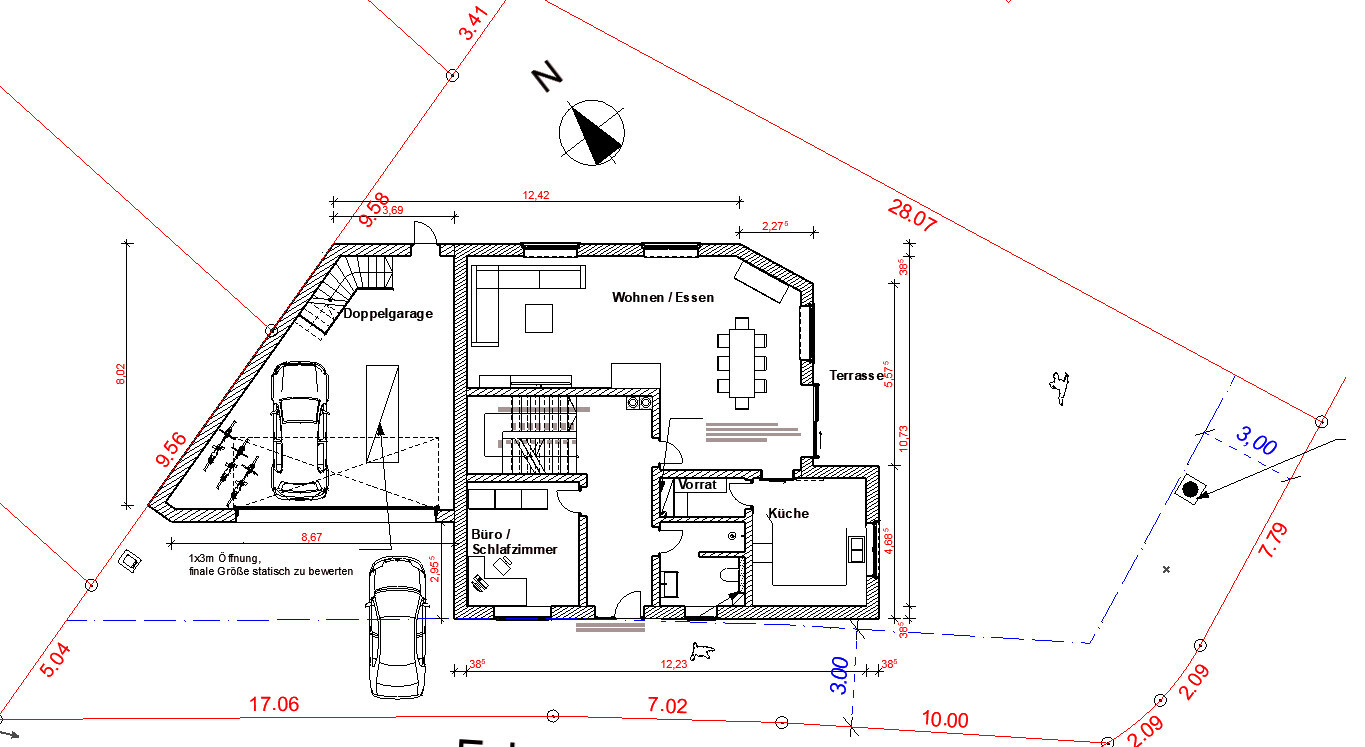
so far we have only been silent readers in this forum and have already gained some interesting ideas this way. We are currently in the planning phase of a single-family house with a basement and have tried to put our wishes into a floor plan. Maybe some of you would like to give feedback on our first drafts. Important: The design is not yet complete. For example, light wells are still missing, the bathroom on the upper floor is not yet fully planned, outdoor areas, etc. Therefore, some changes are still possible, and we would welcome constructive criticism.
Development Plan / Restrictions
- Size of the plot: 560m² (about 6,000 sq ft)
- Slope: slight, approx. 1m (3 ft) drop across the entire width of the plot
- Site occupancy index: 0.35
- Floor area ratio: 0.6
- Building envelope, building line and boundary: present
- Edge development: possible with garage
- Number of parking spaces: at least 2 required
- Number of floors: max. 2 full stories
- Roof type: no direct specification, except slope direction for shed roofs
- Architectural style: modern
- Orientation: no restrictions
- Maximum heights / limits: 7.5m (25 ft) eaves height, 10m (33 ft) ridge height
- Other requirements: should be considered, can be provided upon request/questions
Homeowners’ Requirements
- Architectural style, roof type, building type: staggered shed roof, preferably optimal orientation for photovoltaics or gabled roof
- Basement, floors: basement + 2 full stories
- Number of occupants, ages: 2 adults, 2 children (one toddler), possibly 3rd child
- Space requirements
- Ground floor, generally planned so two people can live comfortably on this level
- Hallway: as small as possible, as large as necessary. If no entrance area, space for shoes/coat storage etc. (cloakroom) must be provided
- Office: one of the parents works very often from home
- Large living room with separate kitchen and pantry
- Bathroom with shower and toilet
- Upper floor:
- Hallway: as small as possible, as large as necessary
- Office for home office in case both parents work from home
- Two children’s rooms
- Parents’ bedroom
- Larger (main) bathroom
- Small storage room for laundry, cleaning supplies, vacuum cleaner, etc.
- Office: family use or home office? Yes
- Guest stays per year: 5-8 overnight stays annually
- Open or closed layout: closed kitchen, open living-dining area, separate hallway
- Conservative or modern construction: modern
- Number of dining seats: at least 4, up to 12 for larger celebrations such as New Year’s Eve or Christmas
- Fireplace: yes
- Music/surround sound wall: surround system would be good and partially available
- Balcony, roof terrace: yes
- Garage, carport: yes, double garage
- Utility garden, greenhouse: no
House Design
- Designed by: architect in cooperation with us
What do we particularly like? Why?
- Laundry chute in both bathrooms
- Very wide and spacious staircase
- Wet rooms stacked above each other
- Nice large living room
- Kitchen with direct pantry and garden view
- Basement prepared for a possible sauna
- Large workshop
- Balcony on the upper floor
- Underground garage
What do we not like? Why?
- Garden is too small, but this is largely due to the plot, the required number of parking spaces, and building envelope restrictions and cannot really be changed
- Windows in the kitchen and second child’s room: windows facing the street were omitted for better furniture arrangement inside. Also, the view of the neighboring house is not to our liking. Unfortunately, the downside is that the exterior appearance of the house suffers from this. What do you think?
- We originally wanted direct access from the garage into the house on the ground floor. This could not be properly realized due to space constraints (staircase too small). That is why the staircase in the garage leads to the basement.
H
hanghaus202326 Apr 2024 15:34I am still at #17. Your house hasn’t changed in complexity or size.
JKHandler schrieb:
Usually, the difference between a company's offer and the material cost is at least a factor of 2,and there are good reasons for that. Labor time and, not to forget, equipment have justified costs that naturally appear on an invoice. Every contractor has to proportionally include their investments and wages in their invoices; otherwise, they would never be able to cover the costs of tools or skilled workers.JKHandler schrieb:
Without going into all the details: if you roughly calculate everything, you end up with a manageable budget,I don’t see it that way. Of course, doing some work yourself eases the financial burden, but you won’t get from a rough estimate of €830,000 (200 m² (2,150 ft²) living space x €3,000 + 100 m² (1,080 ft²) basement x €1,500 + €50,000 additional construction costs + €30,000 garage) down to €500,000.
JKHandler schrieb:
so that for the respective trades only material costs are incurred, plus of course your own time ;-)That’s not correct: as a rule of thumb, you can add one-third to the material costs for tools and small supplies. (At least, that turned out true for us.) And even if you want to take two years, you haven’t accounted for the toll this will take on your mental and physical health after a while. I assume you are still working? And plan to work 8 hours a day? Apart from the commuting to the construction site and hardware stores to get tools or small materials, you realistically have only about 20 to 25 hours per week left to "charge" yourself at $20 per hour. As a non-professional, you will need about twice the time a trained craftsman requires. Your friend helping out might sacrifice some personal time for you for, say, two weeks, but definitely not for a year—and not without pay.To put it clearly: you are valuing your time at $20 per hour. At 25 hours a week, that’s $500, so $2,000 per month. In about 10 months, that adds up to $20,000. For €200,000, that would take you 100 months.
For painting, flooring, and similar tasks, including some smaller jobs, you will likely use up roughly your annual vacation. And then there is your employer, who might tolerate some temporary distraction, but not for a full year where you focus more on your construction site and watching DIY videos than on recovering and recharging on weekends or holidays.
Regarding rough estimates and self-performed work: the bank wants to see realistic numbers and self-work that is feasible within a reasonable timeframe. They are less likely to finance a long-term construction project than a "turnkey" house, where your DIY skills are limited to painting and landscaping.
JKHandler schrieb:
In my cost calculation, such items occur mainly with house connections, excavation, compaction, windows, roof truss, stair coverings, and roof covering. The rest is done by myself or together with friends,I find that somewhat "uncoordinated": excavation could actually be done yourself, stairs finish as well, and roof covering shouldn’t be complicated either.
Regarding the floor plans: no argument for just one floor. That usually doesn’t work. Basically, all plans could reduce living space a bit, whether the house is built in a turnkey manner or by a professional. If you only have €500,000 available, you don’t reach for the stars. That’s my opinion.
JKHandler schrieb:
Well, as I see it, the budget needs to be cut. So a simple rectangular house shape would be the most suitable, without any extras. On the upper floor, we would remove the office; on the ground floor, reduce the living and dining areas; in the basement, eliminate the optional sauna. The balcony would probably be omitted as well. I would rather keep the garage, but maybe reduce the basement area under it and increase the budget a bit for that... That would probably get things a good deal further along, right? Who put the idea of doing parts yourself into your head? Was it an acquaintance? And they would then basically support a long-term construction site free of charge and naively?
JKHandler schrieb:
The rest will be done as own work or together with friends, so for the relevant trades only the material costs will apply. ...because often some things leave me speechless...
can be read on Dr. Klein’s website, source July 2023:
Schorsch_baut schrieb:
I like all the floor plan options very much. V1 and V2: the route to the kitchen is very long. The roof orientation does not help in winter.
J
JKHandler11 Aug 2024 17:19Hello everyone,
after a longer period of consideration and research, we are getting back to you with the following changes:
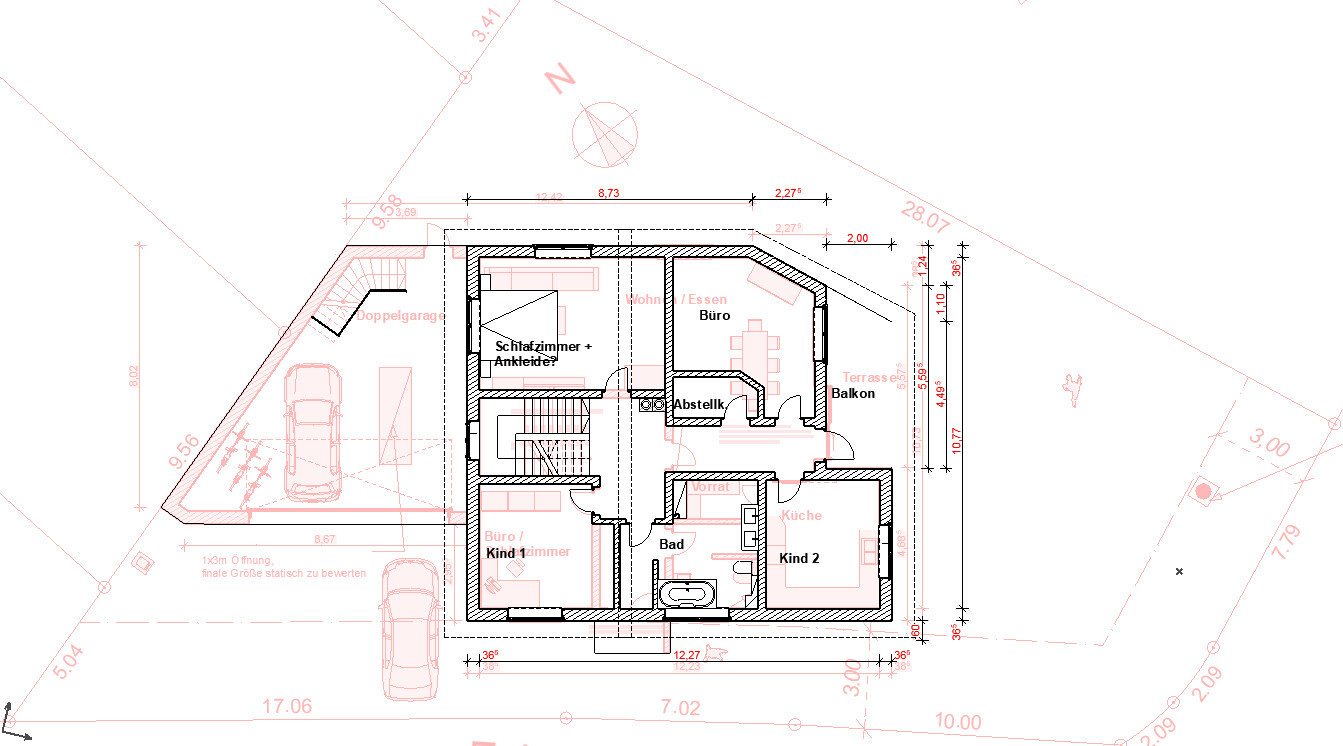
Our architect has created the following preliminary drafts. These serve as an initial reference (the upper floor has two versions, for example, due to different technical shafts).
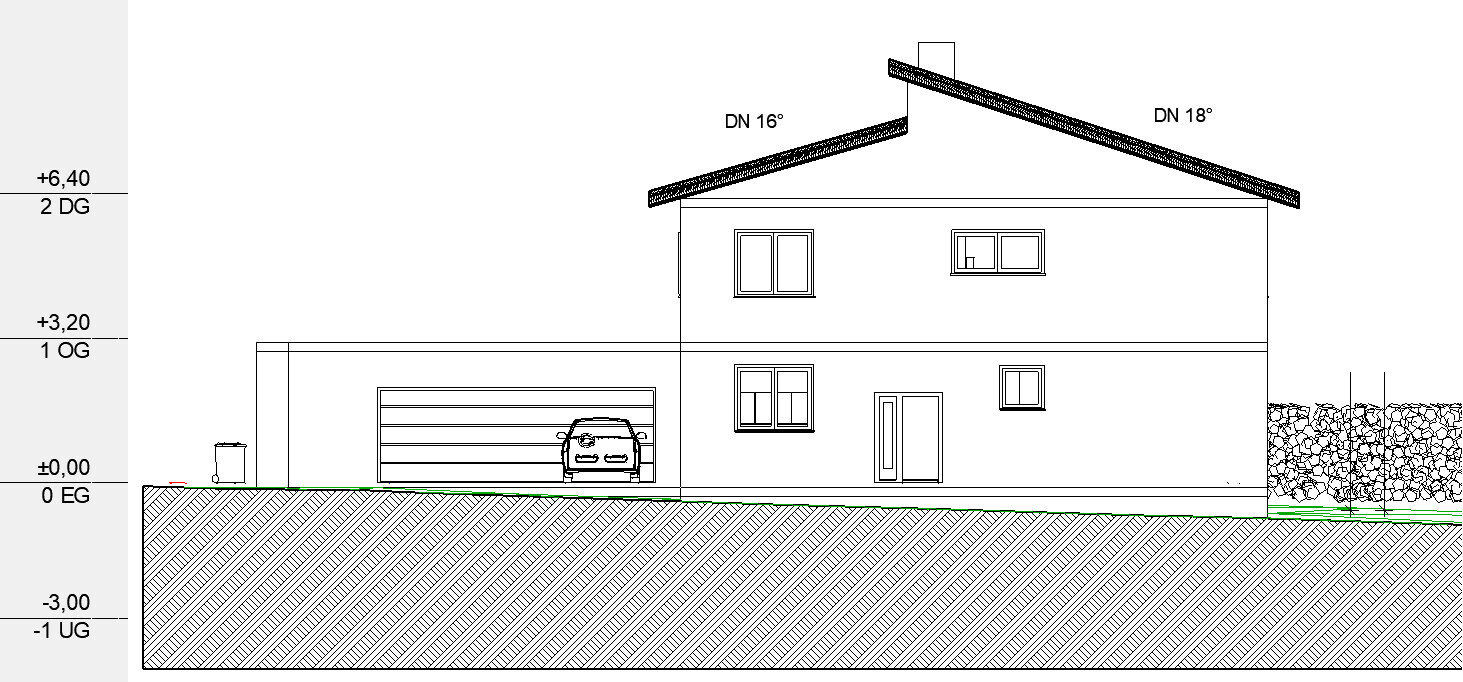
After consulting with the chimney sweep, the positioning of the chimney (chimney with separate air duct) is difficult to implement as planned (according to structural engineering and the Federal Immission Control Act, BImSchV) and is also counterproductive for solar systems. Instead, the chimney must be moved to the ridge as shown in the floor plan (i.e., chimney without separate duct, recommended by the chimney sweep). As a result, the chimney will stand in the middle of the hallway on the upper floor. In general, the chimney position is strongly defined by the ridge orientation and BImSchV regulations.
The question we now have is: Can and should we continue working with the current floor plan, or is it necessary to go back to the starting point due to the chimney situation? Perhaps you have ideas or suggestions.
For completeness, here are our initial "concerns" about the floor plan:
Thank you and best regards
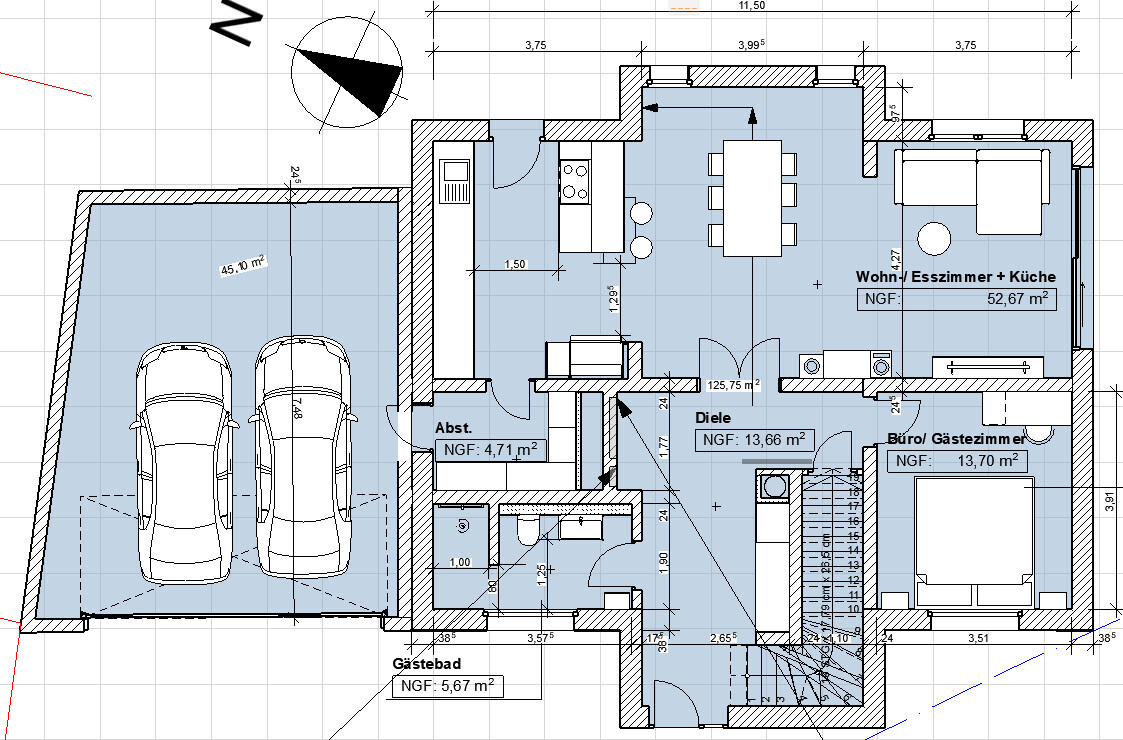
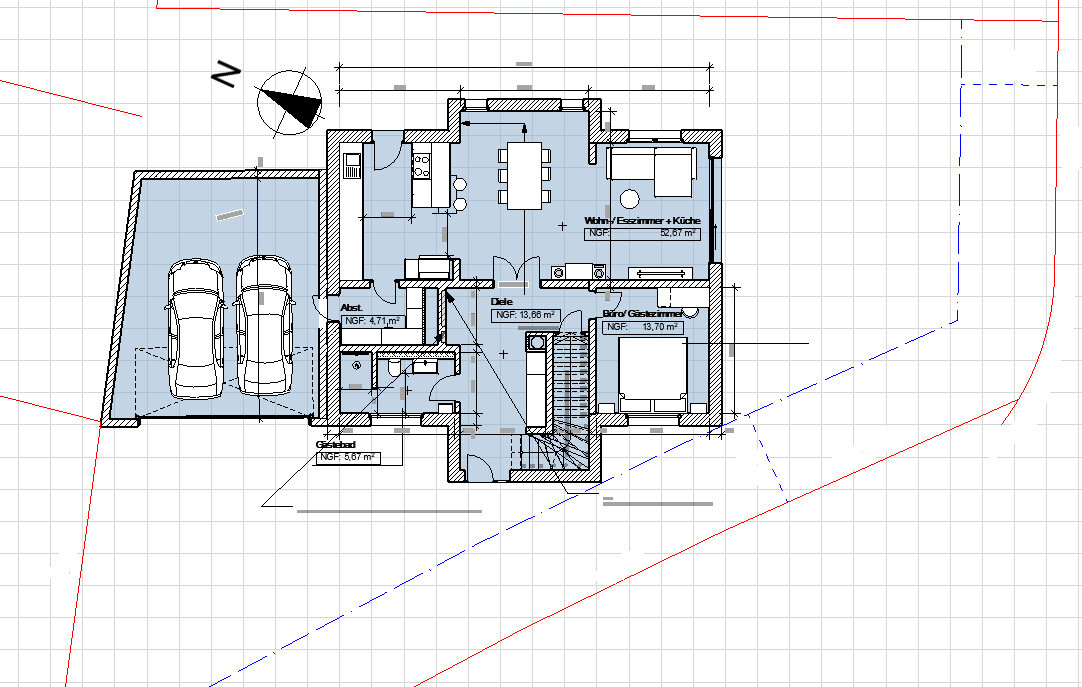
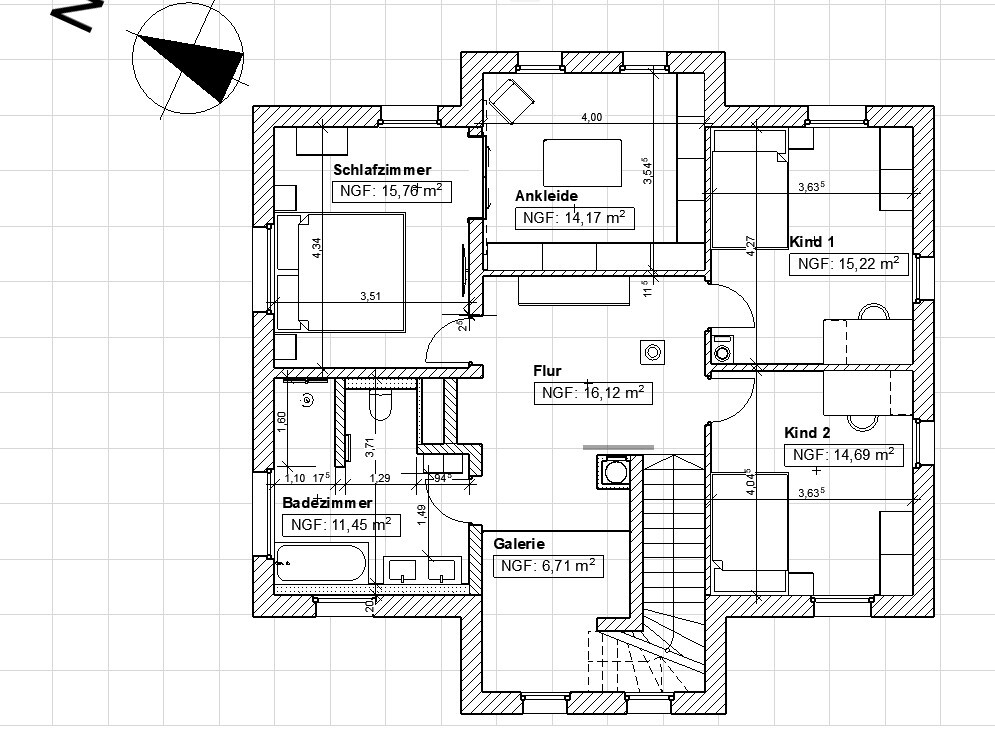
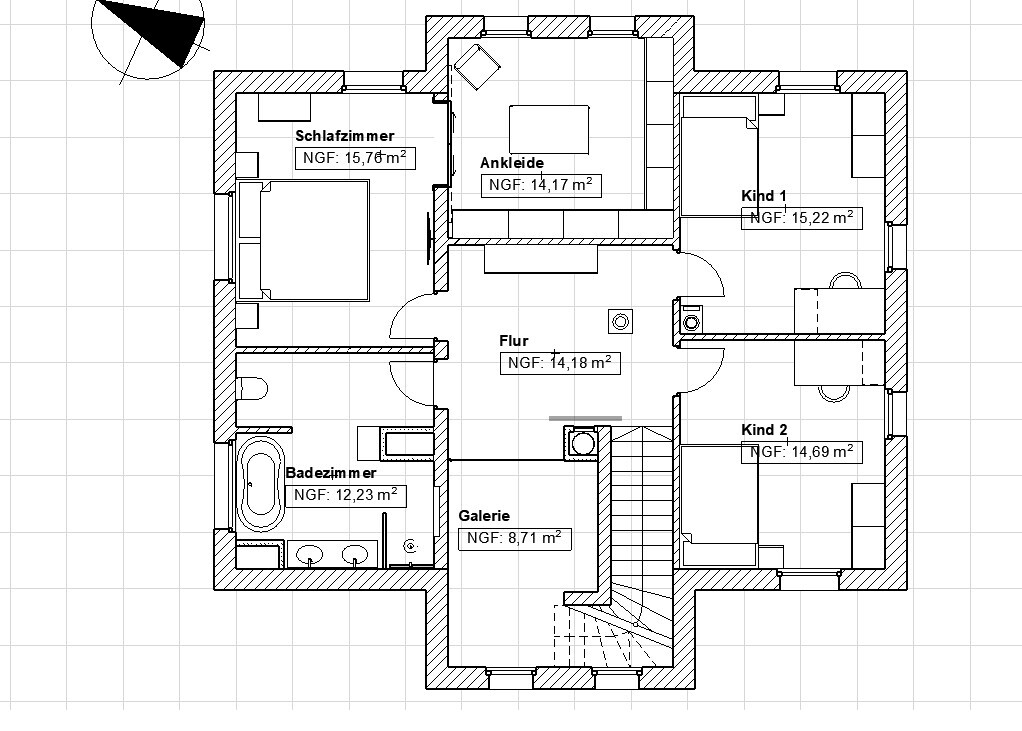
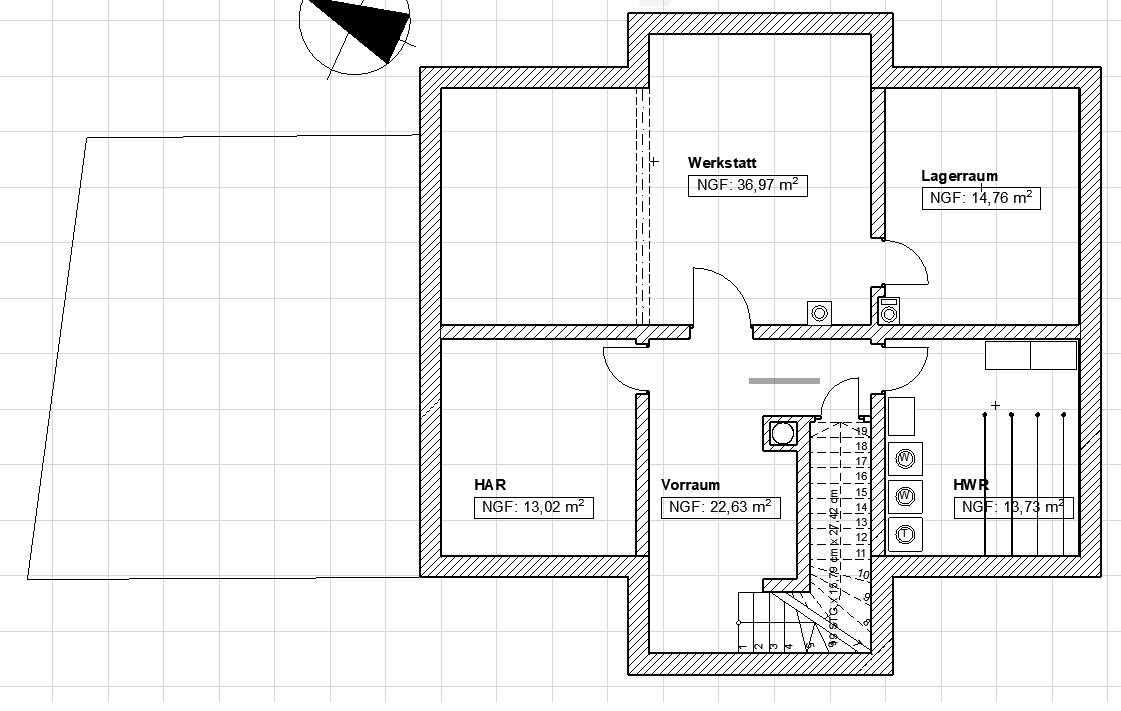
after a longer period of consideration and research, we are getting back to you with the following changes:
- Budget increased by about 35%
- Adjusted space requirements:
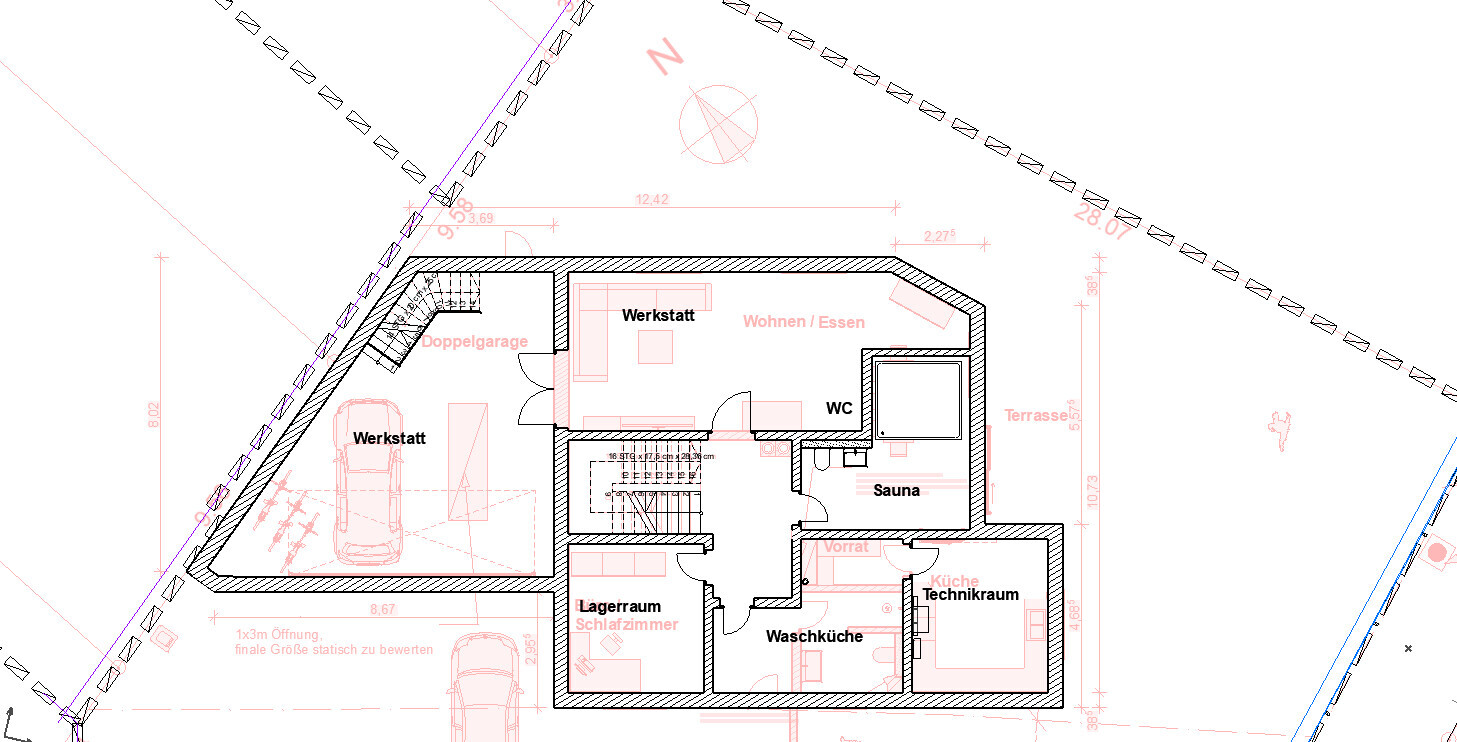
- Basement: workshop, storage, utility room, technical room
- Ground floor: guest room/office, bathroom, pantry, kitchen, dining and living room
- Upper floor: Child 1, Child 2, master bedroom, bathroom
- No basement under the garage anymore
Our architect has created the following preliminary drafts. These serve as an initial reference (the upper floor has two versions, for example, due to different technical shafts).
After consulting with the chimney sweep, the positioning of the chimney (chimney with separate air duct) is difficult to implement as planned (according to structural engineering and the Federal Immission Control Act, BImSchV) and is also counterproductive for solar systems. Instead, the chimney must be moved to the ridge as shown in the floor plan (i.e., chimney without separate duct, recommended by the chimney sweep). As a result, the chimney will stand in the middle of the hallway on the upper floor. In general, the chimney position is strongly defined by the ridge orientation and BImSchV regulations.
The question we now have is: Can and should we continue working with the current floor plan, or is it necessary to go back to the starting point due to the chimney situation? Perhaps you have ideas or suggestions.
For completeness, here are our initial "concerns" about the floor plan:
- Children’s rooms may be a bit too small
- Too much hallway space on the upper floor
- Master bedroom is too small for the large, already owned bed, while the walk-in closet is too big
Thank you and best regards
Similar topics