
Hello everyone,
after we secured our plot, we spoke to several construction companies. Some only offer the building volume and want to create the floor plan after signing the contract. That feels a bit like “buying a pig in a poke” to us.
One company approached things differently and, after a several-hour discussion, presented a concept that we would like to share and discuss with you here.
Here is first the questionnaire:
Development Plan / Restrictions
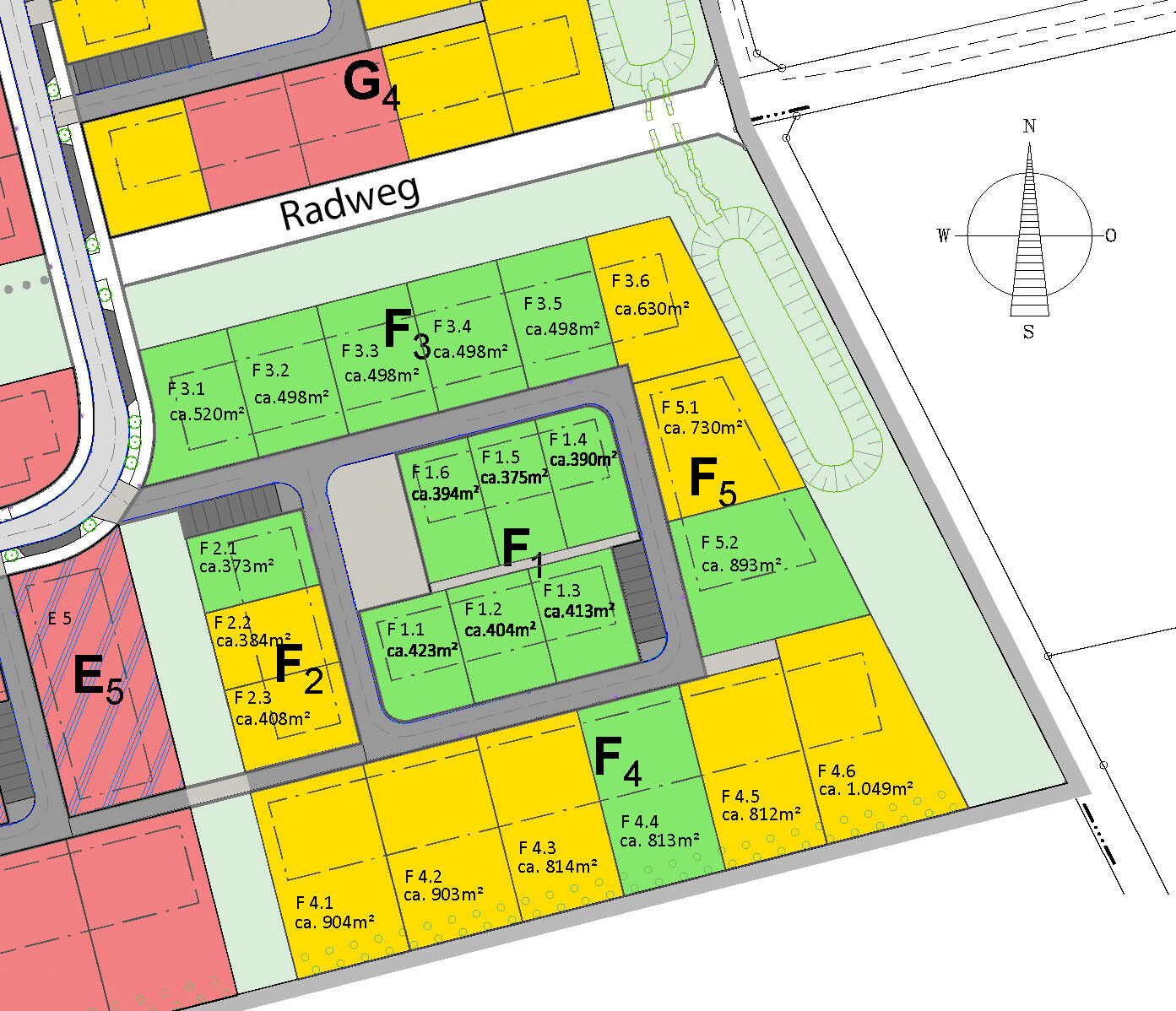
Plot: F 1.6
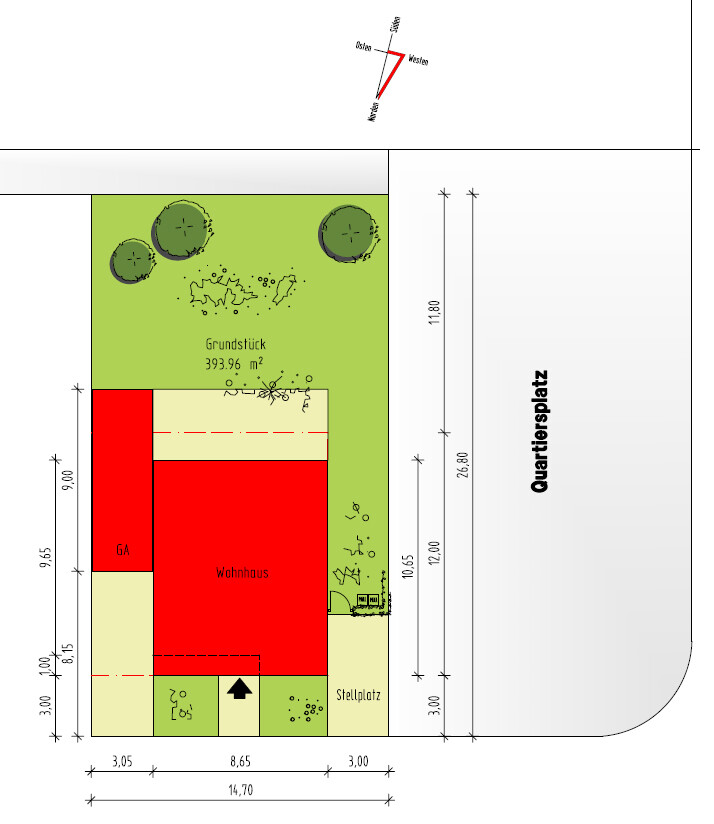
Plot size: 394 m² (14.7 x 26.8 meters), no slope
Building envelope: 8.7 x 12.0 meters (11.7 x 12.0 meters minus 3 meters (10 feet) setback towards the east)
Orientation: Southeast to south
Floor area ratio / site coverage ratio: 0.4 / 0.8
Number of parking spaces: 2
Number of floors: 2 full stories (additional stepped-back floor is allowed)
Roof type: flat roof
Energy standard: at least KFW 55
Energy sources: photovoltaic system and air-to-water heat pump or ground-to-water heat pump
Homeowners’ Requirements
The architectural style, roof shape, and building type are basically set by the development plan and are acceptable to us (otherwise, we would not have applied for the plot).
We (2 adults and 2 elementary school children) plan to build without a basement, with 2 full stories, and a 9-meter (30 feet) garage. Our planned energy source is a ground-to-water heat pump.
We need 1 bedroom, 2 children’s rooms, 1 office (for home office), kitchen, living and dining room, guest toilet (without shower), bathroom (with shower and bathtub), cloakroom as a built-in wardrobe, and of course a utility room. Additionally, storage space is required. We do not expect overnight guests.
We are aiming for a rather modern design with an open kitchen (with a peninsula) and an L-shaped living and dining area (6 dining seats, no fireplace).
Since we do not want a “traditional” entrance canopy, we would prefer a “modern” solution.
House Design
The design comes from a medium-sized general contractor in the region, with its own project draftsmen and an architect.
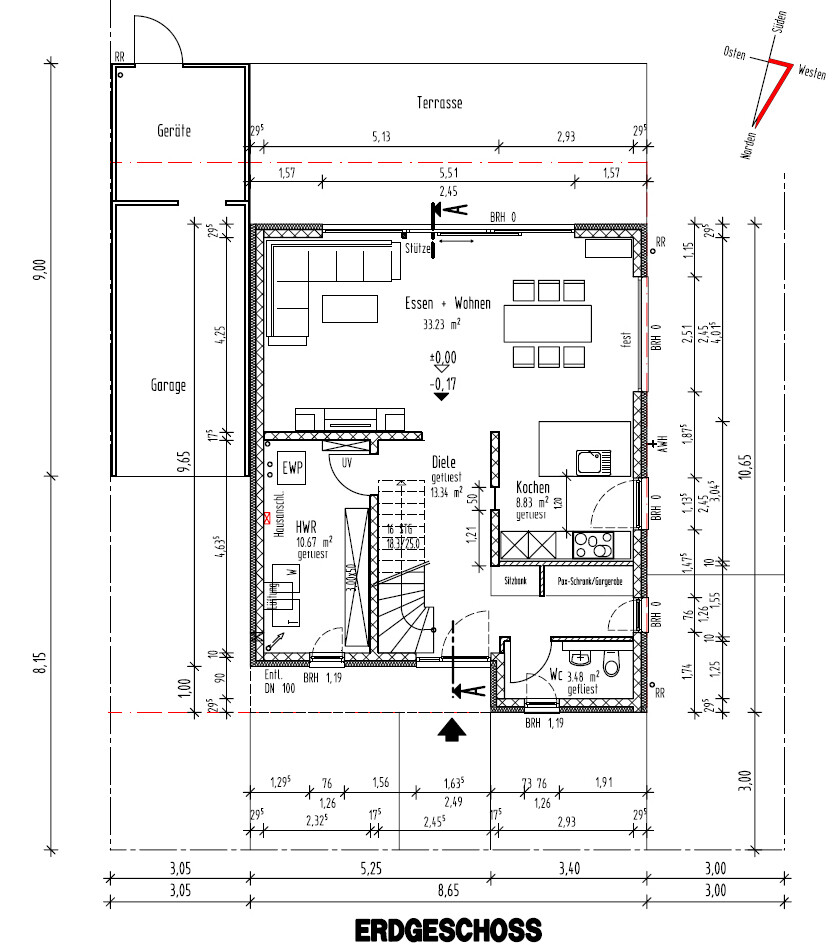
What we particularly like is that all our requirements have already been fully implemented in the first draft. Even extras like a bench and an interior light well, which we only mentioned in passing, have been included. In our view, the entrance canopy was also well realized, even if it costs a few square meters of living space.
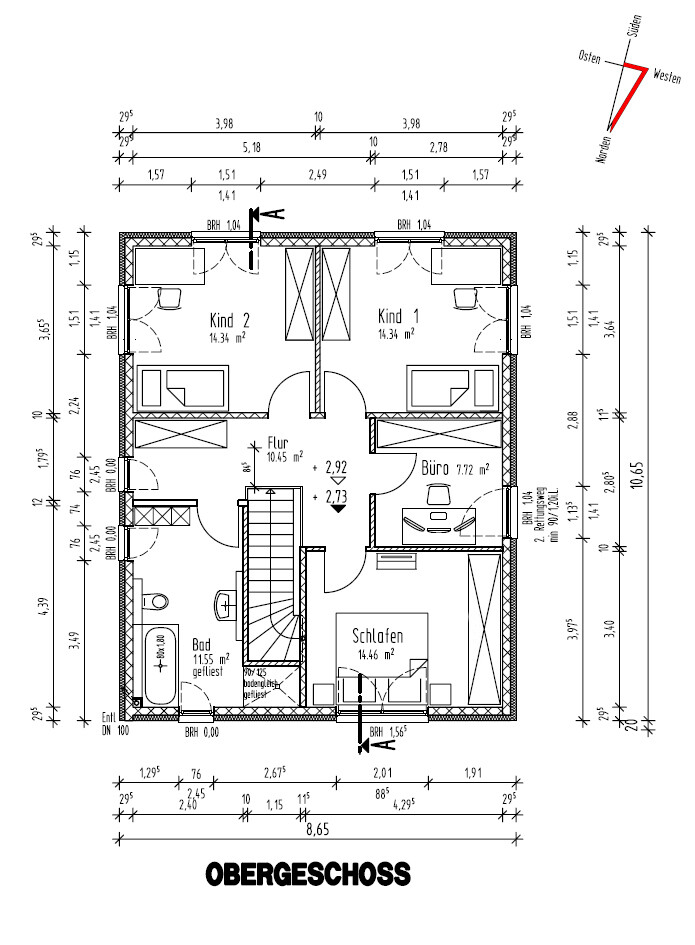
Especially the storage spaces (and the cloakroom) were very well implemented from our point of view. In the first draft, the bathroom was 2.5 m² (27 sqft) smaller, and there was a storage room in front of it. Instead of the fixed storage room, there is now space in the hallway to optionally place a (built-in) closet or remove it later when the children no longer live at home. This redesign also made it possible to add an additional window in the bathroom. Whether this is really necessary is still open.
The kitchen and living/dining area were efficiently designed despite the 42 m² (452 sqft) size.
The guest toilet might be a bit oversized, but worse things exist.
The office window might look better if centered in the room, but the window below it in the kitchen makes this more difficult.
The window in the bedroom behind/above the bed may not be perfect either. We have considered several options and concluded that this is the best solution.
With 16 windows, the house feels like it has quite a lot. We wouldn’t know which one to give up—except maybe the second window in the bathroom. We are also wondering whether the large window in the dining area really needs to be that big.
What is the most important/basic question about the floor plan in 130 characters?
Do you have any suggestions on what we could adjust in the floor plan? Any ideas about the windows (large one in dining, two floor-to-ceiling in bathroom, central in office, behind/above bed in bedroom)? Perhaps we can discuss the kitchen layout here or in a separate thread later.
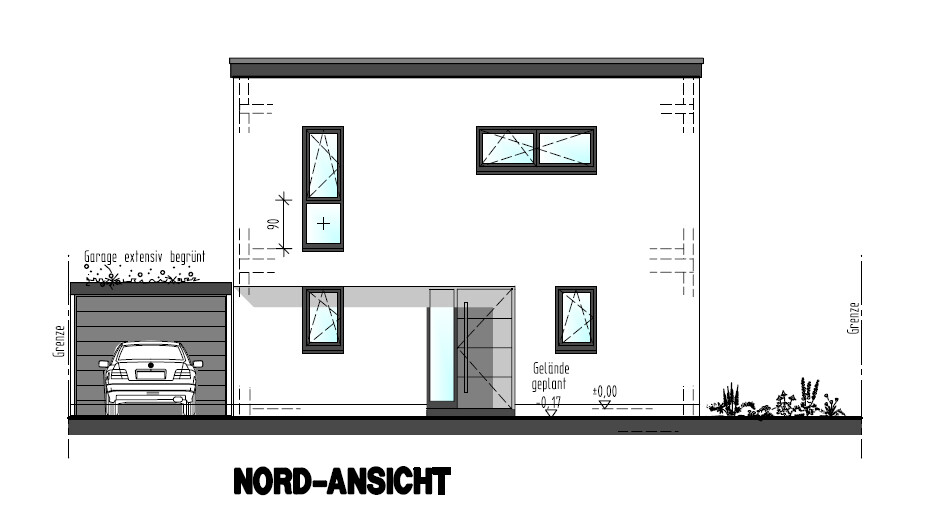
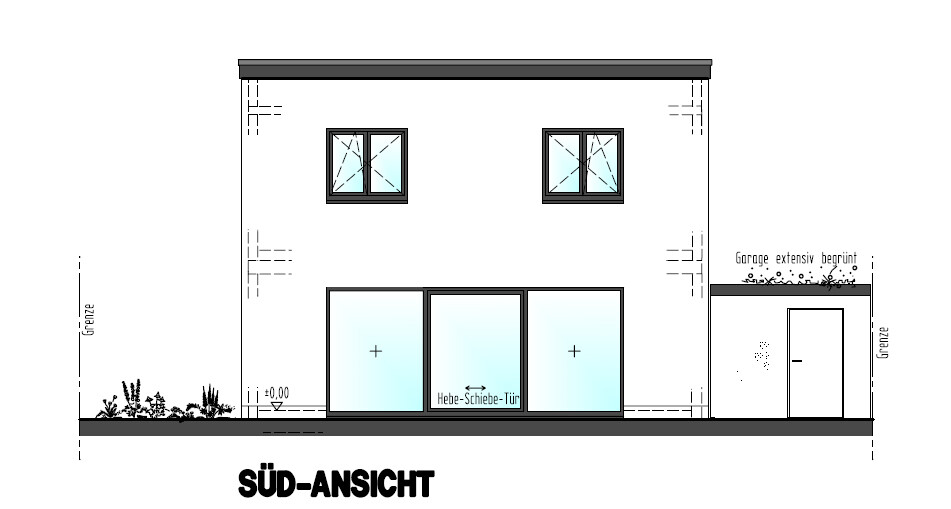
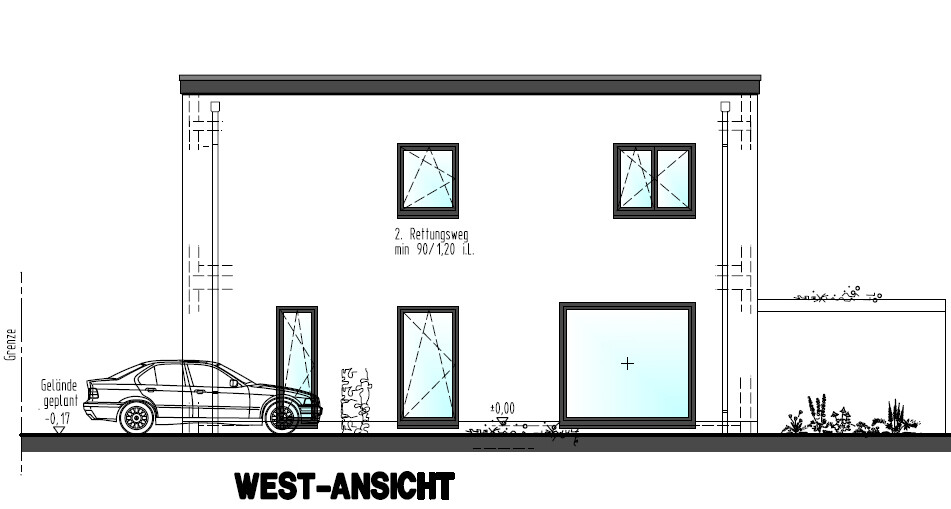
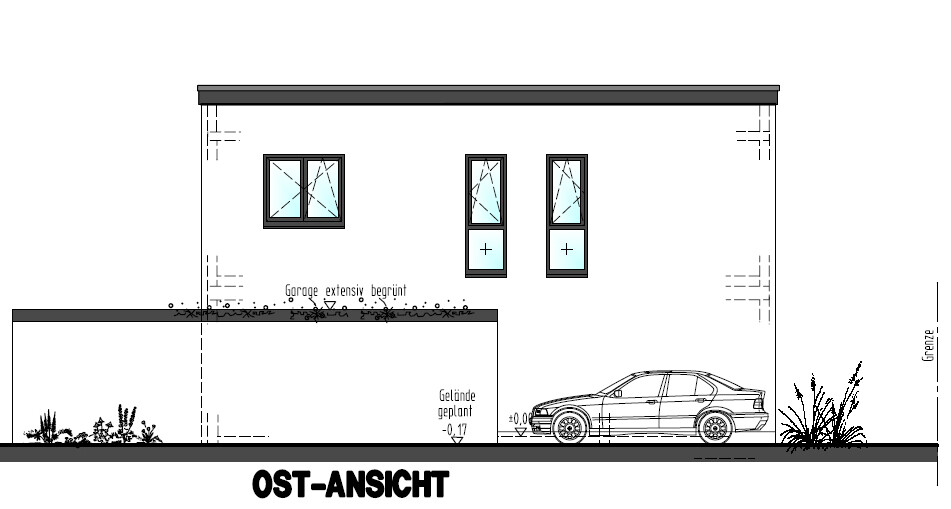
after we secured our plot, we spoke to several construction companies. Some only offer the building volume and want to create the floor plan after signing the contract. That feels a bit like “buying a pig in a poke” to us.
One company approached things differently and, after a several-hour discussion, presented a concept that we would like to share and discuss with you here.
Here is first the questionnaire:
Development Plan / Restrictions
Plot: F 1.6
Plot size: 394 m² (14.7 x 26.8 meters), no slope
Building envelope: 8.7 x 12.0 meters (11.7 x 12.0 meters minus 3 meters (10 feet) setback towards the east)
Orientation: Southeast to south
Floor area ratio / site coverage ratio: 0.4 / 0.8
Number of parking spaces: 2
Number of floors: 2 full stories (additional stepped-back floor is allowed)
Roof type: flat roof
Energy standard: at least KFW 55
Energy sources: photovoltaic system and air-to-water heat pump or ground-to-water heat pump
Homeowners’ Requirements
The architectural style, roof shape, and building type are basically set by the development plan and are acceptable to us (otherwise, we would not have applied for the plot).
We (2 adults and 2 elementary school children) plan to build without a basement, with 2 full stories, and a 9-meter (30 feet) garage. Our planned energy source is a ground-to-water heat pump.
We need 1 bedroom, 2 children’s rooms, 1 office (for home office), kitchen, living and dining room, guest toilet (without shower), bathroom (with shower and bathtub), cloakroom as a built-in wardrobe, and of course a utility room. Additionally, storage space is required. We do not expect overnight guests.
We are aiming for a rather modern design with an open kitchen (with a peninsula) and an L-shaped living and dining area (6 dining seats, no fireplace).
Since we do not want a “traditional” entrance canopy, we would prefer a “modern” solution.
House Design
The design comes from a medium-sized general contractor in the region, with its own project draftsmen and an architect.
What we particularly like is that all our requirements have already been fully implemented in the first draft. Even extras like a bench and an interior light well, which we only mentioned in passing, have been included. In our view, the entrance canopy was also well realized, even if it costs a few square meters of living space.
Especially the storage spaces (and the cloakroom) were very well implemented from our point of view. In the first draft, the bathroom was 2.5 m² (27 sqft) smaller, and there was a storage room in front of it. Instead of the fixed storage room, there is now space in the hallway to optionally place a (built-in) closet or remove it later when the children no longer live at home. This redesign also made it possible to add an additional window in the bathroom. Whether this is really necessary is still open.
The kitchen and living/dining area were efficiently designed despite the 42 m² (452 sqft) size.
The guest toilet might be a bit oversized, but worse things exist.
The office window might look better if centered in the room, but the window below it in the kitchen makes this more difficult.
The window in the bedroom behind/above the bed may not be perfect either. We have considered several options and concluded that this is the best solution.
With 16 windows, the house feels like it has quite a lot. We wouldn’t know which one to give up—except maybe the second window in the bathroom. We are also wondering whether the large window in the dining area really needs to be that big.
What is the most important/basic question about the floor plan in 130 characters?
Do you have any suggestions on what we could adjust in the floor plan? Any ideas about the windows (large one in dining, two floor-to-ceiling in bathroom, central in office, behind/above bed in bedroom)? Perhaps we can discuss the kitchen layout here or in a separate thread later.
B
Bertram1006 Jun 2020 10:28I would have the front door open outwards. Although this is unconventional in Germany, it doesn’t really matter. It provides you with much more convenience and, in an emergency, better safety.
Thank you in advance for your feedback.
Why did this question come up again?
The original wall between the hallway and the kitchen now only measures 80cm (31.5 inches) in length. Our kitchen planner changed the originally planned hidden kitchen layout so that the entrance is now where an interior window was originally planned.
This leaves us with very little wall space to install a switch and a screen. My idea was to place these centrally on the 80cm (31.5 inches) wall between the cloakroom and the kitchen. That would mean 3 electrical boxes and 2-3 chases.
Our building supervisor pointed out that this needs to be checked structurally since this wall carries a significant load.
Another idea was to position the switch directly next to the door leading to the guest WC and asked why the door opens the way it does instead of allowing direct access to the cloakroom.
It’s true that it’s inconvenient when you enter the house and first encounter the door jamb (which has been widened to 30cm (12 inches) on the right) and then the edge of the WC.
Or everyone would first have to go to the cloakroom and possibly through the narrow floor-to-ceiling window and then exit through the front door if it’s open. Hopefully, this situation never occurs, but it certainly wouldn’t be the best solution in an emergency.
Unfortunately, I didn’t quite understand what you meant here.
The door hinge is currently planned on the right when viewed from outside.
We hope such a situation never arises. However, if it does and not everyone manages to get out on time, one wonders whether it would really have been so bad to have the door open towards the cloakroom, so you don’t have to walk 1.5 meters (5 feet) into the hall in your shoes.
That is certainly an interesting idea. However, the video intercom and flush-mounted mailbox will be installed on the back wall of the guest WC. That wouldn’t be very practical for someone ringing the doorbell from outside to open the door.
Why did this question come up again?
The original wall between the hallway and the kitchen now only measures 80cm (31.5 inches) in length. Our kitchen planner changed the originally planned hidden kitchen layout so that the entrance is now where an interior window was originally planned.
This leaves us with very little wall space to install a switch and a screen. My idea was to place these centrally on the 80cm (31.5 inches) wall between the cloakroom and the kitchen. That would mean 3 electrical boxes and 2-3 chases.
Our building supervisor pointed out that this needs to be checked structurally since this wall carries a significant load.
Another idea was to position the switch directly next to the door leading to the guest WC and asked why the door opens the way it does instead of allowing direct access to the cloakroom.
hausnrplus25 schrieb:
The WC’s wall projection supports the hinge position shown to the right...
It’s true that it’s inconvenient when you enter the house and first encounter the door jamb (which has been widened to 30cm (12 inches) on the right) and then the edge of the WC.
11ant schrieb:
You don’t seriously expect people to have to walk around the open door to get from the upper floor outside in an emergency, do you?
Or everyone would first have to go to the cloakroom and possibly through the narrow floor-to-ceiling window and then exit through the front door if it’s open. Hopefully, this situation never occurs, but it certainly wouldn’t be the best solution in an emergency.
ypg schrieb:
No. You still have to close it and turn accordingly, unlike the storage room at work, which you can close with your backside or foot.
Unfortunately, I didn’t quite understand what you meant here.
guckuck2 schrieb:
I would probably leave it as is. Especially for families, if several people want to enter or leave the house at the same time, there would be congestion if the door were hinged on the right.
The door hinge is currently planned on the right when viewed from outside.
guckuck2 schrieb:
But how likely is that?
We hope such a situation never arises. However, if it does and not everyone manages to get out on time, one wonders whether it would really have been so bad to have the door open towards the cloakroom, so you don’t have to walk 1.5 meters (5 feet) into the hall in your shoes.
Bertram100 schrieb:
I would have the front door open outwards. It’s unconventional in Germany, but that doesn’t matter. It gives you much more convenience and, in an emergency, more safety.
That is certainly an interesting idea. However, the video intercom and flush-mounted mailbox will be installed on the back wall of the guest WC. That wouldn’t be very practical for someone ringing the doorbell from outside to open the door.
-SCEPS- schrieb:
The door is currently planned to open with the hinge on the right side when viewed from the outside.Correct, my mistake. Need to pay more attention.
Therefore, I would hang the door on the left. On a daily basis, a right-hand hinge might be inconvenient.

-SCEPS- schrieb:
Or everyone has to run to the cloakroom firstWho would want to go back for a jacket when there’s a fire?https://www.instagram.com/11antgmxde/
https://www.linkedin.com/company/bauen-jetzt/
11ant schrieb:
Who would go get a jacket when there’s a fire?No one. It was more about the area in front of it, which is quite limited.From an emergency exit perspective, the door definitely should not open towards the staircase.
-SCEPS- schrieb:
Unfortunately, I didn’t understand what you were trying to say here. You turn… move… it doesn’t matter with the wardrobe.
guckuck2 schrieb:
Right, my mistake. Good point.
I would therefore hinge the door on the left. Having it on the right might cause problems in daily use. Never have a door that opens towards the staircase landing. It’s bad for the emergency escape route in case of fire.
Similar topics