
ᐅ Floor Plan Design for a Single-Family Home (140 sqm Urban Villa) on a Slope with a Double Garage
Created on: 13 Jul 2018 11:06
F
Franky73Hello everyone,
Two months ago, we purchased a serviced building plot on a hillside and are currently deeply involved in the floor plan design, which is proving quite challenging due to the elevation difference.
I have been following the forum for a while and recently found a great template for our project that I think just needs some adjustments to fit our requirements. I would really appreciate your feedback and am, of course, open to criticism!
Development Plan / Restrictions
Owner’s Requirements
House Design
If you have to give up something, which details or features
Why does the design look the way it does?
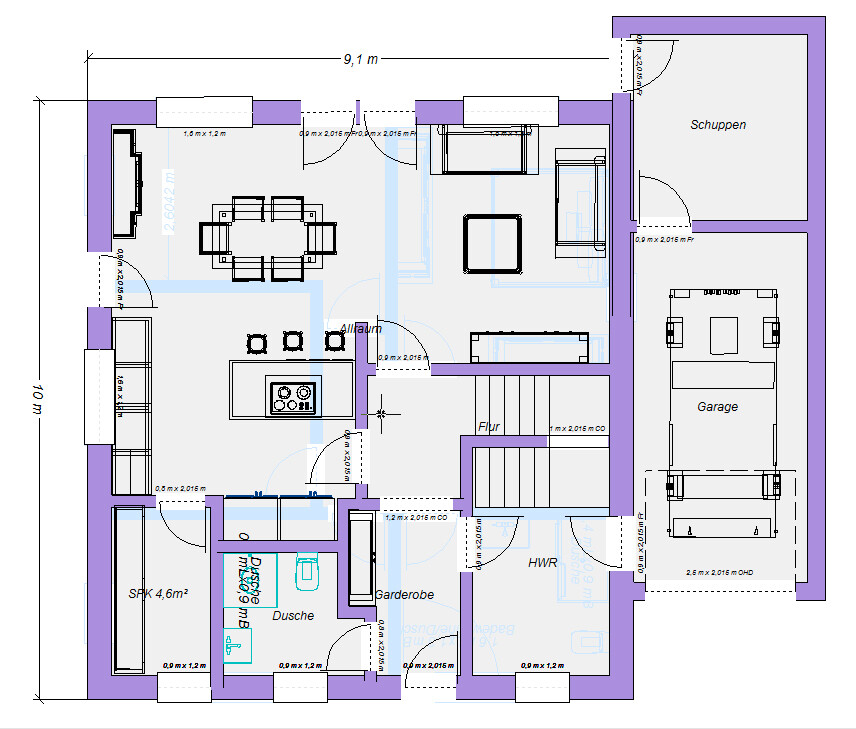
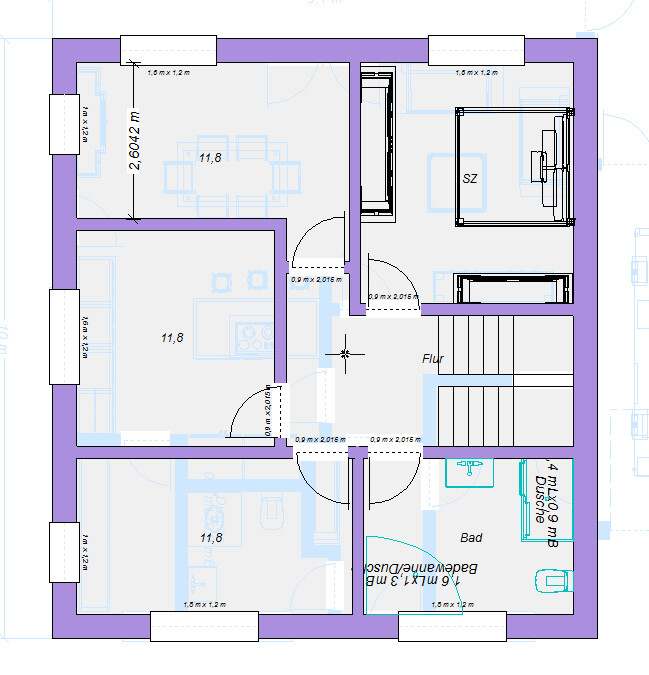
We really like the design here by "kaho674." It truly reflects our ideas. The upper floor should still fit now but, of course, with our minimum required room sizes and the requirement to build only 1.5 storeys.
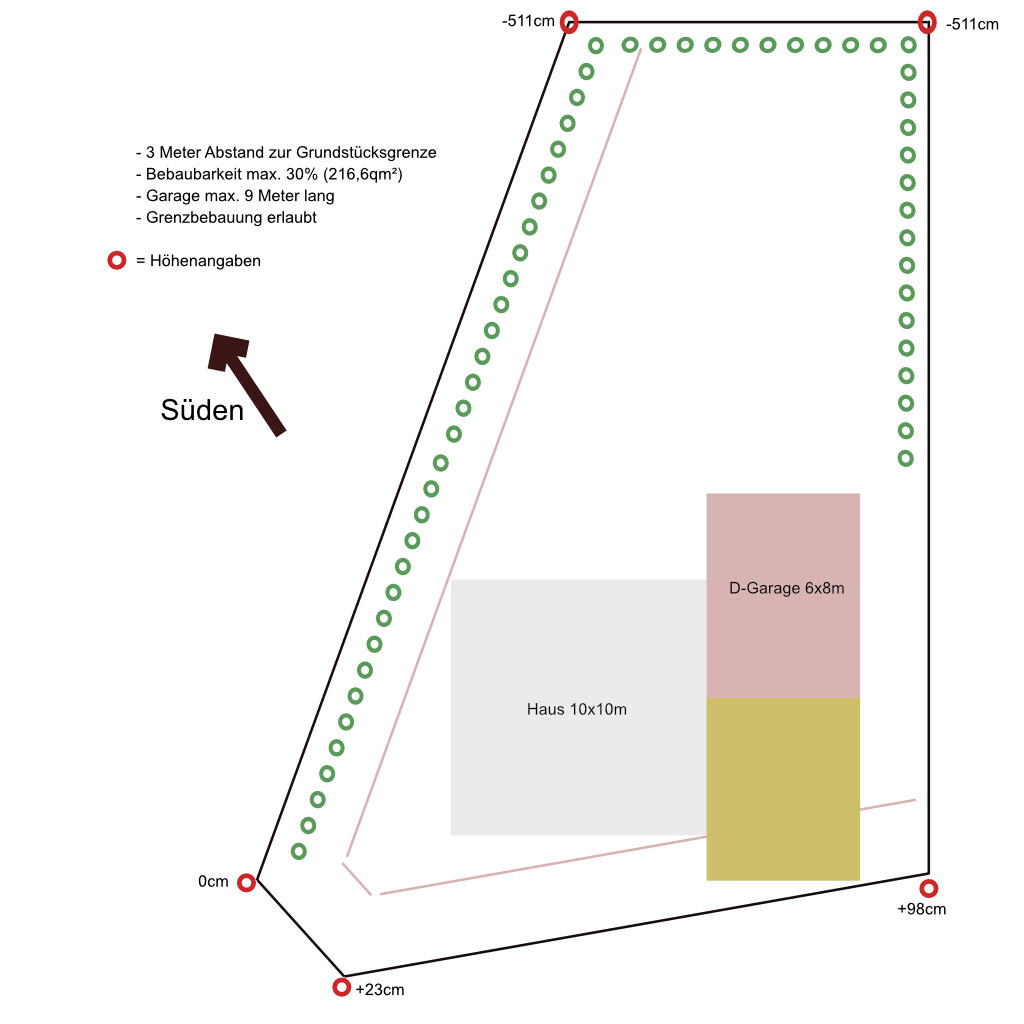
What is really important to us, especially since the plot is on a slope — the highest point at the street is just under 1m (3.3 ft) above the zero level and it drops 5.11m (16.8 ft) to the lowest point — is how everything can be integrated into the plot without the costs for filling and leveling running out of control. We have also considered an alternative to the urban villa in the style of a split-level house. What have your experiences been building on such a plot?
Many thanks
Two months ago, we purchased a serviced building plot on a hillside and are currently deeply involved in the floor plan design, which is proving quite challenging due to the elevation difference.
I have been following the forum for a while and recently found a great template for our project that I think just needs some adjustments to fit our requirements. I would really appreciate your feedback and am, of course, open to criticism!
Development Plan / Restrictions
- Plot size: 722sqm (7,770 sqft)
- Slope: Yes (southwest)
- Site coverage ratio: 0.3
- Floor area ratio: 0.8
- Building window, building line and boundary: -
- Edge development: No (only carport)
- Number of parking spaces: 1-2 (in front of the garage and next to the house)
- Number of storeys: 1.5
- Roof style: No restrictions
- Architectural style: No restrictions
- Orientation: No restrictions
- Maximum heights / limits: 3m (10 ft) distance to neighbor
Owner’s Requirements
- Style, roof type, building type: Urban villa, hipped roof
- Basement, storeys: No basement, 1.5 storeys
- Number of occupants: 4 (ages: 44, 45, 16, 6 years)
- Space requirements on ground and upper floor: Upstairs minimum bedroom 11sqm (118 sqft), walk-in closet 8sqm (86 sqft), 2 children’s rooms 12sqm (129 sqft) each, bathroom 13sqm (140 sqft)
- Office: Family use or home office?: Not needed
- Guest overnight stays per year: Rare
- Open or closed architecture: Open downstairs, rather closed upstairs
- Conservative or modern design: Modern
- Open kitchen, kitchen island: Open kitchen with island
- Number of dining seats: Minimum 6, possibility for a large dining table (big family)
- Fireplace: No
- Music / stereo wall: No
- Balcony, roof terrace: If possible, a partially covered terrace
- Garage, carport: Preferably a double garage
- Utility garden, greenhouse: Yes
- Other: Storage space necessary, as no basement
House Design
- Who designed the plan: Currently from the forum
- What do you like most? Why? Great layout on the ground floor, still open upstairs
- What do you not like? Why?: The upper floor layout still fits 3 children, which we don’t need
- Estimated price by architect/planner: We thought, excluding land, max $250,000 - realistic?
- Personal price limit for house, including fittings: €250,000
- Preferred heating system: We are open!
If you have to give up something, which details or features
- You can give up: Walk-in closet, double garage
- You cannot give up: Large bathroom
Why does the design look the way it does?
We really like the design here by "kaho674." It truly reflects our ideas. The upper floor should still fit now but, of course, with our minimum required room sizes and the requirement to build only 1.5 storeys.
What is really important to us, especially since the plot is on a slope — the highest point at the street is just under 1m (3.3 ft) above the zero level and it drops 5.11m (16.8 ft) to the lowest point — is how everything can be integrated into the plot without the costs for filling and leveling running out of control. We have also considered an alternative to the urban villa in the style of a split-level house. What have your experiences been building on such a plot?
Many thanks
Focus on the civil engineering work first. Calculate how many cubic meters of soil you will need to fill, remove, or store. A budget of 250,000€ without a double garage might be possible if all earthworks (excavation, lateral storage, filling, transportation, disposal) are included for the sloped site. If not, it will be impossible to build a house on this plot within that budget, regardless of how inexpensive the house itself might be. Building on a slope is simply expensive.
Katja’s floor plan is good, no question about that; however, after the redesign of the original plan, the floor plan itself is no longer the issue!
Katja’s floor plan is good, no question about that; however, after the redesign of the original plan, the floor plan itself is no longer the issue!

Hi. Very flattering, but this wasn’t designed for a sloped site. It’s also not a one-and-a-half-story house since there is no walk-in closet included. You might be able to take some ideas from it, but every plot and homeowner needs their own individual house.
Please also keep in mind that the rooms upstairs become much smaller due to the sloped ceilings. That really doesn’t leave much space for children’s bedrooms. How high is the knee wall planned? Can you increase it to 10cm (5 inches) x 10cm (5 inches)?
By the way, the title is confusing. It’s not a townhouse/villa... Maybe the admin can change it for you.
Please also keep in mind that the rooms upstairs become much smaller due to the sloped ceilings. That really doesn’t leave much space for children’s bedrooms. How high is the knee wall planned? Can you increase it to 10cm (5 inches) x 10cm (5 inches)?
By the way, the title is confusing. It’s not a townhouse/villa... Maybe the admin can change it for you.
Zaba12 schrieb:
Focus on the civil engineering work. Calculate how many cubic meters of soil you will need to add, remove, or store. A budget of 250,000€ without a double garage might be possible if all earthworks (excavation, lateral storage, filling, transportation, disposal) for the sloped site are included. If not, then you won’t have a chance to build a house on that plot within that budget (no matter how inexpensive the house itself might be). Building on a slope is simply expensive.
Katja’s floor plan is good, no question, but the problem here isn’t the floor plan!Yes, I have realized myself that the plot is the issue!
However, I apparently made another mistake. A neighbor had excess fill soil and wanted to get rid of it for free. I took it and had it spread out across the plot to level it (since other neighbors had supported the slope with retaining walls and leveled their plots). Now, an acquaintance told me that I have to remove it all again exactly where the house is supposed to go because foundations must be laid on undisturbed soil. Well, if that is true, that’s a real beginner’s mistake! I thought I was getting something for free that I would need anyway!
Is that correct? How would you approach the earthworks in this situation?
kaho674 schrieb:
Hi. Very flattering, but this wasn’t intended for a sloped site. It’s also not a one-and-a-half-story house, since it doesn’t include a dressing room. Maybe you can take a few ideas, but every plot and every homeowner needs their own custom house.
Please also keep in mind that the rooms upstairs become much smaller because of the sloped ceilings. That’s really quite little for children’s rooms. How high is the knee wall planned? Can you increase it to 10cm (5 inches) by 10cm (5 inches)?
By the way, the headline is confusing. It’s not a townhouse… Maybe the admin can change that for you.Hello Katja,
I’ve been quietly following for a while, but I/we really find your designs very well thought-out! I think it’s important to mention that!!!
As pointed out, the house could have completely different dimensions; we’re still at the very beginning of planning. In our building area, we’re only allowed to build a maximum of one and a half stories (two-thirds rule). We thought a townhouse looked very elegant and was a perfect way to avoid too many sloped ceilings inside. What matters most to us are the rooms mentioned for us and the kids on the upper floor. Apart from that, we’re completely open. Do you have another great idea?
Best regards, Frank
What is the height difference within the building plot area?
Check with the building authority or the structural engineer whether construction is allowed on filled ground. Was the soil simply dumped and spread, or compacted properly in layers? It might also depend on how much fill you add.
A sloped site is more expensive than a flat plot with a slab foundation. Earthworks are the big unknown here. Is there a soil report? Not all slopes are the same, and costs can vary accordingly.
Plan your outdoor area to minimize earthworks as much as possible. Every cubic meter costs, and retaining structures do too. Having different levels can also be an advantage in the landscaping.
Check with the building authority or the structural engineer whether construction is allowed on filled ground. Was the soil simply dumped and spread, or compacted properly in layers? It might also depend on how much fill you add.
A sloped site is more expensive than a flat plot with a slab foundation. Earthworks are the big unknown here. Is there a soil report? Not all slopes are the same, and costs can vary accordingly.
Plan your outdoor area to minimize earthworks as much as possible. Every cubic meter costs, and retaining structures do too. Having different levels can also be an advantage in the landscaping.
Similar topics