
ᐅ Floor Plan Design for a Single-Family Home of Approximately 250 sqm with a Separate Granny Flat
Created on: 26 Jan 2025 21:52
C
CornforthWhite
I already feel a bit anxious writing this, anticipating the inevitable criticism of our design, but I’m posting it anyway. We struggled somewhat with the software, so much of the presentation is still quite provisional. Our main goal is to find out whether what we’ve basically planned could work. We’re primarily looking for feedback on functional planning errors. Style critique is sure to come since our design is unlikely to suit most people’s taste here—but that interests us less (we like what we like, and that probably won’t change). Although tastes vary, I’ve learned a lot from other threads recently and hope that “the usual suspects” might also take a look at our design. Thanks in advance!
Development Plan / Restrictions
Plot size: 960 m² (10,333 sq ft)
Slope: no
Floor area ratio: 0.2, maximum buildable footprint however <175 m² (1,883 sq ft)
BUT: the 1977 Building Use Ordinance applies
Floor space index: -
Building envelope, building line and boundary: 5 m (16 ft) from the road on the south and west, 3 m (10 ft) from neighbors on the north and east
Edge development: no
Number of parking spaces: 1.5 per dwelling unit
Number of storeys: 1 + attic
Roof style: no fixed style, but roof pitch regulation with 2 options
Option 1: 22–26 degrees
Option 2: 33–44 degrees
Architectural style: no specification
Orientation: flexible
Maximum heights / limits: in red the official restrictions of the development plan, in green the generously granted exceptions we are aware of (several times approved). The neighbors recently submitted a building application aiming for slightly higher eaves and knee wall heights—this will serve as a reference for us.
For roof option 1 (22–26 degrees pitch): ridge height max. 8 m (26 ft) (or 8.15 m / 27 ft), eaves height max. 4.0 m (13 ft) (or 5.20–5.30 m / 17–17.5 ft), knee wall max. 115 cm (45 in) (or 2.20–2.30 m / 7–7.5 ft)
For roof option 2 (33–44 degrees pitch): ridge height max. 10.5 m (34 ft), eaves height max. 3.5 m (11.5 ft), knee wall max. 40 cm (16 in) (exceptions probably possible but no figures known)
Definition of eaves height: Top of rough ground floor slab to intersection of exterior wall with the bottom edge of the rafters
Definition of knee wall: Top of rough attic floor slab to intersection of exterior wall with the bottom edge of the rafters
Client Requirements
Architectural style, roof shape, building type: a new build that does not look like a typical new build
Basement, floors: no basement (high groundwater level, no living space planned underground), two full stories (which are effectively possible due to generous exceptions from the development plan)
Number of people, age: my mother (70+), my husband and I (late 30s), 2 cats, 1 dog, 1 child planned
Space requirements on ground and upper floors: On the ground floor a self-contained apartment for my mother and kitchen / living / dining / utility for us;
Office: 2 offices (both approx. 50% and 80% remote work)
Guest stays per year: about 2–3 weeks
Open or closed layout: open on the ground floor
Conservative or modern building style: conservative
Open kitchen, kitchen island: yes to both
Number of dining seats: 6–8
Fireplace: yes (gas fireplace)
Music/sound system wall: no
Balcony, roof terrace: balcony would be nice
Garage, carport: spacious double garage
Utility garden, greenhouse: rather no
Other wishes / special features / daily routine, including reasons why some things are desired or not:
House Design
Who designed it: DIY
What do you like most and why?
- Style inspired by classic American Colonial architecture
- Living area centered around the fireplace
- Porch with insect protection, fireplace & privacy
- Kitchen island with plenty of workspace
- Small “secondary kitchen” to temporarily hide dirty dishes / cooking mess
What do you not like? Why?
I wouldn’t exactly say “dislike,” but we have doubts about the following points:
Personal price limit for the house, including fittings: we’re budgeting €3,000 per m² plus additional costs and landscaping, but have significant equity and thus some flexibility upwards; also plan a lot of personal work.
Preferred heating technology: heat pump with geothermal probe
If you have to give up something, which features/finishes
- Could be sacrificed: balcony
- Cannot be sacrificed: no compromises on the self-contained apartment
Why is the design like it is now?
We originally wanted to buy a house with old-style charm but found nothing suitable. Although we like modern, minimalist architecture, it’s not for us personally.
I’ll help a bit with the images.
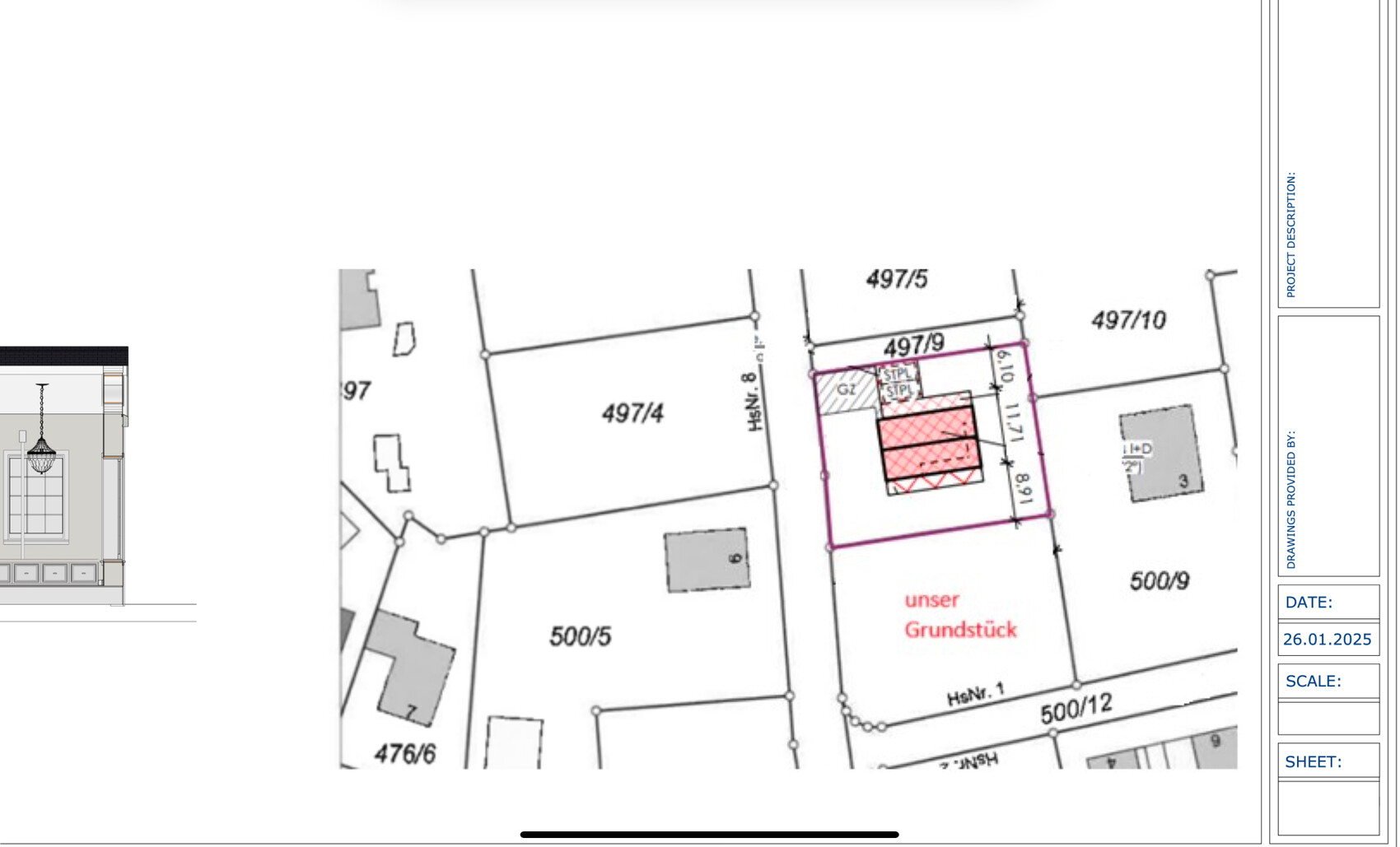
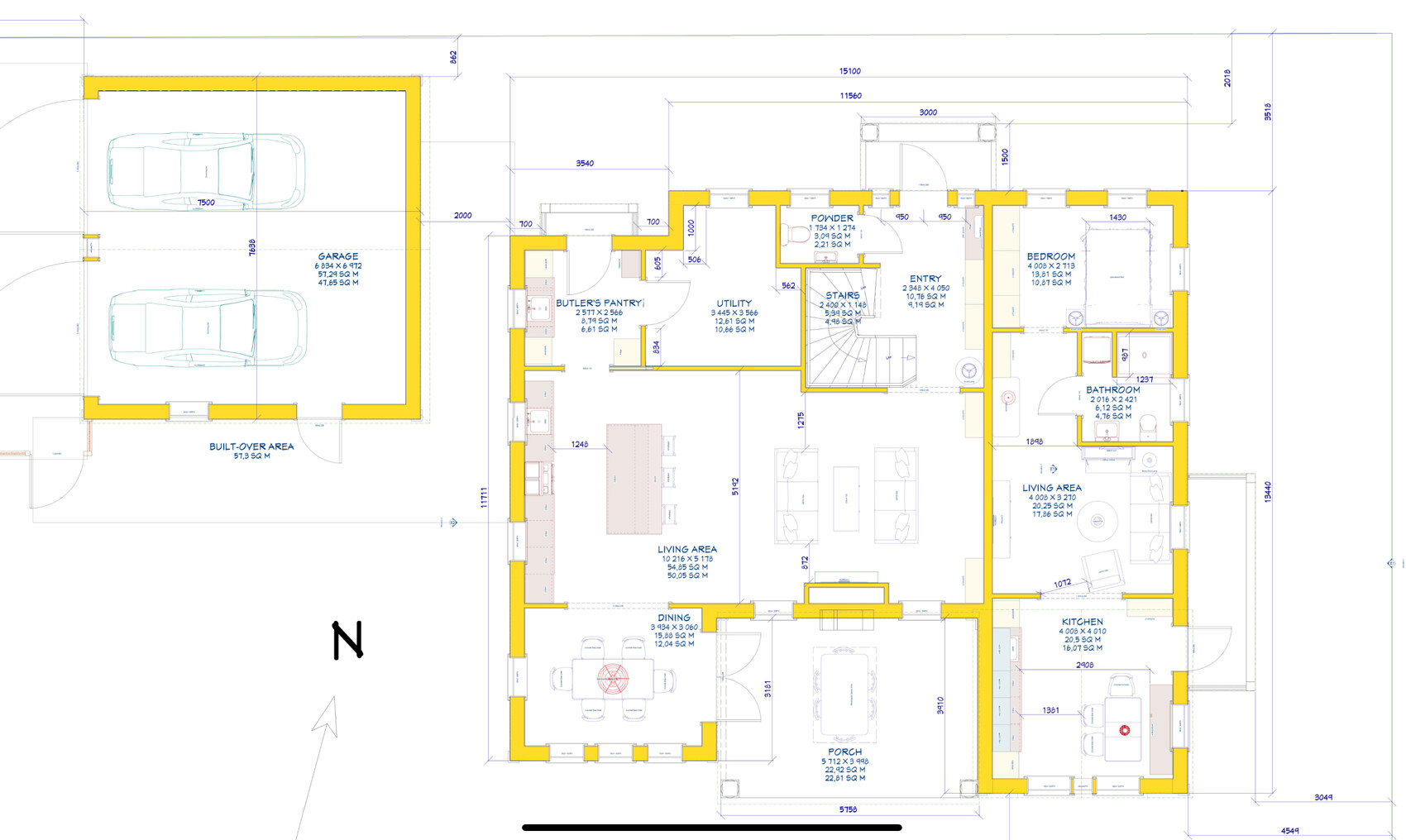
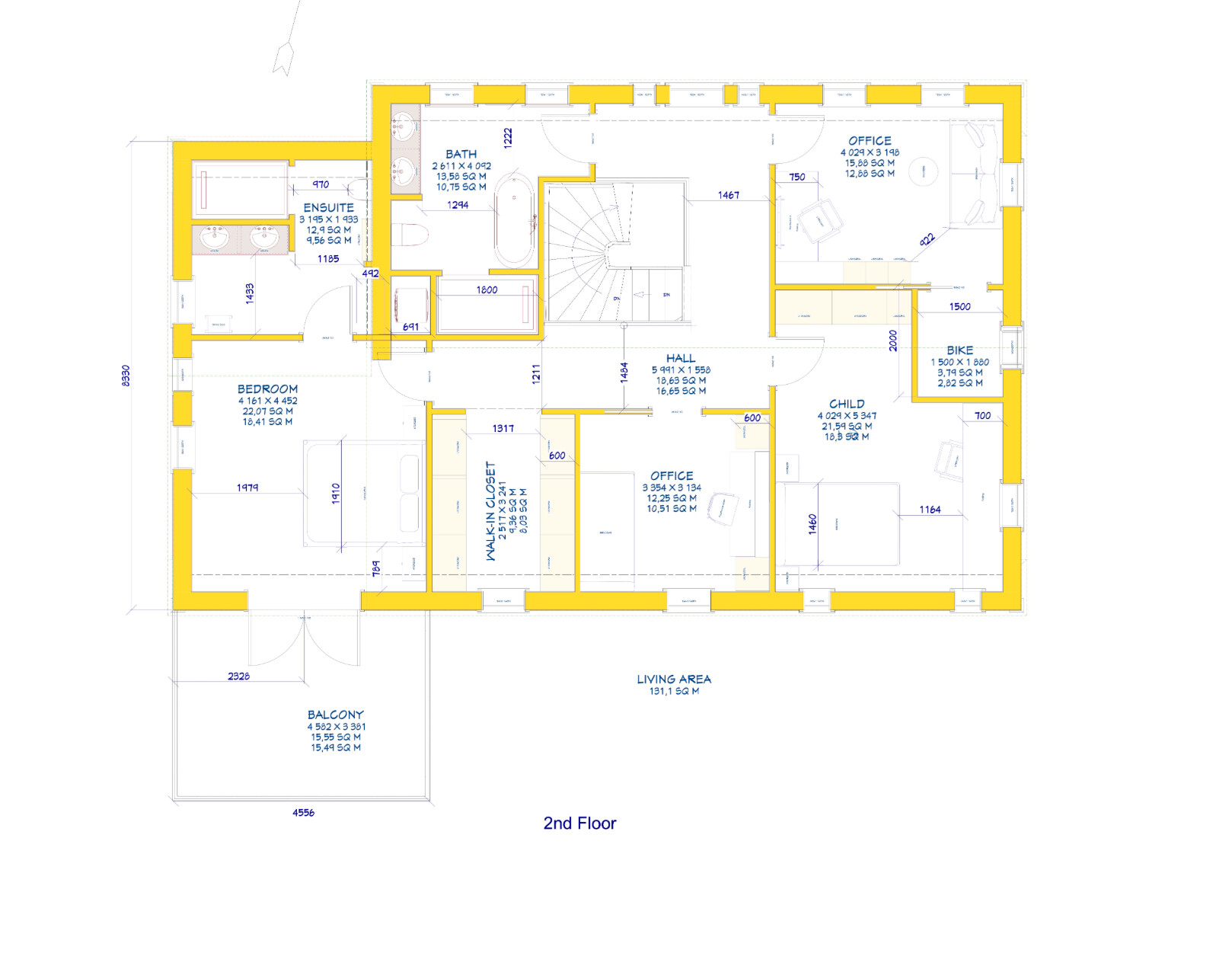
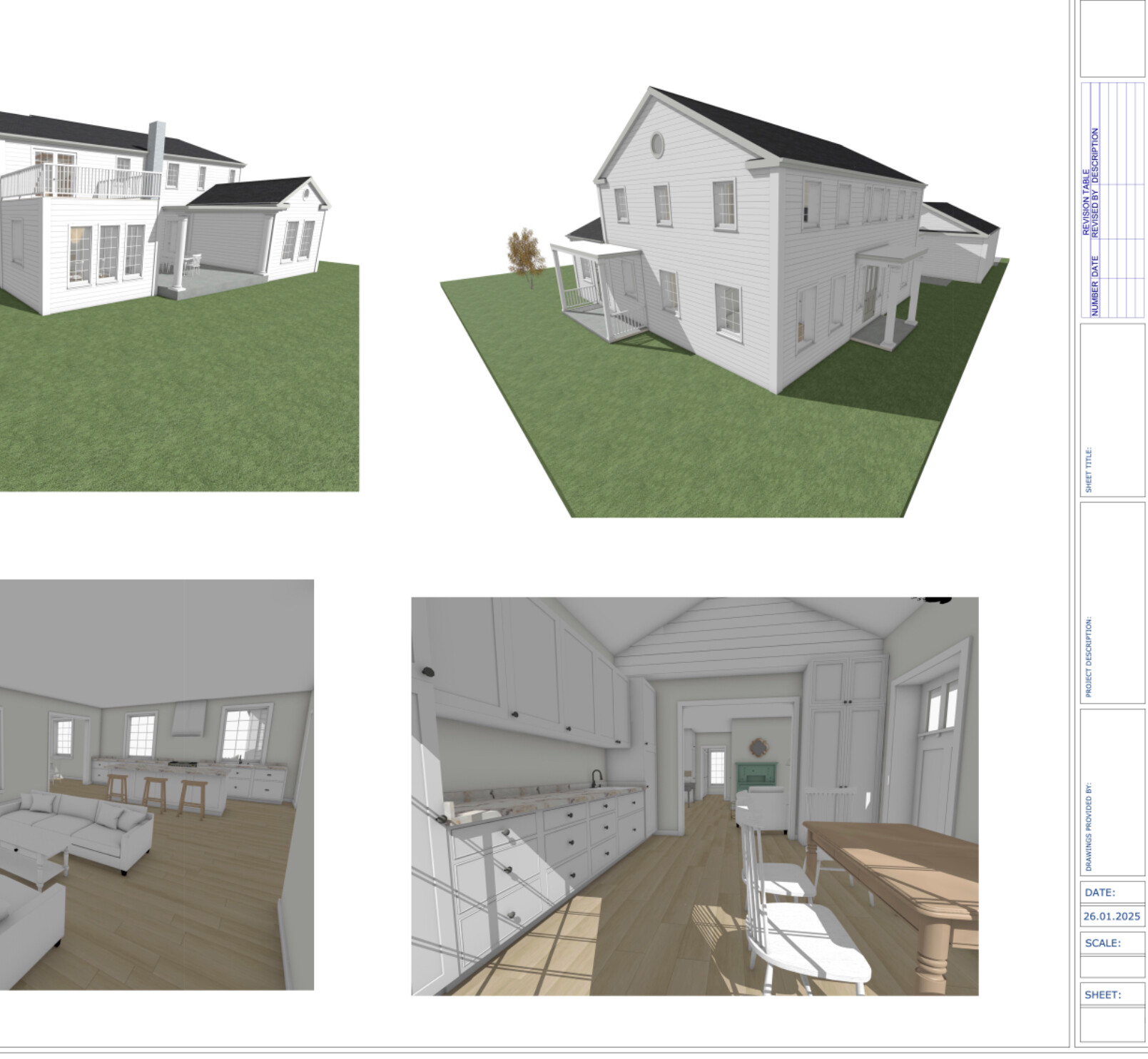
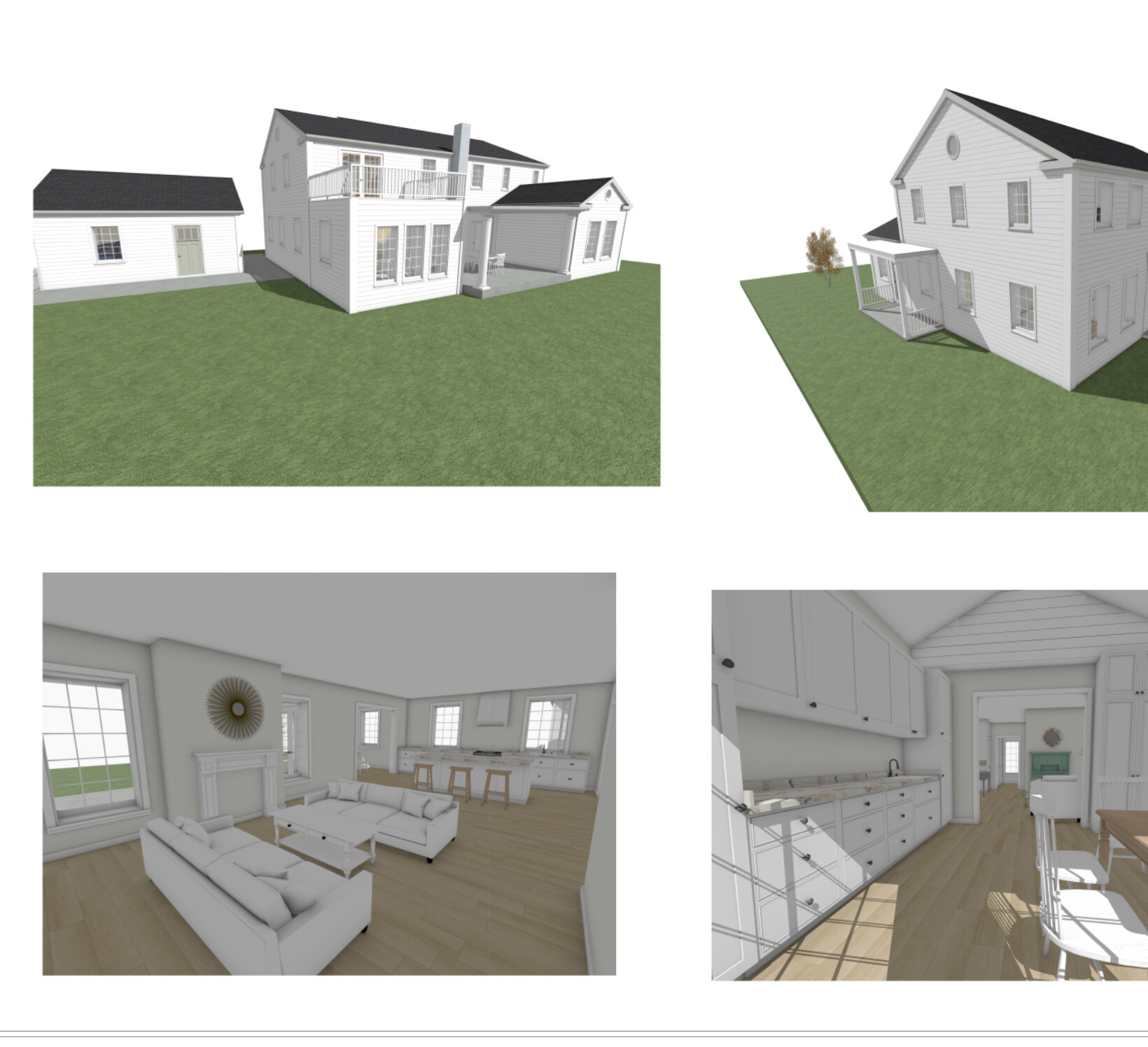
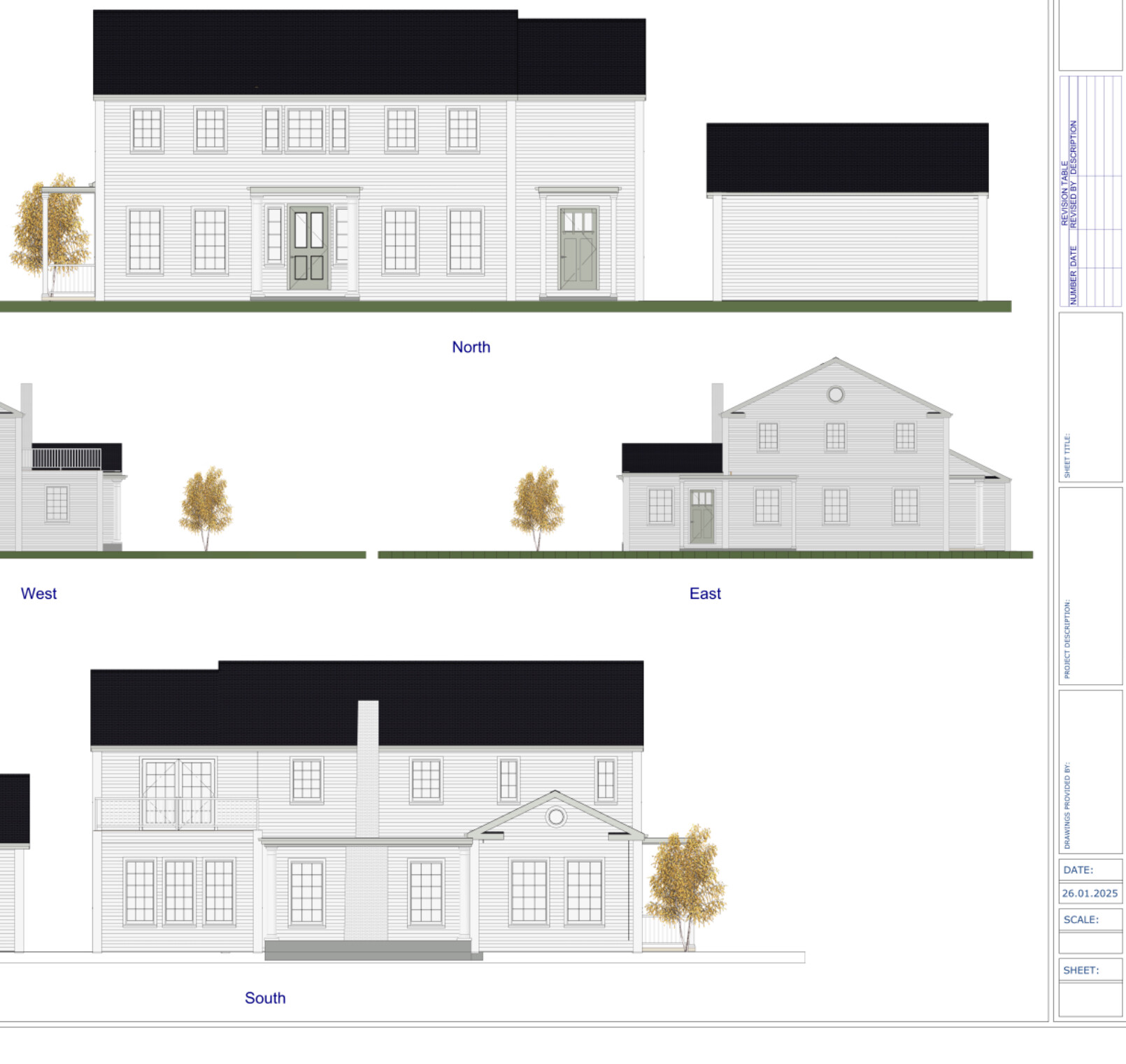
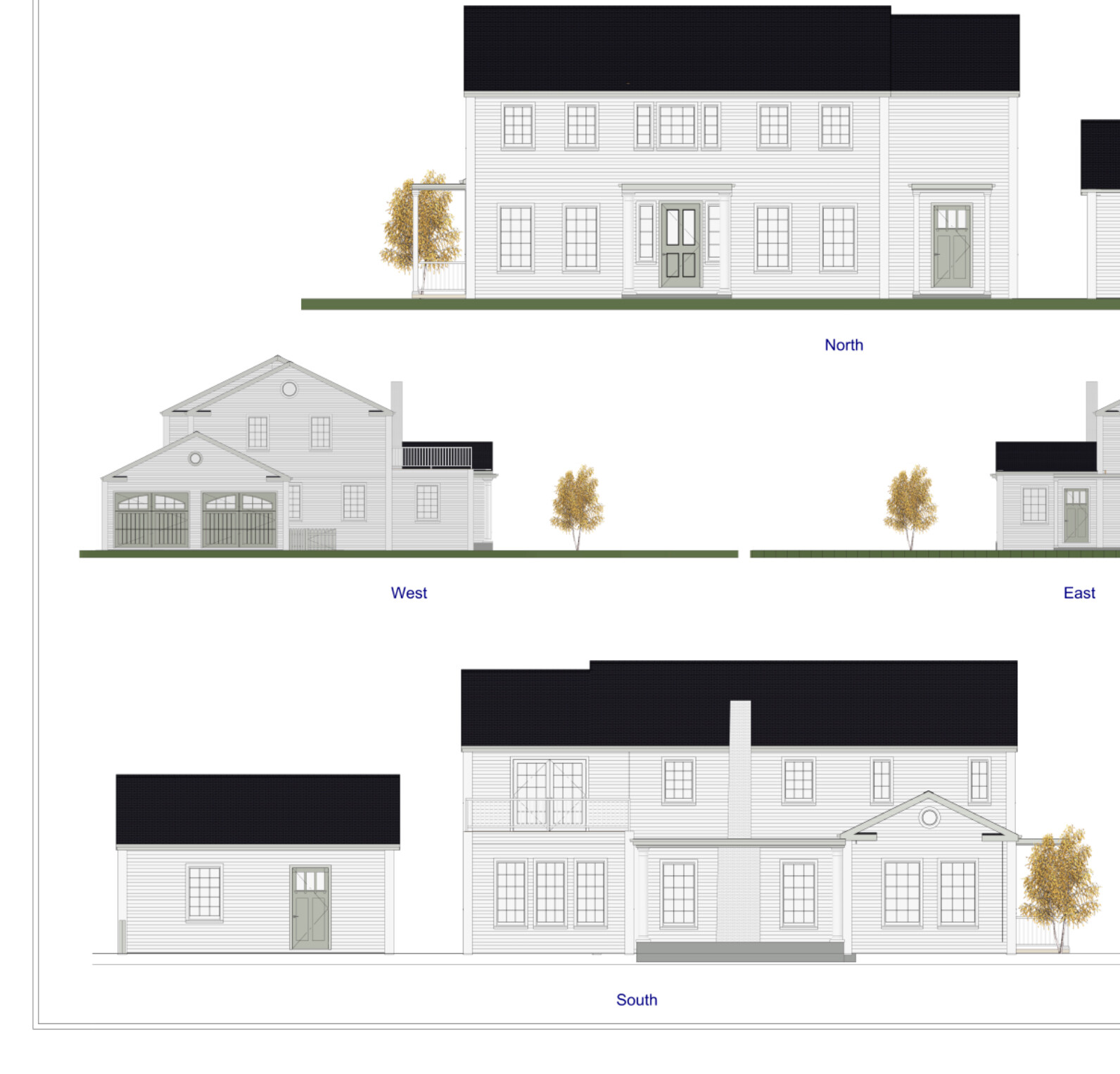
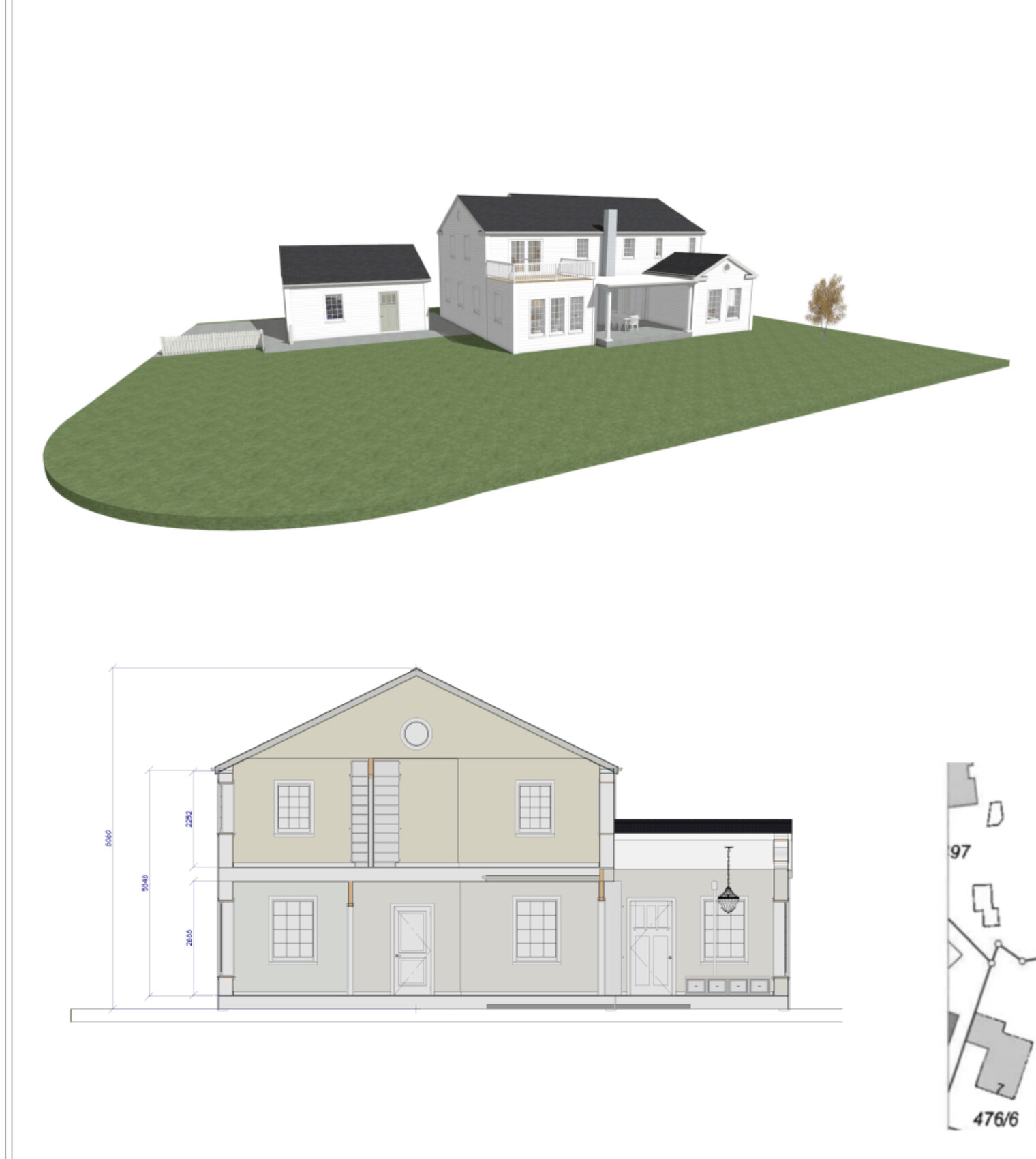
Development Plan / Restrictions
Plot size: 960 m² (10,333 sq ft)
Slope: no
Floor area ratio: 0.2, maximum buildable footprint however <175 m² (1,883 sq ft)
BUT: the 1977 Building Use Ordinance applies
- § 19 IV: Ancillary structures according to § 14 are not counted towards the allowable footprint. The same applies to balconies, loggias, terraces, and structural elements as far as they are permitted within setback areas or distance zones under regional law (here: Bavaria) (…).
- § 21a III: Covered parking spaces and garages are not to be counted towards the allowable footprint as long as they are less than 0.1 of the plot area.
Floor space index: -
Building envelope, building line and boundary: 5 m (16 ft) from the road on the south and west, 3 m (10 ft) from neighbors on the north and east
Edge development: no
Number of parking spaces: 1.5 per dwelling unit
Number of storeys: 1 + attic
Roof style: no fixed style, but roof pitch regulation with 2 options
Option 1: 22–26 degrees
Option 2: 33–44 degrees
Architectural style: no specification
Orientation: flexible
Maximum heights / limits: in red the official restrictions of the development plan, in green the generously granted exceptions we are aware of (several times approved). The neighbors recently submitted a building application aiming for slightly higher eaves and knee wall heights—this will serve as a reference for us.
For roof option 1 (22–26 degrees pitch): ridge height max. 8 m (26 ft) (or 8.15 m / 27 ft), eaves height max. 4.0 m (13 ft) (or 5.20–5.30 m / 17–17.5 ft), knee wall max. 115 cm (45 in) (or 2.20–2.30 m / 7–7.5 ft)
For roof option 2 (33–44 degrees pitch): ridge height max. 10.5 m (34 ft), eaves height max. 3.5 m (11.5 ft), knee wall max. 40 cm (16 in) (exceptions probably possible but no figures known)
Definition of eaves height: Top of rough ground floor slab to intersection of exterior wall with the bottom edge of the rafters
Definition of knee wall: Top of rough attic floor slab to intersection of exterior wall with the bottom edge of the rafters
Client Requirements
Architectural style, roof shape, building type: a new build that does not look like a typical new build
Basement, floors: no basement (high groundwater level, no living space planned underground), two full stories (which are effectively possible due to generous exceptions from the development plan)
Number of people, age: my mother (70+), my husband and I (late 30s), 2 cats, 1 dog, 1 child planned
Space requirements on ground and upper floors: On the ground floor a self-contained apartment for my mother and kitchen / living / dining / utility for us;
Office: 2 offices (both approx. 50% and 80% remote work)
Guest stays per year: about 2–3 weeks
Open or closed layout: open on the ground floor
Conservative or modern building style: conservative
Open kitchen, kitchen island: yes to both
Number of dining seats: 6–8
Fireplace: yes (gas fireplace)
Music/sound system wall: no
Balcony, roof terrace: balcony would be nice
Garage, carport: spacious double garage
Utility garden, greenhouse: rather no
Other wishes / special features / daily routine, including reasons why some things are desired or not:
- Covered terrace / loggia / outdoor seating with reliable but as discreet as possible insect protection (lakeside location, regular mosquito issue) & fireplace (probably gas as well)
- A rather unpopular opinion here, but we explicitly do not want roller shutters or venetian blinds. We currently have them despite many south-facing windows and never use them (feels like a vault). Instead, we plan air conditioning (powered by photovoltaics) and larger trees.
- Gas stove (I just can’t get comfortable with induction)
- Washing machine & dryer on the upper floor
- In one office, a small niche for an exercise bike (turbo trainer)
House Design
Who designed it: DIY
What do you like most and why?
- Style inspired by classic American Colonial architecture
- Living area centered around the fireplace
- Porch with insect protection, fireplace & privacy
- Kitchen island with plenty of workspace
- Small “secondary kitchen” to temporarily hide dirty dishes / cooking mess
What do you not like? Why?
I wouldn’t exactly say “dislike,” but we have doubts about the following points:
- Passage between garage and house might be too narrow?
- Entrance and staircase possibly not spacious enough?
- Staircase: can’t properly design it in the software, but according to a stair calculation tool it should work. Is the space requirement adequate? Are the asymmetrical runs a problem?
- Bedroom in the self-contained apartment is borderline small
- Bathrooms: enough space?
- Utility/technical room: large enough?
- Could a mechanical ventilation system with heat recovery possibly be installed in the crawl space attic?
Personal price limit for the house, including fittings: we’re budgeting €3,000 per m² plus additional costs and landscaping, but have significant equity and thus some flexibility upwards; also plan a lot of personal work.
Preferred heating technology: heat pump with geothermal probe
If you have to give up something, which features/finishes
- Could be sacrificed: balcony
- Cannot be sacrificed: no compromises on the self-contained apartment
Why is the design like it is now?
We originally wanted to buy a house with old-style charm but found nothing suitable. Although we like modern, minimalist architecture, it’s not for us personally.
I’ll help a bit with the images.
C
CornforthWhite28 Jan 2025 08:03wiltshire schrieb:
100% agreement!
We had this in our townhouse – in the Netherlands and Belgium during the 19th century, there was a trend to replicate the grand stone surrounds in wood. We bought one exactly for the decorative reason you mentioned, on a whim, at an antique shop in s’Hertogenbosch and had it in our townhouse living room for years. About this piece, which was never quite clear if it was hideously ugly or magnificent, I found a photo from Christmas 2016/17. For size reference: the tiles measure 33cm (13 inches) on each side, and the speakers are just over 90cm (35 inches) tall.
[ATTACH alt="grundrissplanung-einfamilienhaus-ca-250qm-mit-einliegerwohnung-681316-1.jpeg"]90179[/ATTACH] Wow, I haven’t seen a wood replica like that before. To be honest, it’s not quite my taste, but definitely unusual and unique, and I’m always open to that. The Netherlands (and Belgium) seem to be excellently positioned when it comes to fireplace surrounds, many other antiques, and historic building elements, with lots of interesting dealers.
C
CornforthWhite28 Jan 2025 08:08kbt09 schrieb:
But the entrance to your house is really quite confusing. And somehow, the porch approach seems like a very scattered effort.I understand that the entrance to the main dwelling is not well received here, but you’ll have to explain to me what exactly is wrong with the porch (which, with a corner plot, may even be more “wrong” than previously misunderstood for the other plot).

CornforthWhite schrieb:
Are you also assuming the access route to the granny flat comes from the other purple-bordered property? No.
CornforthWhite schrieb:
I find the path to the granny flat along the eastern neighbor’s fence, with appropriate privacy screening planted, to be rather unproblematic. Well, I said my piece. It’s not my problem anyway.
I think you should just put the plan aside completely and start a brand-new one. Just to loosen up your fixed ways of thinking. For example, set yourselves the goal of creating access to serve both parties.
W
wiltshire28 Jan 2025 08:19Regarding privacy: this can be achieved by garden design when it comes to screening views from the street.
Concerning the location of the living room: it is certainly unusual not to design it with plenty of natural light and an open view outside, but it is a conscious decision to create a somewhat more enclosed space in that area. I spent a few months in an adobe house in New Mexico. There, the “darker” living room worked very well—although the lighting conditions and climate are unlike anything we have in Central Europe. It’s not my preference, but that doesn’t mean it’s wrong.
Enjoy working with the fireplace installer. Be open-minded and don’t pre-judge the outcome based on your questions.
Concerning the location of the living room: it is certainly unusual not to design it with plenty of natural light and an open view outside, but it is a conscious decision to create a somewhat more enclosed space in that area. I spent a few months in an adobe house in New Mexico. There, the “darker” living room worked very well—although the lighting conditions and climate are unlike anything we have in Central Europe. It’s not my preference, but that doesn’t mean it’s wrong.
Enjoy working with the fireplace installer. Be open-minded and don’t pre-judge the outcome based on your questions.
wiltshire schrieb:
The "dark" living room worked very well there -Yes, that would be fine if it weren’t the only access to the terrace. The fact that everyone always has to pass by the already narrow dining table cannot seriously be considered.C
CornforthWhite28 Jan 2025 08:31K a t j a schrieb:
No.
Well, I said it. It’s not my problem.
I think you should just put the plan aside completely and start a whole new one. Just to loosen up your fixed perspectives. For example, set a goal to provide access to both units with a single driveway. If I provide access for both units with one driveway, either one unit’s entrance will be passed by the other (which we don’t want), or I will completely break up the garden area. The garden’s south-facing orientation should remain as it is. We deliberately chose the corner lot because on the south and west sides, the (small and quiet) streets border the garden instead of neighbors.
An access path along the neighboring property, with a hedge on the left side as visual screening from the rest of the garden, in my view, only slightly narrows the lot and therefore does not seem so problematic. As mentioned, a parking space could also be easily omitted there.
Similar topics