
ᐅ Floor Plan Design for a 145 sqm Single-Family Home on a Sloped Site
Created on: 22 Apr 2019 21:13
W
Wienerwald
Hello,
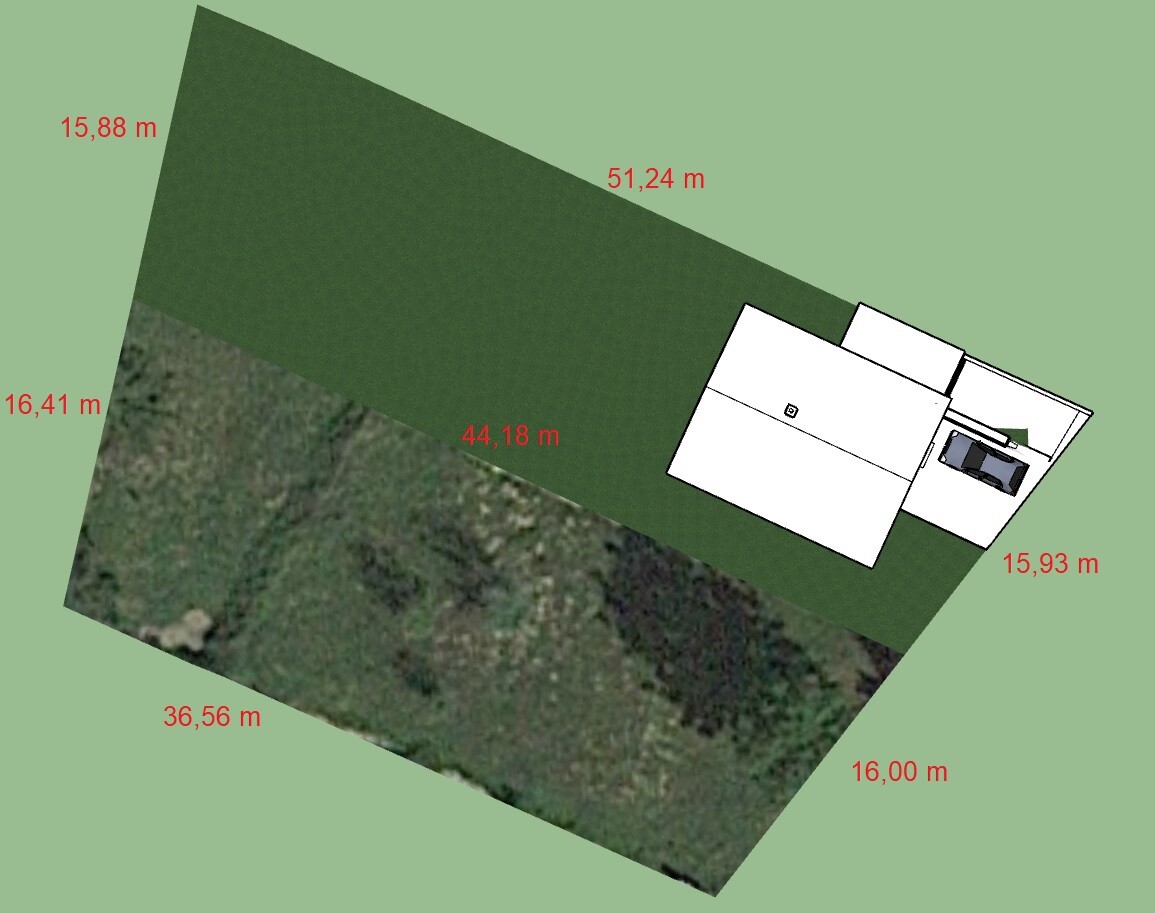
we have two plots of land near Vienna. We plan to build on the northern plot, while the southwestern plot will be kept as a garden and will not be built on. The plots are located on a gently sloping hillside. The access road is very quiet and leads to 10 other houses before turning into a forest path.
We are planning a single-family house with approximately 145 m² (1560 sq ft) of living space, with the option to expand later by finishing the half-basement if additional space is needed. It is important for us to have a cost- and energy-efficient construction without bay windows, excessively high ceilings, etc.
Development Plan / Restrictions
The plot is located in Lower Austria near Vienna.
Plot size – 739 m² (7950 sq ft), the southern plot with 643 m² (6920 sq ft) also belongs to us and will be used as a garden (no construction planned)
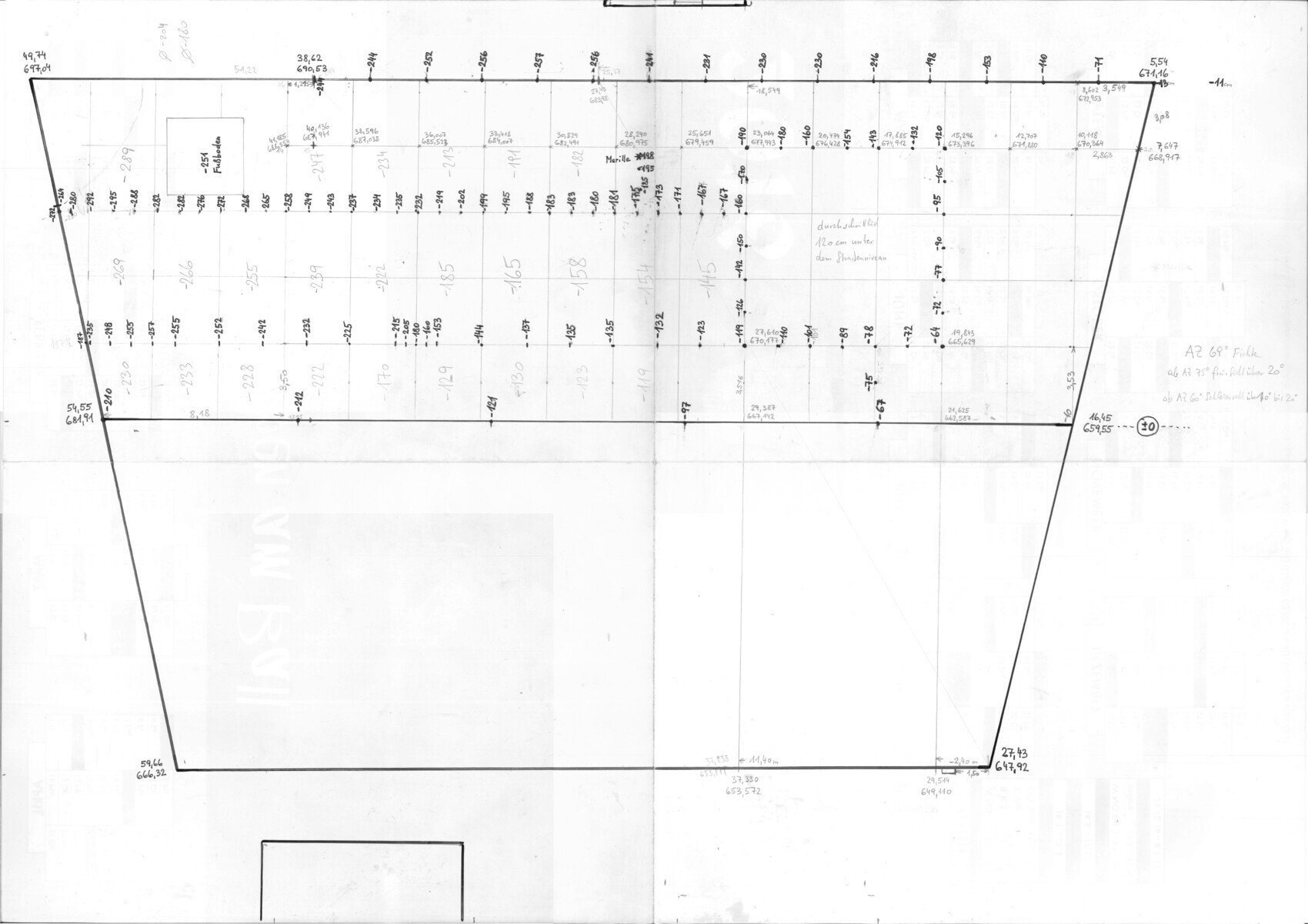
Slope – yes – approx. 270 cm (9 feet) (see attached detailed plan, the official height plan is currently being prepared)
Site coverage ratio – 25% of the plot area, 10% of the plot area allowed for ancillary buildings
Floor area ratio – none specified
Building envelope, building line, and setback – half the building height, but at least 3 m (10 ft) setback in front, back, and on both sides of the plot; only ancillary buildings (garage, carport, shed, etc.) are permitted within the setback zone. For open development style, a side setback for ancillary buildings must be maintained.
Edge development – Ancillary buildings may have a total ground floor area of up to 100 m² (1075 sq ft) and a height of 3 m (10 ft). Due to the slope, this height may be exceeded on the downhill side.
Number of parking spaces – 2 parking spaces / access driveway – maximum 7 m (23 ft) wide / carport and garage in the front setback with a minimum distance of 1 m (3 ft) from the street / garage and carport depth max. 12 m (39 ft) / street-facing front of carport and garage max. 7 m (23 ft)
Number of floors – maximum 2 floors plus basement
Roof style – no specification
Architectural style – no specification
Orientation – no specification
Maximum heights / limits – 9 m (30 ft) at the highest point, or max. 8 m (26 ft) average per side, measured from existing ground level
Additional requirements – it may be necessary to cede about 55 cm (22 inches) on the street side to the municipality.
Client Requirements
Architectural style, roof type, building type – preferably rectangular and energy efficient (no bay windows, etc.)
Basement, floors – 2 floors plus a finished basement
Number of occupants, ages – 3 people (ages 41, 39, 1)
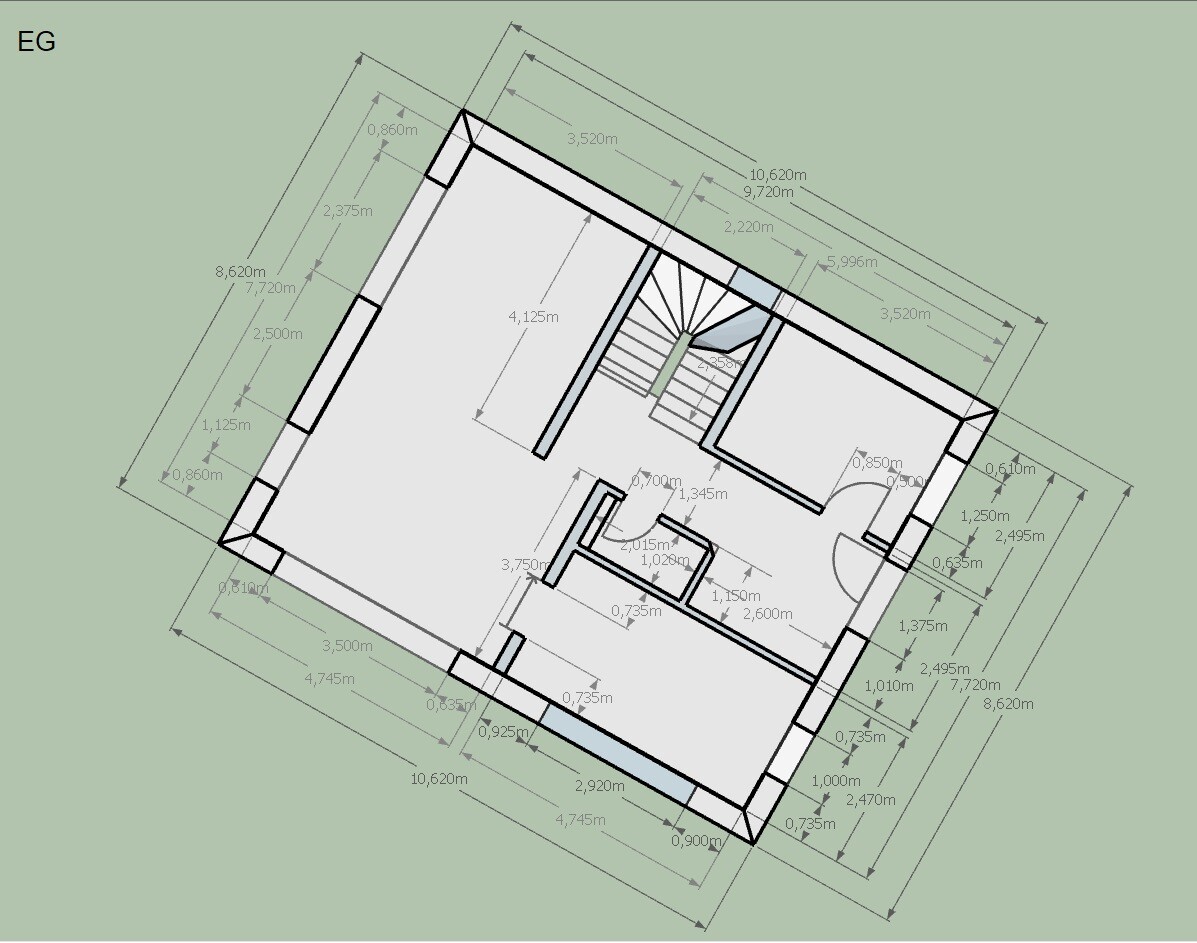
Space requirements on ground floor (GF) and upper floor (UF) – GF: entrance, cloakroom, kitchen, living/dining area, office/guest room; UF: 2 children’s bedrooms, bathroom, separate WC, utility room, master bedroom – Note: the garden shed shown in the overview is existing.
Office use – Home office
Guest overnight stays per year – 4 times, each with 2 guests
Open or closed architecture – closed
Conservative or modern style – conservative
Open kitchen, kitchen island – no open kitchen
Number of dining seats – at least 8 normally, up to 14 when hosting guests
Fireplace – initially considered, but no agreement yet (3-sided glass and low heating output) – opinions vary
Music / stereo wall – no
Balcony, roof terrace – no
Garage, carport – carport for one car and garage for the second car
Kitchen garden, greenhouse – yes, planned for the future
Other wishes, special features, daily routine, and reasons for preferences
House Design
Designer:
- Do-it-Yourself
What do you particularly like? Why?
UF
GF
Basement
What do you dislike? Why?
UF
GF
Price estimate from architect/planner: 400,000 EUR (for the house including garage, carport, terrace, and fence on street side)
Personal price limit for the house, including fittings:
Preferred heating technology: Heat pump (ground collectors)
If you had to give up options or details, which ones would you drop?
What can you not give up?
Why is the design as it is now?
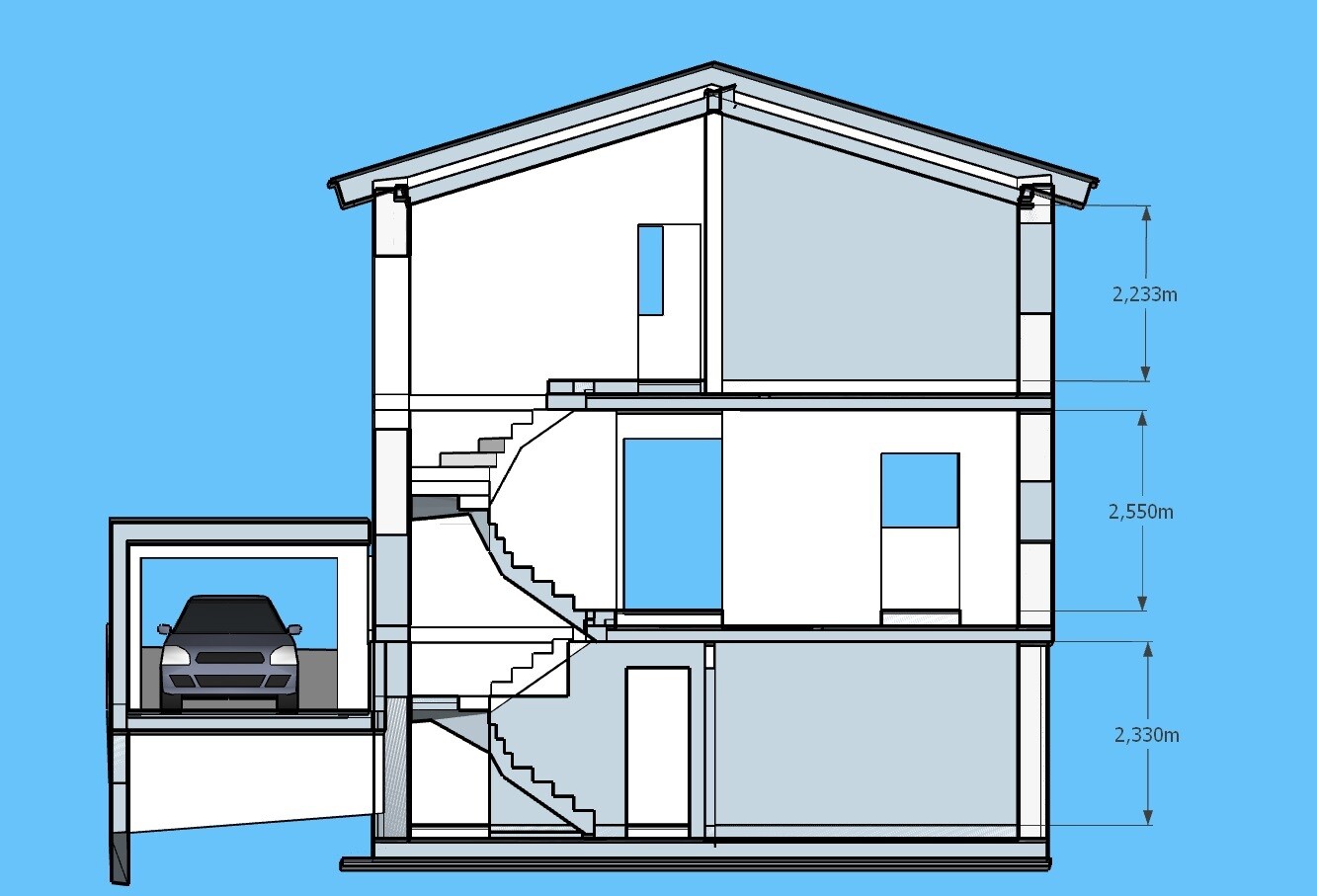
The plot is on a slope, so a walkout basement is practical, placing the main entrance (ground floor) at street level.
Because of the height difference and the narrowness of the plot, the pitched roof with a knee wall height of 2.2 m (7 ft) was planned to widen the building while still complying with the setback requirement (half the building height).
Since no neighboring property borders the west side, providing an unobstructed view, we planned the living room on the west side (the basement is accessible via the garden on the west side, so the living room does not have garden access). The kitchen/dining area is placed to the south, with a level garden exit. From the kitchen, there is a view of the south garden, enabling supervision of the children and direct access to the outdoor dining area.
The garage entrance is halfway between basement and ground floor level and connects to the house via a door.
The office serves as a retreat area.
The finished basement area can be converted in the future into a fitness room, guest room, office, or an additional children’s room; alternatively, the third room on the upper floor can be used as a children’s room and the master bedroom moved to the basement... Since the backwater level of the sewage pipe is at street level and the sewer does not run below the basement level, no wastewater pipes are planned in the basement to avoid the need for sewage pumps.
On the upper floor, we placed emphasis on three equally sized rooms of at least 16 m² (172 sq ft) so they can be interchanged and used as children’s rooms, office, or guest rooms. As we currently have a separate toilet from the bathroom and find this very practical, we implemented this in the house as well. The utility room is mainly for laundry washing and storage of cleaning supplies (ironing will be done in the living room) and has the advantage of hiding laundry piles behind a door. Neither the toilet nor the utility room adjoins a bedroom (reducing noise disturbance), and no water pipes are planned in the wall to the children’s room.
Which wishes were implemented by the architect? n/a
What do you consider particularly good or bad about the design?
The slope was well integrated into the design by using the walkout basement. Despite the narrow plot, we achieved a comfortable building width.
After balancing our requirements and wishes, the most important elements could be realized.
What is the most important / fundamental question about the floor plan summarized in 130 characters?
We kindly ask for your views on our floor plan. Please include constructive suggestions for improvement.
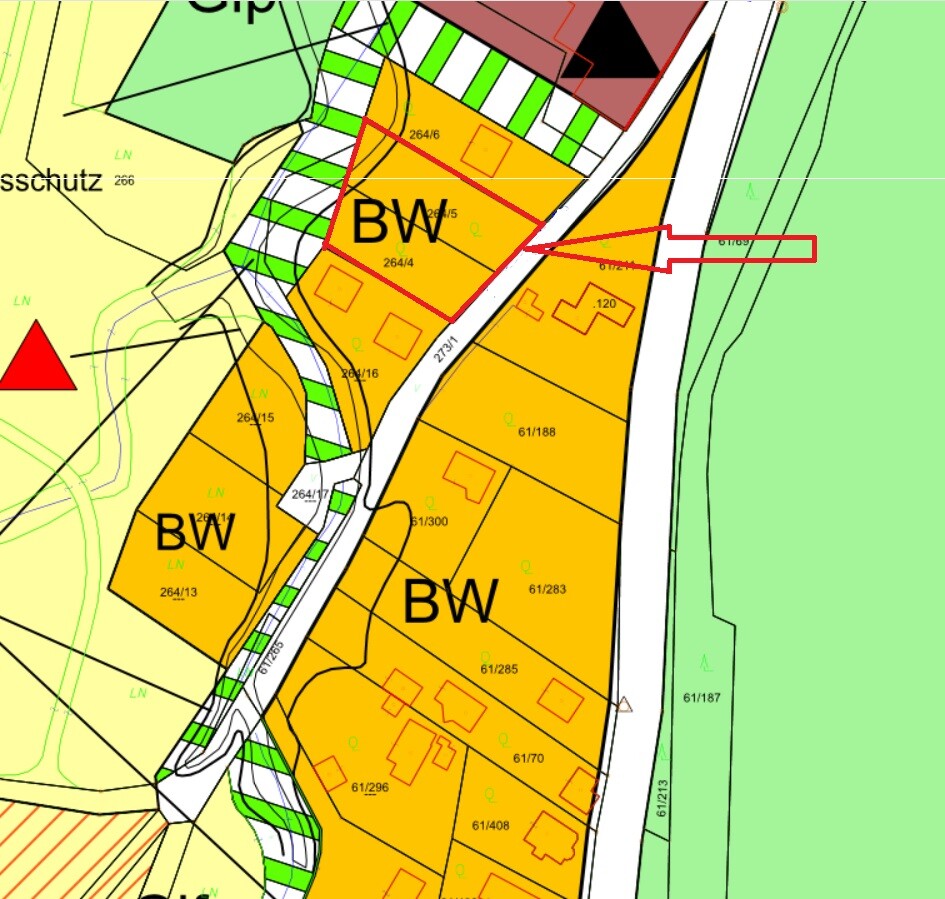
we have two plots of land near Vienna. We plan to build on the northern plot, while the southwestern plot will be kept as a garden and will not be built on. The plots are located on a gently sloping hillside. The access road is very quiet and leads to 10 other houses before turning into a forest path.
We are planning a single-family house with approximately 145 m² (1560 sq ft) of living space, with the option to expand later by finishing the half-basement if additional space is needed. It is important for us to have a cost- and energy-efficient construction without bay windows, excessively high ceilings, etc.
Development Plan / Restrictions
The plot is located in Lower Austria near Vienna.
Plot size – 739 m² (7950 sq ft), the southern plot with 643 m² (6920 sq ft) also belongs to us and will be used as a garden (no construction planned)
Slope – yes – approx. 270 cm (9 feet) (see attached detailed plan, the official height plan is currently being prepared)
Site coverage ratio – 25% of the plot area, 10% of the plot area allowed for ancillary buildings
Floor area ratio – none specified
Building envelope, building line, and setback – half the building height, but at least 3 m (10 ft) setback in front, back, and on both sides of the plot; only ancillary buildings (garage, carport, shed, etc.) are permitted within the setback zone. For open development style, a side setback for ancillary buildings must be maintained.
Edge development – Ancillary buildings may have a total ground floor area of up to 100 m² (1075 sq ft) and a height of 3 m (10 ft). Due to the slope, this height may be exceeded on the downhill side.
Number of parking spaces – 2 parking spaces / access driveway – maximum 7 m (23 ft) wide / carport and garage in the front setback with a minimum distance of 1 m (3 ft) from the street / garage and carport depth max. 12 m (39 ft) / street-facing front of carport and garage max. 7 m (23 ft)
Number of floors – maximum 2 floors plus basement
Roof style – no specification
Architectural style – no specification
Orientation – no specification
Maximum heights / limits – 9 m (30 ft) at the highest point, or max. 8 m (26 ft) average per side, measured from existing ground level
Additional requirements – it may be necessary to cede about 55 cm (22 inches) on the street side to the municipality.
Client Requirements
Architectural style, roof type, building type – preferably rectangular and energy efficient (no bay windows, etc.)
Basement, floors – 2 floors plus a finished basement
Number of occupants, ages – 3 people (ages 41, 39, 1)
Space requirements on ground floor (GF) and upper floor (UF) – GF: entrance, cloakroom, kitchen, living/dining area, office/guest room; UF: 2 children’s bedrooms, bathroom, separate WC, utility room, master bedroom – Note: the garden shed shown in the overview is existing.
Office use – Home office
Guest overnight stays per year – 4 times, each with 2 guests
Open or closed architecture – closed
Conservative or modern style – conservative
Open kitchen, kitchen island – no open kitchen
Number of dining seats – at least 8 normally, up to 14 when hosting guests
Fireplace – initially considered, but no agreement yet (3-sided glass and low heating output) – opinions vary
Music / stereo wall – no
Balcony, roof terrace – no
Garage, carport – carport for one car and garage for the second car
Kitchen garden, greenhouse – yes, planned for the future
Other wishes, special features, daily routine, and reasons for preferences
House Design
Designer:
- Do-it-Yourself
What do you particularly like? Why?
UF
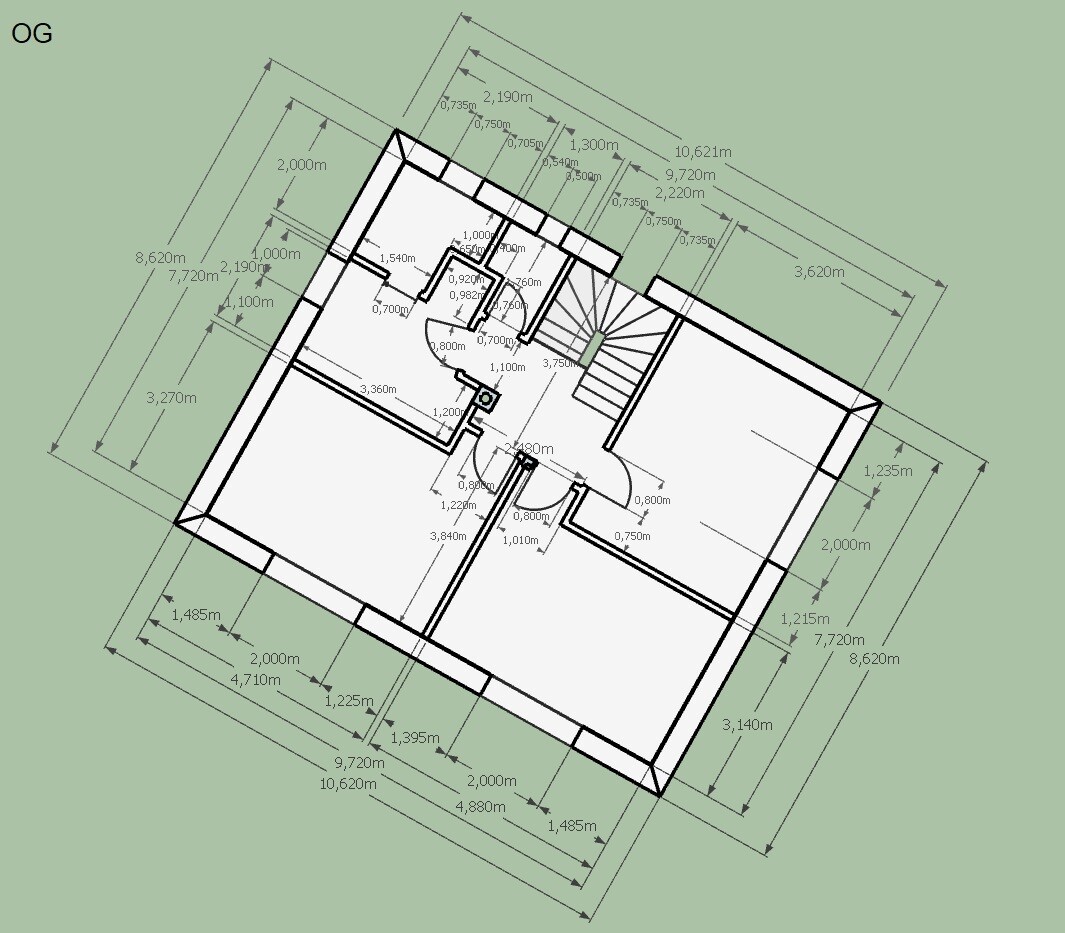
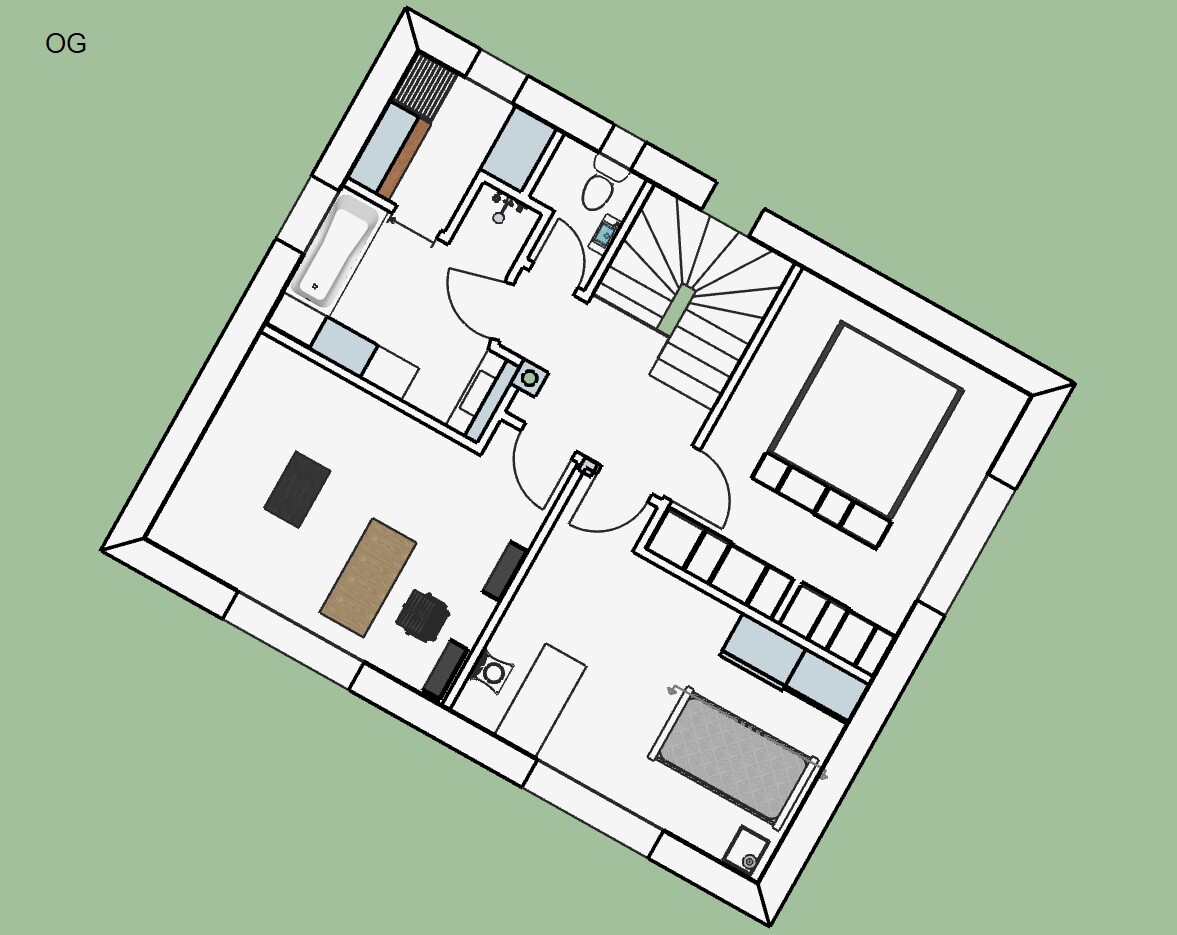
- Separate bathroom and WC
- Separate utility room for washing/drying laundry (since the basement can only drain with a pump and laundry is washed where it is generated)
- WC and utility room not adjacent to bedrooms, reducing noise disturbance
- All rooms approximately equal size (minimum 16 m² / 172 sq ft), rooms can be swapped if needed
- Children’s rooms facing south
- Master bedroom facing east to be woken up by the morning sun
GF
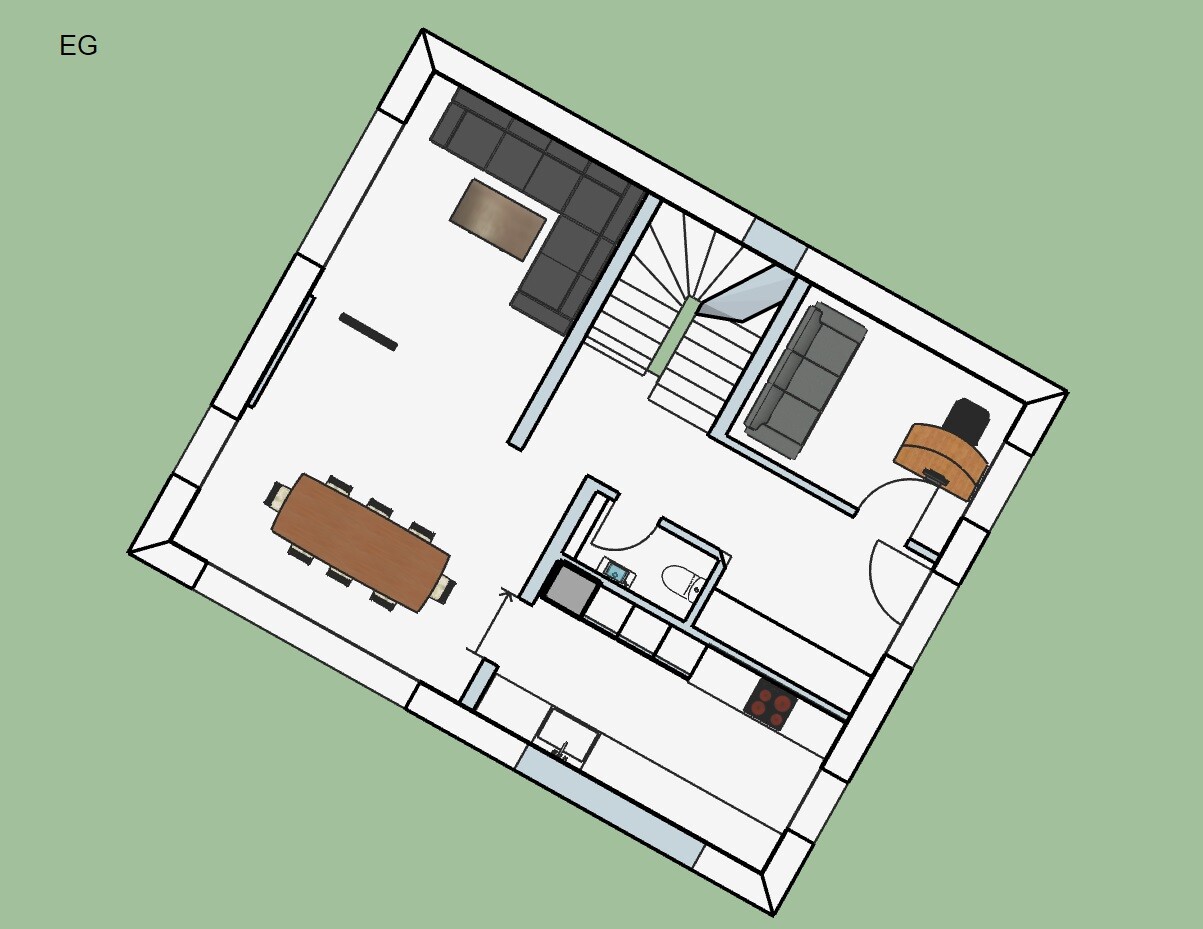
- No open kitchen, but view of dining table when door is open
- Living and dining room not separated
- Living room with view over the west garden
- Dining room facing south with direct access to the garden (right next to kitchen)
Basement
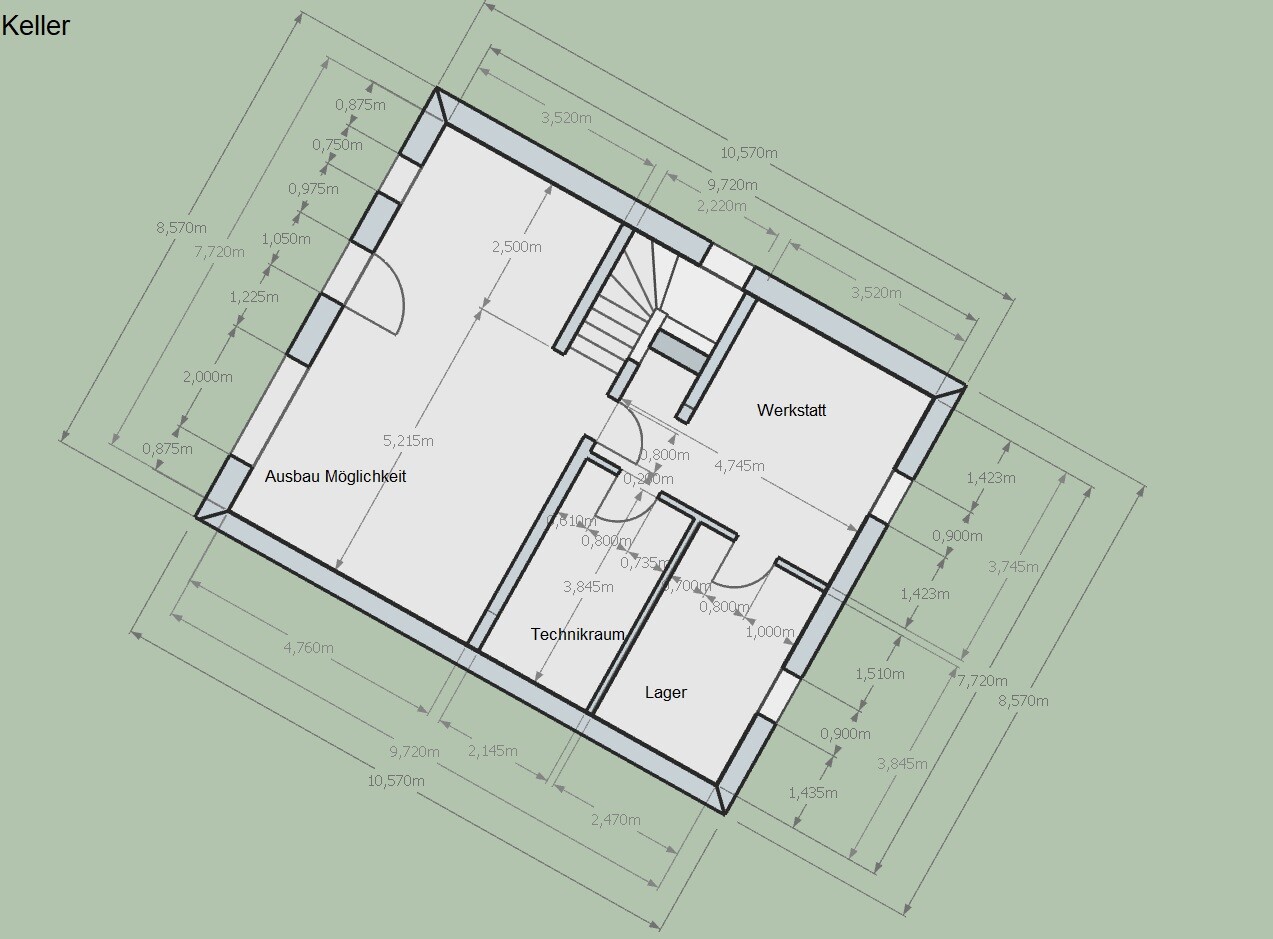
- Expandable, sheltered location to the garden
- Exit to west terrace
What do you dislike? Why?
UF
- Access to utility room through the bathroom
GF
- Office window faces the carport
Price estimate from architect/planner: 400,000 EUR (for the house including garage, carport, terrace, and fence on street side)
Personal price limit for the house, including fittings:
Preferred heating technology: Heat pump (ground collectors)
If you had to give up options or details, which ones would you drop?
- Garage, fireplace
What can you not give up?
- Separate kitchen
- Separate bathroom and WC on the upper floor
- Utility room on the upper floor
- Office/guest room
Why is the design as it is now?
The plot is on a slope, so a walkout basement is practical, placing the main entrance (ground floor) at street level.
Because of the height difference and the narrowness of the plot, the pitched roof with a knee wall height of 2.2 m (7 ft) was planned to widen the building while still complying with the setback requirement (half the building height).
Since no neighboring property borders the west side, providing an unobstructed view, we planned the living room on the west side (the basement is accessible via the garden on the west side, so the living room does not have garden access). The kitchen/dining area is placed to the south, with a level garden exit. From the kitchen, there is a view of the south garden, enabling supervision of the children and direct access to the outdoor dining area.
The garage entrance is halfway between basement and ground floor level and connects to the house via a door.
The office serves as a retreat area.
The finished basement area can be converted in the future into a fitness room, guest room, office, or an additional children’s room; alternatively, the third room on the upper floor can be used as a children’s room and the master bedroom moved to the basement... Since the backwater level of the sewage pipe is at street level and the sewer does not run below the basement level, no wastewater pipes are planned in the basement to avoid the need for sewage pumps.
On the upper floor, we placed emphasis on three equally sized rooms of at least 16 m² (172 sq ft) so they can be interchanged and used as children’s rooms, office, or guest rooms. As we currently have a separate toilet from the bathroom and find this very practical, we implemented this in the house as well. The utility room is mainly for laundry washing and storage of cleaning supplies (ironing will be done in the living room) and has the advantage of hiding laundry piles behind a door. Neither the toilet nor the utility room adjoins a bedroom (reducing noise disturbance), and no water pipes are planned in the wall to the children’s room.
Which wishes were implemented by the architect? n/a
What do you consider particularly good or bad about the design?
The slope was well integrated into the design by using the walkout basement. Despite the narrow plot, we achieved a comfortable building width.
After balancing our requirements and wishes, the most important elements could be realized.
What is the most important / fundamental question about the floor plan summarized in 130 characters?
We kindly ask for your views on our floor plan. Please include constructive suggestions for improvement.
Objection: Door widths: downstairs office can easily have a wider door set slightly offset.
Upstairs is also possible.
Bedroom: who says the bed has to be placed like that? The room itself is sufficient for a bedroom.
Upstairs bathroom has a toilet with a hand basin. The bathroom has one washbasin.
Downstairs kitchen: remove the cloakroom, make the kitchen wider. Add a table and 2 chairs. Or 3.
There is enough wall space to install coat hooks.
K.
Upstairs is also possible.
Bedroom: who says the bed has to be placed like that? The room itself is sufficient for a bedroom.
Upstairs bathroom has a toilet with a hand basin. The bathroom has one washbasin.
Downstairs kitchen: remove the cloakroom, make the kitchen wider. Add a table and 2 chairs. Or 3.
There is enough wall space to install coat hooks.
K.
You, I don’t believe that. These PC programs encourage playing around, so people just place a sofa somewhere, and it ends up looking professional. There’s no way the TV would actually be placed like that in reality. And what is a sofa doing in the office? There should be a cabinet for files, possibly a second chair, and maybe a small table like an Ikea Lack for a cup.

I don’t think it’s a bad idea at all.
Adjust the door dimensions and see if it still works. Swap the wardrobe and guest toilet to give the latter a window.
The layouts are a mess – they need to be completely redone.
What would really bother me is how the bathroom gets chopped up by the effort to move the utility room to the upper floor. That makes sense in larger houses, but you are building with a basement and smaller overall space. I would plan a laundry chute here and move the laundry area to the basement, especially since you might even be able to connect a door directly to the garden for an outdoor drying rack. This would allow for a nice bathroom where you enjoy getting up early and can access a window without falling into the bathtub.
With four people and regular guests, I would also try to include a shower in the guest toilet.
Adjust the door dimensions and see if it still works. Swap the wardrobe and guest toilet to give the latter a window.
The layouts are a mess – they need to be completely redone.
What would really bother me is how the bathroom gets chopped up by the effort to move the utility room to the upper floor. That makes sense in larger houses, but you are building with a basement and smaller overall space. I would plan a laundry chute here and move the laundry area to the basement, especially since you might even be able to connect a door directly to the garden for an outdoor drying rack. This would allow for a nice bathroom where you enjoy getting up early and can access a window without falling into the bathtub.
With four people and regular guests, I would also try to include a shower in the guest toilet.
Similar topics