
ᐅ Floor Plan Design for KfW 40 Single-Family Home in an Established Residential Area with Fully Finished Basement
Created on: 11 Aug 2025 20:39
A
AnnaChris88
Hello everyone,
After reading many posts here and following the discussions closely, we would like to use the collective knowledge and your input to reconsider our design. Attached are the basic data.
Development Plan / Restrictions
Plot size: 414 sqm (4455 sq ft)
Slope: hardly any – 1.5 m (5 ft) gradient from northwest to southeast
Site occupancy index: 0.4
Floor area ratio: 0.8
Building envelope, building line and boundary: entire plot buildable, including a 4 m (13 ft) wide strip along the eastern property boundary, parcel 743/22
Edge development:
Number of parking spaces: 2
Number of floors: 2 full stories mandatory
Roof type: 28-degree (28°) pitched roof mandatory
Architectural style: classic
Orientation: south/west
Maximum height / limits: none
Other requirements:
Owners’ Requirements
Style, roof type, building type: classic with pitched roof
Basement, floors: finished basement, 2 full stories
Number of occupants, ages: 4 persons (42, 37, 3, 1)
Room requirements on ground floor and upper floor: as in current design
Office: home office
Occasional overnight guests: few
Open floor plan
Conservative building method
Open kitchen with island
Number of dining seats: at least 6
Fireplace: no
Music / stereo wall
Balcony, roof terrace: originally planned above the terrace, canceled for cost reasons
Garage / carport: garage for storage purposes
Additional wishes / special features:
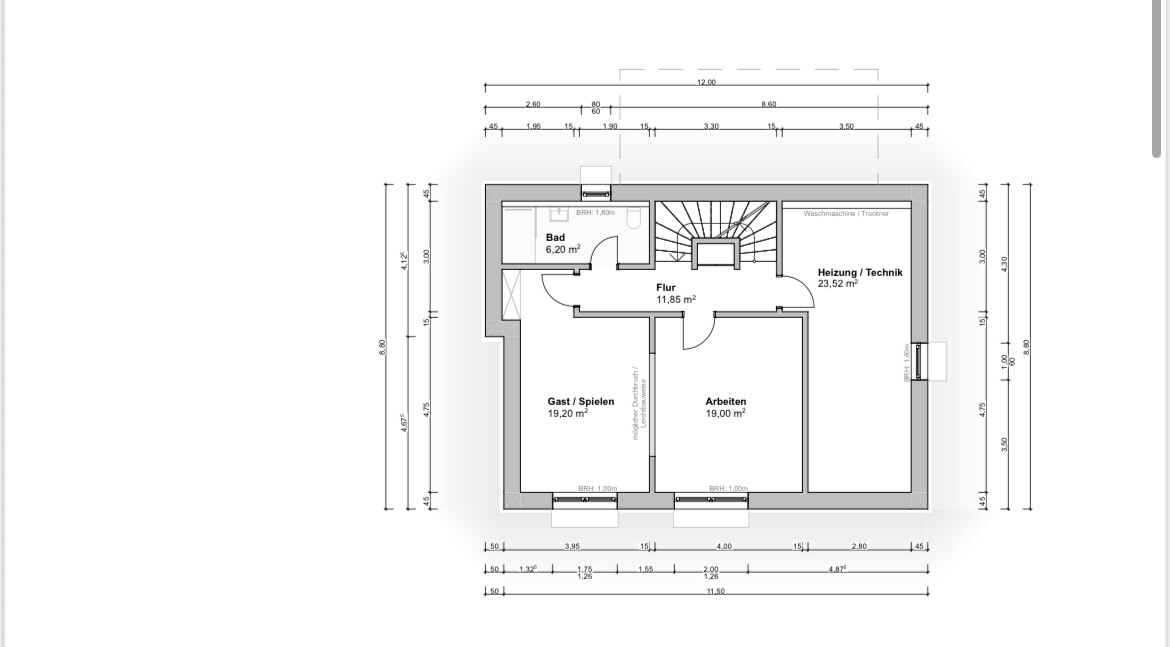
- There should be a large living-dining area separated from the stairwell by a door (sound insulation), a large kitchen with island, one bathroom with shower in the basement including two rooms to likely be used when the children move to the basement later; currently playing room and office/guest room, separate walk-in wardrobe from master bedroom, two large children’s rooms upstairs each larger than 15 sqm (160 sq ft)
House Design
Design by: architect and DIY
What do you particularly like?
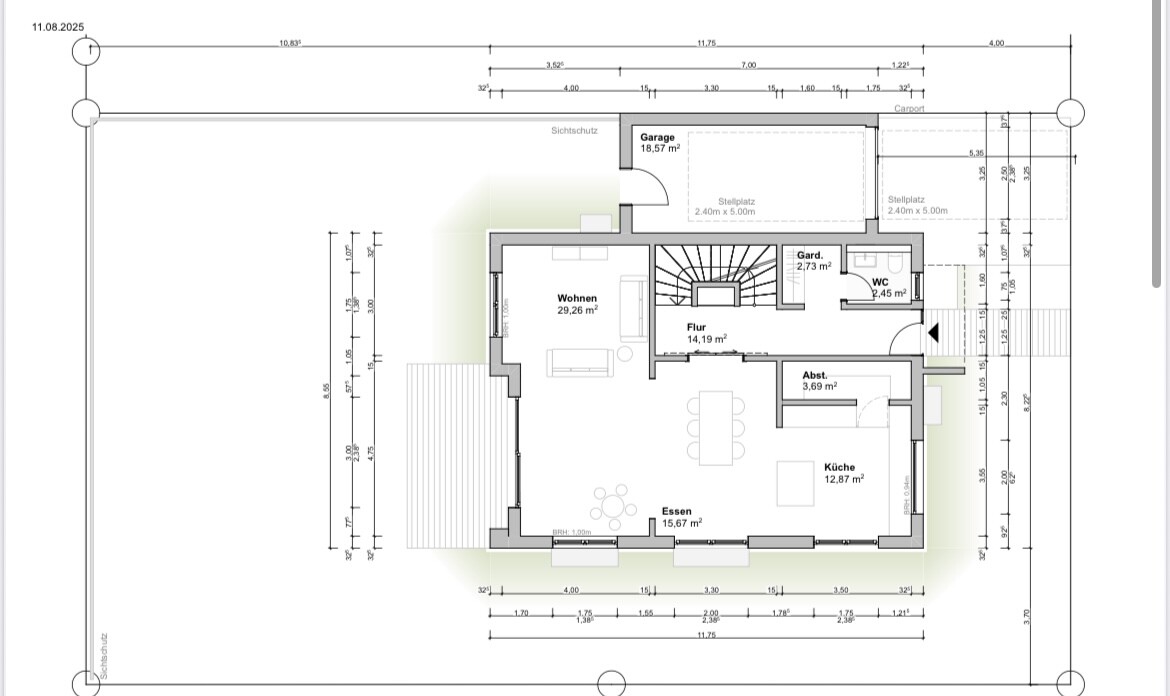
- Ground floor is especially liked due to the combination of a large room with clearly defined areas
What do you dislike?
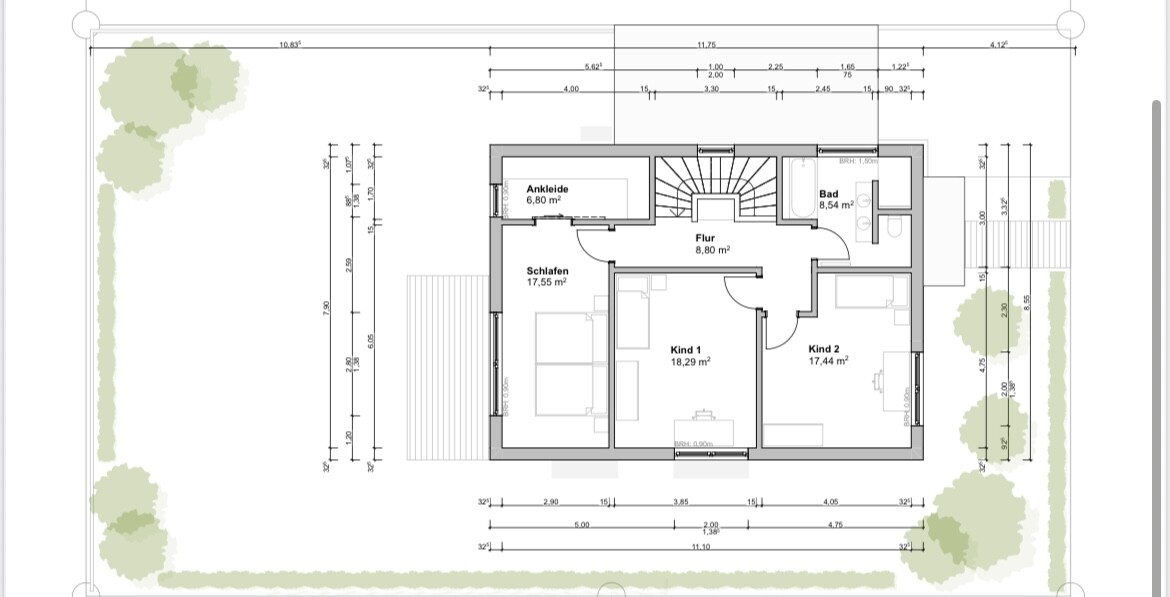
- Bathroom layout upstairs is not optimal so far, since window should actually be larger and face east
- Master bedroom should ideally be separated from children’s bathroom or walk-in wardrobe
- Window of guest WC faces north and not next to entrance door
Price estimate based on initial offer: €500,000–520,000
Personal price limit for house including equipment: €550,000
Preferred heating technology: heat pump with photovoltaic system
If you had to give up something, which details or additions
- You could give up: pantry on ground floor
- You cannot give up: separate walk-in wardrobe upstairs, shower bathroom in basement, door to hallway on ground floor
Why is the design like this? For example:
First discussion with architect and 7 rounds of “corrections” / revisions based on our wishes
We look forward to your feedback!!
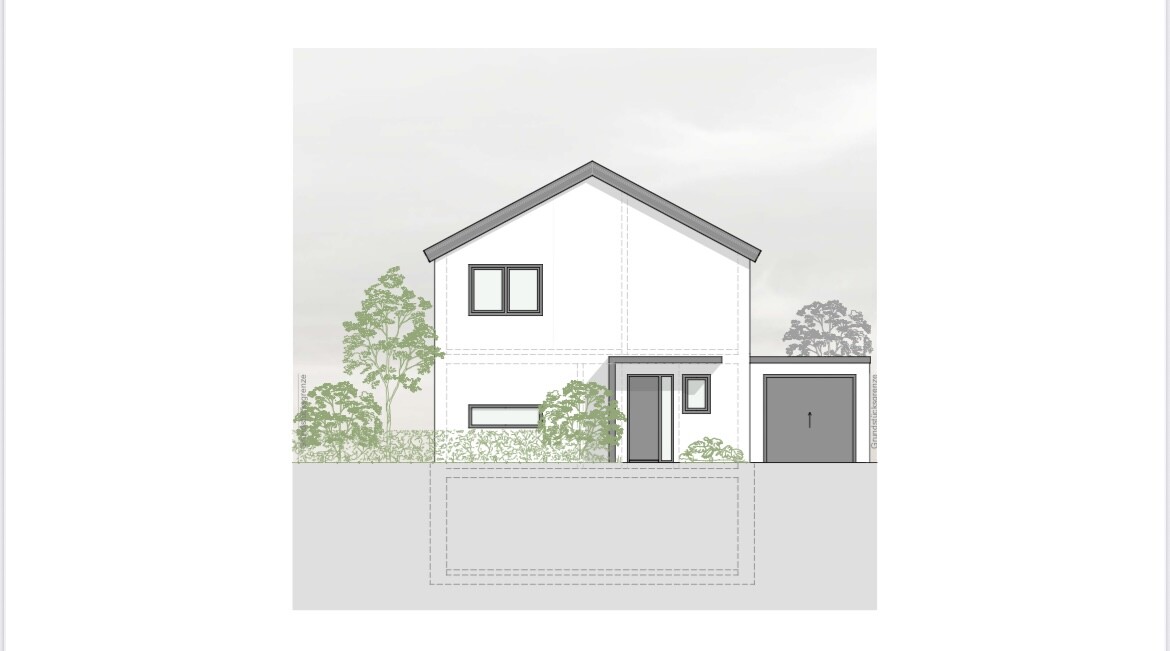
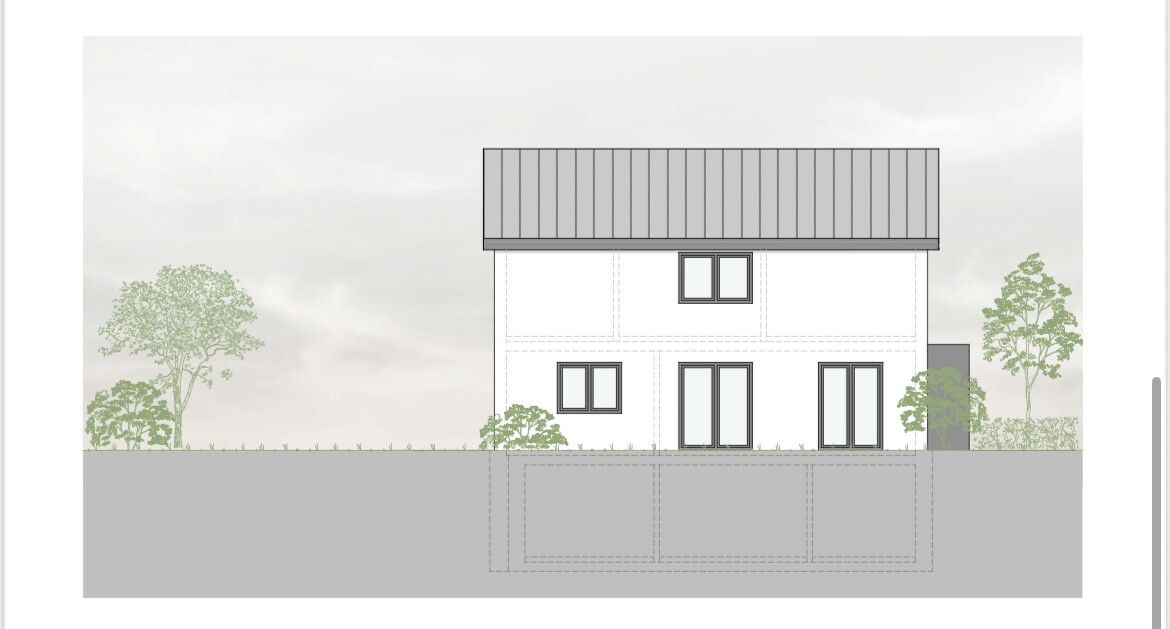
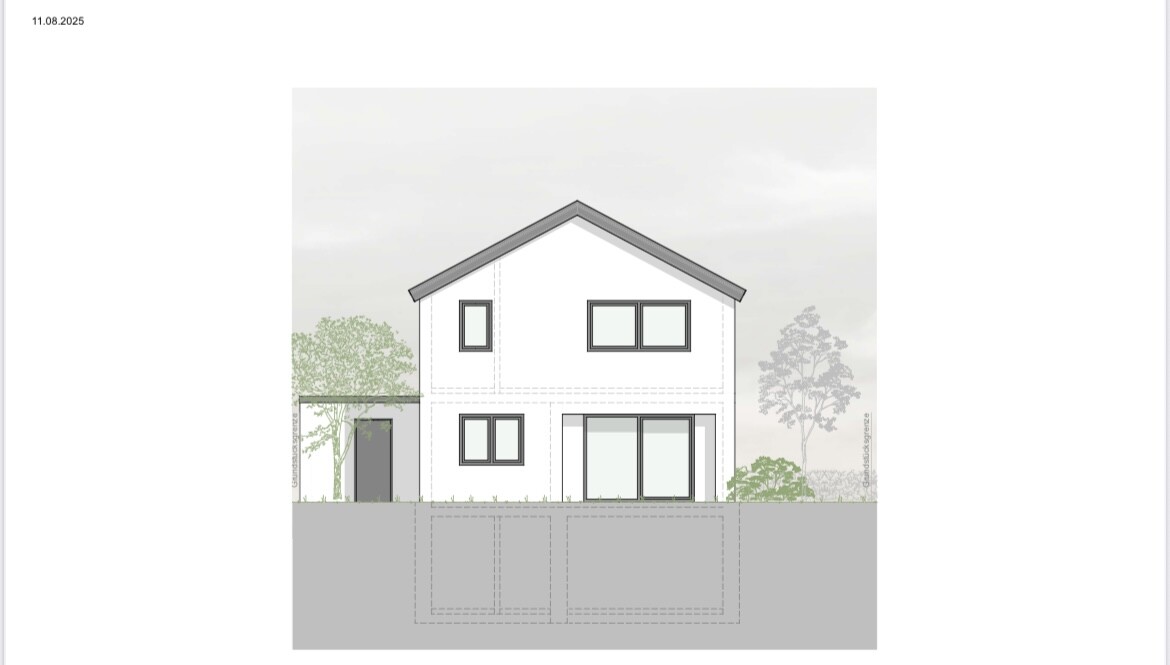
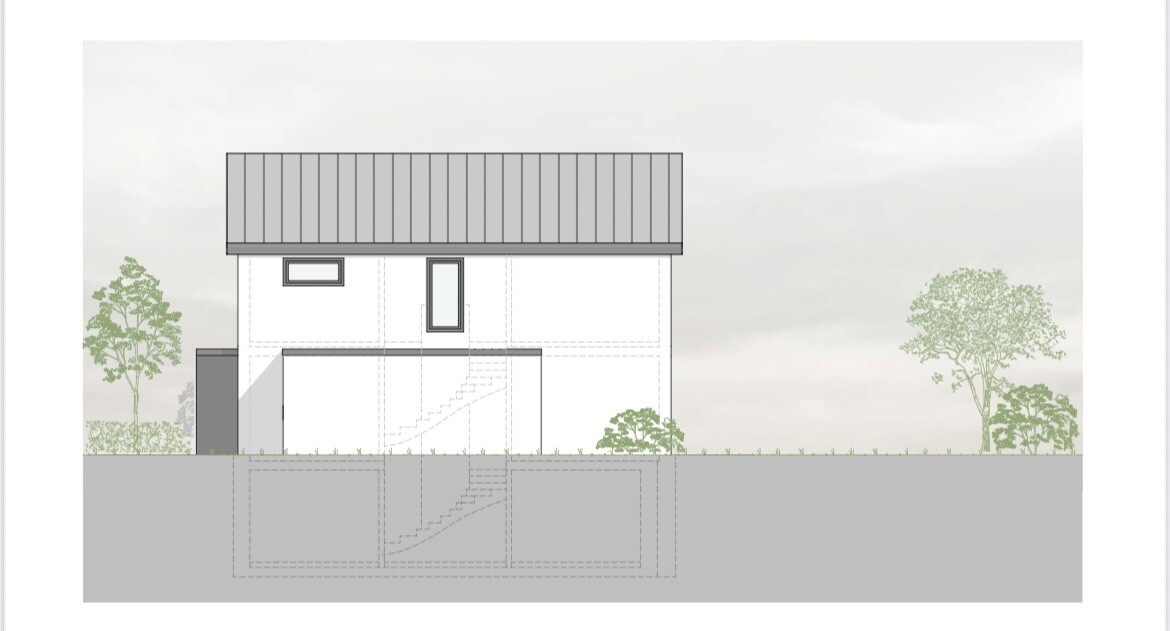
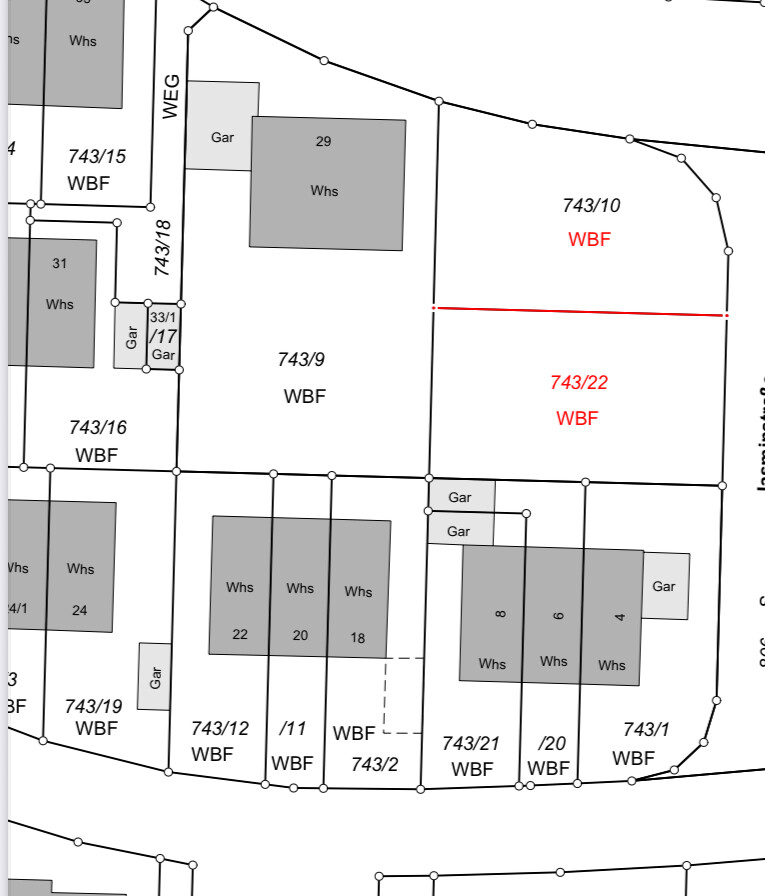
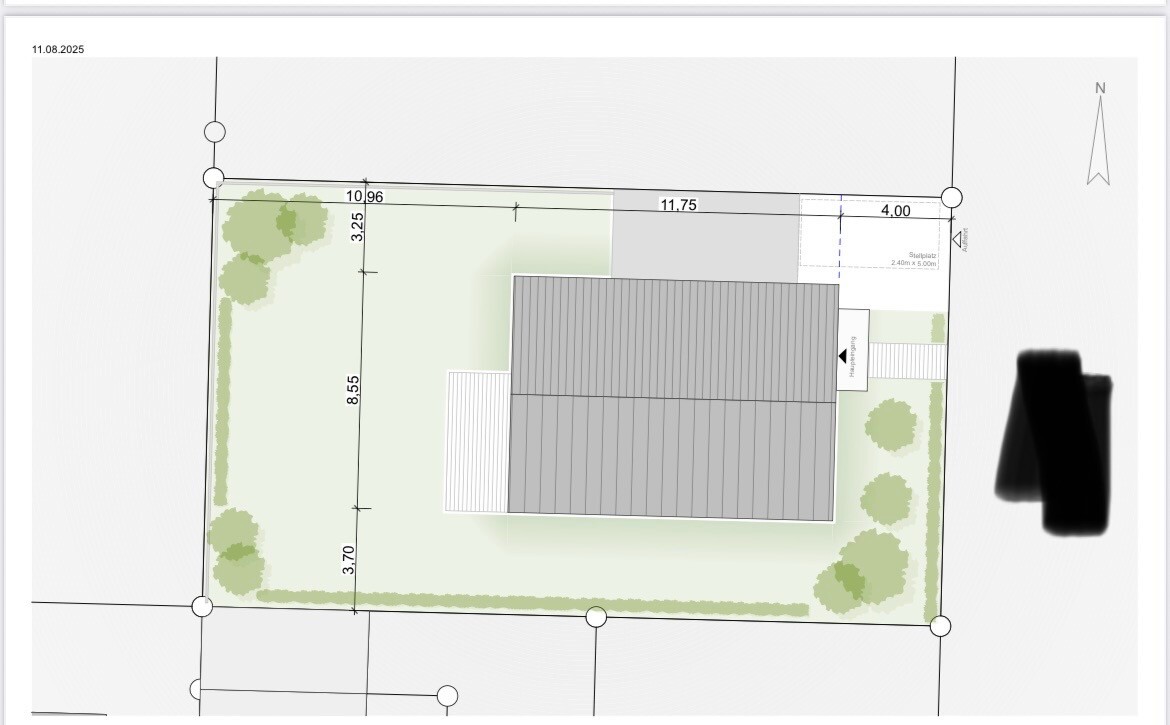
After reading many posts here and following the discussions closely, we would like to use the collective knowledge and your input to reconsider our design. Attached are the basic data.
Development Plan / Restrictions
Plot size: 414 sqm (4455 sq ft)
Slope: hardly any – 1.5 m (5 ft) gradient from northwest to southeast
Site occupancy index: 0.4
Floor area ratio: 0.8
Building envelope, building line and boundary: entire plot buildable, including a 4 m (13 ft) wide strip along the eastern property boundary, parcel 743/22
Edge development:
Number of parking spaces: 2
Number of floors: 2 full stories mandatory
Roof type: 28-degree (28°) pitched roof mandatory
Architectural style: classic
Orientation: south/west
Maximum height / limits: none
Other requirements:
Owners’ Requirements
Style, roof type, building type: classic with pitched roof
Basement, floors: finished basement, 2 full stories
Number of occupants, ages: 4 persons (42, 37, 3, 1)
Room requirements on ground floor and upper floor: as in current design
Office: home office
Occasional overnight guests: few
Open floor plan
Conservative building method
Open kitchen with island
Number of dining seats: at least 6
Fireplace: no
Music / stereo wall
Balcony, roof terrace: originally planned above the terrace, canceled for cost reasons
Garage / carport: garage for storage purposes
Additional wishes / special features:
- There should be a large living-dining area separated from the stairwell by a door (sound insulation), a large kitchen with island, one bathroom with shower in the basement including two rooms to likely be used when the children move to the basement later; currently playing room and office/guest room, separate walk-in wardrobe from master bedroom, two large children’s rooms upstairs each larger than 15 sqm (160 sq ft)
House Design
Design by: architect and DIY
What do you particularly like?
- Ground floor is especially liked due to the combination of a large room with clearly defined areas
What do you dislike?
- Bathroom layout upstairs is not optimal so far, since window should actually be larger and face east
- Master bedroom should ideally be separated from children’s bathroom or walk-in wardrobe
- Window of guest WC faces north and not next to entrance door
Price estimate based on initial offer: €500,000–520,000
Personal price limit for house including equipment: €550,000
Preferred heating technology: heat pump with photovoltaic system
If you had to give up something, which details or additions
- You could give up: pantry on ground floor
- You cannot give up: separate walk-in wardrobe upstairs, shower bathroom in basement, door to hallway on ground floor
Why is the design like this? For example:
First discussion with architect and 7 rounds of “corrections” / revisions based on our wishes
We look forward to your feedback!!
A
AnnaChris8812 Aug 2025 18:1611ant schrieb:
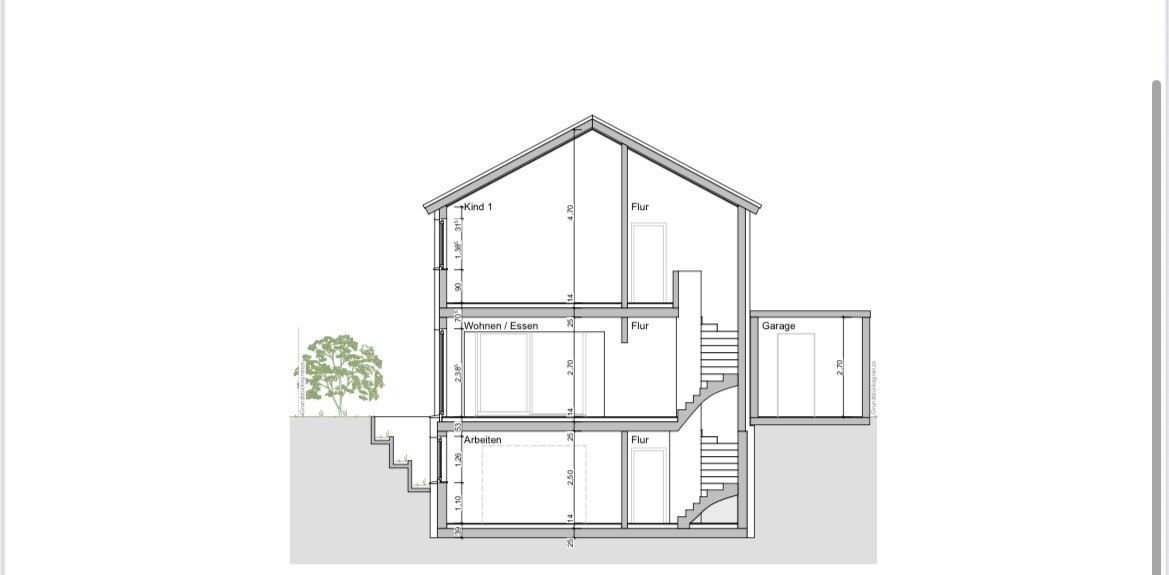
You can’t do anything with pretty but misleading drawings. If there is a height difference of one and a half meters, the terrain should not be shown as perfectly flat in the elevation drawings (or if it is planned to be leveled, that will cost a lot of excavator work—i.e., a lot of money; and possibly the landscaping itself becomes a construction element—including setback requirements). These are the typical major oversights from discount architects who mostly just want to produce superficially professional-looking images their clients will approve. Then there’s five and a half meters distance in front of the garage or from the street, including or excluding the unexplained four meters mentioned at the beginning? — with light wells that in the floor plans are only shown as light shafts, it goes on. At that point, it’s really pointless to fuss over a T-shaped bathroom layout. Instead of mostly duplicate images, I would have preferred the plot to include elevation points and that the drawings could be viewed in a separate tab to scale. At least with two other helpful responders, the pause button has effectively been hit. I also share the doubts regarding the mandatory two-story requirement.Thanks for your messages. I’ll try to work through everything 😉Well, this is a preliminary design—things like light wells haven’t been “drawn” yet but are definitely in our minds. Currently, the surveyor is measuring the plot precisely. The 1.5m (5 feet) is an estimate from me. Once we have the data, the architect will position the house in the plot accordingly.
My plan is not to fully level the site but to work with the slope somewhat, allowing the basement to “stick out” about 1m (3 feet) above ground to
a) reduce the amount of earthworks needed,
b) give the lower living spaces in the basement more light,
c) avoid excessive excavation and the need for a pumping system in the basement.
Since there is no height restriction and this has been done with two neighbors, I don’t see any problem. Or do you see problems apart from access to the front door involving a few steps? The two full stories are mandatory—that was confirmed by the building department themselves.
The utility room is large because it combines laundry, storage, and technical equipment all in one. We have a similar setup in our current rented semi-detached house and manage fine. We also have a playroom now, and it gets plenty of use.
My husband prioritized spaciousness, and I designed the rooms to fit our furniture (which is why there are relatively few floor-to-ceiling windows—to place furniture underneath).
We don’t want to do without the basement because when the children are young, it might even house an au pair, and separating the basement and upper floor offers more privacy and allows a dedicated playroom for the kids.
The estimate of around 500,000€ for the house is based on two quotes from prefab house suppliers using timber frame construction.
As already mentioned, I really like the suggestion about revising the hallway—that definitely needs work.
I made the pantry as small as possible because I expect we will mostly fill one wall with shelves and won’t need much space to move around inside.
I managed to talk my husband out of a kitchen island after your comments. My personal preference is a U-shaped kitchen.
So far, I haven’t found a solution for the bathroom on the upper floor, as I mentioned before.
The living area isn’t intended to have two separate lounge zones (at least not right now); one corner will probably become a spot for the children’s toys.
The children’s bedrooms are designed generously because we currently have about 14m² (150 ft²) per child, and we want to give them more space.
Our bedroom is “this long” because we have two 1.40m (55 inch) beds side by side.
The bathrooms are small—true. We based the size on what we have now. I would have liked to give more space, but the architect pointed out structural and load-bearing walls, so all three levels are divided into roughly equal thirds.
The idea of placing the parents in the basement from the start, and the children upstairs, sounds really interesting—we will reconsider that.
The 5.35m (17.6 feet) slipped past me—it seems to have been lost in one of the revisions since it was in the beginning.
Thanks for all your input!
AnnaChris88 schrieb:
The estimate of around €500,000 (about $540,000) to build the house is based on two quotes from prefab home suppliers using a timber frame construction method. If they say so, it’s probably true... unless this comment has some merit. It’s only €220,000 (about $240,000) difference, but apparently this possible gap is significant.
ypg schrieb:
I calculated about 80 square meters (860 square feet) on the ground floor. Over three floors, that’s 240 square meters (2,580 square feet). At €3,000 (about $3,250) per square meter for standard living space, that comes to €720,000 (about $780,000). You didn’t receive a "quote," but rather a completely non-binding estimate that no one takes responsibility for—except you.
240 square meters (2,580 square feet) for €500,000 (about $540,000)? Name those suppliers; they’d be swamped with customers if that were true, especially since you want to build to KfW 40 standards...
We built to KfW 40 standards ourselves, so I at least have some experience with this.
AnnaChris88 schrieb:
The fact that the house can be built for around €500,000 is based on two offers from two prefab home providers using timber frame construction. May I ask if that includes a basement or not? Without a basement, the estimate makes perfect sense. A basement can’t really be built with timber frame construction. Prefab home providers usually offer from the top of the foundation slab or with a basement.
Arauki11 schrieb:
If they say so, then it’s probably true……unless this objection is valid. Even if it’s only €220,000, this possible difference seems to matter. .. then I also see the difference without a basement.
A house simply costs money per square meter, whether underground, above ground, in Flensburg, Meppen, or Passau. Small variations are always possible, but not by a third.
We can only point that out.
AnnaChris88 schrieb:
Things like light wells haven’t been “drawn in” yet. Actually, on average they are included.
AnnaChris88 schrieb:
My plan wouldn’t be to fully compensate for that either, Why would you? Then the light well’s location wouldn’t make sense.
AnnaChris88 schrieb:
Or do you see any problems, apart from the access to the front door requiring a few steps? Why would the front door have steps?
AnnaChris88 schrieb:
My husband valued spaciousness, and I basically designed the rooms so our furniture fits (which is why there are relatively few floor-to-ceiling windows so we can place furniture under the windows). Spaciousness is usually achieved by having floor-to-ceiling windows. Window sills protect but visually reduce the sense of space.
AnnaChris88 schrieb:
Possibly also to accommodate an au pair. Oops… that changes quite a few things, in my view.
AnnaChris88 schrieb:
The living area isn’t meant for two separate chill-out zones (at least not yet), but toys will likely end up in one corner here as well. Here too? Then the kids will have their own bedrooms, a playroom, and the living room for spreading out… for those who like that.
AnnaChris88 schrieb:
I would have liked to do a bit more with the whole thing, but the architect pointed out the structural engineering and load-bearing walls, so all three levels are divided into thirds. I thought it was timber frame? On the upper floor, for example, only the roof is supported by 2–3 studs, as far as I know.
 Papierturm12 Aug 2025 20:00
AnnaChris88 schrieb:
The technical room is so large because it is meant to combine the utility room, storage room, and technical equipment all in one. We have this setup in our current rented semi-detached house and it works well for us. We also have a playroom now, which is used frequently. Even if the layout actually fits this purpose, I would still be somewhat cautious. Depending on the technical equipment, which could be quite different from the previous house, utility rooms can sometimes be significantly warmer and therefore less suitable for storage.
That the house can be built for around €500,000 was based on two offers from two turnkey house manufacturers using timber frame construction. Unfortunately, I am quite sure that the costs for the basement as well as additional construction-related expenses will still be added. I would be very surprised if that were not the case.
(Also: Check whether timber frame construction is really the best option for the plot.)
I made the pantry as small as possible because I think we will only fill one wall with shelves and won’t need much space to move around. Rooms should remain functional for everyday use. Having so little space to move around is likely to turn the room into an unloved clutter storage.

AnnaChris88 schrieb:
So this is a preliminary design – elements like light wells haven’t been “drawn” yet but are already envisioned. Currently, the surveyor is precisely measuring the site. The 1.5m (5 feet) is my own estimate. With this data, the architect will then position the house on the plot. No, this is not a preliminary design! – apparently, there is no such stage here at all (which, in my opinion, is a serious mistake).
A preliminary design is not just a “like it or not” draft; it is an independent development phase of the design process. It takes place during design phase 2 and must be preceded by a thorough examination of the topographical and legal conditions of the site — these essential tasks must be completed before any drawing can begin.
In this context, you should actually mention the zoning plan (without a link!), for example “Posemuckel No. 123 ‘Karl-Ranseier Settlement’.”
A preliminary design translates a qualified spatial program into a volume-accurate building form and cannot possibly be created without first having conclusively reviewed the site conditions and the zoning regulations.
Impatiently sketching before completing these fundamental homework tasks is childish, naive dream-building and a waste of time and fees!
Then, to spend a lot of money adapting the site to a fantasy house that is not based on reality, you wouldn’t need an architect paid for an individual design. I suspect that here a so-called architect is practicing more like an “artist.” Such architects, as @Gerddieter warns, regularly only offer the first half of the process (design phases 1 to 4 or 1 to 3), have too little or no experience with the second half, and tend to give cost estimates that were outdated at the start of their studies. One should really call these “hopes” rather than “estimates.”
Once their “designs” are “finalized” (meaning not serious building readiness but mere internal agreement that the design is liked as is), house manufacturers or other general contractors reveal that (one could have saved the artist’s tuition fees) the house must now unfortunately be smaller due to budget restrictions and therefore entirely redesigned again. Then a poor building permit drafter tries to rescue what they can from the spirit of this “we like it now” design. Regarding Yvonne, Katja, Kerstin, and [USER=59988]@hanghaus2023: what is your profession, by the way? Here we regularly see mature suggestions, while these discount architects don’t even seem to feel the slightest shame!
AnnaChris88 schrieb:
I was able to talk my husband out of the kitchen island based on your comments. My favorite option now is a U-shaped kitchen. Even if the husband, as Frau Jahnke so nicely puts it, “lives indoors,” the decisive say should go to the one who, in most cases, does the majority of the kitchen work.
https://www.instagram.com/11antgmxde/
https://www.linkedin.com/company/bauen-jetzt/
H
hanghaus202313 Aug 2025 14:18Before the actual heights are known, I will not join the pipe dream.
Without a basement, it might be possible to manage within the budget.
Without a basement, it might be possible to manage within the budget.
Similar topics