
Hello everyone,
I would appreciate your feedback on the floor plans.
Development Plan / Restrictions:
· Plot size: 1,200 m² (18 m (59 inches) wide)
· Slope: south-facing hill, street to the north
· Site coverage ratio: 0.3
· Floor area ratio: 0.6
· Building envelope, building line, and boundary: see "enlarged building envelope" 12 x 14 m (39 x 46 feet)
· Edge development: garages
· Number of parking spaces: 3 required according to building authority
· Construction type: open building layout
· Building setback: 3 m (10 feet)
· Roof type: pitched roofs 15-30°, hipped roofs to be avoided, see regulations
· Orientation: ridge direction of the buildings parallel to each other
· Exterior design: see section 6 of the regulations
Homeowners’ Requirements
Preliminary: The homeowners (born 1982 male, 1988 female, and two children born 2014 female, 2016 male) want to live on two floors (basement and ground floor). A third children’s bedroom should also be included. The third floor (attic) should be accessible barrier-free.
· Style: Bauhaus (optionally exposed concrete)
· Roof design: large south-facing side (for solar panels, photovoltaics)
· Building type: two-family house
· Basement and floors: basement, ground floor, attic
· Number of occupants and ages as above: (2 + 3 in basement and ground floor, 2 + 1 in attic)
o Space requirements attic: 2 bedrooms, 1 flexible floor plan bathroom, open living/dining/kitchen area, utility room
o Space requirements ground floor: 1 master bedroom, walk-in closet, master bathroom, large open living/dining/kitchen area, wardrobe, storage room
o Space requirements basement: 3 children’s bedrooms, children’s bathroom, optional play corridor, boiler room, cellar, utility room
· Open or closed architecture: open
· Conservative or modern construction: modern
· Kitchen: open kitchen with island (at least on ground floor)
· Balcony, roof terrace: likely sensible on all three floors considering exposed concrete
· Parking spaces: carports if possible, which can later be converted into garages (initial cost saving)
· Heating/thermal technology: air-to-water heat pump (underfloor heating), optional photovoltaics
· Windows: large window areas on the south side, optionally wide, low windows above the kitchen worktop on the ground floor
· Energy efficiency: KfW 55 standard
· High sound insulation (especially for the ceiling of the attic, separate residential unit)
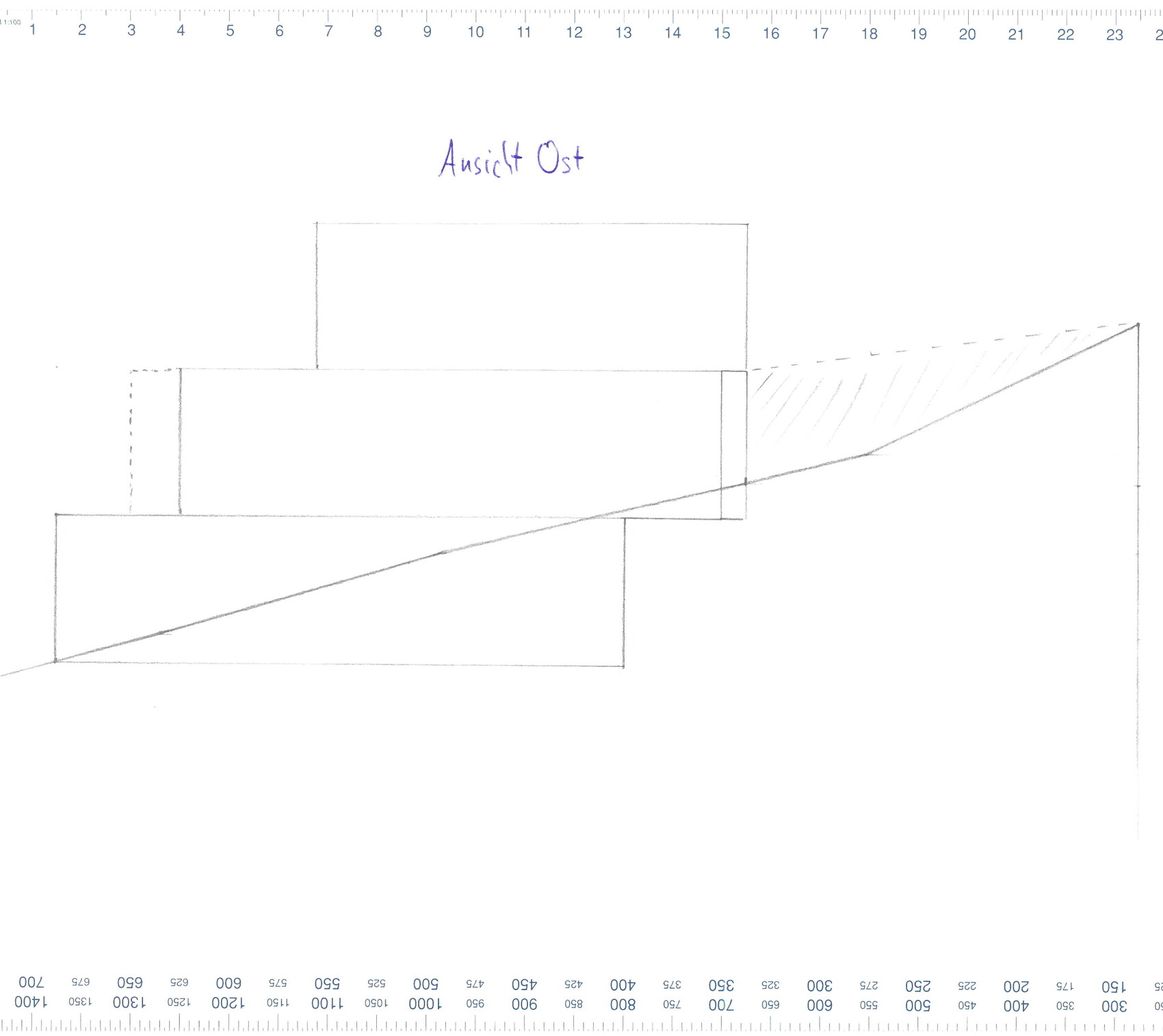
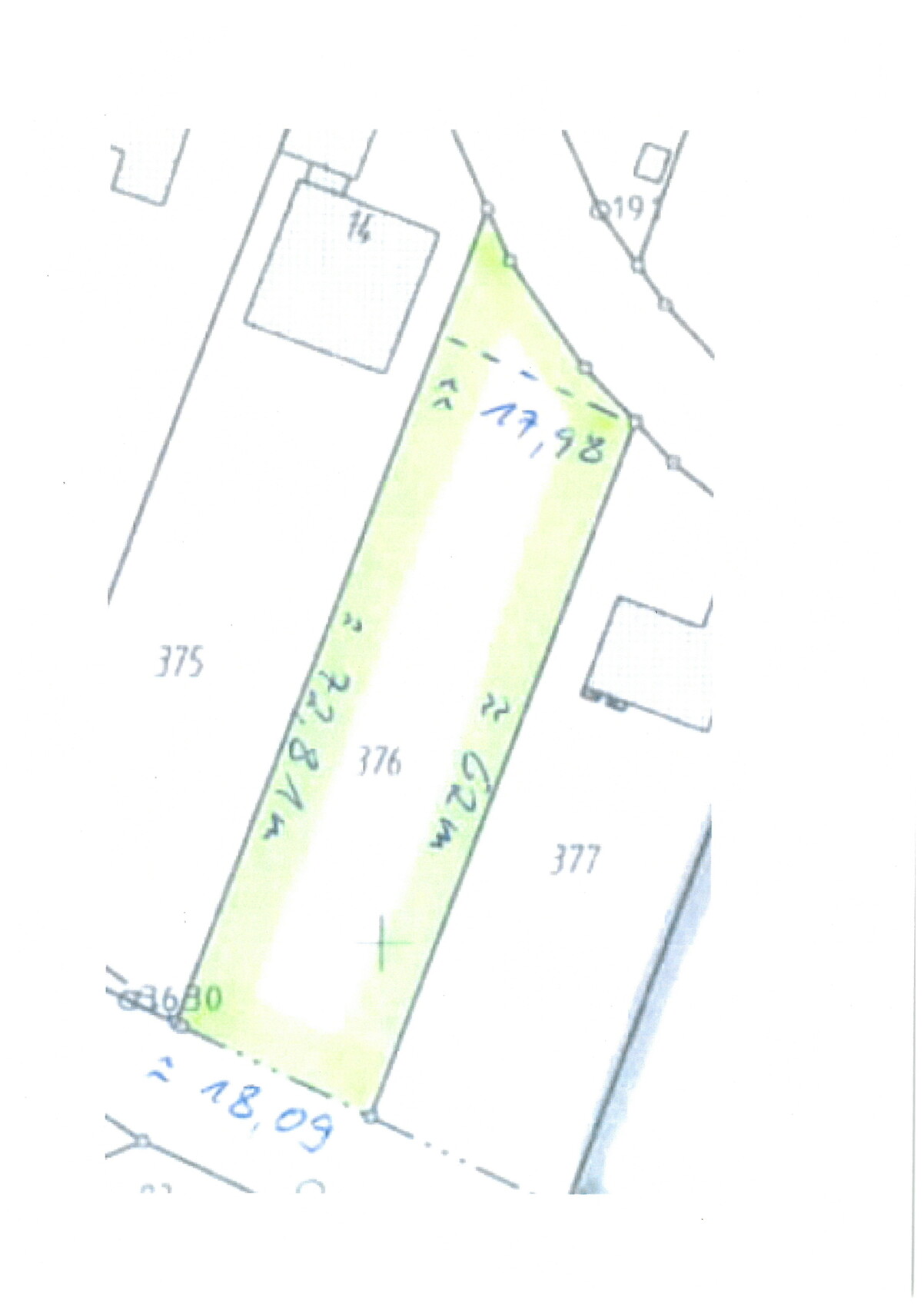
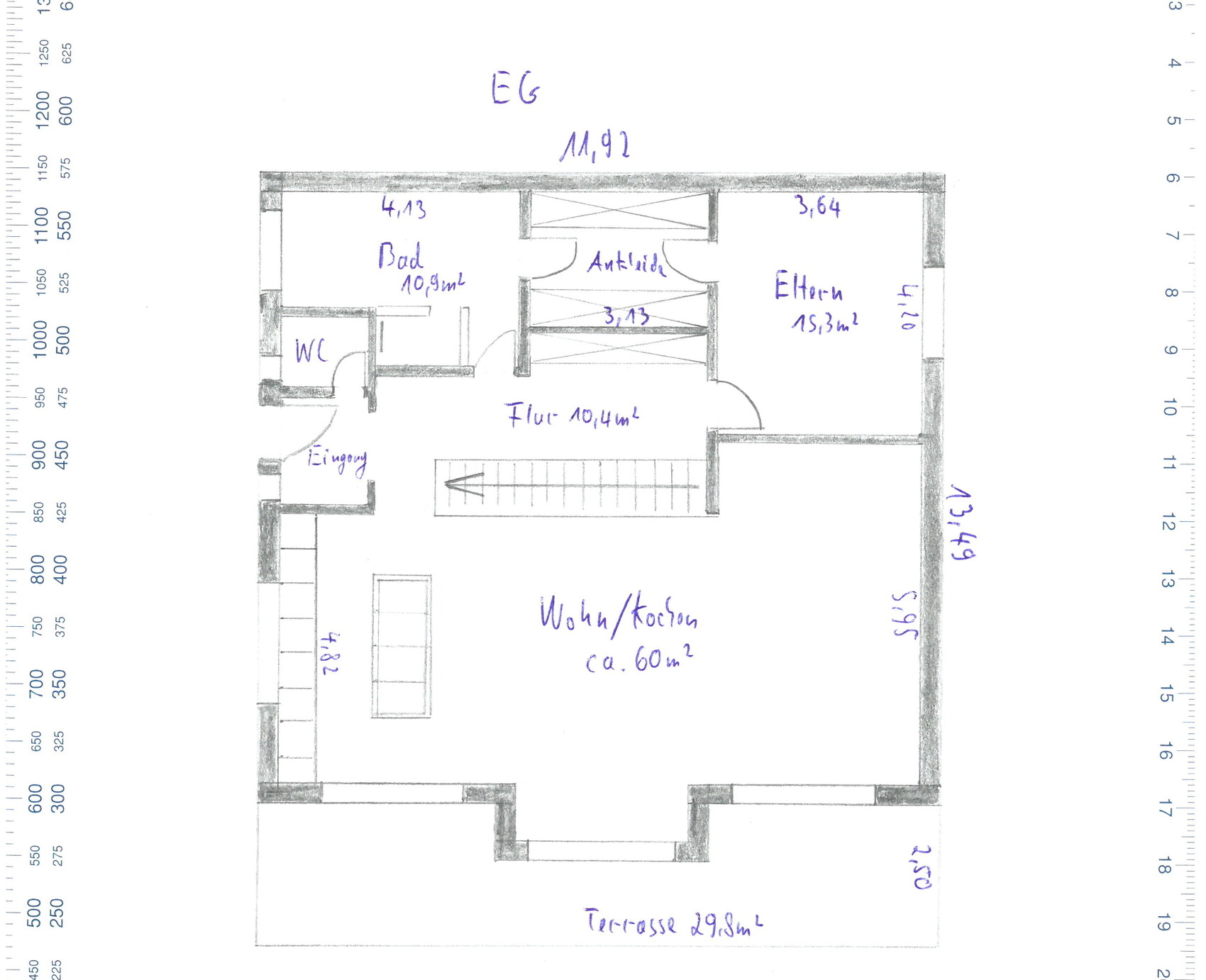
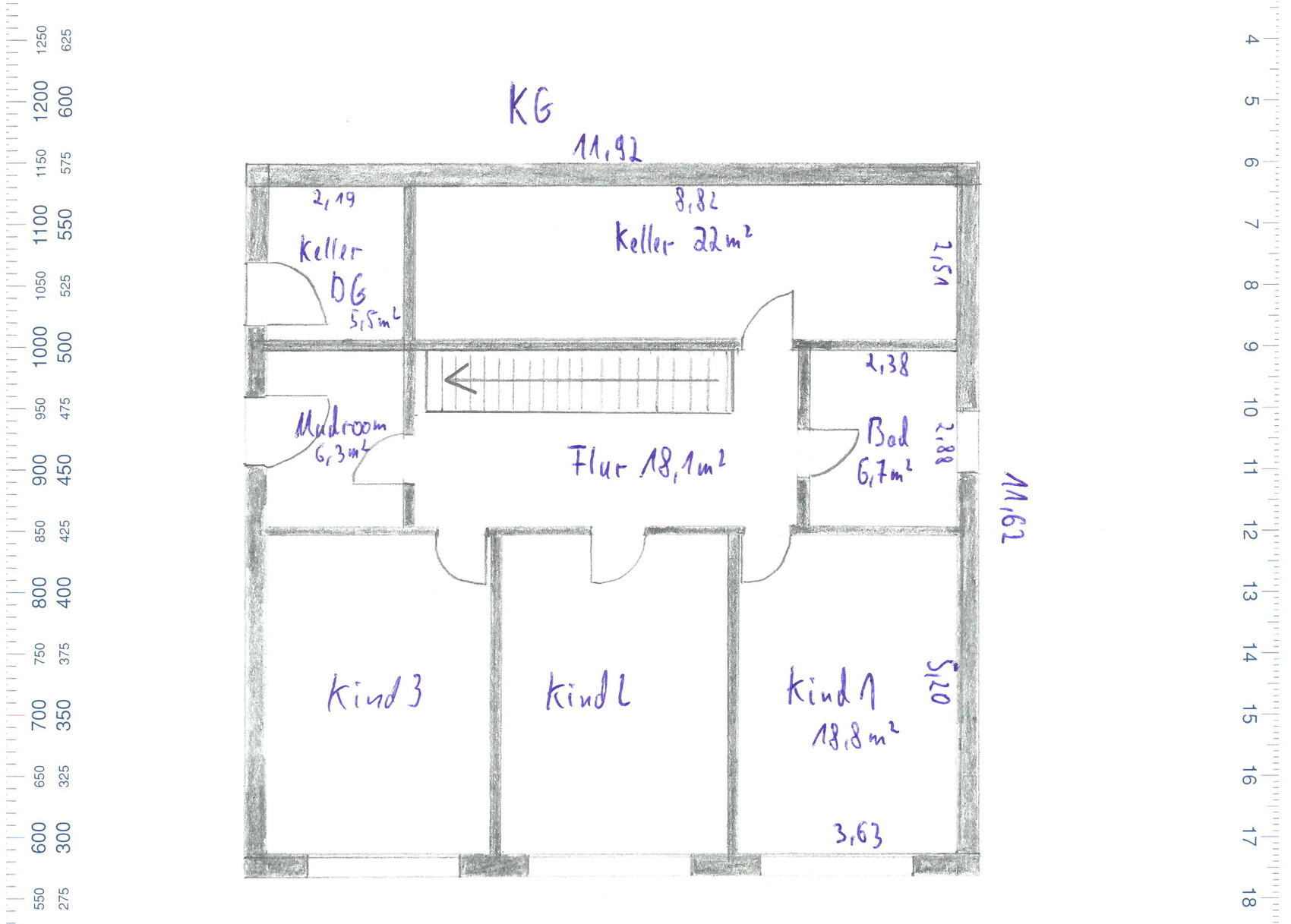
I would appreciate your feedback on the floor plans.
Development Plan / Restrictions:
· Plot size: 1,200 m² (18 m (59 inches) wide)
· Slope: south-facing hill, street to the north
· Site coverage ratio: 0.3
· Floor area ratio: 0.6
· Building envelope, building line, and boundary: see "enlarged building envelope" 12 x 14 m (39 x 46 feet)
· Edge development: garages
· Number of parking spaces: 3 required according to building authority
· Construction type: open building layout
· Building setback: 3 m (10 feet)
· Roof type: pitched roofs 15-30°, hipped roofs to be avoided, see regulations
· Orientation: ridge direction of the buildings parallel to each other
· Exterior design: see section 6 of the regulations
Homeowners’ Requirements
Preliminary: The homeowners (born 1982 male, 1988 female, and two children born 2014 female, 2016 male) want to live on two floors (basement and ground floor). A third children’s bedroom should also be included. The third floor (attic) should be accessible barrier-free.
· Style: Bauhaus (optionally exposed concrete)
· Roof design: large south-facing side (for solar panels, photovoltaics)
· Building type: two-family house
· Basement and floors: basement, ground floor, attic
· Number of occupants and ages as above: (2 + 3 in basement and ground floor, 2 + 1 in attic)
o Space requirements attic: 2 bedrooms, 1 flexible floor plan bathroom, open living/dining/kitchen area, utility room
o Space requirements ground floor: 1 master bedroom, walk-in closet, master bathroom, large open living/dining/kitchen area, wardrobe, storage room
o Space requirements basement: 3 children’s bedrooms, children’s bathroom, optional play corridor, boiler room, cellar, utility room
· Open or closed architecture: open
· Conservative or modern construction: modern
· Kitchen: open kitchen with island (at least on ground floor)
· Balcony, roof terrace: likely sensible on all three floors considering exposed concrete
· Parking spaces: carports if possible, which can later be converted into garages (initial cost saving)
· Heating/thermal technology: air-to-water heat pump (underfloor heating), optional photovoltaics
· Windows: large window areas on the south side, optionally wide, low windows above the kitchen worktop on the ground floor
· Energy efficiency: KfW 55 standard
· High sound insulation (especially for the ceiling of the attic, separate residential unit)
S
sichtbeton8215 Mar 2019 09:43Here is an updated progress report. The exterior walls on the ground floor are now being constructed. The drainage system has been installed, and backfilling with the excavated soil is happening simultaneously.
We plan to use the rainwater from the roof and paved areas—at least for irrigation stored in a cistern, and possibly as a supply for a pool or pond. I am considering a mechanical filter to, for example, stop bird nests from the roof.
What do you think about the Mall pre-filter shaft V? Do you know of any alternatives?
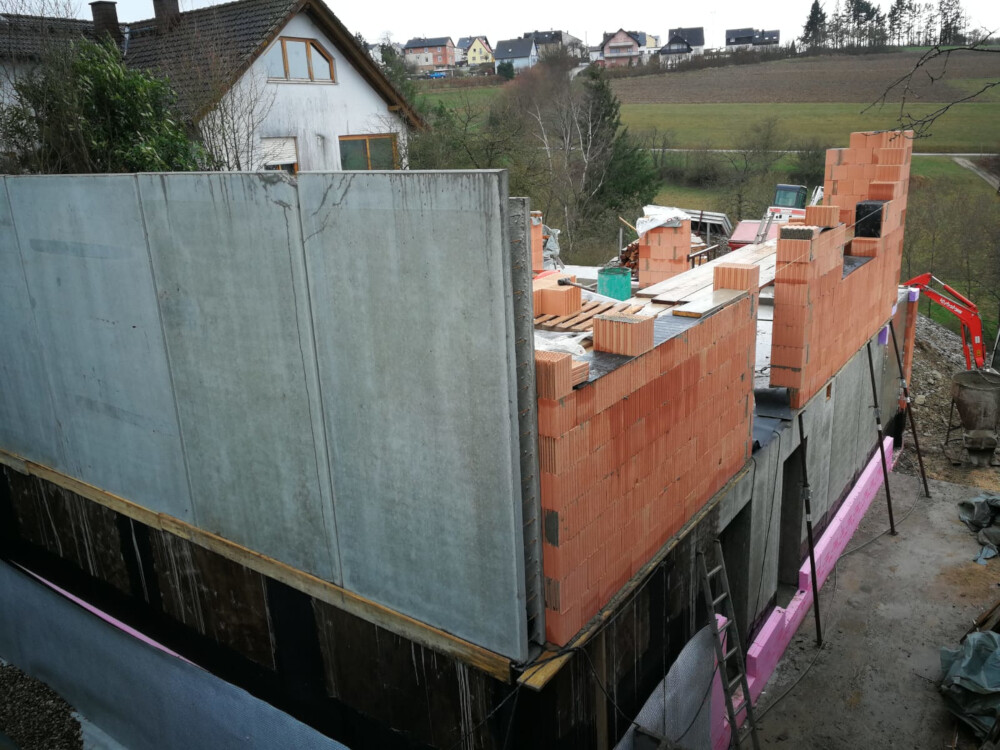
We plan to use the rainwater from the roof and paved areas—at least for irrigation stored in a cistern, and possibly as a supply for a pool or pond. I am considering a mechanical filter to, for example, stop bird nests from the roof.
What do you think about the Mall pre-filter shaft V? Do you know of any alternatives?
S
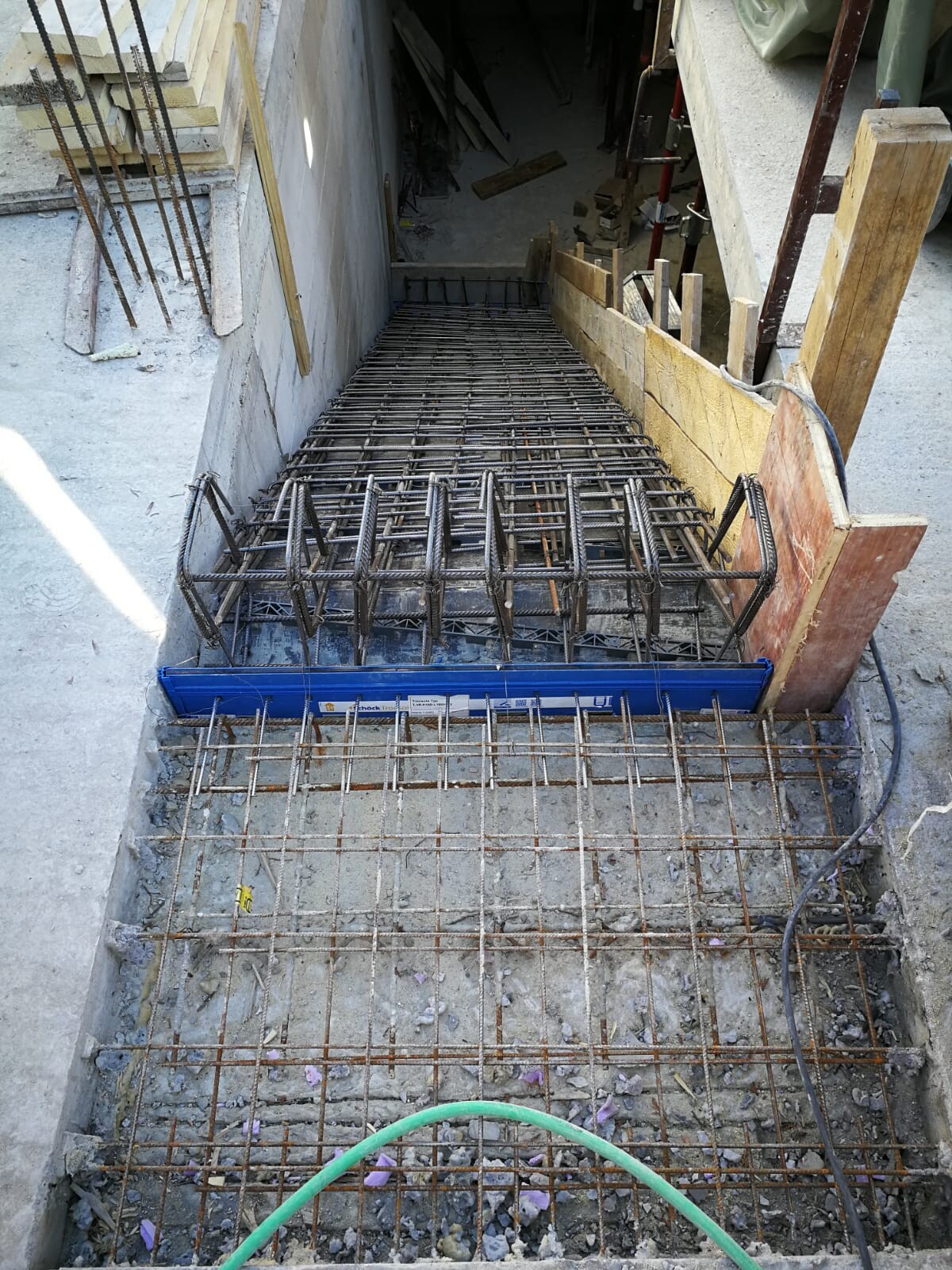
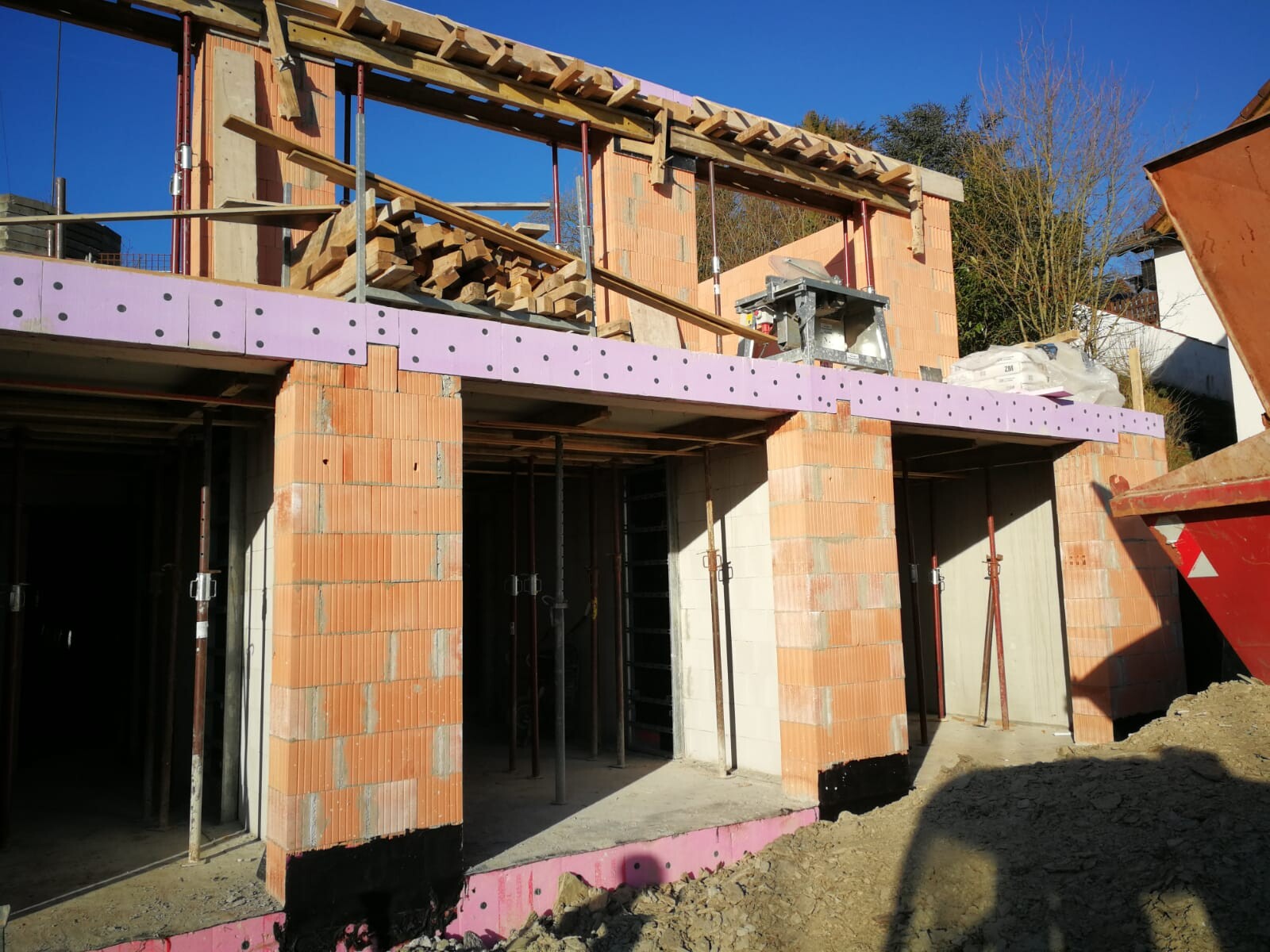
sichtbeton8222 Mar 2019 11:49And we continue! The steel for the interior staircase is in place, and the walls on the ground floor are rising.

S
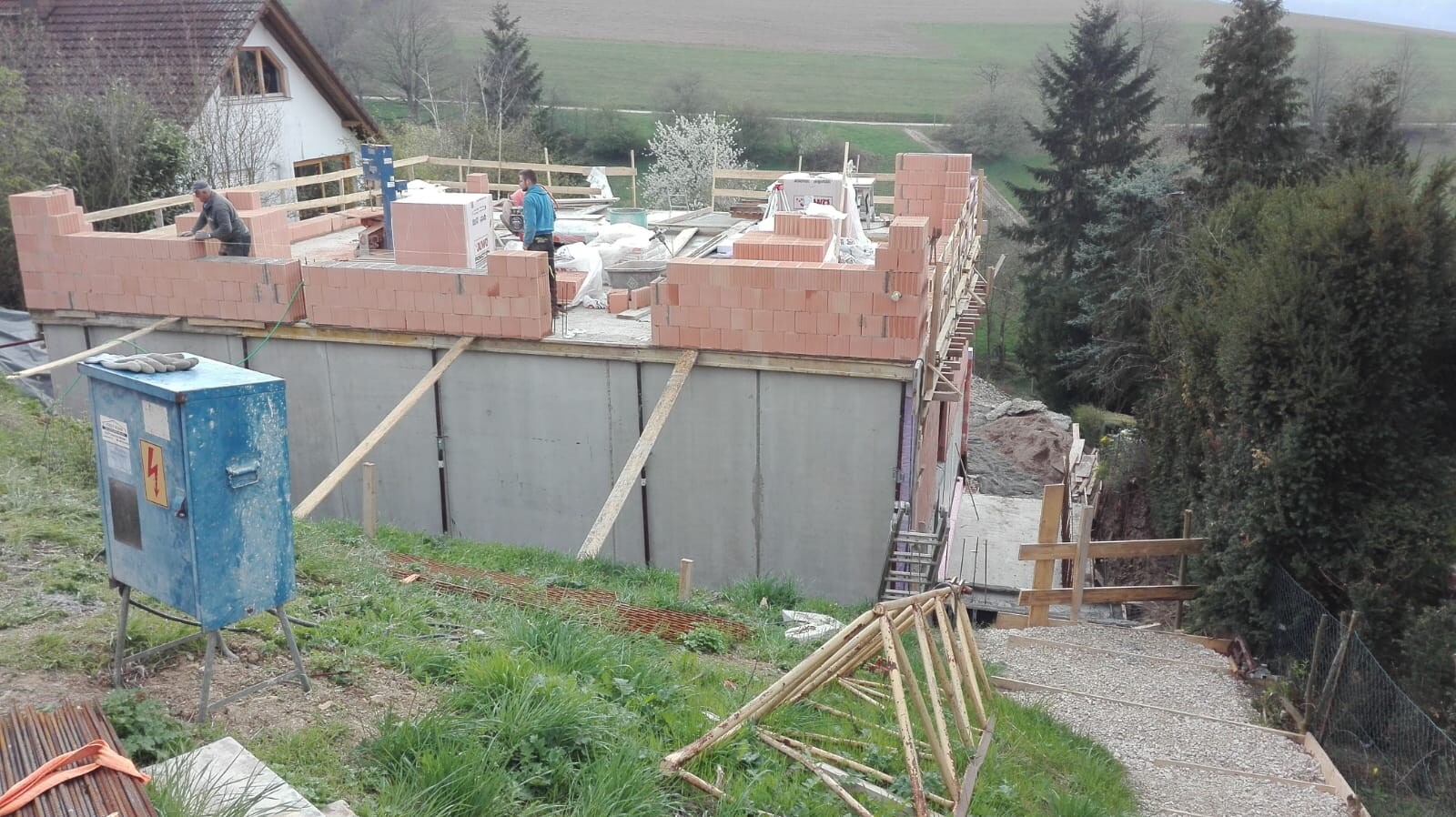
sichtbeton829 Apr 2019 07:30Following the saying “all good things come in threes,” the construction of the third floor has begun. The view surpasses that from the second floor.
So far, everything is still running smoothly. Well, dealing with the multi-utility application process has cost me some nerves. It really is quite an excessive amount of paperwork. I’m actually a professional in the field, working for an energy supplier (not the local one). Although not directly in this area, I at least have some relevant knowledge. For the average homebuilder, this can be extremely overwhelming. I’ve already said that the multi-utility process will probably cost me more hair than the entire house construction itself.
I also tried taking a drone photo. The drone took off but ended up stuck in a neighbor’s tree two properties away after 3-4 seconds. I’ll keep trying but will practice first in a remote field.
So far, everything is still running smoothly. Well, dealing with the multi-utility application process has cost me some nerves. It really is quite an excessive amount of paperwork. I’m actually a professional in the field, working for an energy supplier (not the local one). Although not directly in this area, I at least have some relevant knowledge. For the average homebuilder, this can be extremely overwhelming. I’ve already said that the multi-utility process will probably cost me more hair than the entire house construction itself.
I also tried taking a drone photo. The drone took off but ended up stuck in a neighbor’s tree two properties away after 3-4 seconds. I’ll keep trying but will practice first in a remote field.
I wish you continued steady progress with your build. I’m curious to see how it will look when finished.
Regarding the drone, you should definitely practice flying it. Is it still operational?
Please make sure to follow the current drone regulations (insurance, fireproof marking, etc.). Flying a drone with a camera over a neighbor’s property is now prohibited, even at greater heights. In such cases, the property owner’s permission is required.
Regarding the drone, you should definitely practice flying it. Is it still operational?
Please make sure to follow the current drone regulations (insurance, fireproof marking, etc.). Flying a drone with a camera over a neighbor’s property is now prohibited, even at greater heights. In such cases, the property owner’s permission is required.
Similar topics