
ᐅ Floor plan design for a new build modern semi-detached house with 6-meter ceiling height and 239 square meters of living space
Created on: 9 Nov 2025 23:46
L
lucaskilam
Hello everyone,
I am planning to demolish my existing semi-detached house and build a modern residential building on my property.
The new house will again be attached directly to the existing neighboring half.
The plot measures 1,027 sqm (about 11,060 sq ft), and the design comes from my architect.
I would appreciate honest and constructive feedback on the floor plan and room layout.
Elevations and floor plans are attached.
Development plan / restrictions
Client requirements
House design
I look forward to honest criticism and suggestions for improvement, especially regarding:
Thank you in advance for your feedback!
Best regards,
lucaskilam
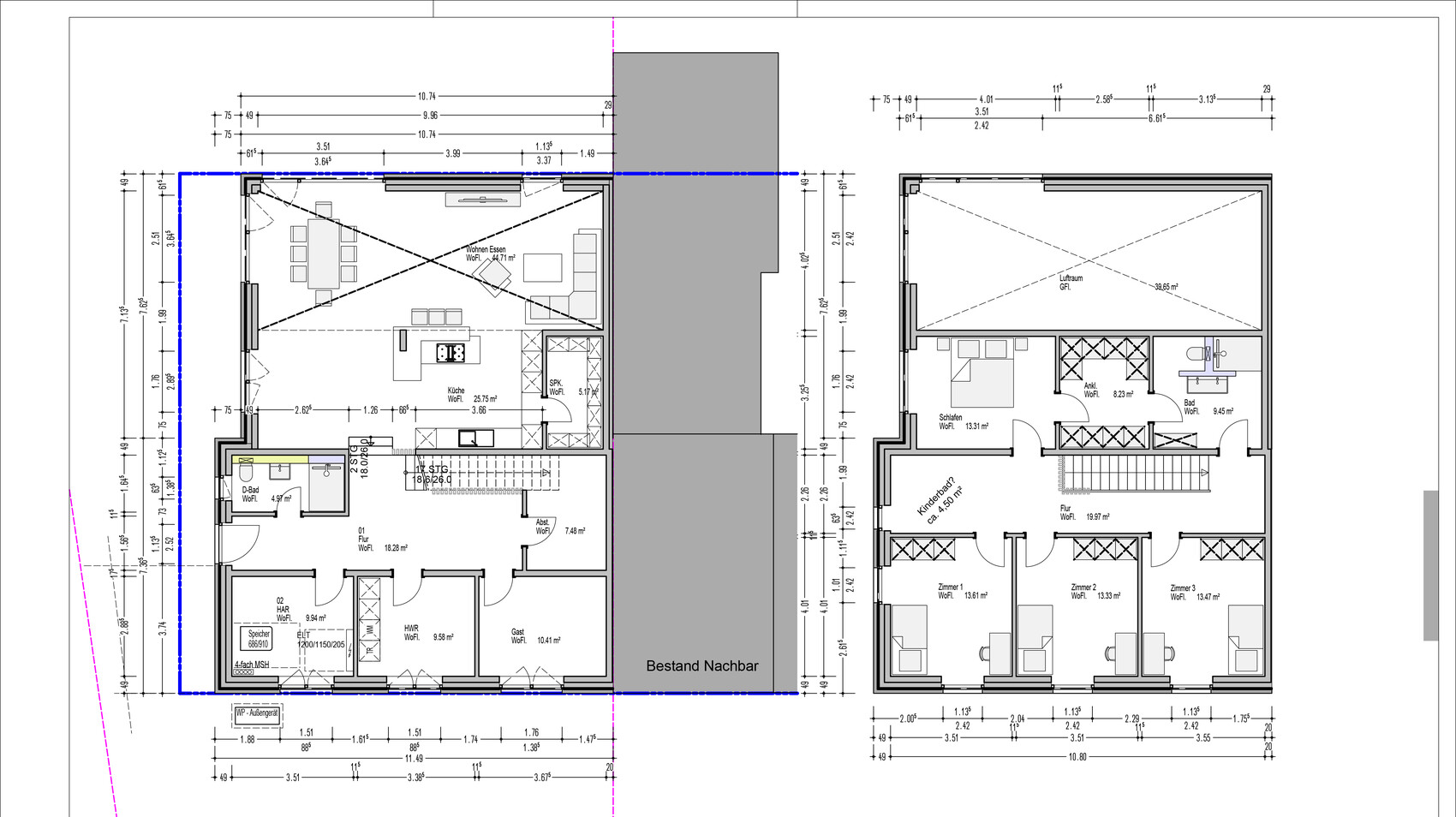
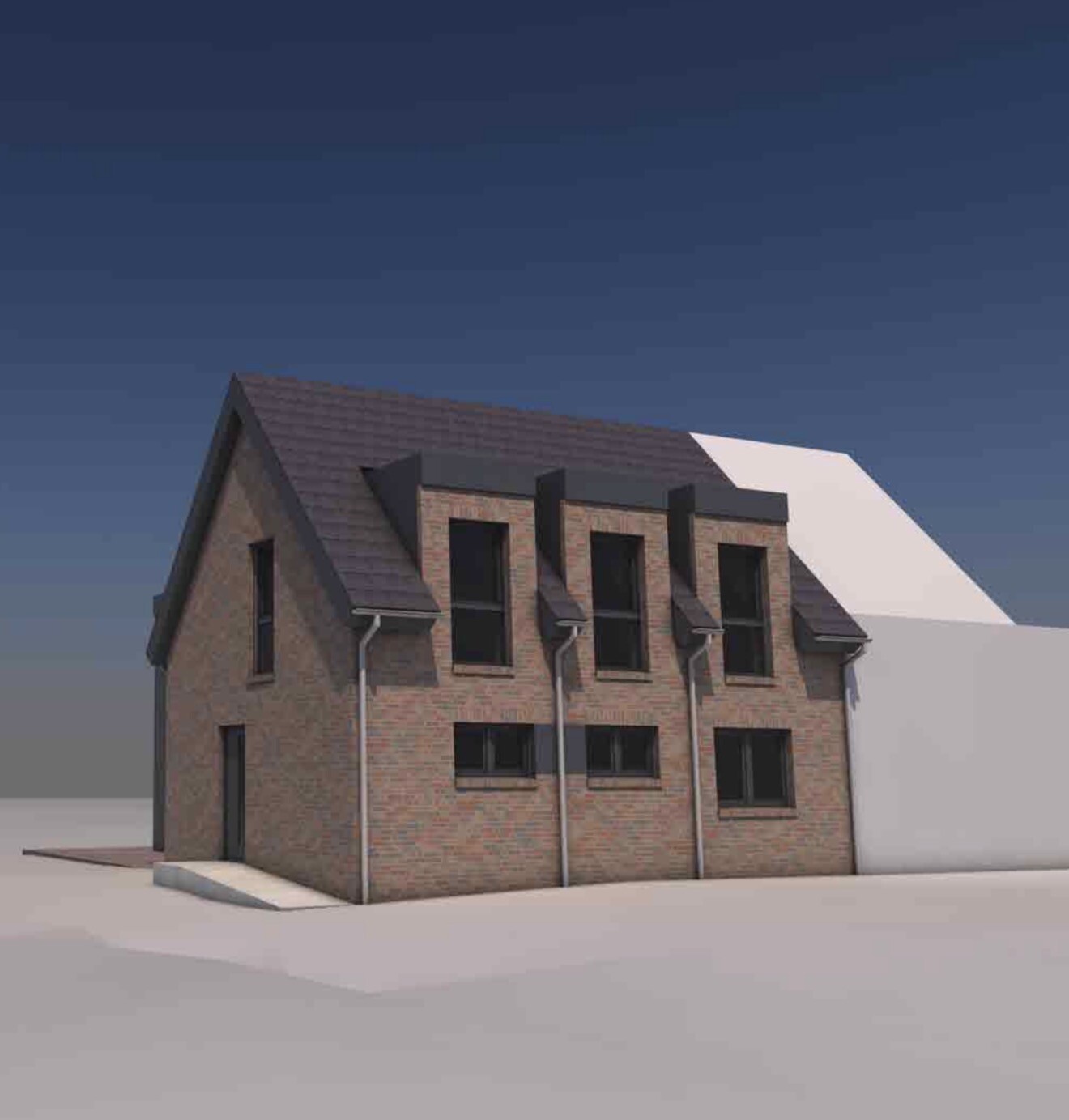
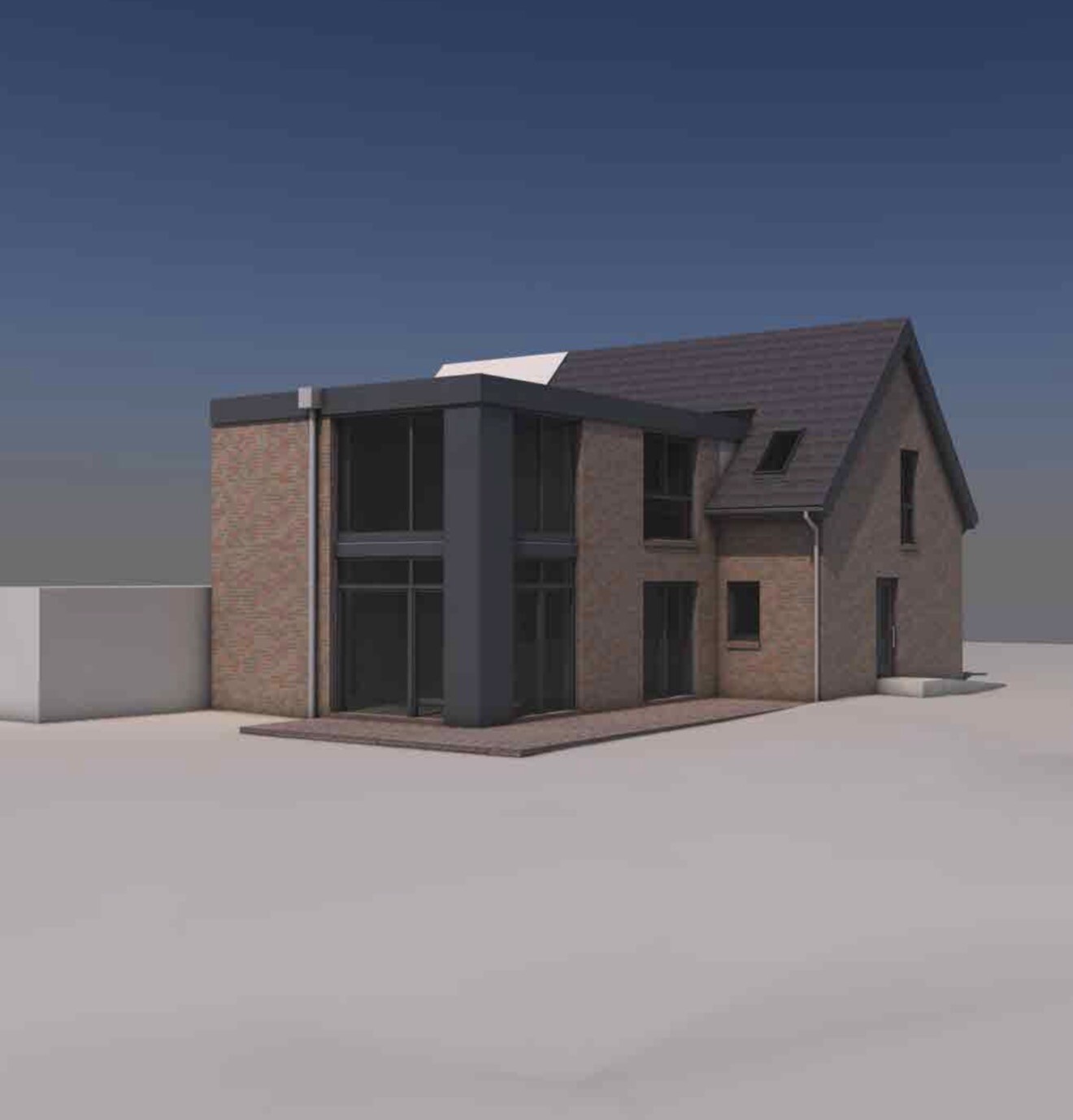
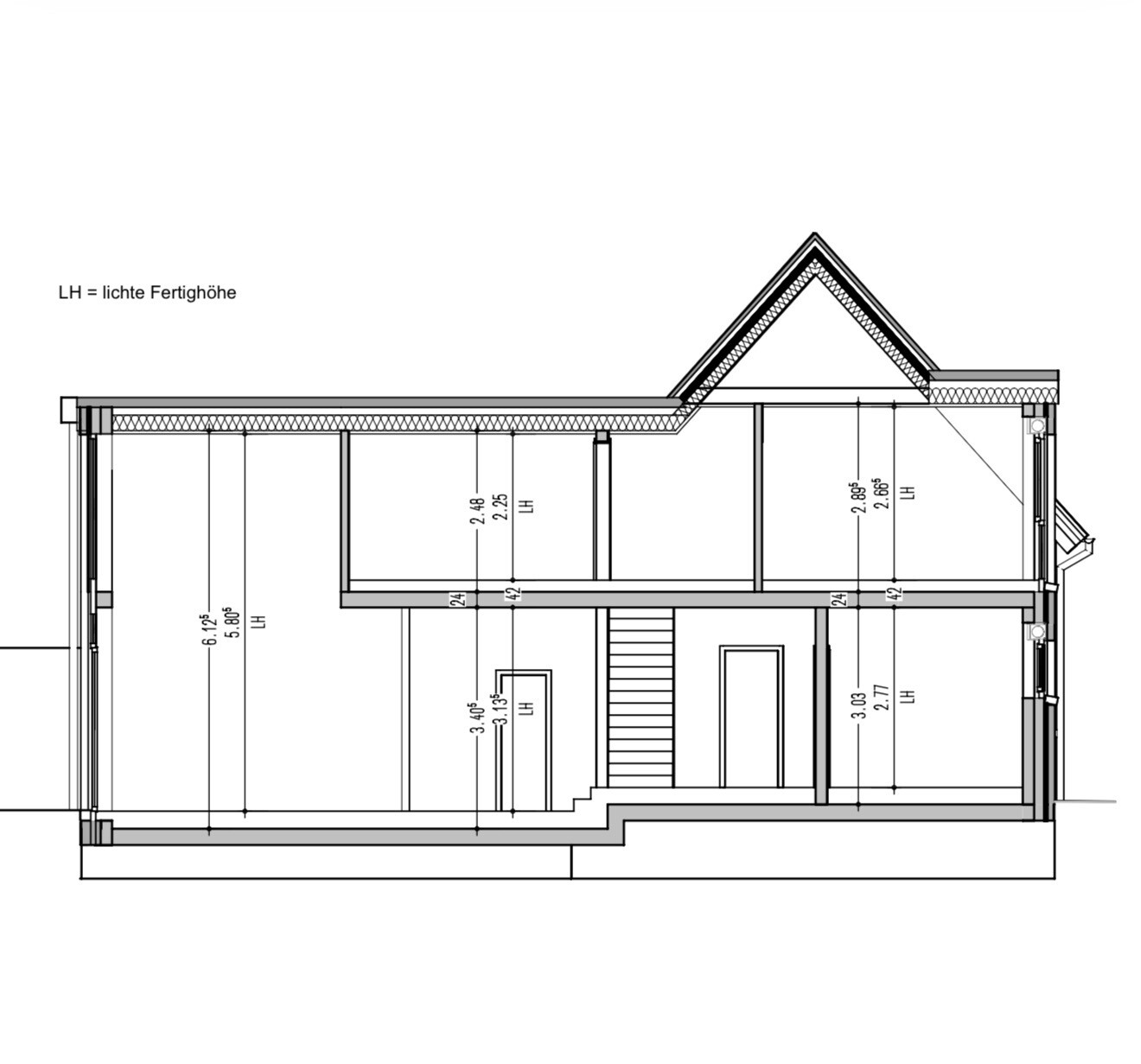
I am planning to demolish my existing semi-detached house and build a modern residential building on my property.
The new house will again be attached directly to the existing neighboring half.
The plot measures 1,027 sqm (about 11,060 sq ft), and the design comes from my architect.
I would appreciate honest and constructive feedback on the floor plan and room layout.
Elevations and floor plans are attached.
Development plan / restrictions
- Plot size: 1,027 sqm (half share use for semi-detached house)
- Slope: no slope, flat area
- Site coverage ratio: 0.3
- Floor area ratio: 0.5
- Building envelope / building line / building boundary: according to development plan, semi-detached house permitted
- Edge development: attached to existing neighboring half
- Number of parking spaces: 2
- Number of floors: 1.5 floors
- Roof type: gable roof
- Architectural style: modern, clean lines
- Orientation: garden facing southwest
- Maximum building height: 10 m (33 ft)
- Other requirements: only one full storey allowed
Client requirements
- Building type: semi-detached house, new build after demolition
- Basement: no
- Living area: approx. 239 sqm (2,572 sq ft)
- Occupants: 5 persons (2 adults, 3 children)
- Ceiling height in living area: approx. 6 m (20 ft)
- Living/dining area: approx. 44 sqm (473 sq ft), open and bright
- Office: home office on ground floor
- Guest bedrooms: rare use (max. 2–3 times per year)
- Architecture: open, modern, large windows
- Construction method: solid construction
- Kitchen: open with cooking island
- Seating capacity: 6–8 people
- Fireplace: not planned
- Music/stereo wall: possible
- Balcony / roof terrace: currently not planned
- Garage / carport: double carport
- Garden: low maintenance, for family use
- Special features: high, open living area with gallery
House design
- Designed by: independent architect
- Positive aspects: the open living area with gallery and high ceiling, generous lighting
- Less favorable aspects: access to the gallery not yet optimal
- Price estimate according to architect: approx. 850,000 euros (including fittings, excluding landscaping)
- Personal budget limit: approx. 900,000 euros
- Heating system: air-to-water heat pump with underfloor heating
- Could be omitted: guest room on ground floor
- Must have: high ceiling in living area, open kitchen, gallery
- Reason for design: combination of modern living concept and development plan requirements (only 1 full storey, mandatory attachment)
- Special features: despite semi-detached structure, a spacious feel through 6 m ceiling height and open gallery
I look forward to honest criticism and suggestions for improvement, especially regarding:
- Floor plan layout
- Lighting and window areas
- Proportions with 1.5 floors
- Practical everyday use (family with three children)
Thank you in advance for your feedback!
Best regards,
lucaskilam
L
lucaskilam13 Nov 2025 08:46Arauki11 schrieb:
You dream of a 6-meter (20 feet) high ceiling? Wow.
As I said before, try to let go of such fixed ideas, but still keep in mind that it should be something special to you.
Such details shouldn’t really be set in stone; the architect should have the freedom to design. Apparently, you tend to decide on such "unnecessary" things in advance.
What I might decide for myself, for example: a highly insulated house, possibly at least partially a wooden facade or maybe a bold exterior color, a master bedroom with a nice view of the greenery, comfortable ceiling heights throughout, perhaps folding windows but at least very large glass fronts in the main living area with external blinds, at least on the south side, air conditioning, a separate TV room, an elegant interior staircase without a fixed design, a covered terrace area, walk-in showers without doors, a welcoming entrance area (inside and outside), etc. — basically things that still give the architect real freedom to work with. Understood. So far, we have only informed the architect about which rooms and how many we want, and that we want high ceilings in the living area. Everything else has been deliberately left up to them. Now we will also have a second version of the design created.
L
lucaskilam13 Nov 2025 08:52ypg schrieb:
Isn’t that a problem? What does the architect say about carrying out the demolition? Surely the neighboring house shouldn’t be damaged.
Have you lived in the semi-detached house yourself, or did you just buy it as a plot?
Did you buy a house with a bunker?
Take a look at the neighboring buildings. Not just the immediate ones, but also the many houses in the neighborhood where the single-story rule applies.
What about a protruding basement? Is it allowed to build a single story plus basement there? If so, you have some options, for example, a split-level design might be possible. Some people have surely done this when individually renovating their semi-detached houses there.
If this is an old development plan, for example from the 1960s, it is still legally binding. However, some houses are much older—the semi-detached houses from before the war could be renovated more freely. How does Hanse Haus handle this? Do they also work with building pre-application approvals?
Do you know the neighbors? I would consider visiting their doorbells and asking if they had any issues with the building authority regarding their renovation. I bought the plot including the existing building. Neighbor consent for the new construction has already been obtained. According to the architect, the building area is 12 x 15 meters (39 x 49 feet) and may be fully built on. I don’t know if a protruding basement is allowed, but I assume there are no objections as long as it stays within the specified building area.
W
wiltshire13 Nov 2025 09:17lucaskilam schrieb:
All right. So far, we have only told the architect which and how many rooms we want and that we want high ceilings in the living area. We have deliberately left everything else up to them. Now we are having a second version of the design created as well.Give the architect the following information so they can work more effectively:1. What makes for a good day at home for each of you?
2. How does a typical weekday and a typical weekend day unfold, depending on the weather and season, so that you feel comfortable and get everything done?
3. What needs for togetherness and privacy are important to you?
An architect should really find out how the people in the house want to live, not just what they want to live in.
Go back to basics and write down your room requirements. This doesn’t mean just kitchen, bathroom, and three kids’ bedrooms.
Think instead about an 8-person dining table, a 10m (33 feet) long bookshelf 2.5m (8 feet) high, a farmhouse cabinet from great-grandfather Hermann that should be placed in the living area, a wardrobe including space for school bags and sports bags, a 5-meter (16 feet) long closet plus a cabinet for 250 pairs of shoes, and so on.
What really sets you apart from another family with three children is important here. Also, think about what is absolutely necessary for you and what would just be nice to have.
Often people want too much, which is partly due to being overwhelmed by all the inputs and impressions you get, causing you to lose sight of some things. The "dough resting period" mentioned by @11ant is the time when you pull out your old lists of must-haves and nice-to-haves. It’s great if you planned for a window seat that wasn’t originally on the list, but then the farmhouse cabinet from great-grandfather Hermann only fits in the storage room. Do you know what I mean?
Think instead about an 8-person dining table, a 10m (33 feet) long bookshelf 2.5m (8 feet) high, a farmhouse cabinet from great-grandfather Hermann that should be placed in the living area, a wardrobe including space for school bags and sports bags, a 5-meter (16 feet) long closet plus a cabinet for 250 pairs of shoes, and so on.
What really sets you apart from another family with three children is important here. Also, think about what is absolutely necessary for you and what would just be nice to have.
Often people want too much, which is partly due to being overwhelmed by all the inputs and impressions you get, causing you to lose sight of some things. The "dough resting period" mentioned by @11ant is the time when you pull out your old lists of must-haves and nice-to-haves. It’s great if you planned for a window seat that wasn’t originally on the list, but then the farmhouse cabinet from great-grandfather Hermann only fits in the storage room. Do you know what I mean?
lucaskilam schrieb:
I purchased the plot including the existing building. Neighbor approval for the new construction has already been obtained. According to the architect, the building plot is 12x15m (39x49 feet) and may be fully built on. I’m not sure if a projecting basement is allowed, but I assume there are no objections as long as it stays within the designated building area.That’s not what I meant. Not the approval, but the difficulties.
You showed an excerpt from Google Maps – if you know a bit about Hamburg, you can quickly find the plot or the semi-detached houses from the 1930s. The house is even documented in the Hamburg archive with its half-timbered construction.
All the old houses in the settlement have projecting basements. Many neighbors with the same type of house have already renovated and made use of the basement by creating split-level layouts. Using split-level designs also allows for higher ceilings. Just take a walk along your street and see how they have done it. In my opinion, there are many more possibilities than those drawn by the architect.
Additionally, a tip: if you don’t close off the entire partition wall but keep a 3-meter (10-foot) gap to create an inner courtyard, you have more options to place windows on the north side. Although the ground-level footprint decreases, this is compensated in my view by the use of windows on the upper floor. Maybe this isn’t the right architect after all? Someone mentioned that here at the start.
ypg schrieb:
if you don’t fully close off the partition wall but keep a distance of 3 meters (10 feet)Is it really that simple? Shouldn't a distance of 6 meters (20 feet) be maintained instead, since the neighbor is on the boundary and would basically have to apply their setback area on their own property?Similar topics