
ᐅ Floor plan design for a 180 m² urban villa with basement
Created on: 22 Dec 2017 13:08
M
MIA_SAN_MIA__
Since the old thread was a complete mess, I’m starting this new one here:
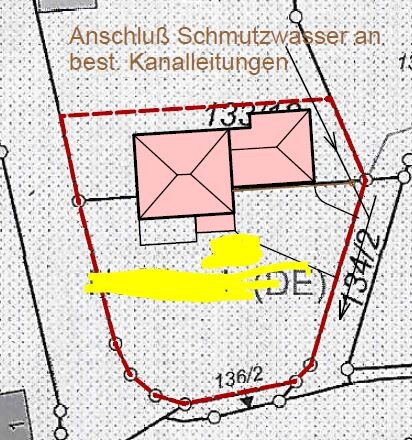
Development plan/restrictions: No development plan, initial inquiry with the municipality received positive feedback.
Plot size: 884m² (9509 sq ft)
Slope: Approximately 1.5m (5 ft) slope across the building width from north to south. Leveling out flat toward the street on the south side.
Number of parking spaces: 2 garage spaces
Number of stories: 2
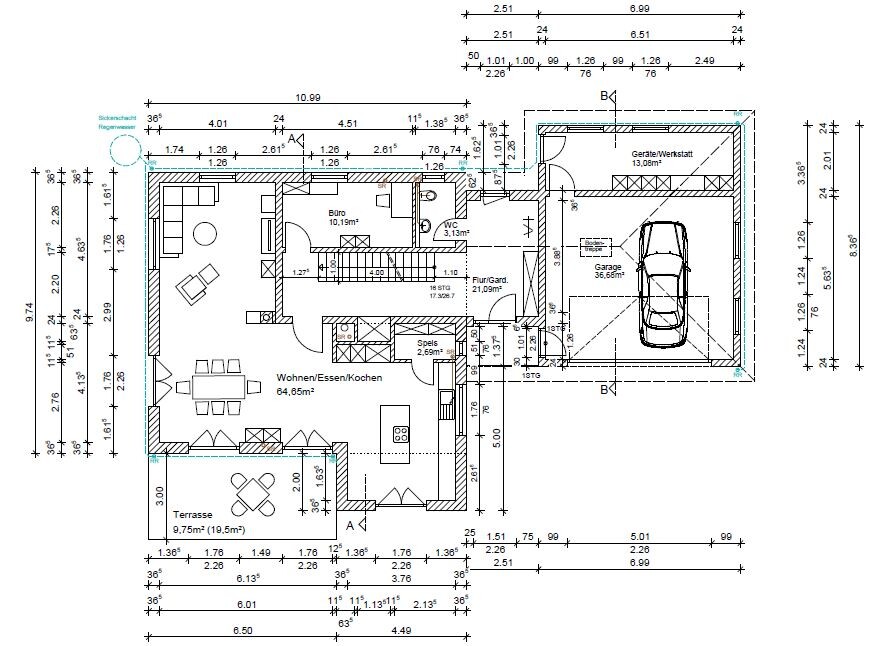
Orientation: Dining/cooking areas facing south
Homeowners’ requirements
Style, roof type, building type: Urban villa, hipped roof
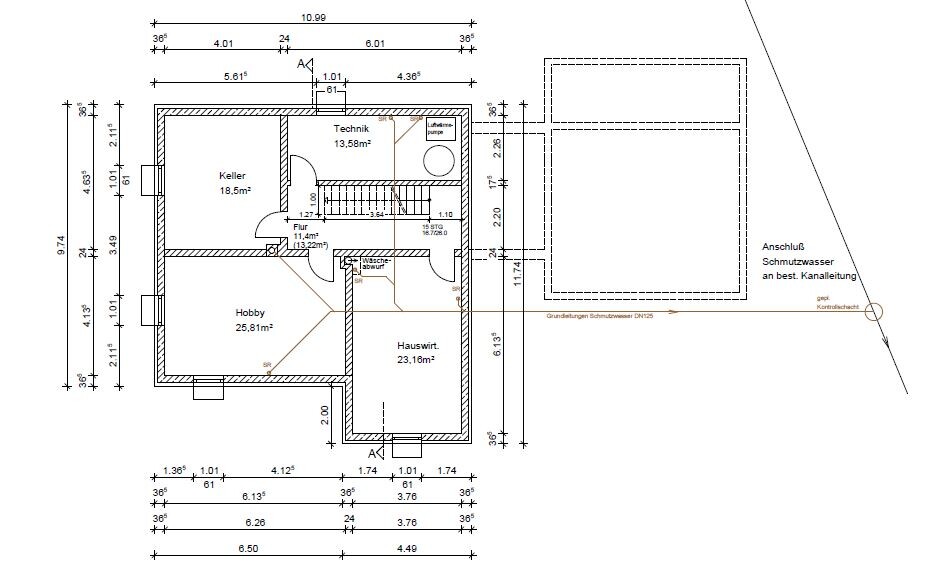
Basement, floors: Basement included, 2 floors
Number of occupants, ages: 2 (27 & 24 years old), planned total 4
Office: family use or home office? Home office
Guests staying overnight per year: few / couch is sufficient
Open or closed architecture: Open plan, living room separated by room divider
Conservative or modern construction: Modern
Open kitchen, kitchen island: Open plan, kitchen island absolutely necessary (for aesthetic reasons)
Number of dining seats: Large dining table for 8-12 people
Fireplace: Yes
Music/sound system wall: 5.1 surround sound for TV
Balcony, roof terrace: No
Garage, carport: Garage
Utility garden, greenhouse: Yes
Additional wishes/special features/daily routine, including reasons for chosen or excluded features: Living room is mainly used for watching TV, so south-facing orientation is not necessary
House design
Planned by: Planner
What do you like most? Why? All our wishes are included: straight staircase, laundry chute, cloakroom near the front door, pantry, kitchen island
What do you dislike? Why? The middle window on the south side is quite close to the bay window.
Price estimate according to architect/planner: 430k
Preferred heating technology: Air-source heat pump
If you had to give up some details or upgrades:
- What you could do without: laundry chute
- What you cannot do without: pantry, kitchen island, straight staircase
Why does the design look the way it does now? Countless drawings from us that the planner built on.
Which wishes were implemented by the architect? A mix of many examples from various magazines, our ideas, and our stubbornness ;-) ...
What do you think makes the design particularly good or bad? We think it’s very successful but welcome further suggestions
Development plan/restrictions: No development plan, initial inquiry with the municipality received positive feedback.
Plot size: 884m² (9509 sq ft)
Slope: Approximately 1.5m (5 ft) slope across the building width from north to south. Leveling out flat toward the street on the south side.
Number of parking spaces: 2 garage spaces
Number of stories: 2
Orientation: Dining/cooking areas facing south
Homeowners’ requirements
Style, roof type, building type: Urban villa, hipped roof
Basement, floors: Basement included, 2 floors
Number of occupants, ages: 2 (27 & 24 years old), planned total 4
Office: family use or home office? Home office
Guests staying overnight per year: few / couch is sufficient
Open or closed architecture: Open plan, living room separated by room divider
Conservative or modern construction: Modern
Open kitchen, kitchen island: Open plan, kitchen island absolutely necessary (for aesthetic reasons)
Number of dining seats: Large dining table for 8-12 people
Fireplace: Yes
Music/sound system wall: 5.1 surround sound for TV
Balcony, roof terrace: No
Garage, carport: Garage
Utility garden, greenhouse: Yes
Additional wishes/special features/daily routine, including reasons for chosen or excluded features: Living room is mainly used for watching TV, so south-facing orientation is not necessary
House design
Planned by: Planner
What do you like most? Why? All our wishes are included: straight staircase, laundry chute, cloakroom near the front door, pantry, kitchen island
What do you dislike? Why? The middle window on the south side is quite close to the bay window.
Price estimate according to architect/planner: 430k
Preferred heating technology: Air-source heat pump
If you had to give up some details or upgrades:
- What you could do without: laundry chute
- What you cannot do without: pantry, kitchen island, straight staircase
Why does the design look the way it does now? Countless drawings from us that the planner built on.
Which wishes were implemented by the architect? A mix of many examples from various magazines, our ideas, and our stubbornness ;-) ...
What do you think makes the design particularly good or bad? We think it’s very successful but welcome further suggestions

ypg schrieb:
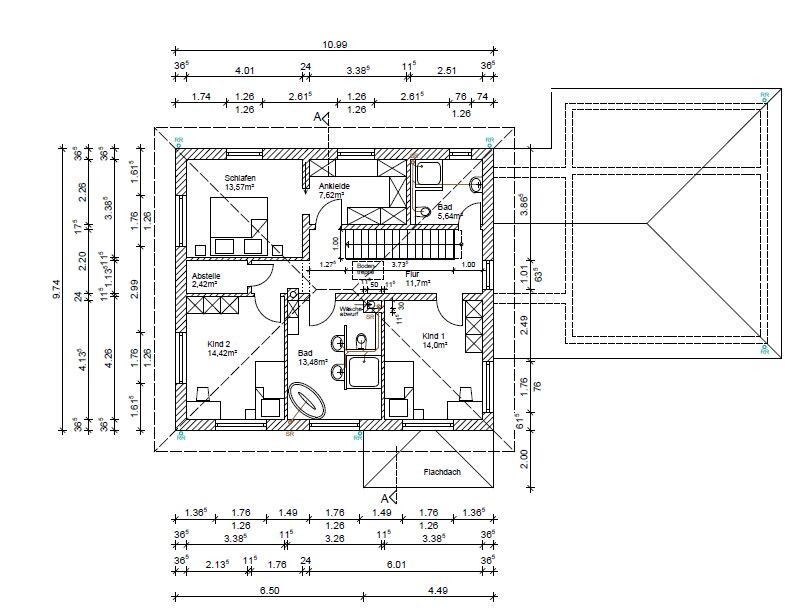
That will probably happen if you use the bathroom located between the children’s bedrooms in the morning. At least in your plan, your concern is justified! From your perspective, you probably shouldn’t place the bathroom between the rooms.
Personally, I always wonder how parents think their children or other family members might react to ambient noises.
In my opinion, no one has major issues with noises when everyone is considerate – not even toilet flushes or other water sounds.
Anyway… Happy New Year! 🙂In our case, when the children are finally asleep and I want to take a bath or shower in peace, the sound often wakes them up again and the whole routine starts over. Very frustrating. Depending on how easily the child wakes up, this usually affects the first 5 years of life. So it’s not just a temporary issue. Especially if you have two children with, say, a two-year gap between them, it could add up to about 7 years in total.M
MIA_SAN_MIA__2 Jan 2018 10:47Arifas schrieb:
In our case, when the kids finally fall asleep and I want to take a bath or shower in peace, the noise often wakes them up again, and the whole cycle starts over. Very frustrating. Depending on how easily the child wakes up, this can affect the first 5 years of their life for us. So it’s not just a temporary issue. Especially if you have two children with, say, a two-year age gap, it can add up to about 7 years in total.Is it possible to see your floor plan anywhere? Do you also have the bathroom directly next to the kids’ rooms, and what wall thickness did you choose there? Is it timber framing or brick?
MIA_SAN_MIA__ schrieb:
Is there any way to see your floor plan? Is the bathroom located right next to the kids' rooms, and what wall thickness did you choose there? Are they wood stud walls or masonry?No, there is no floor plan available. We are still living in the "old" house, so I don’t have a floor plan at the moment. The bathroom is next to one of the kids’ rooms, and the toilet is next to our bedroom. Since children and the baby sleep in both rooms in the evenings, from around 7 p.m. (19:00) you can only use the bathroom and toilet on tiptoe, and even then one of them often wakes up. It’s not very relaxing [emoji18]. The house itself is not that noisy. Maybe our children are just sensitive. But when parents exchange experiences honestly, I often hear similar stories.So, I don’t think it’s absolutely necessary to redesign the bathroom in your case. But I wouldn’t voluntarily go through that again. That’s why we planned the bathrooms differently for the new house.
M
MIA_SAN_MIA__2 Jan 2018 11:13Our top priority was to separate the bedrooms from each other. Therefore, I see no other option for the bathroom either. The question is simply how to construct the walls so that the noise level in the adjacent rooms is minimized. @Arifas Thanks for the explanation!

Even if you shouldn’t have unrealistic expectations about how much increasing wall thickness or density will help, using calcium silicate bricks for the two walls in question can already make a contribution; in the children’s rooms, adding sound insulation boards on top can further improve this.
You shouldn’t think of sound as only acting directly; secondary transmission through adjacent, vibrating structural elements, and so on, is often underestimated. A simple example: if a separation strip is forgotten and the screed is no longer floating, you end up with an excellent transmission path.
The best way to avoid sound is at the source: if you wear flip-flops while blow-drying your hair and stand on a carpet, it already makes (a small) difference compared to being barefoot on tiles.
It also helps a lot to consistently use cavity wall installations instead of chasing walls for pipes. That can achieve a lot, whereas classic acoustic treatments like textile wall coverings or perforated ceilings in the bathroom are usually not used.
I haven’t yet figured out how useful gypsum boards (for example, a thin layer of calcium silicate brick plus a thin gypsum board on the children’s room side) would be in this context.
https://www.instagram.com/11antgmxde/
https://www.linkedin.com/company/bauen-jetzt/
You shouldn’t think of sound as only acting directly; secondary transmission through adjacent, vibrating structural elements, and so on, is often underestimated. A simple example: if a separation strip is forgotten and the screed is no longer floating, you end up with an excellent transmission path.
The best way to avoid sound is at the source: if you wear flip-flops while blow-drying your hair and stand on a carpet, it already makes (a small) difference compared to being barefoot on tiles.
It also helps a lot to consistently use cavity wall installations instead of chasing walls for pipes. That can achieve a lot, whereas classic acoustic treatments like textile wall coverings or perforated ceilings in the bathroom are usually not used.
I haven’t yet figured out how useful gypsum boards (for example, a thin layer of calcium silicate brick plus a thin gypsum board on the children’s room side) would be in this context.
https://www.instagram.com/11antgmxde/
https://www.linkedin.com/company/bauen-jetzt/
Similar topics