
Hello everyone,
We are currently reviewing whether to make any changes to the standard floor plan from our home builder for our end-of-terrace house. There are stricter guidelines that I’m already sure will disappoint some forum members. Roughly, we’ve been told that exterior walls and the façade, including windows and exterior doors, cannot be altered, and load-bearing walls cannot be moved. This mainly concerns the staircase and stair wall. Most other interior walls, as far as we know, are movable. In principle, we could also move in with the unmodified standard layout, but we do see 1-2 points with potential for improvement (though maybe in the end this just fuels the Spec House Building - Small Changes, Unintended Consequences thread).
I will still fill out the questionnaire, even though most of it cannot be changed for us (in particular Section 1 on the development plan is more the home builder’s area).
Development Plan / Restrictions
Plot size – 207 m² (2,230 sq ft)
Slope – slight incline, I don’t have exact survey data, but we can’t change anything at the house entrances anyway.
Site coverage ratio – 0.4
Floor area ratio – 0.8
Building envelope, building line, and setback – not relevant since we cannot change the external shell
Edge development – not relevant since we cannot change the external shell
Number of parking spaces (already included) – garage plus parking space in front
Number of storeys – 2
Roof type – gable roof
Architectural style –
Orientation – north/south
Maximum heights / limits – not relevant
Other conditions: Hornbeam hedge along the cul-de-sac on our property (on the west side; in the floor plans it appears on the right because they are not north-oriented)
Homeowners’ Requirements
Architectural style, roof type, building type: fixed by the home builder
Basement, floors: usable basement + 2 full stories + converted attic (already determined by the builder)
Number of occupants, ages: currently 2 (31 and 32); planning for 1-2 children
Space needs on ground and upper floors:
Office: family use or home office? Home office, both partly working remotely. Ideally, a separate space for each would be great, but if that’s not possible with potentially 2 children, it’s manageable.
Guest bedrooms per year: about 3-4 times a year
Open or closed layout: medium? Open transition between kitchen and living area is a must, but overall, some walls are okay.
Conservative or modern building style: –
Open kitchen, kitchen island: tends to “not fully closed” (see above), but we don’t necessarily need an island if something else is more practical or cost-effective.
Number of dining seats: for 4 people
Fireplace: no
Music / stereo wall: no
Balcony / roof terrace: no
Garage / carport: garage included
Utility garden / greenhouse: no (maybe a small bed later we’d do ourselves)
Additional wishes / special features / daily routine, also reasons why certain things should or shouldn’t be included:
We are both partly working remotely. Currently, we have an office and a desk in the living room. If possible, I’d prefer not to keep working in the living room. If two adults move in, it’s absolutely no problem; with one child it’s probably still fine, with two children… well, by then things might have changed anyway. I feel we’ll find a solution, and if someone locks themselves away in the 4 m² (43 sq ft) closet on the first floor (where the walls are still adjustable) or gets a desk in the bedroom, that might work.
House Design
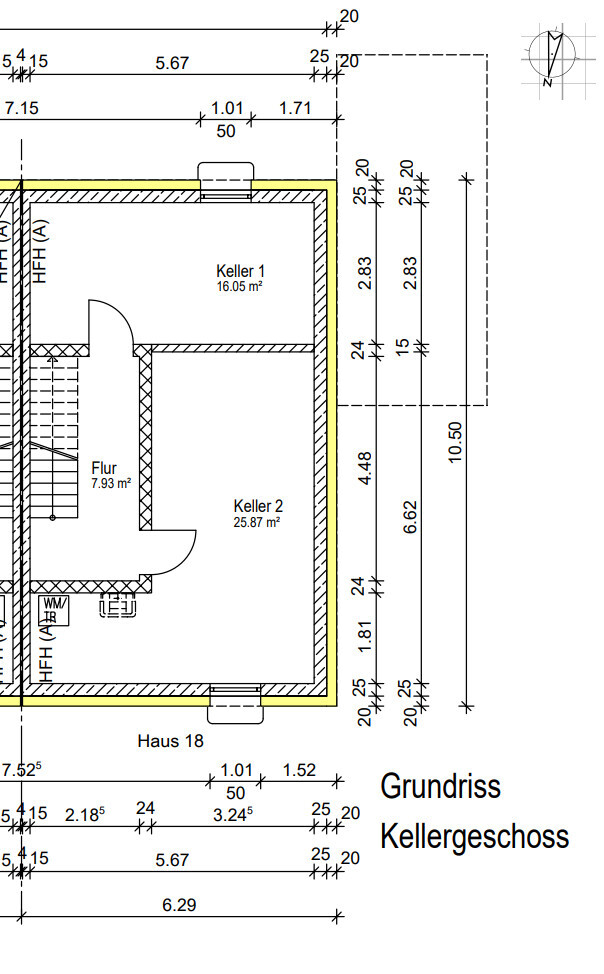
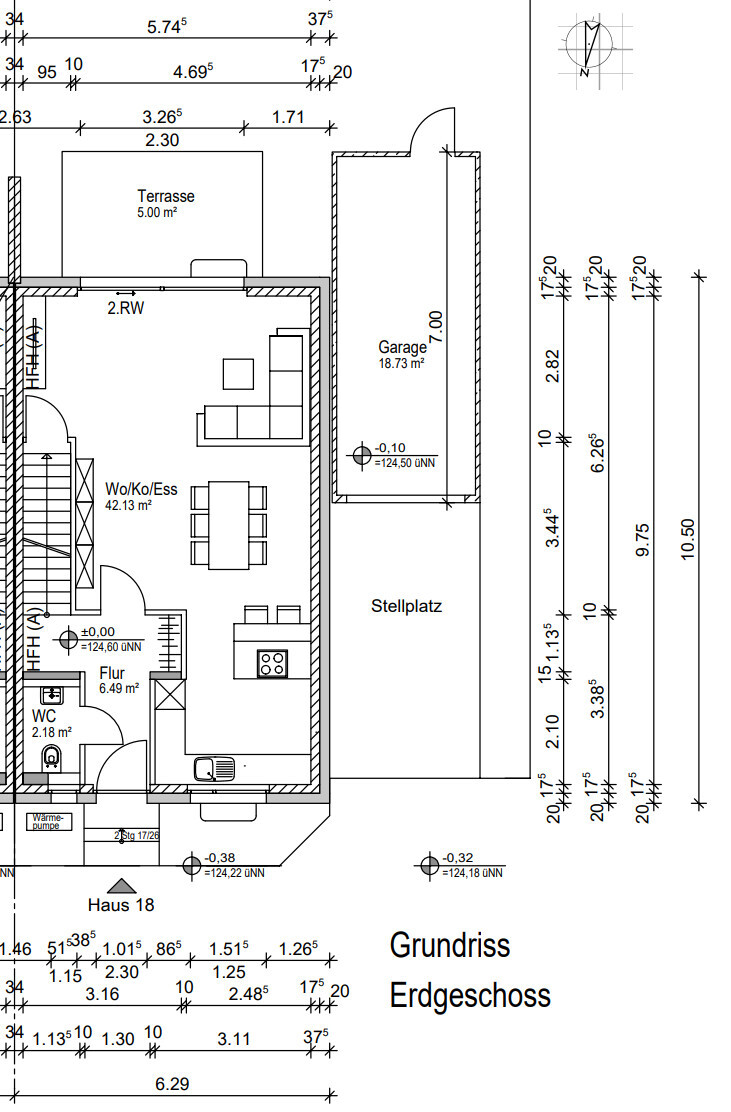
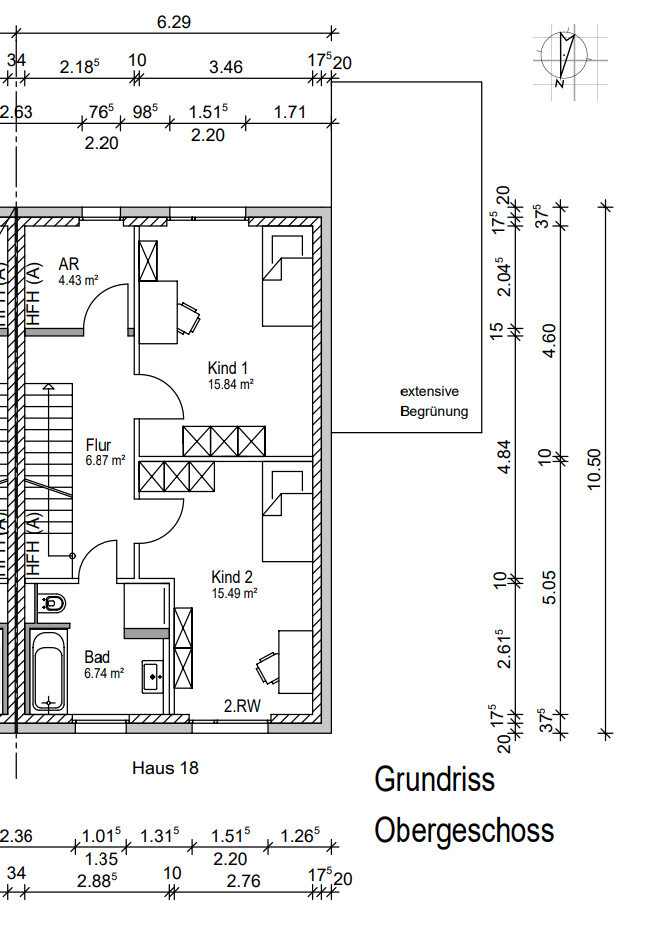
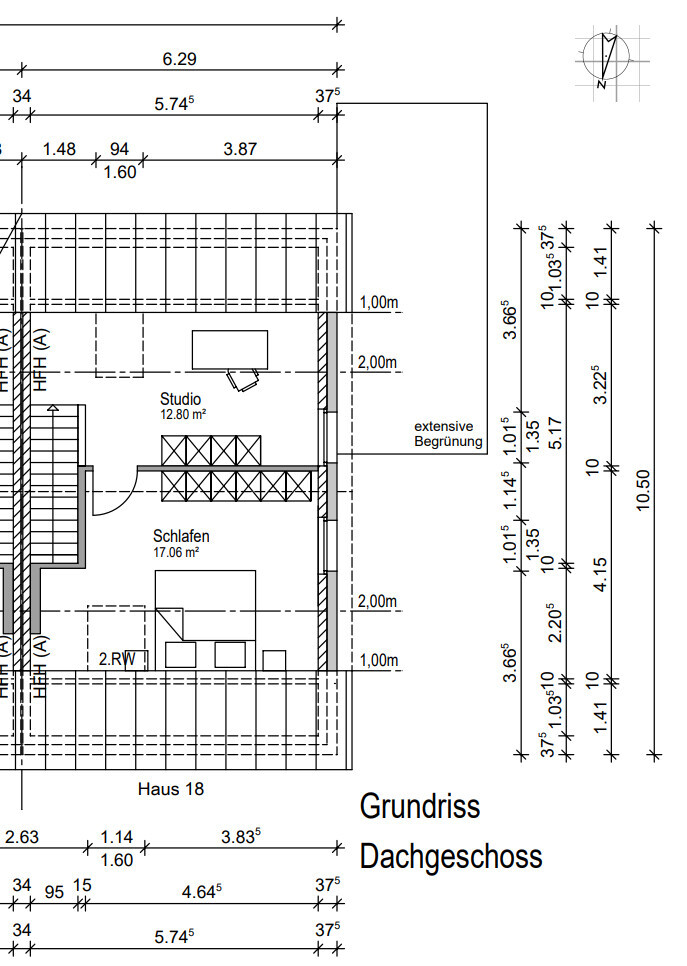
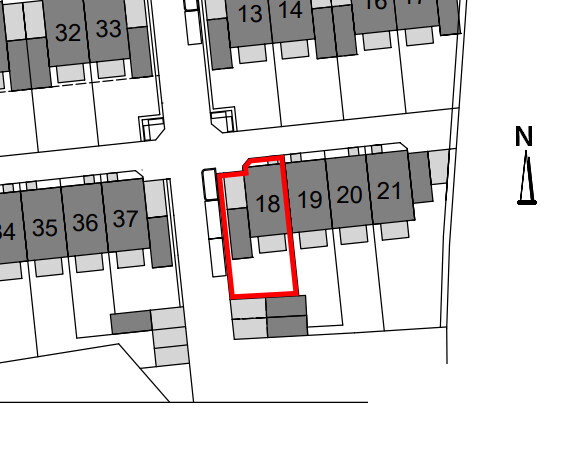
Surroundings: To the south are garages for neighboring terrace houses, then a turning area (end of the cul-de-sac), followed by some individual trees and other detached houses. To the east is our block. Then a few small trees and a railway line (several meters lower). To the west, on our property, there is a city-required hornbeam hedge. We will try to negotiate a passage to the street (for bikes and so on). Since the second escape route on the ground floor is via the terrace, I see some chances, but city officials aren’t always easy.
Planning by:
- Home builder
What do you like especially? Why?
- I see the plan working for us both if the family plan doesn’t happen (then it’s very generous) and with 1-2 children as well.
What don’t you like? Why?
- Ground floor: (main pain point) Entrance is relatively narrow with little cloakroom space. The peninsula kitchen feels too small to work well (and probably requires an expensive extractor in the peninsula). The distance from the sofa to the TV is huge. The basement access is in the living room. We’ll probably manage some kind of furnishing on the ground floor, but right now it doesn’t exactly feel “yes, this is perfect.”
- Upper floor: We’ve debated whether to enlarge the 4 m² (43 sq ft) closet slightly to potentially use it later as an overflow office, but actually we find it as planned not bad at all (and initially more practical).
- Attic: The “landing” could be another possible office space if children come; we considered whether to separate it right away with a wall and door or leave it as shown.
So actually: except for the ground floor, we are quite satisfied; everything else is in the range of “if we want the jack-of-all-trades, maybe some changes could be made – or we keep it as is and see if the need arises.”
If you had to give up something, which details/extensions:
- We can give up: changes to the upper floor and attic
- We cannot give up: at least 1 office
Why is the design as it is now? e.g.
Standard plan from the home builder
What do you think makes it particularly good or bad?
I think it’s a solid floor plan for young families, but the ground floor worries me a bit. I feel maybe a different staircase shape would have helped, but as far as I’ve been told, that cannot be changed.
What is the most important/basic question about the floor plan in 130 characters?
How do we best arrange the ground floor? Should we still make some changes here?
Ideas for potential changes to the ground floor
Maybe reduce the kitchen size and straighten the hallway wall? (We’ve discussed this idea in the kitchen forum but haven’t talked to the planner yet.) The scale is off here (I think my cabinets are too large). The rough structural width in the kitchen at the narrowest point is 248 cm (98 inches), so roughly 240 cm (94 inches) minus about 130 cm (51 inches) for both kitchen sides would leave 110 cm (43 inches) aisle width. Also, the window would be moved to the corner. In return, there would be more cloakroom space in the hallway. Bad idea? Opinions?
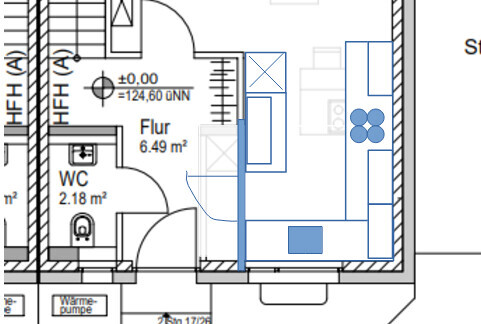
Another question is a bit… can we reduce the distance between sofa and TV? I’ve just sketched in our current furniture; it would look roughly like this (sofa 275 x 220 cm (108 x 87 inches)).
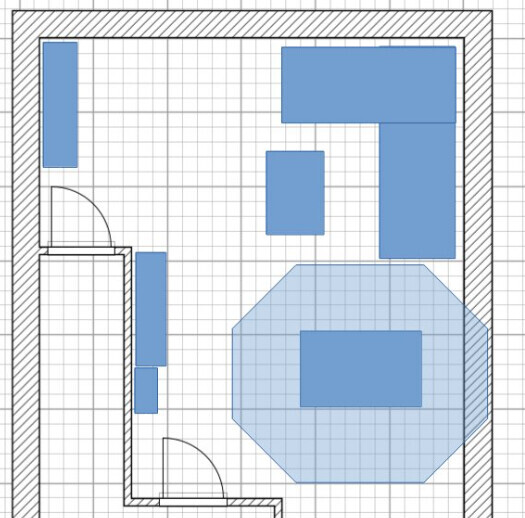
Ideas so far include putting a shelf behind the sofa (but that blocks the terrace door more). Any other ideas?
Best regards
We are currently reviewing whether to make any changes to the standard floor plan from our home builder for our end-of-terrace house. There are stricter guidelines that I’m already sure will disappoint some forum members. Roughly, we’ve been told that exterior walls and the façade, including windows and exterior doors, cannot be altered, and load-bearing walls cannot be moved. This mainly concerns the staircase and stair wall. Most other interior walls, as far as we know, are movable. In principle, we could also move in with the unmodified standard layout, but we do see 1-2 points with potential for improvement (though maybe in the end this just fuels the Spec House Building - Small Changes, Unintended Consequences thread).
I will still fill out the questionnaire, even though most of it cannot be changed for us (in particular Section 1 on the development plan is more the home builder’s area).
Development Plan / Restrictions
Plot size – 207 m² (2,230 sq ft)
Slope – slight incline, I don’t have exact survey data, but we can’t change anything at the house entrances anyway.
Site coverage ratio – 0.4
Floor area ratio – 0.8
Building envelope, building line, and setback – not relevant since we cannot change the external shell
Edge development – not relevant since we cannot change the external shell
Number of parking spaces (already included) – garage plus parking space in front
Number of storeys – 2
Roof type – gable roof
Architectural style –
Orientation – north/south
Maximum heights / limits – not relevant
Other conditions: Hornbeam hedge along the cul-de-sac on our property (on the west side; in the floor plans it appears on the right because they are not north-oriented)
Homeowners’ Requirements
Architectural style, roof type, building type: fixed by the home builder
Basement, floors: usable basement + 2 full stories + converted attic (already determined by the builder)
Number of occupants, ages: currently 2 (31 and 32); planning for 1-2 children
Space needs on ground and upper floors:
Office: family use or home office? Home office, both partly working remotely. Ideally, a separate space for each would be great, but if that’s not possible with potentially 2 children, it’s manageable.
Guest bedrooms per year: about 3-4 times a year
Open or closed layout: medium? Open transition between kitchen and living area is a must, but overall, some walls are okay.
Conservative or modern building style: –
Open kitchen, kitchen island: tends to “not fully closed” (see above), but we don’t necessarily need an island if something else is more practical or cost-effective.
Number of dining seats: for 4 people
Fireplace: no
Music / stereo wall: no
Balcony / roof terrace: no
Garage / carport: garage included
Utility garden / greenhouse: no (maybe a small bed later we’d do ourselves)
Additional wishes / special features / daily routine, also reasons why certain things should or shouldn’t be included:
We are both partly working remotely. Currently, we have an office and a desk in the living room. If possible, I’d prefer not to keep working in the living room. If two adults move in, it’s absolutely no problem; with one child it’s probably still fine, with two children… well, by then things might have changed anyway. I feel we’ll find a solution, and if someone locks themselves away in the 4 m² (43 sq ft) closet on the first floor (where the walls are still adjustable) or gets a desk in the bedroom, that might work.
House Design
Surroundings: To the south are garages for neighboring terrace houses, then a turning area (end of the cul-de-sac), followed by some individual trees and other detached houses. To the east is our block. Then a few small trees and a railway line (several meters lower). To the west, on our property, there is a city-required hornbeam hedge. We will try to negotiate a passage to the street (for bikes and so on). Since the second escape route on the ground floor is via the terrace, I see some chances, but city officials aren’t always easy.
Planning by:
- Home builder
What do you like especially? Why?
- I see the plan working for us both if the family plan doesn’t happen (then it’s very generous) and with 1-2 children as well.
What don’t you like? Why?
- Ground floor: (main pain point) Entrance is relatively narrow with little cloakroom space. The peninsula kitchen feels too small to work well (and probably requires an expensive extractor in the peninsula). The distance from the sofa to the TV is huge. The basement access is in the living room. We’ll probably manage some kind of furnishing on the ground floor, but right now it doesn’t exactly feel “yes, this is perfect.”
- Upper floor: We’ve debated whether to enlarge the 4 m² (43 sq ft) closet slightly to potentially use it later as an overflow office, but actually we find it as planned not bad at all (and initially more practical).
- Attic: The “landing” could be another possible office space if children come; we considered whether to separate it right away with a wall and door or leave it as shown.
So actually: except for the ground floor, we are quite satisfied; everything else is in the range of “if we want the jack-of-all-trades, maybe some changes could be made – or we keep it as is and see if the need arises.”
If you had to give up something, which details/extensions:
- We can give up: changes to the upper floor and attic
- We cannot give up: at least 1 office
Why is the design as it is now? e.g.
Standard plan from the home builder
What do you think makes it particularly good or bad?
I think it’s a solid floor plan for young families, but the ground floor worries me a bit. I feel maybe a different staircase shape would have helped, but as far as I’ve been told, that cannot be changed.
What is the most important/basic question about the floor plan in 130 characters?
How do we best arrange the ground floor? Should we still make some changes here?
Ideas for potential changes to the ground floor
Maybe reduce the kitchen size and straighten the hallway wall? (We’ve discussed this idea in the kitchen forum but haven’t talked to the planner yet.) The scale is off here (I think my cabinets are too large). The rough structural width in the kitchen at the narrowest point is 248 cm (98 inches), so roughly 240 cm (94 inches) minus about 130 cm (51 inches) for both kitchen sides would leave 110 cm (43 inches) aisle width. Also, the window would be moved to the corner. In return, there would be more cloakroom space in the hallway. Bad idea? Opinions?
Another question is a bit… can we reduce the distance between sofa and TV? I’ve just sketched in our current furniture; it would look roughly like this (sofa 275 x 220 cm (108 x 87 inches)).
Ideas so far include putting a shelf behind the sofa (but that blocks the terrace door more). Any other ideas?
Best regards

Maybe I just needed to vent again. In any case, it seems that the land registry transfer is now underway. As far as we know, the insolvency administrator approved it with a notary last Friday, then it goes to the notary who originally registered the preliminary note, and from there (hopefully as quickly as possible) to the land registry office. After that, it depends on how fast they are. But actually, they have usually been quite prompt before (when we were told at the time of the preliminary land registry entry that it could take 3-6 weeks for them to get back to us, we already had the invoice after two weeks, and I don’t remember exactly, but I think the registration was also done quickly). So we’re hopeful that this part will now be resolved quickly.
What else are we currently doing? Getting quotes, getting quotes, getting quotes... and trying to sort out the utility connections somehow.
Basically, we had contact with two site managers. With the first one, communication was always problematic. (Let’s say he is experienced but quite old.) Sometimes, we felt like we were talking past each other. Also, the prices kept going up with every conversation. So the initial rough verbal estimate included significantly more work for much less money than what ended up in the offer (which only covered part of what he originally promised). And the second site manager? Initially interested, but now completely unresponsive. What started as “he will handle communication with the city” now turns into “yes, you’ll need to check with the city” when we or our neighbors follow up (since we can’t reach him).
So, we’re starting to accept that our (maybe) site manager might show up at one or two appointments at best, just to check if we’re not doing something completely wrong. In the end, the major issues on our side are pretty much done anyway. The structural engineering has already been properly reported to the city, and we have mostly completed the rough installation of water pipes, underfloor heating, and electrical systems. The screed is in, and the walls are plastered.
So what’s left where a professional eye wouldn’t hurt? Mainly the house connections, heat pump installation, bathrooms (are they properly sealed?), and possibly the exterior works (or at least coordination with the civil engineer for some of the connections). Things like painting or flooring, of course, can also be done poorly, but well, it is what it is.
Right now, a lot of questions are coming up about the heat pump, but I’ll put that into a separate post later. Maybe the combined knowledge of the forum can give us some ideas.
What else are we currently doing? Getting quotes, getting quotes, getting quotes... and trying to sort out the utility connections somehow.
Basically, we had contact with two site managers. With the first one, communication was always problematic. (Let’s say he is experienced but quite old.) Sometimes, we felt like we were talking past each other. Also, the prices kept going up with every conversation. So the initial rough verbal estimate included significantly more work for much less money than what ended up in the offer (which only covered part of what he originally promised). And the second site manager? Initially interested, but now completely unresponsive. What started as “he will handle communication with the city” now turns into “yes, you’ll need to check with the city” when we or our neighbors follow up (since we can’t reach him).
So, we’re starting to accept that our (maybe) site manager might show up at one or two appointments at best, just to check if we’re not doing something completely wrong. In the end, the major issues on our side are pretty much done anyway. The structural engineering has already been properly reported to the city, and we have mostly completed the rough installation of water pipes, underfloor heating, and electrical systems. The screed is in, and the walls are plastered.
So what’s left where a professional eye wouldn’t hurt? Mainly the house connections, heat pump installation, bathrooms (are they properly sealed?), and possibly the exterior works (or at least coordination with the civil engineer for some of the connections). Things like painting or flooring, of course, can also be done poorly, but well, it is what it is.
Right now, a lot of questions are coming up about the heat pump, but I’ll put that into a separate post later. Maybe the combined knowledge of the forum can give us some ideas.
I hadn’t written anything about the “heat pump madness” for a while. Sigh. It still won’t let us go.
Act one: We want to get a quote for a heat pump. The heating technician checks the originally planned location (according to the developer’s planning) and says: Actually, today you should only install propane heat pumps, and I can’t install one there. It’s too close to the street, too close to the front door (house entrance), too close to the sewer pipe, and too close to the neighbor’s property. (And that’s how the story began.)
So we got a few more opinions, but most of them (except maybe one) came to the same conclusion. A propane heat pump won’t work there. Everyone thinks the spacing rules that heat pump manufacturers specify are a bit exaggerated, but what can you do.
So no propane heat pump?
Act two: Did you know that almost all refrigerants used in heat pumps other than propane will soon be affected either by F-Gas regulations or PFAS bans? Don’t recognize those terms? Not that important here. In any case, some refrigerants are already banned for use in new units. Many more will be affected in the coming years (unless no other option is available at the location). If you already have one, you don’t have to remove it yet; there is grandfathering (though eventually, replacement refrigerant may become hard to get, but usually you don’t just need it without reason). But do you want to install that now?
What about a different location? One suggestion that quickly came up is “on the garage roof.” That’s inconvenient because the garage was definitely a potential target for us. So at first, we want to take a dual approach and get quotes for “non-propane” heat pumps (e.g., R32) in front of the house and propane heat pumps for the garage roof.
Act three: Building permit / planning permission. Our permit is from 2023. At that time in NRW (North Rhine-Westphalia), heat pumps were still classified similarly to buildings and a 3-meter (10 feet) setback from boundaries was required. This changed on 01/01/2024 (which apparently doesn’t apply to us), and there used to be a regulation allowing exceptions. One such exception is included in our permit—with the exact model of the heat pump specified: “The deviation applies only to the specific system type <model designation> by <heat pump manufacturer>.” The assessment was a noise study to check compliance with the Technical Instructions on Noise Protection (TA Lärm). The model is actually one of those that won’t be allowed for installation from 2025 anyway 🙂 But is the permit transferable to other quieter heat pumps? We got a written no, the neighbors received a verbal yes from a different building authority. Apparently, the city really likes us 🙂 Would it be enough to submit the model and data sheet for the permit amendment, proving that it’s quieter? No, apparently we need a completely new expert report from a qualified professional. (We got to see the original report—it starts by stating it’s based on the manufacturer’s noise level data…) We called the original expert, who also couldn’t understand why that’s necessary. Well, we haven’t completely given up on the new location either, where the German Heat Pump Association offers a calculator that predicts noise levels under TA Lärm and generates a report, which is supposed to be no problem. We are still clarifying if that report will suffice—but our construction manager expects the answer to be no. Sigh. I really feel like we are just being slowed down by the city.
Does all this sound a bit complicated? I’ve already left out at least three confusing loops here. 🙂
Anyway… everything is still being clarified, but right now it’s quite a pain point.
To finish with something positive:
We have construction electricity and water again on-site! Hurray! The construction dryer is running, and the moisture issues in the basement, which we struggled to solve just by airing out, seem to be improving 🙂 Otherwise, we’ll be able to start several “non-heat pump” projects in August <3
Act one: We want to get a quote for a heat pump. The heating technician checks the originally planned location (according to the developer’s planning) and says: Actually, today you should only install propane heat pumps, and I can’t install one there. It’s too close to the street, too close to the front door (house entrance), too close to the sewer pipe, and too close to the neighbor’s property. (And that’s how the story began.)
So we got a few more opinions, but most of them (except maybe one) came to the same conclusion. A propane heat pump won’t work there. Everyone thinks the spacing rules that heat pump manufacturers specify are a bit exaggerated, but what can you do.
So no propane heat pump?
Act two: Did you know that almost all refrigerants used in heat pumps other than propane will soon be affected either by F-Gas regulations or PFAS bans? Don’t recognize those terms? Not that important here. In any case, some refrigerants are already banned for use in new units. Many more will be affected in the coming years (unless no other option is available at the location). If you already have one, you don’t have to remove it yet; there is grandfathering (though eventually, replacement refrigerant may become hard to get, but usually you don’t just need it without reason). But do you want to install that now?
What about a different location? One suggestion that quickly came up is “on the garage roof.” That’s inconvenient because the garage was definitely a potential target for us. So at first, we want to take a dual approach and get quotes for “non-propane” heat pumps (e.g., R32) in front of the house and propane heat pumps for the garage roof.
Act three: Building permit / planning permission. Our permit is from 2023. At that time in NRW (North Rhine-Westphalia), heat pumps were still classified similarly to buildings and a 3-meter (10 feet) setback from boundaries was required. This changed on 01/01/2024 (which apparently doesn’t apply to us), and there used to be a regulation allowing exceptions. One such exception is included in our permit—with the exact model of the heat pump specified: “The deviation applies only to the specific system type <model designation> by <heat pump manufacturer>.” The assessment was a noise study to check compliance with the Technical Instructions on Noise Protection (TA Lärm). The model is actually one of those that won’t be allowed for installation from 2025 anyway 🙂 But is the permit transferable to other quieter heat pumps? We got a written no, the neighbors received a verbal yes from a different building authority. Apparently, the city really likes us 🙂 Would it be enough to submit the model and data sheet for the permit amendment, proving that it’s quieter? No, apparently we need a completely new expert report from a qualified professional. (We got to see the original report—it starts by stating it’s based on the manufacturer’s noise level data…) We called the original expert, who also couldn’t understand why that’s necessary. Well, we haven’t completely given up on the new location either, where the German Heat Pump Association offers a calculator that predicts noise levels under TA Lärm and generates a report, which is supposed to be no problem. We are still clarifying if that report will suffice—but our construction manager expects the answer to be no. Sigh. I really feel like we are just being slowed down by the city.
Does all this sound a bit complicated? I’ve already left out at least three confusing loops here. 🙂
Anyway… everything is still being clarified, but right now it’s quite a pain point.
To finish with something positive:
We have construction electricity and water again on-site! Hurray! The construction dryer is running, and the moisture issues in the basement, which we struggled to solve just by airing out, seem to be improving 🙂 Otherwise, we’ll be able to start several “non-heat pump” projects in August <3
H
hanghaus202318 Jul 2024 09:49You impress me. Do I really have to check with the building authority regarding the heat pump?
I have just switched from gas to a heat pump, and something like that never occurred to me.
Despite the installer’s certificate of harmlessness and the lower efficiency, I decided to go for a heat pump running on propane gas.
I have just switched from gas to a heat pump, and something like that never occurred to me.
Despite the installer’s certificate of harmlessness and the lower efficiency, I decided to go for a heat pump running on propane gas.
@hanghaus2023 Honestly, we had expected dealing with the building authority to be less complicated. Otherwise, our permit clearly states that the completion has not yet been done, and no final survey or similar has been completed. If there were special conditions in the permit, any deviation from them will probably be noticed. We didn’t want to risk having to dismantle anything in the worst-case scenario. But regarding the same location, we had assumed we could simply ask, “Can we install a quieter heat pump than what’s specified in the permit?” and get the answer, “Of course you can” — unfortunately, that wasn’t the case, at least with our case officer... It even seems like the city isn’t consistent with itself on this matter... We’re hoping to get this resolved quickly now. We also understood that a new location might be more interesting, but right now we don’t fully know what the city expects from us, though that will become clear.
Here in the forum, many probably have fairly large plots of land. And even though you have to comply with the noise regulations (TA Lärm) in any case, this is usually much less of a problem with detached houses because the neighboring house is much further away. With row houses, it’s obviously much tighter.
Apart from that, we’re just a bit unlucky that the building code in NRW was only updated in 2024 to make such things easier on smaller plots (without requiring an exemption), but since our building permit is from 2023 and the house is not yet completed, the old building code still applies to us, so we still need this exemption.
Ultimately, it’s very likely that everything will be approved; it’s just a bit frustrating that we have to go through these approval steps.
Here in the forum, many probably have fairly large plots of land. And even though you have to comply with the noise regulations (TA Lärm) in any case, this is usually much less of a problem with detached houses because the neighboring house is much further away. With row houses, it’s obviously much tighter.
Apart from that, we’re just a bit unlucky that the building code in NRW was only updated in 2024 to make such things easier on smaller plots (without requiring an exemption), but since our building permit is from 2023 and the house is not yet completed, the old building code still applies to us, so we still need this exemption.
Ultimately, it’s very likely that everything will be approved; it’s just a bit frustrating that we have to go through these approval steps.
Hmm, time for another update?
It actually took until mid-August, but the land registry transfer has finally been completed in our favor! That’s about 7 months after Tecklenburg filed for insolvency in January and roughly 4 months since we were informed that the insolvency administrator would not continue the contract. Just to recap the timeline.
We had the keys for a while, and the former Tecklenburg site manager once said he didn’t understand why nothing further had happened on our part. But on one hand, we were a bit worried that any value increases we made could legally be considered part of the insolvency estate and somehow used against us. On the other hand, not having the title recorded in the land registry was a serious blocker for things like utility connections, and our bank didn’t want to release funds before that happened. Allegedly, everything should work smoothly now—let’s see. So far, we’ve been bridging the gap with our own funds.
We had hoped to start a bit more in August, but it was limited to small tasks (and lots of phone calls with utility providers, etc.). However, the tiler is coming next week, and generally, things will pick up well in September and October.
It actually took until mid-August, but the land registry transfer has finally been completed in our favor! That’s about 7 months after Tecklenburg filed for insolvency in January and roughly 4 months since we were informed that the insolvency administrator would not continue the contract. Just to recap the timeline.
We had the keys for a while, and the former Tecklenburg site manager once said he didn’t understand why nothing further had happened on our part. But on one hand, we were a bit worried that any value increases we made could legally be considered part of the insolvency estate and somehow used against us. On the other hand, not having the title recorded in the land registry was a serious blocker for things like utility connections, and our bank didn’t want to release funds before that happened. Allegedly, everything should work smoothly now—let’s see. So far, we’ve been bridging the gap with our own funds.
We had hoped to start a bit more in August, but it was limited to small tasks (and lots of phone calls with utility providers, etc.). However, the tiler is coming next week, and generally, things will pick up well in September and October.
Time for another update!
Progress is slow but steady. The tiler has finished now. I have to admit, I expected it to go faster overall, but he mostly worked alone (and honestly, I didn’t get the impression he was working particularly slowly while we were there). It turned out really nice though and it’s quite uplifting.
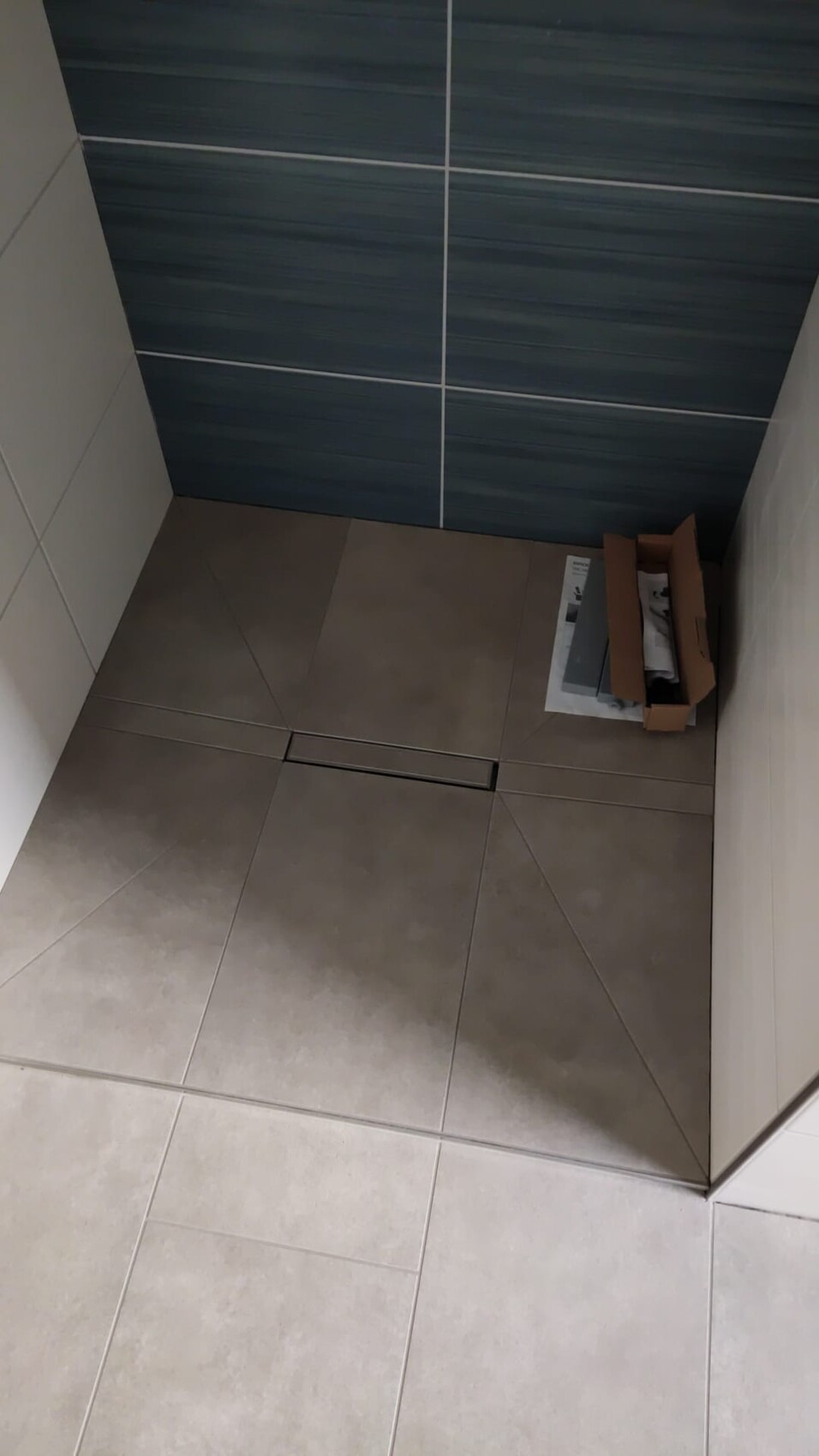
We’ve had some minor “oops” moments that could have been avoided with better coordination. The original plan included a tiled shower with a prefabricated shower board. We thought we’d keep it simple and use the same type of board in the new bathroom design, assuming it would cause the least problems. Our new plumber pointed out on site that it would be tight height-wise (the connections come out too high from the wall). We asked three times whether it would still work, and he eventually said, “yes, it should fit.” Okay, so we ordered the shower board. Then delivery got delayed, installation was postponed, and when it really became urgent (the tiler was already on site) and the plumber arrived with the shower board, he said it wouldn’t work flush with the floor. “I did say it would be tight,” he said, and suddenly we had to quickly decide what to do. We shouldn’t have let ourselves be rushed and should have reconsidered calmly. But we made a decision, and I’m still not happy with it. We now have a small 2cm (about ¾ inch) step into the shower area—visually not so bad and the tiler did a good job finishing it off (there’s an edge strip on it, just like on other edges everywhere). Everything is sealed properly as well. But I just worry that we have introduced a potential weak spot where water could seep in unnoticed eventually. Well, it is what it is. We made the decision, and chances are I would have chosen differently the next day (even if the alternative would have been more complicated). I’m starting to understand the saying, “The first house you build is for your enemies, the second for your friends, and the third for yourself.”
Next week the house connections are supposed to be installed (this week the core drilling for that is scheduled). That was a real struggle too, and I’m really hoping everything goes smoothly this time. Please, please. How this process is handled seems to vary a lot regionally, and our experience here felt chaotic. But we have now arranged the multi-utility house entry. We have someone who will do the core drilling. None of the utility providers objected to the planned location. Next week a contractor from the utilities will come. IN THEORY, this should work now. But after all the calls and messages back and forth, phew. I won’t believe it until it’s really done.
(Edit: well, the photo doesn’t really show much, but I don’t have anything better right now)
Progress is slow but steady. The tiler has finished now. I have to admit, I expected it to go faster overall, but he mostly worked alone (and honestly, I didn’t get the impression he was working particularly slowly while we were there). It turned out really nice though and it’s quite uplifting.
We’ve had some minor “oops” moments that could have been avoided with better coordination. The original plan included a tiled shower with a prefabricated shower board. We thought we’d keep it simple and use the same type of board in the new bathroom design, assuming it would cause the least problems. Our new plumber pointed out on site that it would be tight height-wise (the connections come out too high from the wall). We asked three times whether it would still work, and he eventually said, “yes, it should fit.” Okay, so we ordered the shower board. Then delivery got delayed, installation was postponed, and when it really became urgent (the tiler was already on site) and the plumber arrived with the shower board, he said it wouldn’t work flush with the floor. “I did say it would be tight,” he said, and suddenly we had to quickly decide what to do. We shouldn’t have let ourselves be rushed and should have reconsidered calmly. But we made a decision, and I’m still not happy with it. We now have a small 2cm (about ¾ inch) step into the shower area—visually not so bad and the tiler did a good job finishing it off (there’s an edge strip on it, just like on other edges everywhere). Everything is sealed properly as well. But I just worry that we have introduced a potential weak spot where water could seep in unnoticed eventually. Well, it is what it is. We made the decision, and chances are I would have chosen differently the next day (even if the alternative would have been more complicated). I’m starting to understand the saying, “The first house you build is for your enemies, the second for your friends, and the third for yourself.”
Next week the house connections are supposed to be installed (this week the core drilling for that is scheduled). That was a real struggle too, and I’m really hoping everything goes smoothly this time. Please, please. How this process is handled seems to vary a lot regionally, and our experience here felt chaotic. But we have now arranged the multi-utility house entry. We have someone who will do the core drilling. None of the utility providers objected to the planned location. Next week a contractor from the utilities will come. IN THEORY, this should work now. But after all the calls and messages back and forth, phew. I won’t believe it until it’s really done.
(Edit: well, the photo doesn’t really show much, but I don’t have anything better right now)
Similar topics