
ᐅ Floor plan of a single-family house approximately 170 m², without a basement, featuring a carport
Created on: 6 Jun 2022 20:07
S
SandyBlack
Questionnaire about your floor plan
Development plan / Restrictions
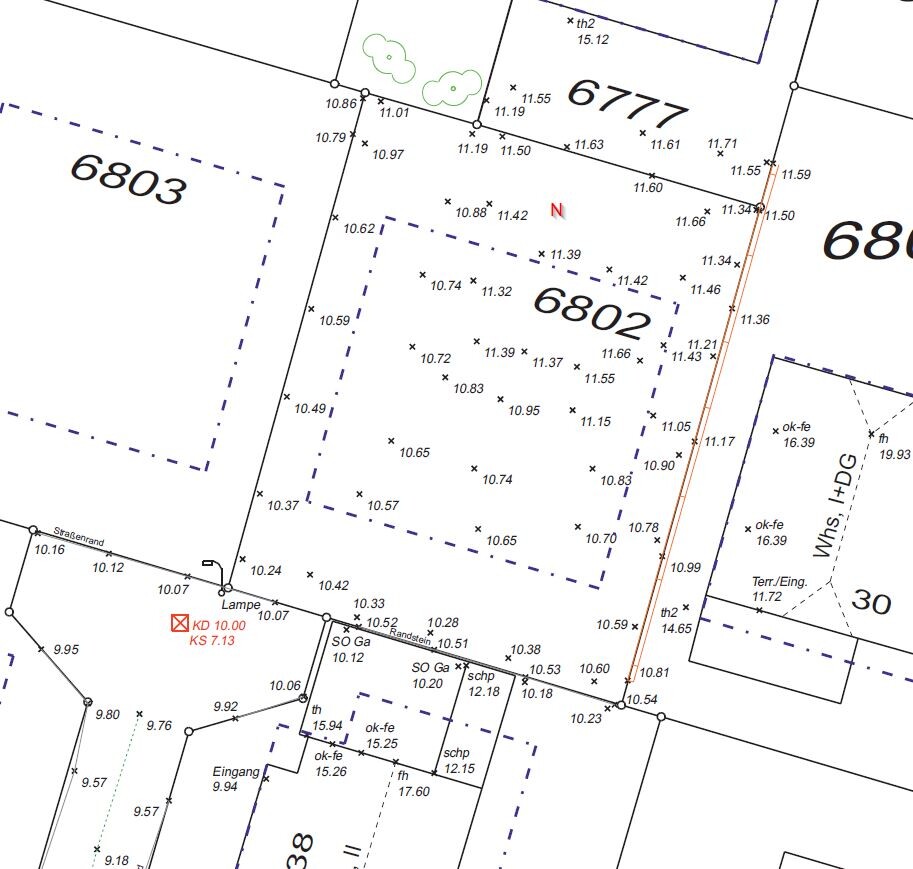
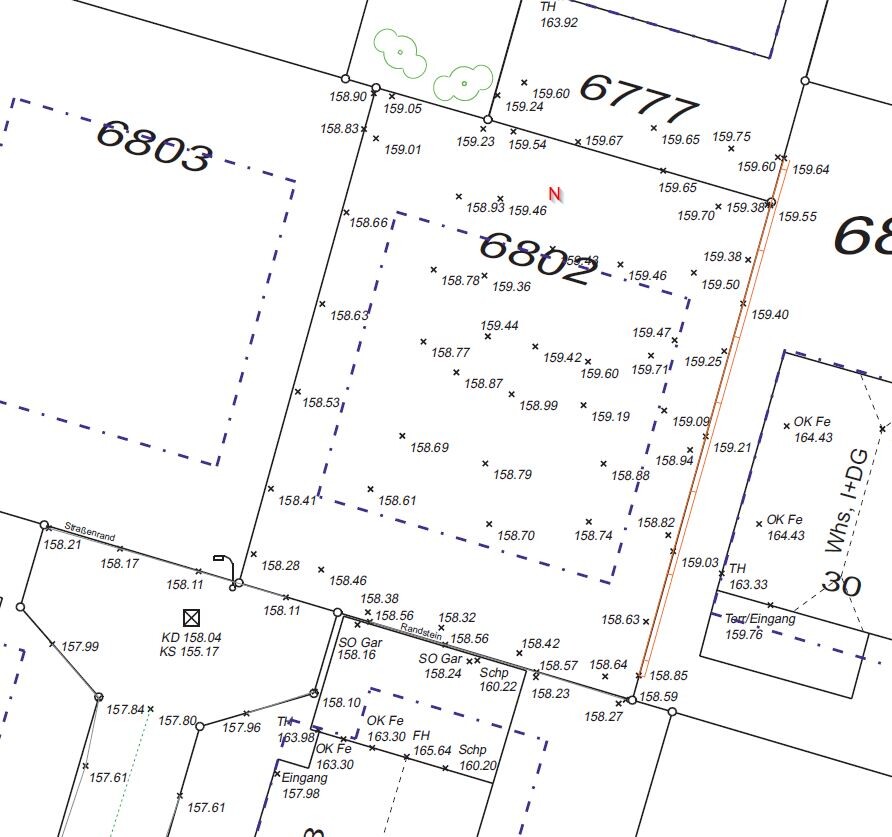
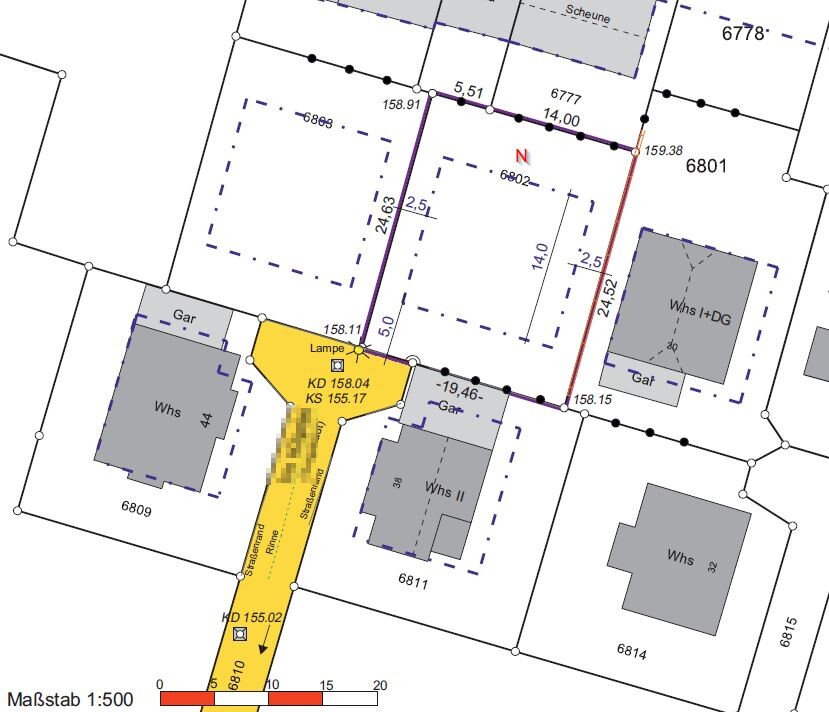
Plot size 477 m² (5,134 ft²)
Slope No
Site coverage ratio 0.3
Floor area ratio 0.8
Building envelope, building line and boundary 14 x 14 meters (46 x 46 feet)
Setbacks South/North 5 m (16 ft); East/West 2.50 m (8 ft)
Number of parking spaces 2 (side by side)
Number of floors 2
Roof type Gable roof
Architectural style
Orientation East/West
Maximum heights / limits
Other regulations
Homeowners’ requirements
Style, roof type, building type Gable roof
Basement, floors No basement, 2 floors
Number of people, ages 3: 33, 32, and 1.5 years (4th planned)
Space requirements on ground floor, upper floor
Ground floor: kitchen, living room, guest room, guest WC/shower, utility room, storage room, pantry
Upper floor: bathroom, laundry room, work corner, bedroom, 2 children’s rooms
Office: family use or home office? Home office 3 days per week
Guests per year approx. once a month grandparents visit overnight; plus approx. 3–6 additional visits per year
Open or closed architecture open
Conservative or modern construction modern?
Open kitchen, kitchen island open, island preferred but not a must
Number of dining seats
Fireplace No
Music/home cinema wall Guest room to include “cinema”; 7.2.4 speakers + screen or TV
Balcony, roof terrace No
Garage, carport Double carport (5.50 m wide x 6 m long (18 x 20 ft) + storage room (5.5 m wide x 3 m long [18 x 10 ft])
Utility garden, greenhouse No
House design
Who designed it:
- Architect Architect of the house supplier
What do you like most? Why? Open layout; living room somewhat separated; straight staircase (not a must); guest WC not directly by the entrance but nicely connected to guest room; long corridor upstairs for window seat and extra play area for children; large children’s rooms; large bathroom; appealing corner terrace solution possible (NW)
What don’t you like? Why? Pantry too small – probably not very practical this way; guest room too small – integrating cinema difficult; living room too narrow (3.50 m / 11.5 ft); only 1 m (3.3 ft) width between staircase and wall (too narrow?); guest WC big enough?; kitchen too small? Kitchen (half) island probably hard to implement well; no dedicated home office space
Estimated price according to architect/planner: 500,000
Personal price limit for house including fixtures: 550,000
Preferred heating technology: air-to-water heat pump
If you have to give up, which details/extensions
- can you do without: straight staircase; guest WC not next to front door; kitchen island; possibly pantry accessible from kitchen; children’s rooms could be a bit smaller
- can’t you do without: guest room; open kitchen/dining area; guest WC with shower; home office space; bathroom with walk-in, level-access shower & bathtub
Why has the design turned out the way it is? E.g. standard design from planner? Developed jointly according to our wishes
What makes it especially good or bad in your view? Many of our wishes already implemented
What is the most important/basic question about the floor plan in 130 characters?
Are we overlooking anything fundamental? What changes should we make? Is a narrow corridor a big issue?
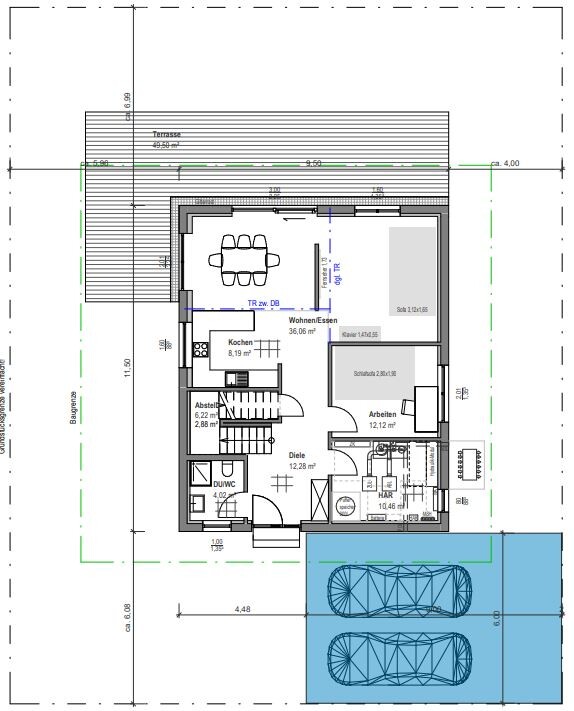
The carport is planned as a double carport on the south side adjoining the recess of the utility room. It is intended to be 5.5 m (18 ft) wide x 9 m (30 ft) long, including a storage room with a length of 3 m (10 ft). Is the planned width sufficient for two cars side by side assuming no SUVs? We plan to use a station wagon like a Skoda Superb and a small car such as a Mercedes A-Class or Toyota Leaf.
The carport positioning is planned as follows:
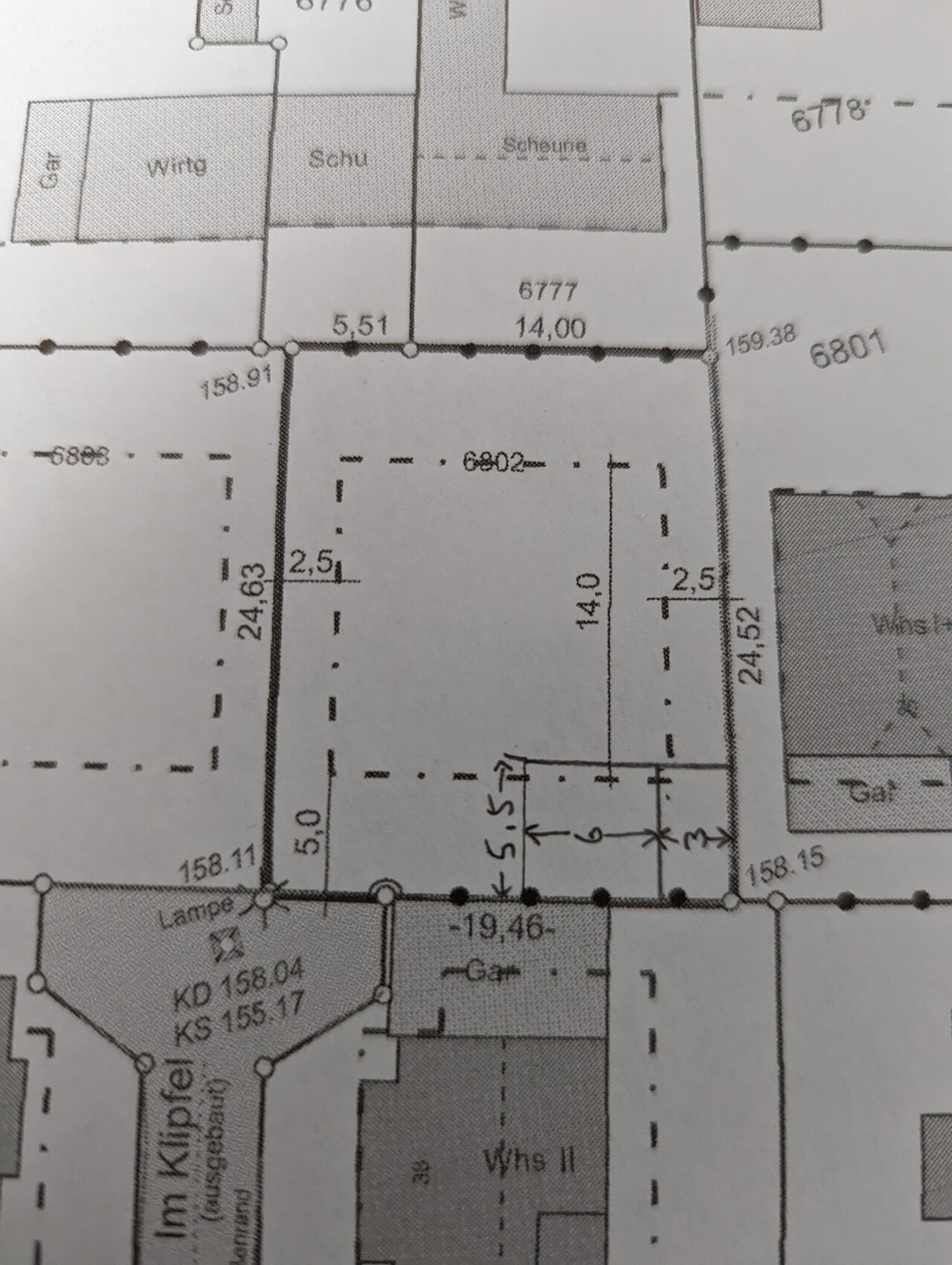
The house itself would be pushed fully to the eastern building boundary to maximize the western garden area.
The current floor plan from the architect looks like this:
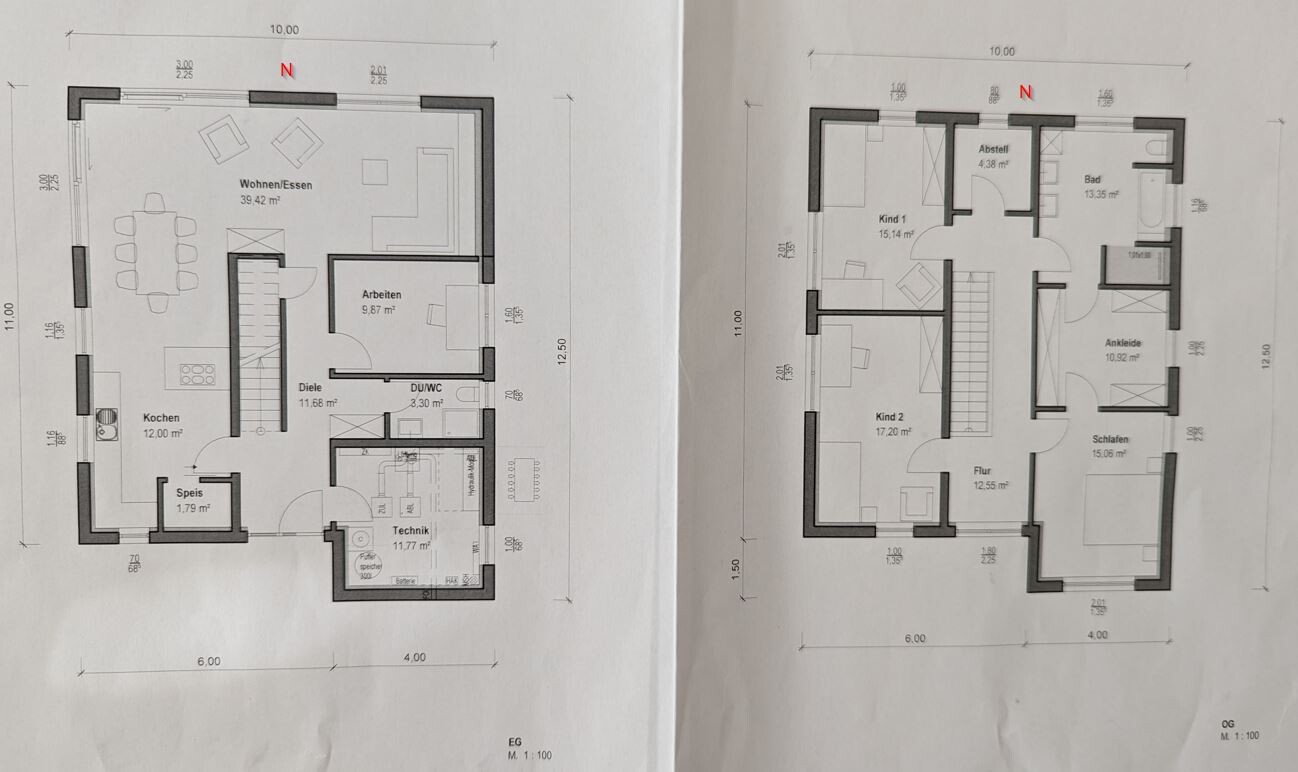
We have already considered some optimizations.
Central to our considerations is adding a second recess on the north side where the living room is, measuring 1 m (3.3 ft) long and 4 m (13 ft) wide, and including a laundry room on the upper floor to house washer and dryer.
This would allow reducing the size of the utility room on the ground floor significantly. We would shorten the utility room by 0.7 m (2.3 ft), leaving about 9 m² (97 ft²). The freed-up space would benefit the guest WC, guest room, and living room.
In the kitchen, we would like to extend the pantry fully along the wall and place the kitchen before it. We have tried to mark our ideas on the floor plan:
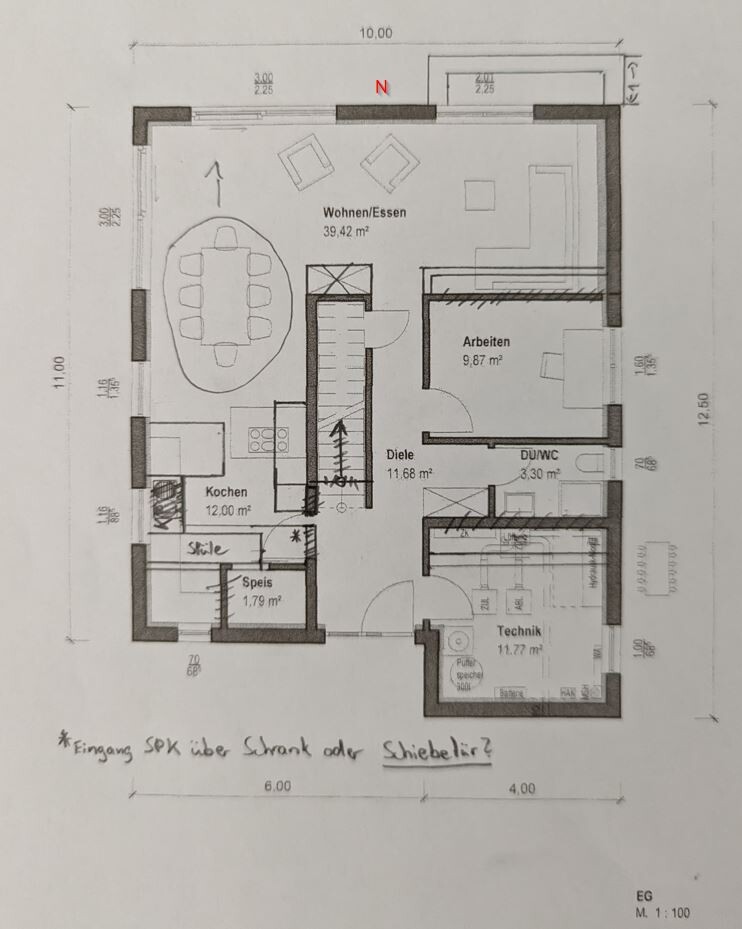
Is the kitchen large enough for a household of 3 to 4 people? An island solution will probably be difficult to realize, right?
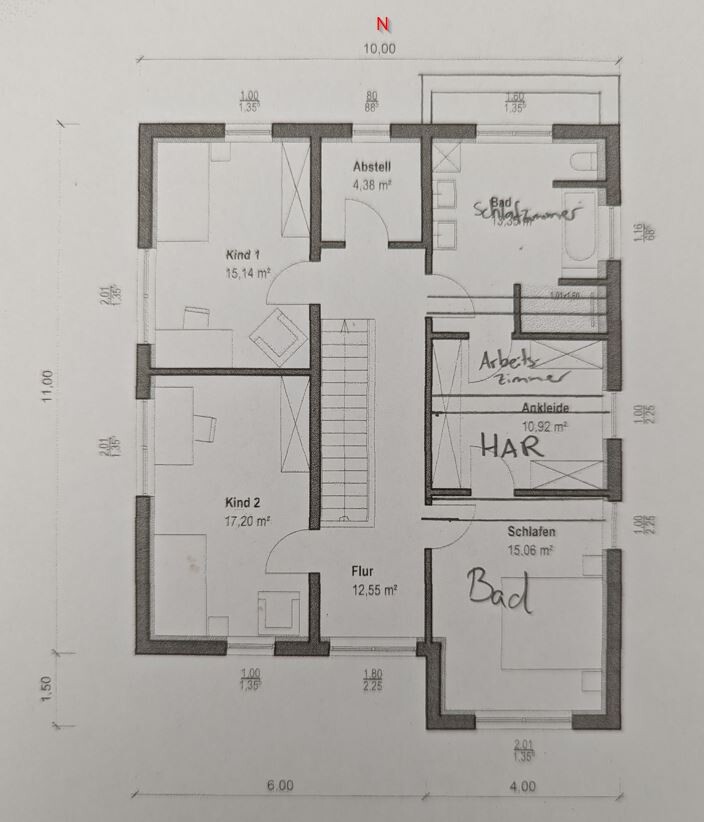
Upstairs, the gained space from the recess would be used for the laundry room. In the plan shown below, we placed the study next to the laundry room; however, we have reconsidered and now prefer to position the work corner where the storage space currently is. The work corner doesn’t need much space, primarily just a desk about 1.60 m (5.2 ft) wide. If there is room for a small cabinet, that’s nice but not essential. Where we marked the study, we would instead plan a walk-in closet. Unfortunately, we have not found a better location for the work corner. We also considered moving it near the children’s rooms, but then the child bedrooms would probably become rather small (about 12–13 m² / 130–140 ft²). These will definitely be adjusted to the same size regardless.
Maybe you have some ideas.
The windows on the ground and upper floor are not finalized yet; these are currently placeholders.
We welcome all comments 🙂.
P.S.: Here is the old planning thread:
https://www.hausbau-forum.de/threads/bebauung-Grundstück-keller-ja-oder-nein.42556/
The planning has fundamentally changed since then, and the plot has meanwhile been remeasured.
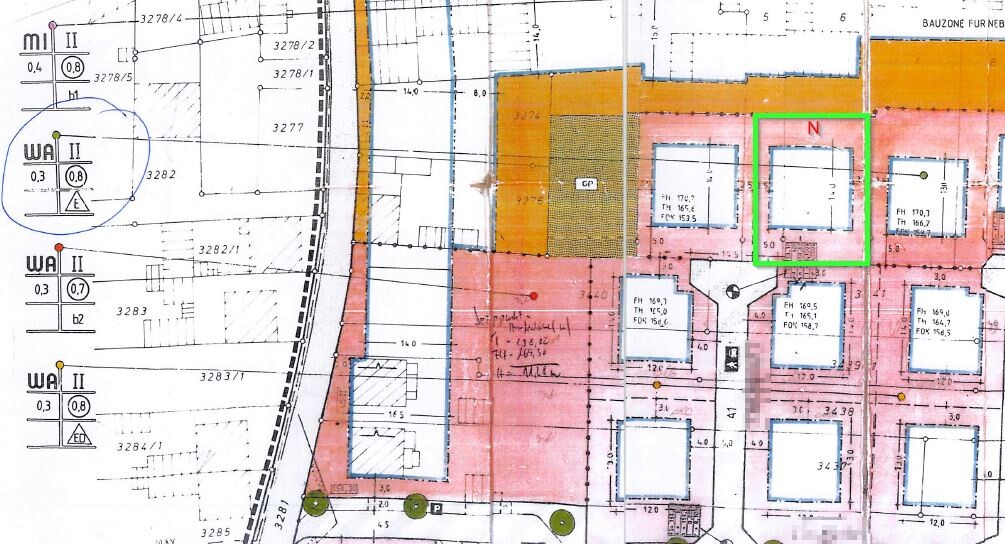
Development plan / Restrictions
Plot size 477 m² (5,134 ft²)
Slope No
Site coverage ratio 0.3
Floor area ratio 0.8
Building envelope, building line and boundary 14 x 14 meters (46 x 46 feet)
Setbacks South/North 5 m (16 ft); East/West 2.50 m (8 ft)
Number of parking spaces 2 (side by side)
Number of floors 2
Roof type Gable roof
Architectural style
Orientation East/West
Maximum heights / limits
Other regulations
Homeowners’ requirements
Style, roof type, building type Gable roof
Basement, floors No basement, 2 floors
Number of people, ages 3: 33, 32, and 1.5 years (4th planned)
Space requirements on ground floor, upper floor
Ground floor: kitchen, living room, guest room, guest WC/shower, utility room, storage room, pantry
Upper floor: bathroom, laundry room, work corner, bedroom, 2 children’s rooms
Office: family use or home office? Home office 3 days per week
Guests per year approx. once a month grandparents visit overnight; plus approx. 3–6 additional visits per year
Open or closed architecture open
Conservative or modern construction modern?
Open kitchen, kitchen island open, island preferred but not a must
Number of dining seats
Fireplace No
Music/home cinema wall Guest room to include “cinema”; 7.2.4 speakers + screen or TV
Balcony, roof terrace No
Garage, carport Double carport (5.50 m wide x 6 m long (18 x 20 ft) + storage room (5.5 m wide x 3 m long [18 x 10 ft])
Utility garden, greenhouse No
House design
Who designed it:
- Architect Architect of the house supplier
What do you like most? Why? Open layout; living room somewhat separated; straight staircase (not a must); guest WC not directly by the entrance but nicely connected to guest room; long corridor upstairs for window seat and extra play area for children; large children’s rooms; large bathroom; appealing corner terrace solution possible (NW)
What don’t you like? Why? Pantry too small – probably not very practical this way; guest room too small – integrating cinema difficult; living room too narrow (3.50 m / 11.5 ft); only 1 m (3.3 ft) width between staircase and wall (too narrow?); guest WC big enough?; kitchen too small? Kitchen (half) island probably hard to implement well; no dedicated home office space
Estimated price according to architect/planner: 500,000
Personal price limit for house including fixtures: 550,000
Preferred heating technology: air-to-water heat pump
If you have to give up, which details/extensions
- can you do without: straight staircase; guest WC not next to front door; kitchen island; possibly pantry accessible from kitchen; children’s rooms could be a bit smaller
- can’t you do without: guest room; open kitchen/dining area; guest WC with shower; home office space; bathroom with walk-in, level-access shower & bathtub
Why has the design turned out the way it is? E.g. standard design from planner? Developed jointly according to our wishes
What makes it especially good or bad in your view? Many of our wishes already implemented
What is the most important/basic question about the floor plan in 130 characters?
Are we overlooking anything fundamental? What changes should we make? Is a narrow corridor a big issue?
The carport is planned as a double carport on the south side adjoining the recess of the utility room. It is intended to be 5.5 m (18 ft) wide x 9 m (30 ft) long, including a storage room with a length of 3 m (10 ft). Is the planned width sufficient for two cars side by side assuming no SUVs? We plan to use a station wagon like a Skoda Superb and a small car such as a Mercedes A-Class or Toyota Leaf.
The carport positioning is planned as follows:
The house itself would be pushed fully to the eastern building boundary to maximize the western garden area.
The current floor plan from the architect looks like this:
We have already considered some optimizations.
Central to our considerations is adding a second recess on the north side where the living room is, measuring 1 m (3.3 ft) long and 4 m (13 ft) wide, and including a laundry room on the upper floor to house washer and dryer.
This would allow reducing the size of the utility room on the ground floor significantly. We would shorten the utility room by 0.7 m (2.3 ft), leaving about 9 m² (97 ft²). The freed-up space would benefit the guest WC, guest room, and living room.
In the kitchen, we would like to extend the pantry fully along the wall and place the kitchen before it. We have tried to mark our ideas on the floor plan:
Is the kitchen large enough for a household of 3 to 4 people? An island solution will probably be difficult to realize, right?
Upstairs, the gained space from the recess would be used for the laundry room. In the plan shown below, we placed the study next to the laundry room; however, we have reconsidered and now prefer to position the work corner where the storage space currently is. The work corner doesn’t need much space, primarily just a desk about 1.60 m (5.2 ft) wide. If there is room for a small cabinet, that’s nice but not essential. Where we marked the study, we would instead plan a walk-in closet. Unfortunately, we have not found a better location for the work corner. We also considered moving it near the children’s rooms, but then the child bedrooms would probably become rather small (about 12–13 m² / 130–140 ft²). These will definitely be adjusted to the same size regardless.
Maybe you have some ideas.
The windows on the ground and upper floor are not finalized yet; these are currently placeholders.
We welcome all comments 🙂.
P.S.: Here is the old planning thread:
https://www.hausbau-forum.de/threads/bebauung-Grundstück-keller-ja-oder-nein.42556/
The planning has fundamentally changed since then, and the plot has meanwhile been remeasured.
S
SandyBlack13 Jun 2022 15:58Thanks for the suggestion @Würfel* 🙂
So basically, it doesn’t have to be a staircase with a landing. What we like about a staircase with a landing is the increased safety for the children. Our little one was about 3 years old when we moved in, and a second child is planned. Therefore, it is important to us that the staircase is as safe as possible. That’s why we also want a closed staircase, for example. With a spiral staircase, the steps are significantly narrower on the inside of the turn, which increases the risk of a child falling. For this reason, we generally prefer a staircase with a landing. However, it’s not absolutely necessary.
Our architect also sent her design today.
However, we currently prefer Katja’s design. The layout seems to be better resolved there.
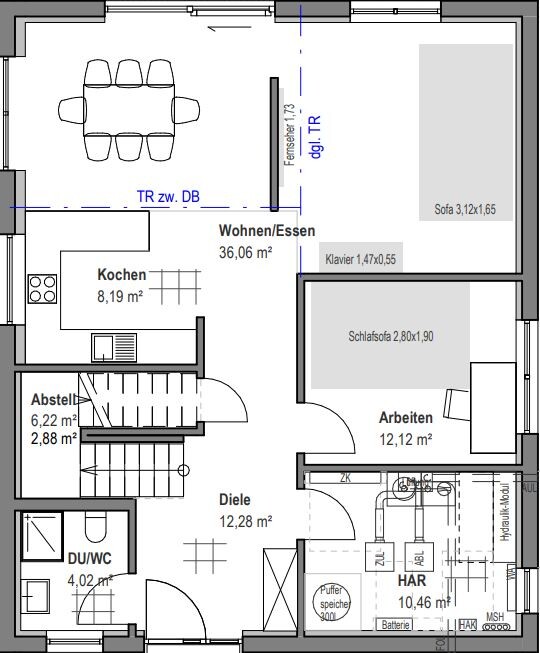
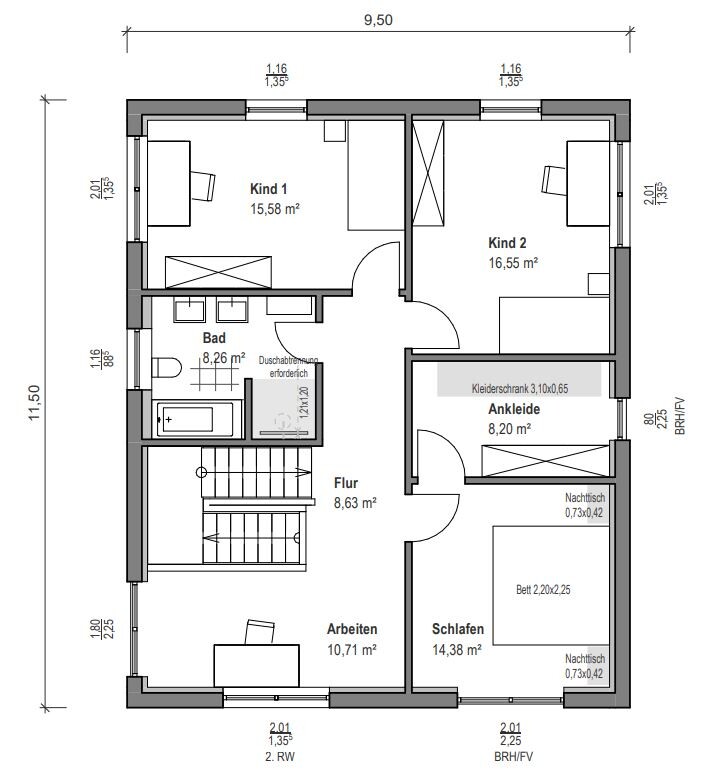
So basically, it doesn’t have to be a staircase with a landing. What we like about a staircase with a landing is the increased safety for the children. Our little one was about 3 years old when we moved in, and a second child is planned. Therefore, it is important to us that the staircase is as safe as possible. That’s why we also want a closed staircase, for example. With a spiral staircase, the steps are significantly narrower on the inside of the turn, which increases the risk of a child falling. For this reason, we generally prefer a staircase with a landing. However, it’s not absolutely necessary.
Our architect also sent her design today.
However, we currently prefer Katja’s design. The layout seems to be better resolved there.
SandyBlack schrieb:
What we simply like better about the landing staircase is the increased safety for children.That’s not exactly correct. Landings have their advantages, but not greater safety for children—in fact, quite the opposite… SandyBlack schrieb:
With a spiral staircase, the issue is that the steps towards the center are much narrower, which increases the risk of a child falling down.… unless you’re dealing with very large dimensions. The landing interrupts your stride—you basically have to turn around. That introduces a risk. A double-wound staircase has a continuous flow. My granddaughter adapted to such a staircase immediately and runs up and down it. Specifically where the steps are narrower, because it matches the size of her feet better. Adults use the steps farther out.
Your landing staircase will likely force the little ones to go slowly and cautiously, because the steps are too wide for small feet.
By the way, trampolines are more dangerous than stairs when more than one child is jumping 😉
S
SandyBlack13 Jun 2022 17:33Hm, okay, we thought that narrower steps increase the risk of slipping. What are the advantages of the landing staircase then? Primarily the appearance?
…. You only fall halfway when you fall.
I think people overthink it too much. Children are the embodiment of flexibility.
And then only with a handrail? Look, a “harp” style or vertical balusters on the railing have the advantage that a child of any height can grab hold everywhere and hold on for safety.
I think people overthink it too much. Children are the embodiment of flexibility.
SandyBlack schrieb:
That’s why it’s important to us that the staircase is as safe as possible. For example, we want a closed staircase.
And then only with a handrail? Look, a “harp” style or vertical balusters on the railing have the advantage that a child of any height can grab hold everywhere and hold on for safety.
SandyBlack schrieb:
However, we currently prefer Katja’s design. Me too! The architect’s design feels somewhat uninspired and is oriented far too much towards the north.
Würfel* schrieb:
Me too! The architect’s design feels somewhat uninspired and seems too focused on facing north.... and having a north-facing orientation doesn’t have to be a disadvantage.
I actually think the design is quite good.
Similar topics