
Hello everyone,
For several months now, we (38, 34, 12, 7) have been considering building our own home and have gone through quite a bit of literature as well as gathered ideas from various forums, which we have adapted to our needs.
We already own a specific plot of land and have created a possible room layout based on a "catalog house" from a general contractor (GC), of which only the exterior walls remained in the last project. The first three drafts were completely scrapped because we encountered insurmountable issues each time. Now we are at draft number 4 (alongside minor modifications and additions), in which we can identify ourselves (at least in theory) and which incorporates most of our wishes.
So far, discussions with the GC have rarely gone beyond "we will build according to your wishes," so I would appreciate expert input from you and am thankful for any suggestions for improvement.
Zoning Plan / Restrictions
Plot size: 2014m² (0.5 acres)
Slope: Approximately 1.25m (4 feet) over 40m (131 feet) from south to north
Floor area ratio (FAR): 0.4
No specified floor space index
Building envelope, building line, and boundary: statutory setback distances
Number of parking spaces: 2 garages + 1 outdoor space
Number of floors: 2 full floors
No other restrictions
Homeowners’ Requirements
Style, roof shape, building type: 2 full floors without sloped ceilings, hipped roof, no dull "urban villa concrete box"
Basement: yes
Number of occupants, ages: 2 adults, 2 children (12, 7)
Office: private study
Guest stays per year: approx. 5 (no separate guest room as there are 2 children’s rooms)
Conservative or modern building style: modern
Open kitchen, kitchen island: semi-open kitchen without doors
Number of dining seats: 6–8
Fireplace: yes
Balcony, roof terrace: no
Garage or carport: garage if budget allows
Utility garden, greenhouse: no
Wishes: separate walk-in closet for parents, second exit, generous front door, landing staircase (not feasible before due to space), workshop room
House Design
Source of design: external floor plan from catalog house, interior planning and window placement independently based on our wishes
What we like most: nearly all room wishes integrated, almost identical children’s rooms, spacious living area, orientation of rooms to the sky, dynamic façade, detached "stairwell" with lots of natural light
What we don’t like: staircase area just fits the plan dimensions, landing staircase with straight steps not possible, uncertainty about kitchen furnishings, tight bathroom furnishings
Personal price limit for the house, including fittings: 400,000
Preferred heating technology: no preference
If you have to give up something, which details/extensions?
- Can give up: clinker bricks, garage, “luxury” (KNX, sanitary fixtures, etc.)
- Cannot give up: basement
Why has the design evolved this way?
Repeatedly started over until most wishes could be incorporated
What is the most important/basic question about the floor plan in 130 characters?
Is the plan practically livable? What might hinder room usage?
Best regards,
Daniel
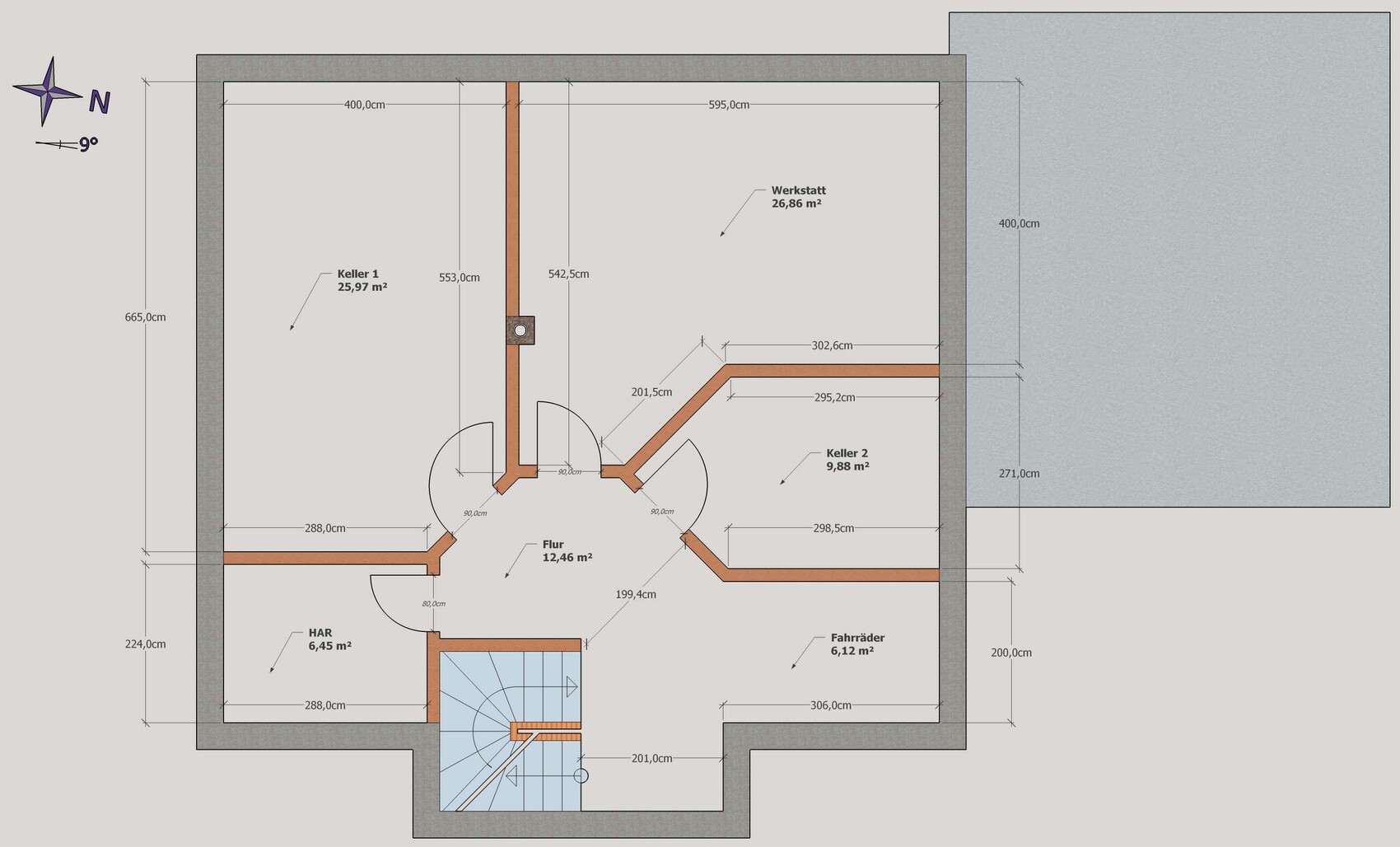
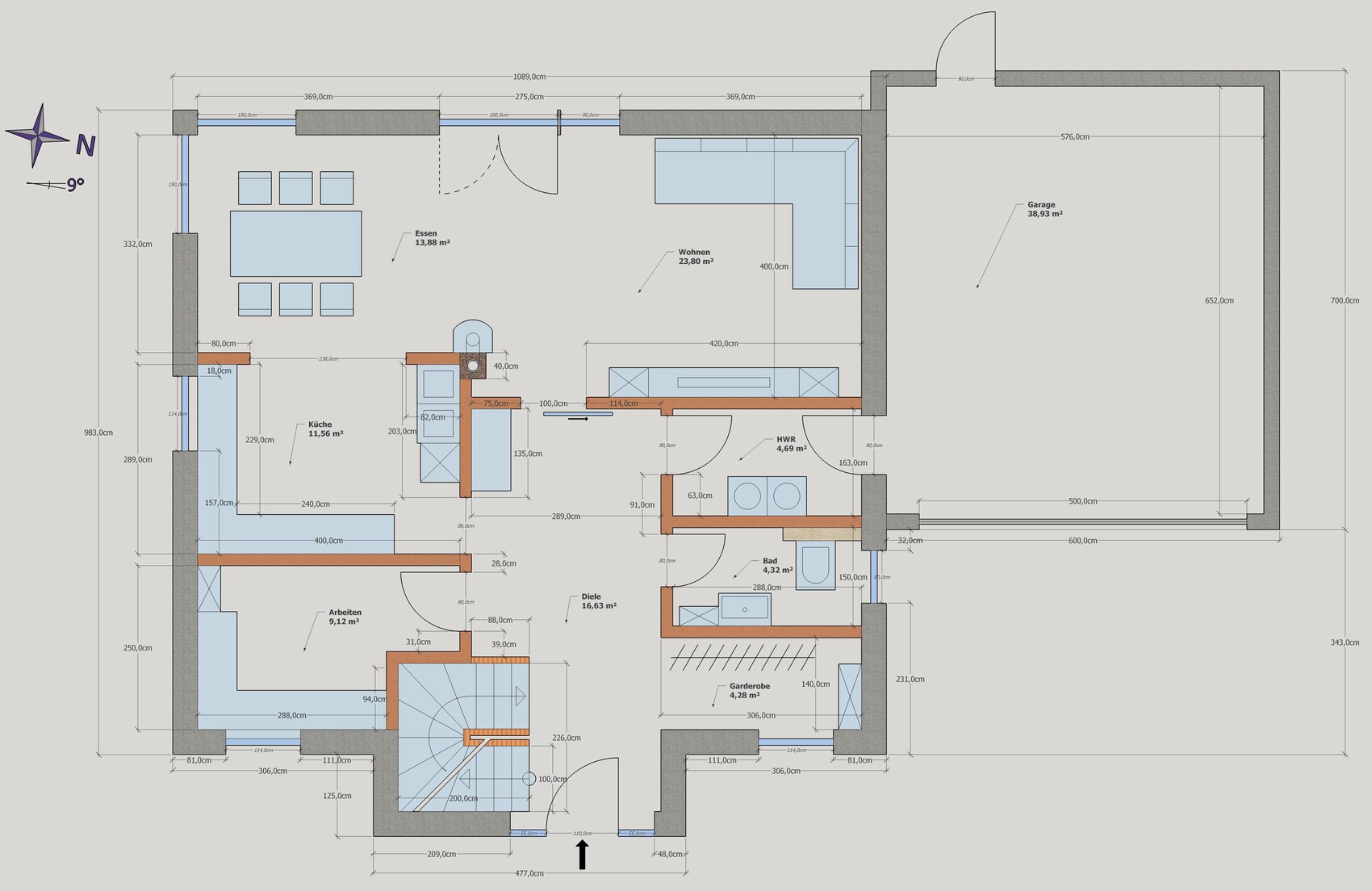
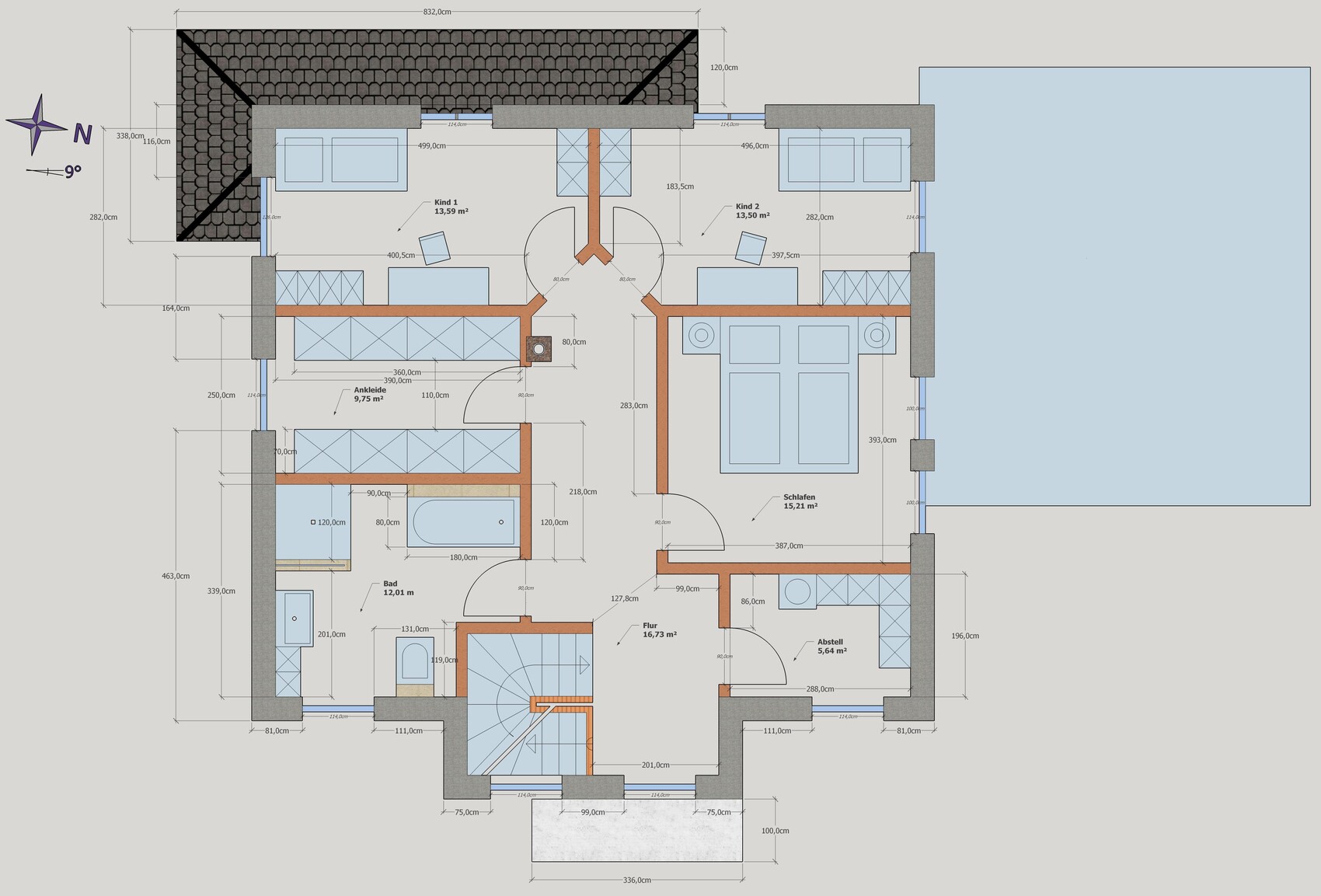
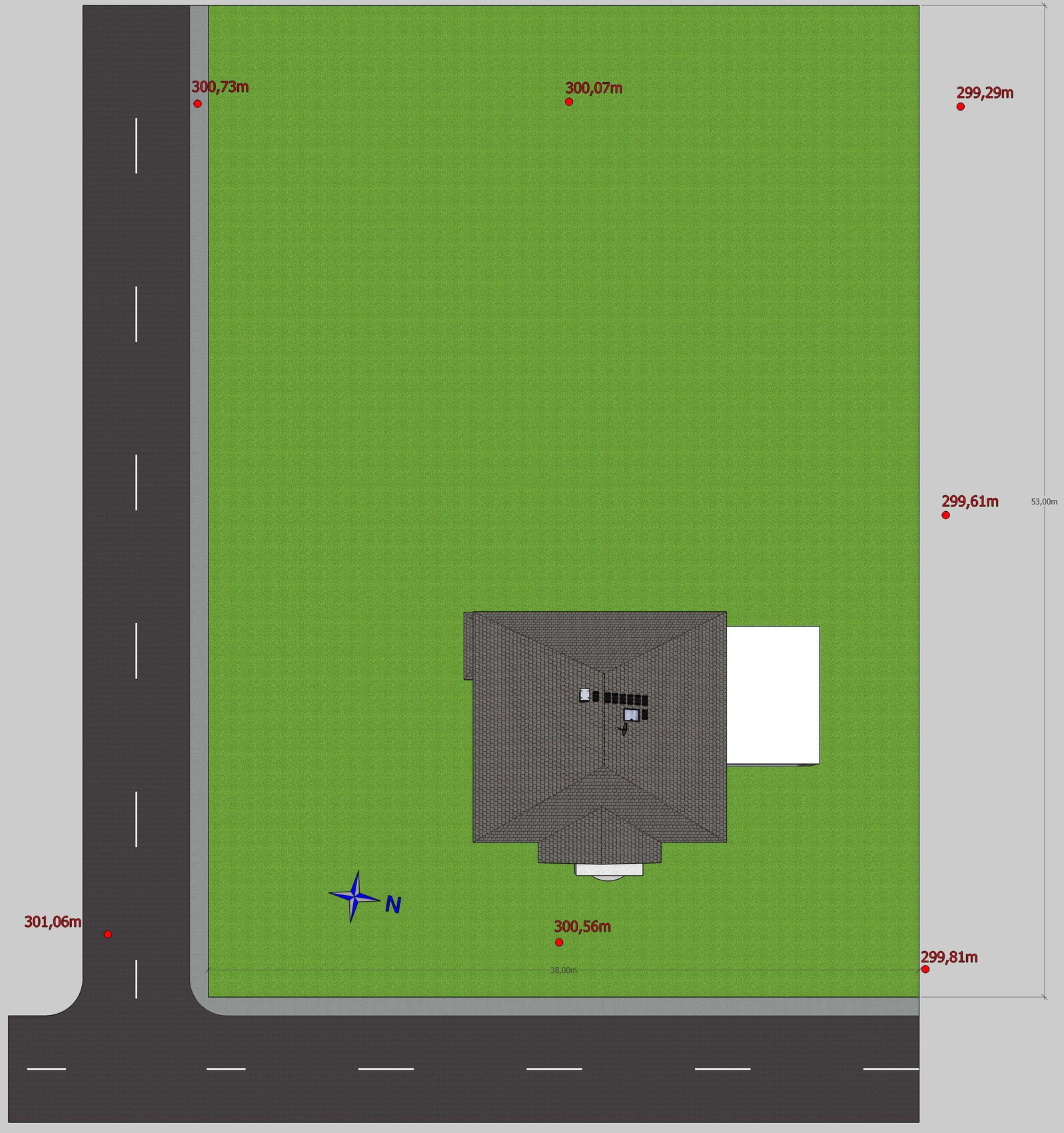
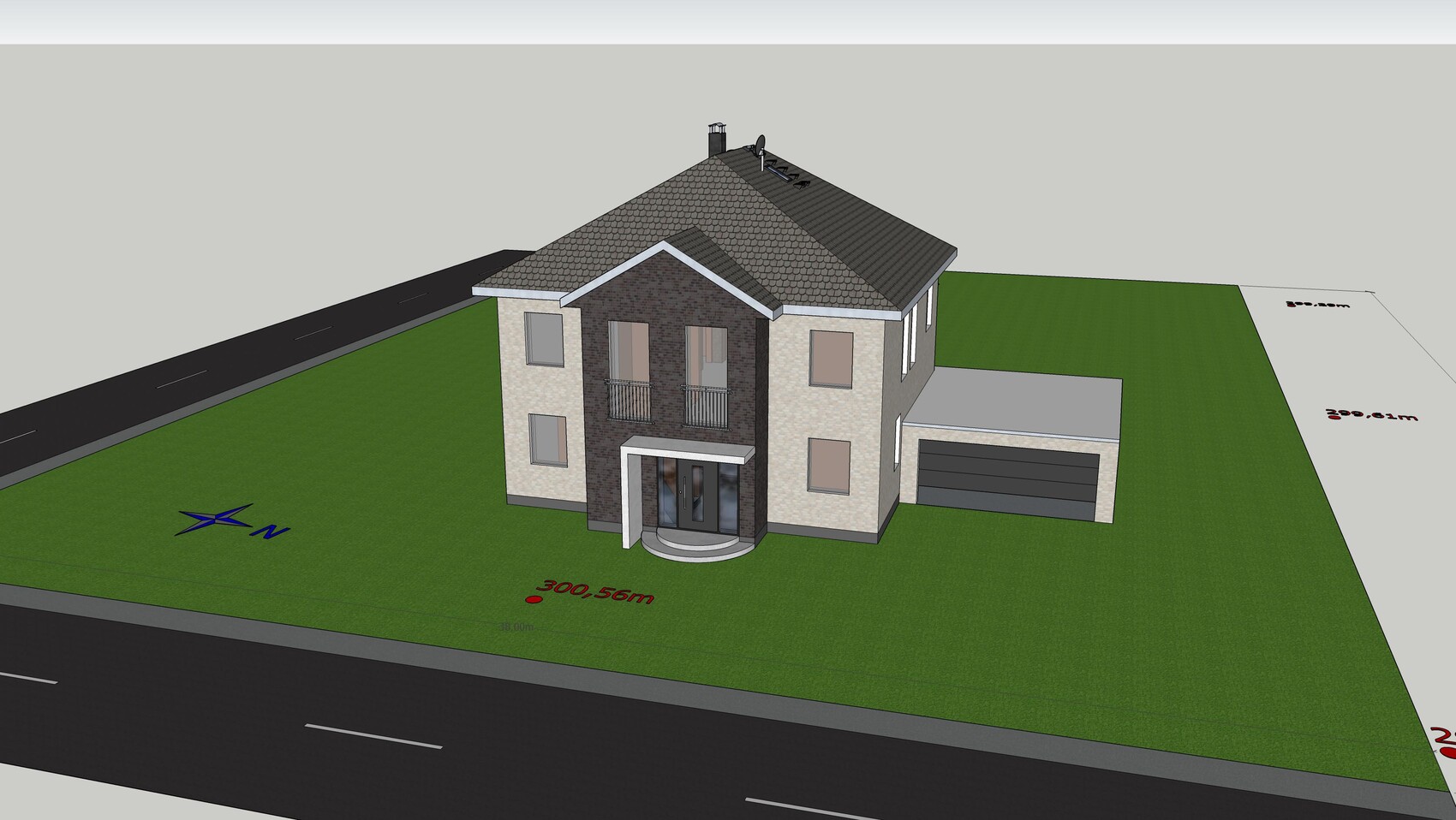
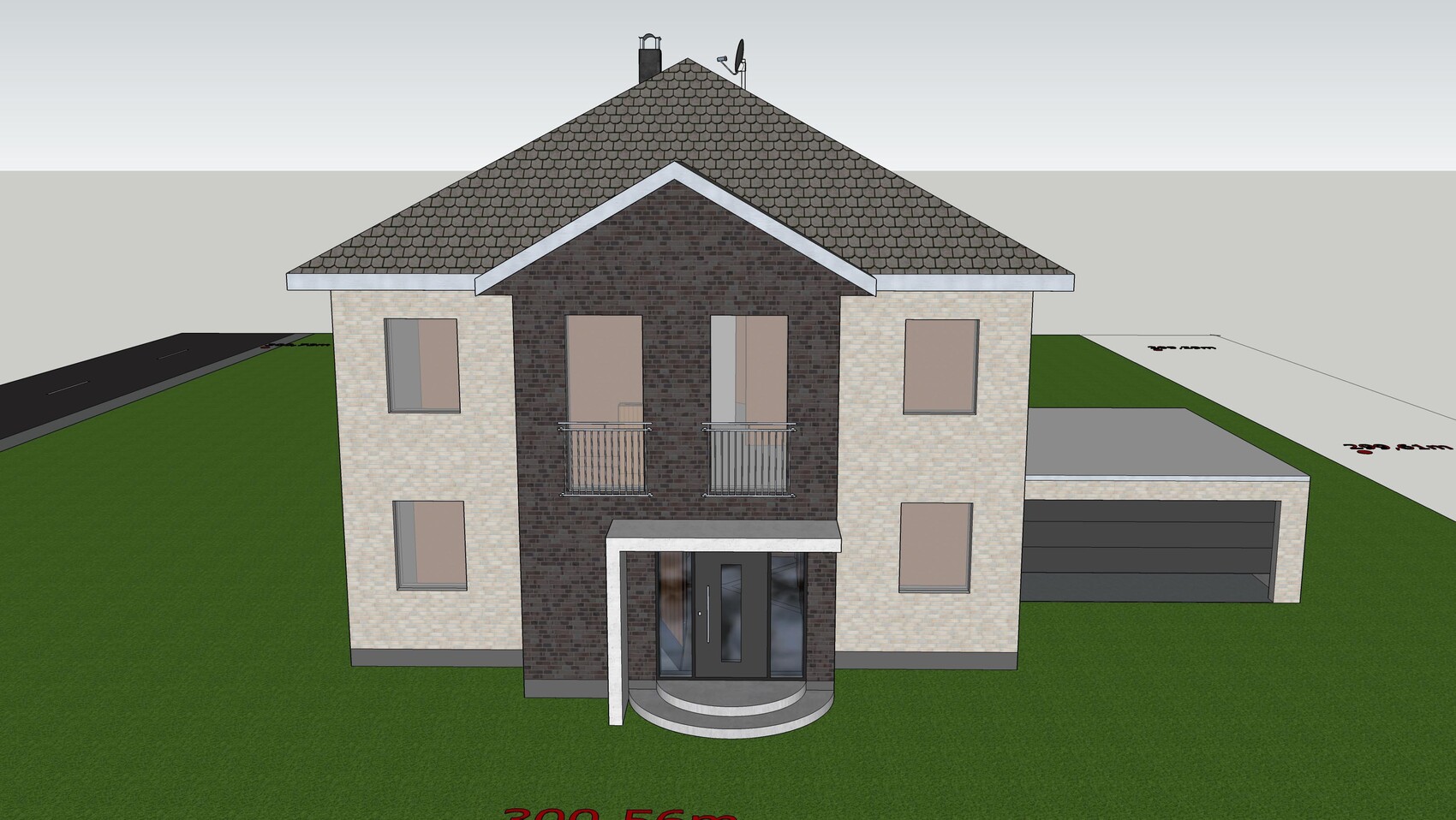
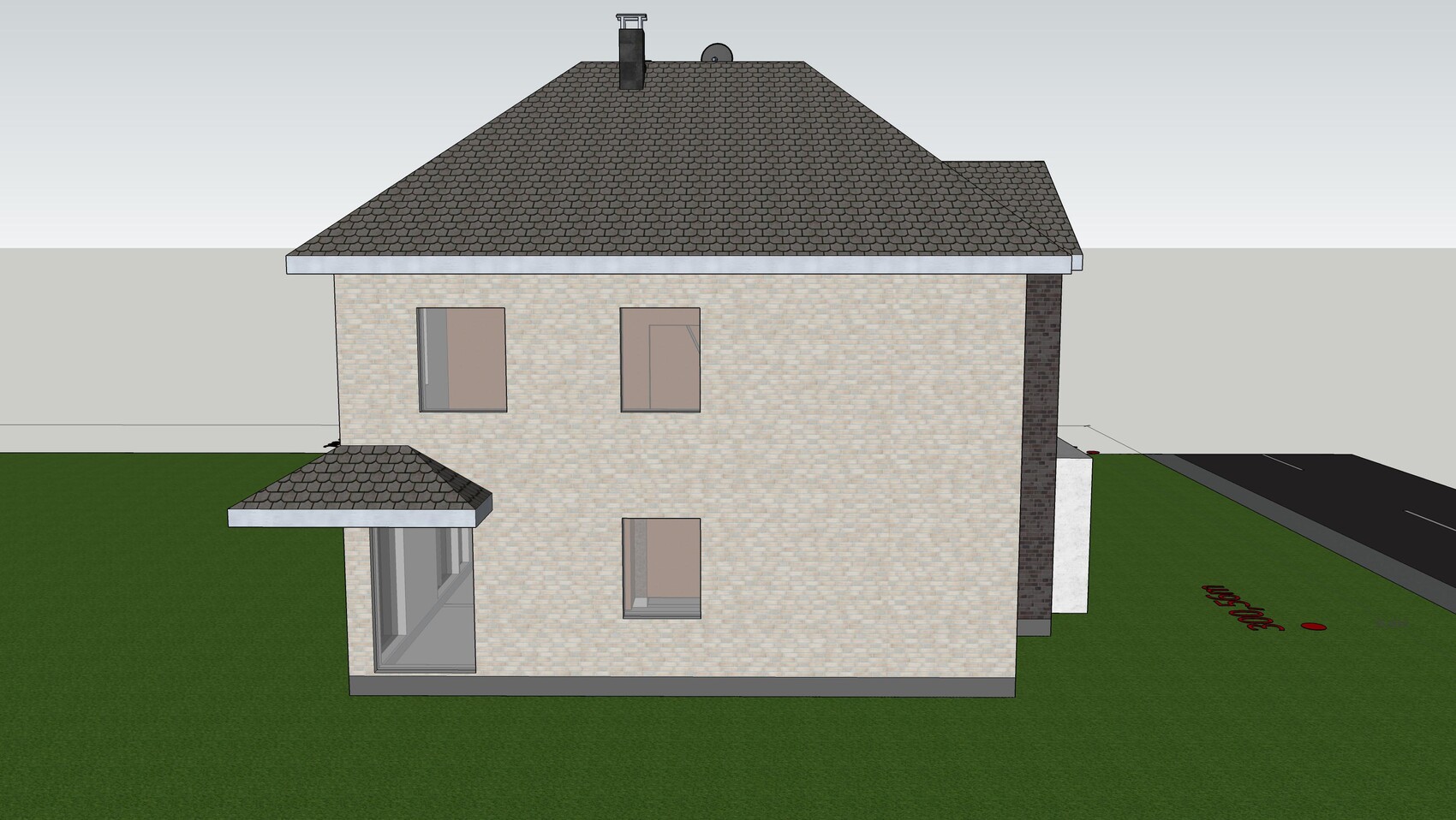
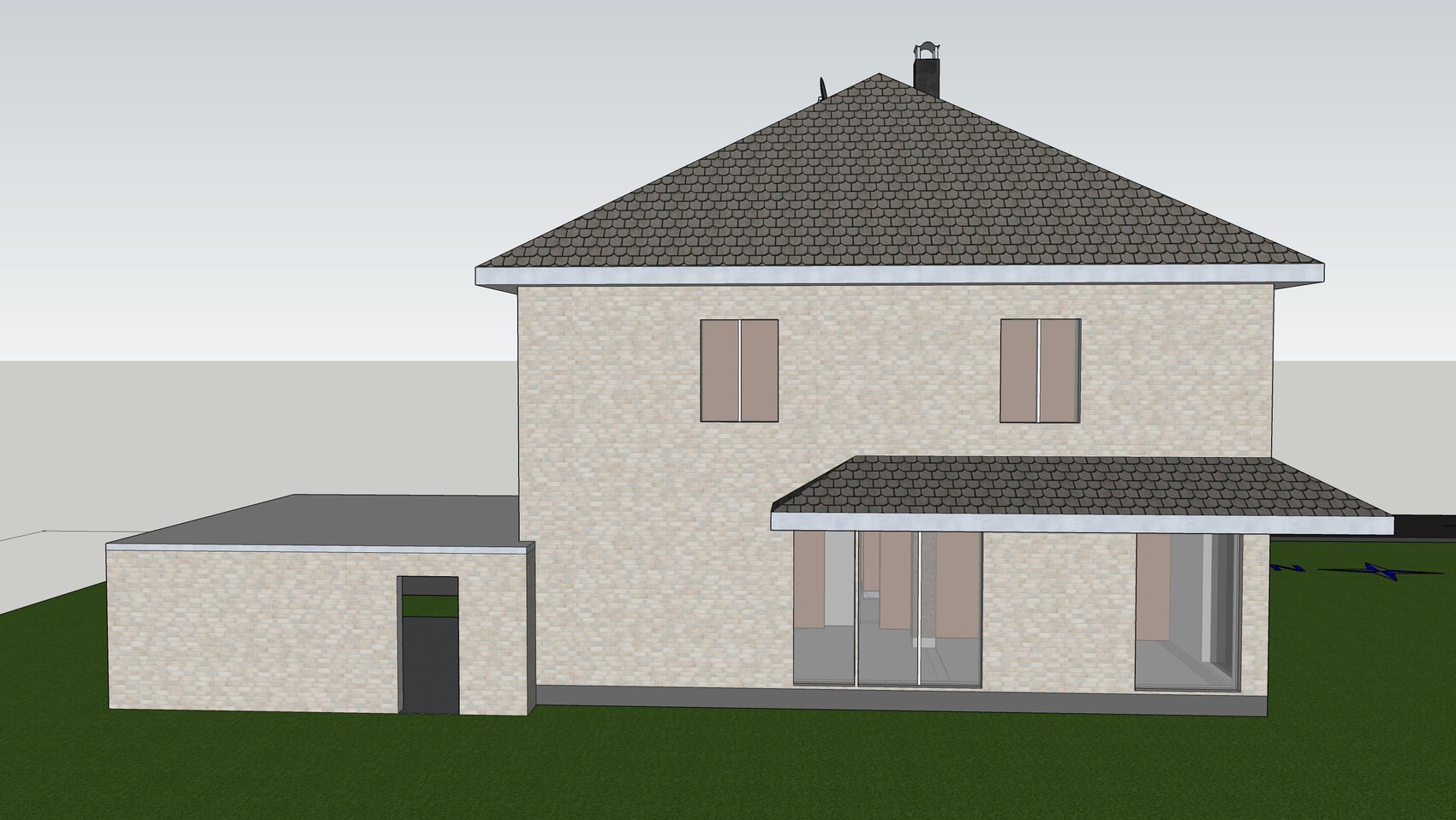
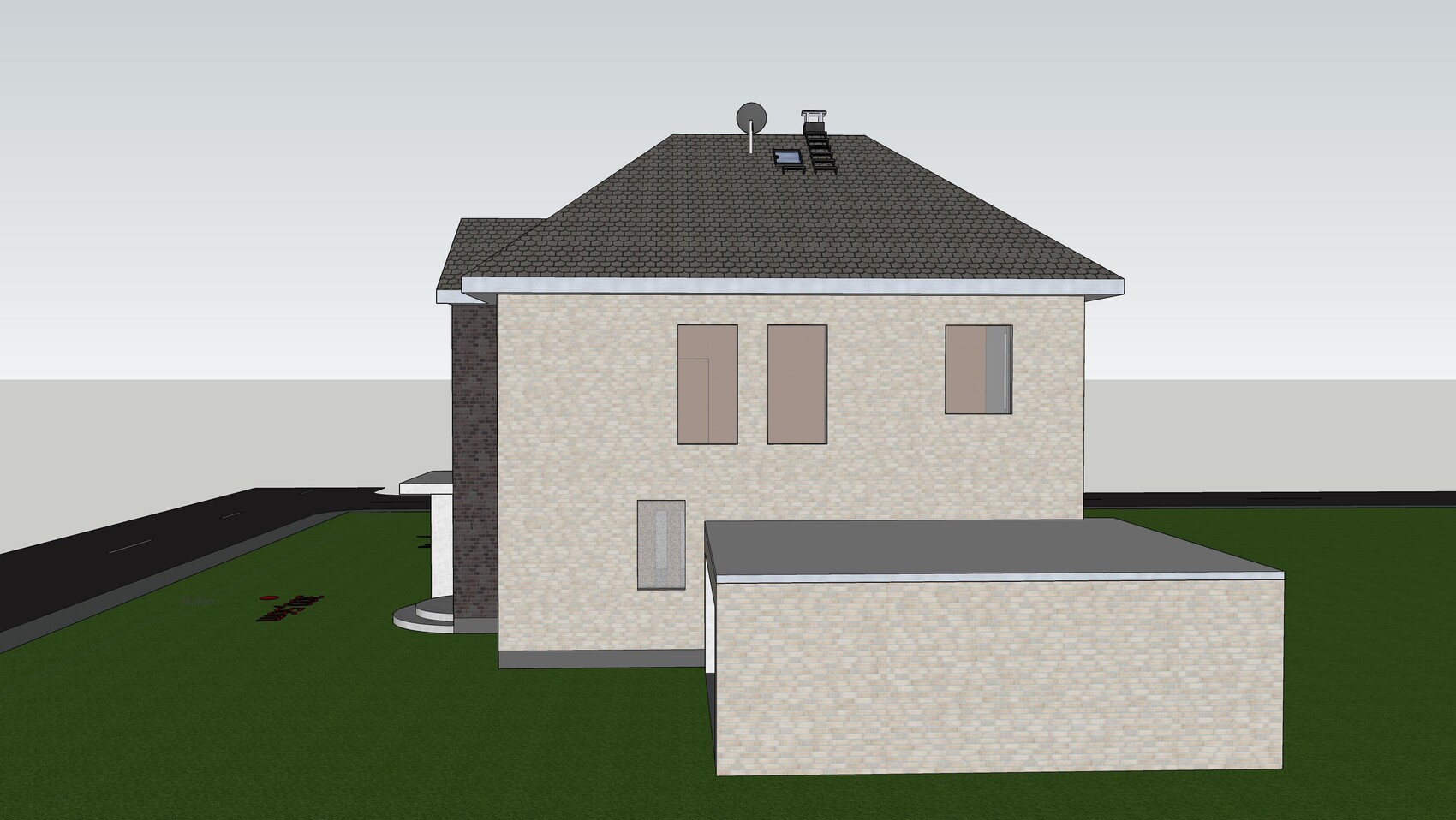
For several months now, we (38, 34, 12, 7) have been considering building our own home and have gone through quite a bit of literature as well as gathered ideas from various forums, which we have adapted to our needs.
We already own a specific plot of land and have created a possible room layout based on a "catalog house" from a general contractor (GC), of which only the exterior walls remained in the last project. The first three drafts were completely scrapped because we encountered insurmountable issues each time. Now we are at draft number 4 (alongside minor modifications and additions), in which we can identify ourselves (at least in theory) and which incorporates most of our wishes.
So far, discussions with the GC have rarely gone beyond "we will build according to your wishes," so I would appreciate expert input from you and am thankful for any suggestions for improvement.
Zoning Plan / Restrictions
Plot size: 2014m² (0.5 acres)
Slope: Approximately 1.25m (4 feet) over 40m (131 feet) from south to north
Floor area ratio (FAR): 0.4
No specified floor space index
Building envelope, building line, and boundary: statutory setback distances
Number of parking spaces: 2 garages + 1 outdoor space
Number of floors: 2 full floors
No other restrictions
Homeowners’ Requirements
Style, roof shape, building type: 2 full floors without sloped ceilings, hipped roof, no dull "urban villa concrete box"
Basement: yes
Number of occupants, ages: 2 adults, 2 children (12, 7)
Office: private study
Guest stays per year: approx. 5 (no separate guest room as there are 2 children’s rooms)
Conservative or modern building style: modern
Open kitchen, kitchen island: semi-open kitchen without doors
Number of dining seats: 6–8
Fireplace: yes
Balcony, roof terrace: no
Garage or carport: garage if budget allows
Utility garden, greenhouse: no
Wishes: separate walk-in closet for parents, second exit, generous front door, landing staircase (not feasible before due to space), workshop room
House Design
Source of design: external floor plan from catalog house, interior planning and window placement independently based on our wishes
What we like most: nearly all room wishes integrated, almost identical children’s rooms, spacious living area, orientation of rooms to the sky, dynamic façade, detached "stairwell" with lots of natural light
What we don’t like: staircase area just fits the plan dimensions, landing staircase with straight steps not possible, uncertainty about kitchen furnishings, tight bathroom furnishings
Personal price limit for the house, including fittings: 400,000
Preferred heating technology: no preference
If you have to give up something, which details/extensions?
- Can give up: clinker bricks, garage, “luxury” (KNX, sanitary fixtures, etc.)
- Cannot give up: basement
Why has the design evolved this way?
Repeatedly started over until most wishes could be incorporated
What is the most important/basic question about the floor plan in 130 characters?
Is the plan practically livable? What might hinder room usage?
Best regards,
Daniel
For me personally, having the walk-in closet separate from the bedroom wouldn’t work. If my teenage kids have visitors in the evening or at night, I might not be able to leave the bedroom to get dressed. It would also be too much walking back and forth between the bedroom, walk-in closet, and bathroom. A walk-in closet only makes sense to me if it can be accessed directly from the bedroom.
Best regards
Sabine
Best regards
Sabine

Curly schrieb:
I would also find it too much walking back and forth between the bedroom, dressing room, and bathroom. I agree, because...
Curly schrieb:
If my teenage kids have visitors in the evening or at night, I might not be able to get out of the bedroom to get dressed. ... but to a lesser extent: having a dressing room doesn’t mean there can’t be a valet stand in the bedroom as well. And how dull would the lives of pimply teens be without dreaming about their classmates’ moms?
https://www.instagram.com/11antgmxde/
https://www.linkedin.com/company/bauen-jetzt/
So, I’m back.
Countless new designs were started and then abandoned sooner or later due to unsolvable follow-up problems.
Result: In none of the designs was I able to include a properly accessible half-landing staircase.
Options:
1. Extend the house about 90cm (35 inches) in the east-west direction. This leads to a nice ground floor. First-floor planning is more difficult but doable. Probably significant additional costs and a living area over 200m² (2,150 sq ft), both of which are actually not desired.
2. Give up the house template and the general contractor and start a new plan with an architect. Quite feasible, and the more I read about the individual trades, the more likely it seems. Some special requests cannot or are reluctantly offered by the general contractor (e.g., electrical work), and for others, unrealistic surcharges are requested, so some trades might need to be subcontracted externally. Still, I want to continue my own planning for now, especially since my rough search for architects has not yet produced any “aha” moments.
3. Abandon the half-landing staircase. Although this thread has mostly dealt with that topic, it was never a must-have for me. I would find it nice, but not essential. For me, the cloakroom area is more important, so I started there initially.
Main changes/improvements:
- Passage to the garage was removed, consistently separating the garage from the house.
- Washing machine/dryer permanently moved to the upper floor.
- Study relocated to the north side, facing the nicer view and avoiding sunlight issues when working at the PC.
- Kitchen enlarged and door moved for a much more relaxed layout; the aquarium moves to the opposite wall.
- Guest toilet shifted to the southeast, larger than necessary; we’re still undecided about a second shower; the appearance of the passageway in the finished house is questionable.
- Slight increase in the depth of the living area, surely nice for the family’s most used room.
Other points:
- I haven’t yet dealt with the window placement in the new rooms. Since I haven’t created any 3D views yet, it still needs to be seen whether the offset of the kitchen window is more positive or negative.
- What do you think about the width of the corner glazing in the dining area? My research gave no recommendations here, and the 2 × 1.5m (5 × 5 feet) was set somewhat arbitrarily.
- In the new plan, the utility room, guest toilet, kitchen, and bathroom are stacked. According to the contractor, that doesn’t matter, but why create problems when they don’t have to arise.
- The stair direction will probably be switched, but that doesn’t affect the other floors.
- The length of the stairs should fit with the step measurement; there might be room for one extra step. After testing and measuring several staircases, I am almost of the opinion that the standardization is exaggerated here. Even exceeding the "ideal" step measurement by several centimeters (inches) still results in very walkable stairs.
- We have no problem with the separate walk-in closet. A direct connection to the bedroom is nicer but inevitably leads to unacceptable compromises in the floor plan.
Best regards
Daniel
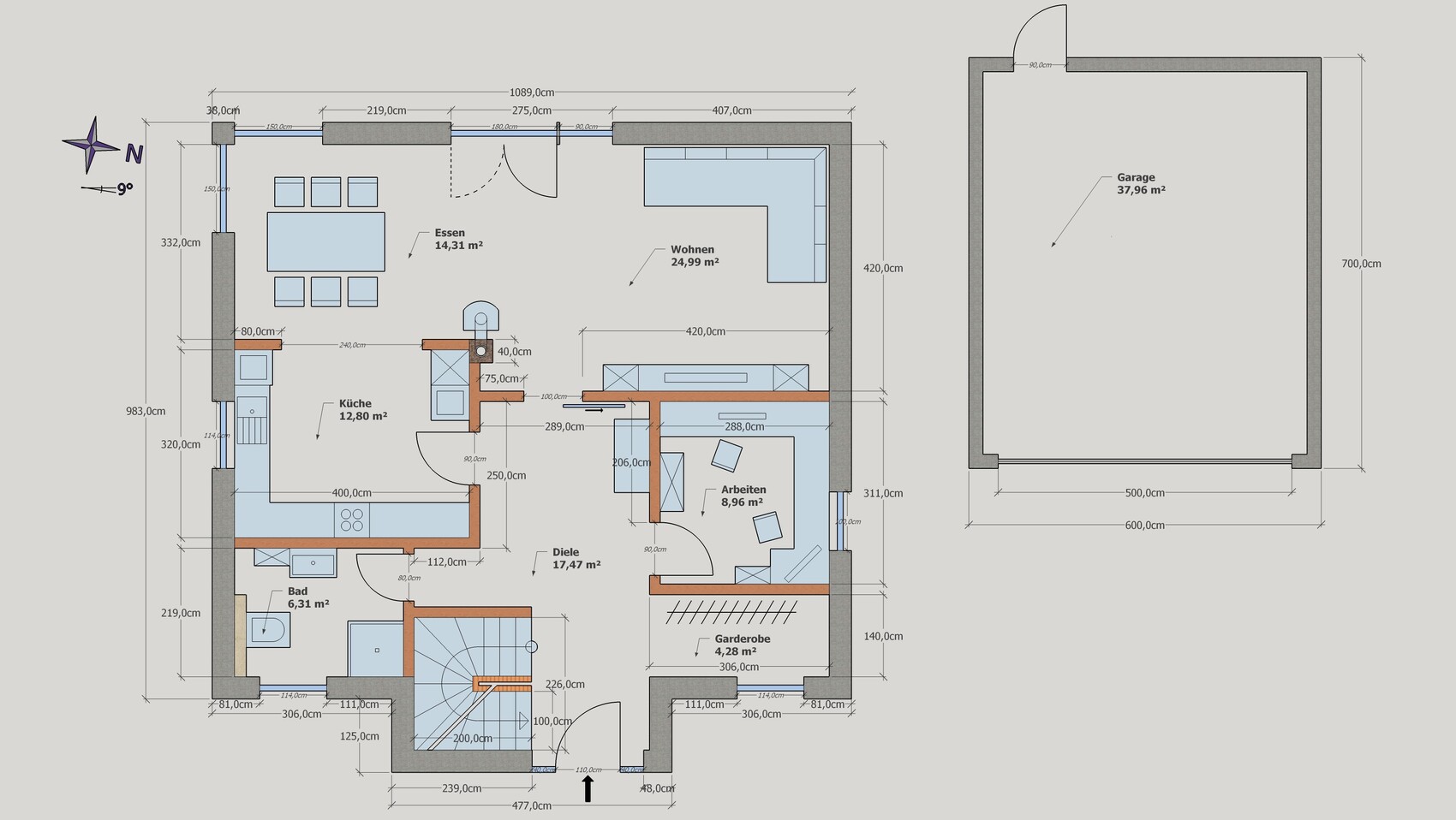
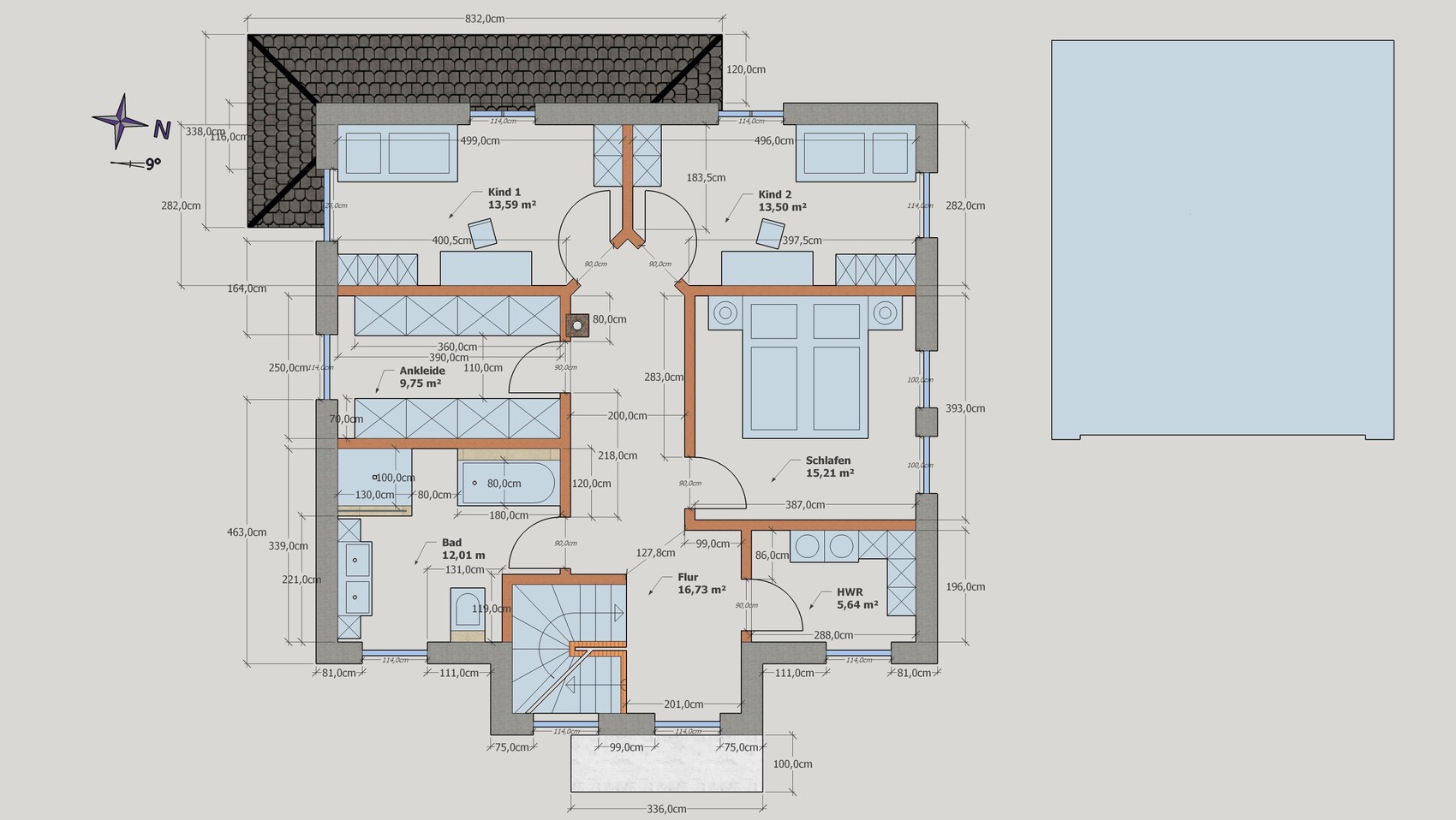
Countless new designs were started and then abandoned sooner or later due to unsolvable follow-up problems.
Result: In none of the designs was I able to include a properly accessible half-landing staircase.
Options:
1. Extend the house about 90cm (35 inches) in the east-west direction. This leads to a nice ground floor. First-floor planning is more difficult but doable. Probably significant additional costs and a living area over 200m² (2,150 sq ft), both of which are actually not desired.
2. Give up the house template and the general contractor and start a new plan with an architect. Quite feasible, and the more I read about the individual trades, the more likely it seems. Some special requests cannot or are reluctantly offered by the general contractor (e.g., electrical work), and for others, unrealistic surcharges are requested, so some trades might need to be subcontracted externally. Still, I want to continue my own planning for now, especially since my rough search for architects has not yet produced any “aha” moments.
3. Abandon the half-landing staircase. Although this thread has mostly dealt with that topic, it was never a must-have for me. I would find it nice, but not essential. For me, the cloakroom area is more important, so I started there initially.
Main changes/improvements:
- Passage to the garage was removed, consistently separating the garage from the house.
- Washing machine/dryer permanently moved to the upper floor.
- Study relocated to the north side, facing the nicer view and avoiding sunlight issues when working at the PC.
- Kitchen enlarged and door moved for a much more relaxed layout; the aquarium moves to the opposite wall.
- Guest toilet shifted to the southeast, larger than necessary; we’re still undecided about a second shower; the appearance of the passageway in the finished house is questionable.
- Slight increase in the depth of the living area, surely nice for the family’s most used room.
Other points:
- I haven’t yet dealt with the window placement in the new rooms. Since I haven’t created any 3D views yet, it still needs to be seen whether the offset of the kitchen window is more positive or negative.
- What do you think about the width of the corner glazing in the dining area? My research gave no recommendations here, and the 2 × 1.5m (5 × 5 feet) was set somewhat arbitrarily.
- In the new plan, the utility room, guest toilet, kitchen, and bathroom are stacked. According to the contractor, that doesn’t matter, but why create problems when they don’t have to arise.
- The stair direction will probably be switched, but that doesn’t affect the other floors.
- The length of the stairs should fit with the step measurement; there might be room for one extra step. After testing and measuring several staircases, I am almost of the opinion that the standardization is exaggerated here. Even exceeding the "ideal" step measurement by several centimeters (inches) still results in very walkable stairs.
- We have no problem with the separate walk-in closet. A direct connection to the bedroom is nicer but inevitably leads to unacceptable compromises in the floor plan.
Best regards
Daniel

RobsonMKK schrieb:
Two things stand out to me:
Over 30 sqm (320 sq ft) of hallway and plenty of “dead” space in the open-plan area.Yes, the hallway is definitely a major reason why we need around 180 sqm (1,940 sq ft) to accommodate our needs and wishes. However, I have also seen designs with well over 20 sqm (215 sq ft) of hallway just on the ground floor. It is airy, that’s true. Personally, at least on paper, I don’t see the “circulation space” as oversized. Upstairs, I see little potential for savings.
What you mean by “dead” space, however, I don’t understand. It is the most frequently used room (children spend more time there than in their bedrooms), and the coffee table, etc., are not even shown. The fireplace also needs some clearance. Maybe I am misunderstanding you.
Similar topics