
Hello everyone,
I have been reading here for a while, and now it’s time for us to start planning the floor plan. We had our first appointment with the architect this week and have already shared our ideas with him as preparation. We received a first draft, which we will discuss during our meeting. Additionally, we created some rough sketches ourselves (without considering structural issues, windows, the staircase is drawn way too small, etc. – really just very basic to clarify our ideas, I’m attaching those as well).
Development plan / restrictions
Plot size: 635 sqm (6,840 sq ft)
House size: 135 sqm (1,450 sq ft)
Number of floors: 1.5
Roof type: Gable roof
Maximum heights / limits: Knee wall 1.20 m (4 ft)
(We would have preferred a bungalow or a townhouse, but unfortunately, there are no plots available here. We are happy to have found one at all, even if that means we have to accept 1.5 floors and a knee wall.)
Client requirements
Basement, floors: no basement
Number of occupants, age: 2 persons, 39 years old (children are 90% unlikely to be planned)
Office: Home office about once a week – although I usually work from the living room with my laptop
Guest stays: maybe 2 to 3 times a year, so far managed without a guest room in the apartment
Architecture: open plan
Construction style: modern
Kitchen: an island kitchen probably won’t fit, but it should be an open kitchen, possibly with a breakfast bar
Dining seats: 4 to 6 – for occasional visitors – but that could also work by putting in a dining table as needed and otherwise using a kitchen breakfast bar daily
Fireplace: rather no, due to cost and space reasons
Balcony, roof terrace: terrace
Garage, carport: carport
Desired ground floor layout:
Includes utility room, guest WC, hallway, living area (consisting of living room, kitchen, dining area/other)
Entrance and ancillary rooms:
- small hallway with space for a coat rack
- utility room about 8 sqm (86 sq ft), space for technical equipment, washing machine, dog food & co.
- guest WC max. 3 sqm (32 sq ft); no guest shower needed
Living area:
- quick access from the entrance to the living area, ideally directly to the kitchen
- living/kitchen/dining area as large as possible (ideally approx. 50 sqm (540 sq ft)), minimizing space wasted by other areas/rooms on the ground floor
- kitchen possibly with island/breakfast bar if space allows
- book corner with window seat if space allows (for info: I have about 1,000 books and a piano – these need to be accommodated somewhere)
- space-saving staircase, preferably open/integrated in the living area to save hallway space
Desired upper floor layout:
Includes bathroom, bedroom, dressing room, hobby room, another room (possibly office, guest room)
Bathroom:
- bathroom with walk-in shower + bathtub (freestanding = nice to have)
- possible wall separation for the toilet (if it fits)
Sleeping area and dressing room:
- bedroom with walk-in closet/dressing room, if feasible given house size
- access from bedroom to dressing room and bathroom
Additional rooms:
- hobby room with space for desk, crafting corner, small seating area
- another room as office/sports/guest room or possibly a child’s room after all – alternatively, a larger hallway/gallery with seating area and light well to the floor below
House design
Designed by: planner/architect from a design-build company
What don’t we like? Why?
Cost estimate according to architect/planner: $240,000 – that is also the financial plan (excluding kitchen or additional furniture, plot and landscaping – total budget is about $400,000)
Preferred heating technology: air-source heat pump
If you had to give up something, which features/finishes could you do without? very reluctantly the dressing/walk-in closet
What is the most important fundamental question about the floor plan, summarized in 130 characters?
How should we best proceed with the draft? Are there ideas that could help us align better with our wishes for the discussion? Which ideas should we discard?
A few more remarks: Reading other posts here sometimes makes me feel guilty because we are “only” building 135 sqm and everything seems so “small.” Still, I want to get the best possible value for my money. Financially, this size is the most reasonable for now.
(PS: And in case the question arises: Why are children only 90% excluded? There are many reasons – for example, difficulties conceiving, but not completely giving up hope.)
Thank you in advance for your opinions.
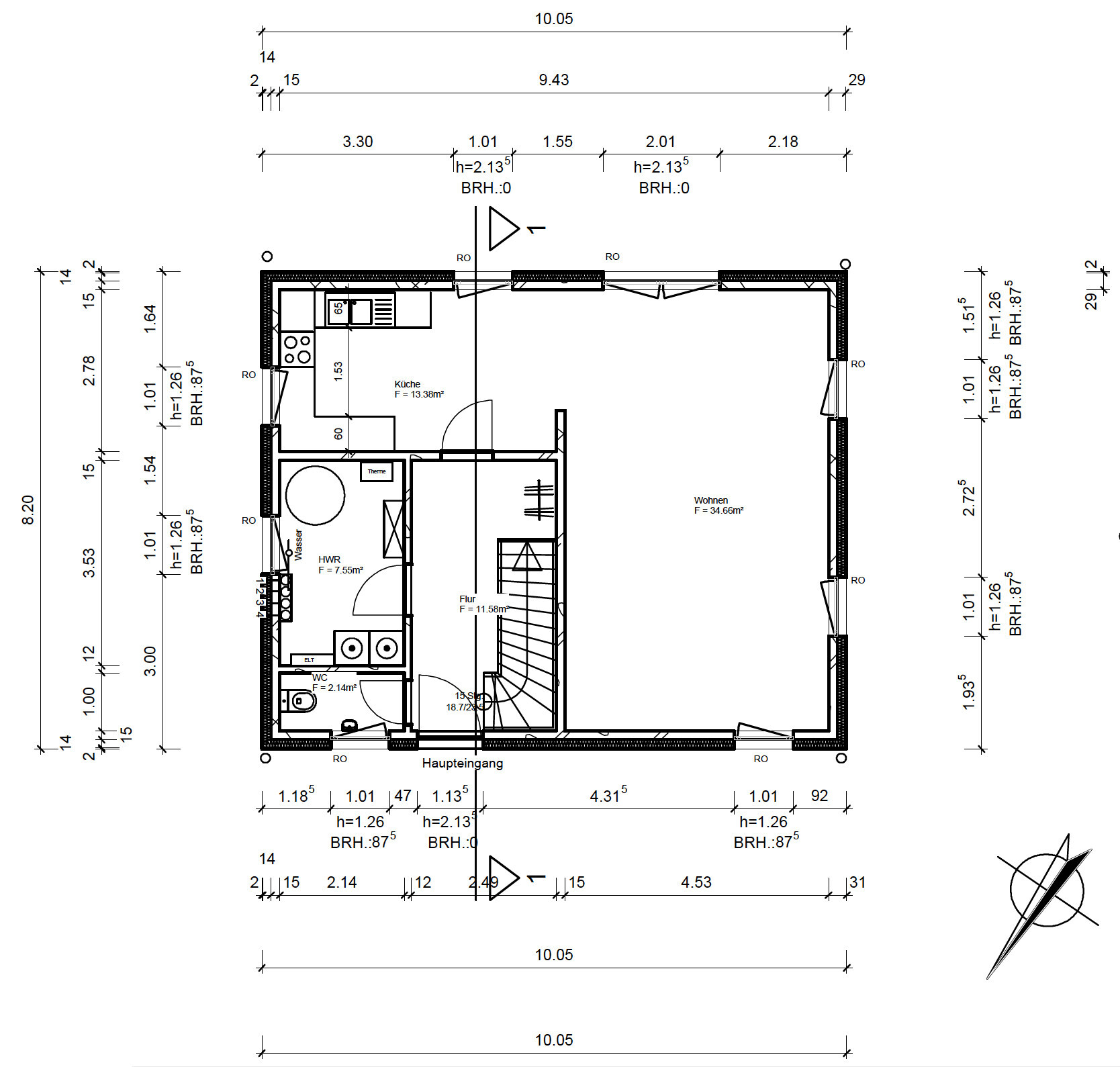
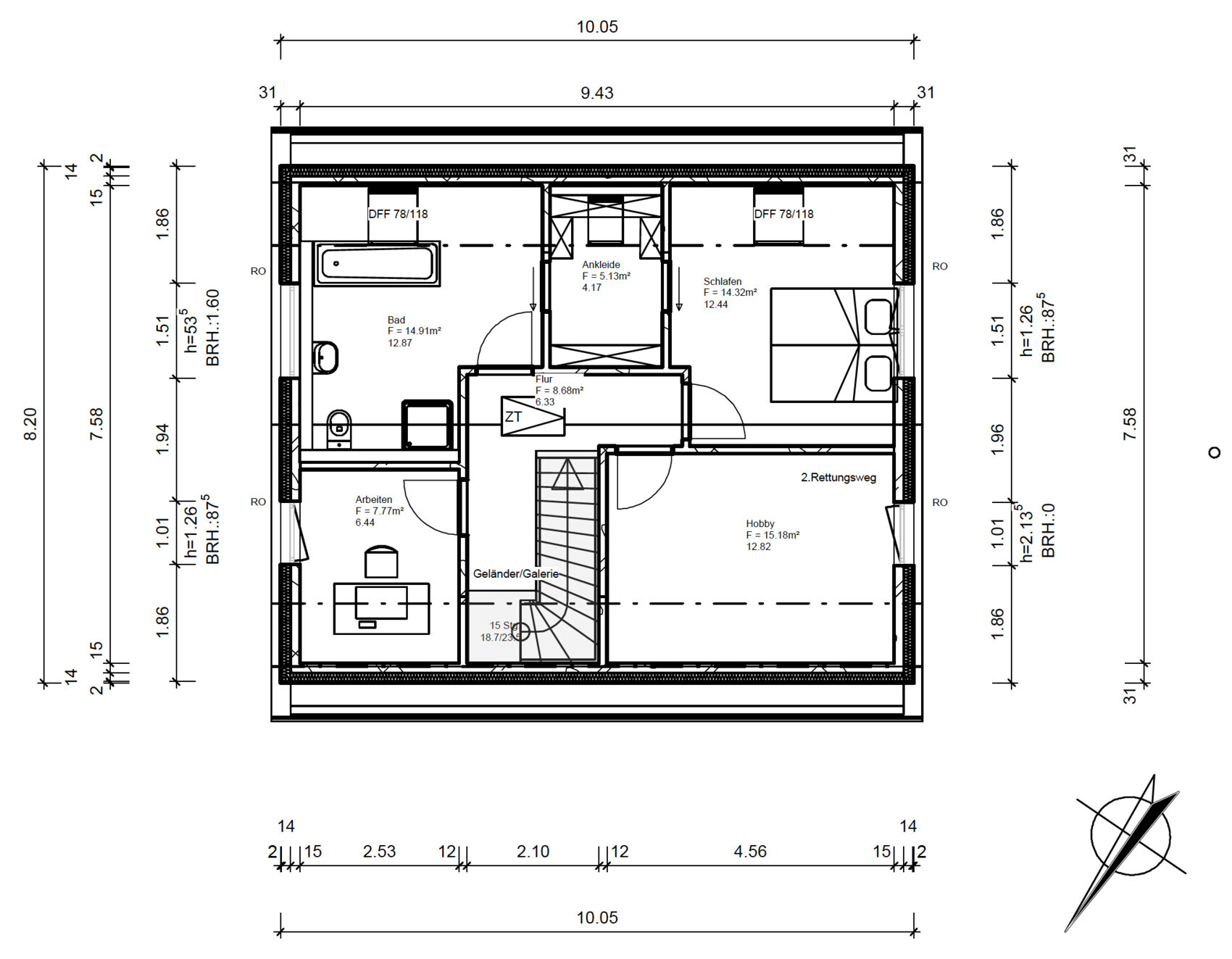
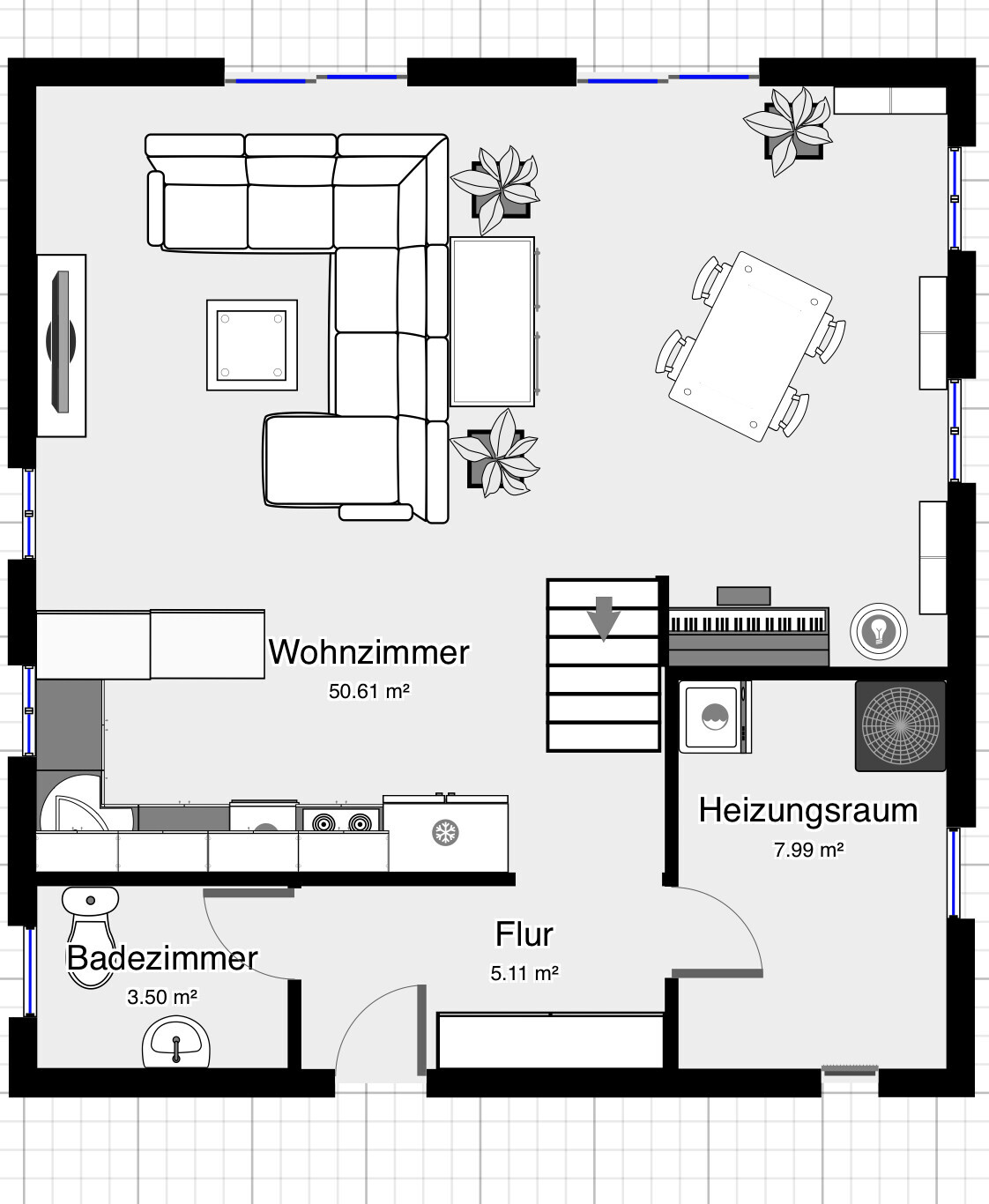
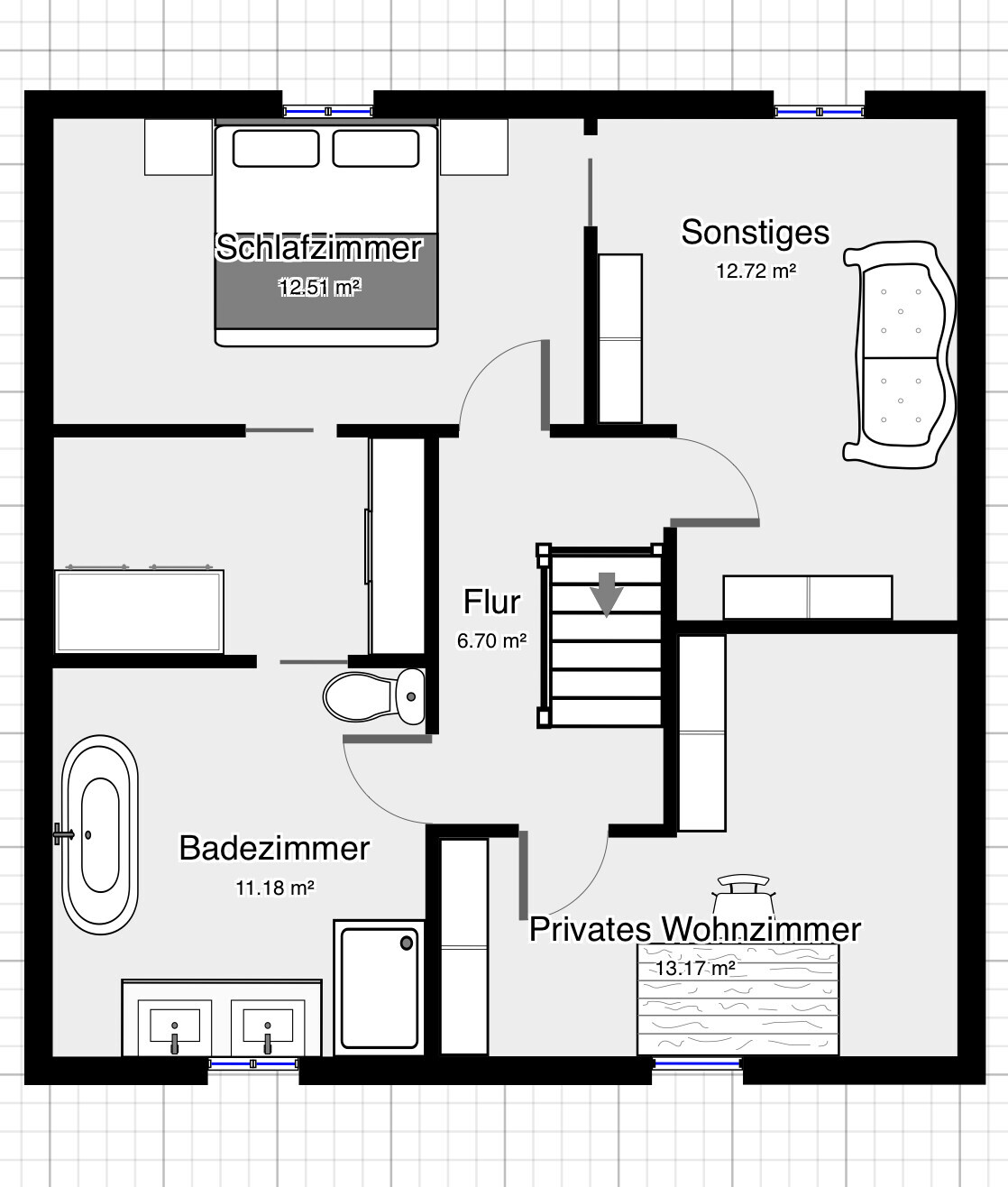
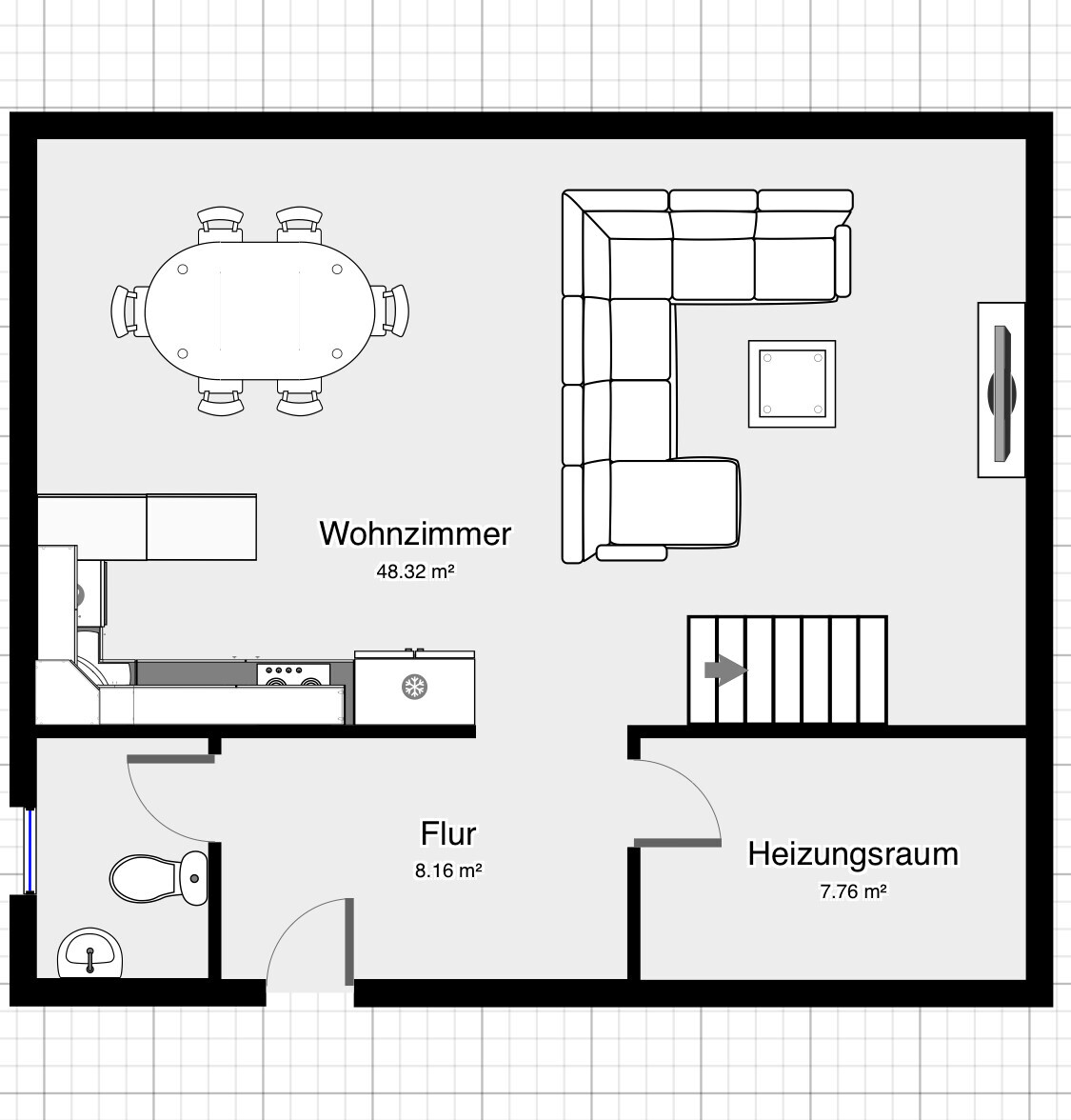
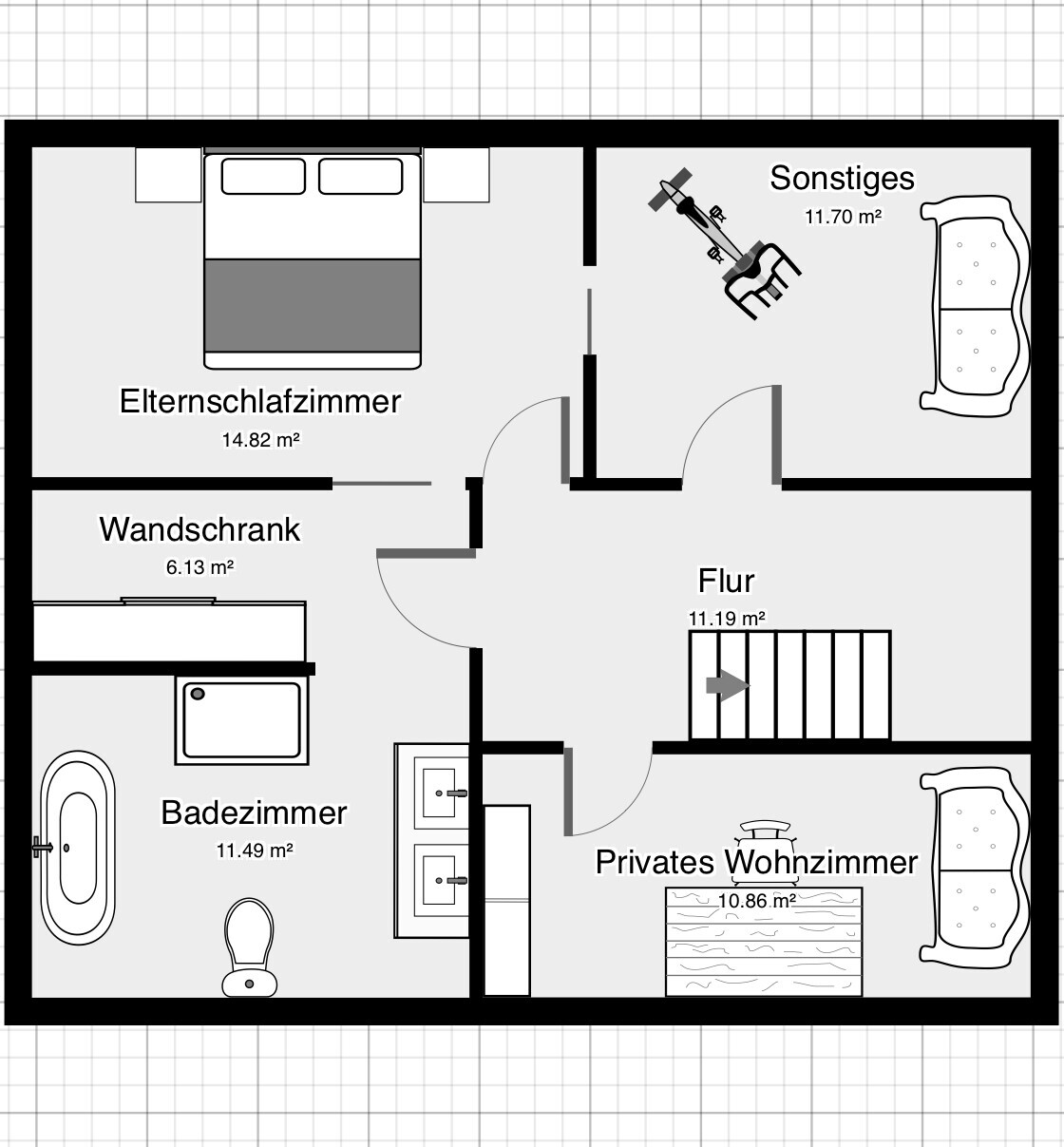
I have been reading here for a while, and now it’s time for us to start planning the floor plan. We had our first appointment with the architect this week and have already shared our ideas with him as preparation. We received a first draft, which we will discuss during our meeting. Additionally, we created some rough sketches ourselves (without considering structural issues, windows, the staircase is drawn way too small, etc. – really just very basic to clarify our ideas, I’m attaching those as well).
Development plan / restrictions
Plot size: 635 sqm (6,840 sq ft)
House size: 135 sqm (1,450 sq ft)
Number of floors: 1.5
Roof type: Gable roof
Maximum heights / limits: Knee wall 1.20 m (4 ft)
(We would have preferred a bungalow or a townhouse, but unfortunately, there are no plots available here. We are happy to have found one at all, even if that means we have to accept 1.5 floors and a knee wall.)
Client requirements
Basement, floors: no basement
Number of occupants, age: 2 persons, 39 years old (children are 90% unlikely to be planned)
Office: Home office about once a week – although I usually work from the living room with my laptop
Guest stays: maybe 2 to 3 times a year, so far managed without a guest room in the apartment
Architecture: open plan
Construction style: modern
Kitchen: an island kitchen probably won’t fit, but it should be an open kitchen, possibly with a breakfast bar
Dining seats: 4 to 6 – for occasional visitors – but that could also work by putting in a dining table as needed and otherwise using a kitchen breakfast bar daily
Fireplace: rather no, due to cost and space reasons
Balcony, roof terrace: terrace
Garage, carport: carport
Desired ground floor layout:
Includes utility room, guest WC, hallway, living area (consisting of living room, kitchen, dining area/other)
Entrance and ancillary rooms:
- small hallway with space for a coat rack
- utility room about 8 sqm (86 sq ft), space for technical equipment, washing machine, dog food & co.
- guest WC max. 3 sqm (32 sq ft); no guest shower needed
Living area:
- quick access from the entrance to the living area, ideally directly to the kitchen
- living/kitchen/dining area as large as possible (ideally approx. 50 sqm (540 sq ft)), minimizing space wasted by other areas/rooms on the ground floor
- kitchen possibly with island/breakfast bar if space allows
- book corner with window seat if space allows (for info: I have about 1,000 books and a piano – these need to be accommodated somewhere)
- space-saving staircase, preferably open/integrated in the living area to save hallway space
Desired upper floor layout:
Includes bathroom, bedroom, dressing room, hobby room, another room (possibly office, guest room)
Bathroom:
- bathroom with walk-in shower + bathtub (freestanding = nice to have)
- possible wall separation for the toilet (if it fits)
Sleeping area and dressing room:
- bedroom with walk-in closet/dressing room, if feasible given house size
- access from bedroom to dressing room and bathroom
Additional rooms:
- hobby room with space for desk, crafting corner, small seating area
- another room as office/sports/guest room or possibly a child’s room after all – alternatively, a larger hallway/gallery with seating area and light well to the floor below
House design
Designed by: planner/architect from a design-build company
What don’t we like? Why?
- Narrow galley kitchen. I already have this in my apartment and don’t want it anymore. Is it really not possible to do it differently? Structural or other reasons?
- Staircase located in the dirty area. Shoes, dirt, etc. I don’t want to walk through that every time I go upstairs.
- Dressing room under a sloped ceiling. Not much space left for wardrobes...
- Office only 7 sqm (75 sq ft). Does that make sense? If, against expectations, a child arrives, this would be the hobby room, which would then be much too small.
- Bathrooms. Does the layout make sense? I always thought they should be arranged above/below each other.
- Technical equipment. Could it also be located in the attic?
Cost estimate according to architect/planner: $240,000 – that is also the financial plan (excluding kitchen or additional furniture, plot and landscaping – total budget is about $400,000)
Preferred heating technology: air-source heat pump
If you had to give up something, which features/finishes could you do without? very reluctantly the dressing/walk-in closet
What is the most important fundamental question about the floor plan, summarized in 130 characters?
How should we best proceed with the draft? Are there ideas that could help us align better with our wishes for the discussion? Which ideas should we discard?
A few more remarks: Reading other posts here sometimes makes me feel guilty because we are “only” building 135 sqm and everything seems so “small.” Still, I want to get the best possible value for my money. Financially, this size is the most reasonable for now.
(PS: And in case the question arises: Why are children only 90% excluded? There are many reasons – for example, difficulties conceiving, but not completely giving up hope.)
Thank you in advance for your opinions.
First of all... 3-meter-long (10 feet) stairs do not work. In the thread https://www.hausbau-forum.de/threads/grundrissplanung-unbedingt-vor-Beitrag-Erstellung-lesen.11714/ pinned at the beginning of the forum section, there are also dimension drawings of some standard stairs included. You should take a look.
R
Reluctance20 Feb 2019 07:29ypg schrieb:
The square meters result from the living area on the ground floor plus the living area in the upper floor where the ceiling height is over 2.30 meters (7.5 feet). Any area between 1.20 and 2.30 meters (3.9 and 7.5 feet) is either not counted or only counted halfway.
*This can also vary depending on the federal state.The problem here is that the builder is talking to us in terms of WNFL (net living area). With the city villa we originally discussed, this did not make much difference. But now that we’re switching to a 1.5-story design, I’m losing at least 10 square meters (108 square feet) of living space… I need to see if there’s a way to recover some of that.
Thank you very much for the various floor plan suggestions and the tips regarding the staircase and the upper floor. I will now take three of the proposed floor plans to the meeting with the architect and see what comes of it. I’ll keep you updated.
Reluctance schrieb:
The problem here is that the builder is referring to WNFL (net living area) when talking with us. For the townhouse we originally discussed with him, that didn’t matter much. But now, switching to 1.5 stories is costing me at least 10 square meters (108 square feet) of living space... I need to see if I can still get some of that back.No, the problem is that you don’t know your plot of land. By that, I mean the zoning plan or development plan.
It’s similar to letting your parents choose your unknown partner: You’re introduced to him along with what you’re supposed to do with him. And if your parents tell you he doesn’t like stews, you don’t question that—you simply skip the stews.
At a price of 400,000, I would personally be a bit more proactive and read through the Brandenburg building regulations. The more you know, the more you can question.

The development plan includes many regulations, also detailed in the written text. All are important, but the key points for those analyzing here are in the drawing, specifically in the land-use template:
The floor area ratio (FAR) is a decimal number that, simply put, allows you to calculate the area of the building footprint, for example, 635 sqm (6,838 sq ft) multiplied by a FAR of 0.2 would give a footprint of 127 sqm (1,367 sq ft).
The plot ratio (also known as the floor space index) works similarly and indicates the maximum permitted floor area (commonly referred to as "living space," simplified here and excluding basements). For example, 635 sqm (6,838 sq ft) multiplied by a plot ratio of 0.3 results in 190 sqm (2,045 sq ft) of floor space. The year the development plan came into effect determines the standard used to calculate this value.
Neither of these numbers take into account which calculation methods the builder uses for their cost estimates.
Besides, there is probably an "o" indicating "open construction" (commonly meaning detached and semi-detached houses or short rows of houses), and an "I" (Roman numeral one) indicating only one full floor, sometimes called one-and-a-half stories, or a "II" — without a circle meaning up to two stories, and with a circle meaning exactly two stories; as well as the roof type (SD / WD / PD / FD etc.) and the roof pitch. The letters "ED" inside a triangle do not relate to the roof but rather indicate the construction type as detached or semi-detached houses.
The plan also shows blue lines (building boundaries — where you may build up to) and red lines (building lines — where you must build up to).
This roughly covers the "layman’s understandable information" — the rest requires more advanced interpretation — but with these basics, you already know the general framework of possibilities.
Another important aspect is elevation points or lines: Non-experts often severely misjudge the flatness of the land visually.
https://www.instagram.com/11antgmxde/
https://www.linkedin.com/company/bauen-jetzt/
The floor area ratio (FAR) is a decimal number that, simply put, allows you to calculate the area of the building footprint, for example, 635 sqm (6,838 sq ft) multiplied by a FAR of 0.2 would give a footprint of 127 sqm (1,367 sq ft).
The plot ratio (also known as the floor space index) works similarly and indicates the maximum permitted floor area (commonly referred to as "living space," simplified here and excluding basements). For example, 635 sqm (6,838 sq ft) multiplied by a plot ratio of 0.3 results in 190 sqm (2,045 sq ft) of floor space. The year the development plan came into effect determines the standard used to calculate this value.
Neither of these numbers take into account which calculation methods the builder uses for their cost estimates.
Besides, there is probably an "o" indicating "open construction" (commonly meaning detached and semi-detached houses or short rows of houses), and an "I" (Roman numeral one) indicating only one full floor, sometimes called one-and-a-half stories, or a "II" — without a circle meaning up to two stories, and with a circle meaning exactly two stories; as well as the roof type (SD / WD / PD / FD etc.) and the roof pitch. The letters "ED" inside a triangle do not relate to the roof but rather indicate the construction type as detached or semi-detached houses.
The plan also shows blue lines (building boundaries — where you may build up to) and red lines (building lines — where you must build up to).
This roughly covers the "layman’s understandable information" — the rest requires more advanced interpretation — but with these basics, you already know the general framework of possibilities.
Another important aspect is elevation points or lines: Non-experts often severely misjudge the flatness of the land visually.
https://www.instagram.com/11antgmxde/
https://www.linkedin.com/company/bauen-jetzt/
R
Reluctance21 Feb 2019 18:38Hi everyone, just a quick feedback on your comments and after our meeting today:
There is no development plan for the area. There is a local ordinance that requires construction to follow the customary style of the neighborhood, meaning it must be similar to the neighboring buildings. Some aspects are specified—for example, a maximum knee wall height of 1.20 meters (4 feet), the eaves facing the street must be at the same height as the adjacent houses, and so on. The exterior of the house is also quite strictly regulated (including facade and roof tile colors, base height, door type—that should be wood—treatment of dormers, the number of roof windows on the street side, type of windows, etc. If anyone is interested, I can share more detailed information here later once we move on to further details).
Thank you also for explaining the different terms. We do not yet have a site plan. The surveyor still needs to come out... we are currently still in the contract signing phase for the land. However, we have already started more detailed planning for the house to avoid further delays (we lost some time due to the previously planned plot falling through).
Today we first shared all our comments with the architect/planner, and we feel that he understands what is important to us. We will wait for the next drafts and hope to sign the notary contract for the land as soon as possible. After that, we will proceed with the details. Thanks so far.
ypg schrieb:
No, the problem is that you don’t know your plot. This refers to the development plan / building zoning plan.
There is no development plan for the area. There is a local ordinance that requires construction to follow the customary style of the neighborhood, meaning it must be similar to the neighboring buildings. Some aspects are specified—for example, a maximum knee wall height of 1.20 meters (4 feet), the eaves facing the street must be at the same height as the adjacent houses, and so on. The exterior of the house is also quite strictly regulated (including facade and roof tile colors, base height, door type—that should be wood—treatment of dormers, the number of roof windows on the street side, type of windows, etc. If anyone is interested, I can share more detailed information here later once we move on to further details).
11ant schrieb:
Also important are elevation points or lines: laypeople tend to severely misjudge the levelness of plots visually.
Thank you also for explaining the different terms. We do not yet have a site plan. The surveyor still needs to come out... we are currently still in the contract signing phase for the land. However, we have already started more detailed planning for the house to avoid further delays (we lost some time due to the previously planned plot falling through).
Today we first shared all our comments with the architect/planner, and we feel that he understands what is important to us. We will wait for the next drafts and hope to sign the notary contract for the land as soon as possible. After that, we will proceed with the details. Thanks so far.
[QUOTE="Reluctance, post: 309190, member: 47968"]etc. - if more details are of interest, I can gladly copy them here again sometime, as soon as it comes to further details).[ /QUOTE]
Since we keep being asked about this, it will probably be necessary in order for us to provide advice
Since we keep being asked about this, it will probably be necessary in order for us to provide advice
Similar topics