
Hello everyone,
I have been reading here for a while, and now it’s time for us to start planning the floor plan. We had our first appointment with the architect this week and have already shared our ideas with him as preparation. We received a first draft, which we will discuss during our meeting. Additionally, we created some rough sketches ourselves (without considering structural issues, windows, the staircase is drawn way too small, etc. – really just very basic to clarify our ideas, I’m attaching those as well).
Development plan / restrictions
Plot size: 635 sqm (6,840 sq ft)
House size: 135 sqm (1,450 sq ft)
Number of floors: 1.5
Roof type: Gable roof
Maximum heights / limits: Knee wall 1.20 m (4 ft)
(We would have preferred a bungalow or a townhouse, but unfortunately, there are no plots available here. We are happy to have found one at all, even if that means we have to accept 1.5 floors and a knee wall.)
Client requirements
Basement, floors: no basement
Number of occupants, age: 2 persons, 39 years old (children are 90% unlikely to be planned)
Office: Home office about once a week – although I usually work from the living room with my laptop
Guest stays: maybe 2 to 3 times a year, so far managed without a guest room in the apartment
Architecture: open plan
Construction style: modern
Kitchen: an island kitchen probably won’t fit, but it should be an open kitchen, possibly with a breakfast bar
Dining seats: 4 to 6 – for occasional visitors – but that could also work by putting in a dining table as needed and otherwise using a kitchen breakfast bar daily
Fireplace: rather no, due to cost and space reasons
Balcony, roof terrace: terrace
Garage, carport: carport
Desired ground floor layout:
Includes utility room, guest WC, hallway, living area (consisting of living room, kitchen, dining area/other)
Entrance and ancillary rooms:
- small hallway with space for a coat rack
- utility room about 8 sqm (86 sq ft), space for technical equipment, washing machine, dog food & co.
- guest WC max. 3 sqm (32 sq ft); no guest shower needed
Living area:
- quick access from the entrance to the living area, ideally directly to the kitchen
- living/kitchen/dining area as large as possible (ideally approx. 50 sqm (540 sq ft)), minimizing space wasted by other areas/rooms on the ground floor
- kitchen possibly with island/breakfast bar if space allows
- book corner with window seat if space allows (for info: I have about 1,000 books and a piano – these need to be accommodated somewhere)
- space-saving staircase, preferably open/integrated in the living area to save hallway space
Desired upper floor layout:
Includes bathroom, bedroom, dressing room, hobby room, another room (possibly office, guest room)
Bathroom:
- bathroom with walk-in shower + bathtub (freestanding = nice to have)
- possible wall separation for the toilet (if it fits)
Sleeping area and dressing room:
- bedroom with walk-in closet/dressing room, if feasible given house size
- access from bedroom to dressing room and bathroom
Additional rooms:
- hobby room with space for desk, crafting corner, small seating area
- another room as office/sports/guest room or possibly a child’s room after all – alternatively, a larger hallway/gallery with seating area and light well to the floor below
House design
Designed by: planner/architect from a design-build company
What don’t we like? Why?
Cost estimate according to architect/planner: $240,000 – that is also the financial plan (excluding kitchen or additional furniture, plot and landscaping – total budget is about $400,000)
Preferred heating technology: air-source heat pump
If you had to give up something, which features/finishes could you do without? very reluctantly the dressing/walk-in closet
What is the most important fundamental question about the floor plan, summarized in 130 characters?
How should we best proceed with the draft? Are there ideas that could help us align better with our wishes for the discussion? Which ideas should we discard?
A few more remarks: Reading other posts here sometimes makes me feel guilty because we are “only” building 135 sqm and everything seems so “small.” Still, I want to get the best possible value for my money. Financially, this size is the most reasonable for now.
(PS: And in case the question arises: Why are children only 90% excluded? There are many reasons – for example, difficulties conceiving, but not completely giving up hope.)
Thank you in advance for your opinions.
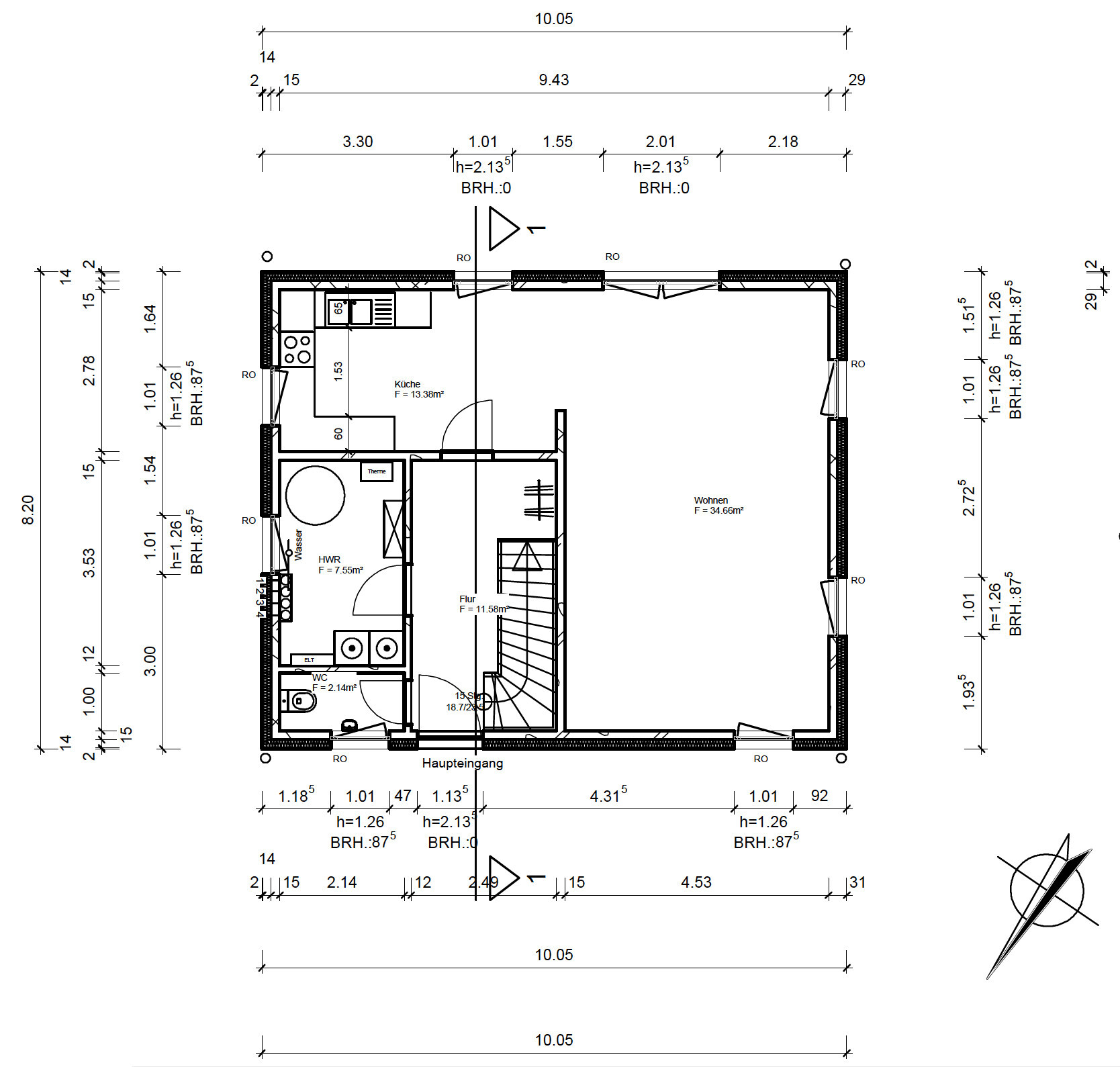
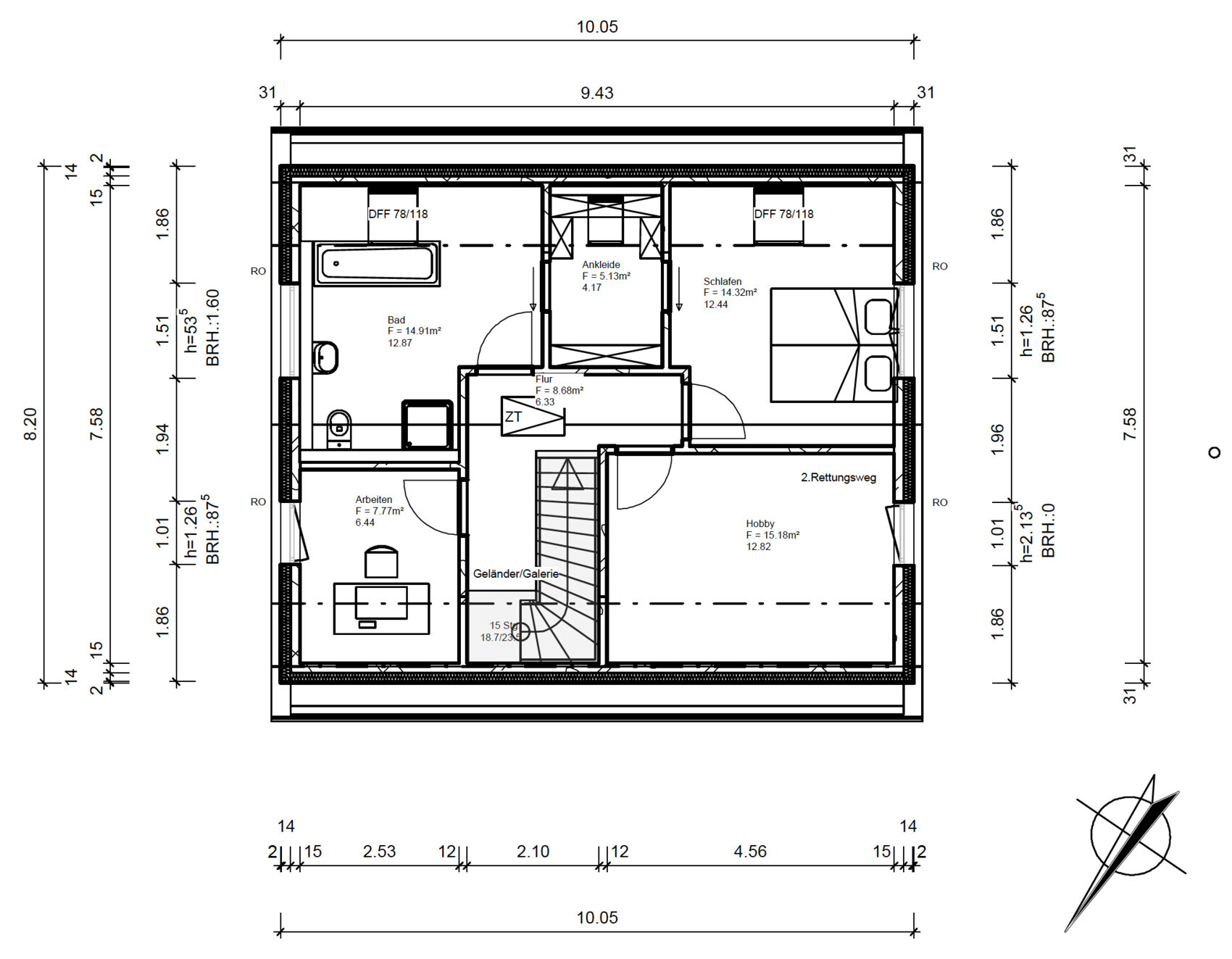
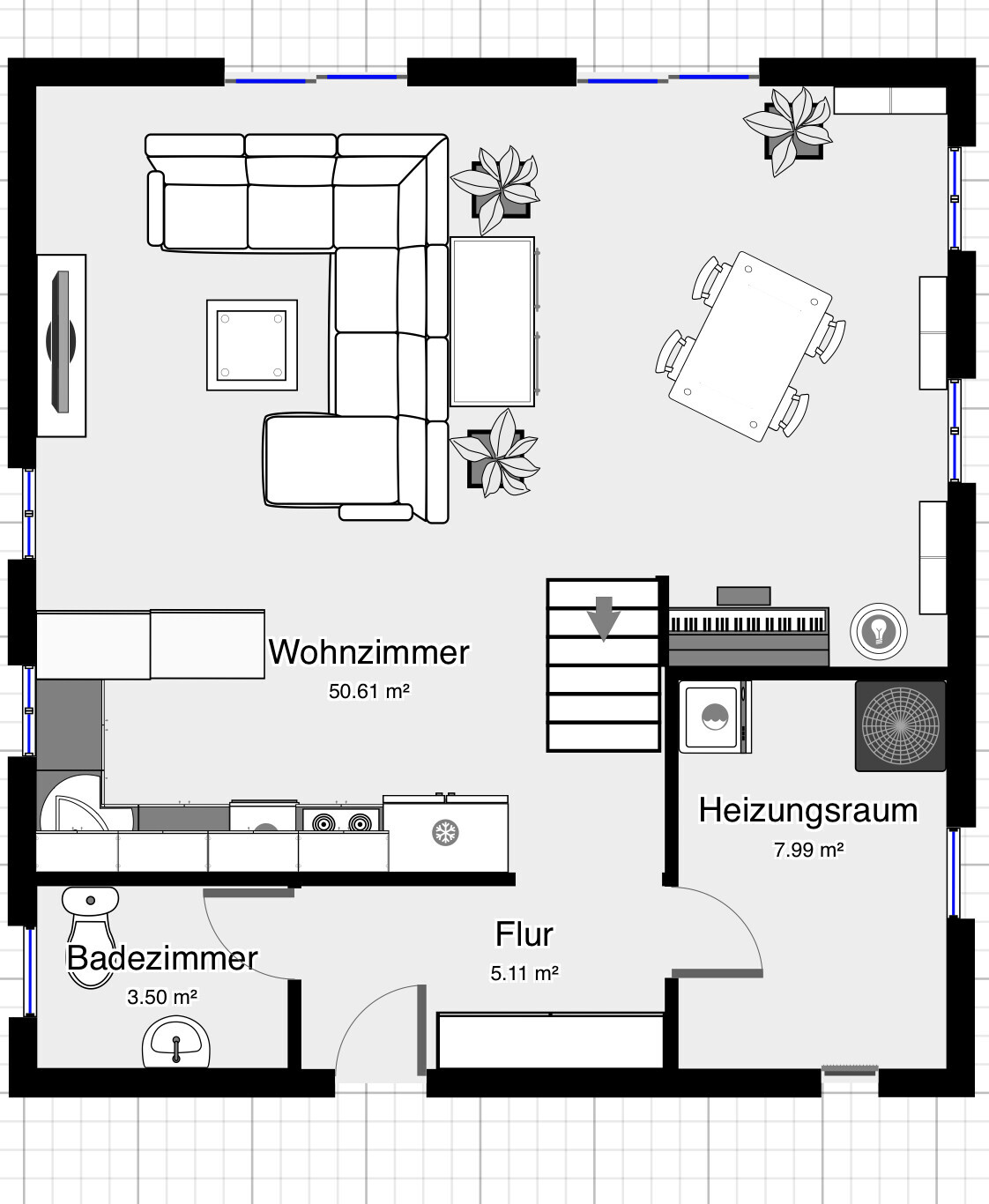
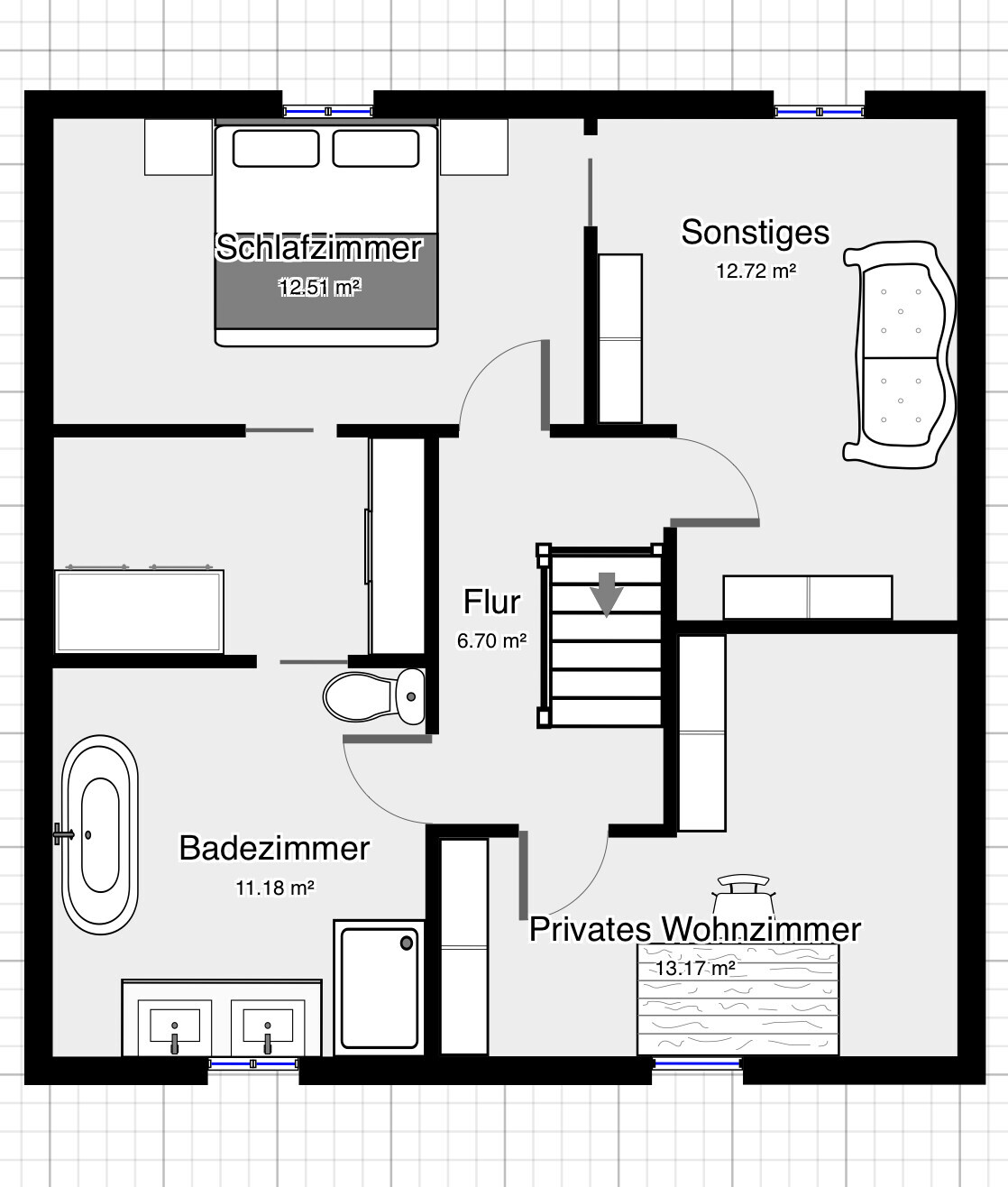
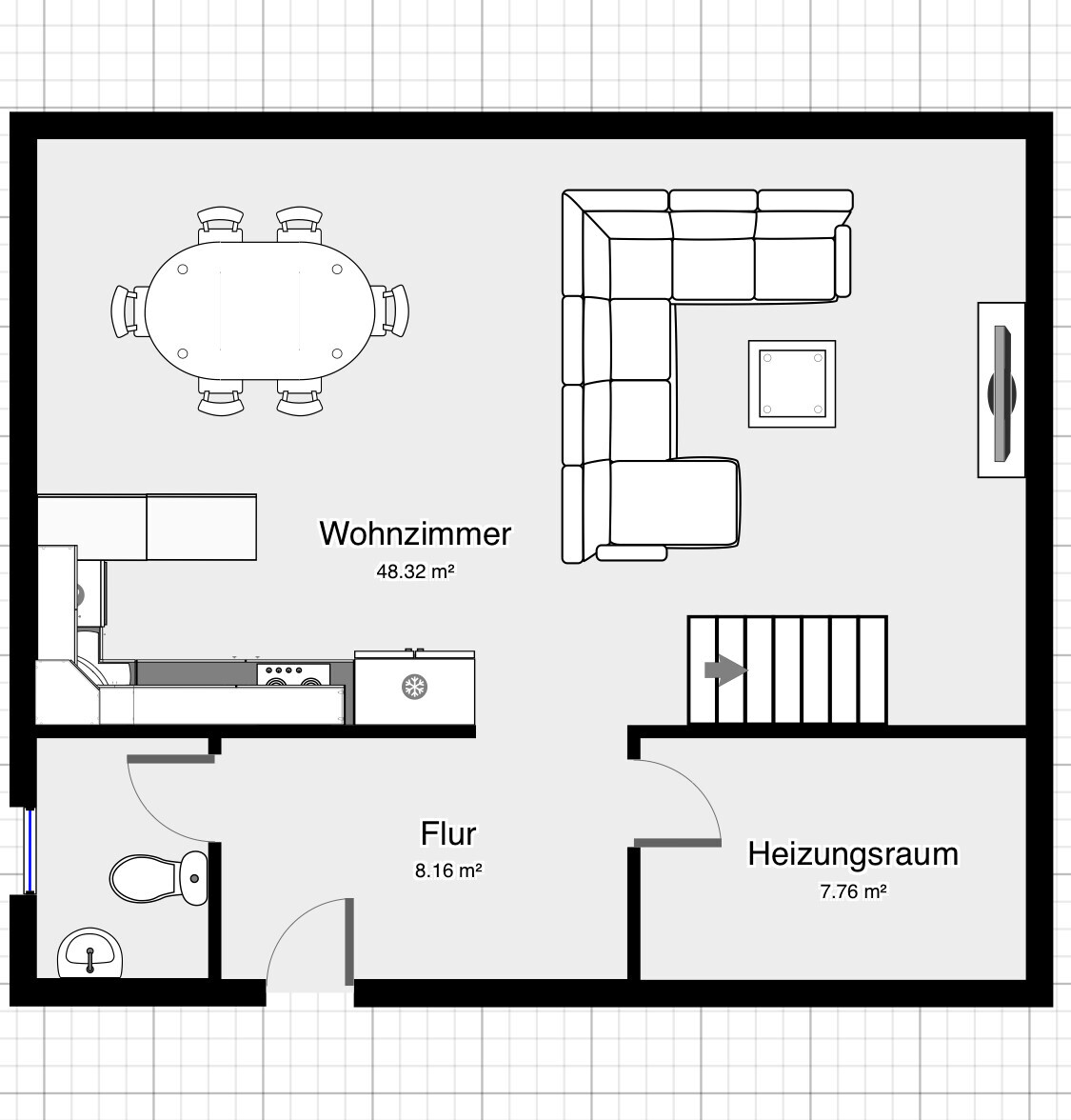
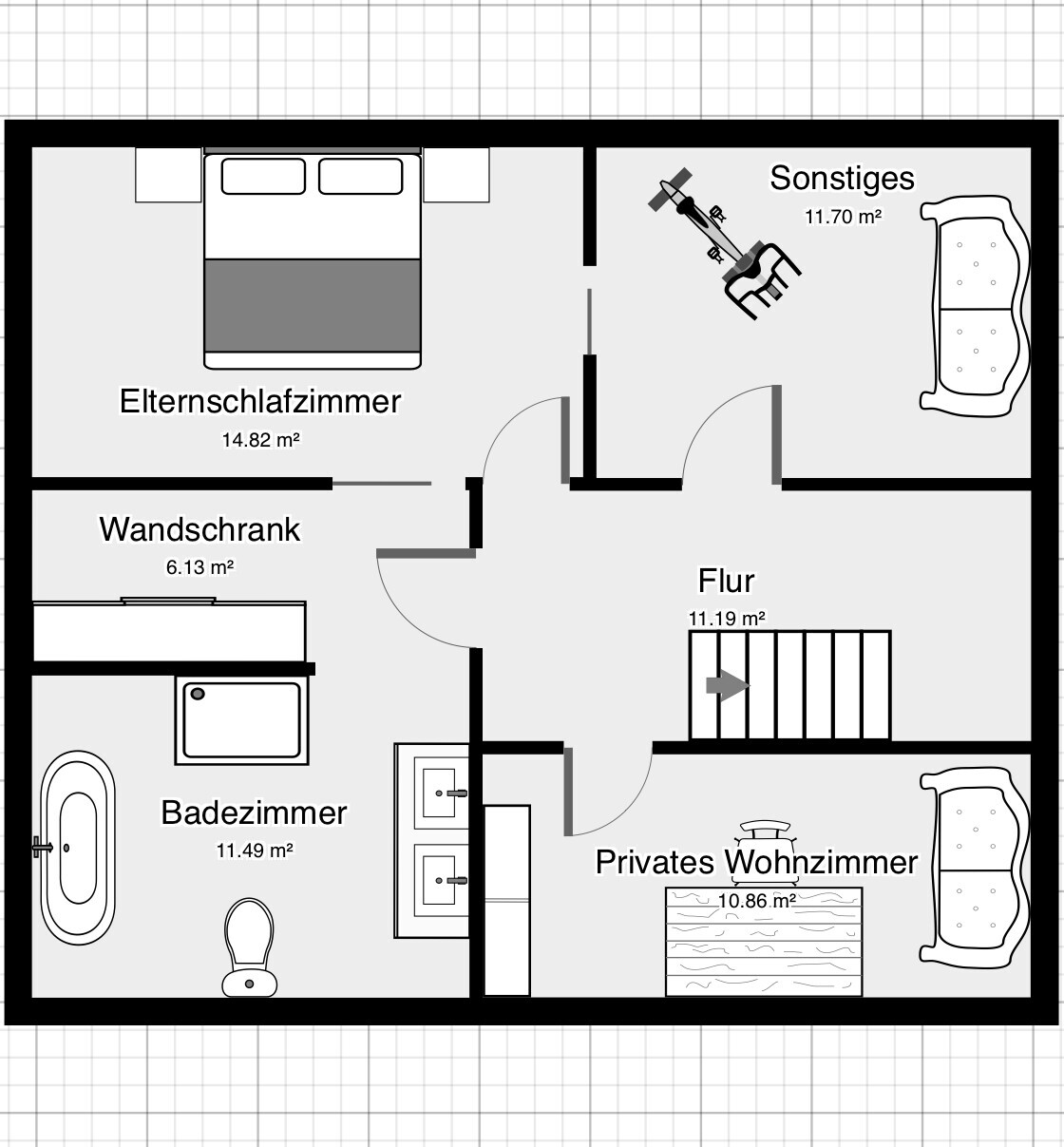
I have been reading here for a while, and now it’s time for us to start planning the floor plan. We had our first appointment with the architect this week and have already shared our ideas with him as preparation. We received a first draft, which we will discuss during our meeting. Additionally, we created some rough sketches ourselves (without considering structural issues, windows, the staircase is drawn way too small, etc. – really just very basic to clarify our ideas, I’m attaching those as well).
Development plan / restrictions
Plot size: 635 sqm (6,840 sq ft)
House size: 135 sqm (1,450 sq ft)
Number of floors: 1.5
Roof type: Gable roof
Maximum heights / limits: Knee wall 1.20 m (4 ft)
(We would have preferred a bungalow or a townhouse, but unfortunately, there are no plots available here. We are happy to have found one at all, even if that means we have to accept 1.5 floors and a knee wall.)
Client requirements
Basement, floors: no basement
Number of occupants, age: 2 persons, 39 years old (children are 90% unlikely to be planned)
Office: Home office about once a week – although I usually work from the living room with my laptop
Guest stays: maybe 2 to 3 times a year, so far managed without a guest room in the apartment
Architecture: open plan
Construction style: modern
Kitchen: an island kitchen probably won’t fit, but it should be an open kitchen, possibly with a breakfast bar
Dining seats: 4 to 6 – for occasional visitors – but that could also work by putting in a dining table as needed and otherwise using a kitchen breakfast bar daily
Fireplace: rather no, due to cost and space reasons
Balcony, roof terrace: terrace
Garage, carport: carport
Desired ground floor layout:
Includes utility room, guest WC, hallway, living area (consisting of living room, kitchen, dining area/other)
Entrance and ancillary rooms:
- small hallway with space for a coat rack
- utility room about 8 sqm (86 sq ft), space for technical equipment, washing machine, dog food & co.
- guest WC max. 3 sqm (32 sq ft); no guest shower needed
Living area:
- quick access from the entrance to the living area, ideally directly to the kitchen
- living/kitchen/dining area as large as possible (ideally approx. 50 sqm (540 sq ft)), minimizing space wasted by other areas/rooms on the ground floor
- kitchen possibly with island/breakfast bar if space allows
- book corner with window seat if space allows (for info: I have about 1,000 books and a piano – these need to be accommodated somewhere)
- space-saving staircase, preferably open/integrated in the living area to save hallway space
Desired upper floor layout:
Includes bathroom, bedroom, dressing room, hobby room, another room (possibly office, guest room)
Bathroom:
- bathroom with walk-in shower + bathtub (freestanding = nice to have)
- possible wall separation for the toilet (if it fits)
Sleeping area and dressing room:
- bedroom with walk-in closet/dressing room, if feasible given house size
- access from bedroom to dressing room and bathroom
Additional rooms:
- hobby room with space for desk, crafting corner, small seating area
- another room as office/sports/guest room or possibly a child’s room after all – alternatively, a larger hallway/gallery with seating area and light well to the floor below
House design
Designed by: planner/architect from a design-build company
What don’t we like? Why?
- Narrow galley kitchen. I already have this in my apartment and don’t want it anymore. Is it really not possible to do it differently? Structural or other reasons?
- Staircase located in the dirty area. Shoes, dirt, etc. I don’t want to walk through that every time I go upstairs.
- Dressing room under a sloped ceiling. Not much space left for wardrobes...
- Office only 7 sqm (75 sq ft). Does that make sense? If, against expectations, a child arrives, this would be the hobby room, which would then be much too small.
- Bathrooms. Does the layout make sense? I always thought they should be arranged above/below each other.
- Technical equipment. Could it also be located in the attic?
Cost estimate according to architect/planner: $240,000 – that is also the financial plan (excluding kitchen or additional furniture, plot and landscaping – total budget is about $400,000)
Preferred heating technology: air-source heat pump
If you had to give up something, which features/finishes could you do without? very reluctantly the dressing/walk-in closet
What is the most important fundamental question about the floor plan, summarized in 130 characters?
How should we best proceed with the draft? Are there ideas that could help us align better with our wishes for the discussion? Which ideas should we discard?
A few more remarks: Reading other posts here sometimes makes me feel guilty because we are “only” building 135 sqm and everything seems so “small.” Still, I want to get the best possible value for my money. Financially, this size is the most reasonable for now.
(PS: And in case the question arises: Why are children only 90% excluded? There are many reasons – for example, difficulties conceiving, but not completely giving up hope.)
Thank you in advance for your opinions.
kbt09 schrieb:
Generally, living areas and also dining/kitchen would be oriented toward the south/west, but that is on the street side. So the question is, what is the building envelope on the plot? Placing the house a bit further back and the carport cleverly at the front could create something nice. Additionally, a terrace on the east side.That’s not allowed at all.
It seems you’ve missed a post somewhere... unfortunately, searching or linking is difficult on a tablet.
The street is probably more northwest; everything facing the street must be designed uniformly without extensions, porches, terraces, bay windows, etc.
This also means no official terrace will be allowed at the front.
But that’s not a problem: a southeast garden with a terrace, an evening barbecue area then in the southwest... with windows for the evening sun there as well.
The plot could be about 24 x 26 meters (79 x 85 feet)... at a 5-meter (16-foot) setback from the street, everything should fit... but this is just an estimate...
Reluctance schrieb:
I have already mentioned this here: Yes, but not that you are tied to the same building contract. That’s a different matter. Many of us have been close to emergency situations... multiple times... but every new plot meant a new zoning plan, a new way of thinking. It is simply the case that a builder gathered information before starting to plan. There was never a general contractor or fixed building contract involved from the beginning...
Reluctance schrieb:
Here I already noted the issue of area:Reluctance schrieb:
That’s right. I found earlier that WNFL is usually short for “usable living area.” Now I have this issue:
- The contract states: "approx. 135 sqm (1450 sq ft) WNFL"
- But in his area calculation, he uses net area again – see excerpt
Reluctance schrieb:
That means the builder sometimes equates WNFL with net area instead of living or usable area.What’s confusing is that you don’t say, “we can afford a house of 135 or 160 sqm (1450 or 1720 sq ft) total,” but rather you talk about what the building contract offered.
It could be that there are also restrictions because of the floor-area ratio. We don’t know that.
It also seems that you rely somewhat on the building contract, at least based on the information you don’t have.
In any case, why we keep asking persistently:
First, it’s never good for a building client to rely solely on the building contract.
Second, ignorance is a bad partner in any contract.
Third, @kbt09, @kaho674, and I are focused on designing a house based on the regulations and budget that actually fits the client. Simply getting the best out of it.
Planning by guesswork is not our approach, and time is too valuable for that.
Reluctance schrieb:
I have mentioned this here before:
I already pointed out the issue with the area here:
And here:
That's correct. I found earlier that WNFL is actually an abbreviation for living usable area. Now I have the following issue:
- The contract states: "approx. 135 sqm (1455 sq ft) WNFL"
- But in his area calculation, he is using net floor area again – see excerpt
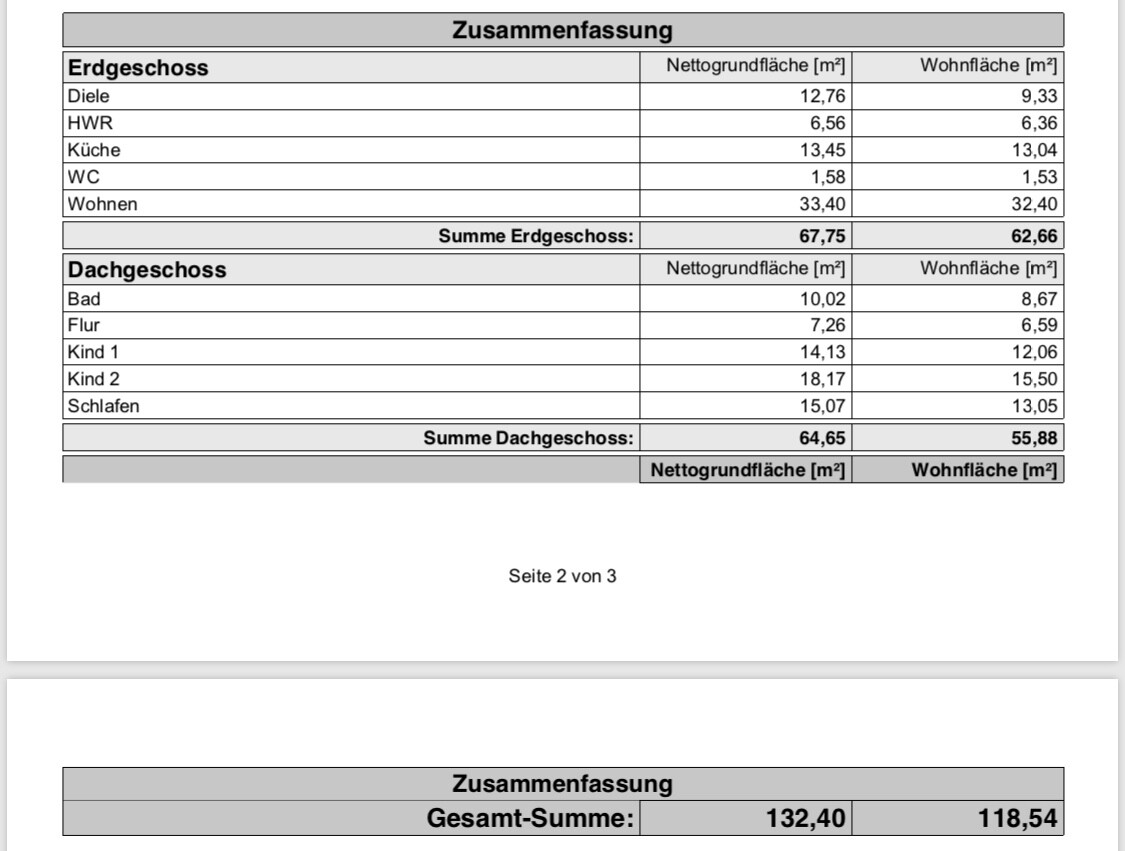
This means the builder is equating WNFL with net floor area rather than living or usable area. So the problem with the area that was already mentioned remains.
But as I said: Thanks a lot for the tips and suggestions so far. I'll gladly start a new thread if it makes sense and things become clearer.How do you come up with a floor plan of 135 sqm (1455 sq ft)? According to the contract, the living area is 118 sqm (1270 sq ft) because of the sloped ceilings on the upper floor. The floor area, meaning the footprint, is of course 135 sqm (1455 sq ft). But according to the guideline, the difference is no longer considered living area. For me, since there are two full stories, the net floor area equals the living area. Gross floor area excludes walls, as shown by my example of the ground floor:- Living area: 70.41 sqm (758 sq ft)
- Net floor area: 71.17 sqm (766 sq ft)
- Gross floor area: 90.75 sqm (977 sq ft) = 8.25 m (27 ft) x 11 m (36 ft)
R
Reluctance24 Feb 2019 15:46ypg schrieb:
The plot could be 24 x 26... Correct, approximately 24 x 25 (8 x 8 meters).
ypg schrieb:
The fact is that a client gathered the information first and then started planning. There was never a general contractor (GC) or developer involved...In this case, however, it was different because we couldn’t find a plot for a long time and then found a developer who also offered to help us search for land.
ypg schrieb:
What’s confusing is that you don’t say “we can afford a house of 135 or 160 sq meters total,” but instead mention what the developer offered.We have an offer for 135 sq meters of net floor area, and based on that we finalized the financing/loan. 160 sq meters, whether net or living area, is out of the question.
Zaba12 schrieb:
How do you arrive at a floor plan of 135 sq meters? According to the contract, living area is 118 sq meters because of the sloped ceilings on the upper floor. Floor area, meaning footprint, is of course 135 sq meters. But the difference is no longer considered living area according to guidelines. With me, having two full stories, net floor area equals living area. Gross floor area excludes walls, as in the example of my ground floor:
- Living area 70.41 sq meters
- Net floor area 71.17 sq meters
- Gross floor area 90.75 sq meters = 8.25 x 11 metersExactly, that’s what I’ve been trying to explain all along. I have 135 sq meters of net floor area (footprint). With two full stories, that roughly equals 130 sq meters of living area, which was the initial plan. Now I have to build 1.5 stories and will probably only get around 120 sq meters of living area.
However, I am paying for the net floor area and cannot simply increase that to get more living area for financial reasons. So, if I increase the ground floor to 90 sq meters, the net floor area on the upper floor would also be 90, resulting in 180 sq meters of net floor area — which I cannot afford.
I really don’t know how to make this any clearer.
Reluctance schrieb:
Correct, approximately 24x25.
In this case, however, we had not found a plot for a long time, and then we found a developer who offered to help us with the land search.
We have an offer for 135 sqm (1450 sq ft) of net floor area, and after that, we finalized the financing/loan. 160 sqm (1720 sq ft), whether net floor area or living area, is not an option.
Exactly, that’s what I’ve been talking about all along. I have 135 sqm (1450 sq ft) net floor area (meaning floor space). With two full floors, that corresponds to about 130 sqm (1400 sq ft) of living area – that was the original plan. Now I have to build 1.5 floors and will probably only have about 120 sqm (1290 sq ft) of living area.
However, I pay for the net floor area, and for financial reasons, I cannot just increase that to get more living space. So if I increase the ground floor area to 90 sqm (970 sq ft), the net floor area on the upper floor will also be 90 sqm (970 sq ft) – adding up to 180 sqm (1940 sq ft) net floor area, which I cannot afford.
I really don’t know how to explain it any clearer.Understood. I just wanted to make sure we’re talking about the same thing. By the way… you’re also paying for the gross floor area, but that doesn’t matter.
I’m curious about the ideas here. Your drawings look quite open on the ground floor, without judging yet.
But I doubt if the dining table and living room will work well that way.

Reluctance schrieb:
Exactly, that’s what I’ve been talking about all along. I have 135 sqm (square meters) of net floor area (i.e., floor space). With two full storeys, that corresponds to about 130 sqm (square meters) of living area – that was the plan initially. First "huh"?
Is the net floor area measured including exterior walls or excluding them? If it’s with walls, the numbers don’t add up. If it’s without walls, that’s the strangest basis for calculation I’ve ever seen.
Reluctance schrieb:
Now I have to build one and a half storeys and will probably end up with only 120 sqm (square meters) of living area. However, I am paying for the net floor area, and for financial reasons I can’t just increase that to get more living area. So if I increase the ground floor area to 90 sqm (square meters), then the net/floor area on the upper floor is also 90 sqm (square meters) – meaning I would have 180 sqm (square meters) of net floor area, which I can’t afford. Second "huh"?
First of all, it’s not necessarily true that the upper floor’s footprint must match that of the ground floor (see bay windows).
And second – how are you letting yourselves be ripped off? Do you seriously want to pay the same amount for 120 sqm (square meters) of living area as for 135 sqm (square meters)? I’d raise hell with the builder. Of course, the cost for a pitched roof house can’t be the same as for a two-storey house just because the foundation slab is the same size. The amount of bricks alone is much less. Fewer windows, simpler roof... that all adds up. Sometimes building regulations have their purpose. To get the same living area, the ground floor footprint for a pitched roof house has to be larger. Usually somewhere close to the standard guidelines. Exactly how many centimeters, they’ll need to adjust to fit your budget. But it’s definitely not zero!
R
Reluctance24 Feb 2019 17:53Zaba12 schrieb:
Understood.... I was already doubting myself.
Zaba12 schrieb:
I’m curious to see the ideas here. Your drawings are quite open on the ground floor, just without judging.Well, they’re partly copied from you – rotated, mirrored, and with furniture arranged differently...
Zaba12 schrieb:
But I doubt if the dining table and living room will work like that.I fear so too. Maybe I need to get a smaller sofa.
kaho674 schrieb:
First “huh”?
Is the net floor area including the exterior walls or not? If yes, it won’t add up. If no, that’s the strangest way to calculate I’ve ever seen.No, without. Including exterior walls is the gross floor area. And that’s a fairly normal way to calculate floor area, as far as I can judge as a layperson. From what I’ve read so far, it goes roughly like this:
- Gross floor area is the total floor area including exterior walls/construction elements
- Net floor area is the total floor area excluding exterior walls/construction elements
- Living area is the usable living space, whereby areas with a ceiling height less than one meter (3 feet) are not considered living area. Areas with a height between one and two meters (3 and 6.5 feet) count as 50% living area...
kaho674 schrieb:
Second “huh”?
First, it’s not necessarily true that the floor area of the upper floor has to match the ground floor (see bay window).No, it isn’t mandatory. Nobody said it was.
kaho674 schrieb:
And second – how can you let yourself be ripped off like this? Do you seriously want to pay the same amount for 120m² (1,292 sq ft) of living area as for 135m² (1,453 sq ft)? I would challenge the builder on that. Of course, he can’t charge the same for a pitched roof as for a two-story building just because the foundation slab is the same size. The bricks alone are much fewer. Fewer windows, simpler roof... it adds up. Such DIN standards sometimes do have a point. To achieve the same living area, the ground floor area with a pitched roof is usually larger. Normally somewhere near the DIN standard. How many centimeters exactly, he has to adjust to your budget. But certainly not zero!Yes, that’s the question of whether he can do it that way or not... If I signed for 135m² (1,453 sq ft) living area, then I signed for 135m² (1,453 sq ft). Now the only debate is who correctly interprets the abbreviation “living area”.
Similar topics