
R
Reluctance18 Feb 2019 21:20Hello everyone,
I have been reading here for a while, and now it’s time for us to start planning the floor plan. We had our first appointment with the architect this week and have already shared our ideas with him as preparation. We received a first draft, which we will discuss during our meeting. Additionally, we created some rough sketches ourselves (without considering structural issues, windows, the staircase is drawn way too small, etc. – really just very basic to clarify our ideas, I’m attaching those as well).
Development plan / restrictions
Plot size: 635 sqm (6,840 sq ft)
House size: 135 sqm (1,450 sq ft)
Number of floors: 1.5
Roof type: Gable roof
Maximum heights / limits: Knee wall 1.20 m (4 ft)
(We would have preferred a bungalow or a townhouse, but unfortunately, there are no plots available here. We are happy to have found one at all, even if that means we have to accept 1.5 floors and a knee wall.)
Client requirements
Basement, floors: no basement
Number of occupants, age: 2 persons, 39 years old (children are 90% unlikely to be planned)
Office: Home office about once a week – although I usually work from the living room with my laptop
Guest stays: maybe 2 to 3 times a year, so far managed without a guest room in the apartment
Architecture: open plan
Construction style: modern
Kitchen: an island kitchen probably won’t fit, but it should be an open kitchen, possibly with a breakfast bar
Dining seats: 4 to 6 – for occasional visitors – but that could also work by putting in a dining table as needed and otherwise using a kitchen breakfast bar daily
Fireplace: rather no, due to cost and space reasons
Balcony, roof terrace: terrace
Garage, carport: carport
Desired ground floor layout:
Includes utility room, guest WC, hallway, living area (consisting of living room, kitchen, dining area/other)
Entrance and ancillary rooms:
- small hallway with space for a coat rack
- utility room about 8 sqm (86 sq ft), space for technical equipment, washing machine, dog food & co.
- guest WC max. 3 sqm (32 sq ft); no guest shower needed
Living area:
- quick access from the entrance to the living area, ideally directly to the kitchen
- living/kitchen/dining area as large as possible (ideally approx. 50 sqm (540 sq ft)), minimizing space wasted by other areas/rooms on the ground floor
- kitchen possibly with island/breakfast bar if space allows
- book corner with window seat if space allows (for info: I have about 1,000 books and a piano – these need to be accommodated somewhere)
- space-saving staircase, preferably open/integrated in the living area to save hallway space
Desired upper floor layout:
Includes bathroom, bedroom, dressing room, hobby room, another room (possibly office, guest room)
Bathroom:
- bathroom with walk-in shower + bathtub (freestanding = nice to have)
- possible wall separation for the toilet (if it fits)
Sleeping area and dressing room:
- bedroom with walk-in closet/dressing room, if feasible given house size
- access from bedroom to dressing room and bathroom
Additional rooms:
- hobby room with space for desk, crafting corner, small seating area
- another room as office/sports/guest room or possibly a child’s room after all – alternatively, a larger hallway/gallery with seating area and light well to the floor below
House design
Designed by: planner/architect from a design-build company
What don’t we like? Why?
Cost estimate according to architect/planner: $240,000 – that is also the financial plan (excluding kitchen or additional furniture, plot and landscaping – total budget is about $400,000)
Preferred heating technology: air-source heat pump
If you had to give up something, which features/finishes could you do without? very reluctantly the dressing/walk-in closet
What is the most important fundamental question about the floor plan, summarized in 130 characters?
How should we best proceed with the draft? Are there ideas that could help us align better with our wishes for the discussion? Which ideas should we discard?
A few more remarks: Reading other posts here sometimes makes me feel guilty because we are “only” building 135 sqm and everything seems so “small.” Still, I want to get the best possible value for my money. Financially, this size is the most reasonable for now.
(PS: And in case the question arises: Why are children only 90% excluded? There are many reasons – for example, difficulties conceiving, but not completely giving up hope.)
Thank you in advance for your opinions.
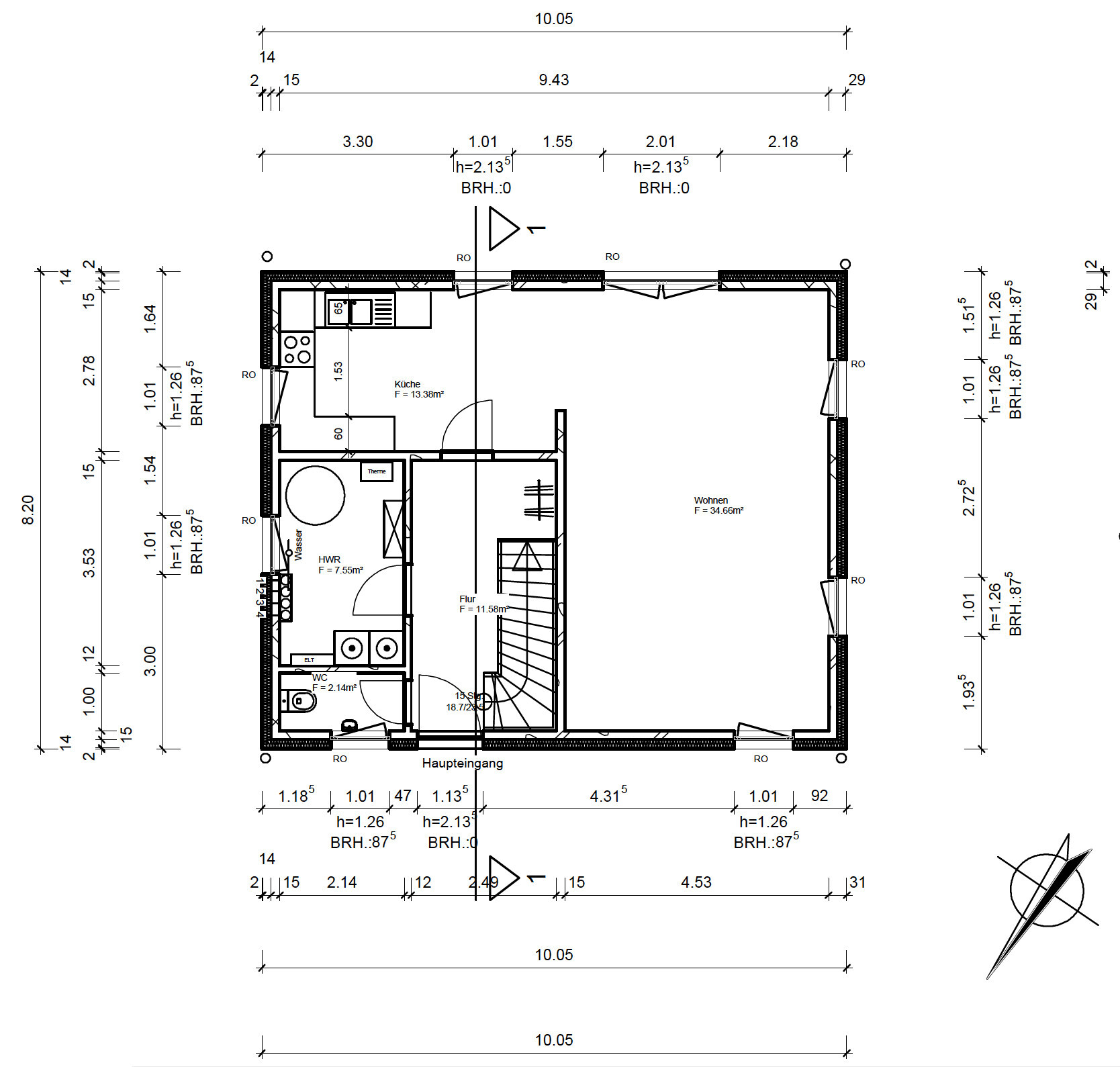
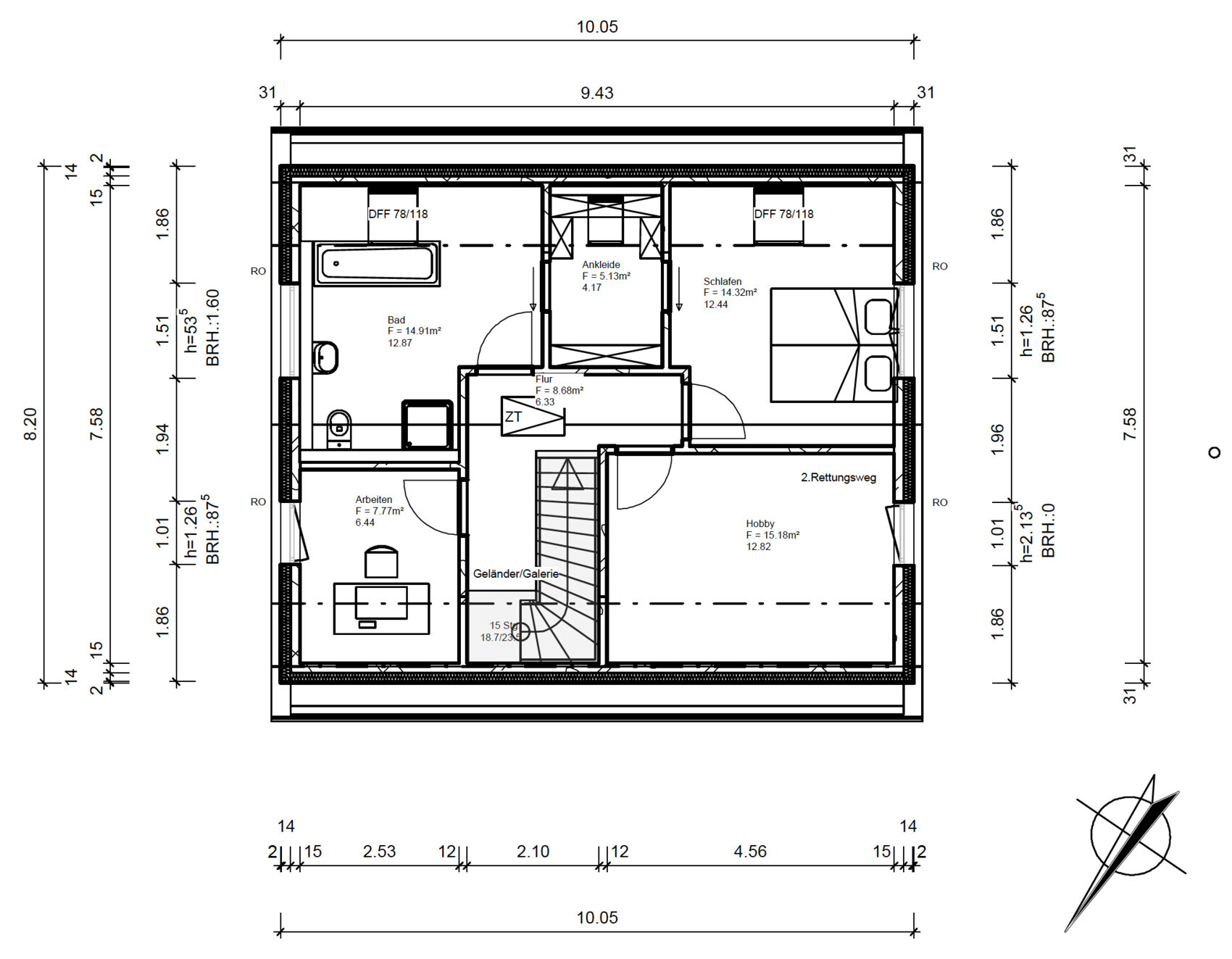
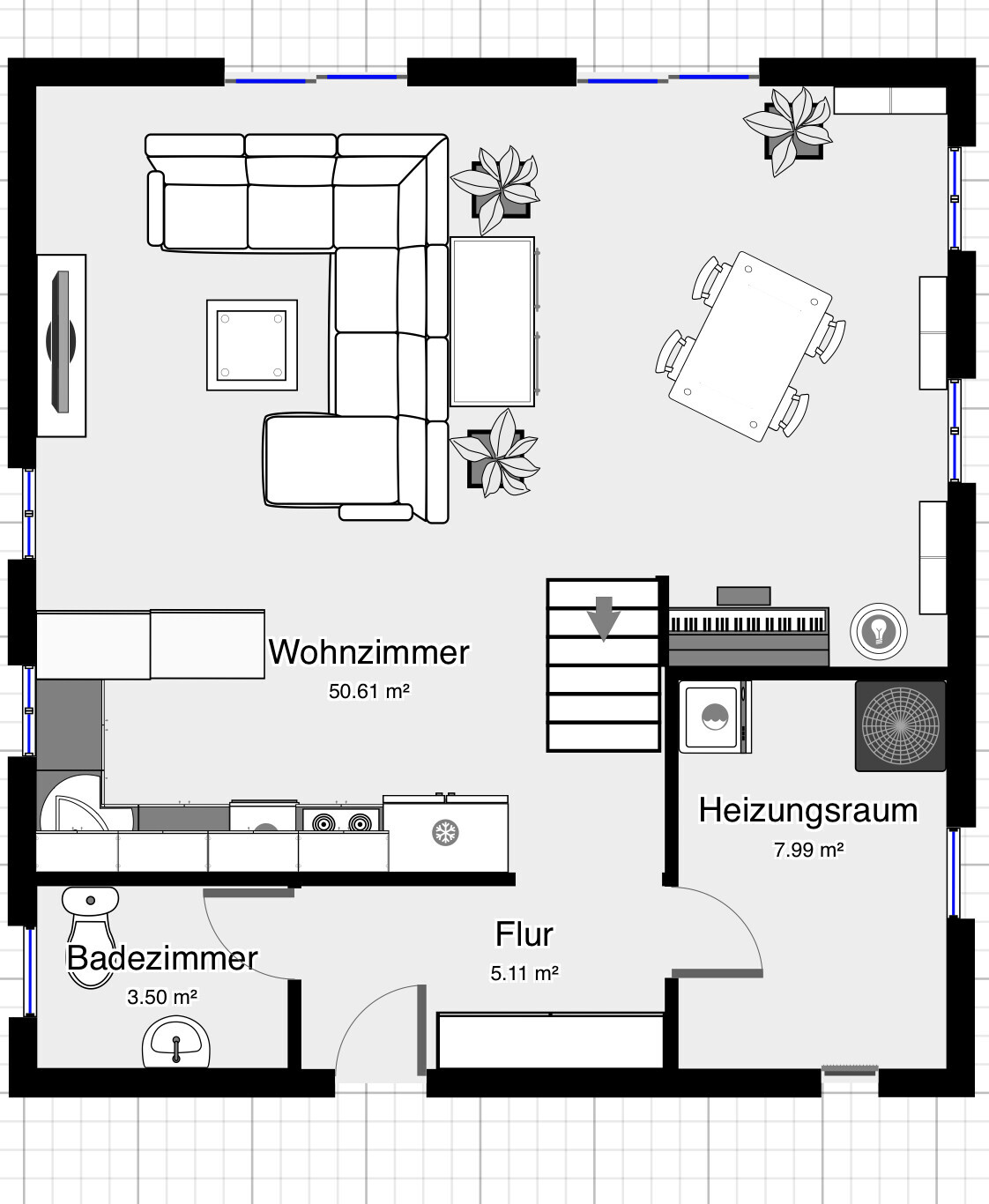
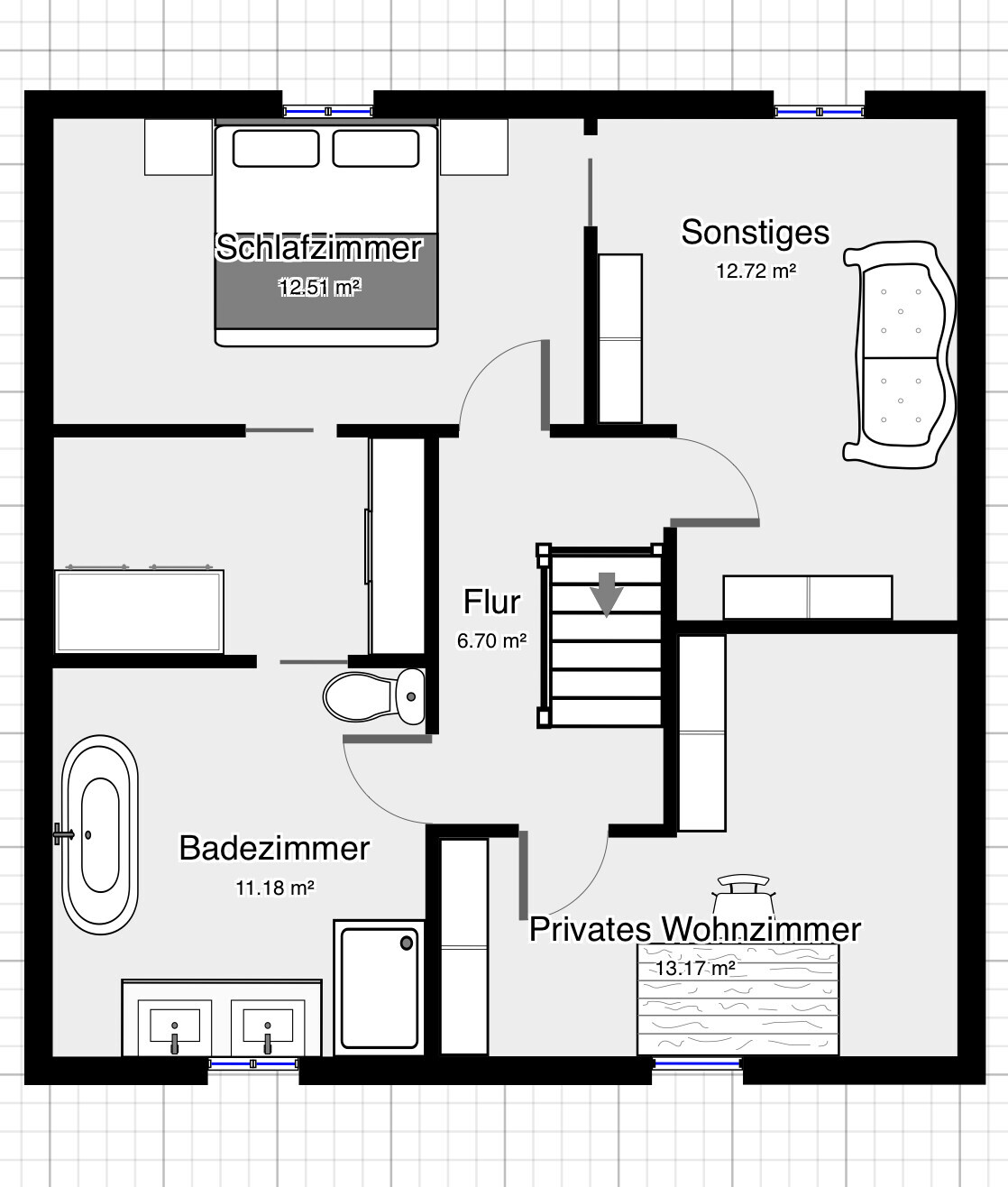
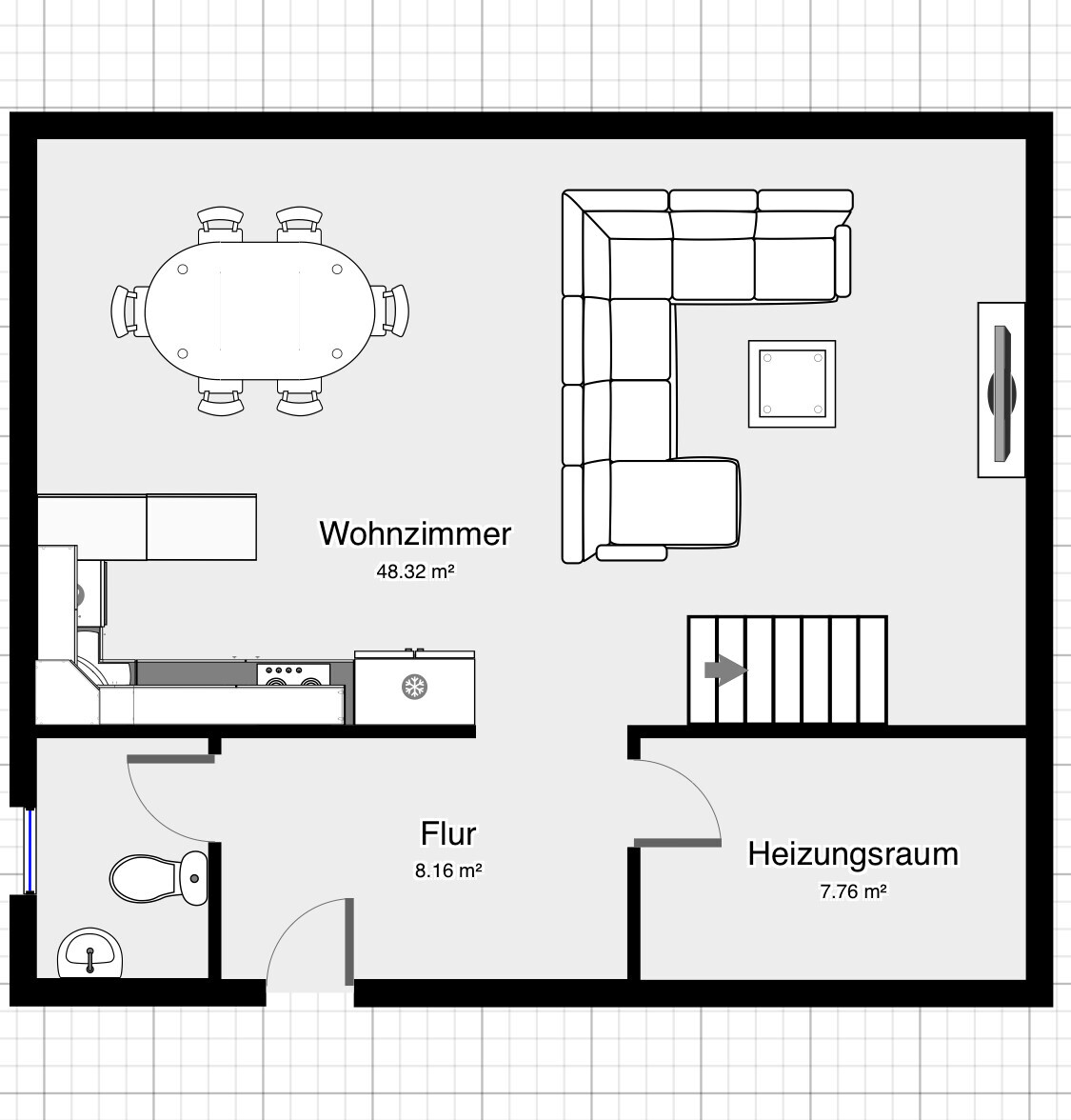
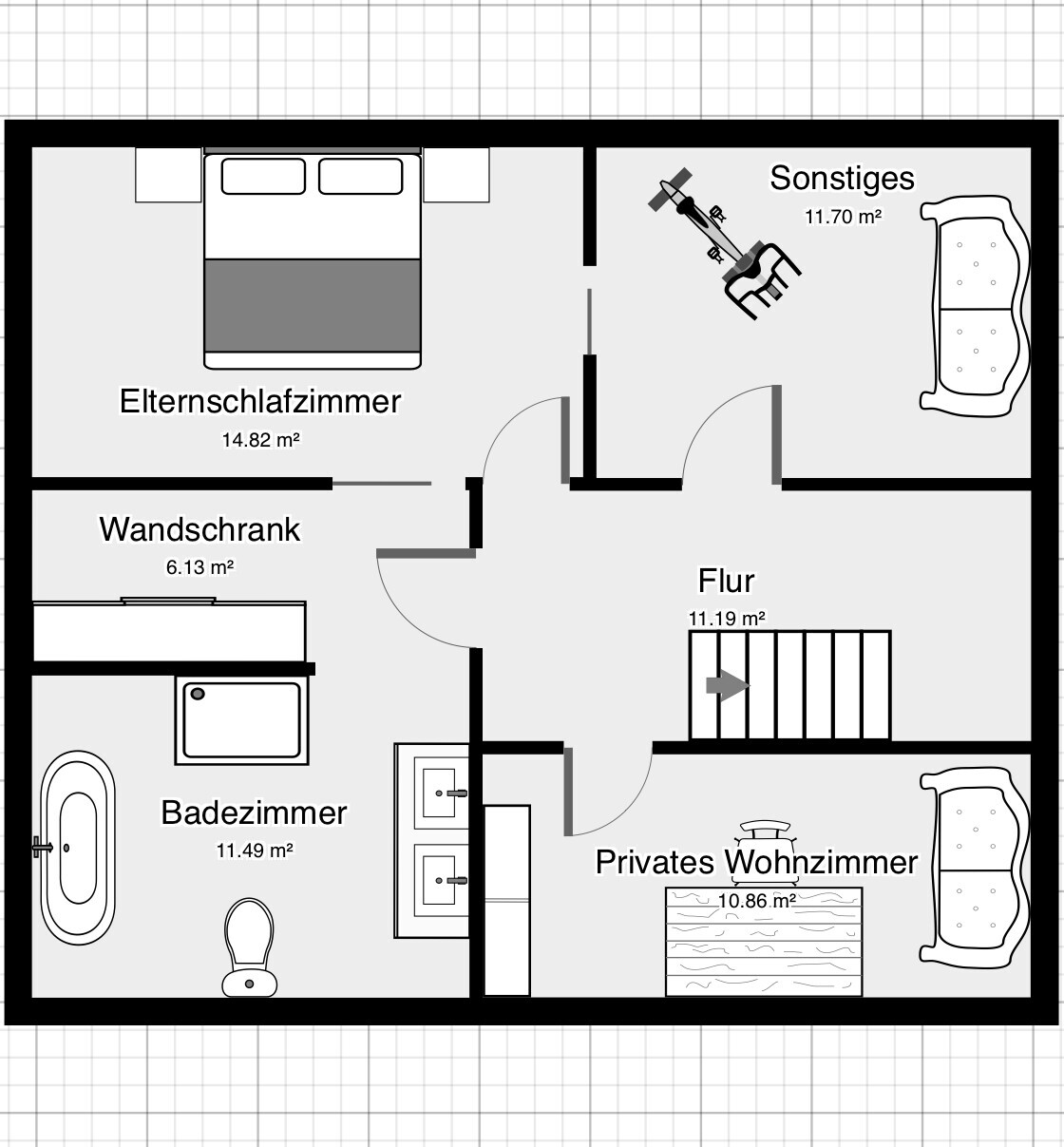
I have been reading here for a while, and now it’s time for us to start planning the floor plan. We had our first appointment with the architect this week and have already shared our ideas with him as preparation. We received a first draft, which we will discuss during our meeting. Additionally, we created some rough sketches ourselves (without considering structural issues, windows, the staircase is drawn way too small, etc. – really just very basic to clarify our ideas, I’m attaching those as well).
Development plan / restrictions
Plot size: 635 sqm (6,840 sq ft)
House size: 135 sqm (1,450 sq ft)
Number of floors: 1.5
Roof type: Gable roof
Maximum heights / limits: Knee wall 1.20 m (4 ft)
(We would have preferred a bungalow or a townhouse, but unfortunately, there are no plots available here. We are happy to have found one at all, even if that means we have to accept 1.5 floors and a knee wall.)
Client requirements
Basement, floors: no basement
Number of occupants, age: 2 persons, 39 years old (children are 90% unlikely to be planned)
Office: Home office about once a week – although I usually work from the living room with my laptop
Guest stays: maybe 2 to 3 times a year, so far managed without a guest room in the apartment
Architecture: open plan
Construction style: modern
Kitchen: an island kitchen probably won’t fit, but it should be an open kitchen, possibly with a breakfast bar
Dining seats: 4 to 6 – for occasional visitors – but that could also work by putting in a dining table as needed and otherwise using a kitchen breakfast bar daily
Fireplace: rather no, due to cost and space reasons
Balcony, roof terrace: terrace
Garage, carport: carport
Desired ground floor layout:
Includes utility room, guest WC, hallway, living area (consisting of living room, kitchen, dining area/other)
Entrance and ancillary rooms:
- small hallway with space for a coat rack
- utility room about 8 sqm (86 sq ft), space for technical equipment, washing machine, dog food & co.
- guest WC max. 3 sqm (32 sq ft); no guest shower needed
Living area:
- quick access from the entrance to the living area, ideally directly to the kitchen
- living/kitchen/dining area as large as possible (ideally approx. 50 sqm (540 sq ft)), minimizing space wasted by other areas/rooms on the ground floor
- kitchen possibly with island/breakfast bar if space allows
- book corner with window seat if space allows (for info: I have about 1,000 books and a piano – these need to be accommodated somewhere)
- space-saving staircase, preferably open/integrated in the living area to save hallway space
Desired upper floor layout:
Includes bathroom, bedroom, dressing room, hobby room, another room (possibly office, guest room)
Bathroom:
- bathroom with walk-in shower + bathtub (freestanding = nice to have)
- possible wall separation for the toilet (if it fits)
Sleeping area and dressing room:
- bedroom with walk-in closet/dressing room, if feasible given house size
- access from bedroom to dressing room and bathroom
Additional rooms:
- hobby room with space for desk, crafting corner, small seating area
- another room as office/sports/guest room or possibly a child’s room after all – alternatively, a larger hallway/gallery with seating area and light well to the floor below
House design
Designed by: planner/architect from a design-build company
What don’t we like? Why?
- Narrow galley kitchen. I already have this in my apartment and don’t want it anymore. Is it really not possible to do it differently? Structural or other reasons?
- Staircase located in the dirty area. Shoes, dirt, etc. I don’t want to walk through that every time I go upstairs.
- Dressing room under a sloped ceiling. Not much space left for wardrobes...
- Office only 7 sqm (75 sq ft). Does that make sense? If, against expectations, a child arrives, this would be the hobby room, which would then be much too small.
- Bathrooms. Does the layout make sense? I always thought they should be arranged above/below each other.
- Technical equipment. Could it also be located in the attic?
Cost estimate according to architect/planner: $240,000 – that is also the financial plan (excluding kitchen or additional furniture, plot and landscaping – total budget is about $400,000)
Preferred heating technology: air-source heat pump
If you had to give up something, which features/finishes could you do without? very reluctantly the dressing/walk-in closet
What is the most important fundamental question about the floor plan, summarized in 130 characters?
How should we best proceed with the draft? Are there ideas that could help us align better with our wishes for the discussion? Which ideas should we discard?
A few more remarks: Reading other posts here sometimes makes me feel guilty because we are “only” building 135 sqm and everything seems so “small.” Still, I want to get the best possible value for my money. Financially, this size is the most reasonable for now.
(PS: And in case the question arises: Why are children only 90% excluded? There are many reasons – for example, difficulties conceiving, but not completely giving up hope.)
Thank you in advance for your opinions.
R
Reluctance18 Feb 2019 22:08Niloa schrieb:
Yay, lots of books, I love that! I also usually have the problem that there is little or no space for bookshelves in prefabricated floor plans.Yes, that is really a problem for me... terrible, right?
Niloa schrieb:
I don’t understand the staircase in your floor plans. Isn’t it way too short?Those were our own (not really serious) floor plan drafts without considering structural engineering, windows, knee walls, etc., and in my floor plan app, the staircase was by default just that small, and I didn’t pay attention to enlarging it. In the designer’s draft, the size should be more accurate.

A 635 sqm (6,835 sq ft) plot is already quite nice; in other states, people can hardly dream of such a size. What would the floor area ratio or plot ratio be in this case?
Unfortunately, the self-planned floor plans are practically useless for two main reasons (in the sense that they are not even suitable for illustrating possible space layouts): first, the scales of doors, windows, rooms, and symbols for furniture and other objects do not match at all; second, a one-and-a-half-story design with a 120 cm (47 inches) knee wall doesn’t work when the furnishing is planned as if it were an attic in a “town villa” style.
For these two reasons, mentally projecting these plans into realistic floor layouts fails.
https://www.instagram.com/11antgmxde/
https://www.linkedin.com/company/bauen-jetzt/
Unfortunately, the self-planned floor plans are practically useless for two main reasons (in the sense that they are not even suitable for illustrating possible space layouts): first, the scales of doors, windows, rooms, and symbols for furniture and other objects do not match at all; second, a one-and-a-half-story design with a 120 cm (47 inches) knee wall doesn’t work when the furnishing is planned as if it were an attic in a “town villa” style.
For these two reasons, mentally projecting these plans into realistic floor layouts fails.
https://www.instagram.com/11antgmxde/
https://www.linkedin.com/company/bauen-jetzt/
R
Reluctance19 Feb 2019 07:35ypg schrieb:
Site plan and development plan, please I don’t have them myself yet – the general contractor is handling this. I hope to receive them at this week’s appointment.
11ant schrieb:
Unfortunately, the self-drawn floor plans are essentially useless for two main reasons (meaning they are not even suitable for illustrating possible space layouts): first, the scales of doors/windows versus rooms versus furniture and other symbols don’t match at all; and second, a one-and-a-half story with a 120 cm (47 inch) knee wall doesn’t work if you imagine the furnishing as if it were a “townhouse” attic.
Because of these two reasons, it’s impossible to realistically translate the ideas into workable floor plans.To keep the focus on the planner’s designs, I would like to remove my own versions, but unfortunately that’s no longer possible. Please ignore them if they’re not helpful. We initially experimented with bungalow floor plans, then planned a townhouse style. We only found out about the 1.20 m (47 inch) knee wall about a week ago. I haven’t updated those “sketches” since then. They are just meant to help visualize our ideas about room layout—for example, an open kitchen or a staircase in the living area. It’s clear the drawings aren’t realistic. That’s the planner’s job – I’m not one, unfortunately. It’s quite possible that our ideas aren’t feasible. If so, please let me know—I’ll try not to insist on them during the meeting with the architect.
Similar topics