
Hi,
as you can see in the pictures, I have the problem that the step is lower than my paving.
Now the question is, what kind of surface solution can be applied in this situation?
One option I considered is using a natural stone slab and grinding the front so that it aligns with the paving. However, I’m uncertain because the natural stone slab can be no thicker than about 10mm (0.4 inches) to remain stable.
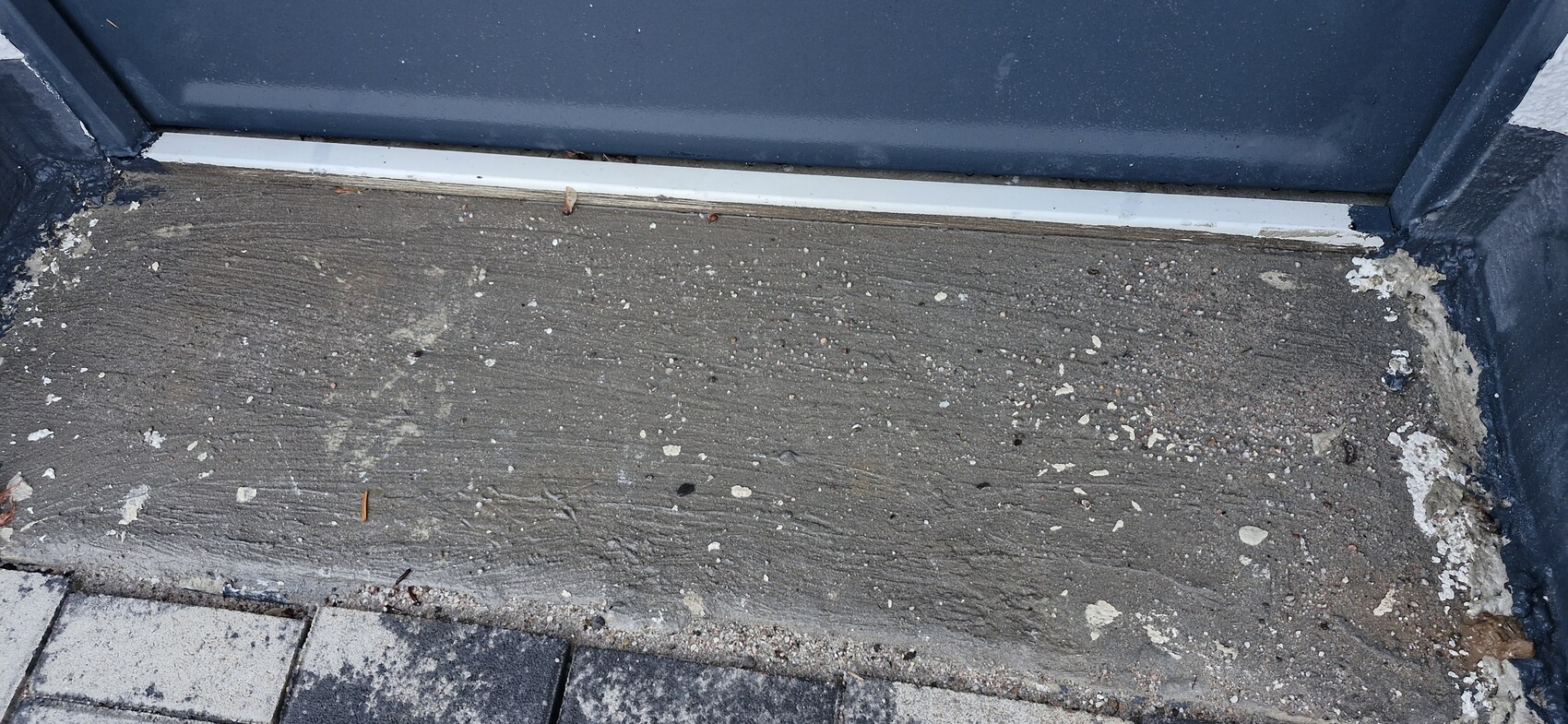
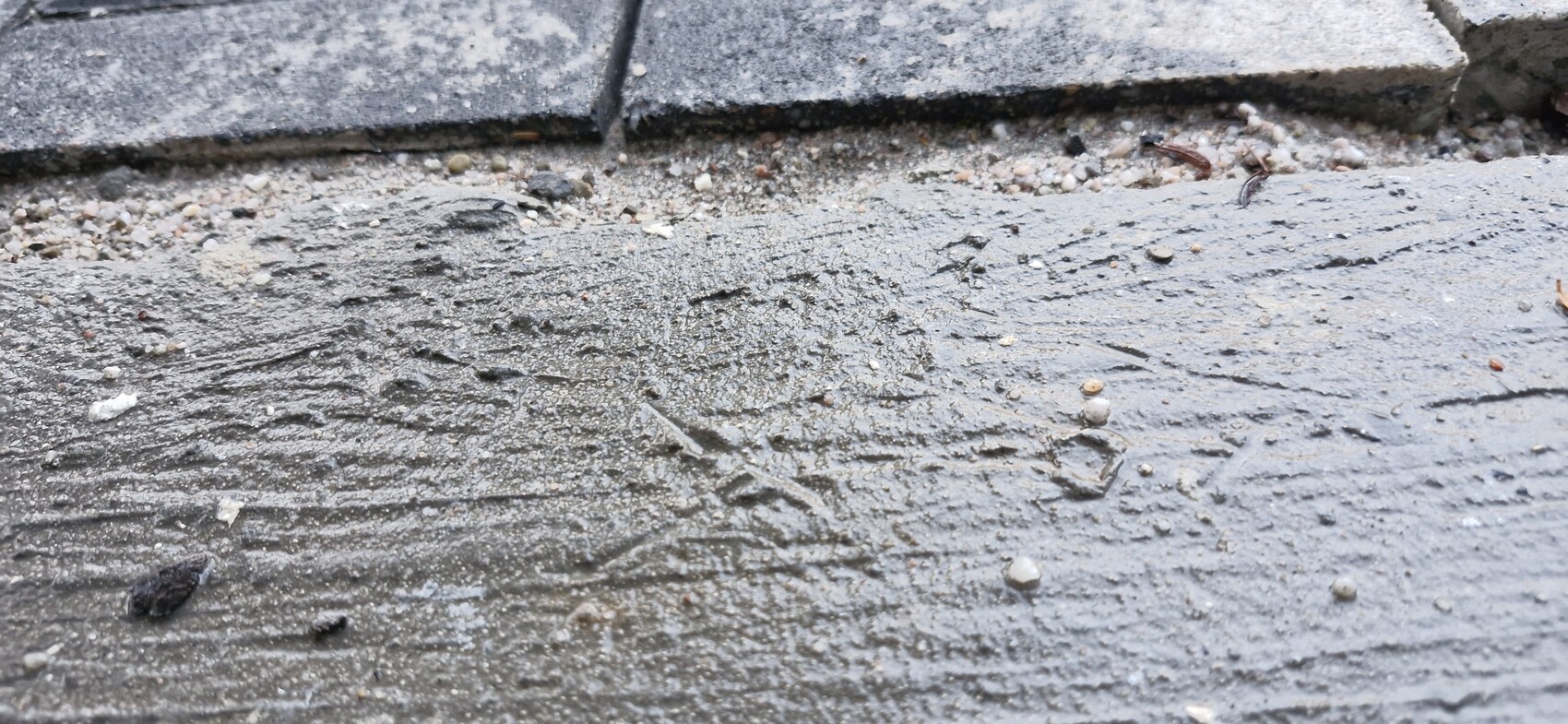
as you can see in the pictures, I have the problem that the step is lower than my paving.
Now the question is, what kind of surface solution can be applied in this situation?
One option I considered is using a natural stone slab and grinding the front so that it aligns with the paving. However, I’m uncertain because the natural stone slab can be no thicker than about 10mm (0.4 inches) to remain stable.

Well, the "problem" is actually not a problem—at least not an unsolvable one.
Without going into other options: since the natural stone slab you mechanically "pre-treated" will later be directly bonded to the concrete substrate, the material thickness of 10mm (0.4 inches) is not an issue.
This is because no bending moments can act on the natural stone under compressive load from above.
The natural stone immediately transfers the applied compressive force through the adhesive layer to the concrete.
In other words: it will work the way you are thinking.
----------------------
Best of luck: KlaRa
Without going into other options: since the natural stone slab you mechanically "pre-treated" will later be directly bonded to the concrete substrate, the material thickness of 10mm (0.4 inches) is not an issue.
This is because no bending moments can act on the natural stone under compressive load from above.
The natural stone immediately transfers the applied compressive force through the adhesive layer to the concrete.
In other words: it will work the way you are thinking.
----------------------
Best of luck: KlaRa
You can find the answer to your question in my post!
There, I explained that the natural stone slab will later be bonded directly to the concrete base, so no bending stresses can occur as a result. If the natural stone slab overhangs at a thickness of 10mm (0.4 inches), that edge will definitely break under load.
Solution: support the overhanging part with a compressive mortar strip.
There, I explained that the natural stone slab will later be bonded directly to the concrete base, so no bending stresses can occur as a result. If the natural stone slab overhangs at a thickness of 10mm (0.4 inches), that edge will definitely break under load.
Solution: support the overhanging part with a compressive mortar strip.
KlaRa schrieb:
support with a compressive-strength mortar strip This means: apply a strip of compressive-strength mortar (which you can get at any hardware store) underneath the cantilever on the concrete (in case my explanation was not clear enough), and then place the natural stone slab on top of it.
Similar topics