
ᐅ Mounting an Awning – What Is the Proper Method for an External Thermal Insulation Composite System (ETICS)?
Created on: 5 Apr 2021 02:21
M
Markiso
I have posted on a similar topic before, but unfortunately I can’t find it anymore (it may have been deleted?), and there are some new insights. To summarize the project: We want to install a retractable awning over our terrace. Initially, we didn’t pay much attention to the mounting, as we thought it would be straightforward and routine work for the respective companies. However, after the first on-site meetings with two companies, we started having more questions and doubts about the mounting. Maybe someone here can tell us if there is a “correct” solution or method. From a layperson’s perspective, the mounting options suggested by the companies didn’t seem quite right.
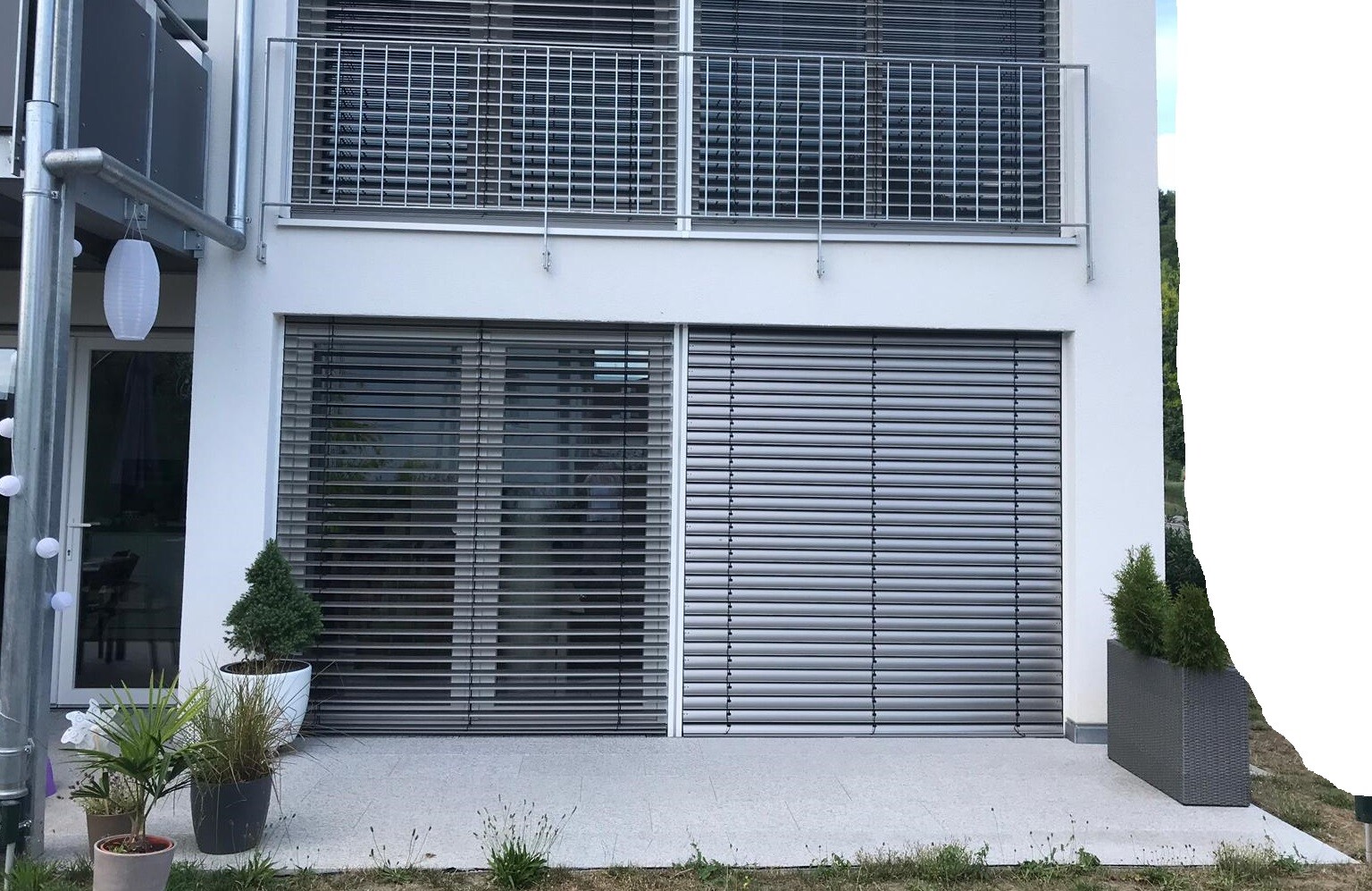
Here is the situation: The awning must be mounted on the floor slab (on the exterior wall) made of concrete. Between the concrete and the exterior wall there is, as is common nowadays (the building was constructed in 2018), insulation of varying thickness—I assume about 12cm (5 inches). Additionally, the neighbors on the first floor have full-width floor-to-ceiling windows that of course have fall protection in the form of railings. These railings are also attached beneath the windows directly to the floor slab. Below that, mounting the awning is not possible because the roller shutter boxes are already installed there. Thus, the awning’s mounting would also have to be at the same height as the railing fixings, ideally with a good distance from them so as not to be too close in the concrete. This means the mounting not only has to bridge the insulation layer up to the concrete but also the 10cm (4 inches) distance between the exterior wall and the railing fixings.
The following proposals were made:
Company 1: Mounting in the concrete using steel brackets (?) that bridge the distance from the exterior wall to the awning. I feel this is not ideal because it would put some pressure on the “soft” insulation, especially when screwing in the awning.
Company 2: Mounting on the railing brackets. This makes me even more uneasy because I assume those brackets are designed only for the railings, not for an additional load from an awning plus wind, etc.
Neither company had an immediate answer or clear solution during the on-site inspection as to how they would handle the mounting. That wasn’t very reassuring, as I think our situation really isn’t that complicated—maybe just slightly more complex than standard due to the railings.
Both companies advised us to contact a third company. This company was at least able to immediately answer the question about the mounting during the on-site visit. Their approach is as follows: At each mounting point, a roughly 10x10cm (4x4 inch) square is cut into the insulation, and then anchors (quote) are fixed into the concrete. Plastic plates are placed on these anchors (as they supposedly have a better thermal transmittance value and therefore create a smaller thermal bridge). These plates are intended to bridge the distance from the concrete to the awning, i.e., insulation plus the roughly 10cm (4 inches) gap between the exterior wall and the railing brackets. The immediate response and explanation seemed plausible to me at first. However, since we have no technical expertise, I could be mistaken. My main concern is whether it is really advisable to cut out such a large area of the insulation. There would be three mounting points: right and left on the outer edges to carry the weight, and one in the middle to prevent sagging and to maintain tension on the awning.
Is this method good/correct? Or is there a standard or professionally accepted way to attach it?
Here is a picture of our terrace and the railings:
PS: When I see prices from other forum posts (not only here) for more expensive models and sizes, I am really surprised. For us, the offer from the third company for a Markilux5010 measuring 5m x 3m (16.4 ft x 9.8 ft) was almost 5000€ (including a motor with remote control) 😳 But here, the focus is on the mounting 🙂
Here is the situation: The awning must be mounted on the floor slab (on the exterior wall) made of concrete. Between the concrete and the exterior wall there is, as is common nowadays (the building was constructed in 2018), insulation of varying thickness—I assume about 12cm (5 inches). Additionally, the neighbors on the first floor have full-width floor-to-ceiling windows that of course have fall protection in the form of railings. These railings are also attached beneath the windows directly to the floor slab. Below that, mounting the awning is not possible because the roller shutter boxes are already installed there. Thus, the awning’s mounting would also have to be at the same height as the railing fixings, ideally with a good distance from them so as not to be too close in the concrete. This means the mounting not only has to bridge the insulation layer up to the concrete but also the 10cm (4 inches) distance between the exterior wall and the railing fixings.
The following proposals were made:
Company 1: Mounting in the concrete using steel brackets (?) that bridge the distance from the exterior wall to the awning. I feel this is not ideal because it would put some pressure on the “soft” insulation, especially when screwing in the awning.
Company 2: Mounting on the railing brackets. This makes me even more uneasy because I assume those brackets are designed only for the railings, not for an additional load from an awning plus wind, etc.
Neither company had an immediate answer or clear solution during the on-site inspection as to how they would handle the mounting. That wasn’t very reassuring, as I think our situation really isn’t that complicated—maybe just slightly more complex than standard due to the railings.
Both companies advised us to contact a third company. This company was at least able to immediately answer the question about the mounting during the on-site visit. Their approach is as follows: At each mounting point, a roughly 10x10cm (4x4 inch) square is cut into the insulation, and then anchors (quote) are fixed into the concrete. Plastic plates are placed on these anchors (as they supposedly have a better thermal transmittance value and therefore create a smaller thermal bridge). These plates are intended to bridge the distance from the concrete to the awning, i.e., insulation plus the roughly 10cm (4 inches) gap between the exterior wall and the railing brackets. The immediate response and explanation seemed plausible to me at first. However, since we have no technical expertise, I could be mistaken. My main concern is whether it is really advisable to cut out such a large area of the insulation. There would be three mounting points: right and left on the outer edges to carry the weight, and one in the middle to prevent sagging and to maintain tension on the awning.
Is this method good/correct? Or is there a standard or professionally accepted way to attach it?
Here is a picture of our terrace and the railings:
PS: When I see prices from other forum posts (not only here) for more expensive models and sizes, I am really surprised. For us, the offer from the third company for a Markilux5010 measuring 5m x 3m (16.4 ft x 9.8 ft) was almost 5000€ (including a motor with remote control) 😳 But here, the focus is on the mounting 🙂
During a further inspection of the mounting situation to decide the exact width of the awning, another question came up for us.
Here is the situation: The apartment building has two identical apartments each on the ground floor and the first floor. At the top (attic level), there is a single apartment running across the entire width of the building. This apartment also has a roof terrace spanning the full width. The owner has installed a covering (glass with awnings underneath) supported by posts over about two-thirds or three-quarters of the terrace. The balconies of the two first-floor apartments have coverings provided by the original construction. Since the roof terrace is recessed as usual, meaning it is within the building area and does not extend outward like a balcony, the roof of the attic terrace is positioned above the roofs of the first-floor balconies.
Now to the specific problem. The owner of the attic apartment has extended their roof even wider than the combined widths of the first-floor balcony roofs. This means the attic roof overhangs on both sides by about 1 meter (3 feet). As we experienced during last winter with heavy snow loads, the large snow slides from the attic terrace roof land directly on our terrace below. Aside from the obvious safety hazard, we are wondering if this affects the awning we plan to install. The drop zone for snow is exactly where the awning would be mounted—specifically where the awning box (also called the cassette?) would be located. I assume that neither the awning itself (especially the fabric, which is usually retracted in winter) nor the mounting hardware is designed to withstand such heavy impacts or loads. These are quite massive amounts of snow falling with significant speed from the attic level down to the ground floor.
PS: The covering was installed shortly after the apartment building was completed but without any permission from the owners’ association.
Here is the situation: The apartment building has two identical apartments each on the ground floor and the first floor. At the top (attic level), there is a single apartment running across the entire width of the building. This apartment also has a roof terrace spanning the full width. The owner has installed a covering (glass with awnings underneath) supported by posts over about two-thirds or three-quarters of the terrace. The balconies of the two first-floor apartments have coverings provided by the original construction. Since the roof terrace is recessed as usual, meaning it is within the building area and does not extend outward like a balcony, the roof of the attic terrace is positioned above the roofs of the first-floor balconies.
Now to the specific problem. The owner of the attic apartment has extended their roof even wider than the combined widths of the first-floor balcony roofs. This means the attic roof overhangs on both sides by about 1 meter (3 feet). As we experienced during last winter with heavy snow loads, the large snow slides from the attic terrace roof land directly on our terrace below. Aside from the obvious safety hazard, we are wondering if this affects the awning we plan to install. The drop zone for snow is exactly where the awning would be mounted—specifically where the awning box (also called the cassette?) would be located. I assume that neither the awning itself (especially the fabric, which is usually retracted in winter) nor the mounting hardware is designed to withstand such heavy impacts or loads. These are quite massive amounts of snow falling with significant speed from the attic level down to the ground floor.
PS: The covering was installed shortly after the apartment building was completed but without any permission from the owners’ association.
Similar topics