
Hello everyone
This concerns a solid construction house built in 2018/19, where I have PVC windows.
One of them is a two-sided casement window, connected at the bottom to a fixed glazing panel running the entire length.
So, at the bottom there is floor-to-ceiling fixed glazing about 2m (6.5 ft) wide and above that, two casement windows measuring 1 x 1m (3.3 x 3.3 ft) each.
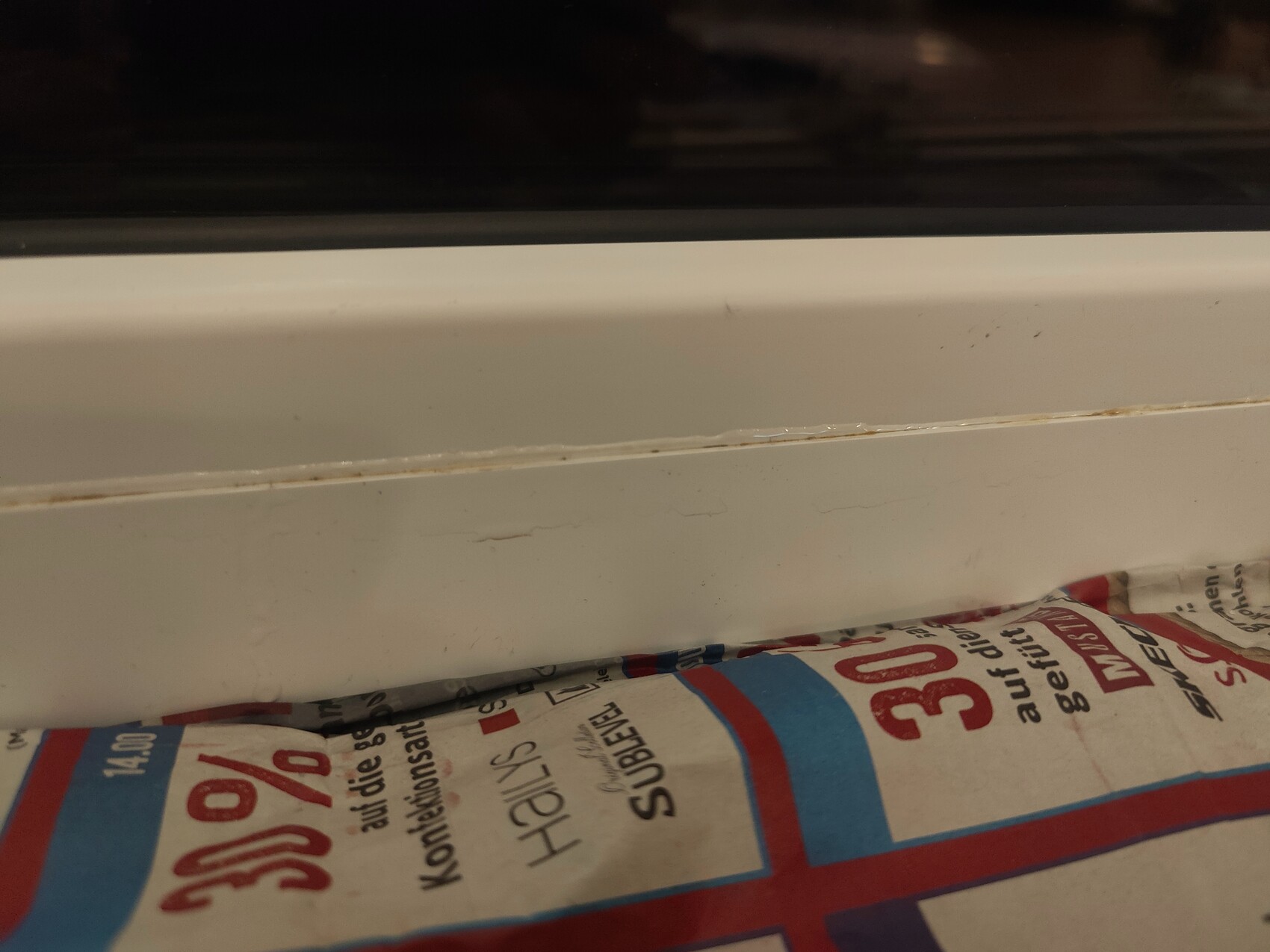
By chance, I just noticed that the fixed glazing seems to be leaking, and as if that weren’t odd enough, it is at a very unusual spot.
The lower frame consists of two parts, so there is a "plastic joint," a seam or connection between these two parts.
And moisture is coming from there, with some brownish discoloration visible as well.
I’ve attached a photo.
Now, the actual question:
How can this happen?
It’s currently dark outside and raining, so I can’t check whether there are drainage caps or similar. But that’s unlikely on fixed glazing, right?
I hope you have a good tip for me.
It seems that hardly anything underneath the laminate flooring has become damp, but of course, I want to fix the cause as quickly as possible...
Best regards
Enrico
This concerns a solid construction house built in 2018/19, where I have PVC windows.
One of them is a two-sided casement window, connected at the bottom to a fixed glazing panel running the entire length.
So, at the bottom there is floor-to-ceiling fixed glazing about 2m (6.5 ft) wide and above that, two casement windows measuring 1 x 1m (3.3 x 3.3 ft) each.
By chance, I just noticed that the fixed glazing seems to be leaking, and as if that weren’t odd enough, it is at a very unusual spot.
The lower frame consists of two parts, so there is a "plastic joint," a seam or connection between these two parts.
And moisture is coming from there, with some brownish discoloration visible as well.
I’ve attached a photo.
Now, the actual question:
How can this happen?
It’s currently dark outside and raining, so I can’t check whether there are drainage caps or similar. But that’s unlikely on fixed glazing, right?
I hope you have a good tip for me.
It seems that hardly anything underneath the laminate flooring has become damp, but of course, I want to fix the cause as quickly as possible...
Best regards
Enrico
B
B.Baumeister15 Jan 2023 15:12profil65 schrieb:
Sure?Pretty sure. But no chance I'll capture that in a photo.
However, if I shine a light inside, I can see the outer metal profile of the frame, the corresponding hole, and how mounting foam is coming out of that hole...
B.Baumeister schrieb:
Not just one screw is missing from the window, but all of them. Then I also found a second window in the house where this is the case. All the screw holes there are empty as well. How many windows with fixed glazing do you have in your house?
My guess is that there are exactly two because such windows are often fastened with anchors/slides/... that become invisible after the installation of the reveal. Did you take any photos during construction that might show something?
Are the windows supplied by the developer/... or from a window manufacturer or ...?
B
B.Baumeister15 Jan 2023 16:03I have five windows like this, and two of them have no visible screws. The smaller window in the pictures is the second one.
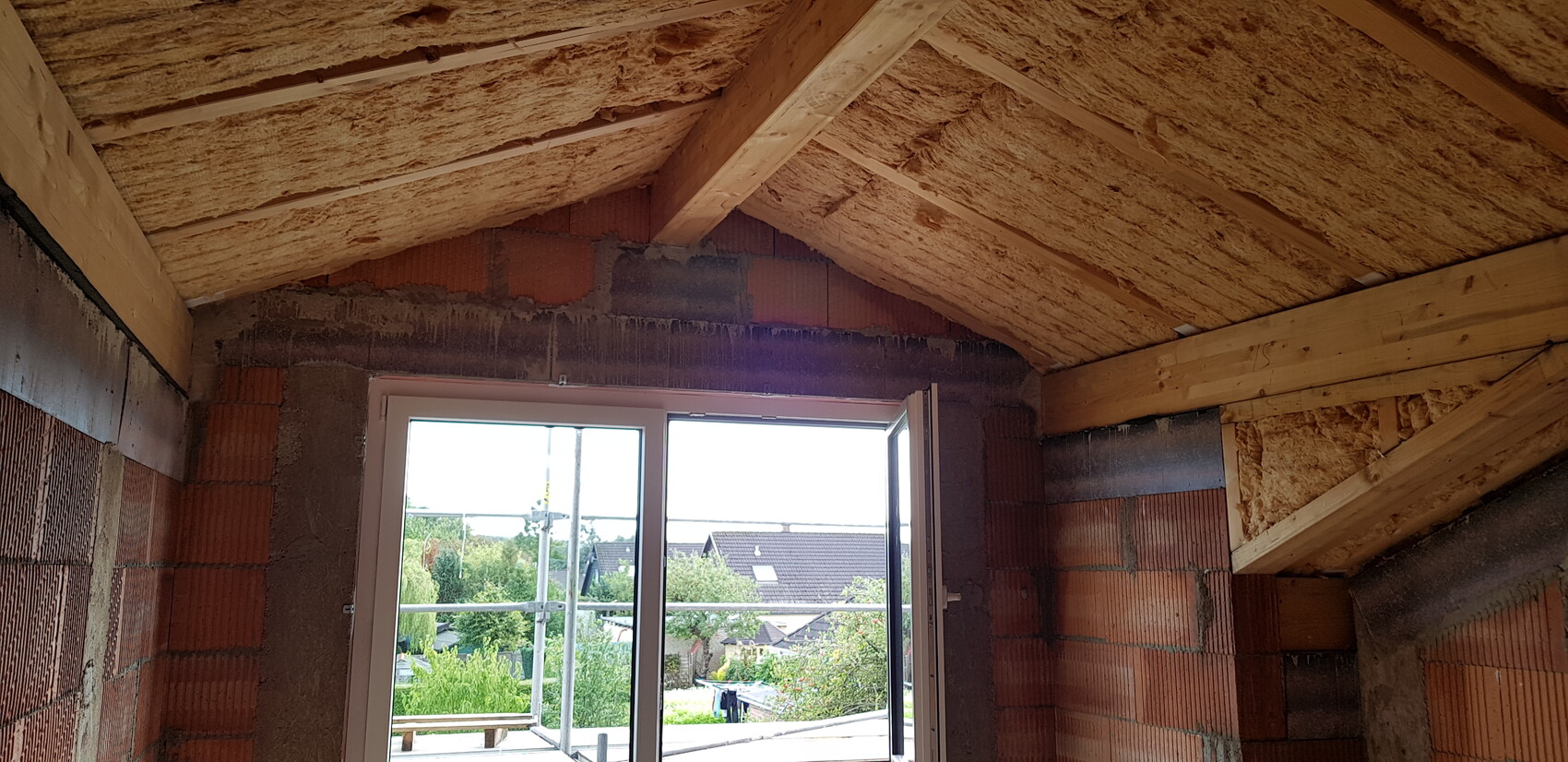
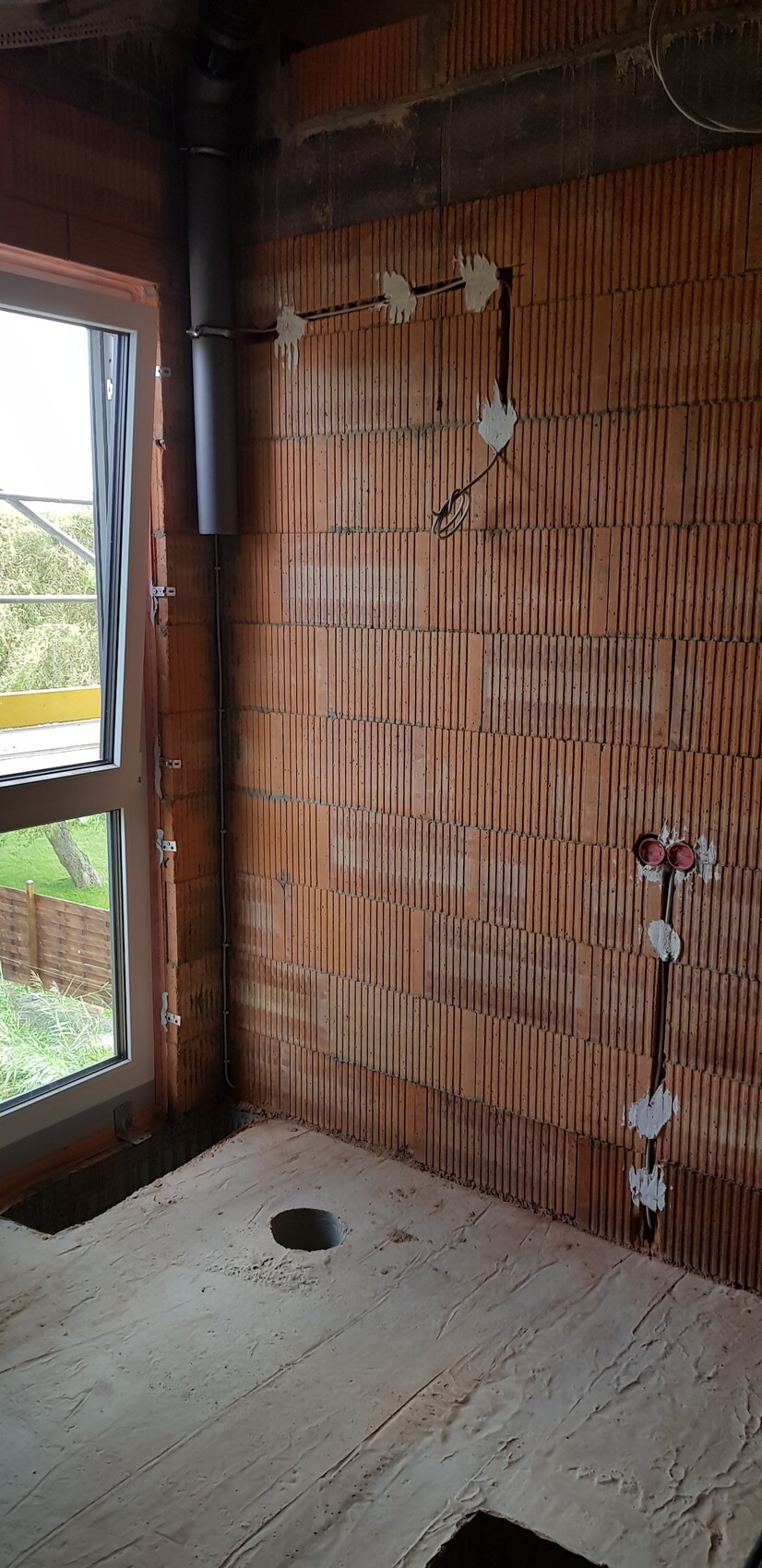
There are anchors, as you can see in the pictures.
It wouldn’t hold with just mounting foam.
The house was built by Heinz von Heiden, and they always work with different contractors for each trade.
I still need to find out who the window manufacturer finally was.

There are anchors, as you can see in the pictures.
It wouldn’t hold with just mounting foam.
The house was built by Heinz von Heiden, and they always work with different contractors for each trade.
I still need to find out who the window manufacturer finally was.
B
B.Baumeister15 Jan 2023 16:23All these windows are on the upper floor and none have balconies. That’s why they are fixed glazing. No, I did not have a building inspector.
Similar topics