
ᐅ Final stage floor plan: Is there still potential for improvement?
Created on: 16 Apr 2018 22:14
M
modder
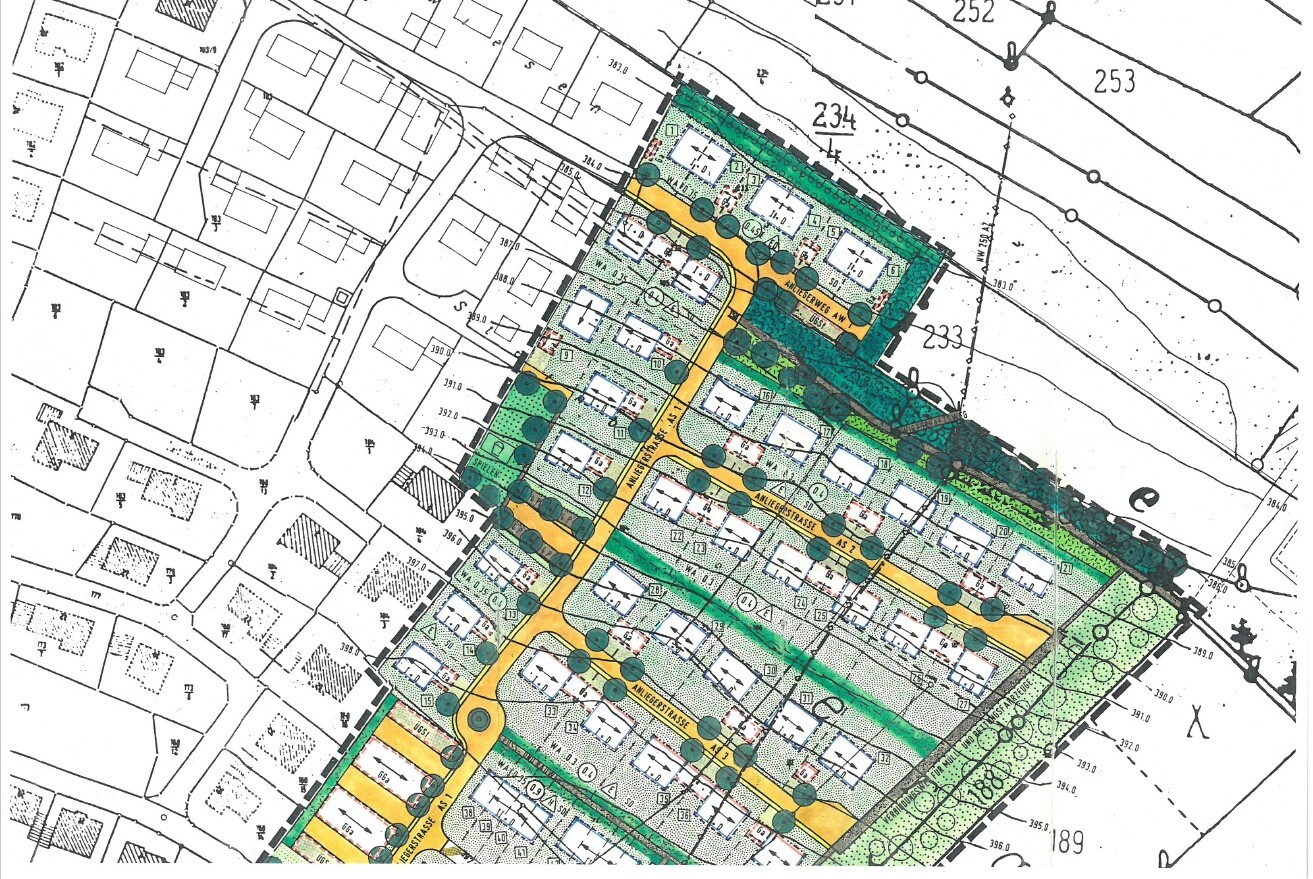
Development Plan / Restrictions
Plot size: 606m² (6519 sq ft)
Slope: slight north-facing slope (3m (10 ft) over 34m (112 ft) length)
House: south-north = 1m (3 ft) height difference
Site occupancy index: 0.35 (212m² (2282 sq ft))
Floor area ratio: 0.40 (242m² (2605 sq ft))
Building envelope: marked in blue (approx. 11.8 x 14.5m (39 x 48 ft))
Boundary construction allowed: no
Parking spaces: 2
Number of floors: two full stories: ground floor + upper floor
Roof type: 38–42° (degrees) gable roof
Architectural style: traditional
Ridge orientation: south-north
Maximum heights / limits: northern eave-side wall height above natural ground level: 3.80m (12 ft 6 in)
Additional requirements: knee wall height from top of raw floor slab to bottom of wall plate 0.50m (70cm / 1 ft 8 in approx. inside)
Client Requirements
Style, roof shape, building type: all according to development plan
Basement, floors: basement + ground floor + upper floor
Number of occupants, ages: 28 (female), 30 (male), plus at least 1 planned child
Space needs in basement: hobby room, utility room, pantry/storage, sauna planned later
Space needs on ground floor: living room, dining + kitchen, WC, hallway
Space needs on upper floor: master bedroom, dressing room, child 1 + child 2, hallway, bathroom
Office: home office!
Overnight guests per year: 3 guests at Easter and Christmas
Closed architecture
Conservative construction style
Open kitchen connected to dining room
Number of dining seats: 5
Living room fireplace: wall-mounted ethanol fireplace
Music / stereo wall: yes
Balcony, roof terrace: no
Garage or carport: single or double garage
Utility garden, greenhouse: no
Other: hallway large enough to bring in and temporarily park a stroller, e.g., when it’s raining outside; staircase with 1m (3 ft 3 in) wide steps and easy to walk on (hence double landings); living room at least 4.5m (15 ft) wide; no direct connection between parents’ and children’s bedrooms; stairway not located in entryway dirt area; all interior doors with 985mm (39 in) clear opening; dining room: lift-and-slide door with 3m (10 ft) width
House Design
- Designer: do-it-yourself
- What do you particularly like about it? Why?
Double-landing staircase, kitchen and dining area facing south, circulation area on the north-east side; large glass window in dining room facing garden, G-shaped kitchen, enlargement of children’s rooms with dormer windows; hallway hopefully spacious-looking even though it could be a little wider
- What do you dislike? Why?
No room for a urinal in the ground floor bathroom
Basement not yet well planned, unsure how to properly separate a future sauna room
Personal budget limit for house including equipment: €425,000
- Preferred heating technology: air-to-water heat pump / ground loop collector + mechanical ventilation with heat recovery + underfloor heating
If You Have to Give Up Anything, on which details / features
- Could give up: exposed roof structure
- Cannot give up: shower in ground floor WC; staircase with straight steps; stairway outside the dirt zone; wardrobe
Why is the Design Like It Is?
Lots of reading layout reviews here, input from builder friends; about 100 hours of drawing floor plans
- What makes it especially good or bad in your view?
In our opinion, very efficient use of space in a relatively small house, pleasant hallway layout
What Is the Most Important / Basic Question About the Floor Plan Summarized in 130 Characters?
Is this floor plan practical?
Are there any major issues or deal-breakers we might have overlooked?
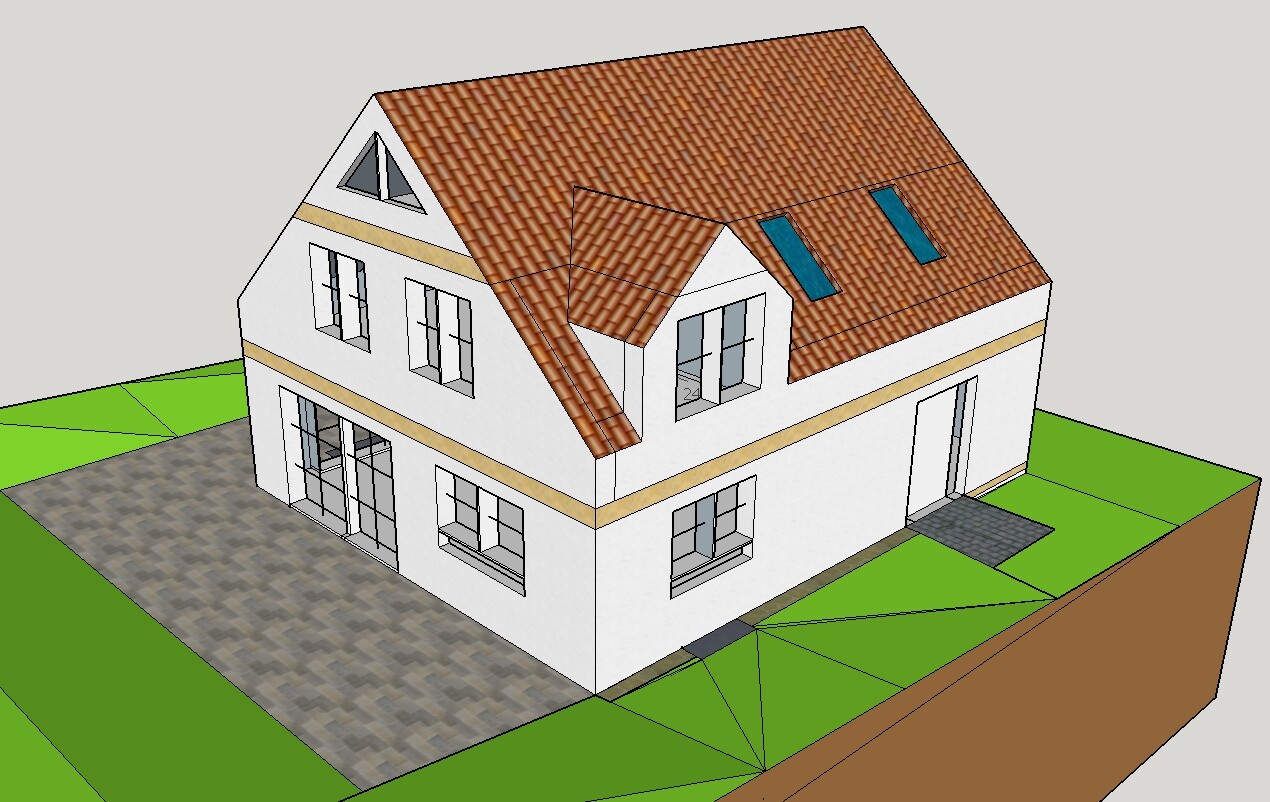
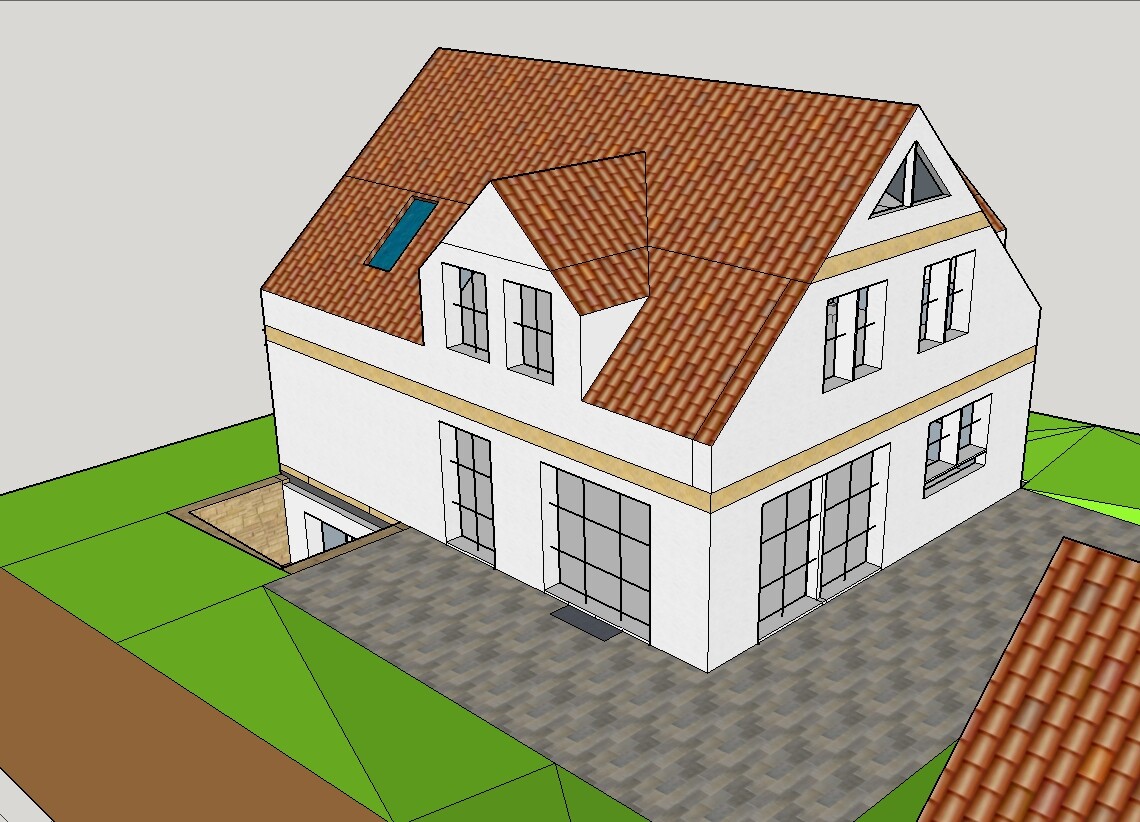
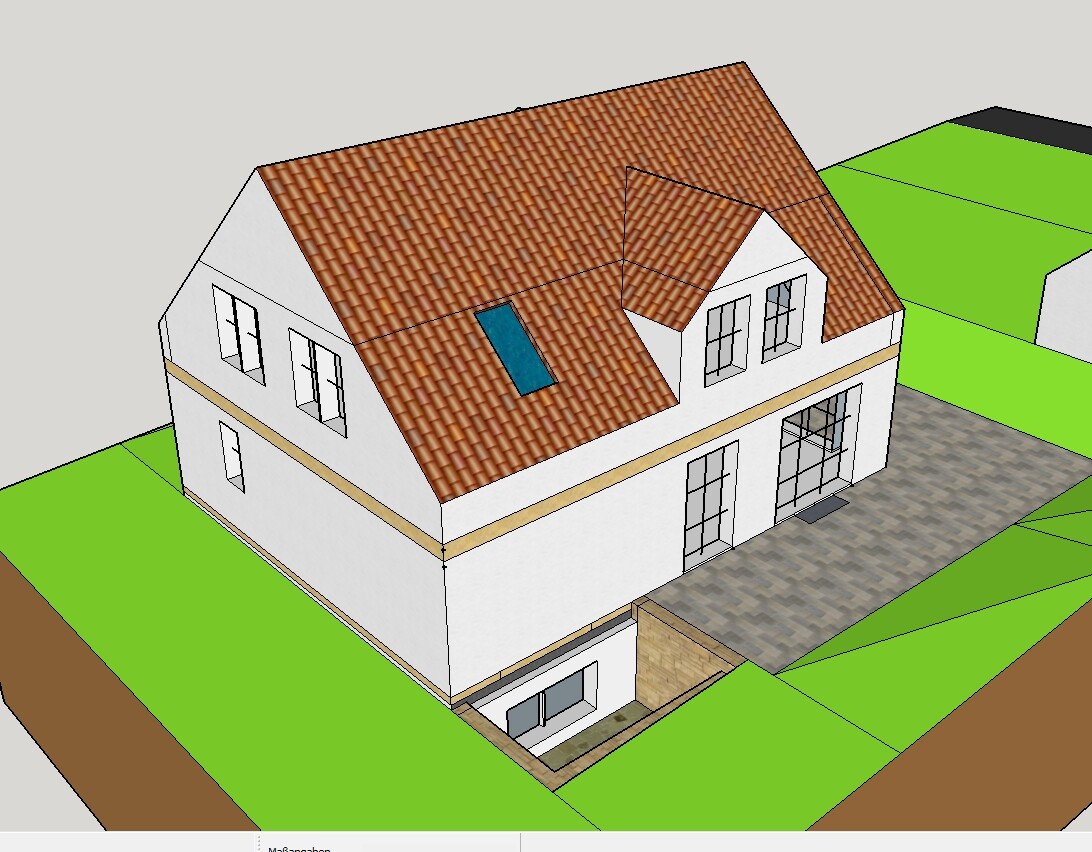
Attached are our own drawings from SketchUp / site plan from the development plan
Our plot is number [9]
Note: Unfortunately, windows are missing on the upper floor. There are planned windows on the gable ends sized 150 x 138cm (59 x 54 in), dormer windows each approx. 200 x 138cm (79 x 54 in), and in the stairwell, master bedroom, and bathroom an additional double casement window sized 78 x 160cm (31 x 63 in)
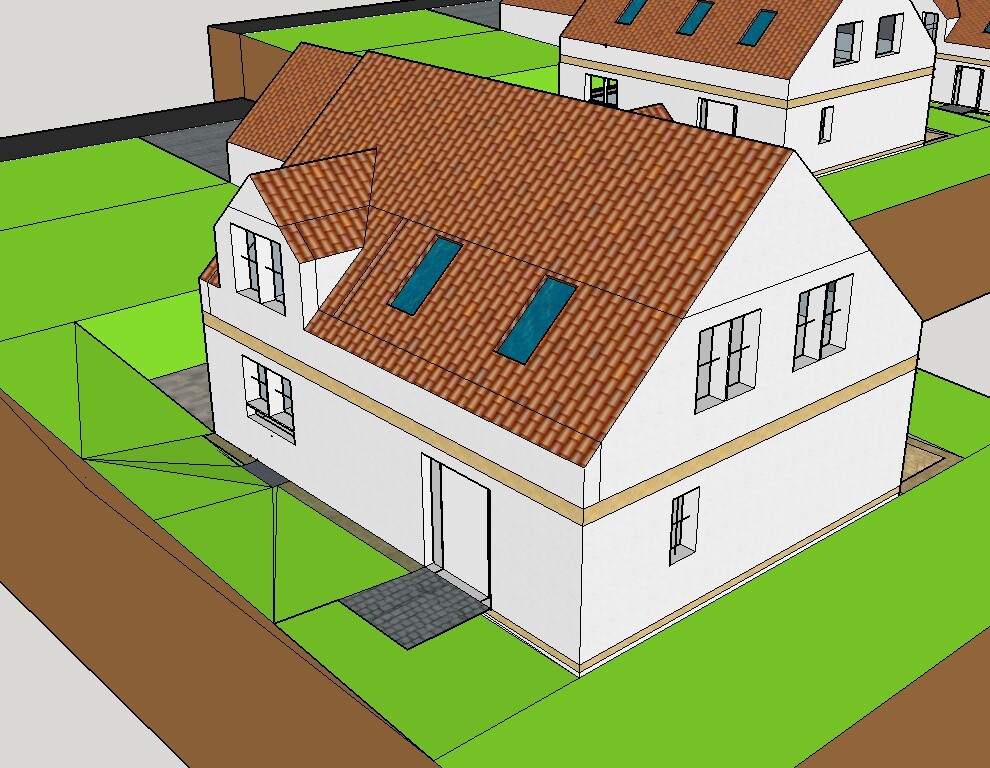
Plot size: 606m² (6519 sq ft)
Slope: slight north-facing slope (3m (10 ft) over 34m (112 ft) length)
House: south-north = 1m (3 ft) height difference
Site occupancy index: 0.35 (212m² (2282 sq ft))
Floor area ratio: 0.40 (242m² (2605 sq ft))
Building envelope: marked in blue (approx. 11.8 x 14.5m (39 x 48 ft))
Boundary construction allowed: no
Parking spaces: 2
Number of floors: two full stories: ground floor + upper floor
Roof type: 38–42° (degrees) gable roof
Architectural style: traditional
Ridge orientation: south-north
Maximum heights / limits: northern eave-side wall height above natural ground level: 3.80m (12 ft 6 in)
Additional requirements: knee wall height from top of raw floor slab to bottom of wall plate 0.50m (70cm / 1 ft 8 in approx. inside)
Client Requirements
Style, roof shape, building type: all according to development plan
Basement, floors: basement + ground floor + upper floor
Number of occupants, ages: 28 (female), 30 (male), plus at least 1 planned child
Space needs in basement: hobby room, utility room, pantry/storage, sauna planned later
Space needs on ground floor: living room, dining + kitchen, WC, hallway
Space needs on upper floor: master bedroom, dressing room, child 1 + child 2, hallway, bathroom
Office: home office!
Overnight guests per year: 3 guests at Easter and Christmas
Closed architecture
Conservative construction style
Open kitchen connected to dining room
Number of dining seats: 5
Living room fireplace: wall-mounted ethanol fireplace
Music / stereo wall: yes
Balcony, roof terrace: no
Garage or carport: single or double garage
Utility garden, greenhouse: no
Other: hallway large enough to bring in and temporarily park a stroller, e.g., when it’s raining outside; staircase with 1m (3 ft 3 in) wide steps and easy to walk on (hence double landings); living room at least 4.5m (15 ft) wide; no direct connection between parents’ and children’s bedrooms; stairway not located in entryway dirt area; all interior doors with 985mm (39 in) clear opening; dining room: lift-and-slide door with 3m (10 ft) width
House Design
- Designer: do-it-yourself
- What do you particularly like about it? Why?
Double-landing staircase, kitchen and dining area facing south, circulation area on the north-east side; large glass window in dining room facing garden, G-shaped kitchen, enlargement of children’s rooms with dormer windows; hallway hopefully spacious-looking even though it could be a little wider
- What do you dislike? Why?
No room for a urinal in the ground floor bathroom
Basement not yet well planned, unsure how to properly separate a future sauna room
Personal budget limit for house including equipment: €425,000
- Preferred heating technology: air-to-water heat pump / ground loop collector + mechanical ventilation with heat recovery + underfloor heating
If You Have to Give Up Anything, on which details / features
- Could give up: exposed roof structure
- Cannot give up: shower in ground floor WC; staircase with straight steps; stairway outside the dirt zone; wardrobe
Why is the Design Like It Is?
Lots of reading layout reviews here, input from builder friends; about 100 hours of drawing floor plans
- What makes it especially good or bad in your view?
In our opinion, very efficient use of space in a relatively small house, pleasant hallway layout
What Is the Most Important / Basic Question About the Floor Plan Summarized in 130 Characters?
Is this floor plan practical?
Are there any major issues or deal-breakers we might have overlooked?
Attached are our own drawings from SketchUp / site plan from the development plan
Our plot is number [9]
Note: Unfortunately, windows are missing on the upper floor. There are planned windows on the gable ends sized 150 x 138cm (59 x 54 in), dormer windows each approx. 200 x 138cm (79 x 54 in), and in the stairwell, master bedroom, and bathroom an additional double casement window sized 78 x 160cm (31 x 63 in)


1.45m (4 ft 9 in) is practically too shallow to be used as a shelf; I wouldn’t even box it off that far, and having the bed with the headboard against the bathroom wall is also not ideal.
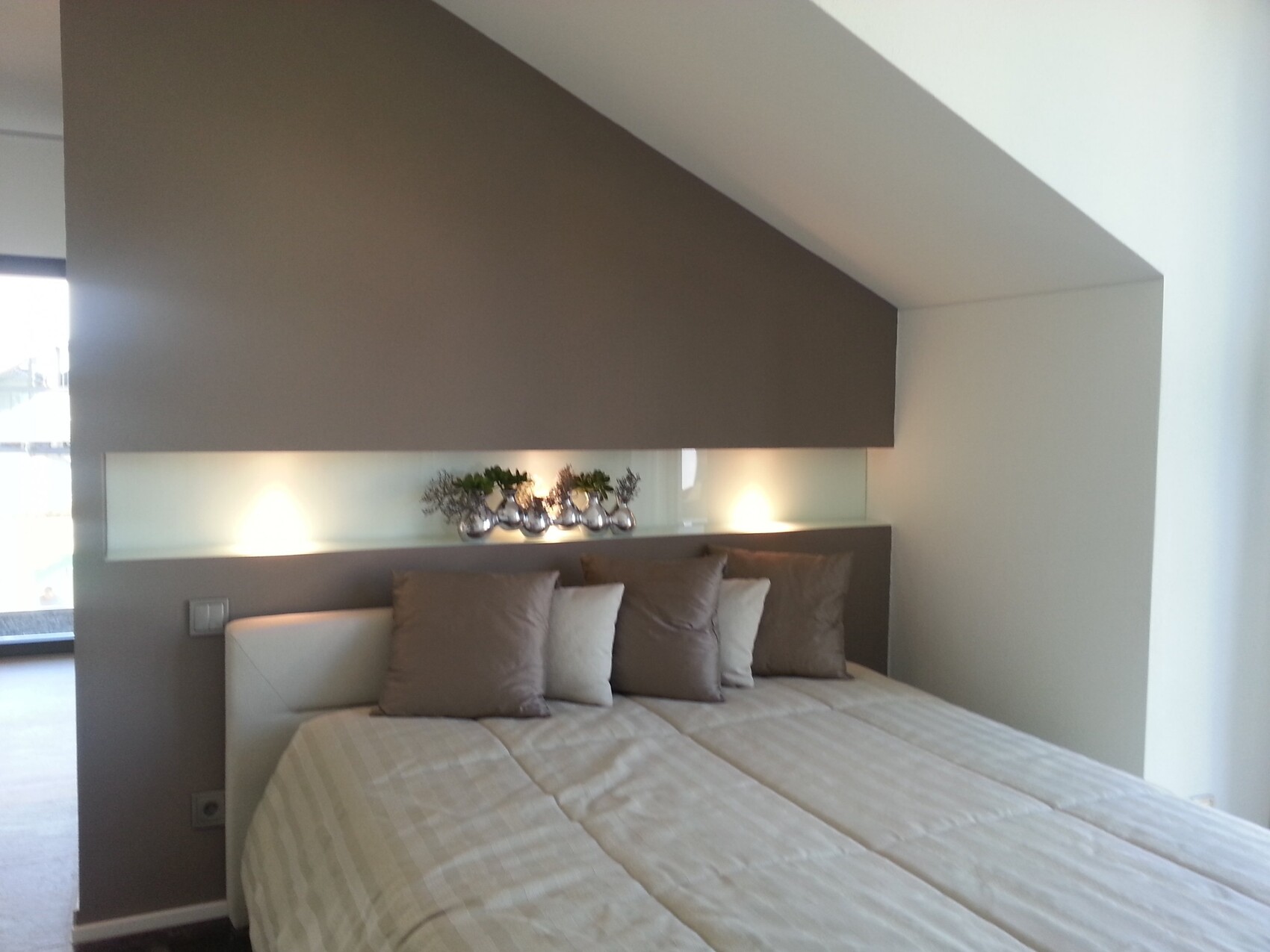
It’s better to extend the knee wall forward a bit and use the space behind it only for storage of seldom-used items (you’ll have to crawl in there), like a guest bed, the stepper you once bought in a fitness craze but never use, etc. This can also be nicely combined with a backlit shelf for the bed:
I would leave the dressing area as it is, and if it needs to be separated from the sleeping area, this can be done with built-in wardrobes and a door creating a separate entrance:
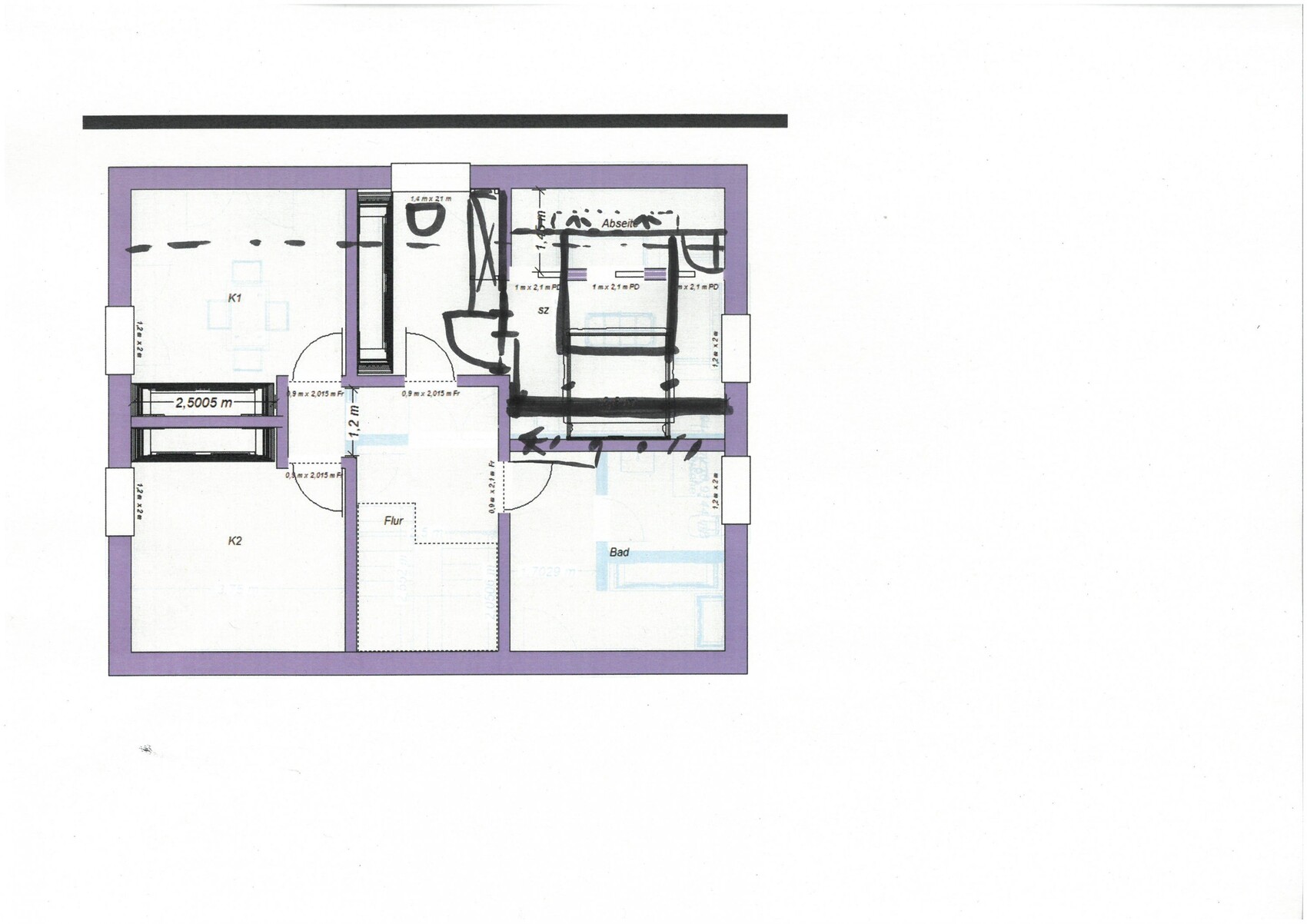
I hope my scribbles are clear: the continuous dashed line probably marks the area from which the room can be used. Slightly past that, I would move the knee wall forward in the bedroom to create a headboard area for the bed, possibly with a niche and lighting like in the picture above. On one side, you can make the space behind accessible through a hatch, although “crawlable” is more accurate (shown on the left in the plan, but it could also be on the other side of the bed). This way, I can reduce the size of the bedroom and enlarge the bathroom, which might then allow for a shower behind the bathroom door or something similar.
The dressing area can, but does not have to, be separated from the bedroom by a wall. It could also be created with a custom-built wardrobe from a carpenter, including a door to the bedroom. The other side of the dressing area is the same: the wardrobe there also has a slope if no dormer window is installed. That’s no problem—the carpenter can install custom shelves accordingly, and evening dresses can hang right at the beginning where the wardrobe can extend up to the ceiling.
A seating area for the lady of the house in front of the window. (I dare say this idea probably comes from a movie where the protagonist has a huge dressing room with a chaise lounge and it looks stylish; in real life, people rarely sit inside the dressing room—I’d bet my head on that.)
It’s better to extend the knee wall forward a bit and use the space behind it only for storage of seldom-used items (you’ll have to crawl in there), like a guest bed, the stepper you once bought in a fitness craze but never use, etc. This can also be nicely combined with a backlit shelf for the bed:
I would leave the dressing area as it is, and if it needs to be separated from the sleeping area, this can be done with built-in wardrobes and a door creating a separate entrance:
I hope my scribbles are clear: the continuous dashed line probably marks the area from which the room can be used. Slightly past that, I would move the knee wall forward in the bedroom to create a headboard area for the bed, possibly with a niche and lighting like in the picture above. On one side, you can make the space behind accessible through a hatch, although “crawlable” is more accurate (shown on the left in the plan, but it could also be on the other side of the bed). This way, I can reduce the size of the bedroom and enlarge the bathroom, which might then allow for a shower behind the bathroom door or something similar.
The dressing area can, but does not have to, be separated from the bedroom by a wall. It could also be created with a custom-built wardrobe from a carpenter, including a door to the bedroom. The other side of the dressing area is the same: the wardrobe there also has a slope if no dormer window is installed. That’s no problem—the carpenter can install custom shelves accordingly, and evening dresses can hang right at the beginning where the wardrobe can extend up to the ceiling.
A seating area for the lady of the house in front of the window. (I dare say this idea probably comes from a movie where the protagonist has a huge dressing room with a chaise lounge and it looks stylish; in real life, people rarely sit inside the dressing room—I’d bet my head on that.)
I just think it’s – excuse the expression – really cool what you’re doing there.
I’ll have to discuss all this with my girlfriend as soon as she gets home from work.
For your information: the room has a height of 1 meter (3.3 feet) starting at 32.7cm (13 inches), and then a ceiling height of 2 meters (6.6 feet) from 1.44m (4.7 feet) upwards.
Yes, the knee wall is really small, that’s true. We might be able to raise it by 25cm (10 inches) with a special permit. That would be the maximum possible without exceeding the eaves wall height on that side.
I haven’t quite understood the advantage of the separate walk-in closet so far. I would also assume that the walls of the children’s rooms should run above the load-bearing wall on the ground floor. So it might not be that simple to make the walk-in closet smaller by removing the wall shared with the bedroom. But maybe I’m misunderstanding something here. Having the shower directly on the bedroom wall might also not be ideal :/
I’ll have to discuss all this with my girlfriend as soon as she gets home from work.
For your information: the room has a height of 1 meter (3.3 feet) starting at 32.7cm (13 inches), and then a ceiling height of 2 meters (6.6 feet) from 1.44m (4.7 feet) upwards.
Yes, the knee wall is really small, that’s true. We might be able to raise it by 25cm (10 inches) with a special permit. That would be the maximum possible without exceeding the eaves wall height on that side.
I haven’t quite understood the advantage of the separate walk-in closet so far. I would also assume that the walls of the children’s rooms should run above the load-bearing wall on the ground floor. So it might not be that simple to make the walk-in closet smaller by removing the wall shared with the bedroom. But maybe I’m misunderstanding something here. Having the shower directly on the bedroom wall might also not be ideal :/
modder schrieb:
Yes, the knee wall is really small, that’s true. We might be able to get it raised by 25cm (10 inches) with a special permit. That would be the maximum increase possible without exceeding the eaves wall height.
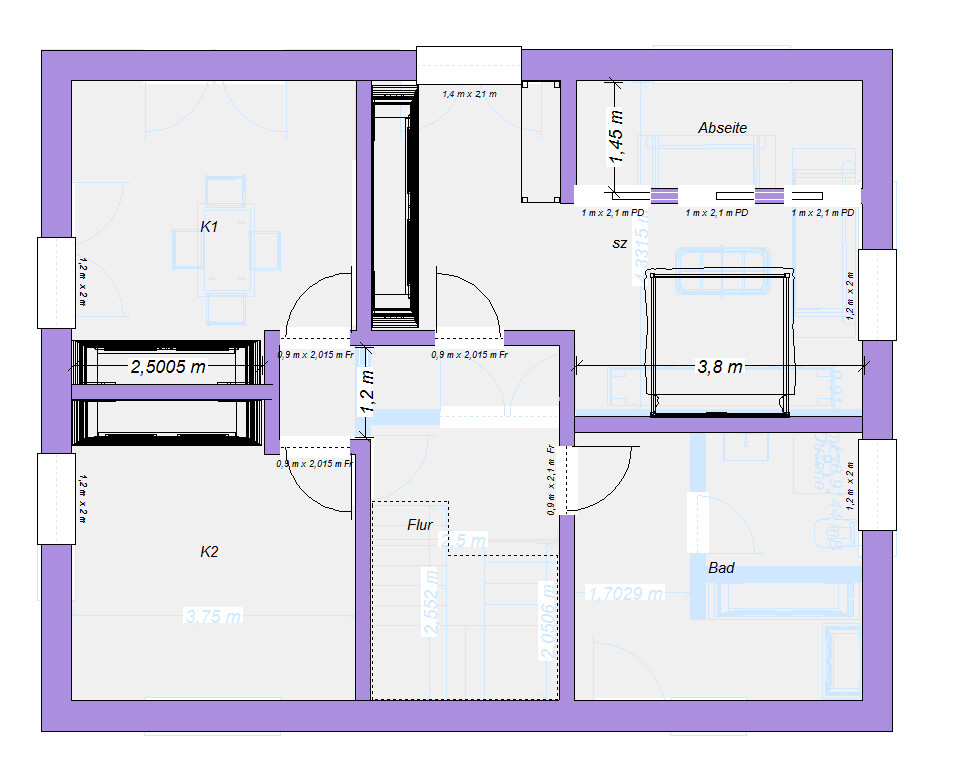
So, could we at least experiment with around 90cm (35 inches)?
kaho674 schrieb:
Like this?
Yes
Similar topics