
ᐅ Final stage floor plan: Is there still potential for improvement?
Created on: 16 Apr 2018 22:14
M
modder
Development Plan / Restrictions
Plot size: 606m² (6519 sq ft)
Slope: slight north-facing slope (3m (10 ft) over 34m (112 ft) length)
House: south-north = 1m (3 ft) height difference
Site occupancy index: 0.35 (212m² (2282 sq ft))
Floor area ratio: 0.40 (242m² (2605 sq ft))
Building envelope: marked in blue (approx. 11.8 x 14.5m (39 x 48 ft))
Boundary construction allowed: no
Parking spaces: 2
Number of floors: two full stories: ground floor + upper floor
Roof type: 38–42° (degrees) gable roof
Architectural style: traditional
Ridge orientation: south-north
Maximum heights / limits: northern eave-side wall height above natural ground level: 3.80m (12 ft 6 in)
Additional requirements: knee wall height from top of raw floor slab to bottom of wall plate 0.50m (70cm / 1 ft 8 in approx. inside)
Client Requirements
Style, roof shape, building type: all according to development plan
Basement, floors: basement + ground floor + upper floor
Number of occupants, ages: 28 (female), 30 (male), plus at least 1 planned child
Space needs in basement: hobby room, utility room, pantry/storage, sauna planned later
Space needs on ground floor: living room, dining + kitchen, WC, hallway
Space needs on upper floor: master bedroom, dressing room, child 1 + child 2, hallway, bathroom
Office: home office!
Overnight guests per year: 3 guests at Easter and Christmas
Closed architecture
Conservative construction style
Open kitchen connected to dining room
Number of dining seats: 5
Living room fireplace: wall-mounted ethanol fireplace
Music / stereo wall: yes
Balcony, roof terrace: no
Garage or carport: single or double garage
Utility garden, greenhouse: no
Other: hallway large enough to bring in and temporarily park a stroller, e.g., when it’s raining outside; staircase with 1m (3 ft 3 in) wide steps and easy to walk on (hence double landings); living room at least 4.5m (15 ft) wide; no direct connection between parents’ and children’s bedrooms; stairway not located in entryway dirt area; all interior doors with 985mm (39 in) clear opening; dining room: lift-and-slide door with 3m (10 ft) width
House Design
- Designer: do-it-yourself
- What do you particularly like about it? Why?
Double-landing staircase, kitchen and dining area facing south, circulation area on the north-east side; large glass window in dining room facing garden, G-shaped kitchen, enlargement of children’s rooms with dormer windows; hallway hopefully spacious-looking even though it could be a little wider
- What do you dislike? Why?
No room for a urinal in the ground floor bathroom
Basement not yet well planned, unsure how to properly separate a future sauna room
Personal budget limit for house including equipment: €425,000
- Preferred heating technology: air-to-water heat pump / ground loop collector + mechanical ventilation with heat recovery + underfloor heating
If You Have to Give Up Anything, on which details / features
- Could give up: exposed roof structure
- Cannot give up: shower in ground floor WC; staircase with straight steps; stairway outside the dirt zone; wardrobe
Why is the Design Like It Is?
Lots of reading layout reviews here, input from builder friends; about 100 hours of drawing floor plans
- What makes it especially good or bad in your view?
In our opinion, very efficient use of space in a relatively small house, pleasant hallway layout
What Is the Most Important / Basic Question About the Floor Plan Summarized in 130 Characters?
Is this floor plan practical?
Are there any major issues or deal-breakers we might have overlooked?
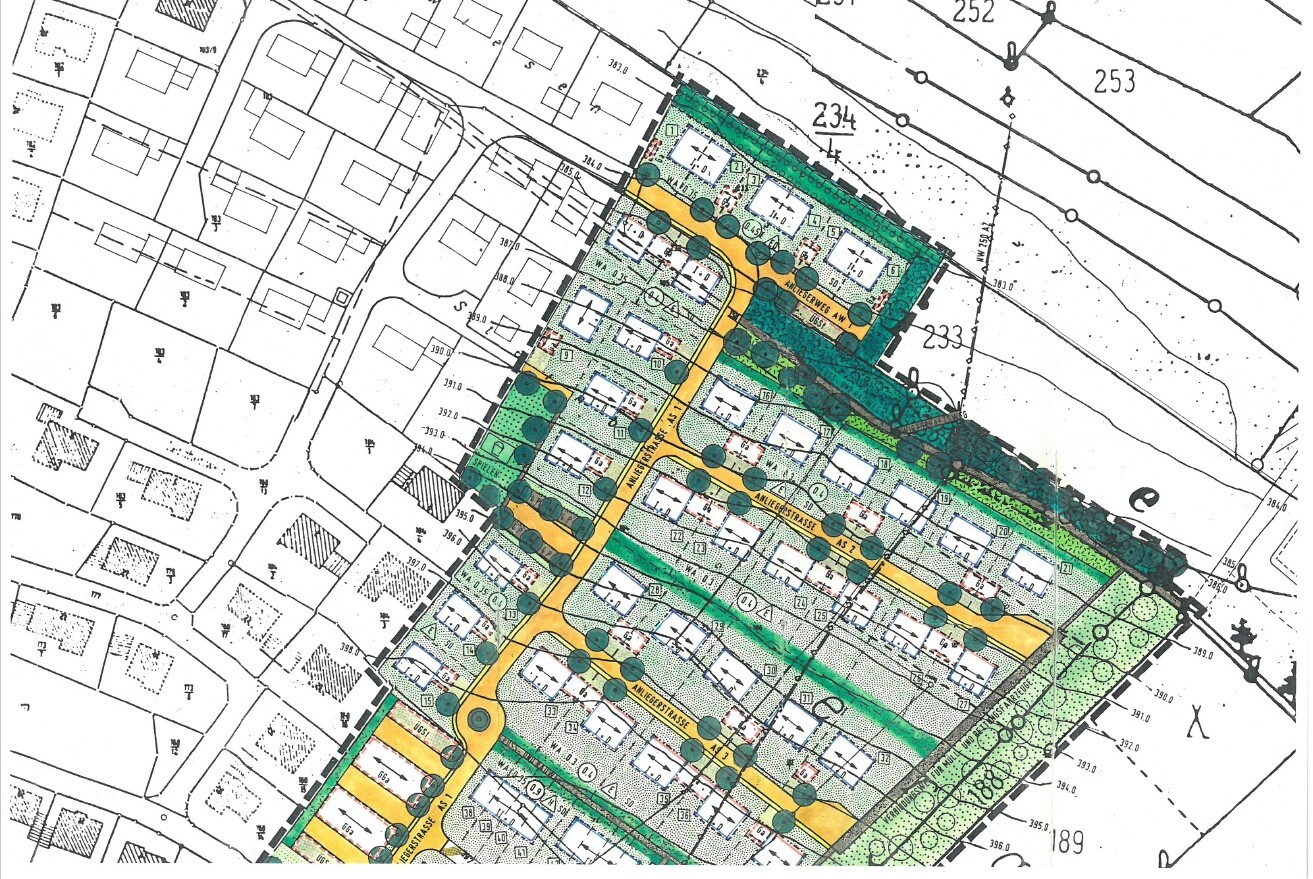
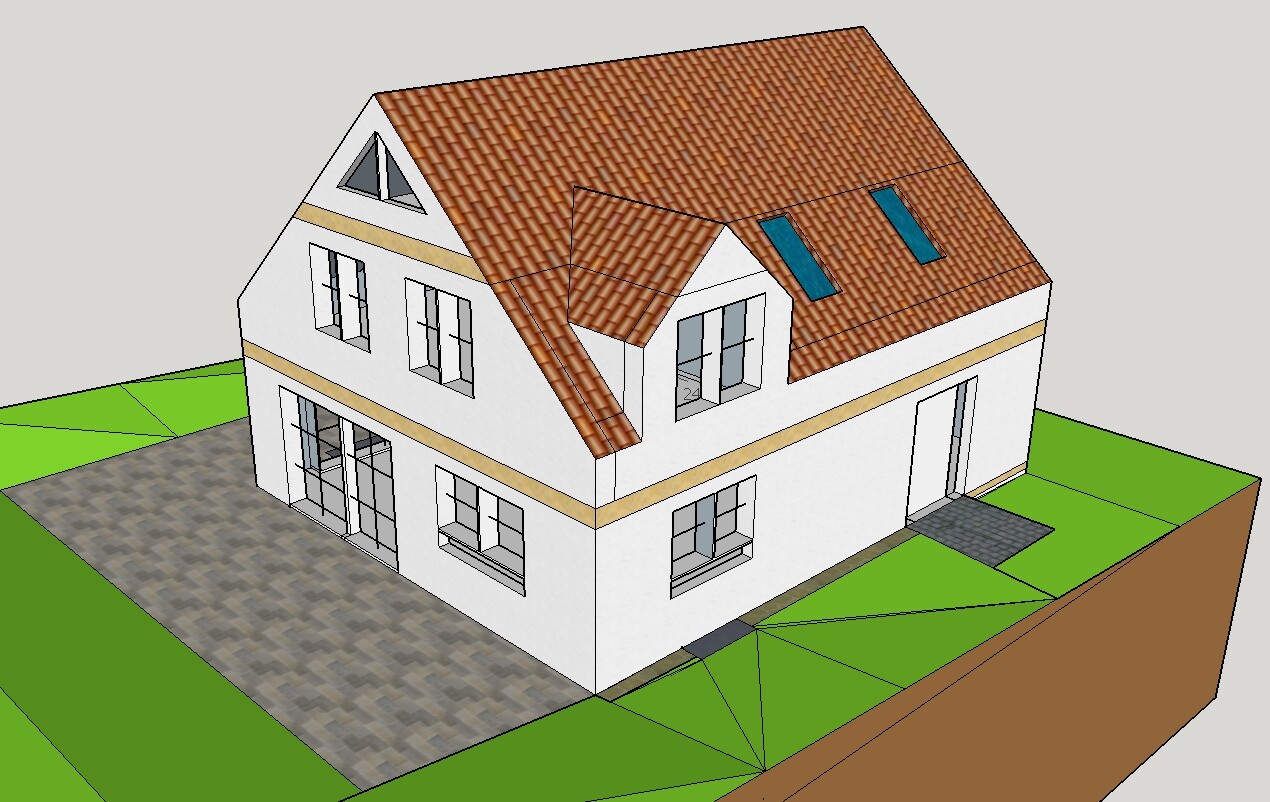
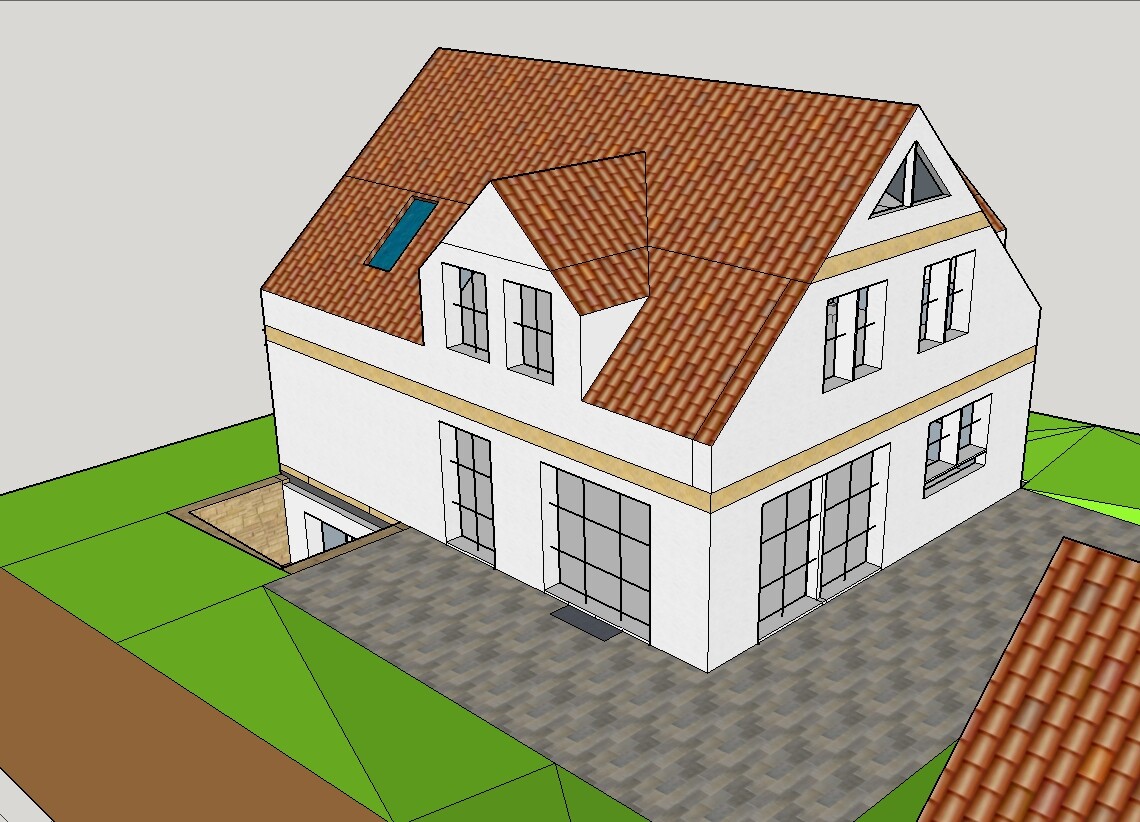
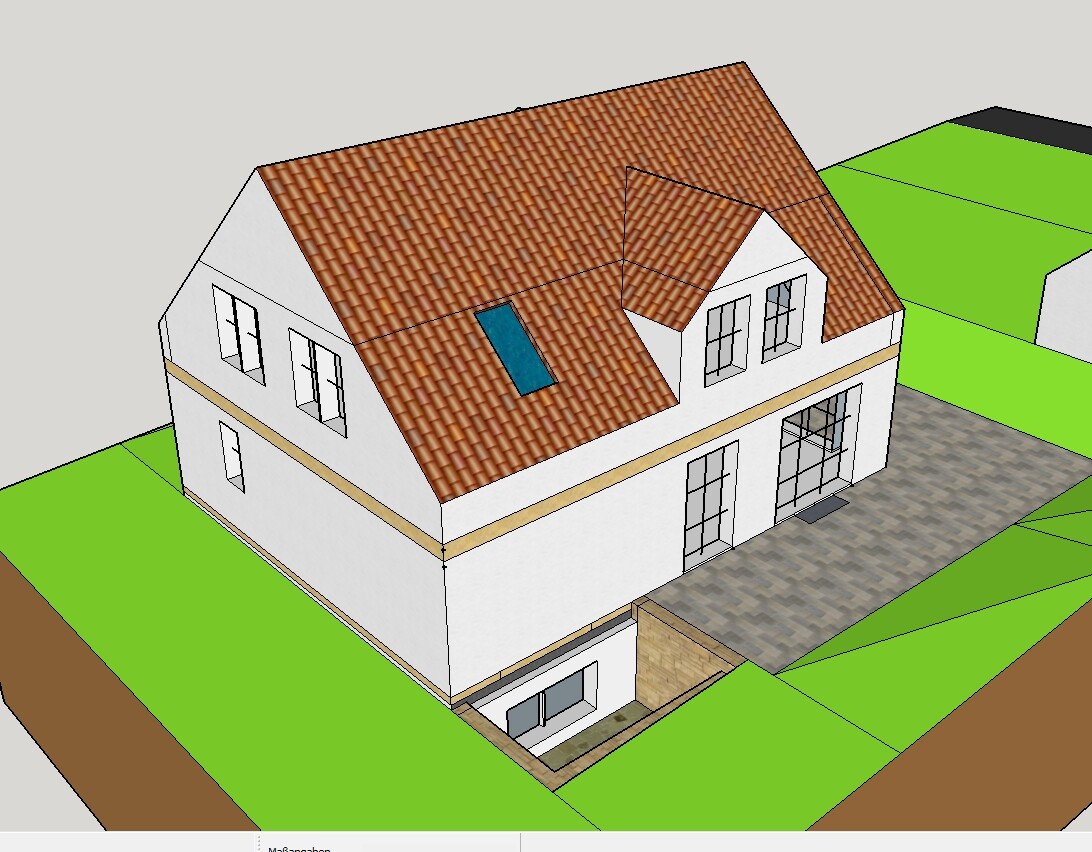
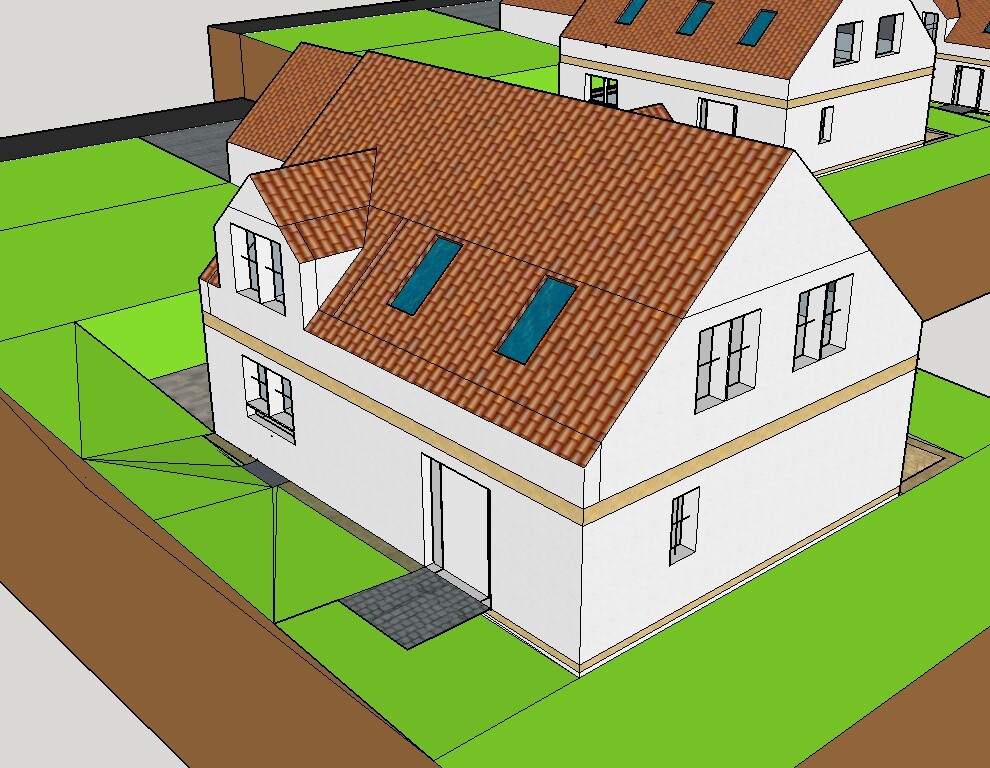
Attached are our own drawings from SketchUp / site plan from the development plan
Our plot is number [9]
Note: Unfortunately, windows are missing on the upper floor. There are planned windows on the gable ends sized 150 x 138cm (59 x 54 in), dormer windows each approx. 200 x 138cm (79 x 54 in), and in the stairwell, master bedroom, and bathroom an additional double casement window sized 78 x 160cm (31 x 63 in)
Plot size: 606m² (6519 sq ft)
Slope: slight north-facing slope (3m (10 ft) over 34m (112 ft) length)
House: south-north = 1m (3 ft) height difference
Site occupancy index: 0.35 (212m² (2282 sq ft))
Floor area ratio: 0.40 (242m² (2605 sq ft))
Building envelope: marked in blue (approx. 11.8 x 14.5m (39 x 48 ft))
Boundary construction allowed: no
Parking spaces: 2
Number of floors: two full stories: ground floor + upper floor
Roof type: 38–42° (degrees) gable roof
Architectural style: traditional
Ridge orientation: south-north
Maximum heights / limits: northern eave-side wall height above natural ground level: 3.80m (12 ft 6 in)
Additional requirements: knee wall height from top of raw floor slab to bottom of wall plate 0.50m (70cm / 1 ft 8 in approx. inside)
Client Requirements
Style, roof shape, building type: all according to development plan
Basement, floors: basement + ground floor + upper floor
Number of occupants, ages: 28 (female), 30 (male), plus at least 1 planned child
Space needs in basement: hobby room, utility room, pantry/storage, sauna planned later
Space needs on ground floor: living room, dining + kitchen, WC, hallway
Space needs on upper floor: master bedroom, dressing room, child 1 + child 2, hallway, bathroom
Office: home office!
Overnight guests per year: 3 guests at Easter and Christmas
Closed architecture
Conservative construction style
Open kitchen connected to dining room
Number of dining seats: 5
Living room fireplace: wall-mounted ethanol fireplace
Music / stereo wall: yes
Balcony, roof terrace: no
Garage or carport: single or double garage
Utility garden, greenhouse: no
Other: hallway large enough to bring in and temporarily park a stroller, e.g., when it’s raining outside; staircase with 1m (3 ft 3 in) wide steps and easy to walk on (hence double landings); living room at least 4.5m (15 ft) wide; no direct connection between parents’ and children’s bedrooms; stairway not located in entryway dirt area; all interior doors with 985mm (39 in) clear opening; dining room: lift-and-slide door with 3m (10 ft) width
House Design
- Designer: do-it-yourself
- What do you particularly like about it? Why?
Double-landing staircase, kitchen and dining area facing south, circulation area on the north-east side; large glass window in dining room facing garden, G-shaped kitchen, enlargement of children’s rooms with dormer windows; hallway hopefully spacious-looking even though it could be a little wider
- What do you dislike? Why?
No room for a urinal in the ground floor bathroom
Basement not yet well planned, unsure how to properly separate a future sauna room
Personal budget limit for house including equipment: €425,000
- Preferred heating technology: air-to-water heat pump / ground loop collector + mechanical ventilation with heat recovery + underfloor heating
If You Have to Give Up Anything, on which details / features
- Could give up: exposed roof structure
- Cannot give up: shower in ground floor WC; staircase with straight steps; stairway outside the dirt zone; wardrobe
Why is the Design Like It Is?
Lots of reading layout reviews here, input from builder friends; about 100 hours of drawing floor plans
- What makes it especially good or bad in your view?
In our opinion, very efficient use of space in a relatively small house, pleasant hallway layout
What Is the Most Important / Basic Question About the Floor Plan Summarized in 130 Characters?
Is this floor plan practical?
Are there any major issues or deal-breakers we might have overlooked?
Attached are our own drawings from SketchUp / site plan from the development plan
Our plot is number [9]
Note: Unfortunately, windows are missing on the upper floor. There are planned windows on the gable ends sized 150 x 138cm (59 x 54 in), dormer windows each approx. 200 x 138cm (79 x 54 in), and in the stairwell, master bedroom, and bathroom an additional double casement window sized 78 x 160cm (31 x 63 in)
In the gable areas, for example, desks or computer tables can be placed, and it might be possible in one room with the full gable width to position a wardrobe against the now fully usable wall. It would also be possible to put a sofa there, which, due to the sloping roof, would not sit flush against the wall.
For instance, my girlfriend always used to sit on the bed to do her homework. With our sloped ceilings, this would only be possible to a limited extent.
Personally, I prefer planning rooms so that each one has at least two furnishing options.
For instance, my girlfriend always used to sit on the bed to do her homework. With our sloped ceilings, this would only be possible to a limited extent.
Personally, I prefer planning rooms so that each one has at least two furnishing options.

I think you are overestimating the dormers. If you put something inside the dormers, you won’t be able to access their windows anymore. I’m rather skeptical about that; my niece has such dormers in her children's rooms, and you absolutely can’t place anything underneath, in front of, or beside them without blocking something.
The software used is Architect 3D Professional, but I wouldn’t really recommend it.
The software used is Architect 3D Professional, but I wouldn’t really recommend it.

modder schrieb:
We actually want to avoid having a closet in the bedroom as much as possible.Then it would be possible to move the wall between the bedroom and the bathroom in favor of the bathroom if necessary.
I just came across the term "two full stories" in the initial thread about the development plan.
Is it mandatory or optional? The house isn’t a two-story building, as you know yourself.
Also, I’m not sure if your staircase design is very common. Landings change the walking rhythm, which isn’t practical and can even be dangerous. You should definitely get some advice on this, especially when combined with a change of direction.
In the living room, I would place the sofa against the exterior wall and install a floor-to-ceiling window on the north or east side.
In general, I would reconsider the layout of the ground floor if your wife also likes to read in natural sunlight.
Of course, there are other reasons as well. Katja did a nice job with the upper floor [emoji4].
I’m also not very keen on the dormer at the edge of the roof.
One more note about the knee wall: 60/70cm (24/28 inches) isn’t much. You won’t be able to fit a bed with a headboard under there… and the kids won’t have much space to move either if a bed with about 40cm (16 inches) high mattress base is placed there.
From my experience, if the knee wall is under 100cm (39 inches), you usually build out within the interior rooms. This reduces floor and usable space but provides a higher knee wall inside.
There have already been plenty of posts about the bottleneck in the walk-in closet…
Is it mandatory or optional? The house isn’t a two-story building, as you know yourself.
Also, I’m not sure if your staircase design is very common. Landings change the walking rhythm, which isn’t practical and can even be dangerous. You should definitely get some advice on this, especially when combined with a change of direction.
In the living room, I would place the sofa against the exterior wall and install a floor-to-ceiling window on the north or east side.
In general, I would reconsider the layout of the ground floor if your wife also likes to read in natural sunlight.
Of course, there are other reasons as well. Katja did a nice job with the upper floor [emoji4].
I’m also not very keen on the dormer at the edge of the roof.
One more note about the knee wall: 60/70cm (24/28 inches) isn’t much. You won’t be able to fit a bed with a headboard under there… and the kids won’t have much space to move either if a bed with about 40cm (16 inches) high mattress base is placed there.
From my experience, if the knee wall is under 100cm (39 inches), you usually build out within the interior rooms. This reduces floor and usable space but provides a higher knee wall inside.
There have already been plenty of posts about the bottleneck in the walk-in closet…
Similar topics