
N
notmaksen20 Nov 2020 19:58Hello everyone,
The calculated energy demand for one of the houses we are interested in is as follows:
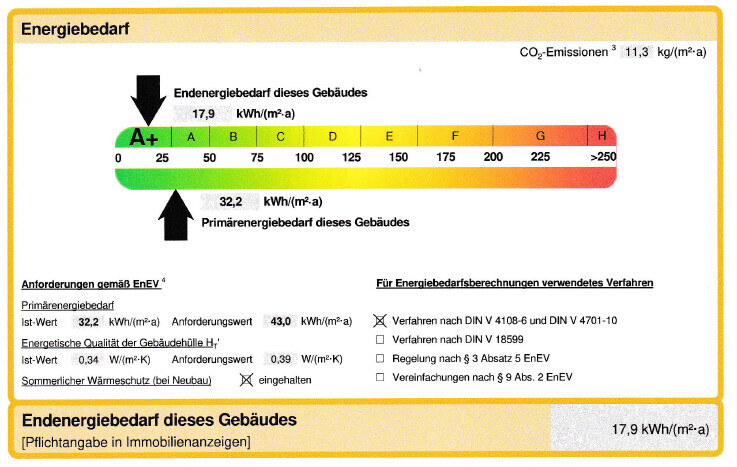
The house is built with Thermoplan S9 bricks, 36.5cm (14 inches) thick, the roof is fully insulated with 30cm (12 inches) of stone wool, and the windows are triple-glazed. I am not aware of any additional insulation measures. Heating is provided by an air-to-water heat pump.
The final energy demand of 17.9 kWh/(m²*a) seems very low to me, given that no additional insulation was applied. Is this achievable with the materials mentioned?
The calculated energy demand for one of the houses we are interested in is as follows:
The house is built with Thermoplan S9 bricks, 36.5cm (14 inches) thick, the roof is fully insulated with 30cm (12 inches) of stone wool, and the windows are triple-glazed. I am not aware of any additional insulation measures. Heating is provided by an air-to-water heat pump.
The final energy demand of 17.9 kWh/(m²*a) seems very low to me, given that no additional insulation was applied. Is this achievable with the materials mentioned?
V
vanny270521 Nov 2020 12:25We originally planned to use insulated brick, which would have given us a final energy demand of 16 kWh/(m²·a) and a primary energy demand of 26 kWh/(m²·a). Now we have chosen Ytong, and according to the energy certificate, the final energy demand is 16 kWh/(m²·a) and the primary energy demand is 28 kWh/(m²·a). All this without additional insulation.
So it is definitely possible and much nicer than having polystyrene on the facade.
So it is definitely possible and much nicer than having polystyrene on the facade.
N
notmaksen21 Nov 2020 17:25@vanny2705: Thanks for the reply. The Thermoplan S9 offers roughly the same insulation performance as a Ytong block of the same thickness. I assume your heating costs are also correspondingly low?
I’m just a bit surprised because this construction method seems much more appealing to me (and many others), yet it’s still relatively rare. So I wonder why it’s not used more often. Are the building costs higher here compared to using insulation?
I’m just a bit surprised because this construction method seems much more appealing to me (and many others), yet it’s still relatively rare. So I wonder why it’s not used more often. Are the building costs higher here compared to using insulation?

V
vanny270521 Nov 2020 18:05I cannot say the heating costs yet, as we will only move in in one week. However, we expect heating costs of around €60-70 (about $65-76) per month.
Yes, this construction method is more expensive. Especially with insulated bricks, everything must always be covered during construction to prevent the insulation from getting wet. That is why we chose the 36.5cm (14.4 inches) Ytong blocks, which allowed us to achieve KfW 55 standard.
Yes, this construction method is more expensive. Especially with insulated bricks, everything must always be covered during construction to prevent the insulation from getting wet. That is why we chose the 36.5cm (14.4 inches) Ytong blocks, which allowed us to achieve KfW 55 standard.
vanny2705 schrieb:
I can’t say the heating costs yet, as we’re moving in only in one week. But we expect around 60-70 € per month for heating.
Yes, this construction method is more expensive, especially with insulated bricks, since during construction everything must always be covered to prevent the insulation from getting wet. That’s why we chose the 36.5 cm (14.4 inches) Ytong blocks, and with those we even achieved KfW 55 standard. Most people still build with non-insulated bricks. Ytong offers worst-case sound insulation.
Similar topics