
ᐅ Insect infestation in the roof structure / attic framing
Created on: 16 Jan 2019 12:49
4
4k2ml32343m34
4k2ml32343m316 Jan 2019 12:49Hello,
my house, currently in the shell construction phase, received a pine rafters roof truss. The roof is not yet covered, but the underlay membrane is installed.
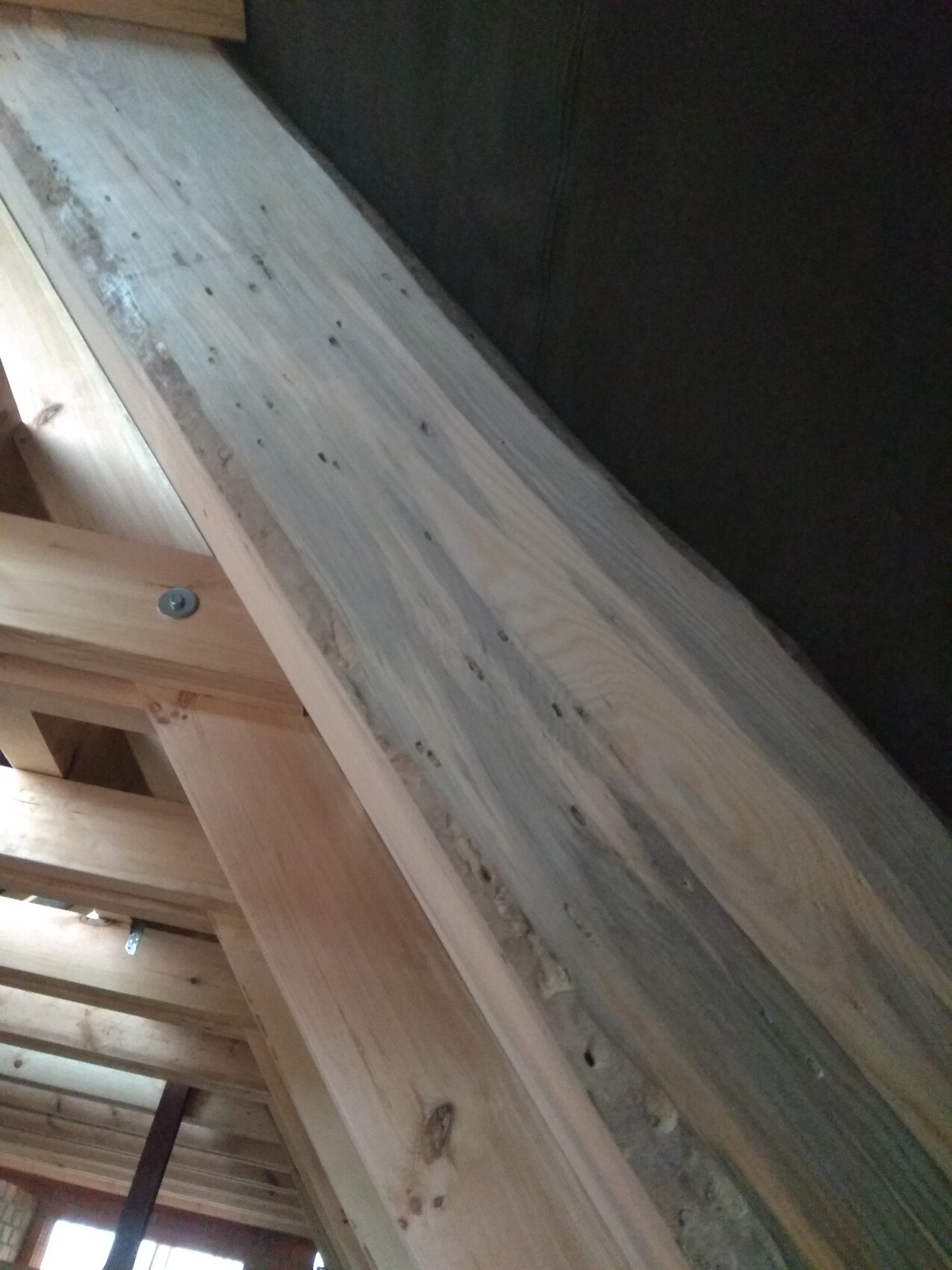
Upon inspection, I noticed that the rafters and collar beam layer are affected by blue stain. Some rafters, in my opinion, show significant infestation with larval feeding tunnels. The construction company refuses to acknowledge this. According to DIN 4074-1, feeding tunnels up to 2mm (0.08 inches) in diameter are allowed. However, the holes are oval, about 5mm (0.2 inches) wide and just under 2mm (0.08 inches) high. The construction company argued that my measurements are incorrect. They say you must measure across as if it were a circle, so the DIN standard is met. Furthermore, they referred to a note in the DIN stating that feeding tunnels up to 5mm (0.2 inches) in diameter do not affect the wood’s strength. I did verify that this note is there, but not in the table with the grading classification (S10 not visible).
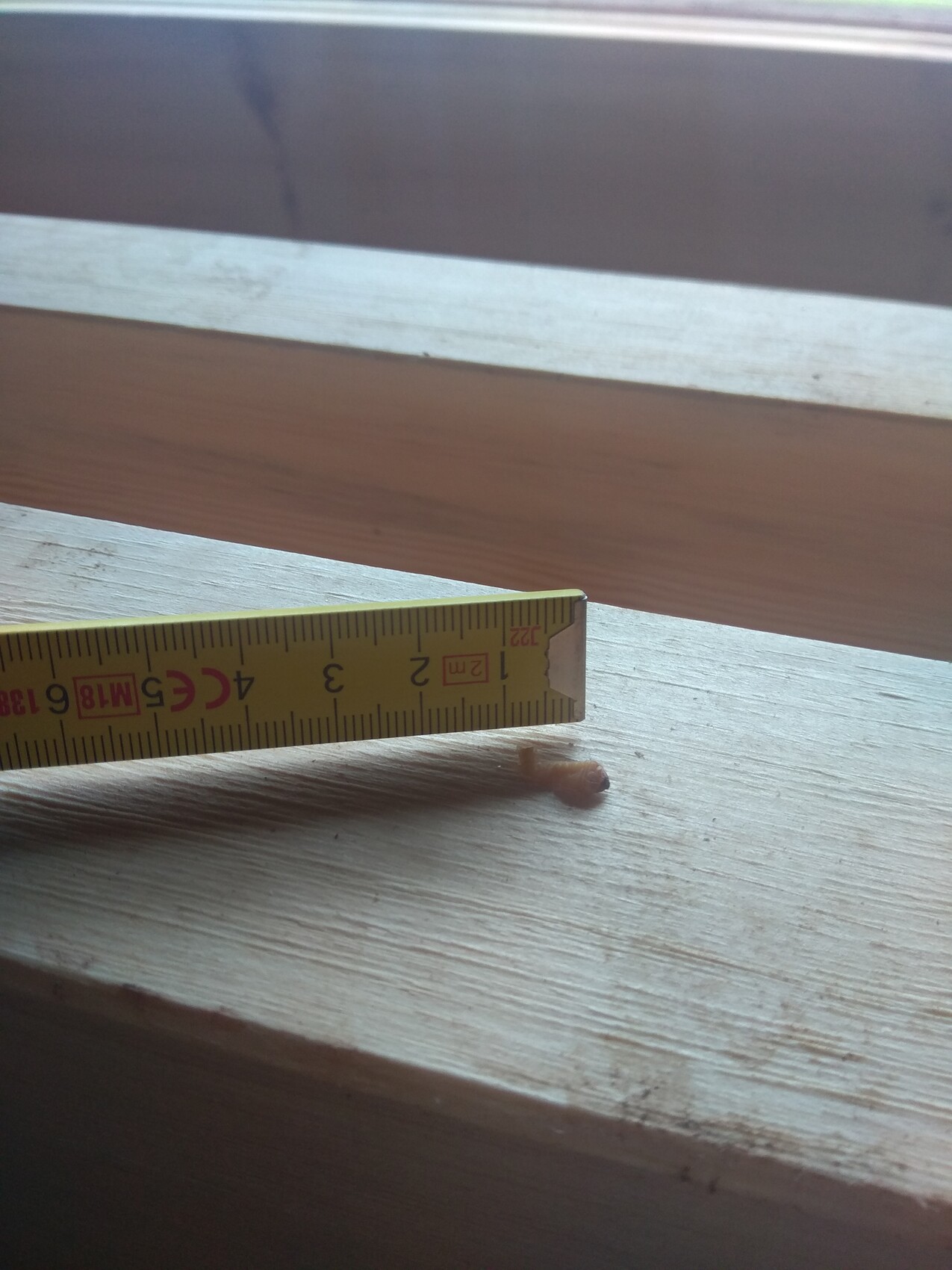
Additionally, I found a larva inside the wood. It still seems fairly fresh and definitely not killed by kiln drying.
A wood protection expert suspects house longhorn beetle, a dry wood insect. The construction company claims it is a fresh wood insect, such as the timberman beetle (Rhagium), but since the wood was dried, there is no risk.
Do you have any advice? Especially regarding the measurement method of the 2mm (0.08 inches) limit. The bill for the roof truss has not been paid yet.

my house, currently in the shell construction phase, received a pine rafters roof truss. The roof is not yet covered, but the underlay membrane is installed.
Upon inspection, I noticed that the rafters and collar beam layer are affected by blue stain. Some rafters, in my opinion, show significant infestation with larval feeding tunnels. The construction company refuses to acknowledge this. According to DIN 4074-1, feeding tunnels up to 2mm (0.08 inches) in diameter are allowed. However, the holes are oval, about 5mm (0.2 inches) wide and just under 2mm (0.08 inches) high. The construction company argued that my measurements are incorrect. They say you must measure across as if it were a circle, so the DIN standard is met. Furthermore, they referred to a note in the DIN stating that feeding tunnels up to 5mm (0.2 inches) in diameter do not affect the wood’s strength. I did verify that this note is there, but not in the table with the grading classification (S10 not visible).
Additionally, I found a larva inside the wood. It still seems fairly fresh and definitely not killed by kiln drying.
A wood protection expert suspects house longhorn beetle, a dry wood insect. The construction company claims it is a fresh wood insect, such as the timberman beetle (Rhagium), but since the wood was dried, there is no risk.
Do you have any advice? Especially regarding the measurement method of the 2mm (0.08 inches) limit. The bill for the roof truss has not been paid yet.
Similar topics