
ᐅ Request for Feedback on Lighting Design for Single-Family Home
Created on: 16 Apr 2018 13:42
D
Don_Mikele87D
Don_Mikele8716 Apr 2018 13:42Hello everyone,
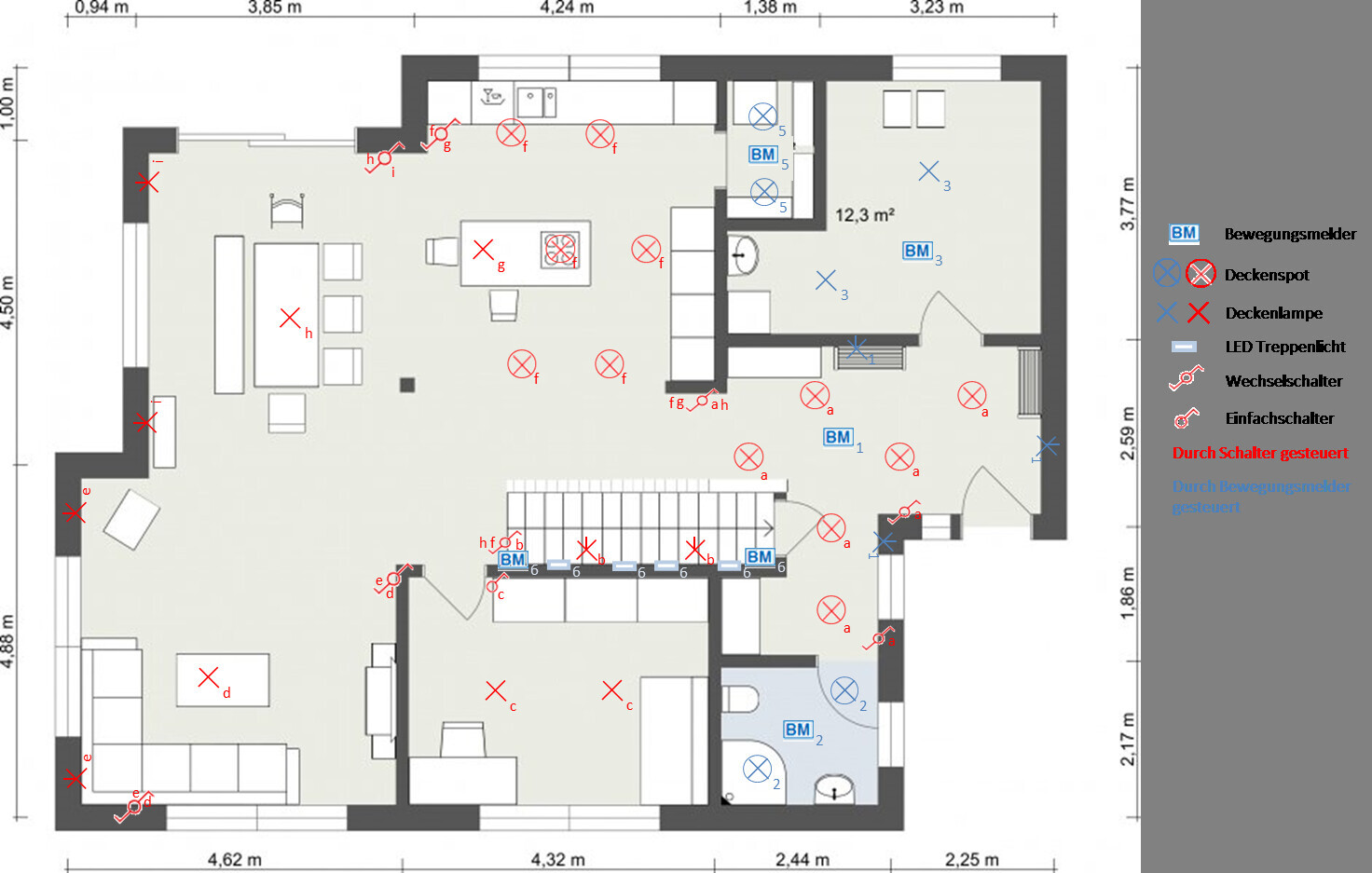
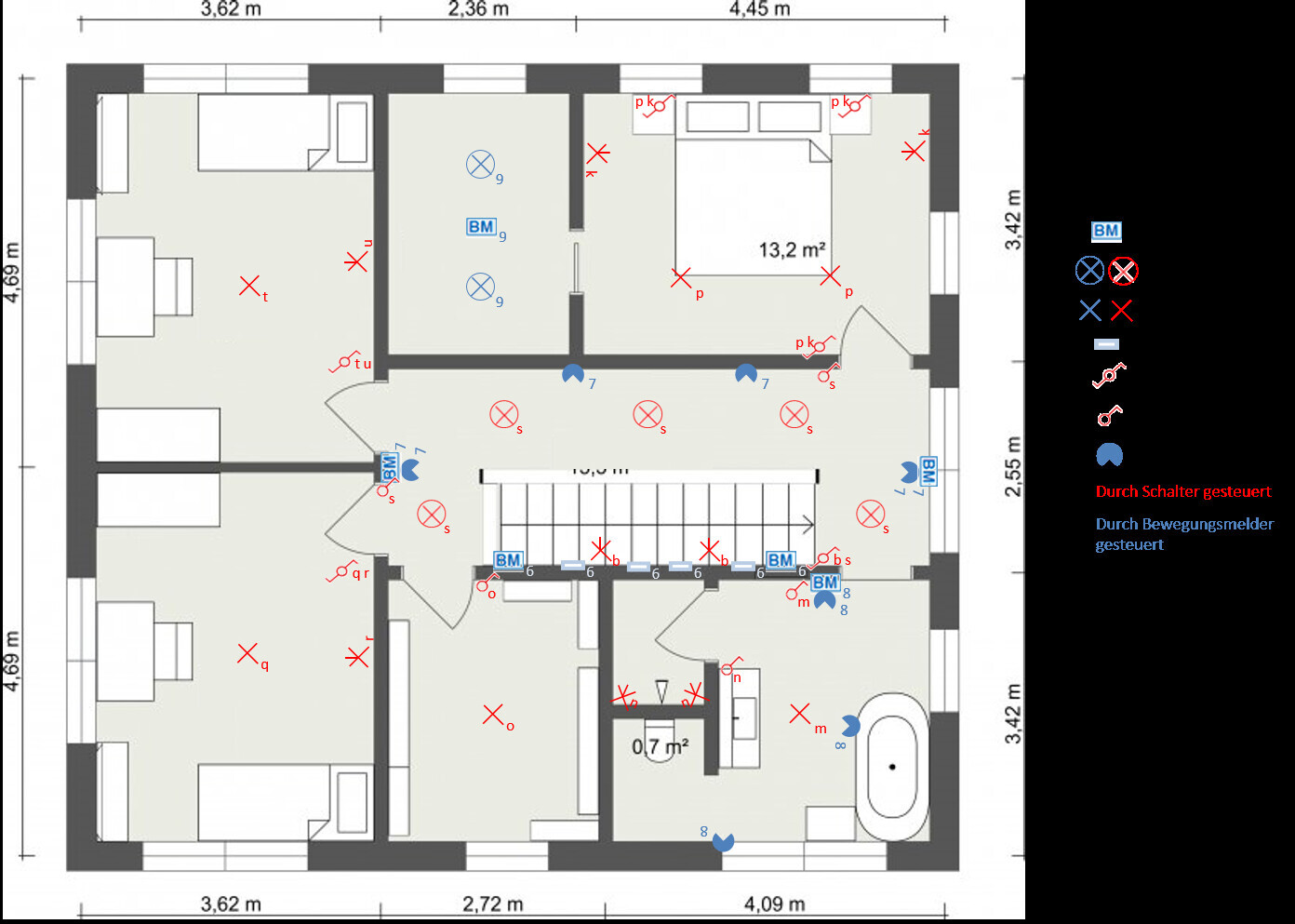
We are currently working on the electrical planning for our single-family home. The main focus right now is on the lighting design. We already have plans for the network and power outlets, but those will be addressed separately later.
Like most here, this is our first time doing such detailed lighting planning. We have checked out many examples in person, done a lot of reading and research, and after several adjustments and a few months of work, the plan below has been developed.
I would really appreciate your feedback – I’m sure that despite the thorough planning, there are valuable suggestions and ideas to be gained here. I’m particularly not yet 100% satisfied with the entrance area and the kitchen.
Before we get into the details, a small request from me: please do not comment on the floor plan or the overall layout – that is fixed and will remain exactly as it is.
About the house:
- Single-family house with 2 floors and no basement
- Approx. 183 sqm (1,970 sq ft) total living area
- Timber frame construction
Ceiling height on ground floor:
In the entrance area 2.4 m (7 ft 10 in) (hallway, bathroom, technical room – height lowers at the passage to kitchen/living room)
Rest of ground floor 2.5 m (8 ft 2 in)
Ceiling height on upper floor:
2.5 m (8 ft 2 in) in the hallway (dropped ceiling due to attic)
Rest of upper floor: knee wall at outer walls about 1.85 m (6 ft 1 in)
Roof slope runs from there to the hallway interior wall, reaching about 3.8 m (12 ft 6 in) in height
Other notes
- Under the stairs on the ground floor is a storage room, which will also have a light source, but for clarity I have left it out on the plan here.
- The LED stair lights will be “strips” on every 2nd or 3rd step, but for simplicity this is not shown exactly like that here.
- The T-wall in the upstairs bathroom is only about 2.3 m (7 ft 7 in) high; the rest above is open so light can reach the shower and WC area as well.
- Our (visual) aim is to have no more than 3 switches (up to 6 individual circuits) grouped in one place. In addition to lighting, there will sometimes be switches for exterior power and electric blinds, so for example at the terrace door and just around the corner to the right, each switch will have “only” 2 circuits assigned.
I hope I have thought of everything.
Thanks in advance for your feedback
Best regards
Michael
We are currently working on the electrical planning for our single-family home. The main focus right now is on the lighting design. We already have plans for the network and power outlets, but those will be addressed separately later.
Like most here, this is our first time doing such detailed lighting planning. We have checked out many examples in person, done a lot of reading and research, and after several adjustments and a few months of work, the plan below has been developed.
I would really appreciate your feedback – I’m sure that despite the thorough planning, there are valuable suggestions and ideas to be gained here. I’m particularly not yet 100% satisfied with the entrance area and the kitchen.
Before we get into the details, a small request from me: please do not comment on the floor plan or the overall layout – that is fixed and will remain exactly as it is.
About the house:
- Single-family house with 2 floors and no basement
- Approx. 183 sqm (1,970 sq ft) total living area
- Timber frame construction
Ceiling height on ground floor:
In the entrance area 2.4 m (7 ft 10 in) (hallway, bathroom, technical room – height lowers at the passage to kitchen/living room)
Rest of ground floor 2.5 m (8 ft 2 in)
Ceiling height on upper floor:
2.5 m (8 ft 2 in) in the hallway (dropped ceiling due to attic)
Rest of upper floor: knee wall at outer walls about 1.85 m (6 ft 1 in)
Roof slope runs from there to the hallway interior wall, reaching about 3.8 m (12 ft 6 in) in height
Other notes
- Under the stairs on the ground floor is a storage room, which will also have a light source, but for clarity I have left it out on the plan here.
- The LED stair lights will be “strips” on every 2nd or 3rd step, but for simplicity this is not shown exactly like that here.
- The T-wall in the upstairs bathroom is only about 2.3 m (7 ft 7 in) high; the rest above is open so light can reach the shower and WC area as well.
- Our (visual) aim is to have no more than 3 switches (up to 6 individual circuits) grouped in one place. In addition to lighting, there will sometimes be switches for exterior power and electric blinds, so for example at the terrace door and just around the corner to the right, each switch will have “only” 2 circuits assigned.
I hope I have thought of everything.
Thanks in advance for your feedback
Best regards
Michael
D
Don_Mikele8716 Apr 2018 15:13A brief addition from my side: the plans are not to scale, but the dimensions shown on the sides are accurate. Unfortunately, it wasn’t possible to do otherwise in the presentation, as I adjusted the floor plan alongside the architect from the beginning using an online planner and based the electrical planning on that.
Regarding the kitchen... ceiling spotlights above the countertop by the window should be positioned closer to the wall; otherwise, the person working will cast shadows on the countertop. Also, only 2 spotlights for 4 m (13 feet) seems a bit sparse.
For the kitchen, I would also consider a "cozy ambient" lighting setup, for example, when sitting at the dining table and only wanting some light in the kitchen.
For the kitchen, I would also consider a "cozy ambient" lighting setup, for example, when sitting at the dining table and only wanting some light in the kitchen.
D
Deliverer16 Apr 2018 15:31kbt09 schrieb:
Regarding the kitchen... ceiling spotlights above the countertop area by the window should be positioned closer to the wall...But only slightly. They are placed exactly on the edge of the countertop.
Have you ever thought about which light fixture you want to hang above the living room table?
Also, in the bedroom, what about the two lighting outlets at the lower corners of the bed? What should go there?
Bathroom – the same issue... no mirror lighting and what do you want to hang from the ceiling there? The person standing at the washbasin has shadows on their face from the ceiling light...
I would carefully consider WHICH lights you like and what you want to achieve with them. Then I can think about where the wiring should go. It seems this wasn’t done here.
Sometimes I feel the "planning" always focuses only on spotlights, and for all other locations, no one knows what to do. So, they just "install a cable there for now."
Also, plan enough power outlets – possibly switchable ones – for cozy lighting. Floor lamps, small table lamps. When sitting comfortably watching TV, you don’t want the light above the living room table on, do you? (Although I have never understood the purpose of a light fixture in that spot...)
I would also reconsider the motion sensors. For example, in the walk-in closet next to the bedroom. If you don’t want to disturb others, the light will always turn on (regardless of the fact that a closed dressing room is inconvenient anyway, but the floor plan is not to be discussed here ).
Try walking through your daily routine. When do you want what kind of lighting...
Also, in the bedroom, what about the two lighting outlets at the lower corners of the bed? What should go there?
Bathroom – the same issue... no mirror lighting and what do you want to hang from the ceiling there? The person standing at the washbasin has shadows on their face from the ceiling light...
I would carefully consider WHICH lights you like and what you want to achieve with them. Then I can think about where the wiring should go. It seems this wasn’t done here.
Sometimes I feel the "planning" always focuses only on spotlights, and for all other locations, no one knows what to do. So, they just "install a cable there for now."
Also, plan enough power outlets – possibly switchable ones – for cozy lighting. Floor lamps, small table lamps. When sitting comfortably watching TV, you don’t want the light above the living room table on, do you? (Although I have never understood the purpose of a light fixture in that spot...)
I would also reconsider the motion sensors. For example, in the walk-in closet next to the bedroom. If you don’t want to disturb others, the light will always turn on (regardless of the fact that a closed dressing room is inconvenient anyway, but the floor plan is not to be discussed here ).
Try walking through your daily routine. When do you want what kind of lighting...
D
Don_Mikele8716 Apr 2018 16:10Wickie schrieb:
Have you thought about which light fixture you want to hang above the living room table? Yes, we have. It will be a rectangular, not too deep pendant lamp made of concrete.
Wickie schrieb:
Also in the bedroom, the two light outlets at the lower corners of the bed? What do you plan to hang there? Either pendant lights or globe lamps – possibly just one spotlight; we are still undecided about that.
Wickie schrieb:
Bathroom – exactly the same... no mirror lighting, and what do you want to hang from the ceiling there? The person standing at the washbasin has shadows on their face caused by the ceiling light... In the bathroom, there will also be either one or a second pendant light. The mirror cabinet will have an integrated light, which I haven’t included here because it will be connected via a power outlet. But overall, we have taken that into consideration.
Wickie schrieb:
I would carefully consider WHICH lights you like and what you want to achieve with them. Then I could think about where the cables should go. It seems this hasn’t happened here. Sometimes I think the “planning” only focuses on recessed spots, and for all other places, there’s no clear idea. Then, you just “put a cable there” for now. And you come to that conclusion based on your three questions above? We actually know which lamp (or at least which type – pendant, hanging, track, etc.) will be used in almost every case.
Wickie schrieb:
Also, plan enough power outlets – possibly some switchable ones – for cozy lighting. Floor lamps, small table lamps. You don’t want to have the light above the living room table on when you’re relaxing and watching TV, do you? (Although I have never really understood the point of having a light there...) If you look closely, you’ll see that in all relevant rooms there are wall lights for indirect lighting to create a cozy atmosphere, plus indirect LED backlighting behind the TV in the living room, and a floor lamp in the living/dining area. Outlet planning is being done separately as mentioned earlier – there will definitely be enough.
Wickie schrieb:
Also, I would reconsider the motion sensors. For example, in the dressing room next to the bedroom. If you don’t want to disturb others in the bedroom, the light will always come on anyway (not to mention that having an enclosed dressing room is disturbing in itself, but the floor plan isn’t up for discussion ) You’re definitely right about the dressing room; my better half also criticizes this. For the hallway on the ground floor, it’s designed so that when you enter, the indirect wall lights turn on – the spotlights only come on if you want more festive lighting.
Thanks for your feedback!
Similar topics