
Hello everyone, how should a new ventilated facade with 20 cm (wood fiber, fiber cement panels) be connected to the existing cold roof (hip roof, 11-degree pitch, ventilated) without thermal bridges? I am concerned that the knee wall remains uninsulated, which could lead to mold in the inhabited ground floor below. Is it necessary to remove the eaves? The attic/floor of the old building (1970) was insulated from the inside and is not inhabited (storage room).
Thank you
Thank you
Till, many thanks for the suggestion. The effort seems proportional, and we will discuss it with the carpenter.
I did not intend to generalize about energy consultants as a profession. However, my experience with previous energy consultants and construction managers has been quite negative. The hourly rate here in Switzerland is 130 CHF, so I would expect a pragmatic approach rather than statements like photovoltaic systems are not worth it and it’s better to replace the entire roof instead. A new car is always the best option, but thankfully most of us drive a used one. Perhaps this is due to my poor initial selection and lack of experience. Ultimately, with the consulting fees, I could have at least paid for the formwork work.
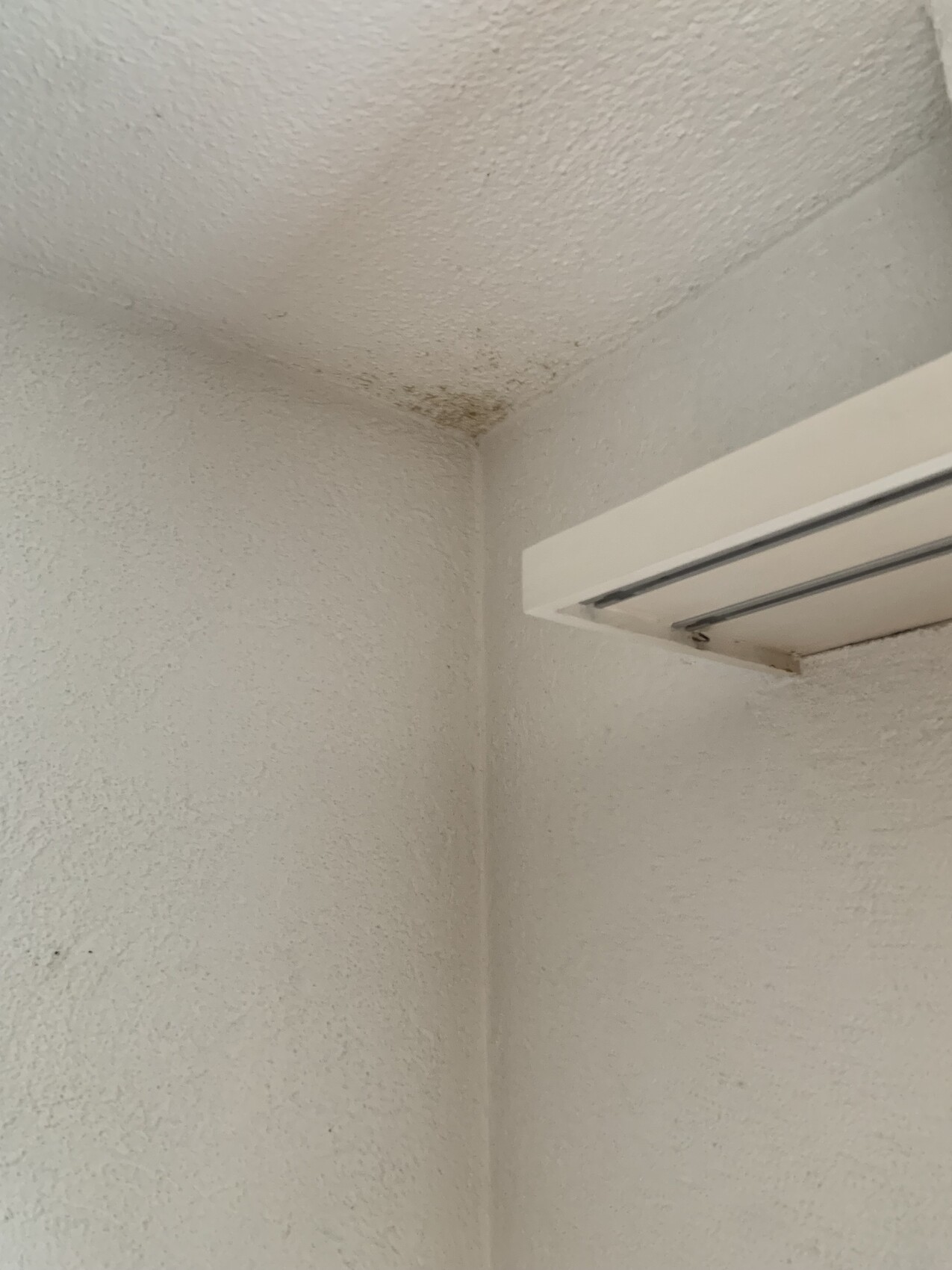
I will borrow a thermal imaging camera and check how it looks at -5/-10 degrees Celsius (23/14 degrees Fahrenheit) outside temperature in the corners of the rooms on the ground floor, as the previous owner had mold issues there and this should be avoided in the future.
I did not intend to generalize about energy consultants as a profession. However, my experience with previous energy consultants and construction managers has been quite negative. The hourly rate here in Switzerland is 130 CHF, so I would expect a pragmatic approach rather than statements like photovoltaic systems are not worth it and it’s better to replace the entire roof instead. A new car is always the best option, but thankfully most of us drive a used one. Perhaps this is due to my poor initial selection and lack of experience. Ultimately, with the consulting fees, I could have at least paid for the formwork work.
I will borrow a thermal imaging camera and check how it looks at -5/-10 degrees Celsius (23/14 degrees Fahrenheit) outside temperature in the corners of the rooms on the ground floor, as the previous owner had mold issues there and this should be avoided in the future.
W
WilderSueden4 Jan 2023 09:13I don’t think 130 Swiss francs is overpriced. My expert here in Germany charges 150 euros, and the salary levels and cost of living are a bit different here. Of course, the quality has to be right 😉
You can properly solve the corner issue only by insulating it from the outside. Alternatively, you can heat the area from the inside to prevent moisture from condensing. With older buildings, the walls are cold, so at a certain temperature (look up dew point calculators), the humidity in the air condenses on the walls. Corners are double thermal bridges and also poorly ventilated.
You can properly solve the corner issue only by insulating it from the outside. Alternatively, you can heat the area from the inside to prevent moisture from condensing. With older buildings, the walls are cold, so at a certain temperature (look up dew point calculators), the humidity in the air condenses on the walls. Corners are double thermal bridges and also poorly ventilated.

dertill schrieb:
As far as I know, the requirements have also increased here recently. Unfortunately not. There are still TÜV courses with a final exam and certification for the "alternative access route."
Cost: 3400 EUR and a few weeks (I think four or five).
You don’t need a specialized degree for this; for example, someone with a business degree can participate.
However, there are currently no scheduled dates for the seminar...
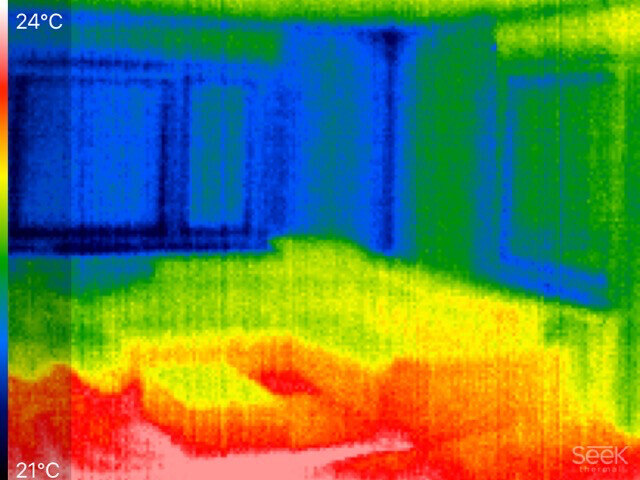
Yesterday, a "consultant" came with a thermal imaging camera, a FLIR attachment costing about 200 euros (around $220), which seems to work reasonably well. I think I’ll get one myself. All thermal bridges were confirmed, with temperature differences in the room ranging from 16°C to 19°C (61°F to 66°F) – 19°C (66°F) closer to the underfloor heating, 16°C (61°F) near the thermal bridges. What really surprised me was the expert’s recommendation not to renovate the façade at all, but to consider thermal heating strips instead. The reasoning was that in an old building like this, you can’t fully seal everything anyway, so you’re just shifting the problems. Many experts, many opinions; I can’t simply add heating to the walls later.
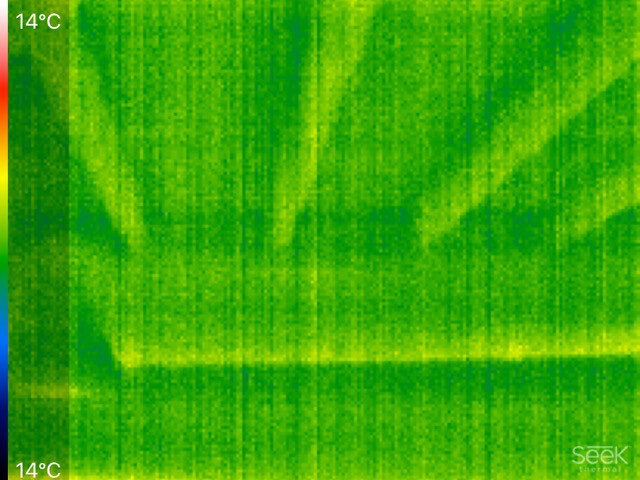
What was useful to know is that the triple-glazed windows were probably installed with expanding foam about 15 years ago. The reveals are therefore problematic, so we need to plan carefully. The expert recommended waiting and replacing all the windows at once, which is also quite a challenging suggestion in terms of implementation. He advised leaving the roof as it is and not opening the cornices. But I can’t fully trust his comments, since he didn’t inspect behind the cornices. On the thermal images, there were no significant temperature transitions visible from the kneewall to the ceiling.
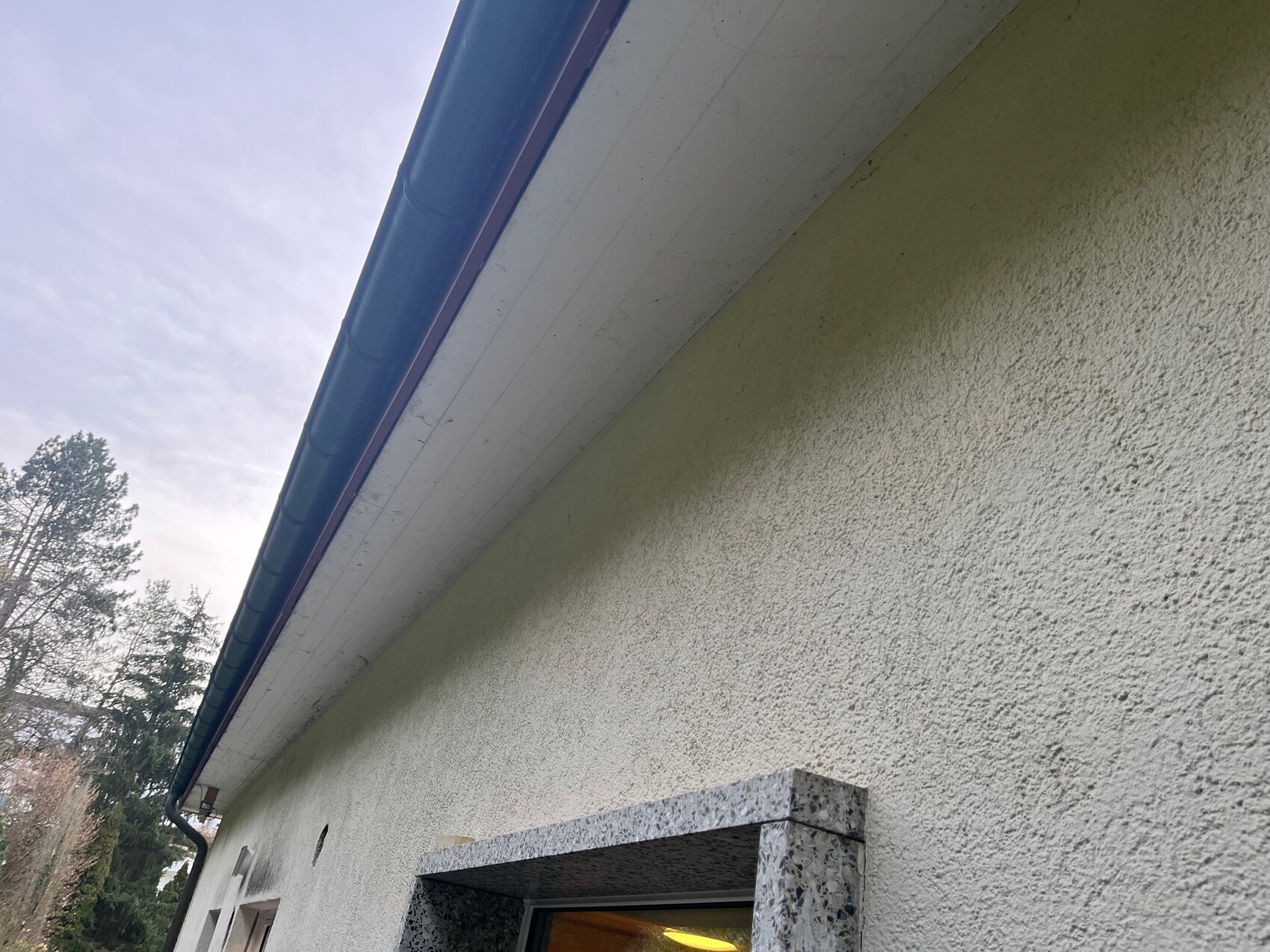
Attached is a photo of the roof and kneewall... it looks quite “homogeneous.”
And the windows from the outside

and inside
Regarding the windows, I’m not sure if it’s only the reveals (which currently have no insulation) or also the building fabric around the frame (cement, probably expanding foam). Since we only planned to install aluminum blinds on 5 out of 11 windows, I’m wondering if roller shutters wouldn’t be better, as they would provide some insulation at night at least. I can’t understand or accept the suggestion from the fourth, somewhat amusing consultant to postpone the façade renovation for 10 years and then replace all windows (the current ones are triple-glazed). Until then, I’m supposed to work with heating strips.
I looked into the heating strips and don’t see any way to connect them to the underfloor heating circuit retrofit without tearing up the floor, especially since I want to lower my supply temperature later rather than increase it to 35°C (95°F). With electric heating strips, the electricity consumption likely wouldn’t be proportional, and new wiring would be required. Recommendations like this really frustrate me—impractical, unfeasible, and then the comment: “You should have involved me from the start of the renovation.”
What was useful to know is that the triple-glazed windows were probably installed with expanding foam about 15 years ago. The reveals are therefore problematic, so we need to plan carefully. The expert recommended waiting and replacing all the windows at once, which is also quite a challenging suggestion in terms of implementation. He advised leaving the roof as it is and not opening the cornices. But I can’t fully trust his comments, since he didn’t inspect behind the cornices. On the thermal images, there were no significant temperature transitions visible from the kneewall to the ceiling.
Attached is a photo of the roof and kneewall... it looks quite “homogeneous.”
And the windows from the outside
and inside
Regarding the windows, I’m not sure if it’s only the reveals (which currently have no insulation) or also the building fabric around the frame (cement, probably expanding foam). Since we only planned to install aluminum blinds on 5 out of 11 windows, I’m wondering if roller shutters wouldn’t be better, as they would provide some insulation at night at least. I can’t understand or accept the suggestion from the fourth, somewhat amusing consultant to postpone the façade renovation for 10 years and then replace all windows (the current ones are triple-glazed). Until then, I’m supposed to work with heating strips.
I looked into the heating strips and don’t see any way to connect them to the underfloor heating circuit retrofit without tearing up the floor, especially since I want to lower my supply temperature later rather than increase it to 35°C (95°F). With electric heating strips, the electricity consumption likely wouldn’t be proportional, and new wiring would be required. Recommendations like this really frustrate me—impractical, unfeasible, and then the comment: “You should have involved me from the start of the renovation.”
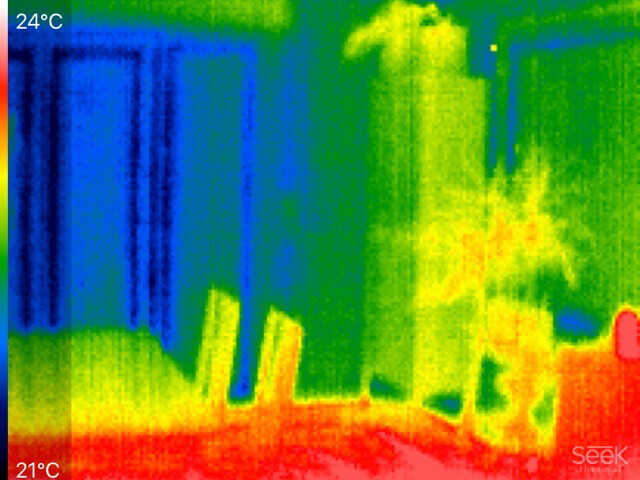
In the meantime, the VHF blown-in facade (wood wool) is complete. Today, I borrowed a Flir One Pro thermal camera attachment. When analyzing and comparing with the older images (unfortunately not taken with a Flir but with a Seek camera) – see above – I’m having some difficulties. Since the facade looks uniformly on the thermal images from the outside, I assume the insulation blowing was done well. What I don’t understand, however, is that when taking images from the inside, for example in the living room, the geometric thermal bridges appear again. There is a temperature difference between 16-17°C (61-63°F) and 21°C (70°F). The windows are clear, but I did not expect the dark blue stripes at the wall junctions given a U-value below 0.2.

Good uniformity of the exterior facade... The reveals, front door, and canopy connections are, as expected, not perfectly insulated.
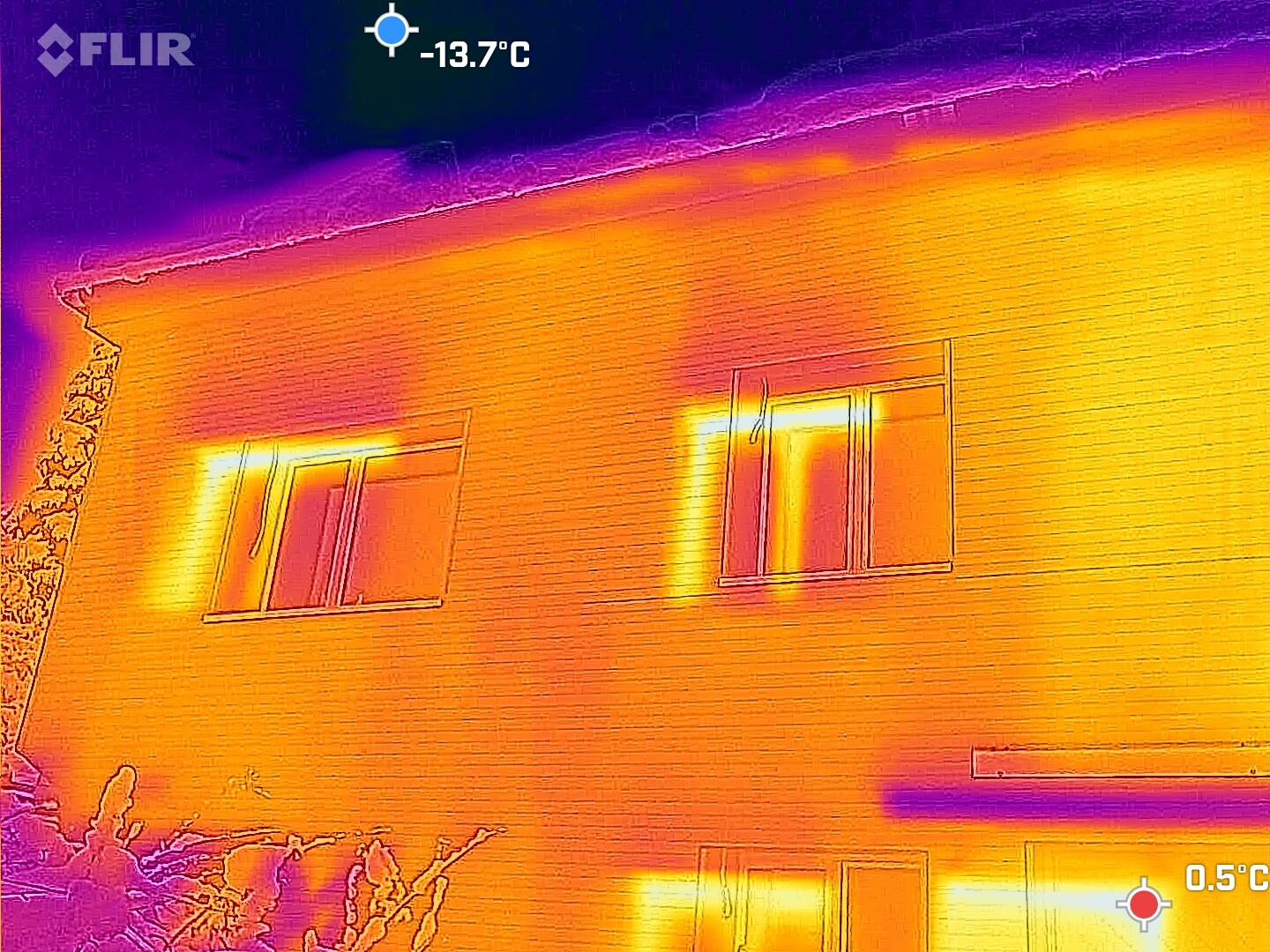
The camera didn’t really convince me (the images are misaligned) and it showed outside spots with -14°C (7°F), although according to the thermometer it was only -8°C (18°F). I probably can’t operate professional thermal cameras, nor have I found any available for borrowing.
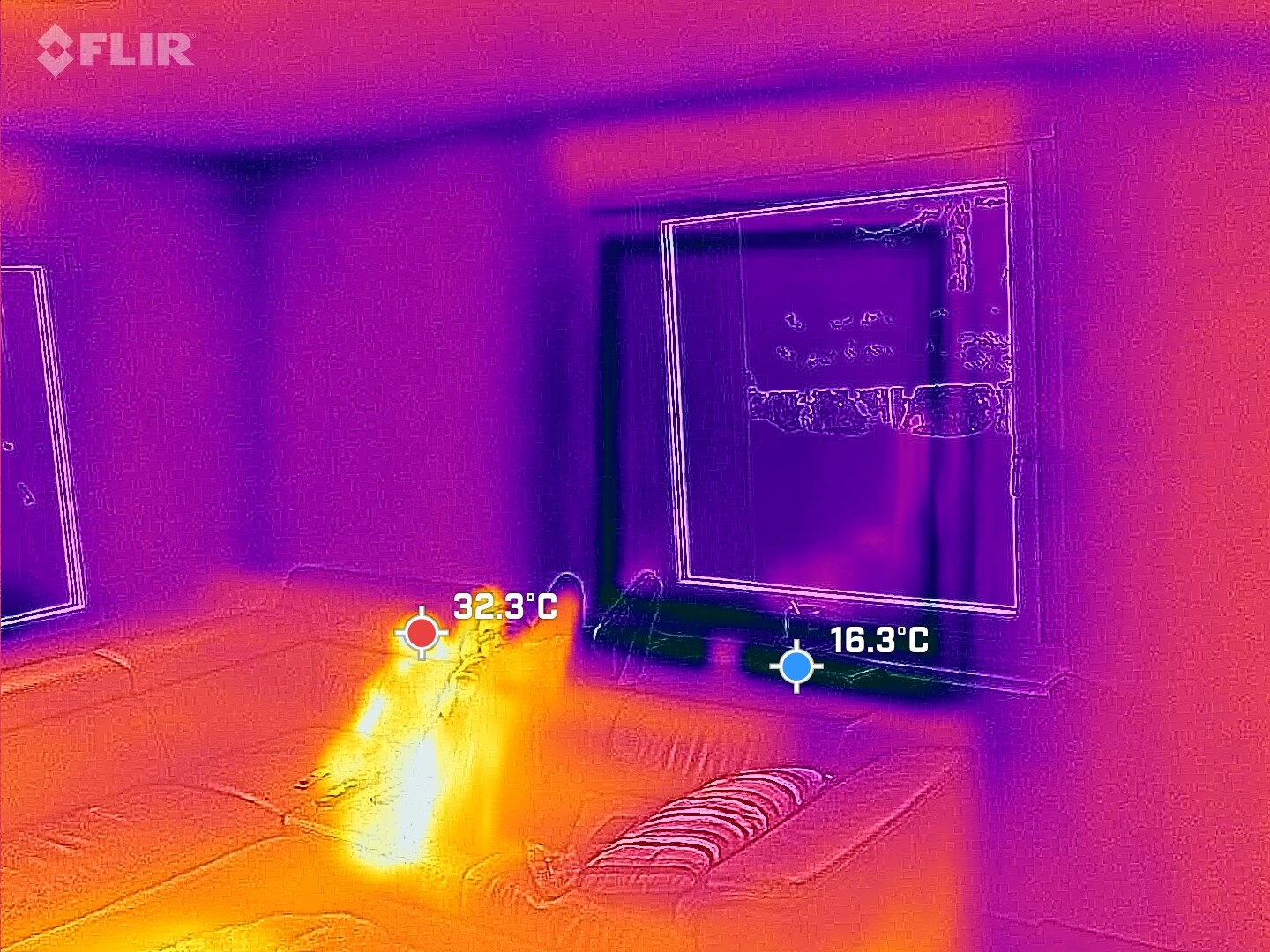
Good uniformity of the exterior facade... The reveals, front door, and canopy connections are, as expected, not perfectly insulated.
The camera didn’t really convince me (the images are misaligned) and it showed outside spots with -14°C (7°F), although according to the thermometer it was only -8°C (18°F). I probably can’t operate professional thermal cameras, nor have I found any available for borrowing.
paulch7 schrieb:
Since the facade looks uniform from the outside in the thermal images, I assume the insulation injection worked well. What I don’t understand is that when I take images from the inside, for example in the living room, the geometric thermal bridges appear again. With a ventilated facade system, it is difficult to tell from the outside with a thermal camera whether the cavity was completely filled. Because of the ventilation, you have a cold facade with an evenly distributed temperature.
Only at the non-ventilated reveals can faults and leaks be detected there.
Did you measure 16.3°C (61.3°F) as the lowest temperature inside with an outdoor temperature of -8°C (17.6°F)? That is actually a reasonable and not unexpected value.
In insulation planning, there is the concept of "minimum thermal protection according to DIN 4108." This must be met everywhere, including thermal bridges, to keep the risk of condensation and mold growth low. For this, at every location, the surface temperature must reach at least 12.6°C (54.7°F) at the standard outdoor temperature (-8° to -15°C (17.6° to 5°F), depending on the region—you can check the exact value for your area). That should be the case for you.
If your windows were installed using only expanding foam without an inner airtight layer and you notice slight drafts at the frame-to-window transition or at the window sill, you might want to do some additional sealing work there.
I don’t own a FLIR camera myself, but a few years ago I used one as an iPhone attachment. If I remember correctly, you can calibrate the offset between the thermal image and the photo to prevent misalignment like that.
Similar topics