
Hello everyone,
We have a newly built house and later noticed with regret that our facade is slightly uneven:
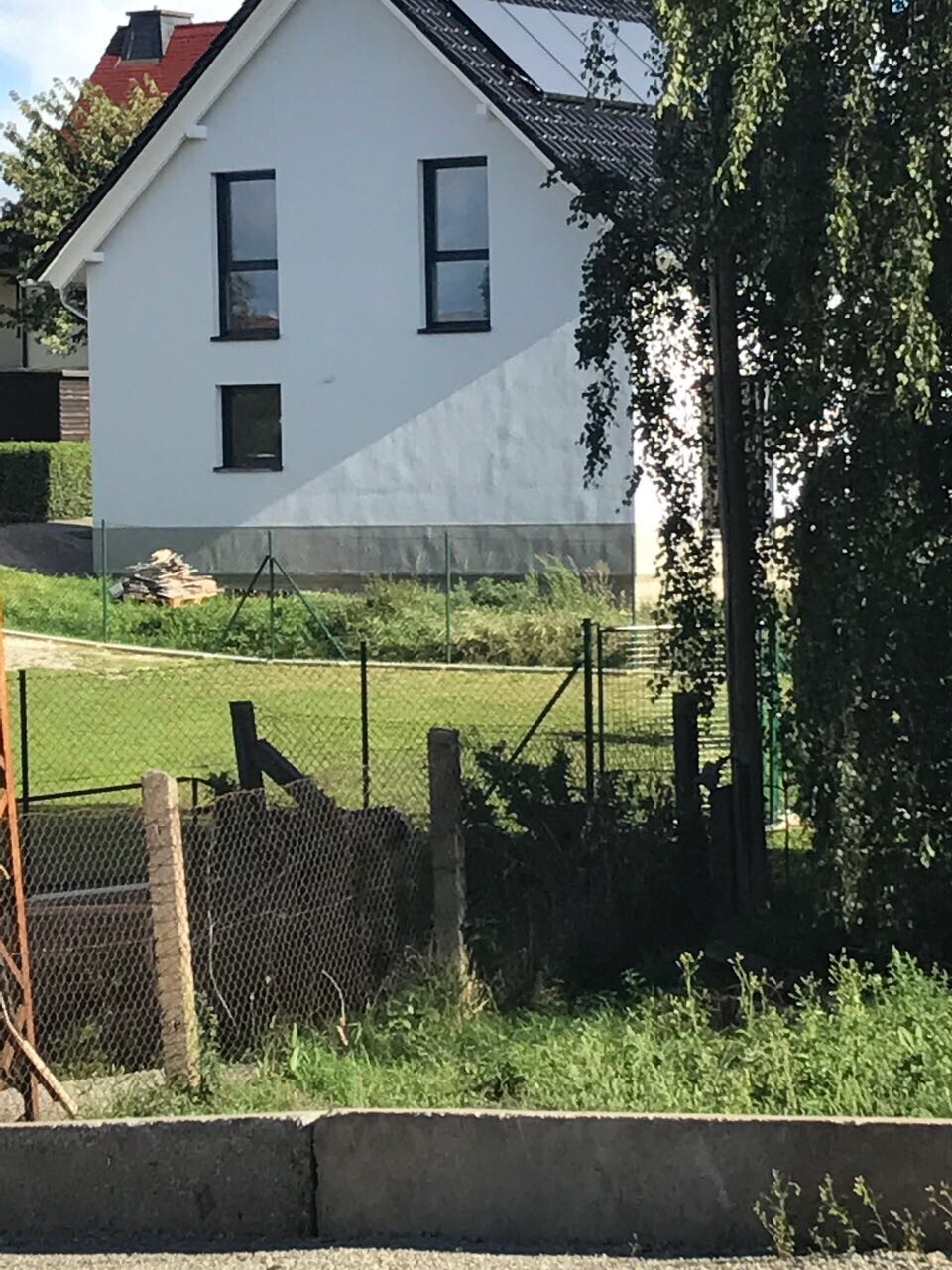
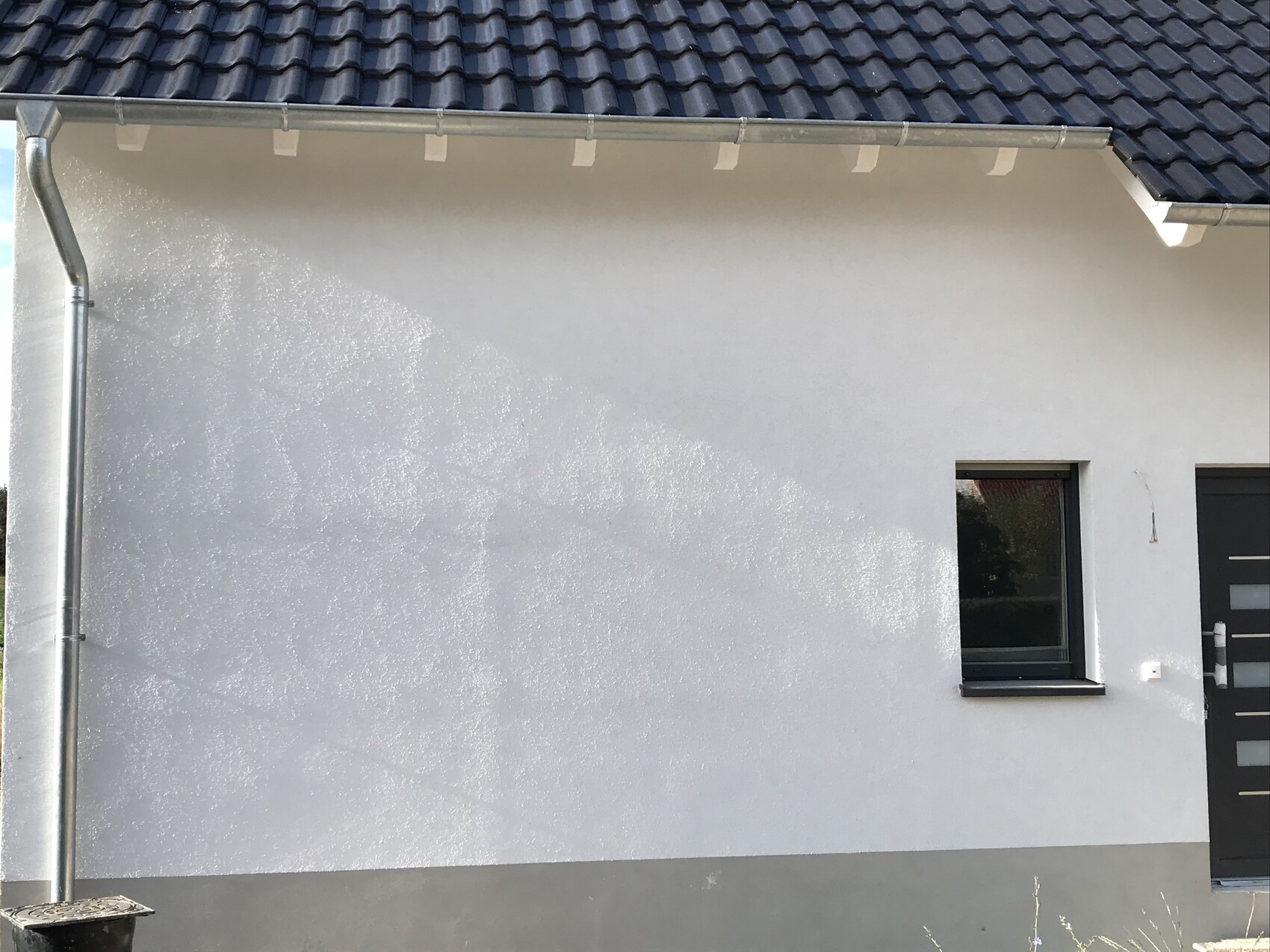
According to the construction company, it is annoying but within the acceptable range and less than 1mm.
After consulting my lawyer, he said that the DIN 18202 standard allows a tolerance of 7mm (0.28 inches) over 2m (6.56 feet), and only between measurement points—that seems like a bad joke.
My facade looks unprofessional and poor, but it’s still within the standard???
What do you think about this? And yes, the final inspection has already taken place, but such work should not be handed over to a customer.
We have a newly built house and later noticed with regret that our facade is slightly uneven:
According to the construction company, it is annoying but within the acceptable range and less than 1mm.
After consulting my lawyer, he said that the DIN 18202 standard allows a tolerance of 7mm (0.28 inches) over 2m (6.56 feet), and only between measurement points—that seems like a bad joke.
My facade looks unprofessional and poor, but it’s still within the standard???
What do you think about this? And yes, the final inspection has already taken place, but such work should not be handed over to a customer.
Knallkörper schrieb:
Why do you think someone has to inspect the facade? If your general contractor sends you the building authority’s approval by mail, that matter is settled for them. I’m not familiar with this topic, but I also think I won’t be able to avoid hiring an expert, even if it costs over 3000.
I also find it quite disappointing that our developer sides with the subcontractor and refers to DIN 18202, even though the defect is obvious to anyone and can be seen quite clearly for part of the day when the sun is shining.

Steve_D schrieb:
I also find it very unfortunate that our general contractor is siding with the subcontractor Why not, after all, it is his side. As long as the term "general contractor" is used correctly here, he is ultimately the one who sold a defective product. This is also important for the question of who is actually the addressee of your claims!
Steve_D schrieb:
I’m not familiar with this topic, but I think I can’t avoid getting an expert involved, And I think that first, a lawyer who is knowledgeable in this area is needed. If the lawyer does their job well, the opposing party will probably be happy to forego appointing an expert—after all, the one who loses ends up paying for it.
With a specialist lawyer in consumer protection who usually handles complaints about electric toothbrushes and apparently tries far-fetched strategies here, you’re only making the opposition happy :-(
https://www.instagram.com/11antgmxde/
https://www.linkedin.com/company/bauen-jetzt/
B
Bieber081530 Oct 2017 22:30Steve_D schrieb:
I can’t avoid hiring an expert, even if it costs over 3000.How do you come up with that figure? Conservatively estimated: 1 hour travel
1 hour inspection
1 hour return trip
1 hour writing the report
A total of 4 hours, multiplied by an hourly rate (100+ euros?) roughly comes to about 500 euros. And in my opinion, that is already expensive.
Steve_D schrieb:
I also find it very unfortunate that our developer is siding with the subcontractorWho sides with whom doesn’t matter. There are only two sides: you and your contracting party, which usually is just another (legal) entity.Preliminary message from an expert:
Visual defects on façades should be assessed from a normal viewing distance and under diffuse light or overcast sky conditions. Unevenness on external thermal insulation composite systems (ETICS) should be evaluated according to DIN 18202. Unless you have agreed on specific requirements for visual quality, it is difficult to prove visual defects.
Sorry, but to me, it really sounds like we don’t have a chance here. -.-
Visual defects on façades should be assessed from a normal viewing distance and under diffuse light or overcast sky conditions. Unevenness on external thermal insulation composite systems (ETICS) should be evaluated according to DIN 18202. Unless you have agreed on specific requirements for visual quality, it is difficult to prove visual defects.
Sorry, but to me, it really sounds like we don’t have a chance here. -.-
Steve_D schrieb:
Unless specific requirements for visual quality were agreed upon, it is difficult to prove visible defects. The "pattern" of the insulation boards is clearly visible under the plaster. The house looks as if someone just stretched a fitted sheet over the facade instead of properly rendering it. If I otherwise wanted to buy your house, I would offer significantly less because the facade looks carelessly done. So, with the naked eye, the value would be visibly lower due to a visible cosmetic defect. In my view, that is the equivalent loss caused by the defect.
https://www.instagram.com/11antgmxde/
https://www.linkedin.com/company/bauen-jetzt/
Steve_D schrieb:
Preliminary message from an expert:
Visual defects on facades should be assessed from a normal viewing distance and under diffuse light or overcast sky conditions. Irregularities in external thermal insulation composite systems (ETICS) must be evaluated according to DIN 18202. Unless specific requirements for visual quality have been agreed upon, it is difficult to prove visual defects.
Sorry, but to me, this really sounds like we don’t stand a chance. -.-How does it look under diffuse light conditions?
Similar topics