
Hello everyone,
this is my first post in the forum, so please bear with me if not everything is described correctly.
Last November, we bought a house from the 1970s, with an extension from the 1980s that needs renovation.
On May 30th, we experienced heavy rainfall events in NRW, which caused water to enter the basement (about 3cm (1 inch) deep). In the meantime, we found out that the water came through the masonry. After drying the interior, we started working on waterproofing the basement from the outside. During this process, we noticed that a bitumen layer had already been applied, as well as polystyrene insulation. Overall, the basement is dry.
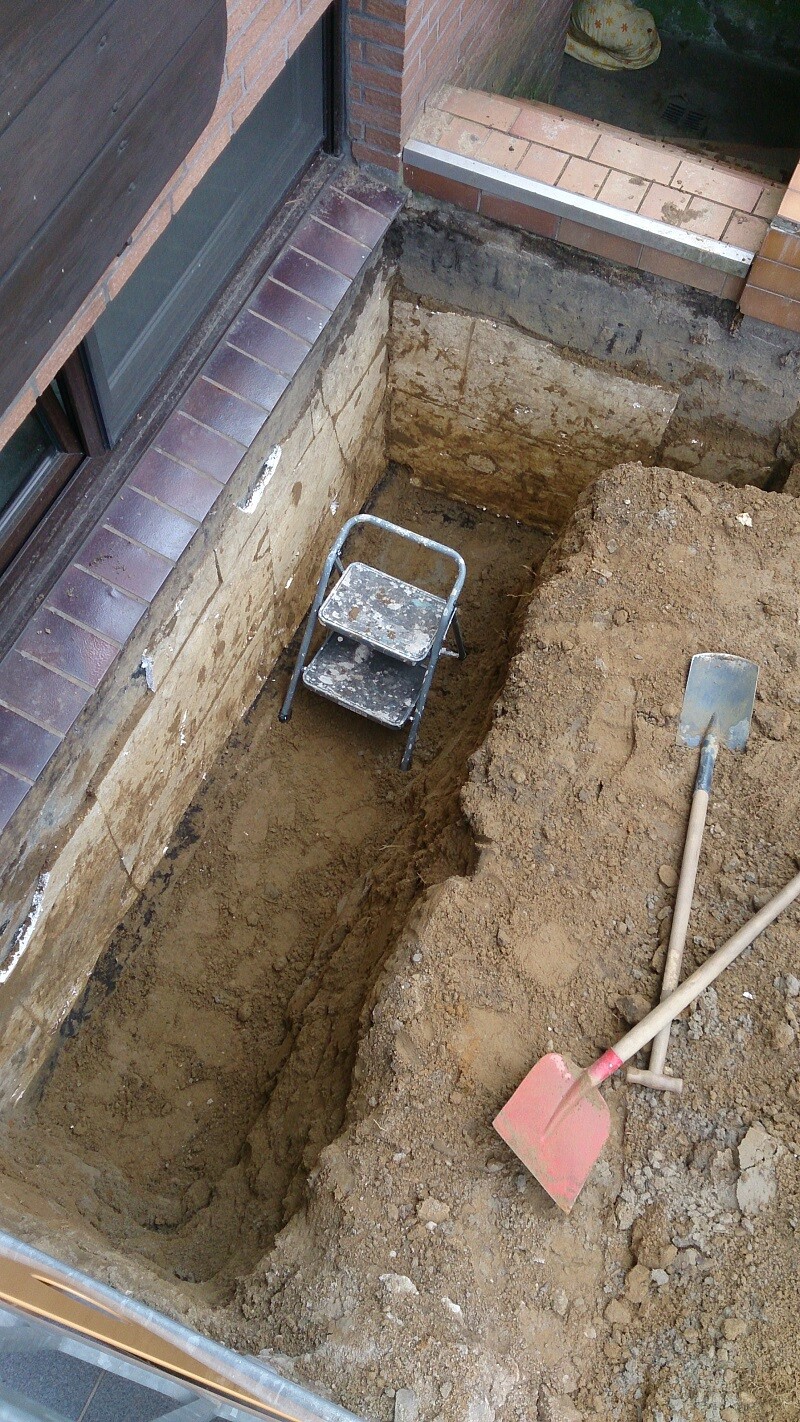
Now to the main questions. What is the best way to proceed? I have already excavated the ground down to the horizontal damp-proof course and removed the old polystyrene. On the web, I found two products that seem suitable for exterior wall repair.
1. pci barraseal® turbo
2. MEM Express-Dicht
Which of these two products is better suited for the work?
I would also like to renew the insulation. What do you suggest here?
Attached are some photos for a better understanding.
Thanks in advance for your help and advice.
Best regards
Patrick
this is my first post in the forum, so please bear with me if not everything is described correctly.
Last November, we bought a house from the 1970s, with an extension from the 1980s that needs renovation.
On May 30th, we experienced heavy rainfall events in NRW, which caused water to enter the basement (about 3cm (1 inch) deep). In the meantime, we found out that the water came through the masonry. After drying the interior, we started working on waterproofing the basement from the outside. During this process, we noticed that a bitumen layer had already been applied, as well as polystyrene insulation. Overall, the basement is dry.
Now to the main questions. What is the best way to proceed? I have already excavated the ground down to the horizontal damp-proof course and removed the old polystyrene. On the web, I found two products that seem suitable for exterior wall repair.
1. pci barraseal® turbo
2. MEM Express-Dicht
Which of these two products is better suited for the work?
I would also like to renew the insulation. What do you suggest here?
Attached are some photos for a better understanding.
Thanks in advance for your help and advice.
Best regards
Patrick
A
abc1507814 Jul 2016 11:30I have also thought about the drainage, but I don’t know where the water is supposed to drain off?! Even if I include the drainage, I only come up to about 400€.
My planned costs for approximately 5 sqm (54 sq ft):
100€ - 200€ for waterproofing membrane (MEM) or PCI
30€ for dimpled membrane 1.5 m x 20 m (5 ft x 66 ft)
50€ - 70€ for XPS insulation
100€ for drainage and fleece
Without wanting to downplay the expertise required, this is not rocket science... Basically, I agree with you and would prefer to have it done by professionals. However, due to current financial constraints and urgent need for action, I have to do something myself!
So please don’t keep pushing me to hire experts.
Maybe I phrased the question wrong... I just want to know the best way to waterproof and insulate a basement from the outside.
Regards
Patrick
My planned costs for approximately 5 sqm (54 sq ft):
100€ - 200€ for waterproofing membrane (MEM) or PCI
30€ for dimpled membrane 1.5 m x 20 m (5 ft x 66 ft)
50€ - 70€ for XPS insulation
100€ for drainage and fleece
Without wanting to downplay the expertise required, this is not rocket science... Basically, I agree with you and would prefer to have it done by professionals. However, due to current financial constraints and urgent need for action, I have to do something myself!
So please don’t keep pushing me to hire experts.
Maybe I phrased the question wrong... I just want to know the best way to waterproof and insulate a basement from the outside.
Regards
Patrick
A
abc1507814 Jul 2016 11:34Steven schrieb:
Hello
Now don’t blame Patrick too harshly. When someone buys a house, they are often short on cash initially and may not be able to spend several thousand euros right away. Or they might simply not want to. Taking initiative is definitely admirable.
I’m also just an amateur but quite interested and have helped build three houses so far.
1. Properly securing the excavation pit is important. If the soil shifts, it can be life-threatening.
2. I think I see the foundation at the bottom of the pit. This needs to be exposed and then the waterproofing membrane (“black tank”) built up from there. It’s important to thoroughly clean the wall.
3. Applying the waterproofing membrane is crucial. The building material supplier can provide competent advice here.
4. Maybe it’s worth spending some money on an expert. Perhaps you can arrange for them to identify the cause and suggest a solution. Then roll up your sleeves and do it yourself.
5. What you do yourself makes you proud, and you’ll do it right (if you know what to do).
StevenThanks.. Finally someone who understands me...
B
Bauexperte4 Jul 2016 11:39Steven schrieb:
Anyone buying a house is often strapped for cash initially and cannot spend several thousand euros. Or simply does not want to. And personal initiative is certainly admirable.We are not talking about building a garden shed or installing flooring here. The original poster wants to work on essential structural components *and* has about as much knowledge of the execution as I have about IT.Energy-efficient construction is a great thing that makes every homeowner proud; no question about it. But energy efficiency should only be applied in areas where mistakes—although annoying—are still forgivable. This is not about "demonizing" it but simply protecting the homeowner from overestimating their own abilities!
It is also pointless to cut corners as a cheap builder and face the same problem within a year. Then it really gets expensive, because you have to pay twice!
Bauexperte
Hello Building Expert
The original poster said there was drainage installed, but the water simply overflowed due to the drainage being full and ran behind the insulation.
It would make sense to first find out why the drainage was full. After all, it is meant to keep water away from the house and direct it somewhere else. This should be clarified first.
Now there is a hole. You could clean the wall, protect it with thick-layer bitumen, then apply insulation with extruded polystyrene (XPS) boards, and install a dimpled membrane neatly in front of it. This would keep out non-pressurized water. Refill the hole and compact it in layers. Don’t just fill it all at once and tamp it down heavily on top; instead, tamp every 15 cm (6 inches) in layers. You can make a tool for this out of wood yourself. Then create a drainage layer at the top (the pattern the original poster showed) and find out where the water can be led away to. Because something seems to be going wrong there.
If water still seeps into the basement after that, I would consider consulting an expert.
Perhaps that’s all there is to it. We have had rainfall over the past months that I only know from tropical regions.
Steven
The original poster said there was drainage installed, but the water simply overflowed due to the drainage being full and ran behind the insulation.
It would make sense to first find out why the drainage was full. After all, it is meant to keep water away from the house and direct it somewhere else. This should be clarified first.
Now there is a hole. You could clean the wall, protect it with thick-layer bitumen, then apply insulation with extruded polystyrene (XPS) boards, and install a dimpled membrane neatly in front of it. This would keep out non-pressurized water. Refill the hole and compact it in layers. Don’t just fill it all at once and tamp it down heavily on top; instead, tamp every 15 cm (6 inches) in layers. You can make a tool for this out of wood yourself. Then create a drainage layer at the top (the pattern the original poster showed) and find out where the water can be led away to. Because something seems to be going wrong there.
If water still seeps into the basement after that, I would consider consulting an expert.
Perhaps that’s all there is to it. We have had rainfall over the past months that I only know from tropical regions.
Steven
C
Cliosoice4 Jul 2016 20:20Can someone tell me approximately how much something like this would cost if done by a professional company?
Regards, Cliospice
Regards, Cliospice
B
Bauexperte4 Jul 2016 21:59Steven schrieb:
If it is still seeping into the basement after that, I would consider consulting an expert.That would then be paying twice; I wouldn’t be keen on that. Bauexperte
Similar topics