
I'm not sure whether this counts as a defect?
Are these cracks on the outer edges of the window sills normal after just under 2 years? If water accumulates on the window sills, which normally shouldn’t happen because there should be a slope.
But let’s say there is snow lying on the window sill for a few days—would moisture penetrate through the cracks into the exterior wall insulation system (EWIS)?
This is a prefabricated house built with a timber frame construction and corresponding insulation, designed to KfW 55 energy efficiency standards. However, the insulation is not polystyrene but wood fiber from Knauf?
Or are these just normal settlement cracks at control joints?
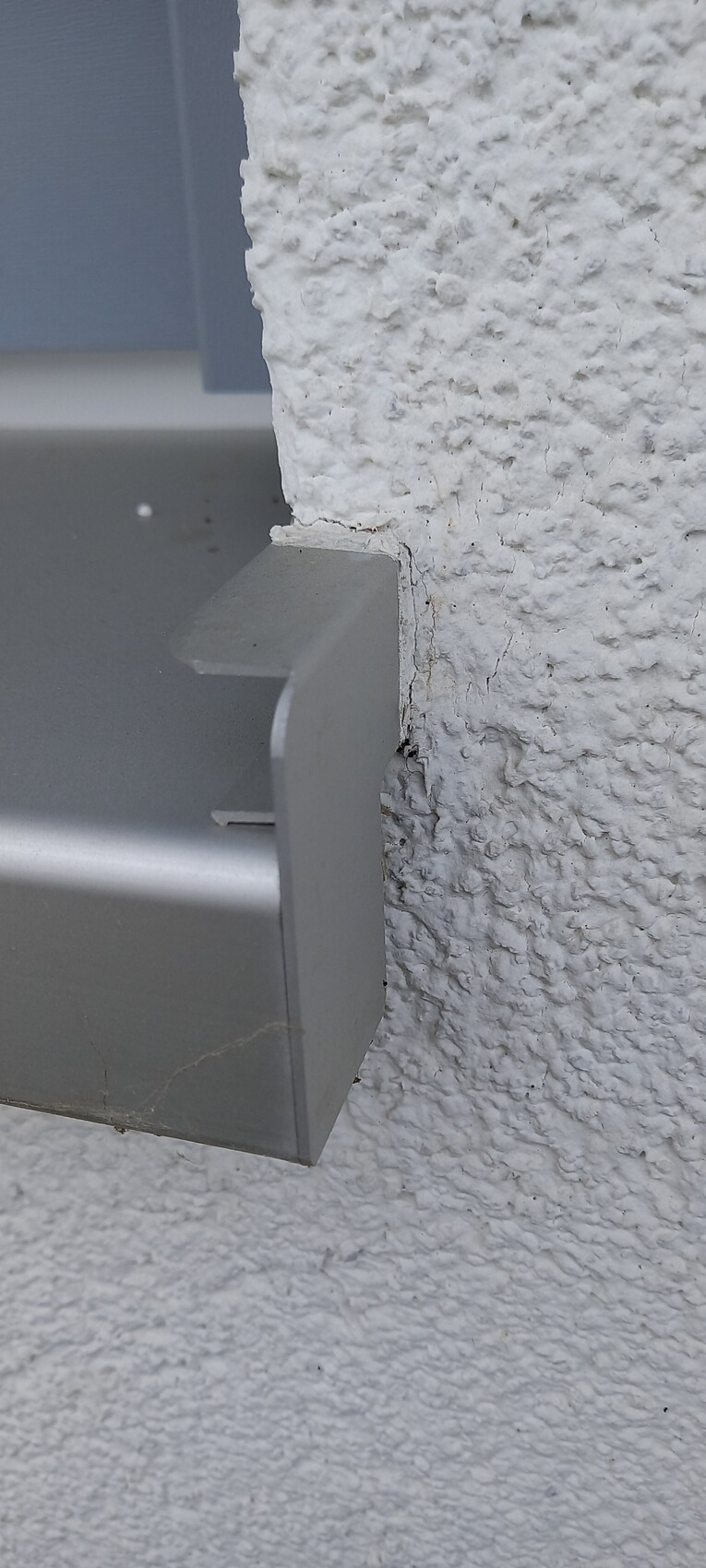
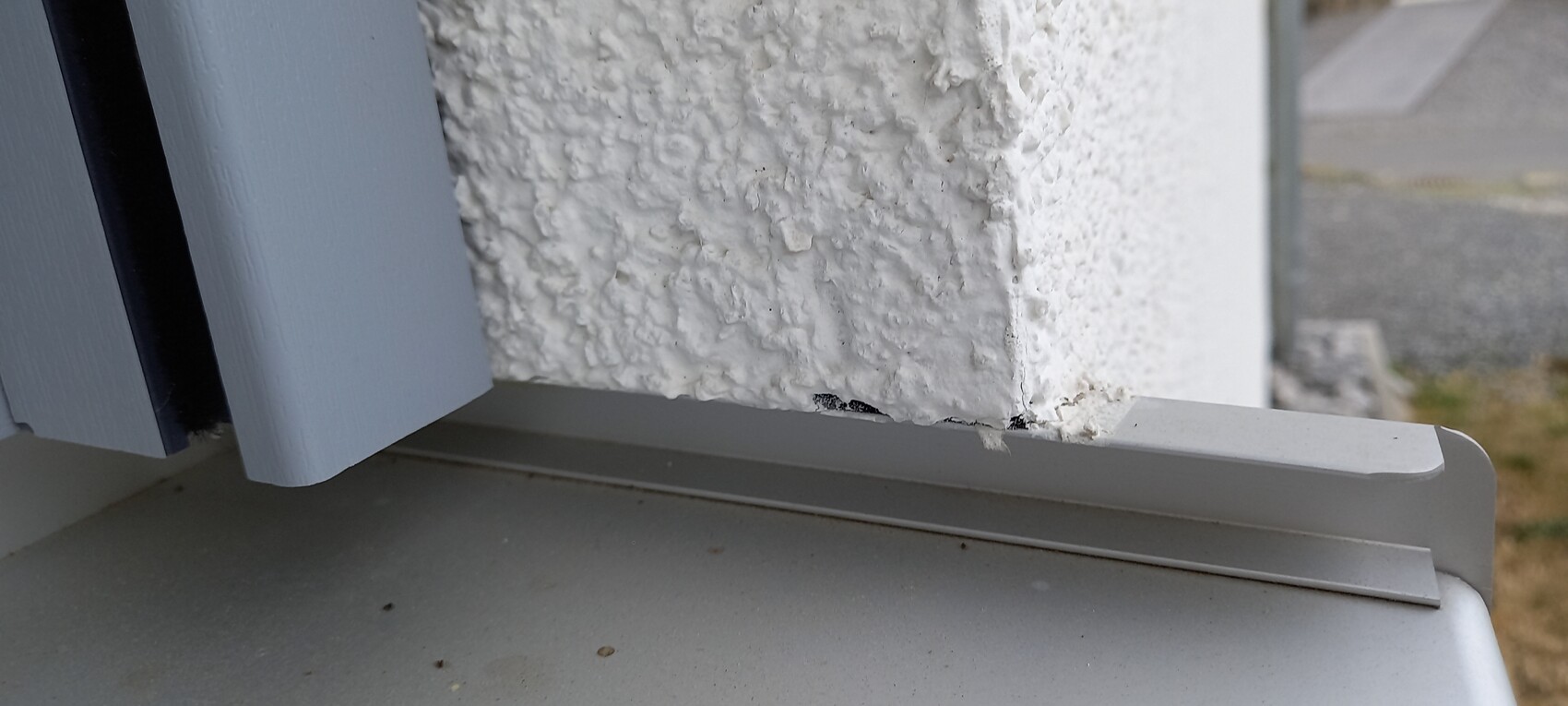
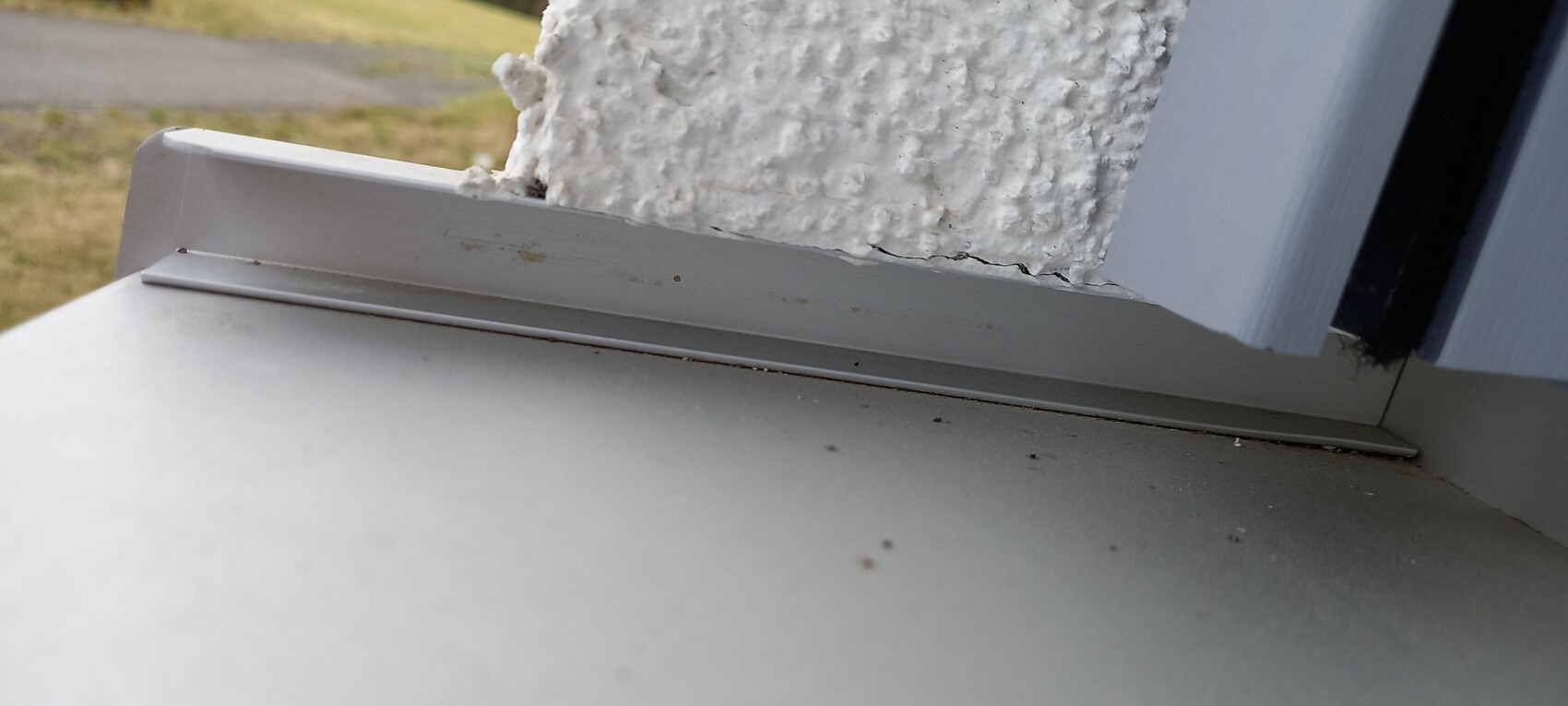
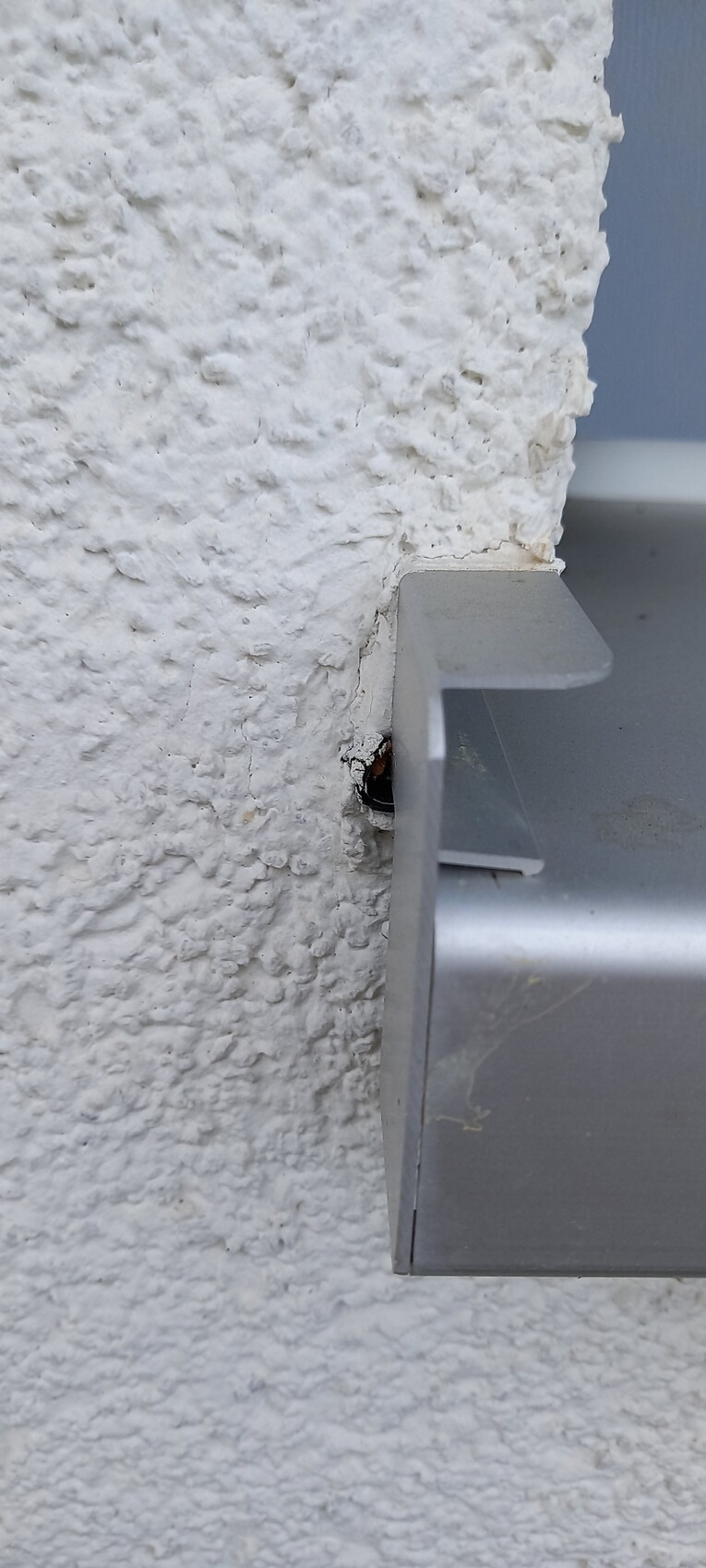
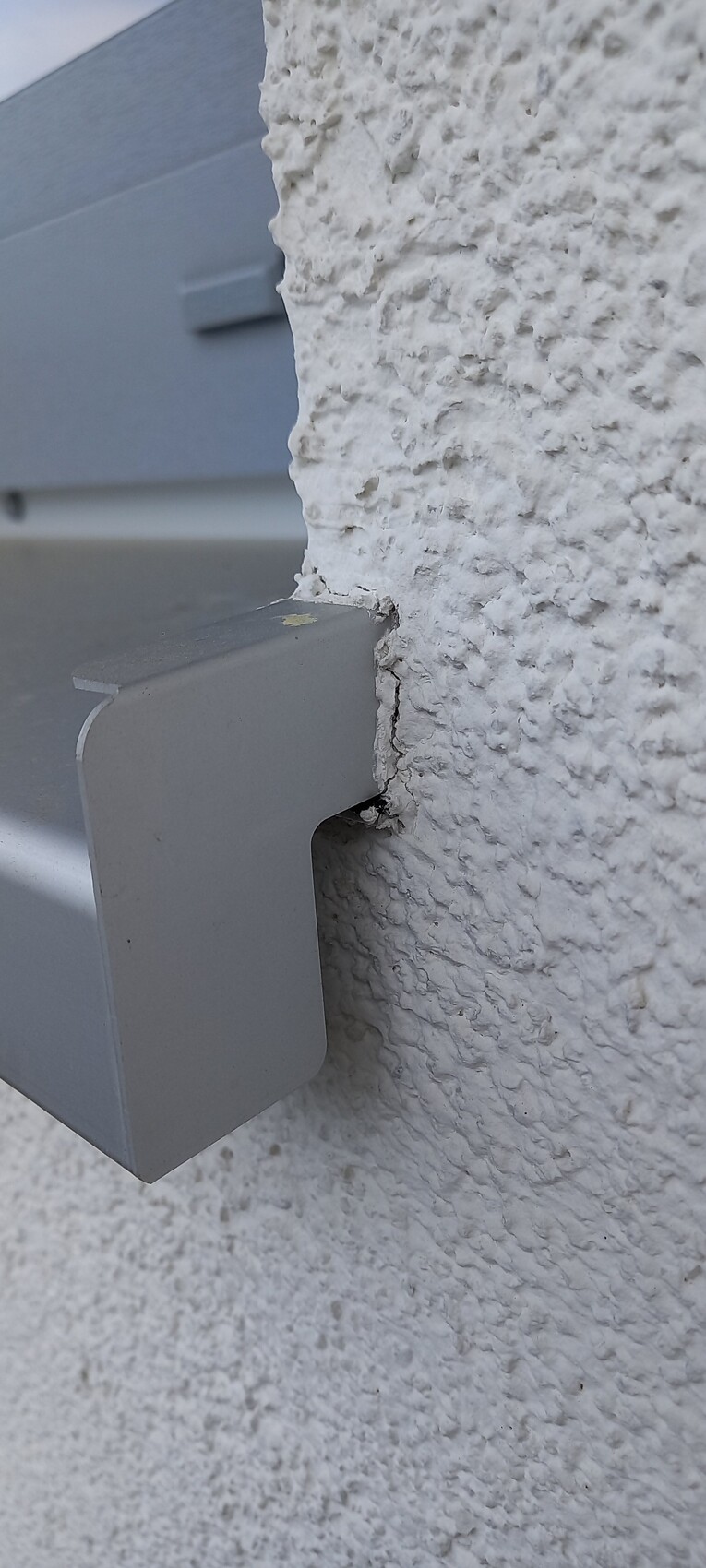
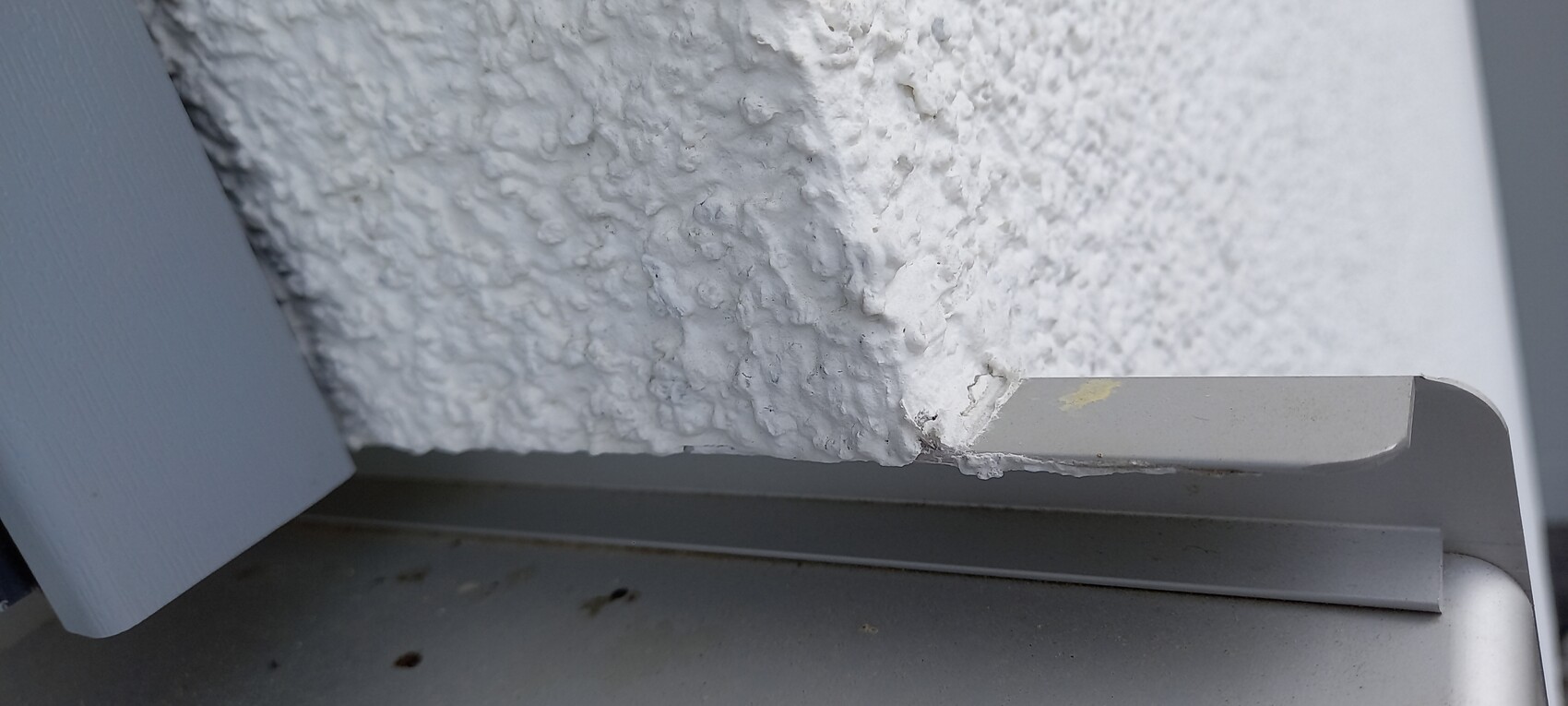
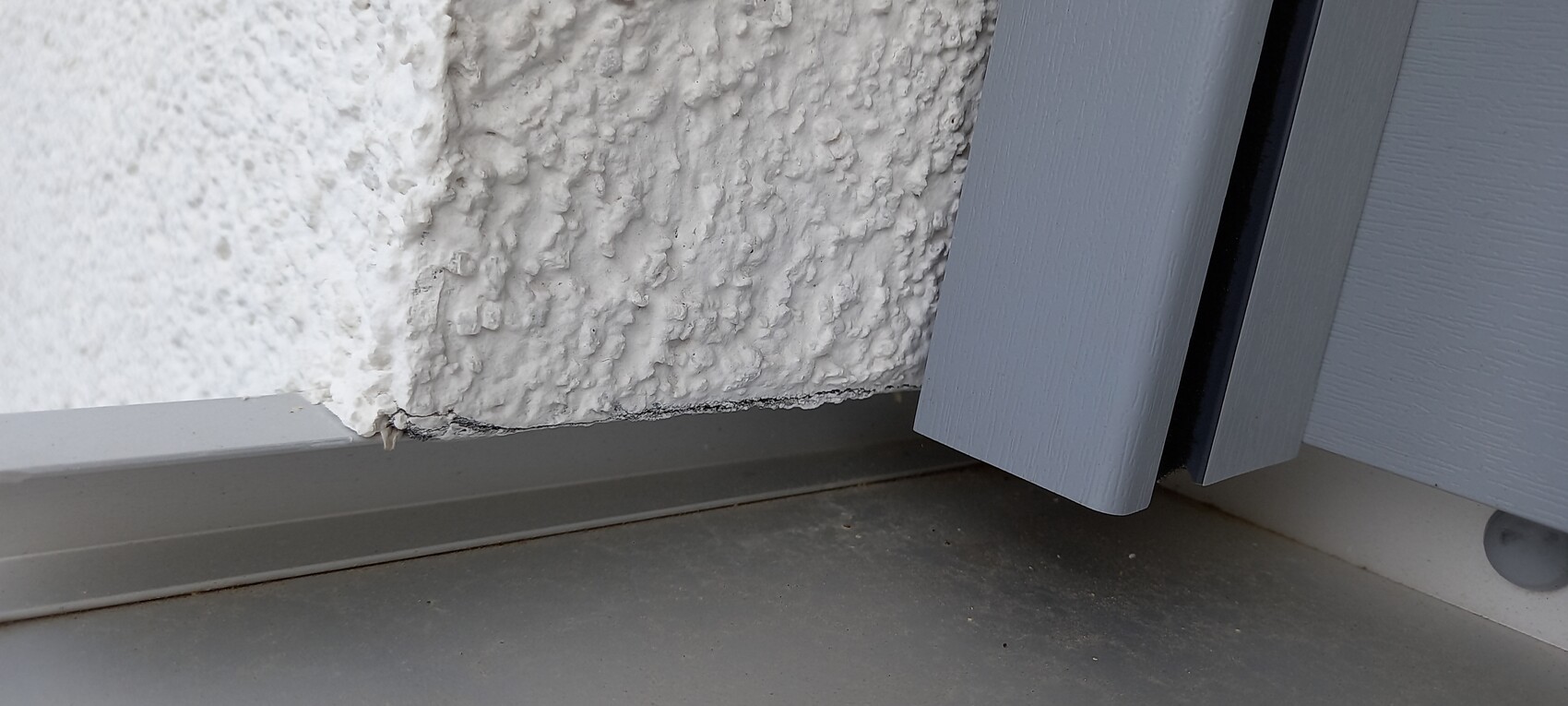
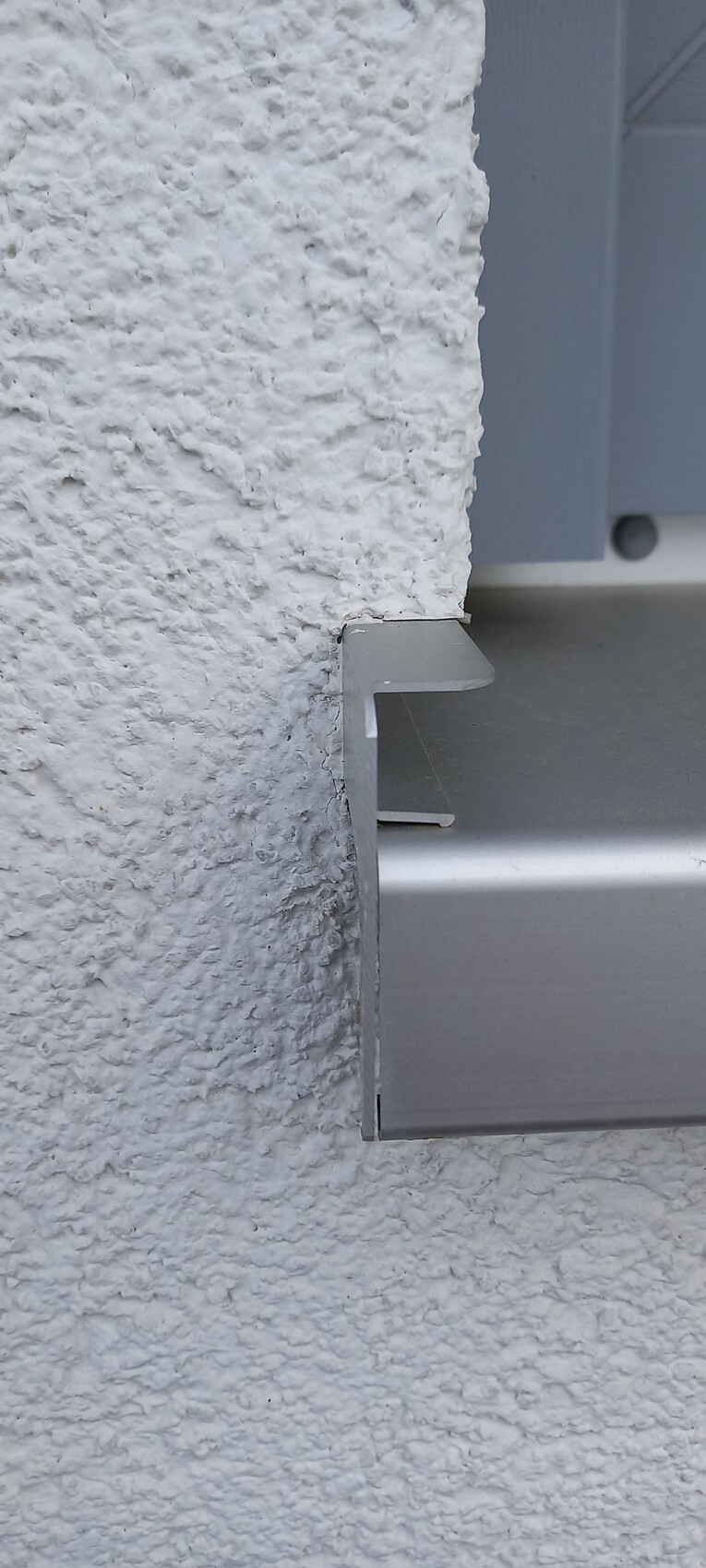
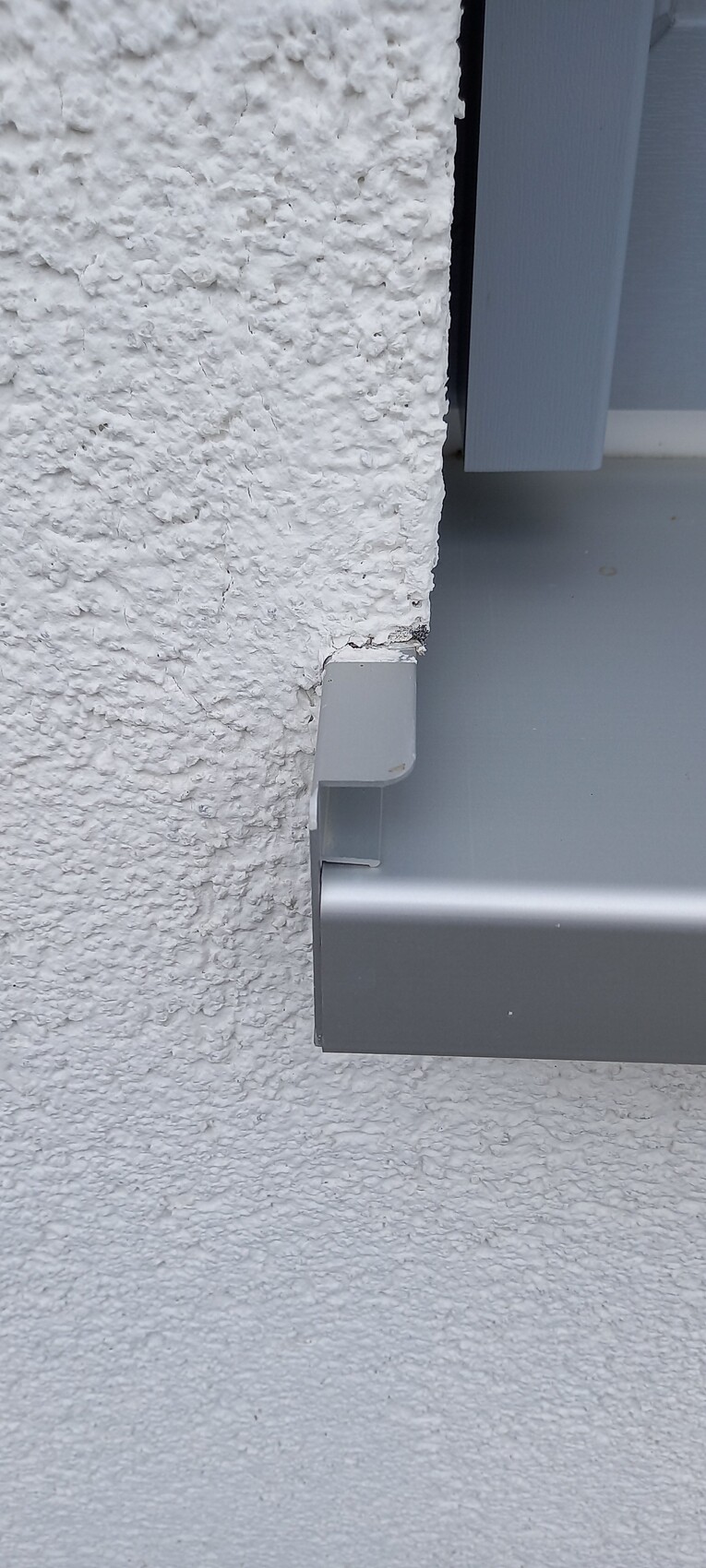
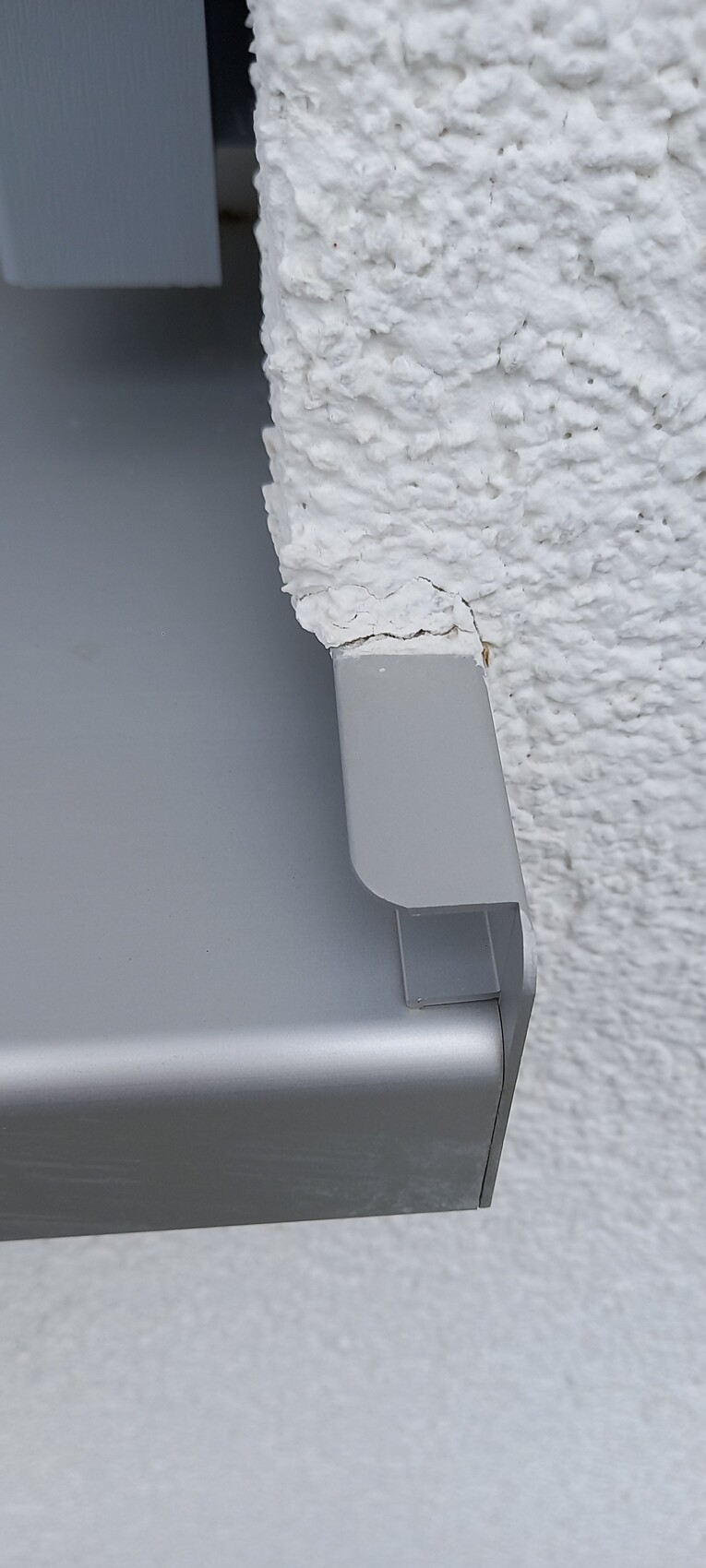
Are these cracks on the outer edges of the window sills normal after just under 2 years? If water accumulates on the window sills, which normally shouldn’t happen because there should be a slope.
But let’s say there is snow lying on the window sill for a few days—would moisture penetrate through the cracks into the exterior wall insulation system (EWIS)?
This is a prefabricated house built with a timber frame construction and corresponding insulation, designed to KfW 55 energy efficiency standards. However, the insulation is not polystyrene but wood fiber from Knauf?
Or are these just normal settlement cracks at control joints?

Disclaimer: I’m not a professional, but probably not... What I see are very minor, frequently occurring settlement or stress cracks under 1mm (0.04 inches). You’re taking photos of artisan workmanship and expecting permanent mechanical engineering or industrial-grade quality?
Moreover, the cracks might only be in the topcoat plaster? There is still underlying material, and for example, Gutex wood fiber insulation boards used as plaster bases can withstand being exposed to rain for three months without plaster.
In one photo, I can make out a second waterproofing layer, which hopefully has been installed beneath all window sills. This is especially important with wood-based External Thermal Insulation Composite Systems (ETICS / WDVS). Otherwise, your concern about rot is justified—the timber frame or wood fiber board behind the plaster can slowly decay unnoticed.
However, from what I see, as mentioned above, it doesn’t look like you need to worry. If you have photos from the construction phase (installation of the window sills), you might be able to get better or more precise information.
Moreover, the cracks might only be in the topcoat plaster? There is still underlying material, and for example, Gutex wood fiber insulation boards used as plaster bases can withstand being exposed to rain for three months without plaster.
In one photo, I can make out a second waterproofing layer, which hopefully has been installed beneath all window sills. This is especially important with wood-based External Thermal Insulation Composite Systems (ETICS / WDVS). Otherwise, your concern about rot is justified—the timber frame or wood fiber board behind the plaster can slowly decay unnoticed.
However, from what I see, as mentioned above, it doesn’t look like you need to worry. If you have photos from the construction phase (installation of the window sills), you might be able to get better or more precise information.
Thanks first of all...
As mentioned, it's “complaining at a high level, based on amateurish fear of water damage.”
I would have to check which meaningful photos I have from the construction phase.
Since it is a small bungalow, everything was suddenly taped off and plastered within a single day.
As mentioned, it's “complaining at a high level, based on amateurish fear of water damage.”
I would have to check which meaningful photos I have from the construction phase.
Since it is a small bungalow, everything was suddenly taped off and plastered within a single day.
B
Benutzer 100113 Sep 2022 20:26I mean, you can even see the sealing tape, which is rare and a good sign. The micro-cracks are most likely harmless.
By the way, a single-family house from Okal Haus with a partial basement was completely plastered in 10 hours... including setting up and dismantling the scaffolding.
Five workers from Poland arrived in the evening. One side was scaffolded, and in the morning the second side, while one side was being plastered and then the scaffolding was set up for the other side.
Okay, it’s a prefabricated house with straight walls, but respect to them—it still looks good today.
By the way, a single-family house from Okal Haus with a partial basement was completely plastered in 10 hours... including setting up and dismantling the scaffolding.
Five workers from Poland arrived in the evening. One side was scaffolded, and in the morning the second side, while one side was being plastered and then the scaffolding was set up for the other side.
Okay, it’s a prefabricated house with straight walls, but respect to them—it still looks good today.
F
fromthisplace17 Sep 2022 20:10Assumption: The windowsill expands when heated and contracts when cooled. The material’s movement causes the cracks to form.
Similar topics