
ᐅ Extension of the screed opening. Is there a risk that the screed might crack?
Created on: 3 Jan 2018 11:30
S
seol_1984
Hello everyone,
In our new build, the screed recess for our fireplace kit (about 600kg (1320 lbs)) was initially made too small. After complaining, it was enlarged as shown in the pictures. To me, as a layperson, it looks quite "improvised," but I might be wrong, so I would like to hear your opinion on this.
What stands out is that the expansion of the recess was clearly done with a different screed material, possibly cement screed, instead of calcium sulfate screed.
Is this a "normal" and "safe" procedure? Can we confidently place our fireplace on the enlarged recess without risk of the extension failing? What should we pay attention to, and should we complain again?
Thank you very much for your assessment.
Best regards,
Seol
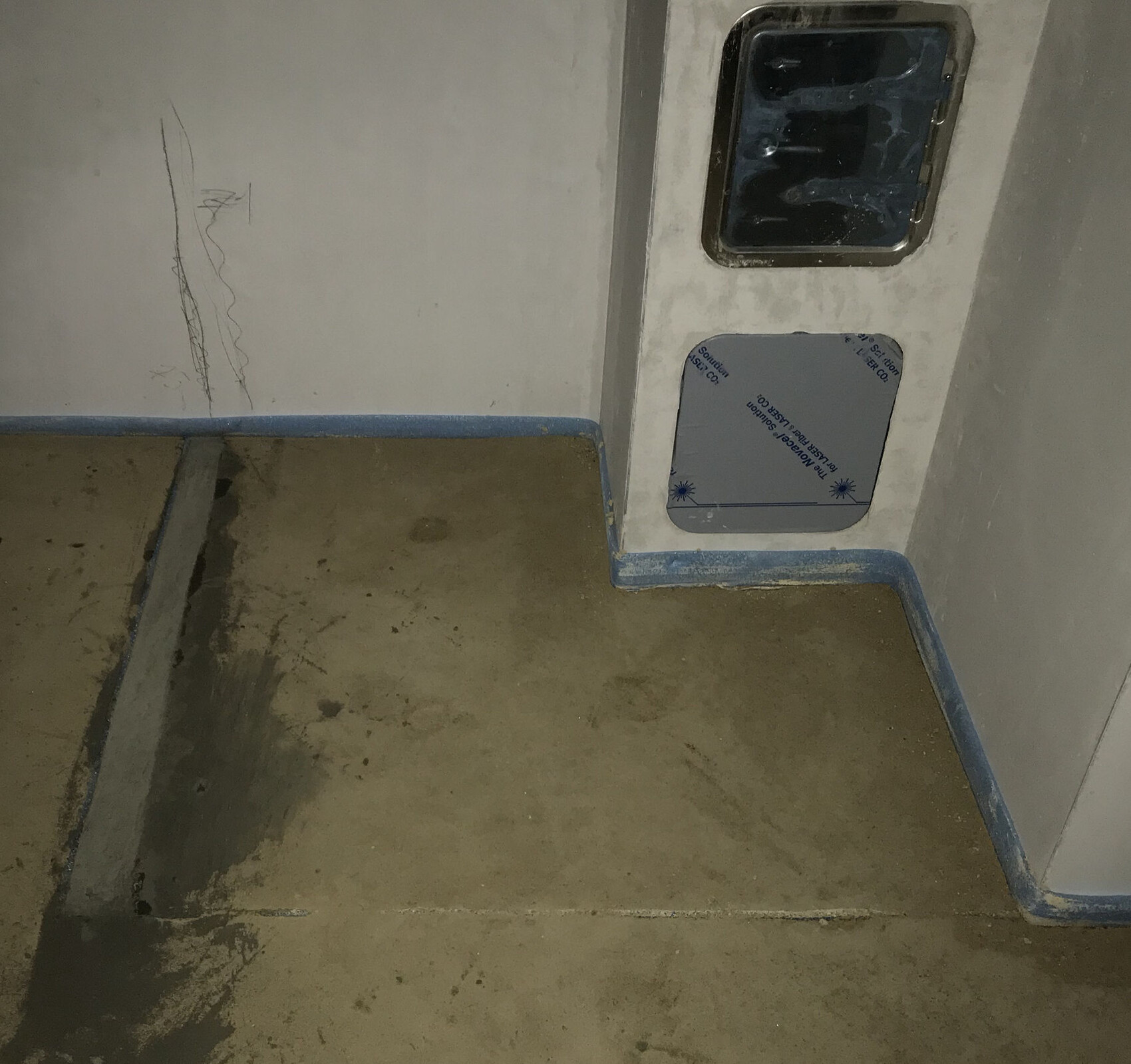
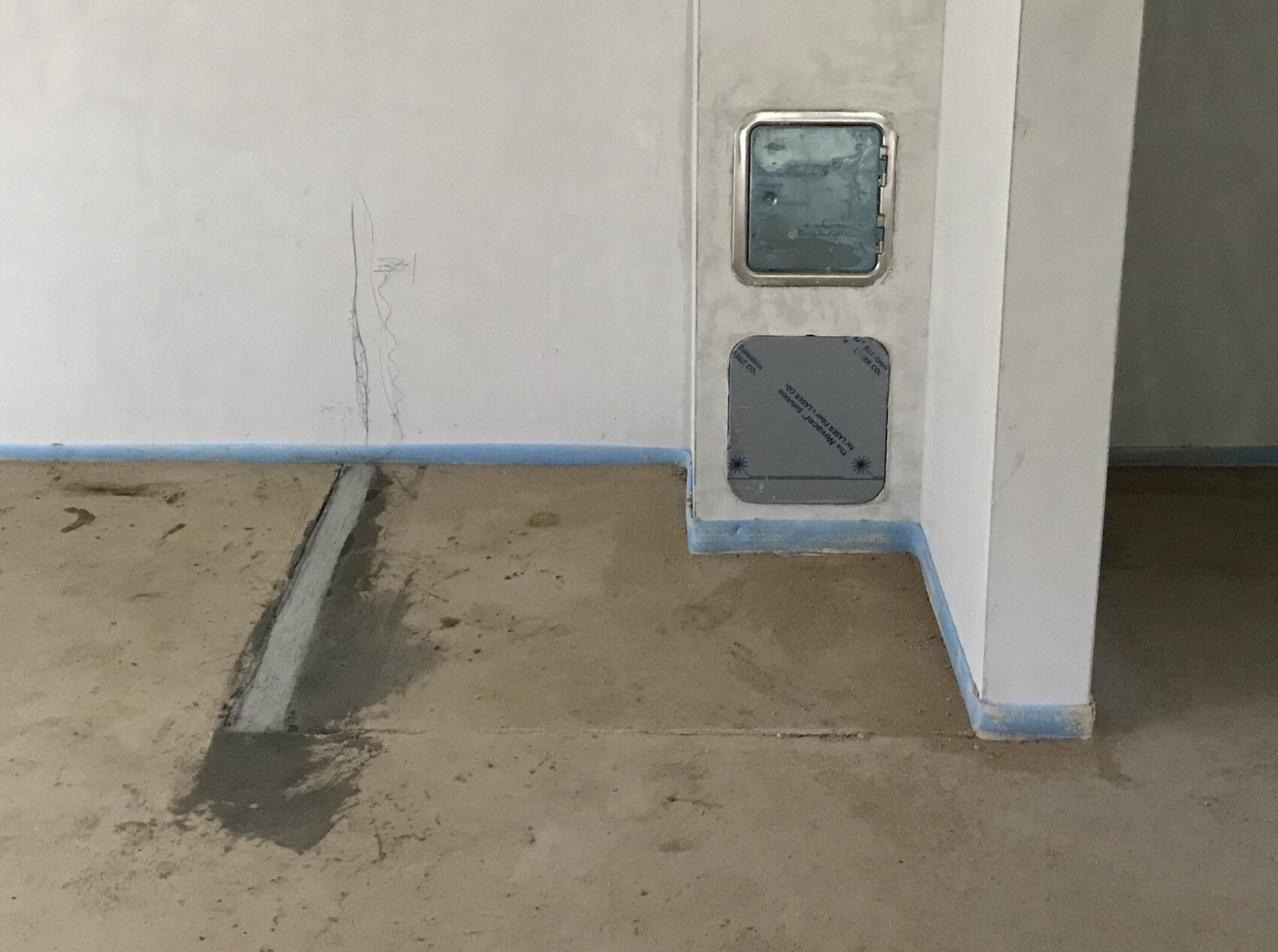
In our new build, the screed recess for our fireplace kit (about 600kg (1320 lbs)) was initially made too small. After complaining, it was enlarged as shown in the pictures. To me, as a layperson, it looks quite "improvised," but I might be wrong, so I would like to hear your opinion on this.
What stands out is that the expansion of the recess was clearly done with a different screed material, possibly cement screed, instead of calcium sulfate screed.
Is this a "normal" and "safe" procedure? Can we confidently place our fireplace on the enlarged recess without risk of the extension failing? What should we pay attention to, and should we complain again?
Thank you very much for your assessment.
Best regards,
Seol
To clarify once more:
- You have a recess in the screed and insulation for the fireplace.
- The recess was filled with thinner insulation and a thicker screed.
- The recess was too small, so it was enlarged and the extension was presumably filled with cement screed.
So, you also have a floating screed under the fireplace, but it is thicker than the screed in the rest of the room?
If that is the case, you now need three things:
- Proof of decoupling between the two areas by a joint (usually with an edge insulation strip)
- Proof of flexural tensile strength of the entire fireplace screed plate (including the edge areas!)
- Load distribution of the fireplace and its total weight
In my opinion, since the strength of the screed cannot be proven with this patchwork, I would do the following:
- Take the structural drawing of the fireplace, showing the points of load. Probably around the outside with no load in the middle?
- Refuse acceptance of the screed installation to the screed installer/general contractor. Presumably, the highest load is in the edge areas, which is where the screed is weakest anyway...
- Remove everything and rebuild the base as described by Klara.
Regards,
Markus
- You have a recess in the screed and insulation for the fireplace.
- The recess was filled with thinner insulation and a thicker screed.
- The recess was too small, so it was enlarged and the extension was presumably filled with cement screed.
So, you also have a floating screed under the fireplace, but it is thicker than the screed in the rest of the room?
If that is the case, you now need three things:
- Proof of decoupling between the two areas by a joint (usually with an edge insulation strip)
- Proof of flexural tensile strength of the entire fireplace screed plate (including the edge areas!)
- Load distribution of the fireplace and its total weight
In my opinion, since the strength of the screed cannot be proven with this patchwork, I would do the following:
- Take the structural drawing of the fireplace, showing the points of load. Probably around the outside with no load in the middle?
- Refuse acceptance of the screed installation to the screed installer/general contractor. Presumably, the highest load is in the edge areas, which is where the screed is weakest anyway...
- Remove everything and rebuild the base as described by Klara.
Regards,
Markus

seol_1984 schrieb:
We were informed that omitting the insulation is not possible because it would create a thermal bridge. What nonsense (excuse me)!
A fireplace in a living space is special, but not unusual. Insulation is needed beneath screeds that either are in contact with the ground or lie above an unheated space.
No insulation layer is required under a fireplace that is solidly supported on the raw floor slab. Why would it be?
I don’t understand this whole additional discussion!
My points were clear, they couldn’t be clearer.
And they comply with what is known in construction as the “state of the art.”
I do not understand this entire supplementary debate.
What will happen if things really get complicated???
“So whoever can clearly explain why the option I presented should not work exactly as described, now is the time to speak—or remain silent forever!”
(Amen)
------------------------------------
Regards: KlaRa
C
chand198612 Jan 2018 17:09KlaRa
I believe the original poster’s concern is that the work in their case was NOT carried out exactly as you described as ideal.
The question is whether it will STILL function properly.
So the issue is not how it should ideally be done, but whether what has already been done is acceptable.
If I understand you correctly, the priority is that the screed under the fireplace a) is directly on the concrete slab to distribute the load there, and b) that a movement joint is made between it and the rest of the screed.
It sounds like this might be different in the original poster’s situation.
I believe the original poster’s concern is that the work in their case was NOT carried out exactly as you described as ideal.
The question is whether it will STILL function properly.
So the issue is not how it should ideally be done, but whether what has already been done is acceptable.
If I understand you correctly, the priority is that the screed under the fireplace a) is directly on the concrete slab to distribute the load there, and b) that a movement joint is made between it and the rest of the screed.
It sounds like this might be different in the original poster’s situation.
@ "chand1986": If I have misunderstood the situation, and currently an 85mm (3.3 inches) thick screed has been installed there, possibly on top of an insulation layer, then later on nothing will happen as long as the base area supporting the fireplace is separated from the rest of the (floating) screed by joints. However, if a ductile insulation layer (used as impact sound insulation) lies beneath this area that supports the fireplace, the compressive strength of the screed mortar might not be sufficient to safely absorb bending stresses caused by the heavy load. With a firmer thermal insulation, on the other hand, it is very likely there would be no negative effects. All in all, if my assumption is correct, it would be puzzling that contractors seem overwhelmed by this additional requirement from the client. Nevertheless: thank you for the information!
C
chand198612 Jan 2018 17:34KlaRa: Good.
Then we will derive the following task for the original poster:
Determine whether joints are present and whether anything runs continuously from below the standard screed into the load-bearing area. If so: What exactly?
With this information, it should be possible to establish whether the work was carried out adequately or not.
To summarize the minimum requirements: A joint is always necessary. If insulation material lies continuously in the load-bearing area, this only causes problems with certain materials for sure. Is that correct?
Then we will derive the following task for the original poster:
Determine whether joints are present and whether anything runs continuously from below the standard screed into the load-bearing area. If so: What exactly?
With this information, it should be possible to establish whether the work was carried out adequately or not.
To summarize the minimum requirements: A joint is always necessary. If insulation material lies continuously in the load-bearing area, this only causes problems with certain materials for sure. Is that correct?
chand1986 schrieb:
Is this correct?Yes!Similar topics