
ᐅ Extension of a 1960s House and Energy-Efficient Renovation
Created on: 21 Apr 2017 13:34
E
El_BurritoE
El_Burrito21 Apr 2017 13:34Hello everyone,
The existing building was constructed in the 1960s. Over the years, various renovation works have been carried out (electrical system, windows, ground floor flooring, stairwell, etc.). However, the electric heating consumes a lot of energy. The rooms are small, and the current layout is no longer suitable for two households. On the north side, a garage extends along the entire length of the house on a half-level between the basement and the ground floor.
The idea:
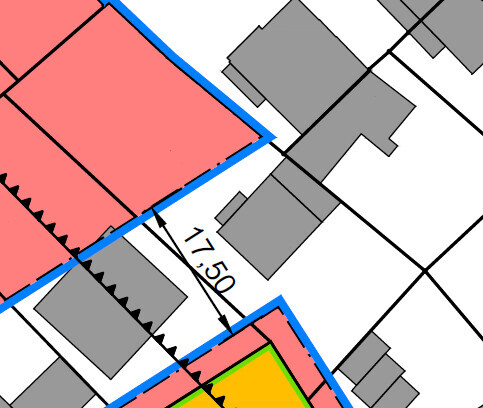
After careful consideration, an extension of the existing building towards the southeast seems reasonable. This would result in a building footprint of 14x9m (existing 8x9m + extension 6x9m = 126 sqm (1356 sq ft)). Ultimately, two separate residential units should be created. A utility room for each apartment is essential. Additionally, it would be beneficial if the upper floor apartment could also use the attic as living space. This could probably be designed as an open plan, but I lack the imagination regarding the room layout. I also don’t know to what extent the exterior wall of the old building will pose challenges for planning. It will certainly have to remain in place.
The tricky part about the existing building is that you have to walk around the house to reach the entrance door on the west side. To avoid visitors having to pass the ground floor when coming to the upper floor, the entrance area should be directly accessible from the street (south side). The question is: what to do with the existing stairwell? Demolition is problematic because it provides access to the basement. Should the old entrance remain for the ground floor and only the upper floor get a new entrance from the south side? I am uncertain. I do not necessarily want to have a basement under the extension — mainly for cost reasons, and the existing basement is actually large enough.
Technical aspects:
I would like to replace the old electric heating with an air source heat pump combined with underfloor heating. The roof covering will soon need to be replaced as well. Since the roof will have to be redone due to the extension, this could be a good opportunity to consider adding a photovoltaic system. New windows will be installed everywhere, and the exterior facade needs insulation. Does it make sense to build the extension with built-in insulation from the start? What is the best way to insulate the old building?
What does the zoning plan say?
Type of use: "General residential area"
Site coverage ratio (floor area ratio) = 0.3
The maximum allowable footprint of buildings is 200 sqm (2153 sq ft) per detached house or 100 sqm (1076 sq ft) per semi-detached house (the calculation is based on the main building footprint, excluding terraces and balconies).
Floor area ratio = 0.6 (maximum 2 full stories)
For buildings with gable, hip, or pyramid roofs:
- Maximum ridge height: 10.5 m (34 ft)
- Maximum eaves height: 7 m (23 ft)
For buildings with flat or shed roofs:
- Maximum building height (top edge): 7.5 m (25 ft)
Roof pitch for gable/hip/pyramid roofs: 25–40 degrees
Roof pitch for shed roof: max. 10 degrees
Semi-detached houses and terraced or row-type houses must be built with uniform main ridge direction and consistent roof pitch.
Roof structures and recesses such as dormers, cross-gables, and loggias are permitted if their total width on each roof side does not exceed half of the width of the supporting exterior wall below. The width of cross-gables is limited to one third of the supporting wall width per roof side.
The height of dormers and cross-gables (measured from the attic floor level to the top of the dormer/cross-gable roof) and roof recesses may be up to 75% of the total roof height (measured from the attic floor level to the ridge).
Dormers and roof recesses must be set back at least 0.5 m (1.6 ft) from the outer edge of the exterior wall below.
Roof structures and recesses must maintain a minimum distance of 1.25 m (4.1 ft) from gables, ridges, and valleys, measured at the narrowest point.
Dormer surfaces must be designed as windows.
Now I hope to get some ideas. The project is still in the design phase. I am open to all suggestions.
Best regards
Sven

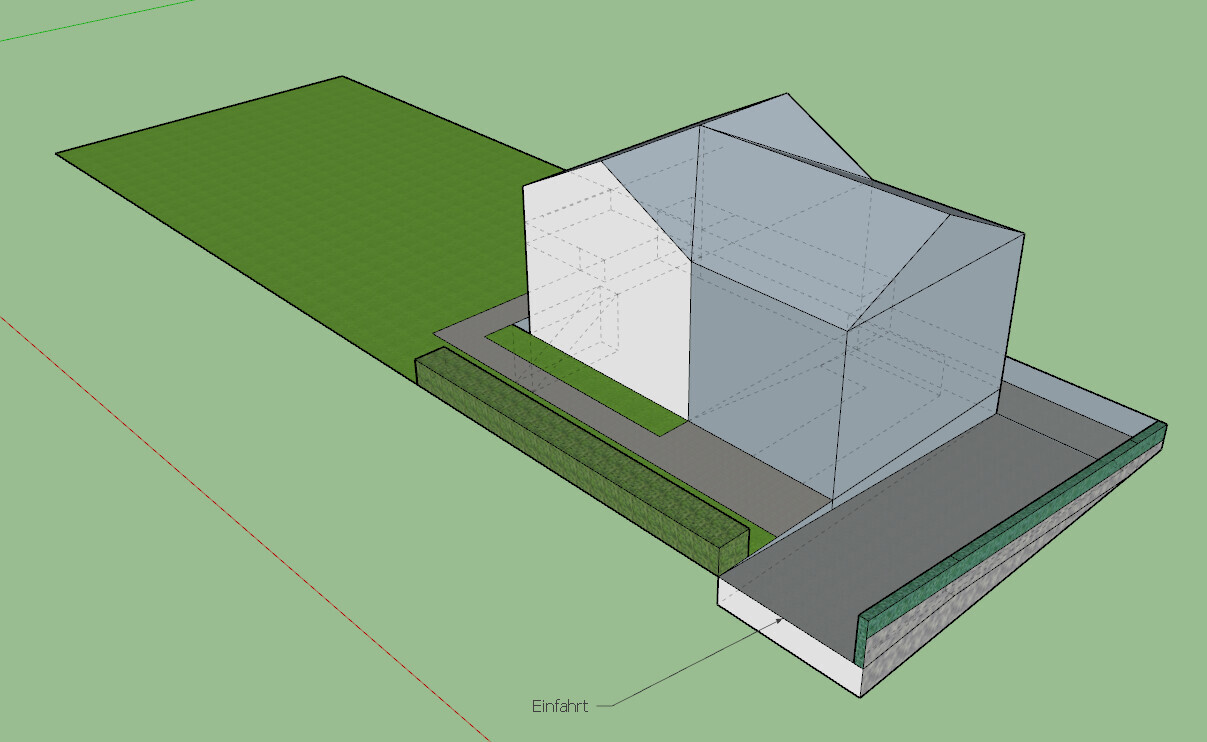
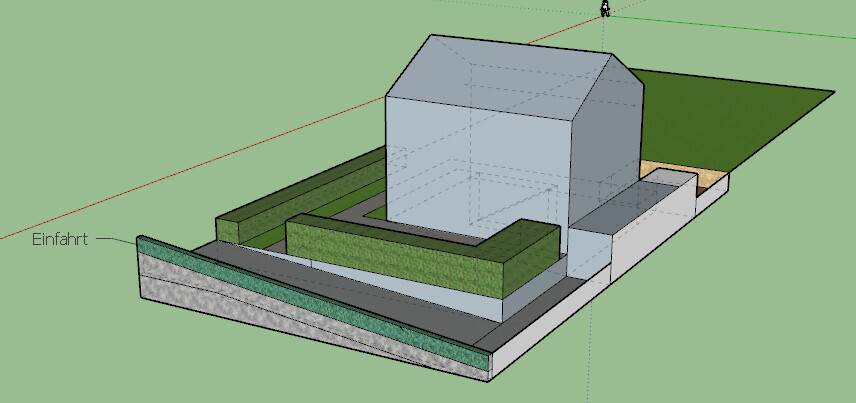
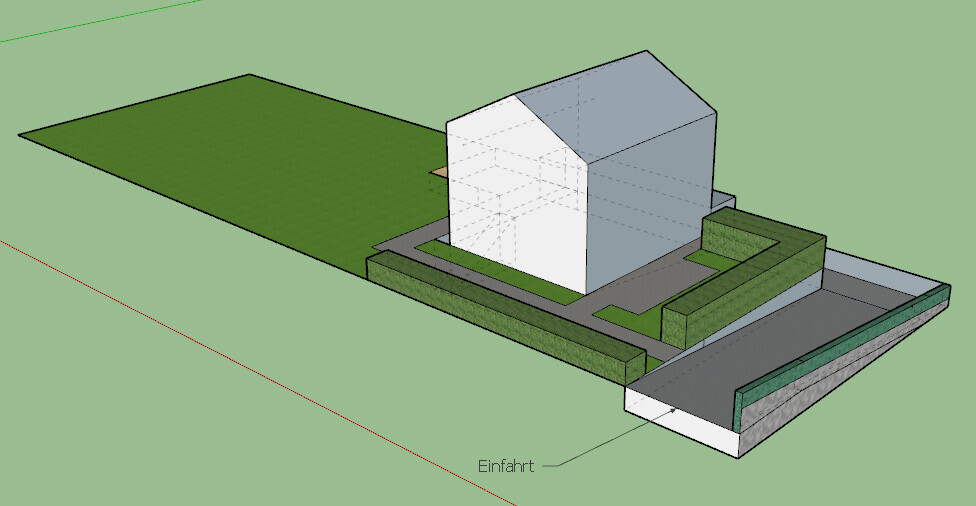
The existing building was constructed in the 1960s. Over the years, various renovation works have been carried out (electrical system, windows, ground floor flooring, stairwell, etc.). However, the electric heating consumes a lot of energy. The rooms are small, and the current layout is no longer suitable for two households. On the north side, a garage extends along the entire length of the house on a half-level between the basement and the ground floor.
The idea:
After careful consideration, an extension of the existing building towards the southeast seems reasonable. This would result in a building footprint of 14x9m (existing 8x9m + extension 6x9m = 126 sqm (1356 sq ft)). Ultimately, two separate residential units should be created. A utility room for each apartment is essential. Additionally, it would be beneficial if the upper floor apartment could also use the attic as living space. This could probably be designed as an open plan, but I lack the imagination regarding the room layout. I also don’t know to what extent the exterior wall of the old building will pose challenges for planning. It will certainly have to remain in place.
The tricky part about the existing building is that you have to walk around the house to reach the entrance door on the west side. To avoid visitors having to pass the ground floor when coming to the upper floor, the entrance area should be directly accessible from the street (south side). The question is: what to do with the existing stairwell? Demolition is problematic because it provides access to the basement. Should the old entrance remain for the ground floor and only the upper floor get a new entrance from the south side? I am uncertain. I do not necessarily want to have a basement under the extension — mainly for cost reasons, and the existing basement is actually large enough.
Technical aspects:
I would like to replace the old electric heating with an air source heat pump combined with underfloor heating. The roof covering will soon need to be replaced as well. Since the roof will have to be redone due to the extension, this could be a good opportunity to consider adding a photovoltaic system. New windows will be installed everywhere, and the exterior facade needs insulation. Does it make sense to build the extension with built-in insulation from the start? What is the best way to insulate the old building?
What does the zoning plan say?
Type of use: "General residential area"
Site coverage ratio (floor area ratio) = 0.3
The maximum allowable footprint of buildings is 200 sqm (2153 sq ft) per detached house or 100 sqm (1076 sq ft) per semi-detached house (the calculation is based on the main building footprint, excluding terraces and balconies).
Floor area ratio = 0.6 (maximum 2 full stories)
For buildings with gable, hip, or pyramid roofs:
- Maximum ridge height: 10.5 m (34 ft)
- Maximum eaves height: 7 m (23 ft)
For buildings with flat or shed roofs:
- Maximum building height (top edge): 7.5 m (25 ft)
Roof pitch for gable/hip/pyramid roofs: 25–40 degrees
Roof pitch for shed roof: max. 10 degrees
Semi-detached houses and terraced or row-type houses must be built with uniform main ridge direction and consistent roof pitch.
Roof structures and recesses such as dormers, cross-gables, and loggias are permitted if their total width on each roof side does not exceed half of the width of the supporting exterior wall below. The width of cross-gables is limited to one third of the supporting wall width per roof side.
The height of dormers and cross-gables (measured from the attic floor level to the top of the dormer/cross-gable roof) and roof recesses may be up to 75% of the total roof height (measured from the attic floor level to the ridge).
Dormers and roof recesses must be set back at least 0.5 m (1.6 ft) from the outer edge of the exterior wall below.
Roof structures and recesses must maintain a minimum distance of 1.25 m (4.1 ft) from gables, ridges, and valleys, measured at the narrowest point.
Dormer surfaces must be designed as windows.
Now I hope to get some ideas. The project is still in the design phase. I am open to all suggestions.
Best regards
Sven
E
El_Burrito4 May 2017 22:25Hello everyone,
I have given some more thought to the floor plan. Attached is the draft of the upper floor. The entrance is on the east side. In this case, access would be via an external staircase. Access to the ground floor remains unchanged, as does the staircase in the northwest. The old bathroom and hallway have to give way to a new dining area. The new bathroom is located in the extension and can also be accessed from the bedroom. The washing machine and dryer will be placed in the bathroom, so a utility room becomes unnecessary, creating more space for a child’s bedroom. I think this should be at least 15 sq.m (161 sq.ft) in size. Additionally, there will be an attached balcony on the west side. The attic is accessible via the existing staircase and could be kept as a potential area for future expansion. What do you think?
I have given some more thought to the floor plan. Attached is the draft of the upper floor. The entrance is on the east side. In this case, access would be via an external staircase. Access to the ground floor remains unchanged, as does the staircase in the northwest. The old bathroom and hallway have to give way to a new dining area. The new bathroom is located in the extension and can also be accessed from the bedroom. The washing machine and dryer will be placed in the bathroom, so a utility room becomes unnecessary, creating more space for a child’s bedroom. I think this should be at least 15 sq.m (161 sq.ft) in size. Additionally, there will be an attached balcony on the west side. The attic is accessible via the existing staircase and could be kept as a potential area for future expansion. What do you think?

A floor plan that becomes even more outdated in its layout after an extension than it was in the original year of construction – who would find that attractive to rent?
https://www.instagram.com/11antgmxde/
https://www.linkedin.com/company/bauen-jetzt/
https://www.instagram.com/11antgmxde/
https://www.linkedin.com/company/bauen-jetzt/
E
El_Burrito5 May 2017 10:28To be honest, it is not really intended for renting out.
And why two separate units?
By the way, it would be better to upload JPEG images here. Unfortunately, I was only able to open the upper floor plan, and the corridor pipe there already looked quite uncomfortable.
Have you ever measured how wide a grown, slim person is? Measured from knuckle to knuckle, so that the textured wallpaper on the walls isn’t scraped off by the knuckles?
Best regards in short
By the way, it would be better to upload JPEG images here. Unfortunately, I was only able to open the upper floor plan, and the corridor pipe there already looked quite uncomfortable.
Have you ever measured how wide a grown, slim person is? Measured from knuckle to knuckle, so that the textured wallpaper on the walls isn’t scraped off by the knuckles?
Best regards in short
E
El_Burrito5 May 2017 14:17Hello, first of all, thanks for the constructive input. The two units come from the fact that my mother lives in the house, and my wife and I want to move into the upper floor. The original plan to build another single-family house at the back of the property is prevented by the zoning plan / building permit.
I’m also not very happy with the corridor layout. It’s wasted space, especially if you make it wider. At this point, I’m a bit out of ideas. The annoying thing is the exterior wall of the existing house. It simply gets in the way of creating large and open rooms.
I’m also not very happy with the corridor layout. It’s wasted space, especially if you make it wider. At this point, I’m a bit out of ideas. The annoying thing is the exterior wall of the existing house. It simply gets in the way of creating large and open rooms.
Similar topics