
 Winniefred30 Nov 2019 17:59
Hello dear forum community!
In 2017, we bought an old building constructed in 1921 and mostly renovated it. Unfortunately, at that time, we didn’t have the time or budget to renew the interior plaster, so it was only patched up and the new electrical wiring was installed behind it. Now, room by room, we want to catch up on what we missed. The old plaster is still original, following the motto "lots of water and sand make a wall." It doesn’t look too bad, but it’s not great either, and if you try to drill a hole, half the wall comes with it. The plaster is simply too old.
We want to start with the younger daughter’s bedroom. At the same time, the wooden beam ceiling (in this case: the floor) will be leveled and made vibration-free using Fermacell dry screed boards. Right now, everything still moves a lot when the children jump around. Since we don’t have an extra bedroom, the little one will sleep temporarily in the older daughter’s room, so the renovation should be done as quickly as possible. That’s why we are choosing dry construction methods — also to avoid unnecessary dust and to keep everything as light as possible. The house’s exterior has about 20cm (8 inches) of insulation plus approximately 2cm (¾ inch) of exterior plaster (from around 1992), the brick walls are about 25cm (10 inches) thick plus approximately 2cm (¾ inch) of interior plaster (made from gravel, sand, water). So overall, the current wall structure is about 49cm (19 inches) thick. There are no mold issues, and energy costs are very low. We want to remove the old plaster on the walls and the old slag in the floor construction, but that should be the only major dirt generated. The ceiling has already been lowered using new drywall.
We plan to work on the two exterior walls with Fermacell composite boards and on the two interior partition walls with Fermacell gypsum boards. The electrical system is already new and will be reused. One radiator will be replaced, and the window sill will also be renewed (the window itself is already new). So it’s quite a complete overhaul.
Who here has concrete experience with these products? Especially in a do-it-yourself setup? What are your long-term experiences, particularly on exterior walls regarding dew points, possible moisture, etc.? In the attic, bathroom, and with a new interior wall, we have generally had good experiences with drywall construction. We want to start this project in spring. We plan to reinstall the laminate flooring, keep the door frame in place during the renovation, and at the end, decorate the walls to be child-friendly again, either with wallpaper or textured plaster, depending on the little girl’s preference. If all goes well, the older daughter’s room will be next.
I would appreciate hearing about your experiences and any tips!
In 2017, we bought an old building constructed in 1921 and mostly renovated it. Unfortunately, at that time, we didn’t have the time or budget to renew the interior plaster, so it was only patched up and the new electrical wiring was installed behind it. Now, room by room, we want to catch up on what we missed. The old plaster is still original, following the motto "lots of water and sand make a wall." It doesn’t look too bad, but it’s not great either, and if you try to drill a hole, half the wall comes with it. The plaster is simply too old.
We want to start with the younger daughter’s bedroom. At the same time, the wooden beam ceiling (in this case: the floor) will be leveled and made vibration-free using Fermacell dry screed boards. Right now, everything still moves a lot when the children jump around. Since we don’t have an extra bedroom, the little one will sleep temporarily in the older daughter’s room, so the renovation should be done as quickly as possible. That’s why we are choosing dry construction methods — also to avoid unnecessary dust and to keep everything as light as possible. The house’s exterior has about 20cm (8 inches) of insulation plus approximately 2cm (¾ inch) of exterior plaster (from around 1992), the brick walls are about 25cm (10 inches) thick plus approximately 2cm (¾ inch) of interior plaster (made from gravel, sand, water). So overall, the current wall structure is about 49cm (19 inches) thick. There are no mold issues, and energy costs are very low. We want to remove the old plaster on the walls and the old slag in the floor construction, but that should be the only major dirt generated. The ceiling has already been lowered using new drywall.
We plan to work on the two exterior walls with Fermacell composite boards and on the two interior partition walls with Fermacell gypsum boards. The electrical system is already new and will be reused. One radiator will be replaced, and the window sill will also be renewed (the window itself is already new). So it’s quite a complete overhaul.
Who here has concrete experience with these products? Especially in a do-it-yourself setup? What are your long-term experiences, particularly on exterior walls regarding dew points, possible moisture, etc.? In the attic, bathroom, and with a new interior wall, we have generally had good experiences with drywall construction. We want to start this project in spring. We plan to reinstall the laminate flooring, keep the door frame in place during the renovation, and at the end, decorate the walls to be child-friendly again, either with wallpaper or textured plaster, depending on the little girl’s preference. If all goes well, the older daughter’s room will be next.
I would appreciate hearing about your experiences and any tips!
R
Reudnitzer10 Dec 2019 22:16I can’t provide any information about Fermacell on walls, as we had a mold problem, so that option was obviously not suitable for us. However, during the renovation of the veranda (which used to be the second children’s room) we used Fermacell boards for the floor. Since it is elevated, meaning it does not have contact with the ground, we worked as follows:
- Removed slag until we had a level surface (it was not possible to remove everything because the substructure is a vaulted brick structure)
- Installed a foil layer (this step can be skipped)
- Applied Fermacell loose-fill screed on top
- Added a layer of expanded polystyrene insulation and underfloor heating elements (this can also be skipped, as under the veranda is the outside environment)
- Laid Fermacell boards on top
- Finally, linoleum as the floor covering
Except for installing the linoleum floor, we were able to do everything ourselves without problems.
I can’t say anything about impact sound insulation; only cats live underneath, where they have their kittens, but as a floor, it has proven very reliable so far. Whether it will last 150 years like the original floor is something I doubt.
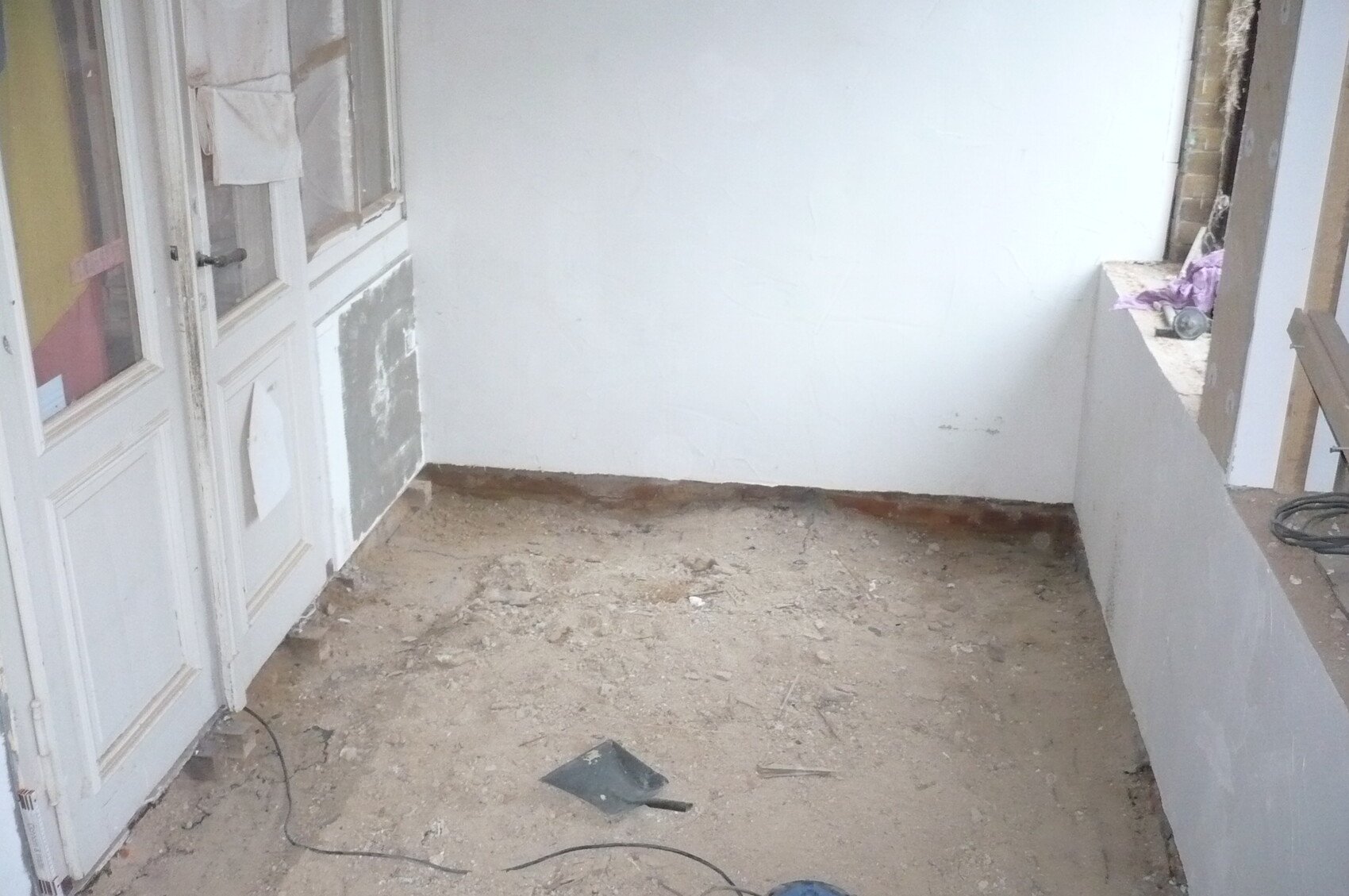
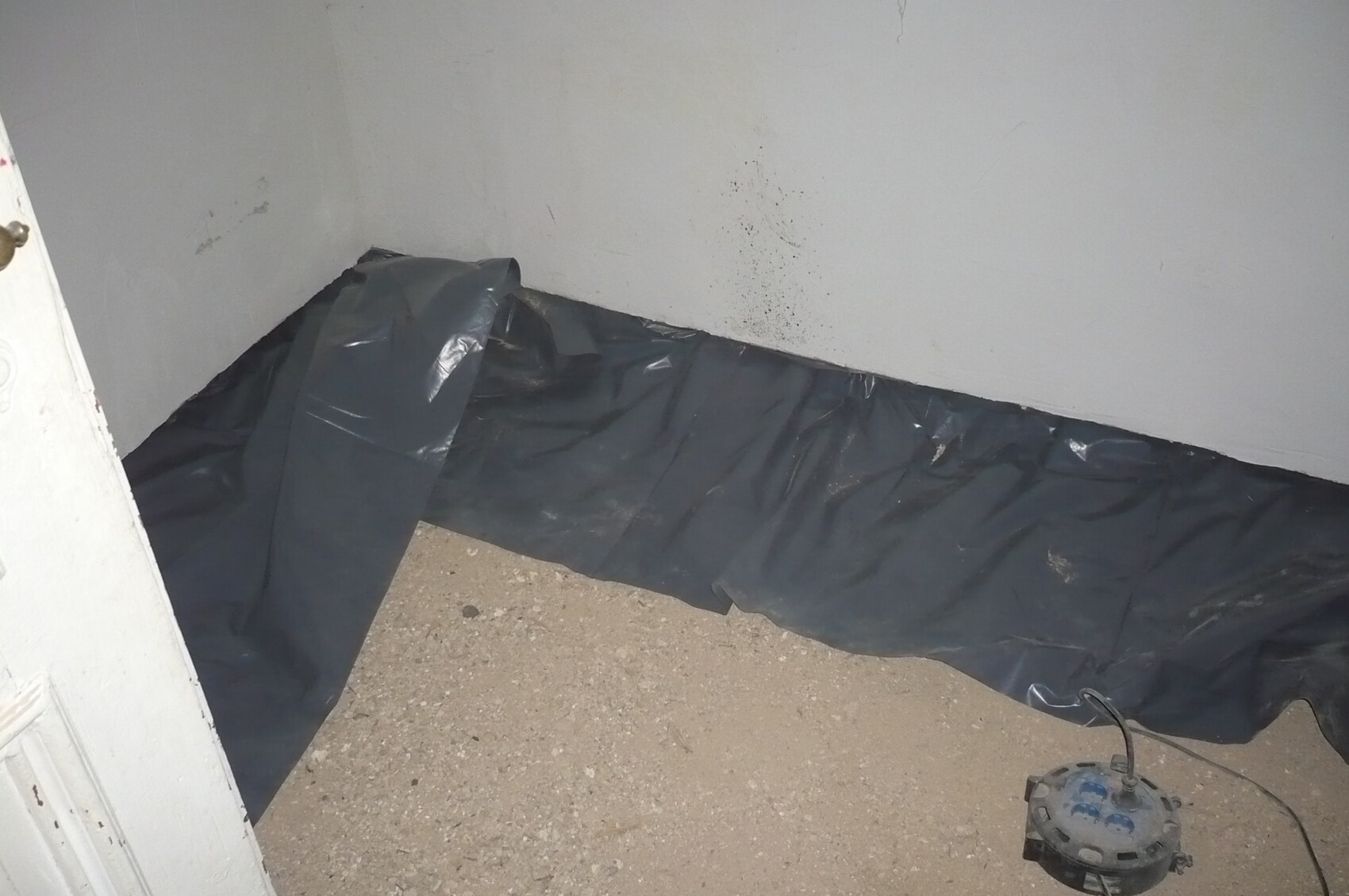
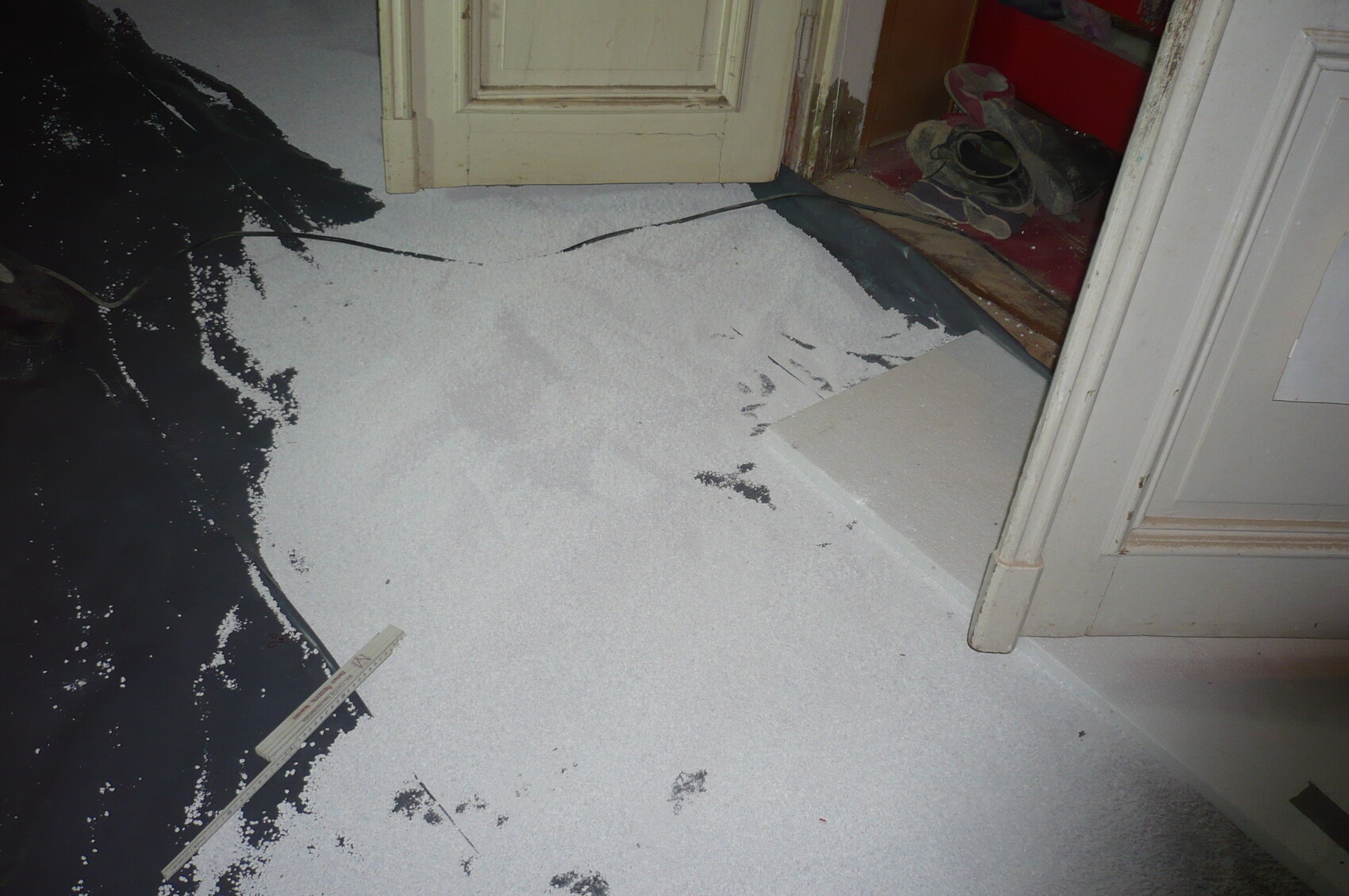
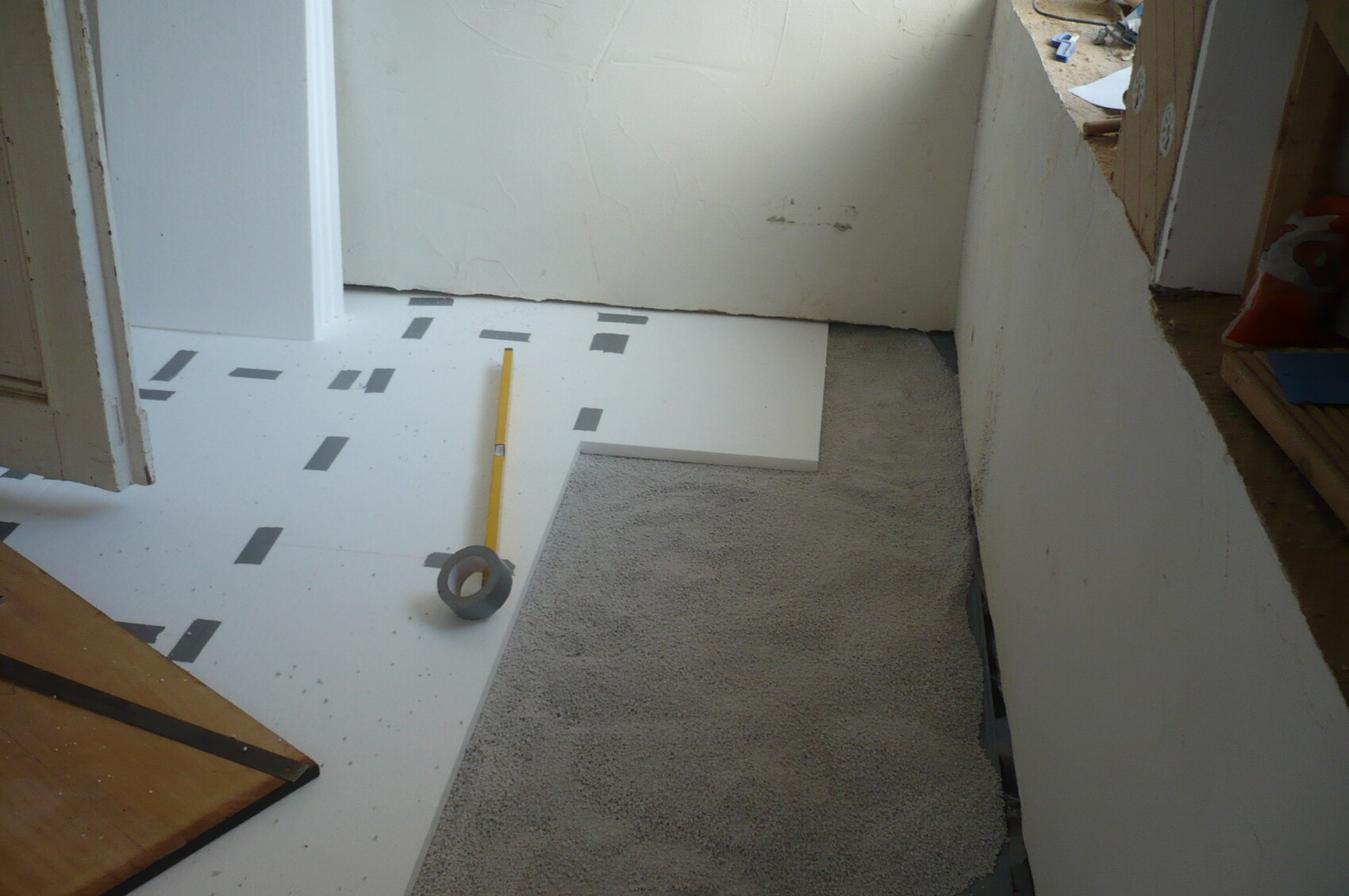
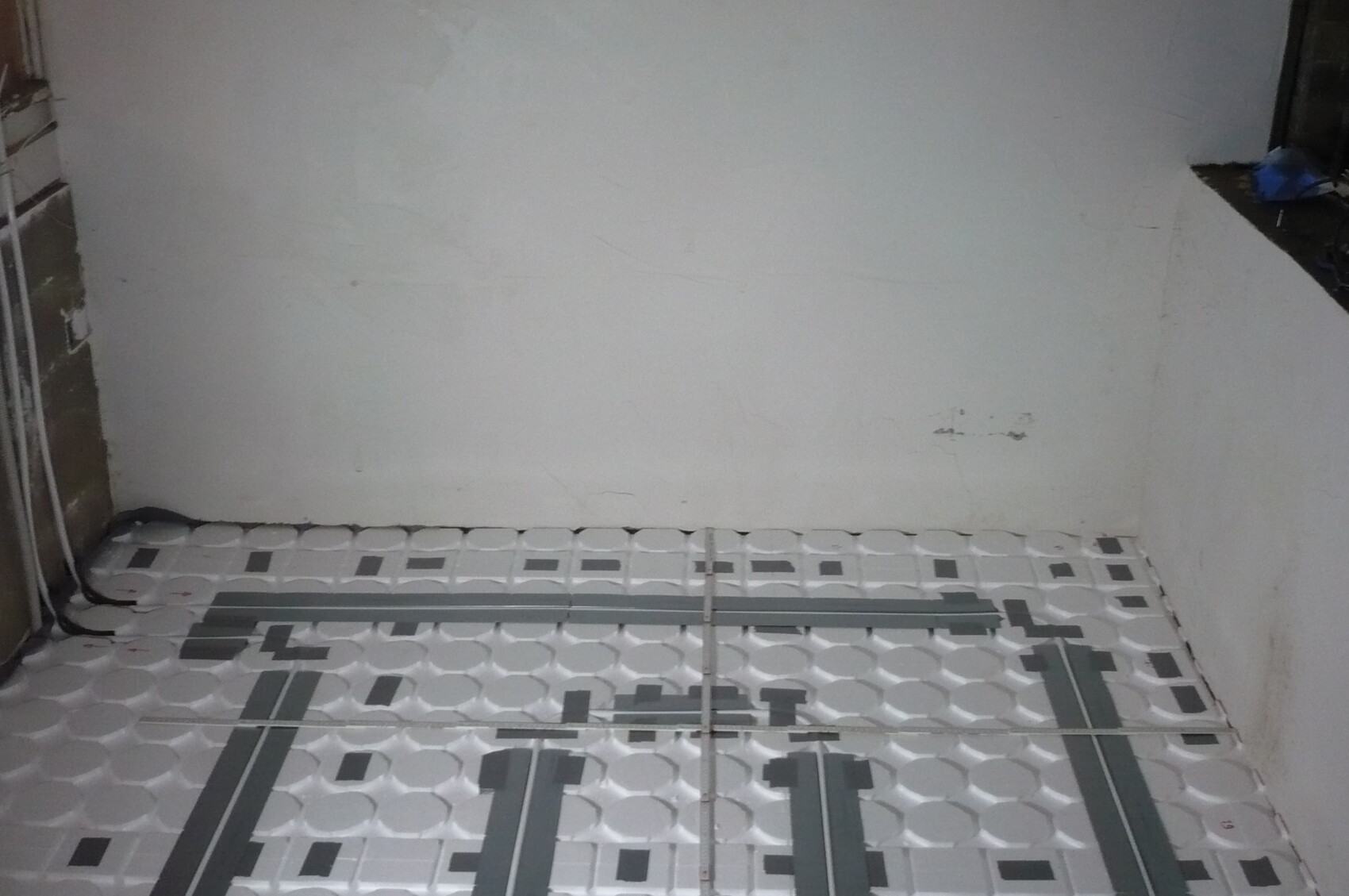
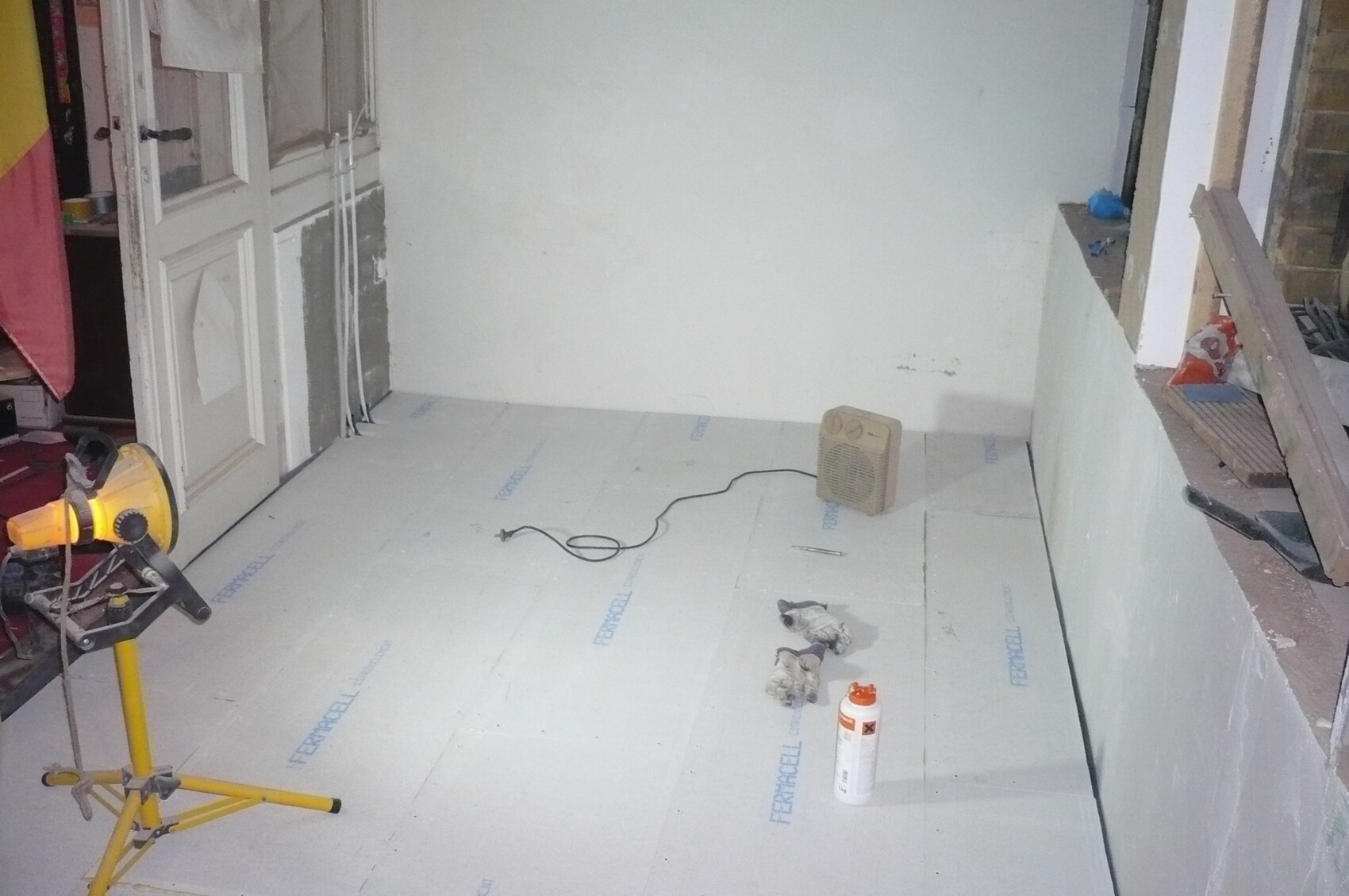
- Removed slag until we had a level surface (it was not possible to remove everything because the substructure is a vaulted brick structure)
- Installed a foil layer (this step can be skipped)
- Applied Fermacell loose-fill screed on top
- Added a layer of expanded polystyrene insulation and underfloor heating elements (this can also be skipped, as under the veranda is the outside environment)
- Laid Fermacell boards on top
- Finally, linoleum as the floor covering
Except for installing the linoleum floor, we were able to do everything ourselves without problems.
I can’t say anything about impact sound insulation; only cats live underneath, where they have their kittens, but as a floor, it has proven very reliable so far. Whether it will last 150 years like the original floor is something I doubt.
 Winniefred15 Dec 2019 17:09
Thank you for your answers! After much back and forth, we have decided to go with plastering to be on the safe side for the exterior walls – and since we’re plastering 2 walls anyway, we might as well plaster all 4. We feel it’s a bit too risky regarding moisture and related issues, even though plastering initially requires more work. For the floor, however, we will still use Fermacell, as we have already had good experiences with it in a small bathroom. We definitely need vibration-free and improved impact sound insulation for the floor.
Similar topics