
Hello everyone,
A brief introduction: we have a mid-terrace house (built in 1969) with an already converted attic (converted in the late 1980s / early 1990s). Now that almost all other work is finished, the attic is to be reactivated (a bedroom for our older daughter plus a work corner for dad), preferably as budget-friendly as possible.
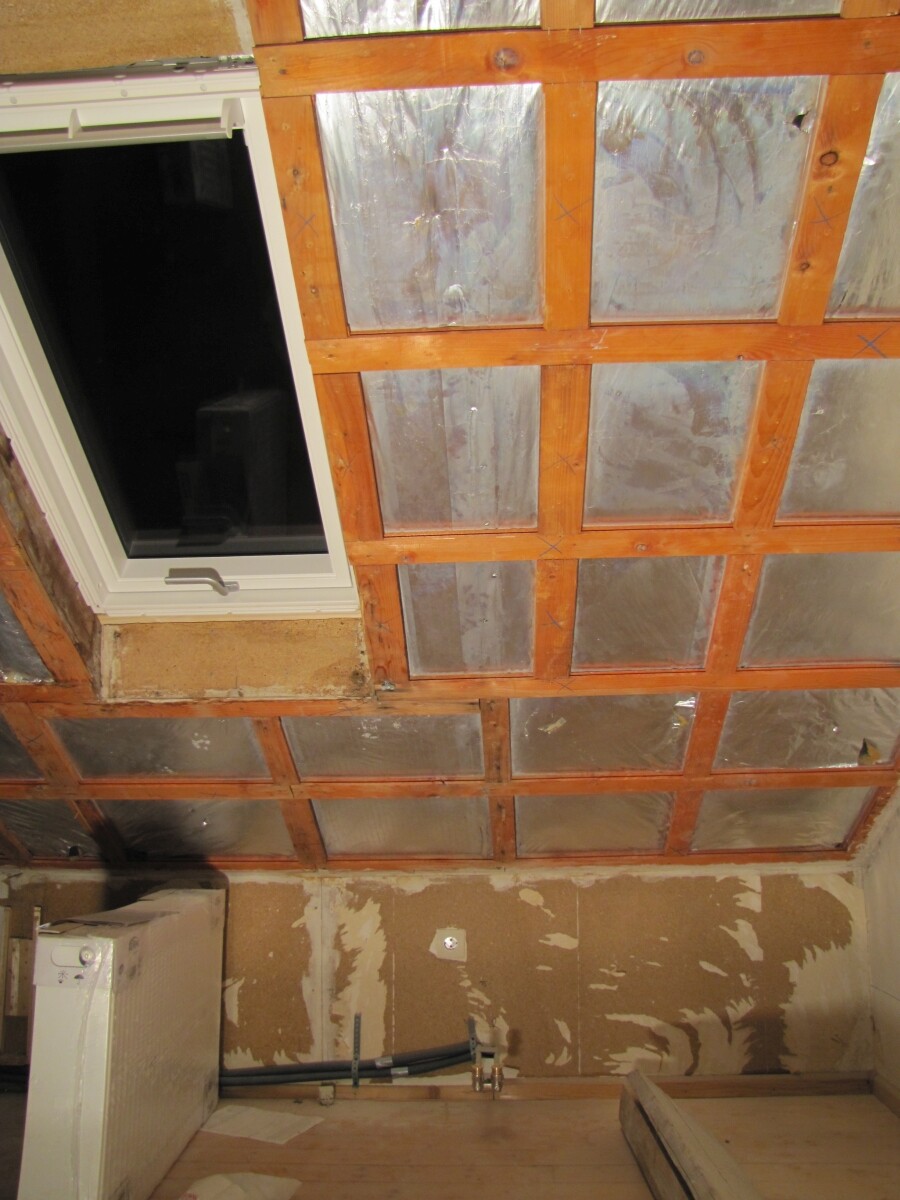
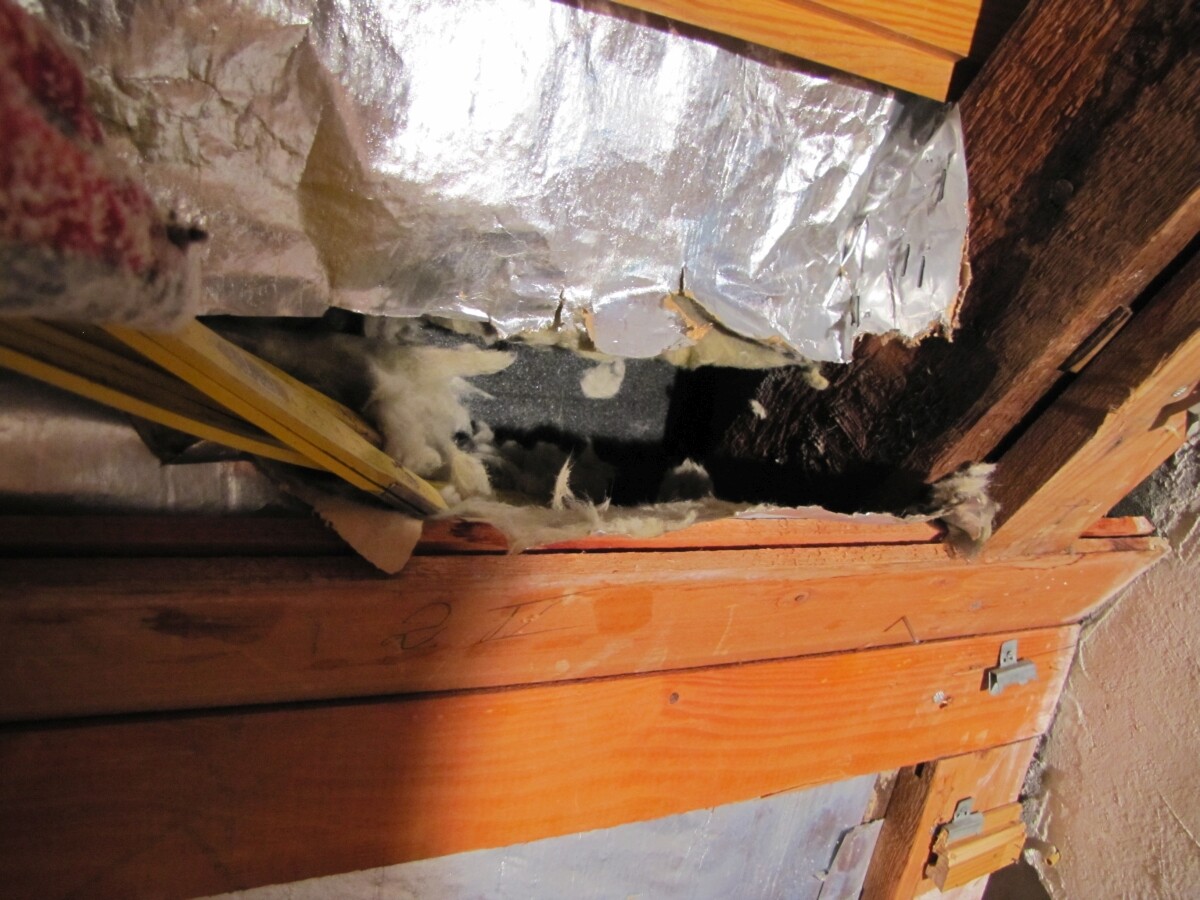
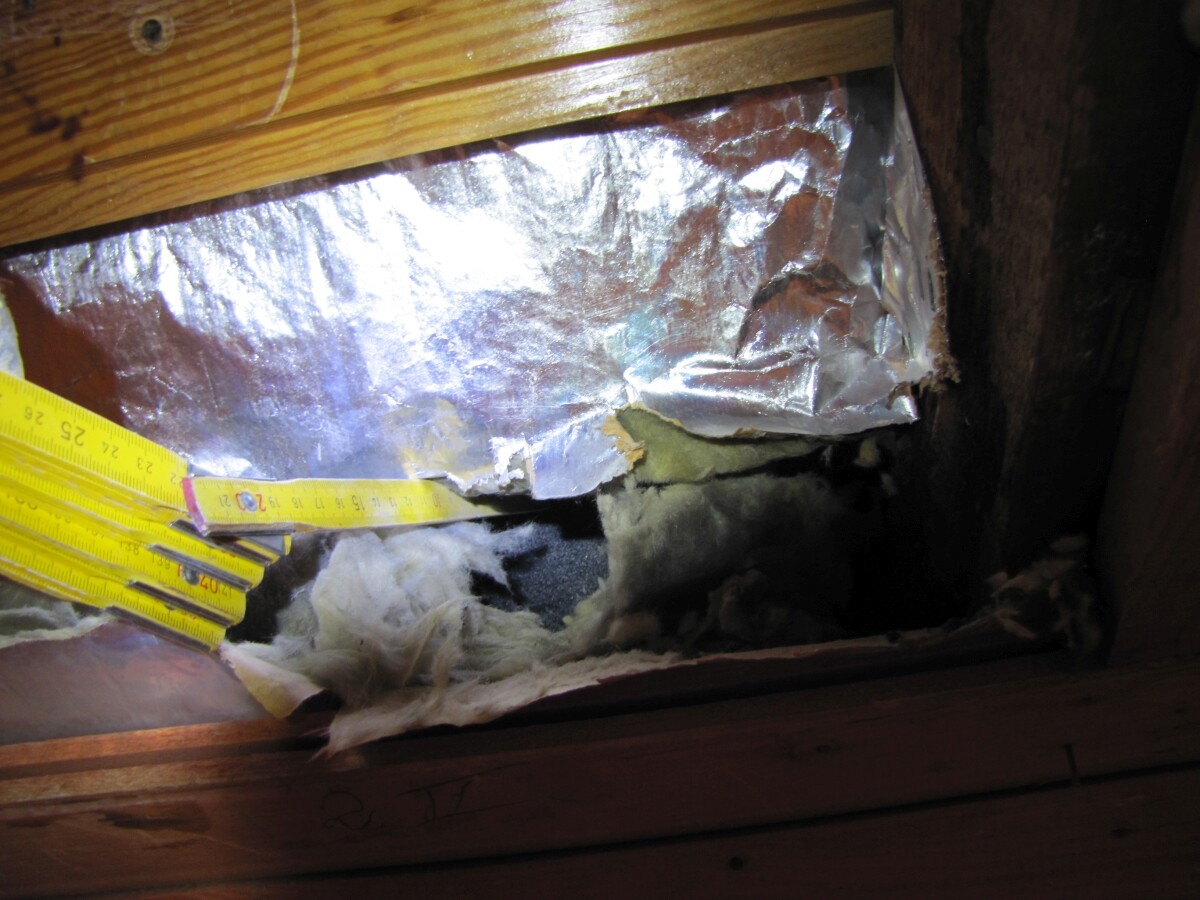
Already converted means that the attic had wooden plank flooring, internal insulation (foil-faced mineral wool), and ceiling cladding (wooden panels) when we bought the house (previous owner did the work themselves). We have already replaced the old attic windows, completely removed and disposed of the wooden panels because we wanted to see how it looked underneath and found that dormice (or another animal) had already chewed through the insulation in one spot. Moisture does not seem to have been a problem so far; the ceiling panels and beams were all dry except for one leak caused by slipped roof tiles (now fixed).
Now a new cladding is to be installed (this time not wood but gypsum drywall) and the insulation is to be done as optimally (and cost-effectively) as possible.
The question now is: what to do with the existing insulation?
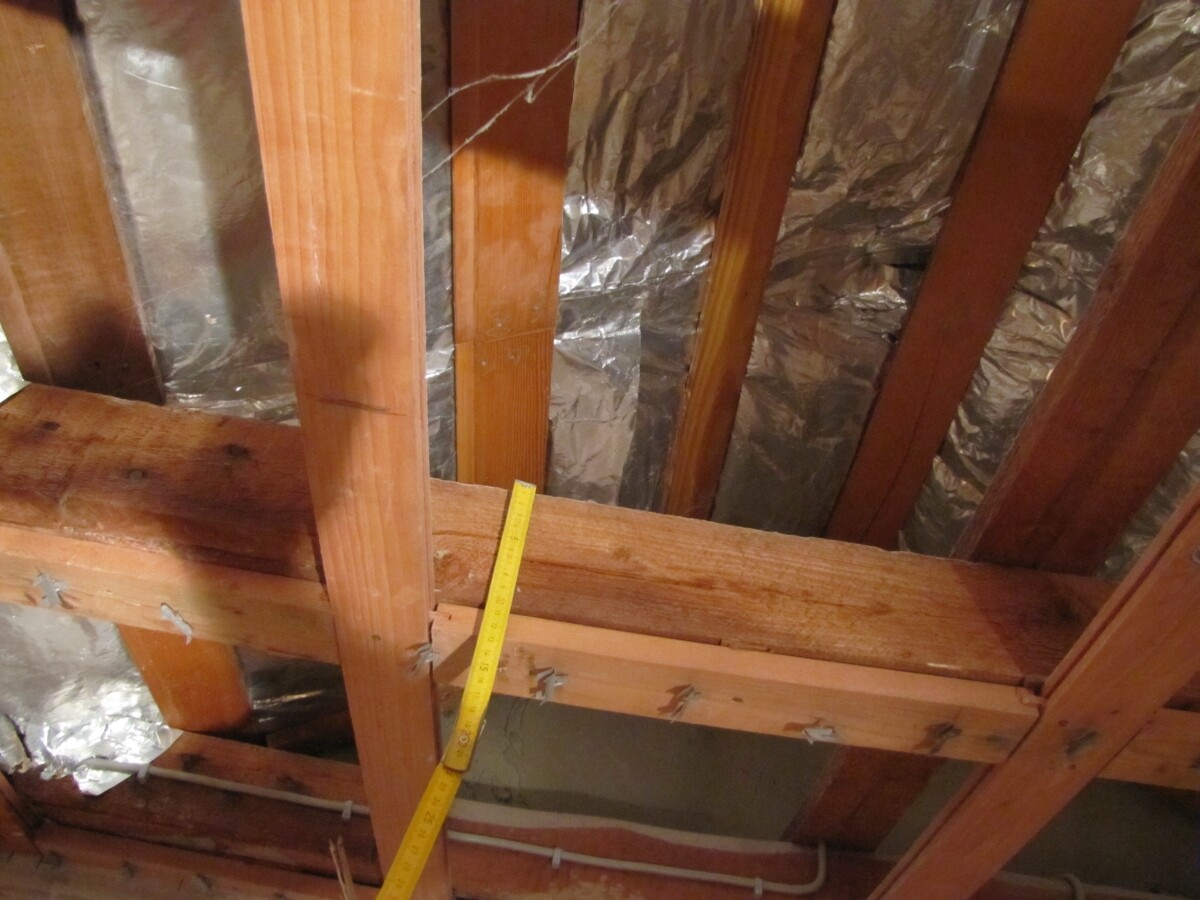
It looks like this: Insulation material = foil-faced mineral wool (exact material unknown). Behind the insulation, or between the insulation and the roof tiles, there appears to be only a layer of roofing felt. Nothing else. The beams are about 10 - 12 cm (4 - 5 inches) thick (closer to 12 cm (5 inches) near the roof windows, otherwise about 10 cm (4 inches)). Accordingly, the insulation is about 10 cm (4 inches) thick. On top of that is the old battens, to which the wooden panels were attached.
An energy consultant and several tradesmen (drywall installers) said the old insulation is still okay, so: seal existing holes with aluminum tape, then install a vapor barrier underneath, then attach the new cladding. Done.
From everything I have read, however, I doubt it is that simple. Especially: does a vapor barrier underneath the insulation (so between the old insulation and the new ceiling cladding) even make sense? Because the foil-faced insulation practically acts as a vapor barrier itself, which would mean moisture could accumulate between the foil facing and the vapor barrier? Or would it find its way through the inevitable gaps between old insulation and rafters, causing moisture damage there?
Would it therefore make sense to combine "piercing the foil facing (spiked roller)" plus an additional vapor barrier? Or would it be better to completely replace the old insulation? My main concern is not to make things worse and to have the space habitable again with as little (and inexpensive) effort as possible.
Thanks in advance for advice and/or experiences. I’m attaching photos here (hope this works...)
Best regards,
Stephan
A brief introduction: we have a mid-terrace house (built in 1969) with an already converted attic (converted in the late 1980s / early 1990s). Now that almost all other work is finished, the attic is to be reactivated (a bedroom for our older daughter plus a work corner for dad), preferably as budget-friendly as possible.
Already converted means that the attic had wooden plank flooring, internal insulation (foil-faced mineral wool), and ceiling cladding (wooden panels) when we bought the house (previous owner did the work themselves). We have already replaced the old attic windows, completely removed and disposed of the wooden panels because we wanted to see how it looked underneath and found that dormice (or another animal) had already chewed through the insulation in one spot. Moisture does not seem to have been a problem so far; the ceiling panels and beams were all dry except for one leak caused by slipped roof tiles (now fixed).
Now a new cladding is to be installed (this time not wood but gypsum drywall) and the insulation is to be done as optimally (and cost-effectively) as possible.
The question now is: what to do with the existing insulation?
It looks like this: Insulation material = foil-faced mineral wool (exact material unknown). Behind the insulation, or between the insulation and the roof tiles, there appears to be only a layer of roofing felt. Nothing else. The beams are about 10 - 12 cm (4 - 5 inches) thick (closer to 12 cm (5 inches) near the roof windows, otherwise about 10 cm (4 inches)). Accordingly, the insulation is about 10 cm (4 inches) thick. On top of that is the old battens, to which the wooden panels were attached.
An energy consultant and several tradesmen (drywall installers) said the old insulation is still okay, so: seal existing holes with aluminum tape, then install a vapor barrier underneath, then attach the new cladding. Done.
From everything I have read, however, I doubt it is that simple. Especially: does a vapor barrier underneath the insulation (so between the old insulation and the new ceiling cladding) even make sense? Because the foil-faced insulation practically acts as a vapor barrier itself, which would mean moisture could accumulate between the foil facing and the vapor barrier? Or would it find its way through the inevitable gaps between old insulation and rafters, causing moisture damage there?
Would it therefore make sense to combine "piercing the foil facing (spiked roller)" plus an additional vapor barrier? Or would it be better to completely replace the old insulation? My main concern is not to make things worse and to have the space habitable again with as little (and inexpensive) effort as possible.
Thanks in advance for advice and/or experiences. I’m attaching photos here (hope this works...)
Best regards,
Stephan
With 6cm (2.4 inches) of additional insulation, there will be issues because the aluminum acts as a vapor barrier.
If it is to be done properly, remove the old insulation and work with at least 16-18cm (6.3-7.1 inches) of insulation with an R-value of 0.35, preferably 0.32.
For thermal protection, consider double boarding or Fermacell.
If it is to be done properly, remove the old insulation and work with at least 16-18cm (6.3-7.1 inches) of insulation with an R-value of 0.35, preferably 0.32.
For thermal protection, consider double boarding or Fermacell.
If you want to keep it simple and affordable, just repair and put panels on top.
The aluminum foil essentially acts as a vapor barrier, and if after 30 years there has been no moisture in the insulation, it is obviously good enough.
With the current construction (assuming the old insulation has a thermal conductivity of WLG040), you get a U-value of about 0.37 W/m²K.
While this is not good by modern standards, it is still a very effective insulation.
For comparison: an uninsulated roof would be around 4.61 W/m²K. If you add another 10cm (5 inches) of insulation with WLG032, the U-value would be about 0.171 W/m²K.
However, you would definitely need a new vapor barrier; otherwise, the new insulation will become damp.
The question is also: do you have the height available to add, for example, 10cm (5 inches), or would that significantly limit usability?
The height will probably be critical, so replacing the old insulation is likely the only option. But 10cm (5 inches) is not enough even with WLG032, so you would have to add additional layers.
In my opinion, all this effort is too much for the modest improvement in insulation.
When the roof is completely renovated in 20 years or so, a proper insulation layer can be installed on top, and that will be sufficient.
The aluminum foil essentially acts as a vapor barrier, and if after 30 years there has been no moisture in the insulation, it is obviously good enough.
With the current construction (assuming the old insulation has a thermal conductivity of WLG040), you get a U-value of about 0.37 W/m²K.
While this is not good by modern standards, it is still a very effective insulation.
For comparison: an uninsulated roof would be around 4.61 W/m²K. If you add another 10cm (5 inches) of insulation with WLG032, the U-value would be about 0.171 W/m²K.
However, you would definitely need a new vapor barrier; otherwise, the new insulation will become damp.
The question is also: do you have the height available to add, for example, 10cm (5 inches), or would that significantly limit usability?
The height will probably be critical, so replacing the old insulation is likely the only option. But 10cm (5 inches) is not enough even with WLG032, so you would have to add additional layers.
In my opinion, all this effort is too much for the modest improvement in insulation.
When the roof is completely renovated in 20 years or so, a proper insulation layer can be installed on top, and that will be sufficient.
G
garfunkel23 Mar 2018 15:20In this situation, I would consider aiming for a combination of internal and external roof insulation. It doesn’t always have to be done all at once.
Similar topics