
Hello everyone,
A brief introduction: we have a mid-terrace house (built in 1969) with an already converted attic (converted in the late 1980s / early 1990s). Now that almost all other work is finished, the attic is to be reactivated (a bedroom for our older daughter plus a work corner for dad), preferably as budget-friendly as possible.
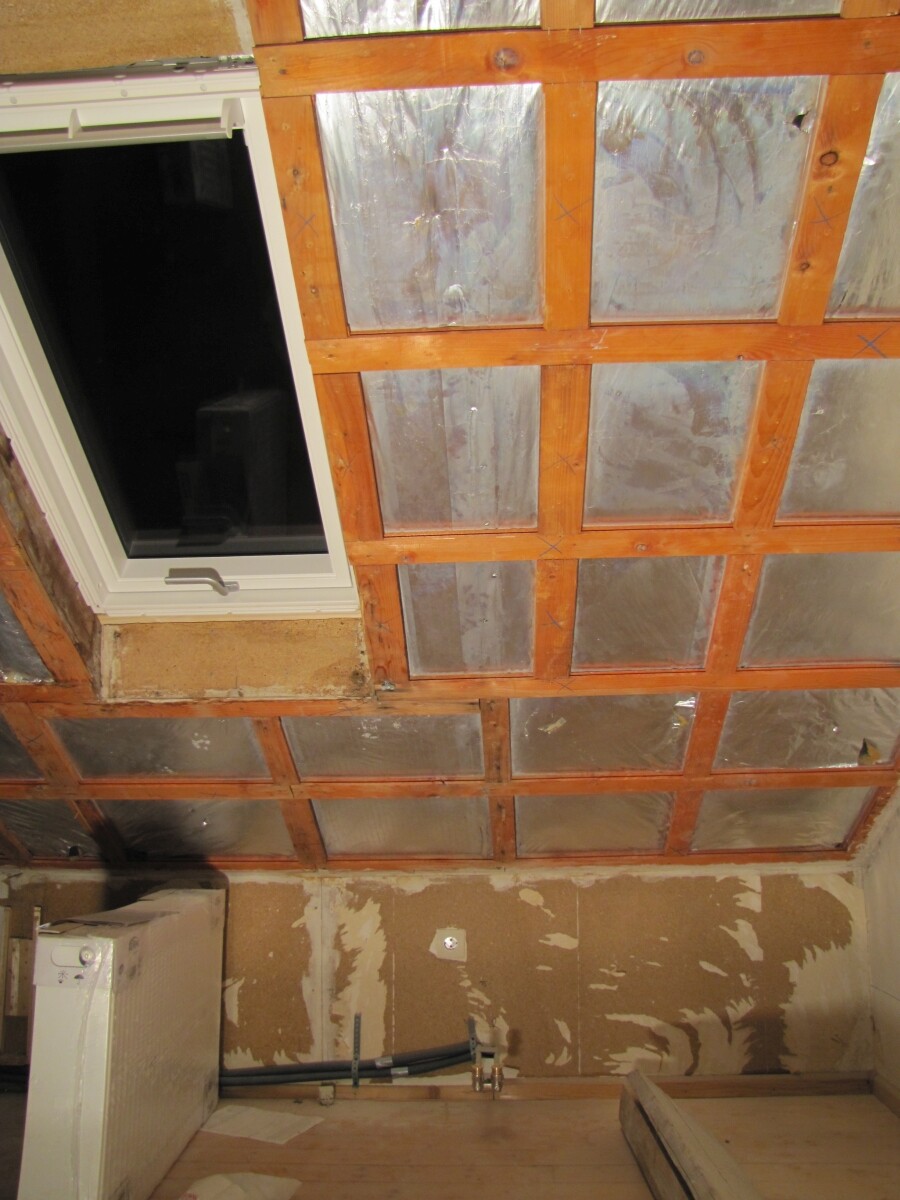
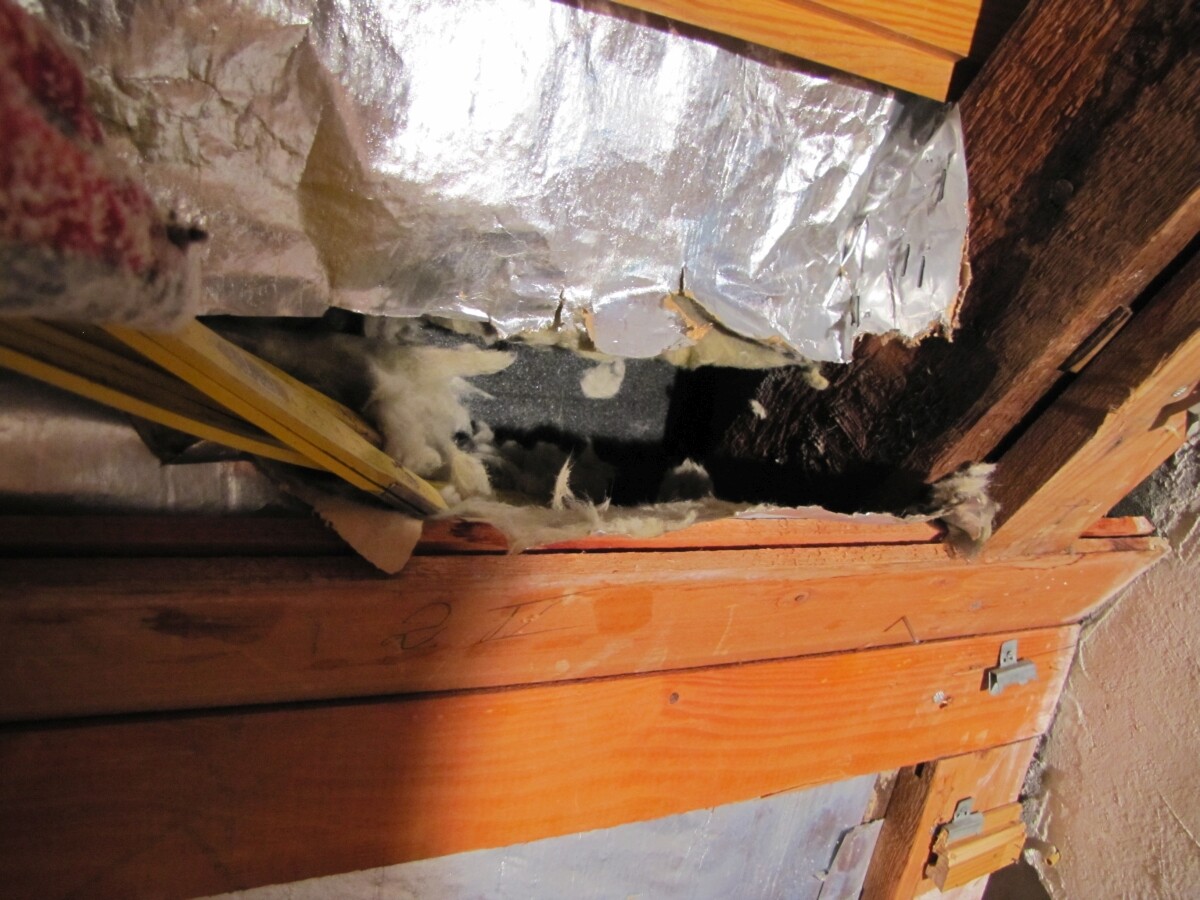
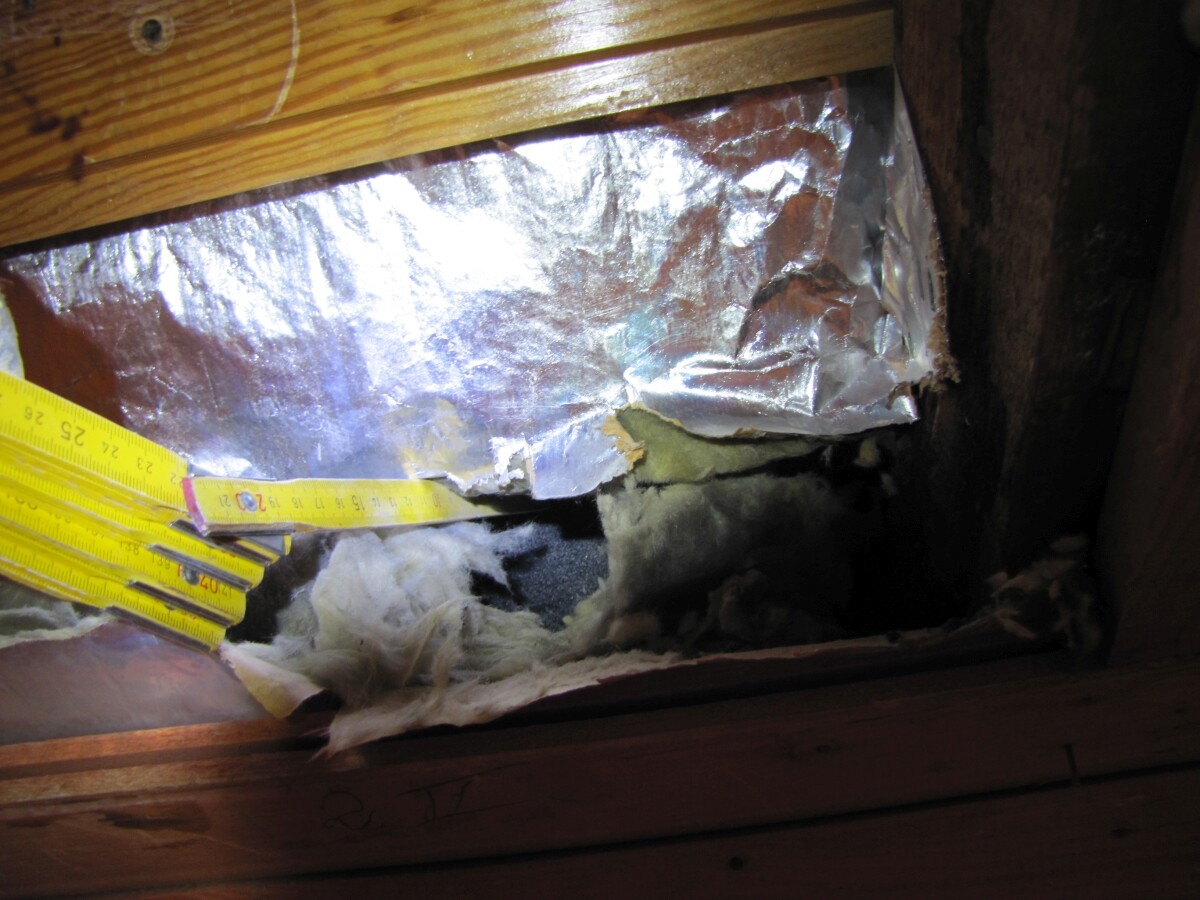
Already converted means that the attic had wooden plank flooring, internal insulation (foil-faced mineral wool), and ceiling cladding (wooden panels) when we bought the house (previous owner did the work themselves). We have already replaced the old attic windows, completely removed and disposed of the wooden panels because we wanted to see how it looked underneath and found that dormice (or another animal) had already chewed through the insulation in one spot. Moisture does not seem to have been a problem so far; the ceiling panels and beams were all dry except for one leak caused by slipped roof tiles (now fixed).
Now a new cladding is to be installed (this time not wood but gypsum drywall) and the insulation is to be done as optimally (and cost-effectively) as possible.
The question now is: what to do with the existing insulation?
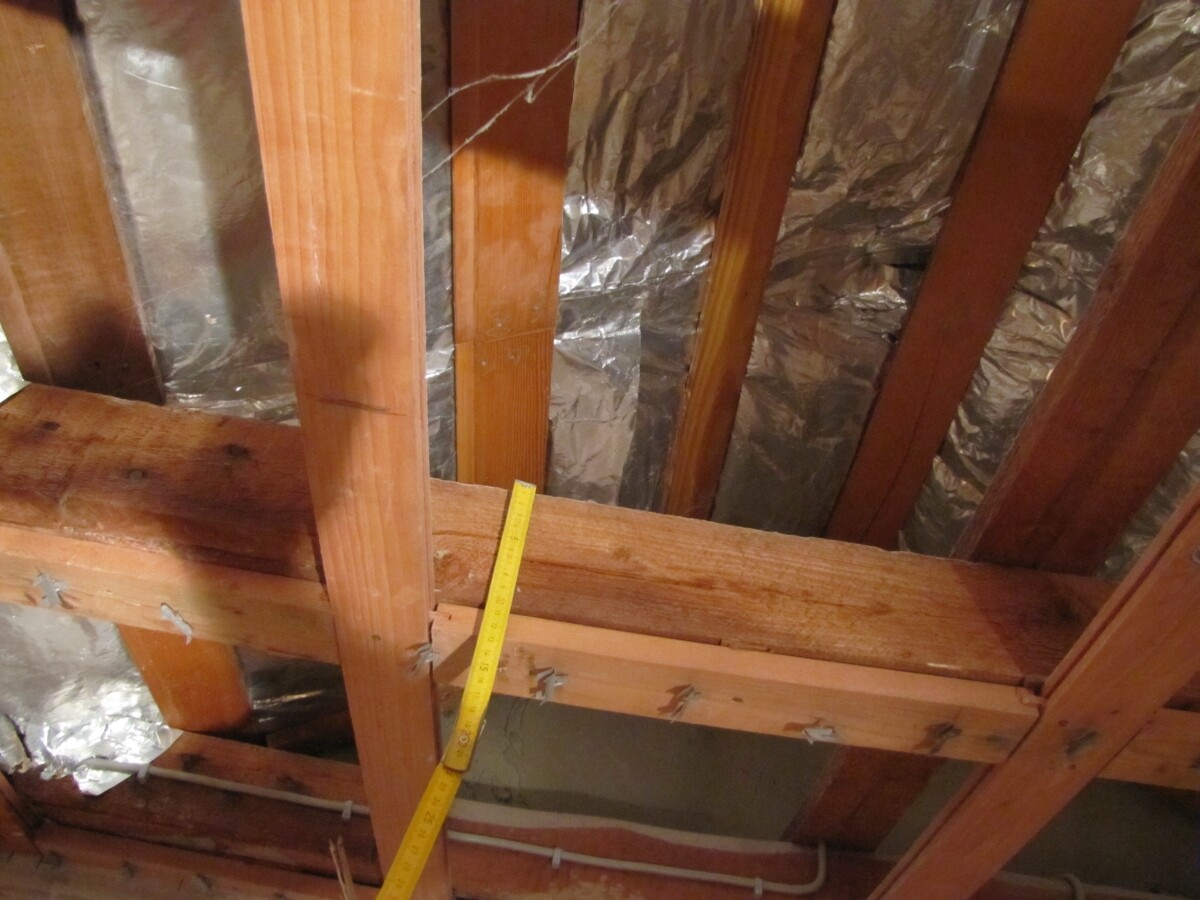
It looks like this: Insulation material = foil-faced mineral wool (exact material unknown). Behind the insulation, or between the insulation and the roof tiles, there appears to be only a layer of roofing felt. Nothing else. The beams are about 10 - 12 cm (4 - 5 inches) thick (closer to 12 cm (5 inches) near the roof windows, otherwise about 10 cm (4 inches)). Accordingly, the insulation is about 10 cm (4 inches) thick. On top of that is the old battens, to which the wooden panels were attached.
An energy consultant and several tradesmen (drywall installers) said the old insulation is still okay, so: seal existing holes with aluminum tape, then install a vapor barrier underneath, then attach the new cladding. Done.
From everything I have read, however, I doubt it is that simple. Especially: does a vapor barrier underneath the insulation (so between the old insulation and the new ceiling cladding) even make sense? Because the foil-faced insulation practically acts as a vapor barrier itself, which would mean moisture could accumulate between the foil facing and the vapor barrier? Or would it find its way through the inevitable gaps between old insulation and rafters, causing moisture damage there?
Would it therefore make sense to combine "piercing the foil facing (spiked roller)" plus an additional vapor barrier? Or would it be better to completely replace the old insulation? My main concern is not to make things worse and to have the space habitable again with as little (and inexpensive) effort as possible.
Thanks in advance for advice and/or experiences. I’m attaching photos here (hope this works...)
Best regards,
Stephan
A brief introduction: we have a mid-terrace house (built in 1969) with an already converted attic (converted in the late 1980s / early 1990s). Now that almost all other work is finished, the attic is to be reactivated (a bedroom for our older daughter plus a work corner for dad), preferably as budget-friendly as possible.
Already converted means that the attic had wooden plank flooring, internal insulation (foil-faced mineral wool), and ceiling cladding (wooden panels) when we bought the house (previous owner did the work themselves). We have already replaced the old attic windows, completely removed and disposed of the wooden panels because we wanted to see how it looked underneath and found that dormice (or another animal) had already chewed through the insulation in one spot. Moisture does not seem to have been a problem so far; the ceiling panels and beams were all dry except for one leak caused by slipped roof tiles (now fixed).
Now a new cladding is to be installed (this time not wood but gypsum drywall) and the insulation is to be done as optimally (and cost-effectively) as possible.
The question now is: what to do with the existing insulation?
It looks like this: Insulation material = foil-faced mineral wool (exact material unknown). Behind the insulation, or between the insulation and the roof tiles, there appears to be only a layer of roofing felt. Nothing else. The beams are about 10 - 12 cm (4 - 5 inches) thick (closer to 12 cm (5 inches) near the roof windows, otherwise about 10 cm (4 inches)). Accordingly, the insulation is about 10 cm (4 inches) thick. On top of that is the old battens, to which the wooden panels were attached.
An energy consultant and several tradesmen (drywall installers) said the old insulation is still okay, so: seal existing holes with aluminum tape, then install a vapor barrier underneath, then attach the new cladding. Done.
From everything I have read, however, I doubt it is that simple. Especially: does a vapor barrier underneath the insulation (so between the old insulation and the new ceiling cladding) even make sense? Because the foil-faced insulation practically acts as a vapor barrier itself, which would mean moisture could accumulate between the foil facing and the vapor barrier? Or would it find its way through the inevitable gaps between old insulation and rafters, causing moisture damage there?
Would it therefore make sense to combine "piercing the foil facing (spiked roller)" plus an additional vapor barrier? Or would it be better to completely replace the old insulation? My main concern is not to make things worse and to have the space habitable again with as little (and inexpensive) effort as possible.
Thanks in advance for advice and/or experiences. I’m attaching photos here (hope this works...)
Best regards,
Stephan
K
Knallkörper9 Mar 2018 19:43Hello. I would repair the old insulation by filling in any gaps. This way, you would create an additional insulation layer on the interior side, at least 60mm (2.4 inches) thick. I believe this is the best way to make the most of it.
Question: Is the old insulation installed with an air gap to the roofing membrane, or is it placed directly against it? If there is an air gap, can you confirm whether effective ventilation is possible there, meaning are there appropriate intake and exhaust vents at the ridge and eaves?
If the answer to any of these questions is no, then in my opinion you definitely need to install a vapor barrier on the room side, for example an aluminum foil, and seal it carefully all around. The reason is that the exterior roofing membrane is quite impermeable to vapor.
Question: Is the old insulation installed with an air gap to the roofing membrane, or is it placed directly against it? If there is an air gap, can you confirm whether effective ventilation is possible there, meaning are there appropriate intake and exhaust vents at the ridge and eaves?
If the answer to any of these questions is no, then in my opinion you definitely need to install a vapor barrier on the room side, for example an aluminum foil, and seal it carefully all around. The reason is that the exterior roofing membrane is quite impermeable to vapor.
Hello.
I’m afraid there is probably no air gap—except where the dormice were active. Therefore, a vapor barrier is needed because the structure is very diffusion-tight? (So far, it seems to have always been dry up there, and last summer it was quite warm, but it hasn’t been used as a bedroom yet…)
That means I would have to double the beams/rafters for the additional insulation (that’s the correct term, if I’m not mistaken?), right?
And a vapor retarder would not help at all (with or without additional insulation), but would actually be counterproductive because the moisture would then either
a) get trapped between the vapor retarder and the old aluminum-foil-faced insulation,
b) or, if the aluminum coating is deliberately perforated, accumulate at the roofing felt?
I wonder why the contractors who looked at this were so focused on the vapor retarder...
Thanks again
Regards
Stephan
I’m afraid there is probably no air gap—except where the dormice were active. Therefore, a vapor barrier is needed because the structure is very diffusion-tight? (So far, it seems to have always been dry up there, and last summer it was quite warm, but it hasn’t been used as a bedroom yet…)
That means I would have to double the beams/rafters for the additional insulation (that’s the correct term, if I’m not mistaken?), right?
And a vapor retarder would not help at all (with or without additional insulation), but would actually be counterproductive because the moisture would then either
a) get trapped between the vapor retarder and the old aluminum-foil-faced insulation,
b) or, if the aluminum coating is deliberately perforated, accumulate at the roofing felt?
I wonder why the contractors who looked at this were so focused on the vapor retarder...
Thanks again
Regards
Stephan
G
garfunkel11 Mar 2018 12:04If the vapor barrier is installed correctly, no moisture will get into the insulation.
Therefore, the construction behind the vapor barrier is "irrelevant."
Of course, the entire assembly should be considered, and a diffusion-open build on the outside is always preferable.
I think 10cm (4 inches) of insulation is no longer adequate for an attic. Keep in mind that under the roof you mostly have "external walls."
In this situation, it would be advisable to add more insulation since you already have everything exposed anyway.
It is recommended to include the rafters in the insulation layer. This means insulating between the rafters at rafter height and then adding another layer above so the rafters don’t create thermal bridges.
Summer heat protection...
Before my renovation, about 10cm (4 inches) of glass wool insulation was installed. In summer, after two days, the rooms would reach 30°C (86°F). Now, with about 180mm (7 inches) of exterior roof insulation, it takes a week or more to reach that temperature.
The construction is crucial here. I would not overlook this under the roof and include it in the planning.
However, it must be considered that even the best insulation cannot help with heat protection when the air temperature does not drop below 25°C (77°F) for weeks — eventually, it just stays warm under the roof.
I find it odd that the energy consultant simply dismissed this since 10cm (4 inches) of insulation is really too little.
The drywall installers might be right, but it’s unclear from which perspective they made this statement.
So, did they only assess the current situation, or did they also consider long-term energy efficiency?
I would suggest consulting a roofer/carpenter for advice.
Maybe also get another energy consultant involved.
You can explain your plans to them and find a good solution together.
It might actually make sense to do little on the inside now and, in a few years when the roof tiles need replacing, add exterior roof insulation or combine it with interior insulation.
There are always several possible solutions.
Therefore, the construction behind the vapor barrier is "irrelevant."
Of course, the entire assembly should be considered, and a diffusion-open build on the outside is always preferable.
I think 10cm (4 inches) of insulation is no longer adequate for an attic. Keep in mind that under the roof you mostly have "external walls."
In this situation, it would be advisable to add more insulation since you already have everything exposed anyway.
It is recommended to include the rafters in the insulation layer. This means insulating between the rafters at rafter height and then adding another layer above so the rafters don’t create thermal bridges.
Summer heat protection...
Before my renovation, about 10cm (4 inches) of glass wool insulation was installed. In summer, after two days, the rooms would reach 30°C (86°F). Now, with about 180mm (7 inches) of exterior roof insulation, it takes a week or more to reach that temperature.
The construction is crucial here. I would not overlook this under the roof and include it in the planning.
However, it must be considered that even the best insulation cannot help with heat protection when the air temperature does not drop below 25°C (77°F) for weeks — eventually, it just stays warm under the roof.
I find it odd that the energy consultant simply dismissed this since 10cm (4 inches) of insulation is really too little.
The drywall installers might be right, but it’s unclear from which perspective they made this statement.
So, did they only assess the current situation, or did they also consider long-term energy efficiency?
I would suggest consulting a roofer/carpenter for advice.
Maybe also get another energy consultant involved.
You can explain your plans to them and find a good solution together.
It might actually make sense to do little on the inside now and, in a few years when the roof tiles need replacing, add exterior roof insulation or combine it with interior insulation.
There are always several possible solutions.
K
Knallkörper11 Mar 2018 13:34garfunkel schrieb:
If the vapor retarder is installed correctly, no moisture will enter the insulation.If possible, I would recommend using a vapor barrier to ensure that the interior side is significantly more diffusion-resistant than the exterior.
If the old insulation can still be used, I don’t see any economic or ecological reason to replace it. Patching is fine to address thermal bridges. Adding additional insulation onto the rafters on the interior side or installing battens perpendicular to the rafters is an option if the room height allows. I also believe that 10 cm (4 inches) is no longer sufficient. Depending on the insulation material, the second layer can also provide some additional soundproofing.
Similar topics