
ᐅ Existing Single-Family Home – What Floor Plan Changes Are Feasible and Practical?
Created on: 3 Jan 2026 13:50
F
FragenderNeul.
Hello everyone,
I would like to tap into the collective knowledge here and exchange practical ideas for adjusting the room layout or the floor plan with the forum.
It concerns an older single-family house.
The dimensions on the floor plans are not 100% accurate but should be sufficient for an overview and initial planning.
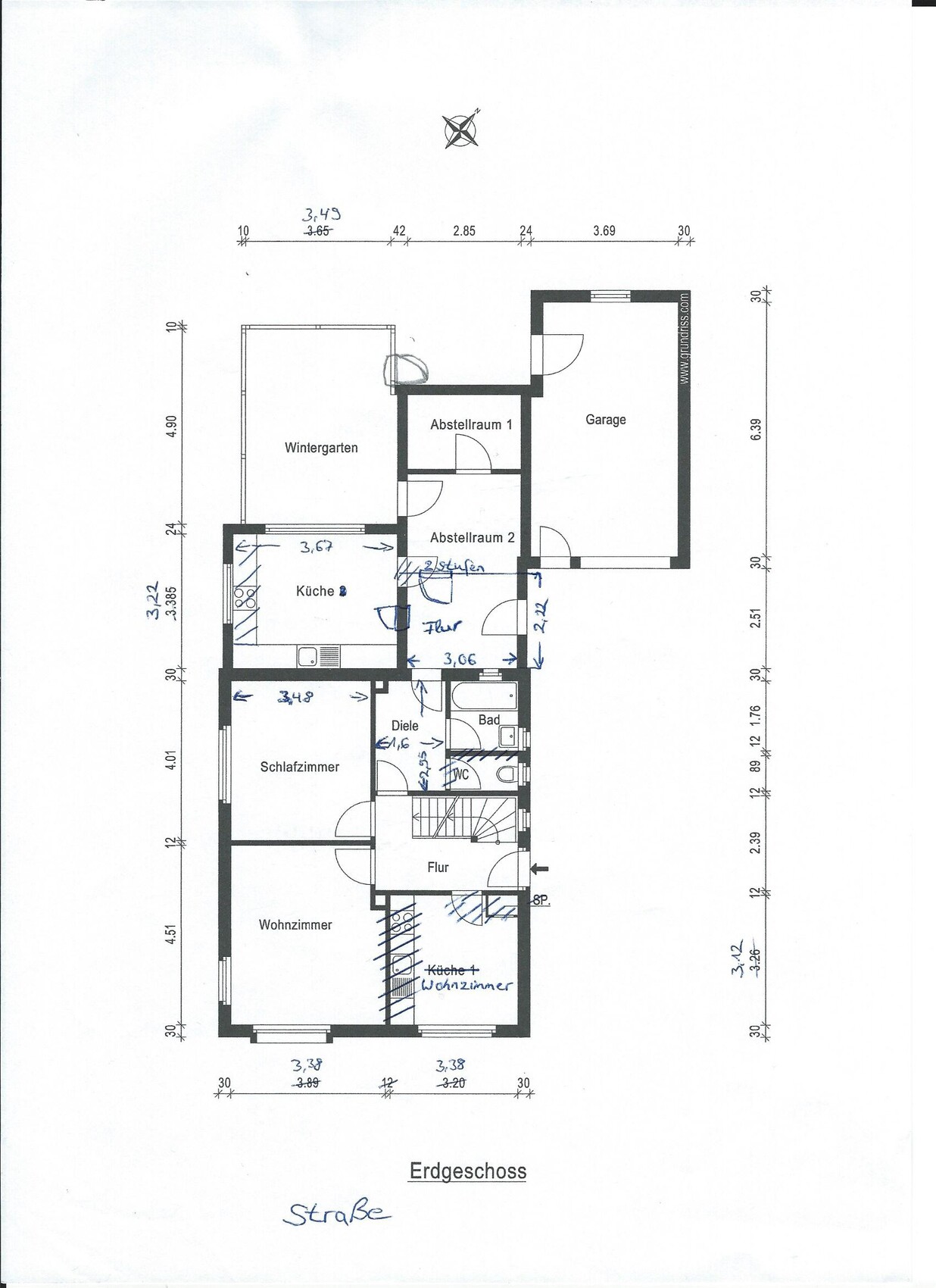
The property consists of several parts: the single-family house, attached to it is a flat-roof extension with kitchen and hallway, then a former shed with kitchen cabinets, a sink, and a pantry, as well as access to the conservatory. The garage is directly next to the former shed. The inner wall of the garage is also the wall of the shed and is probably load-bearing. (The garage has a concrete ceiling.) What is your rough estimate on whether it would even be possible to create a door from the garage to "Storage Room 2"?
- Currently, there are two entrances to the house from the driveway. One to the single-family house itself, one to the flat-roof extension.
- The ground floor floor is concrete (except the living room). Bathroom and conservatory each have underfloor heating.
My wishes/ideas:
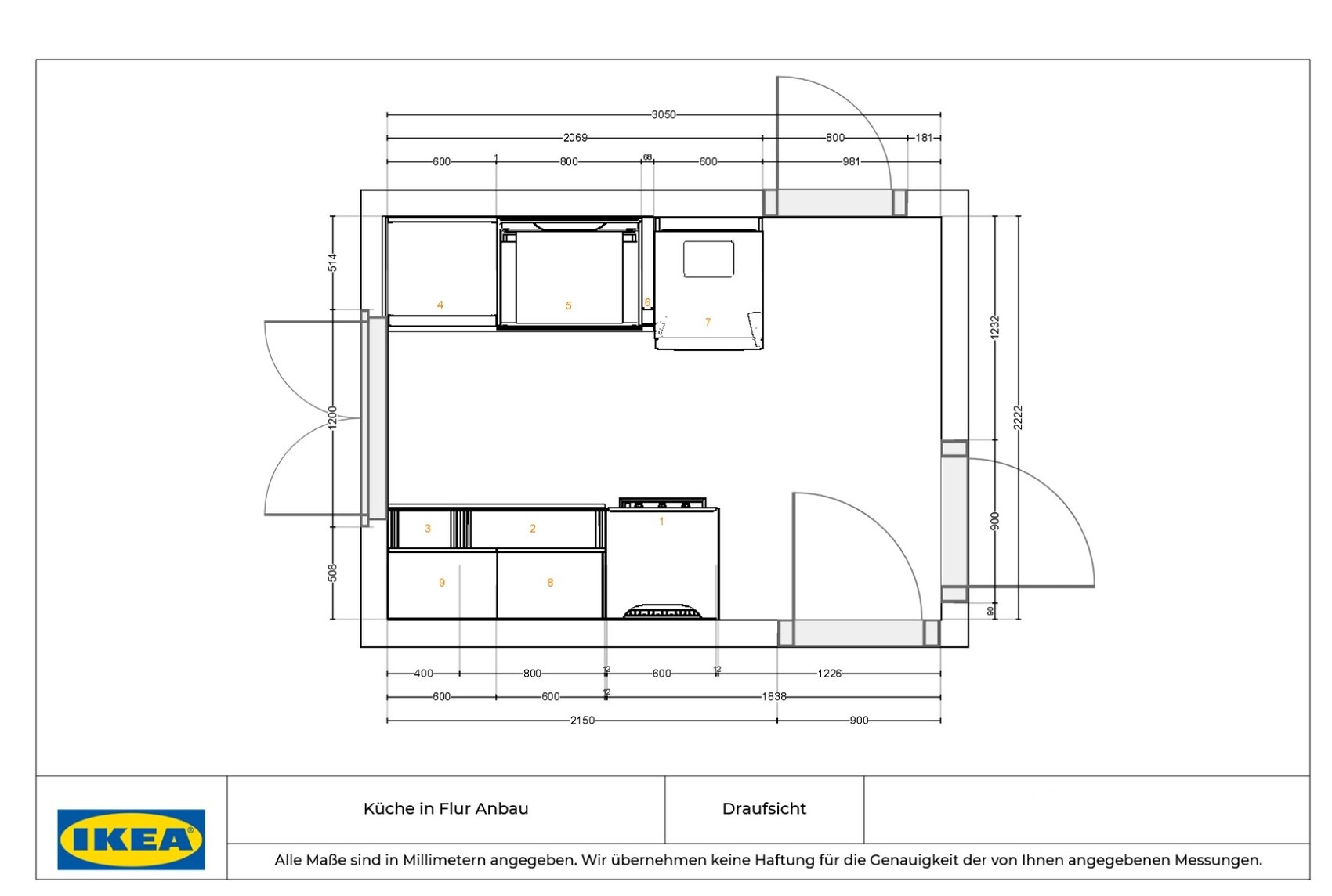
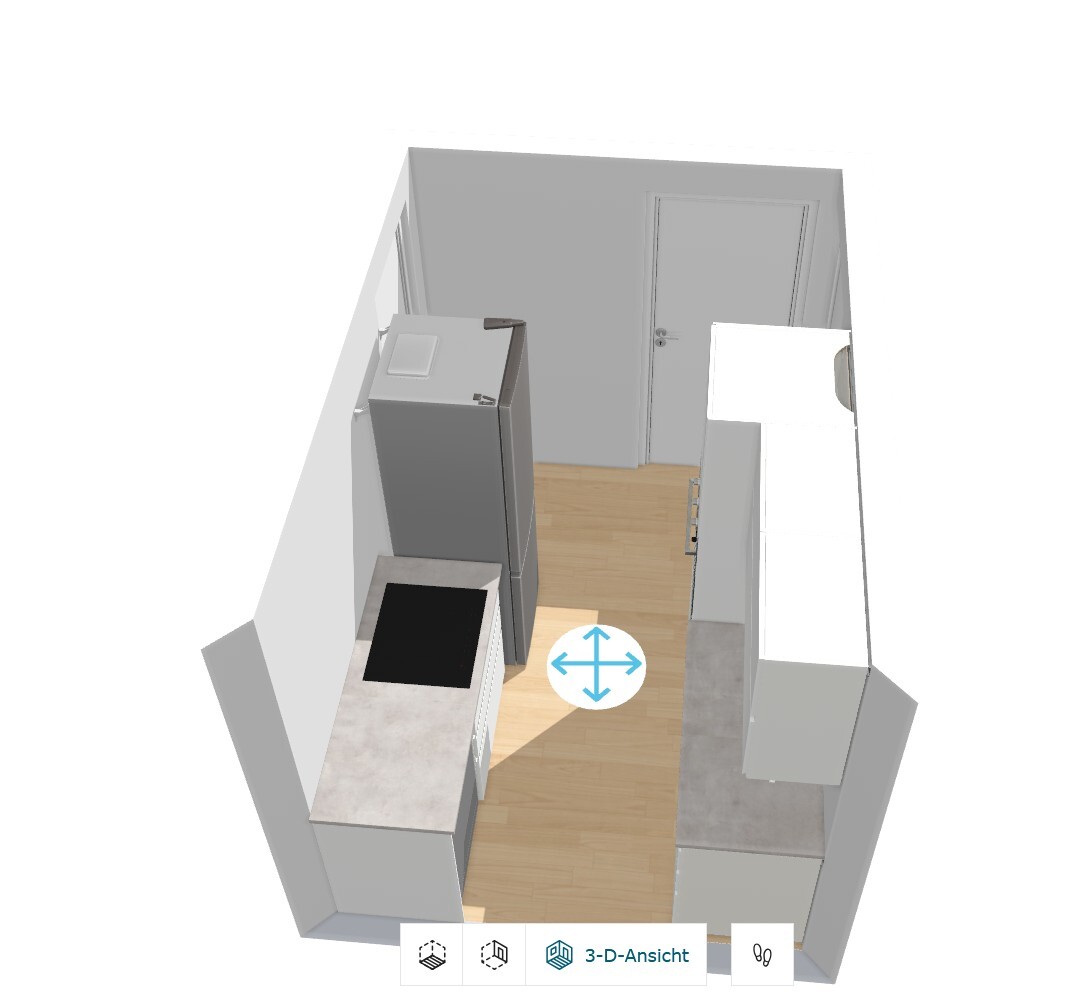
- Larger kitchen and/or dining area – for this, use the rear hallway as the kitchen and turn the current kitchen into a dining room? Replace the rear house entrance with a window and instead create a door from the garage into the former shed (marked as "Storage Room 2" on the floor plan)? Would the kitchen then be big enough? (The "Hallway" room in the extension is only about 3.05m (10 feet) wide and 2.20m (7 feet 3 inches) long. -> Kitchen just in the hallway room would be too small (see IKEA kitchen planner screenshot).
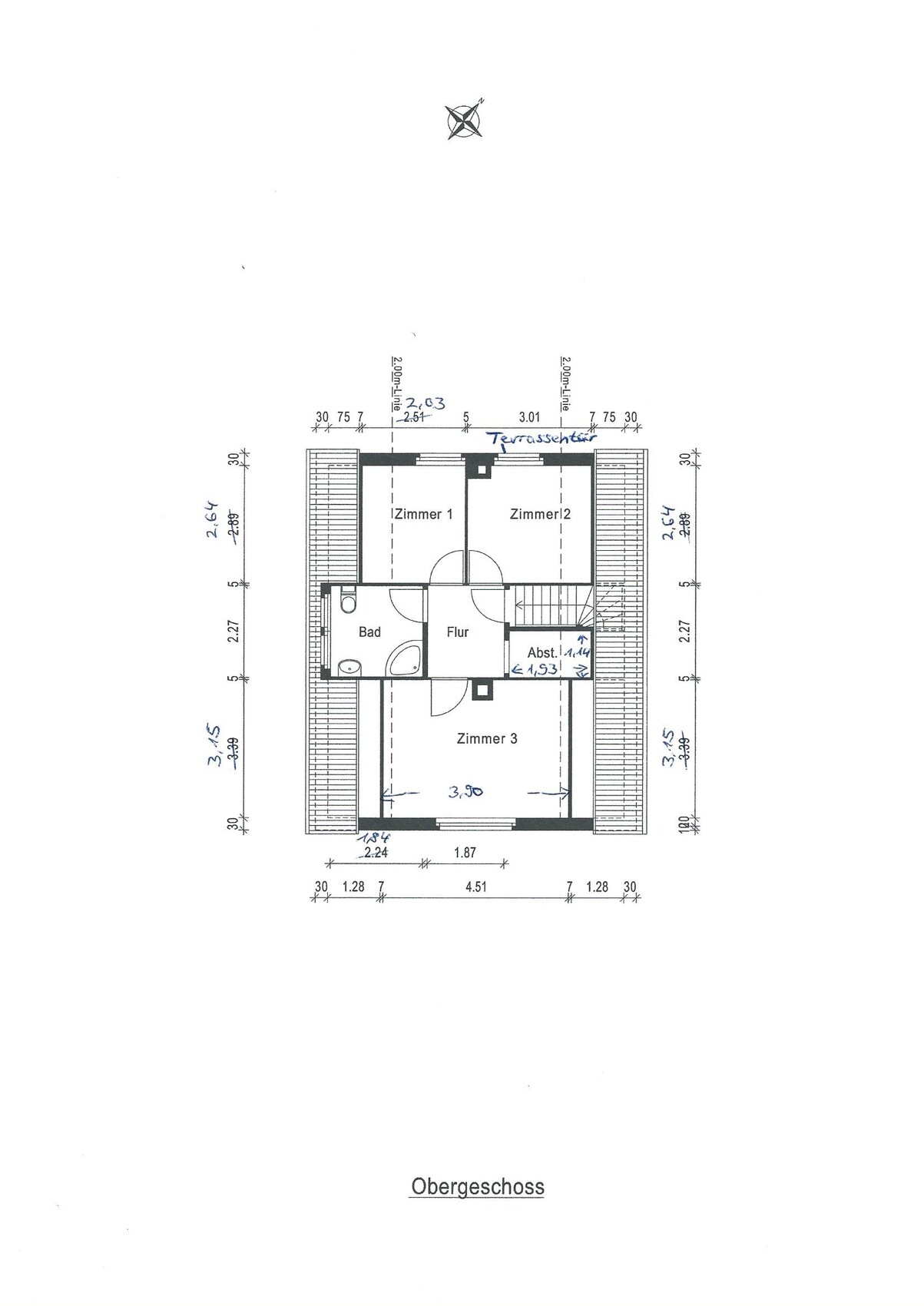
- There is a crawl space under the living room, which is planned to be replaced with a concrete floor in the future. (Possibly at the same time, extend the living room slightly with a small addition to make it more spacious? About 16 m² (172 sq ft) may still be built due to floor area ratio limits. Any opinions on this?)
- "Storage Room 1" should remain a pantry. "Storage Room 2" should be usable as a utility room.
What ideas do you have? What would you change in the existing floor plan and why?
The plan is for a household of 2-4 people.

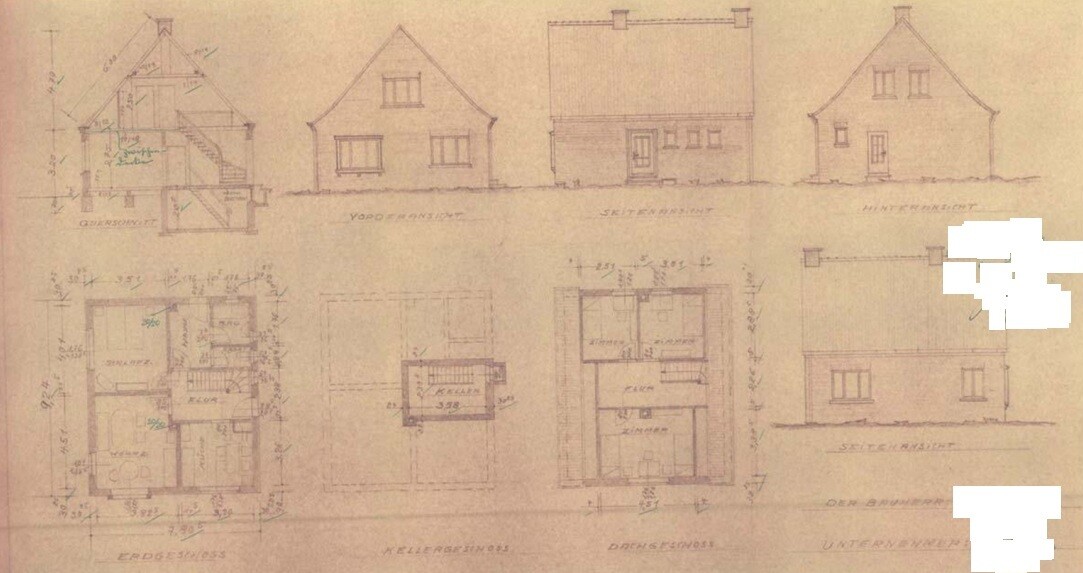

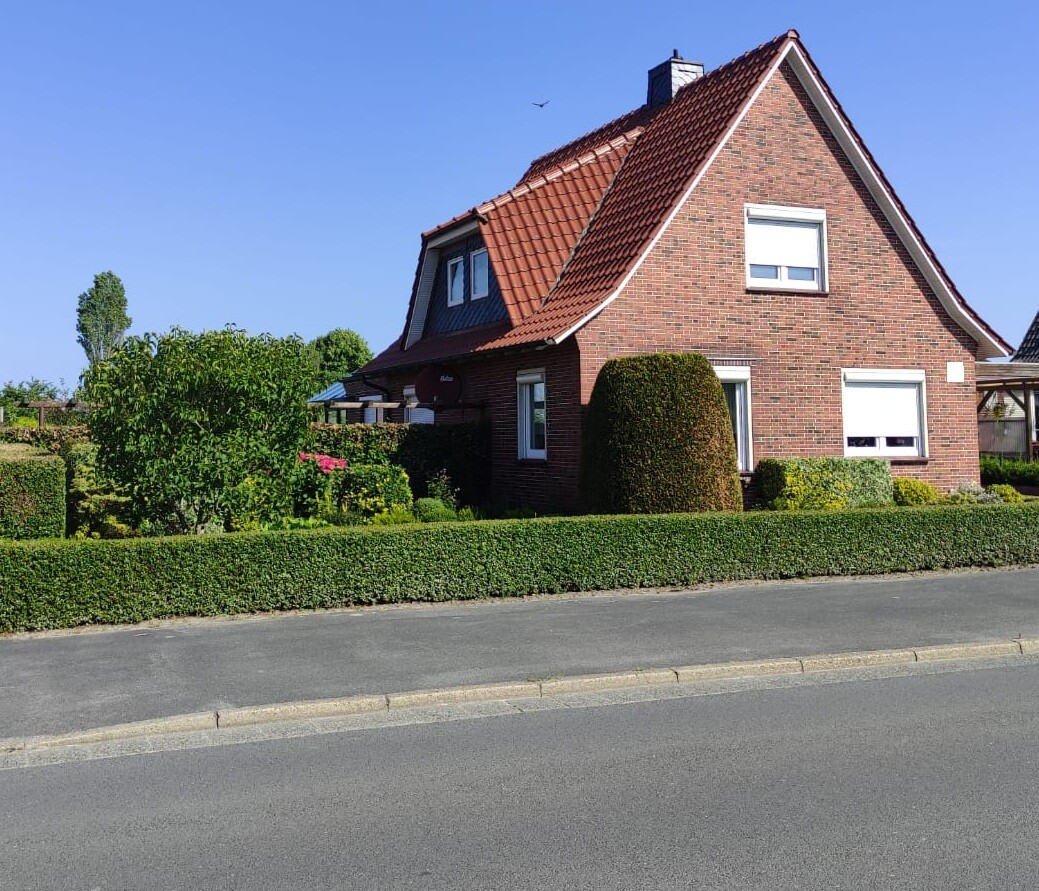
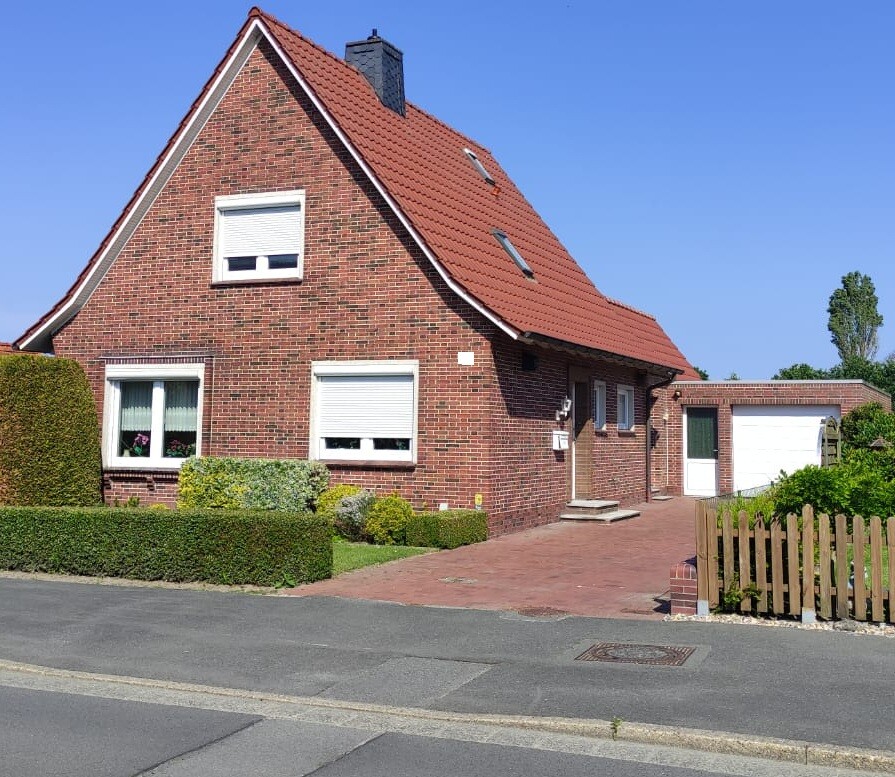
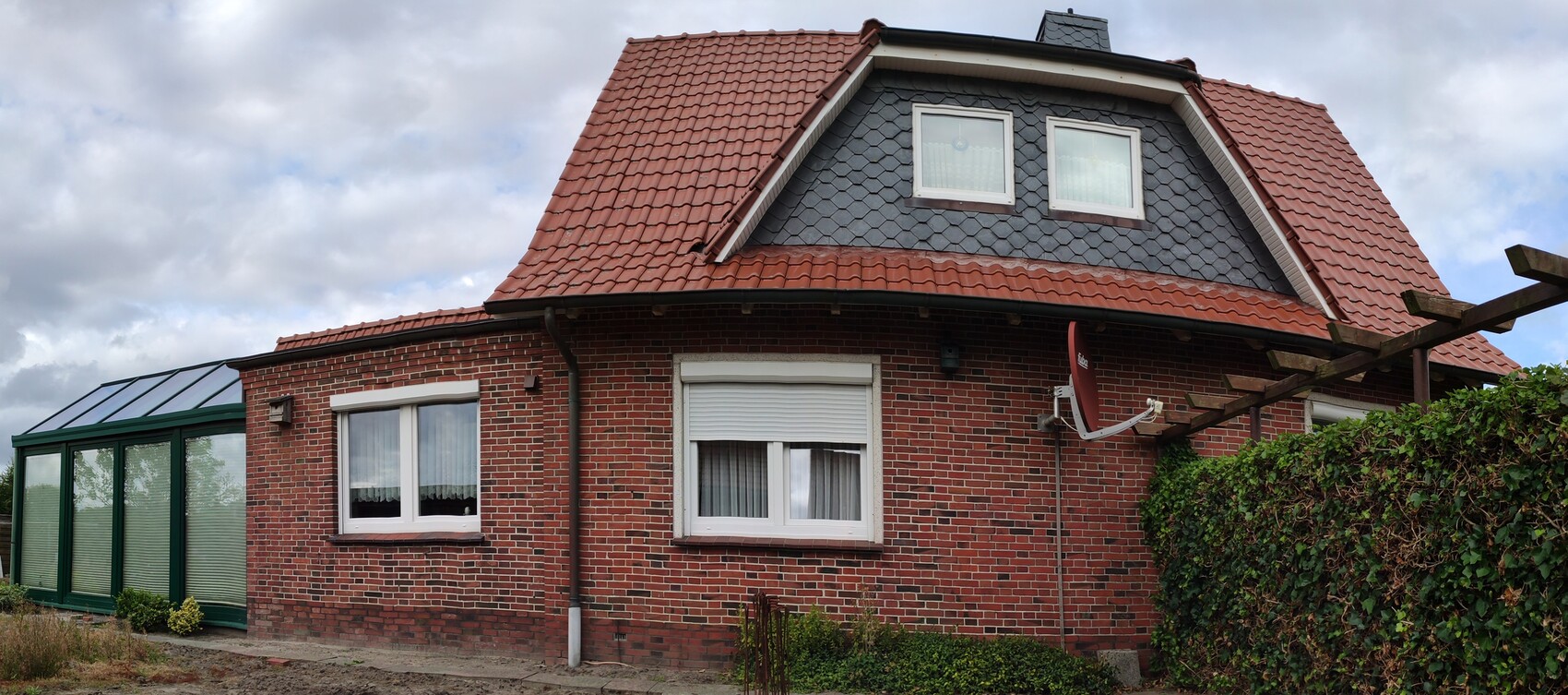
I would like to tap into the collective knowledge here and exchange practical ideas for adjusting the room layout or the floor plan with the forum.
It concerns an older single-family house.
The dimensions on the floor plans are not 100% accurate but should be sufficient for an overview and initial planning.
The property consists of several parts: the single-family house, attached to it is a flat-roof extension with kitchen and hallway, then a former shed with kitchen cabinets, a sink, and a pantry, as well as access to the conservatory. The garage is directly next to the former shed. The inner wall of the garage is also the wall of the shed and is probably load-bearing. (The garage has a concrete ceiling.) What is your rough estimate on whether it would even be possible to create a door from the garage to "Storage Room 2"?
- Currently, there are two entrances to the house from the driveway. One to the single-family house itself, one to the flat-roof extension.
- The ground floor floor is concrete (except the living room). Bathroom and conservatory each have underfloor heating.
My wishes/ideas:
- Larger kitchen and/or dining area – for this, use the rear hallway as the kitchen and turn the current kitchen into a dining room? Replace the rear house entrance with a window and instead create a door from the garage into the former shed (marked as "Storage Room 2" on the floor plan)? Would the kitchen then be big enough? (The "Hallway" room in the extension is only about 3.05m (10 feet) wide and 2.20m (7 feet 3 inches) long. -> Kitchen just in the hallway room would be too small (see IKEA kitchen planner screenshot).
- There is a crawl space under the living room, which is planned to be replaced with a concrete floor in the future. (Possibly at the same time, extend the living room slightly with a small addition to make it more spacious? About 16 m² (172 sq ft) may still be built due to floor area ratio limits. Any opinions on this?)
- "Storage Room 1" should remain a pantry. "Storage Room 2" should be usable as a utility room.
What ideas do you have? What would you change in the existing floor plan and why?
The plan is for a household of 2-4 people.
F
FragenderNeul.3 Jan 2026 21:01Nida35a schrieb:
When were the individual parts of the building constructed, and are there building permits / planning permissions for each in the property documents?
If some parts are unauthorized constructions, you will have problems with renovations.
What is known by the local authorities? ypg schrieb:
Regarding points #3 and #5, I retract my statements on #2 and #4 and first ask whether you can even afford the property. Definitely consult a mortgage broker first and have them calculate the financing, including renovation to the current energy standards. You probably aren’t fully aware of the responsibilities and consequences over the next 30 years.
Also, it’s safe to assume there is mold in the basement without a biochemical test.
Without completely excavating the area, I would also assume there is a leak in the basement, since the opposite hasn’t been proven.
Oh, that’s not what was asked? I know. Just meant as a warning. Because with common sense, you have to assume the property—or rather the extension—was built without permits if you naïvely just ask what the floor plan allows 😉 @All: I have owned the property for a while. Everything is approved and properly recorded with the building authority.
Regarding the use of rooms: I do not have specific requirements on how each room should be used. I want to first gather the expertise and ideas from forum members and then analyze them in detail together.
wpic schrieb:
It is best to consult an experienced architect about this initial situation. They can coordinate further steps with the authorities and, if necessary, develop a legally compliant “special solution” for your property. They are also the right contact for your actual renovation project. Such project planning, including energy-efficient refurbishment, is a complex task that cannot be managed in a forum. This part is interesting to me. How do I find a good architect for properties like this (since it’s not new construction, etc.)? Are there any tips or experiences you can share? What costs should I expect for hiring an architect?
A comprehensive project plan including partial energy upgrades will certainly be necessary and useful.
FragenderNeul. schrieb:
How do I find a good architectIn the phone directory. There are architects who specialize in renovations and existing buildings. Regarding the floor plan: the step is definitely a bit awkward.
But for such an important part of the house—as mentioned before—I wouldn’t just squeeze it into a functional corner. For example, include the bedroom if it’s not needed for something else. Water pipes can probably be installed and redirected in the basement.
It might be possible to use the hallway without the stairs as the main corridor and remove the panel wall. There’s no need for an intermediate door to the garage since everything is close together.
However, if you don’t know who lives or will live there, advice ends here.
F
FragenderNeul.4 Jan 2026 11:16ypg schrieb:
In the business directory. There are architects who specialize in renovations and existing buildings.
Regarding the floor plan: the step is obviously a bit inconvenient.
But I wouldn’t just squeeze such an important part of the house into a functional corner, as mentioned before – for example, include the bedroom if it’s not used for anything else. Water pipes can probably be laid and rerouted in the basement as well.
Possibly, the hallway without the stairs could serve as the main corridor and the partition wall could be removed. A door between the garage and the house isn’t necessary since everything is close together.
However, if you don’t know who will be living there, this advice reaches its limit. Which hallway wall is meant here? The wall between the hallway and bedroom or the one between the corridor and kitchen?
The house and the flat-roof extension are on one level.
The “former shed” and the conservatory are on a level reached by going down two steps from the flat-roof extension. Unfortunately, this has to be accepted as is.
To expand the kitchen into the current bedroom, you would have to go through three walls (bedroom interior wall + brick wall of detached house + kitchen interior wall), and the opening would likely need a steel beam for support.
Could you imagine using the conservatory as a dining room year-round? In summer it would naturally get warm from the sun, but in winter, more energy would be required for heating than in a room inside the main house.
Regarding the residents: adults aged between 25 and 50, possibly 1 or 2 children. A home office space is needed.
FragenderNeul. schrieb:
To expand the kitchen into the current bedroom, you would need to go through three walls (bedroom interior wall + brick wall of the single-family house + kitchen interior wall) and then probably support the opening with a steel beam. Yes. That’s a substantial wall. The effort is probably the same whether it consists of one or three layers. In my opinion, this is the most reasonable option.
FragenderNeul. schrieb:
Could you imagine using the conservatory as a dining room all year round? In summer it would naturally be warm with the sun, but in winter you would have to use more energy for heating than with a room inside the main house. There is no information here about the conservatory and how it is connected to the house. Presumably, the slab foundation is not insulated? My impression is that it is not a living space, nor is it a heated conservatory. It looks like an outdoor area—more like a covered patio. Most likely, it will be cold, damp, and drafty if it is what I think it is. And as such, it is permitted. But even if it could be converted into living space, I don’t understand why anyone would forcefully relocate the kitchen away from the existing rooms instead of using the spaces already available.

Such discussions are pointless because the structural engineering relationships of these different building components are not known. Current as-built plans must be created first, followed by a site survey, and based on this, a preliminary design by an architect. Everything else is guesswork and irrelevant speculation.
Similar topics