
Hello everyone,
since I haven’t made much progress in my other thread and @11ant has repeatedly suggested that I should please provide plans so something can be assessed here...
Well, now I’m finally sharing the plans – because we simply don’t know exactly what to do at this point.
Our project is explained in the thread
https://www.hausbau-forum.de/threads/hausbau-aus-beton-vs-Energieeinsparverordnung-2016.23880/
It is being built together with an architect in design phases 1-8.
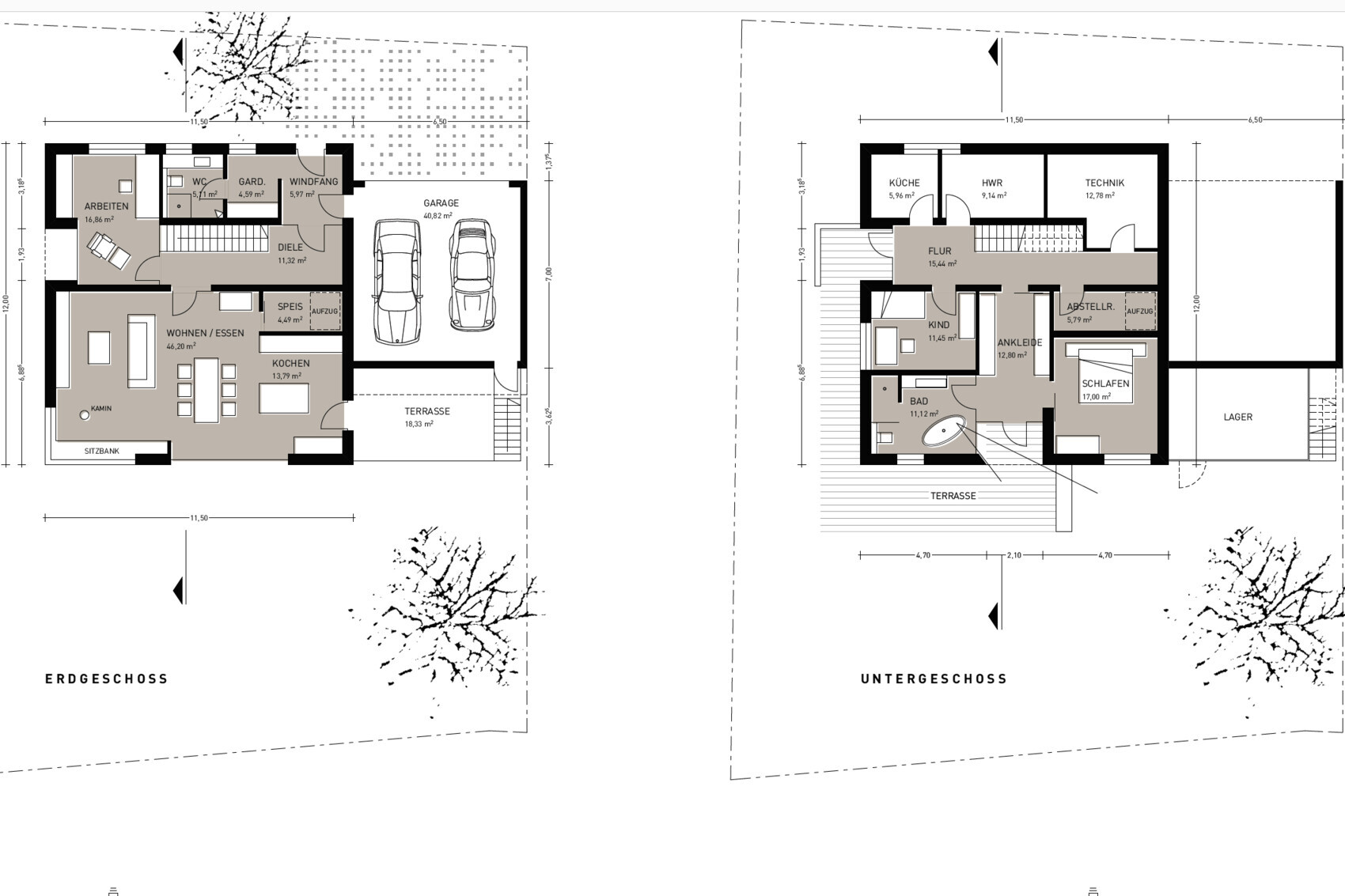
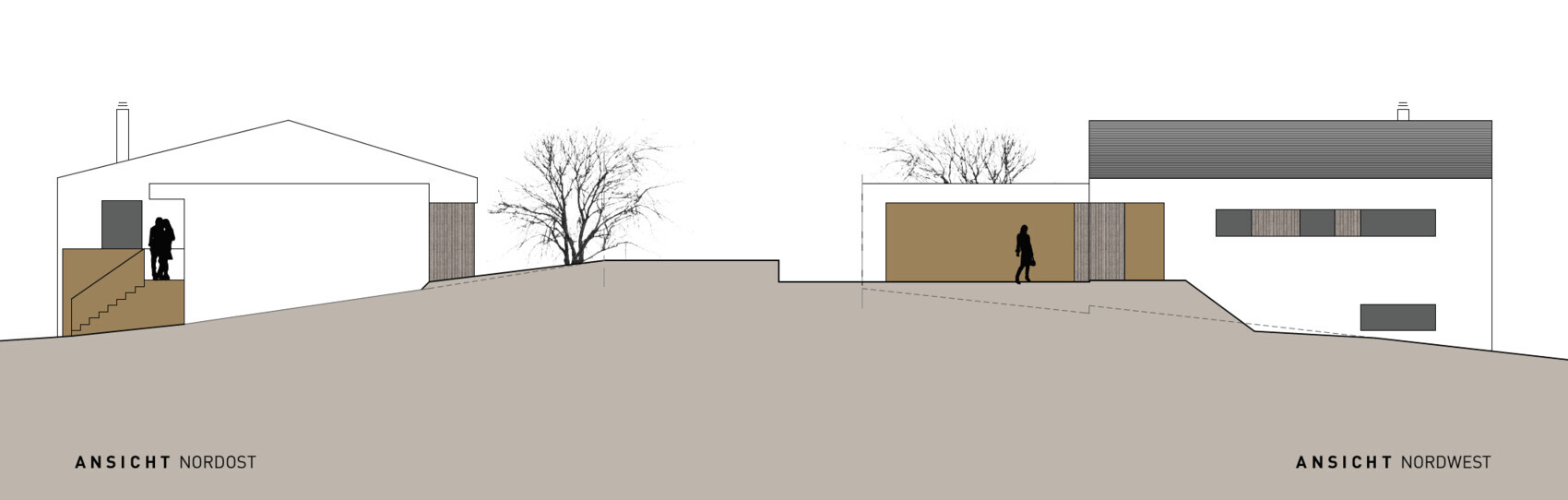
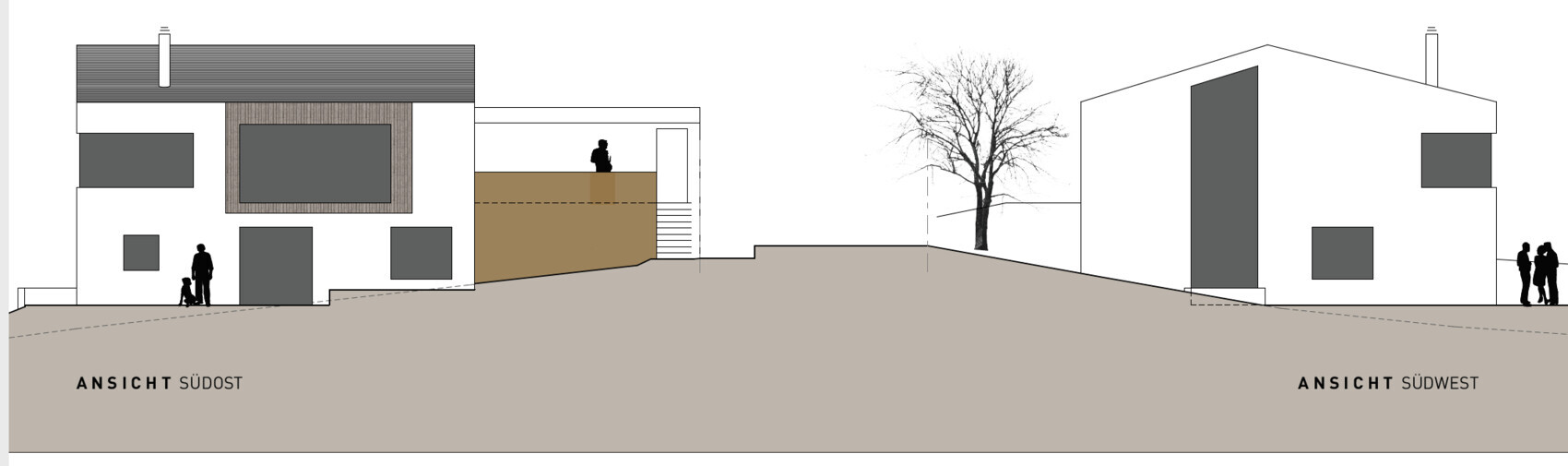
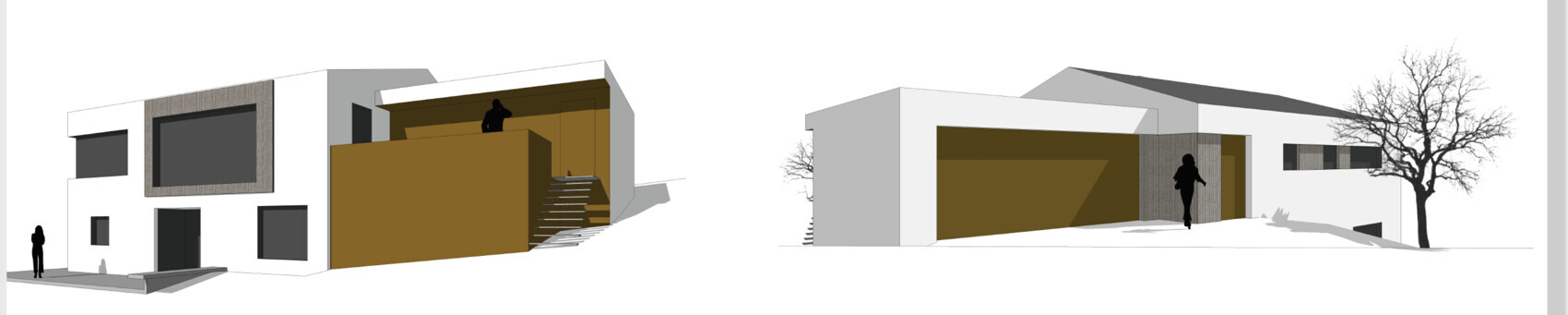
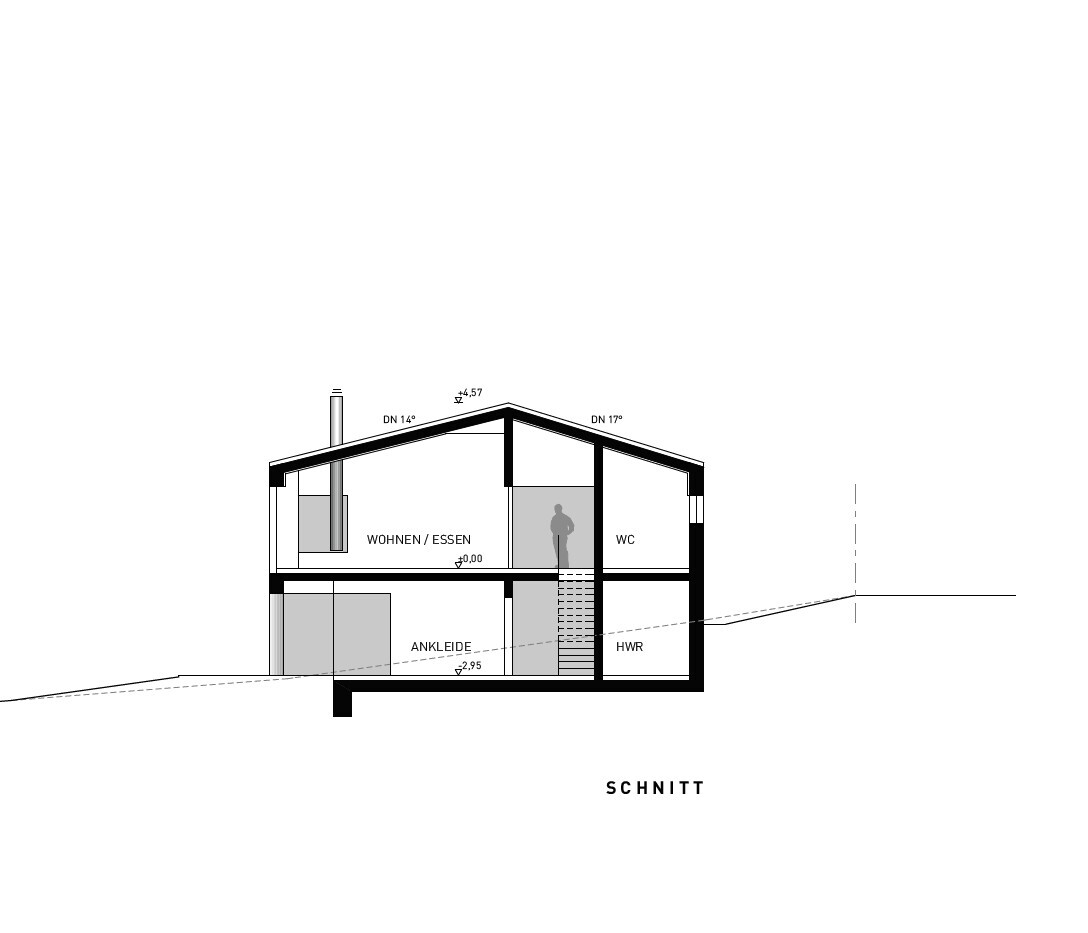
I hope to get some input here now...
The main request is simply for an exposed concrete look on the interior load-bearing walls – since using concrete on the exterior is no longer an option.
Many thanks in advance to everyone who contributes ideas.
since I haven’t made much progress in my other thread and @11ant has repeatedly suggested that I should please provide plans so something can be assessed here...
Well, now I’m finally sharing the plans – because we simply don’t know exactly what to do at this point.
Our project is explained in the thread
https://www.hausbau-forum.de/threads/hausbau-aus-beton-vs-Energieeinsparverordnung-2016.23880/
It is being built together with an architect in design phases 1-8.
I hope to get some input here now...
The main request is simply for an exposed concrete look on the interior load-bearing walls – since using concrete on the exterior is no longer an option.
Many thanks in advance to everyone who contributes ideas.
KingSong schrieb:
11m2 for the child and 17m2 for the parents to sleep despite a walk-in closet? I would prioritize the child’s space more and reduce my own... Why would you need 17m2 just for a bed and sleeping? The child could make much better use of that 17m2... I’ll never understand...
Yes, you’re right, 17m² (183 sq ft) is large, and it was smaller before because the first floor plan was more compact, but this is simply explained:
There is no child, and likely there won’t be one — and if there is, the child will be in the smaller room when young and then upstairs in the study. The “child’s room” will probably be used as a room for the spinning bike or as a guest room.
The two load-bearing walls can be nicely finished with exposed concrete. I can well imagine this working if the rest remains understated. Then they become a focal point and connecting elements.
I find the children’s room absolutely too small. I'm not a fan of oversized children’s rooms, but under 12m² (130ft²) is too little, especially since the rest of the house is planned very generously. Even the utility room is larger [emoji44]. Also, the bathroom for a child should not be accessed through a parents’ area. It might make sense to swap the office with the children’s room, at least once the child can be left alone on one floor.
The freezer room in the basement can be elegantly expanded by shortening the long corridor.
I’m grateful to have such an architectural design for the holidays 🙂 [emoji8]
Best regards,
Yvonne
I find the children’s room absolutely too small. I'm not a fan of oversized children’s rooms, but under 12m² (130ft²) is too little, especially since the rest of the house is planned very generously. Even the utility room is larger [emoji44]. Also, the bathroom for a child should not be accessed through a parents’ area. It might make sense to swap the office with the children’s room, at least once the child can be left alone on one floor.
The freezer room in the basement can be elegantly expanded by shortening the long corridor.
I’m grateful to have such an architectural design for the holidays 🙂 [emoji8]
Best regards,
Yvonne
ypg schrieb:
The two load-bearing walls can be nicely finished with exposed concrete. I also think that works well if the rest of the design is kept minimal. That way, they stand out and serve as connecting elements.
I find the kids’ room absolutely too small. I’m not a fan of oversized children’s rooms, but less than 12m² (130 sq ft) is too little, especially since the rest of the house is planned very generously. Even the heating room is larger [emoji44] Also, the bathroom for a child shouldn’t be accessed through a parent’s area. So it might be better to swap the office with the kids’ room, at least from the age when the child can be left alone on one level.
The freezer room in the basement can be cleverly enlarged by shortening the long corridor.
I’m grateful for such an architectural design proposal for the holidays 🙂 [emoji8]
Regards, Yvonne You’re right about the kids’ room—but the explanation is above...
Originally, there was also a door from the “child’s” room into the bathroom, but we removed it because otherwise the already small room would be difficult to use. The room itself will be sufficient—and if there is a child, they can move upstairs to the “office,” and the office will move down. The freezer room is intended to stay as it is because the “elevator” is meant to be a platform that can be accessed from outside by vehicle, so it would also be wheelchair accessible.
Why are you grateful for such a design proposal during the holidays?

alegend schrieb:
But aren’t we back to precast concrete parts here? We already discussed this topic in the other thread, right?
According to ant1, due to prefabrication with batch size 1, it’s not feasible at realistic prices?!You see, now with a specific house in mind, you can look at this more case-by-case: for this house—which, by the way, in my opinion, is a design that does not lose anything in overall effect by having a plastered exterior, but actually looks just as good with a plastered façade as with exposed concrete—this is consistent overall, and compared to the 7-speed and 11-speed Turbo versions, it’s actually quite “appropriate.”
Lumpi_LE schrieb:
You can do this with precast parts, cast-in-place concrete, or a combination of both.More precisely: in the factory, a thin concrete wall is made for the "interior" (as a custom-made part, since no wall module repeats in a certain grid for this house, so every part is different) along with a matching piece for the "exterior," and they are joined together at a certain distance. This twin precast element is then used as a "lost formwork" for a concrete core poured on site (and to meet current standards for residential buildings, it requires an insulation layer on the outside).
It is also possible to do this so that instead of the cast-in-place concrete layer, an insulation layer is placed, which means concrete on both surfaces. However, in that case, the inner shell can no longer be designed as a thin "lost formwork" but must structurally replace the cast-in-place layer described earlier. As a result, it is significantly heavier, which affects transportation logistics and the possible panel dimensions.
Have a look at the KX and XCON systems from Dennert Massivhaus.
I also join Yvonne in thanking for an architect’s design for Easter.
https://www.instagram.com/11antgmxde/
https://www.linkedin.com/company/bauen-jetzt/
Similar topics