
Hello everyone.
I hope I’m in the right category here.
I have a question or maybe two....
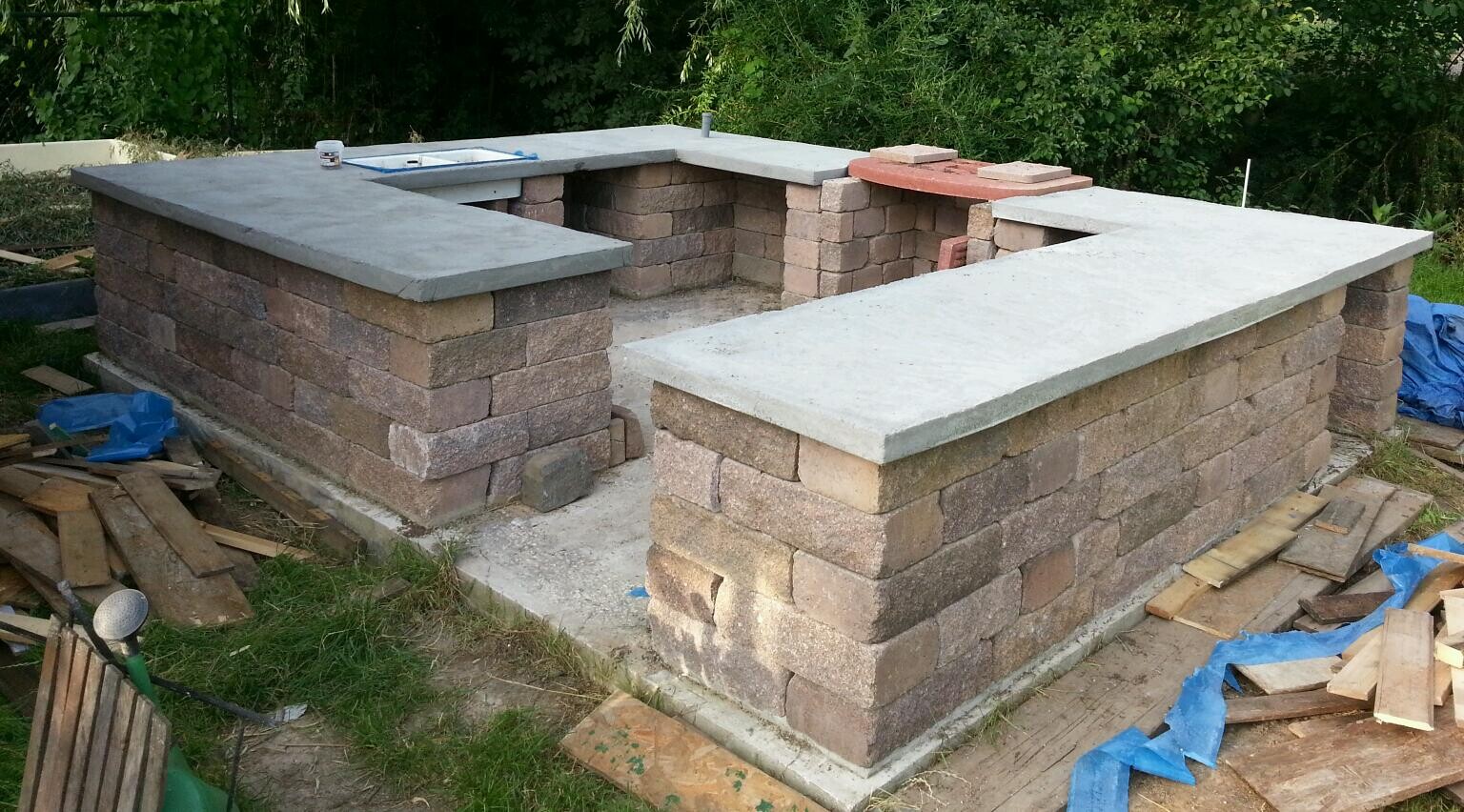
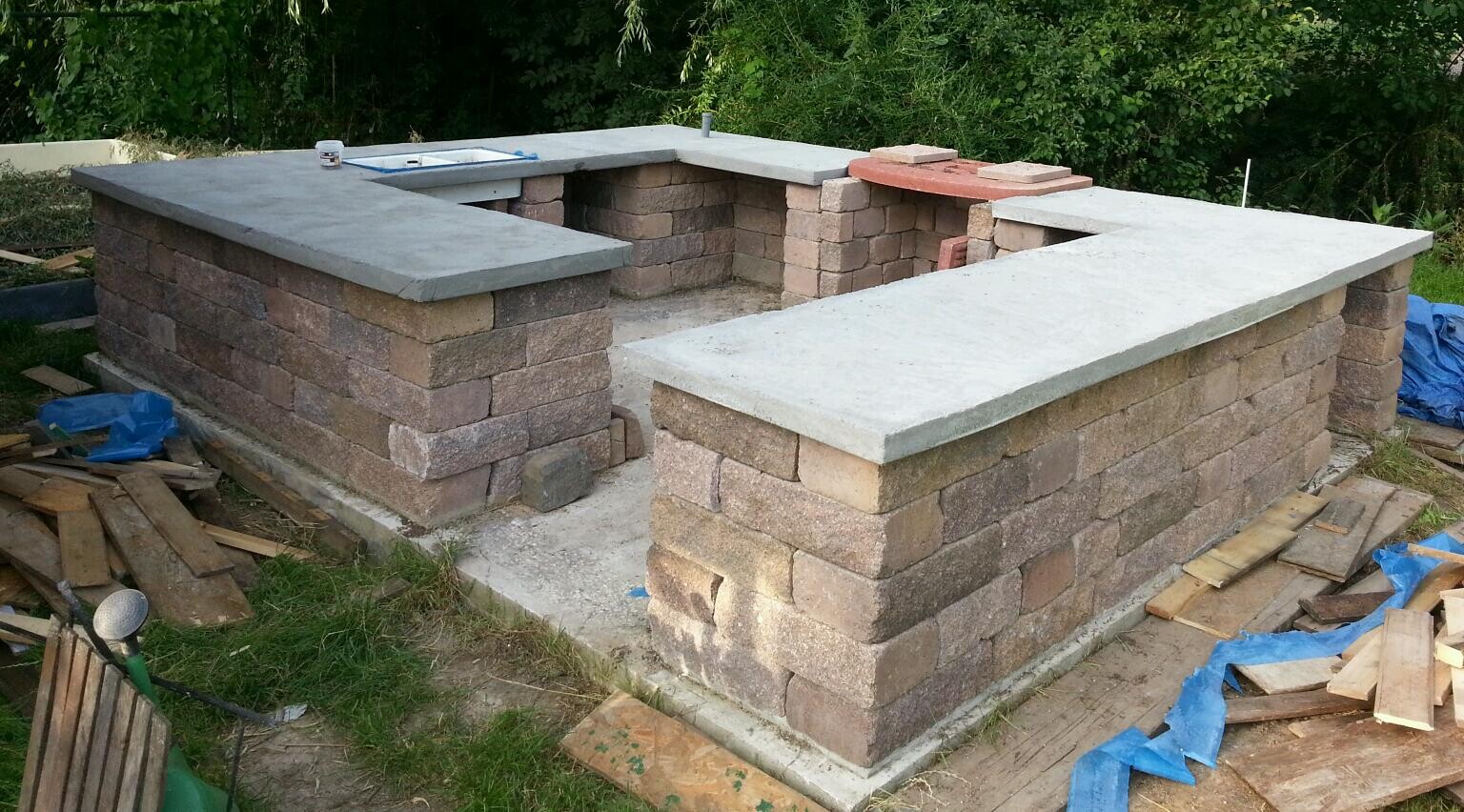
I’m currently building an outdoor kitchen. For this, I poured a concrete slab, then laid masonry blocks, and finally made a countertop. For the countertop, I first built the formwork, lined it with a plastic sheet, placed reinforcement bars inside, and poured ready-mixed concrete. I tamped the concrete as best as I could, with varying success. After one week, I removed the formwork and covered the surface with plastic due to rain. You can see the result in the picture. That was almost two weeks ago now.
My questions are:
1. I would like to somehow finish the slab by covering or painting it to make the surface look nice. I see a problem with tiles because they might flake off in winter. Would it be possible, for example, to seal the slab with concrete filler or something similar and then paint over it with concrete paint? Or will cracks appear sooner or later anyway? If this is possible, how long do I have to wait before applying the filler? Do I have to apply filler and paint to the underside as well? What about primer or similar products? Which concrete filler should I use? After applying filler, what kind of paint should I apply, and when?
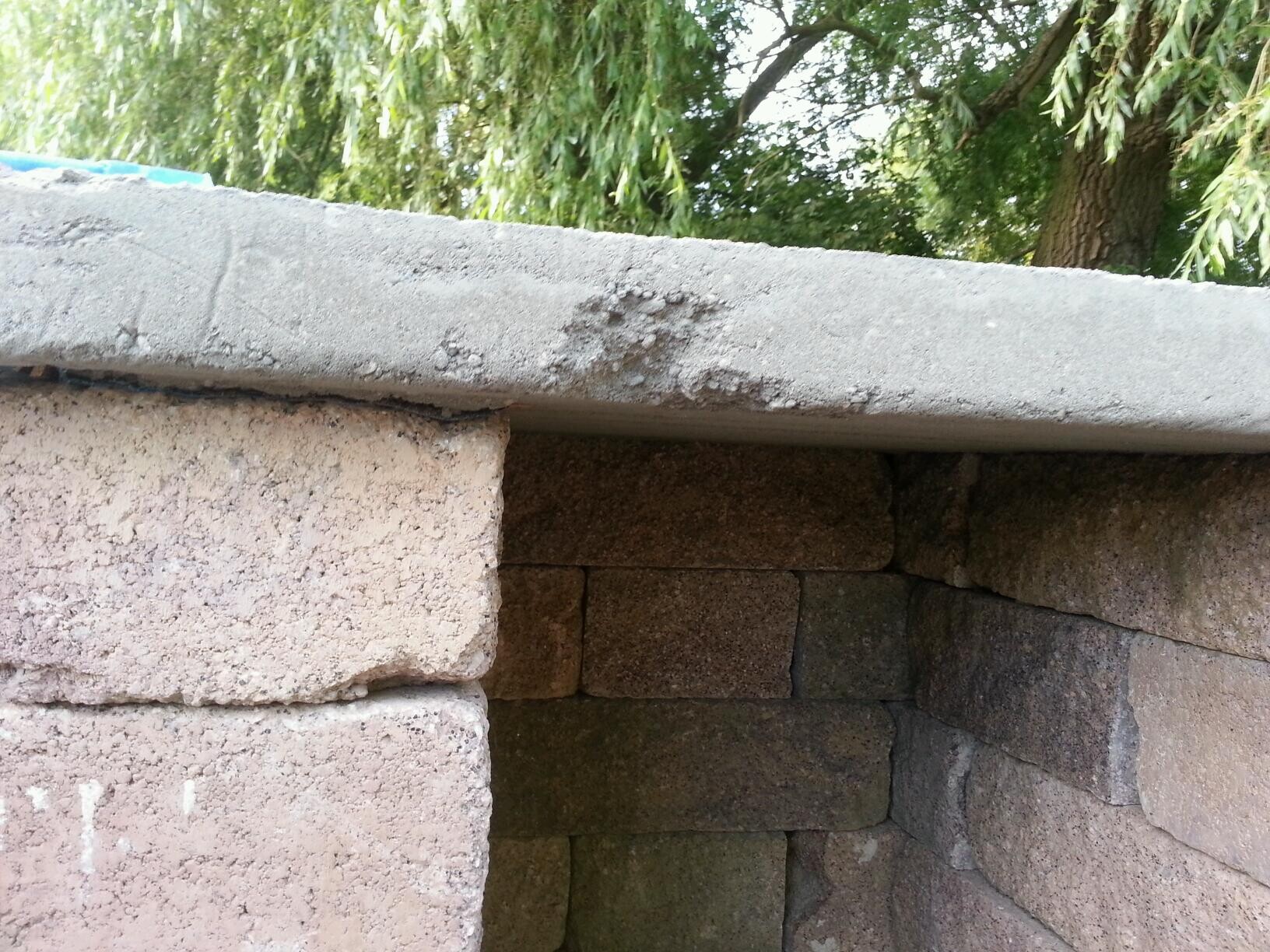
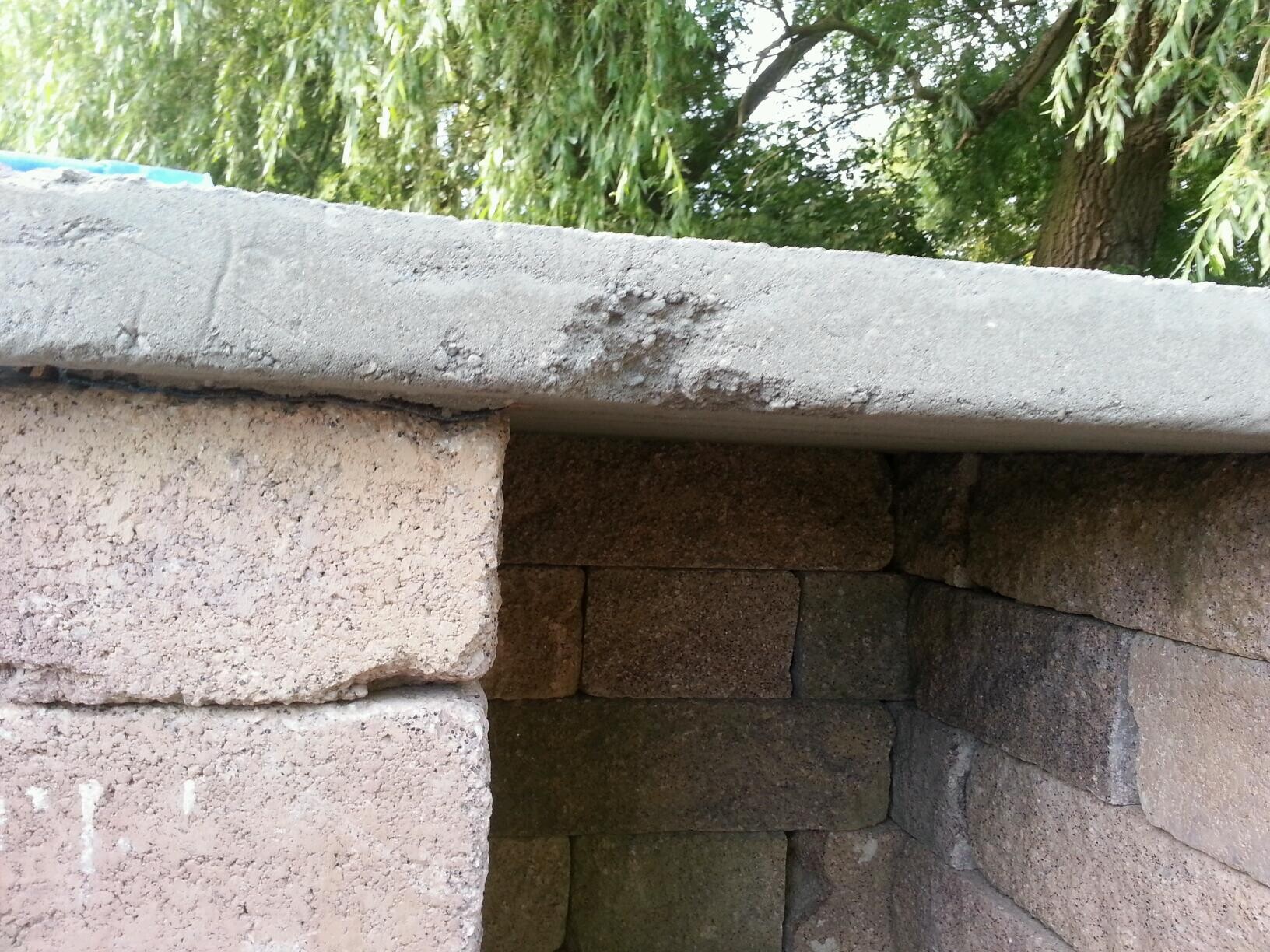
2. In some areas (mainly on the surface), the concrete seems porous. Probably it was not tamped properly. If I use concrete filler, can I just apply it over those spots and will it hold? Or do I need to do something in between, like adding a bonding agent or anything else?
3. In the picture, you can hopefully see on the front edge next to the sink on the right where some concrete chipped off during formwork removal. Is there something I can use to restore that?
I have already been to several hardware stores, and everyone tells me something different, so I don’t know whom to believe. Ideally, I want to finish the kitchen once and then have peace of mind for years. Repainting once in a while is fine, but not constantly dealing with cracks or other repairs. Also, the costs should be reasonable; otherwise, I would have just bought a marble slab.
With that in mind, I thought I’d ask experts who know what they’re talking about.
I really hope you can help me with this project.
Thanks a lot in advance.
Best regards
I hope I’m in the right category here.
I have a question or maybe two....
I’m currently building an outdoor kitchen. For this, I poured a concrete slab, then laid masonry blocks, and finally made a countertop. For the countertop, I first built the formwork, lined it with a plastic sheet, placed reinforcement bars inside, and poured ready-mixed concrete. I tamped the concrete as best as I could, with varying success. After one week, I removed the formwork and covered the surface with plastic due to rain. You can see the result in the picture. That was almost two weeks ago now.
My questions are:
1. I would like to somehow finish the slab by covering or painting it to make the surface look nice. I see a problem with tiles because they might flake off in winter. Would it be possible, for example, to seal the slab with concrete filler or something similar and then paint over it with concrete paint? Or will cracks appear sooner or later anyway? If this is possible, how long do I have to wait before applying the filler? Do I have to apply filler and paint to the underside as well? What about primer or similar products? Which concrete filler should I use? After applying filler, what kind of paint should I apply, and when?
2. In some areas (mainly on the surface), the concrete seems porous. Probably it was not tamped properly. If I use concrete filler, can I just apply it over those spots and will it hold? Or do I need to do something in between, like adding a bonding agent or anything else?
3. In the picture, you can hopefully see on the front edge next to the sink on the right where some concrete chipped off during formwork removal. Is there something I can use to restore that?
I have already been to several hardware stores, and everyone tells me something different, so I don’t know whom to believe. Ideally, I want to finish the kitchen once and then have peace of mind for years. Repainting once in a while is fine, but not constantly dealing with cracks or other repairs. Also, the costs should be reasonable; otherwise, I would have just bought a marble slab.
With that in mind, I thought I’d ask experts who know what they’re talking about.
I really hope you can help me with this project.
Thanks a lot in advance.
Best regards
 blockhauspower13 Jul 2016 21:59
The panel can, of course, be worked on with common cement-based leveling compounds. However, I don’t think I would do that, as I like the somewhat rustic character of the countertop.
Looking at the thickness of the panel, considering that it will be fully exposed to water and then dry again, the concrete cover (cnom) is definitely too thin. Your reinforcement will corrode, and the concrete will start to spall.
Therefore, look into a carbonation inhibitor that prevents the reinforcement from corroding. Otherwise, you won’t enjoy the panel for long.
Regards
Looking at the thickness of the panel, considering that it will be fully exposed to water and then dry again, the concrete cover (cnom) is definitely too thin. Your reinforcement will corrode, and the concrete will start to spall.
Therefore, look into a carbonation inhibitor that prevents the reinforcement from corroding. Otherwise, you won’t enjoy the panel for long.
Regards
Hmm, I expected this to be more positive.
I've never heard of carbonation inhibitor. Is there another term for it or a product name? I can’t find any material under this term. Only explanations of the concept, and everywhere it says 50m thick. I think it should be mm, but even that seems quite thick to me.
I got the concrete from Raab Karcher. They told me it’s not a problem for exterior use. The main thing is that the slab is 7–9cm (3–4 inches) thick. Mine is 8cm (3 inches) thick.
Would it also work to apply this carbonation inhibitor, then a concrete filler, and then concrete paint? So that it holds. Would a waterproofing slurry also be an option to keep the slab dry so nothing flakes off in winter?
Thanks
I've never heard of carbonation inhibitor. Is there another term for it or a product name? I can’t find any material under this term. Only explanations of the concept, and everywhere it says 50m thick. I think it should be mm, but even that seems quite thick to me.
I got the concrete from Raab Karcher. They told me it’s not a problem for exterior use. The main thing is that the slab is 7–9cm (3–4 inches) thick. Mine is 8cm (3 inches) thick.
Would it also work to apply this carbonation inhibitor, then a concrete filler, and then concrete paint? So that it holds. Would a waterproofing slurry also be an option to keep the slab dry so nothing flakes off in winter?
Thanks
blockhauspower15 Jul 2016 08:07This concrete coating is often used to slow down carbonation; the main requirement is that it is very dense. Pay attention to a diffusion-equivalent air layer thickness (sd-value) above 1 meter (3.3 feet).
B
Bieber081515 Jul 2016 09:03thcinocb schrieb:
50m thick The carbonation barrier should be designed so that its diffusion-equivalent air layer thickness is at least 50 m (164 feet).
The sd-value usually refers to the water vapor diffusion-equivalent air layer thickness. Since the carbonation barrier concerns CO2, not water, I cannot say how comparable these values are (50 versus 1).
thcinocb schrieb:
I am currently building an outdoor kitchen. Nice project, by the way! I hope you find a solution that will last in the long term!
Ah, I see. This carbonation retardation is a property of a material, not the material itself, okay.
Do you have any recommendations for concrete colors? I haven’t found the right one yet. Either the diffusion coefficient (sd-value) is below 1 or it is not specified.
Is there anything that can be recommended?
Regards
Do you have any recommendations for concrete colors? I haven’t found the right one yet. Either the diffusion coefficient (sd-value) is below 1 or it is not specified.
Is there anything that can be recommended?
Regards
Similar topics