
ᐅ Preparation of Electrical Installation for a Kitchen Island
Created on: 24 Mar 2024 05:40
S
SeppelPeter86
Good morning everyone,
my electrician has never had to prepare the electrical connection for a kitchen island before.
How was it installed in your case? Were outlets mounted inside the cabinets, or were the individual components wired through junction boxes, or supplied via a loose cable with a socket beneath the kitchen unit?
I appreciate any tips, pictures are also welcome.
my electrician has never had to prepare the electrical connection for a kitchen island before.
How was it installed in your case? Were outlets mounted inside the cabinets, or were the individual components wired through junction boxes, or supplied via a loose cable with a socket beneath the kitchen unit?
I appreciate any tips, pictures are also welcome.

At our place, all the utility connections were installed in the floor/screed beforehand. The drain pipe leads into the concrete slab.
The water/drain connection and the corresponding electrical cables for the induction cooktop and dishwasher were installed separately. These were later attached to the kitchen island.
The water connection was installed in the same way.
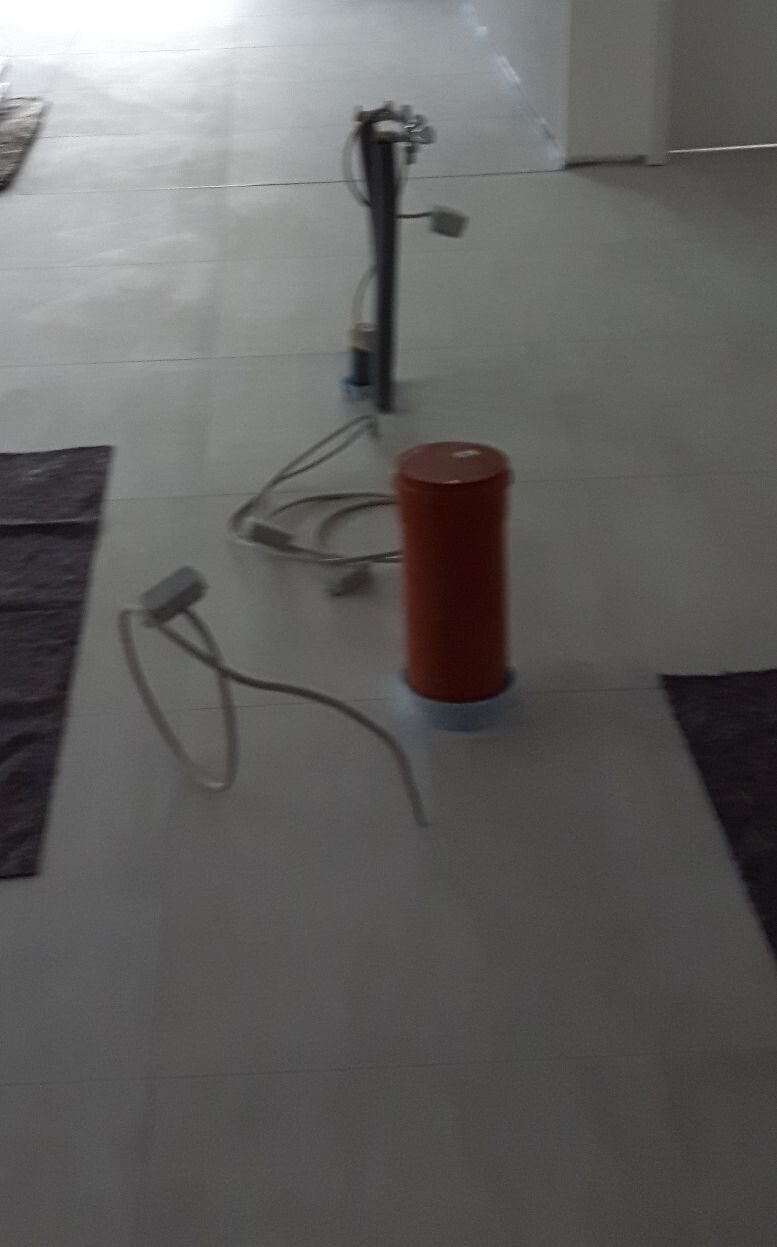
The water/drain connection and the corresponding electrical cables for the induction cooktop and dishwasher were installed separately. These were later attached to the kitchen island.
The water connection was installed in the same way.
H
Hausbauer2326 Mar 2024 13:52@Stephan— : So, do you have a ventilation hood with an exhaust duct leading to the basement, or what is the purpose of the basement pipe for the ventilation hood? We had also considered exhaust air instead of recirculation, but due to the controlled residential ventilation system and the chimney, it’s complicated...
That’s exactly where we stand. Controlled residential ventilation + fireplace (with fresh air supply through the basement via the floor slab) + exhaust hood (extract air through the basement in the floor slab and vented outside next to the house) + differential pressure monitor + window contact switches.
What does your chimney sweep require?
The fact is: We haven’t put the fireplace into operation yet but are prepared for all eventualities in the future.
A few more J(YSt)I cables (or whatever they are called) are still needed to logically wire everything at the appropriate locations.
Everything is possible, but many just say, “Use recirculation and you’re on the safe side.”
What does your chimney sweep require?
The fact is: We haven’t put the fireplace into operation yet but are prepared for all eventualities in the future.
A few more J(YSt)I cables (or whatever they are called) are still needed to logically wire everything at the appropriate locations.
Everything is possible, but many just say, “Use recirculation and you’re on the safe side.”
The differential pressure switch monitors the external and internal pressure, and if a negative pressure occurs, it shuts off the mechanical ventilation system. A temperature sensor is installed at the chimney to check whether the chimney is actually in use. Alternatively, the window could be tilted open if a pressure difference arises while keeping the mechanical ventilation running.
However, as mentioned, everything is pre-installed on our side but not active yet, since the chimney is (still) offline.
However, as mentioned, everything is pre-installed on our side but not active yet, since the chimney is (still) offline.
Similar topics