
ᐅ Electrical Planning / Lighting Design / Networking for New Construction – Experiences?
Created on: 20 Sep 2023 17:50
G
Gregor_K
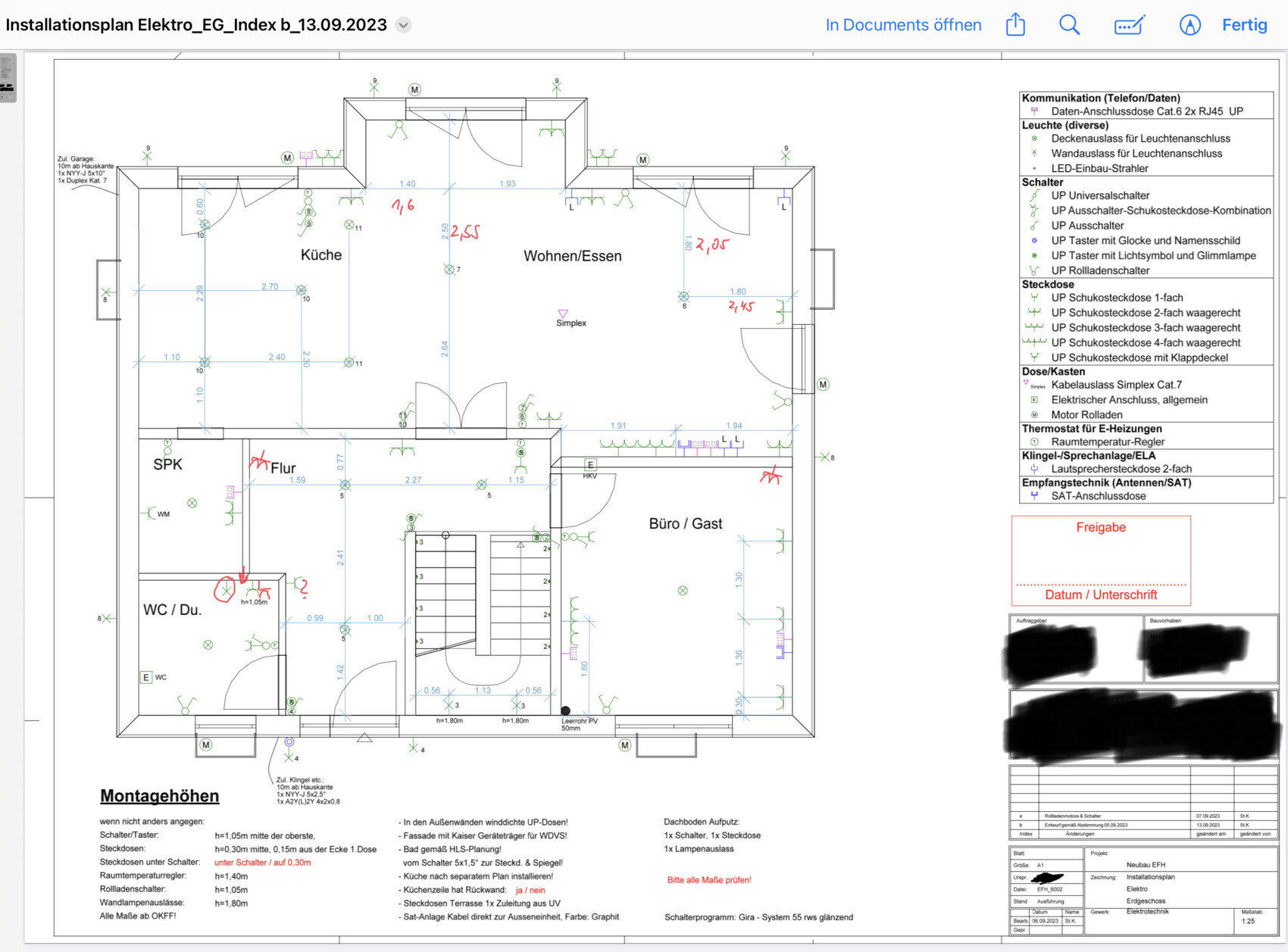
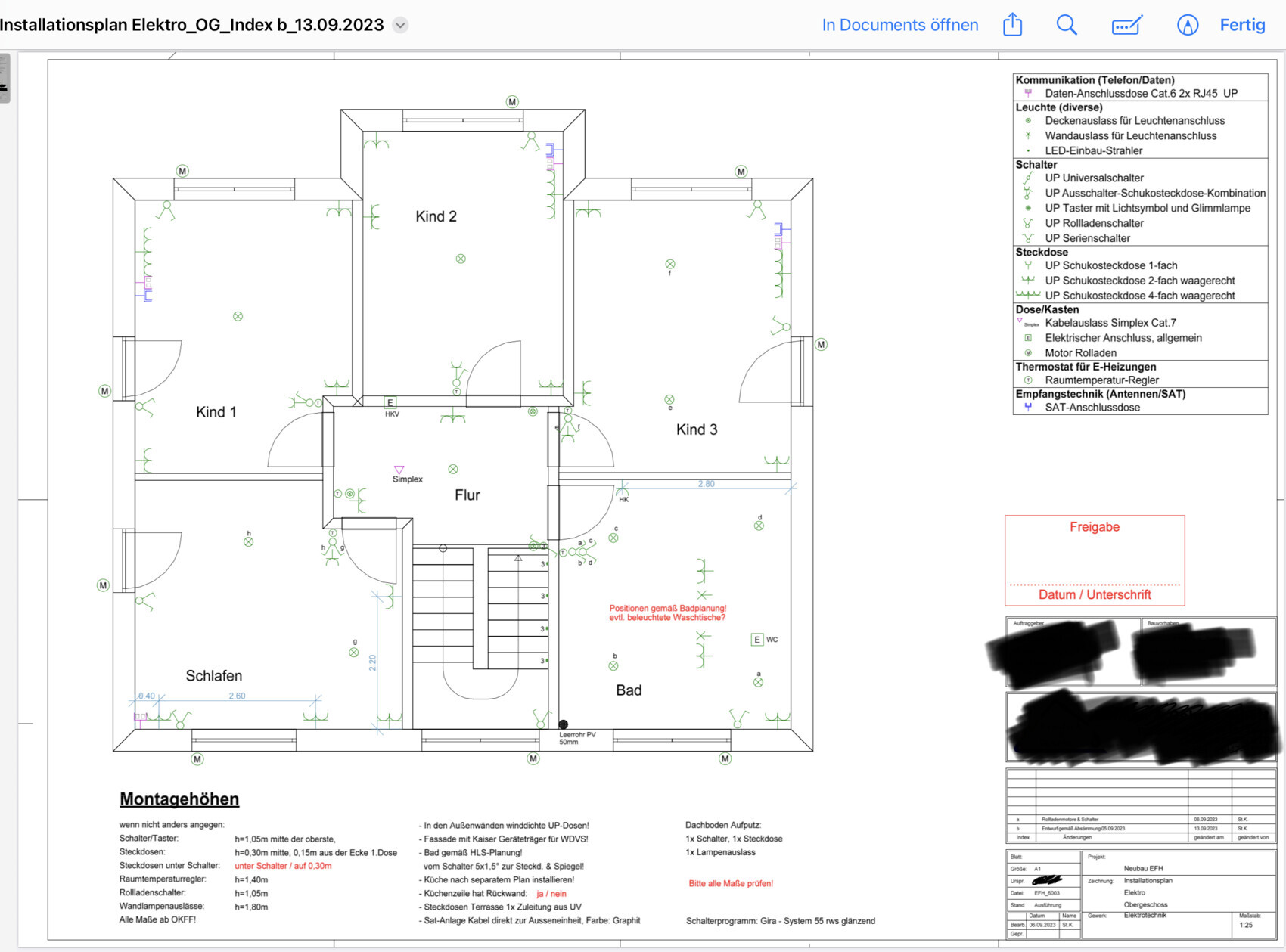
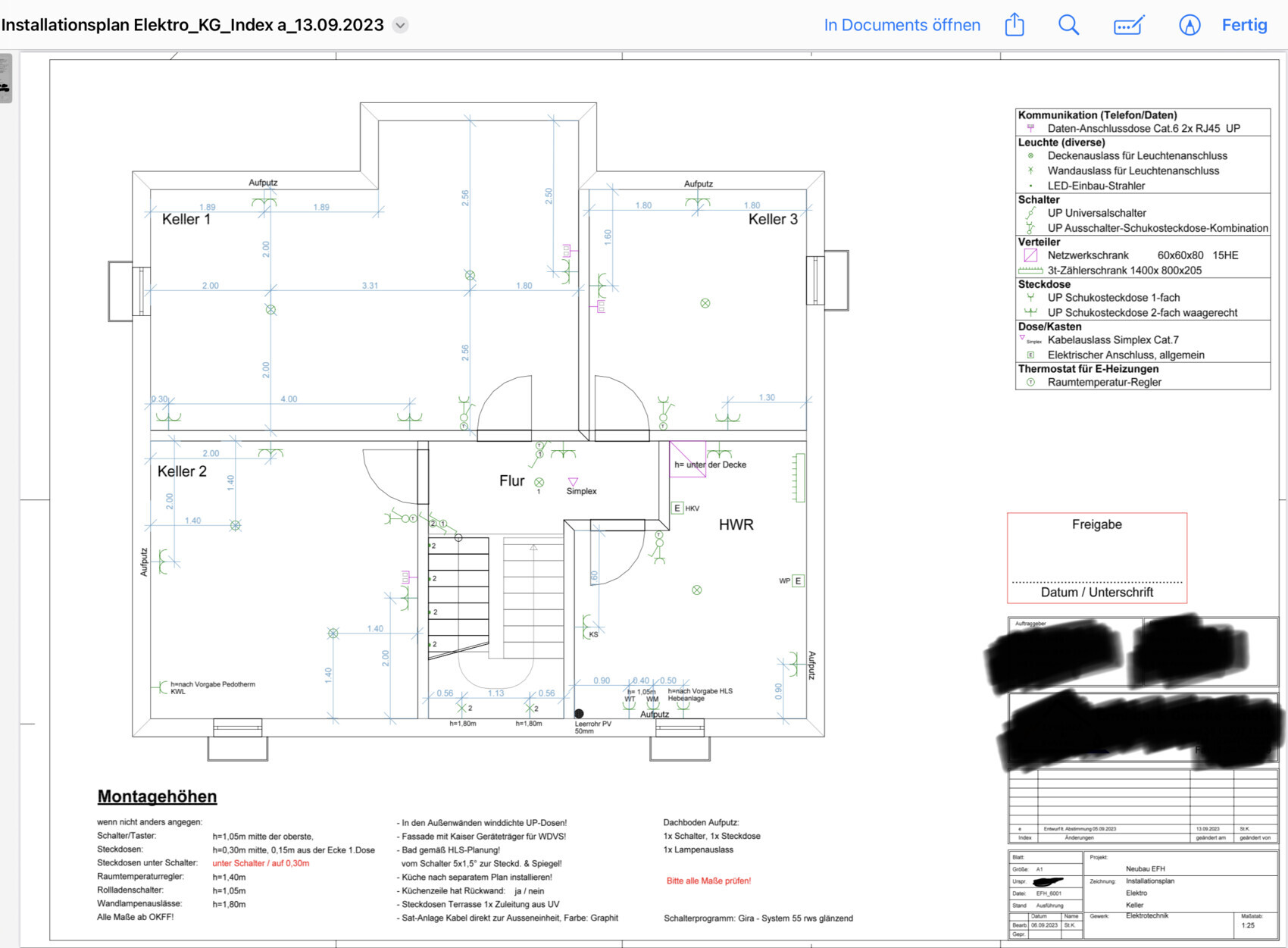
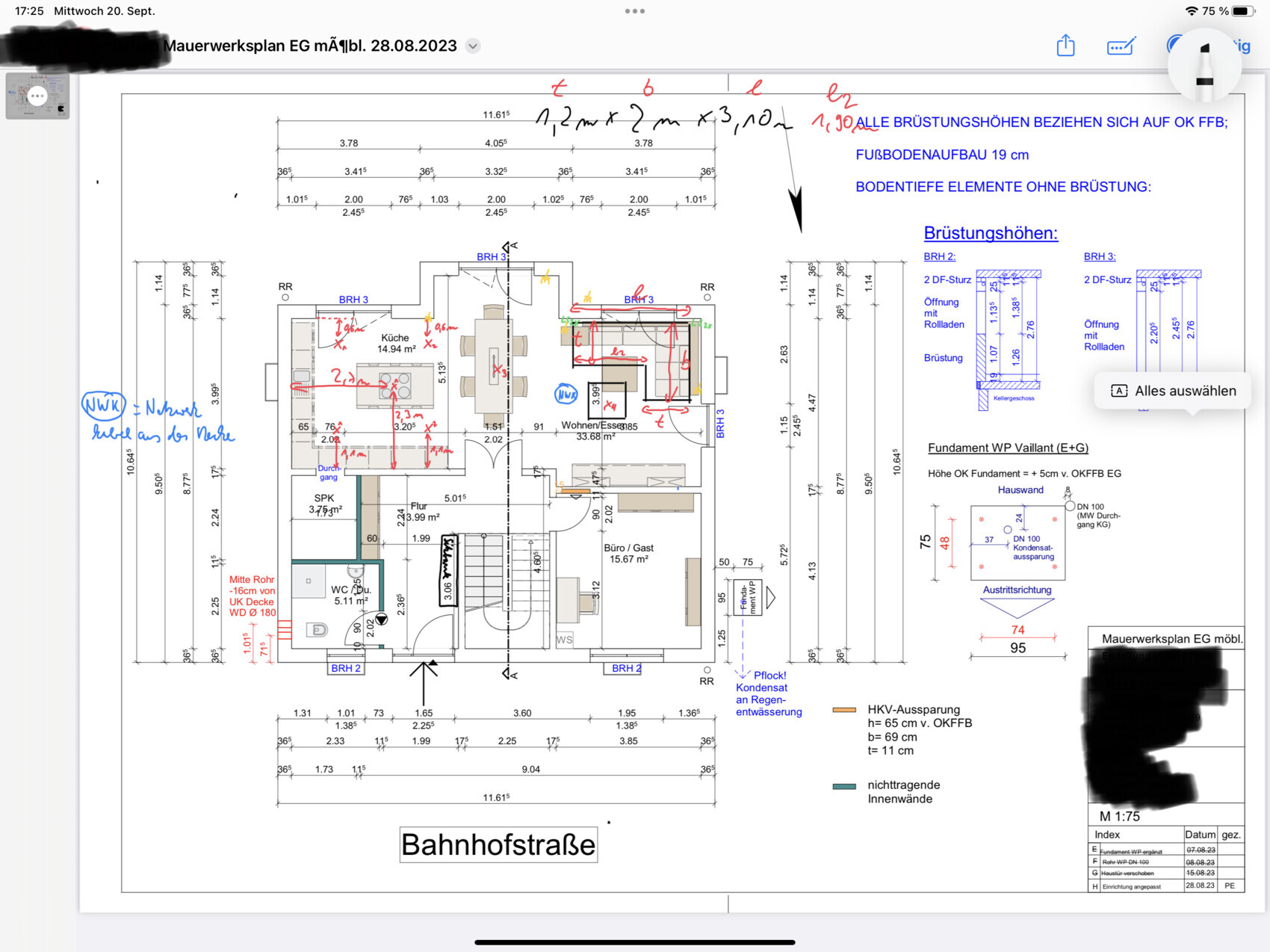
We recently had the electrical planning meeting. During this process, the following plan was created. Unfortunately, no furniture is shown, so I have also included a floor plan with furniture. This is our first time doing something like this. I would appreciate your feedback, as I am sure you can provide valuable advice and some helpful suggestions.
I am particularly uncertain about the kitchen, main bathroom, and staircase areas.
About the house:
- 3 floors: basement + ground floor + upper floor
- approximately 258 sqm (2773 sq ft) of living space on each of the 3 floors
- ceiling height on ground and upper floors: about 2.55 m (8.4 ft)
- ceiling height in basement: about 2.38 m (7.8 ft)
Questions:
Should I really install 5 ceiling light outlets in the kitchen? Although a lot of light is needed, I wonder if this might be too many.
What do you think about the wall outlets in the staircase area?
For rooms of at least 16 sqm (172 sq ft), I have always planned two ceiling outlets. Do you think it is also necessary if the room is, for example, 16.5 sqm (178 sq ft)?
Should I run a cable for illuminated washbasins?
Is a 50 mm (2 inches) empty conduit sufficient for photovoltaics?
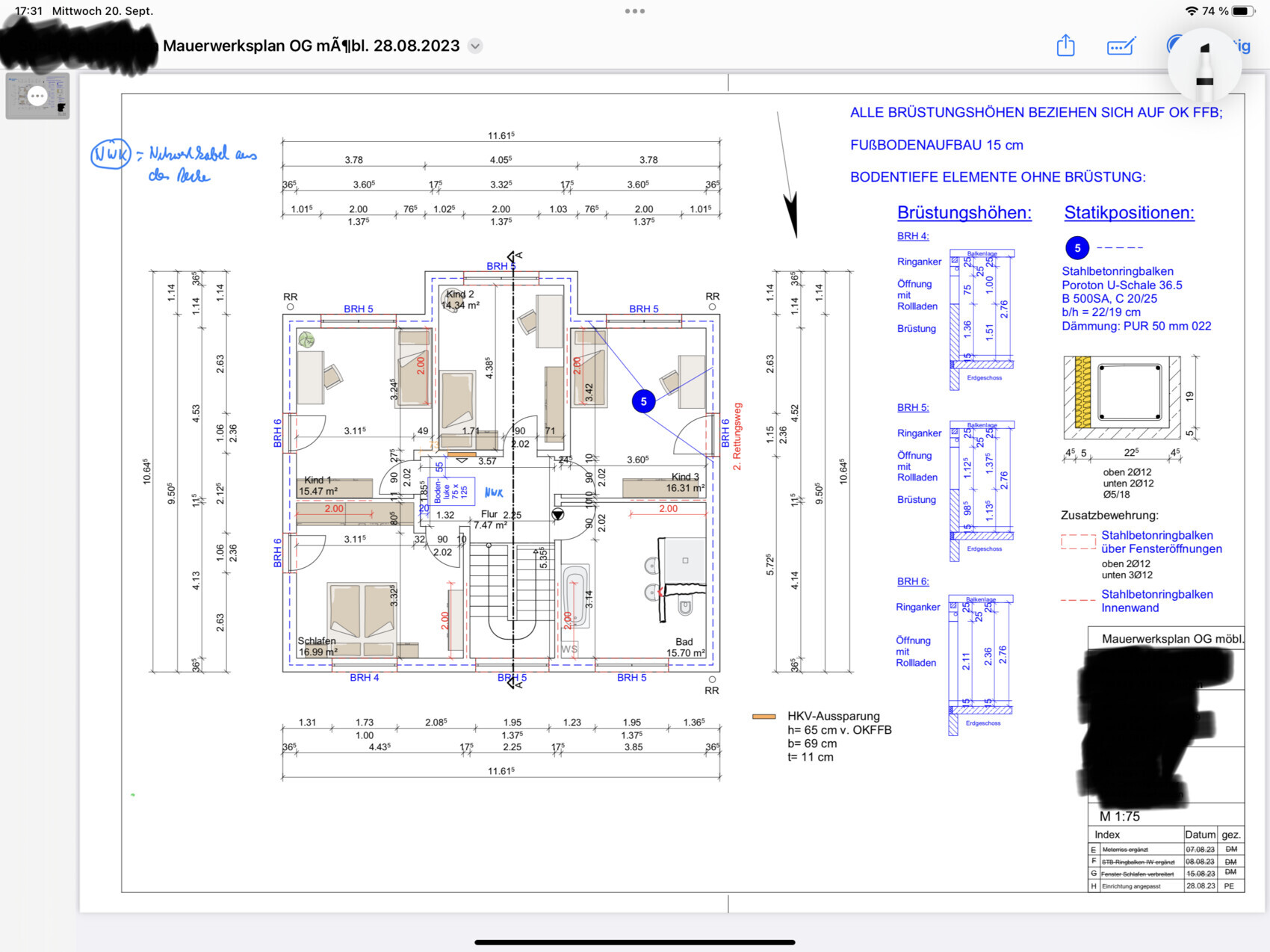
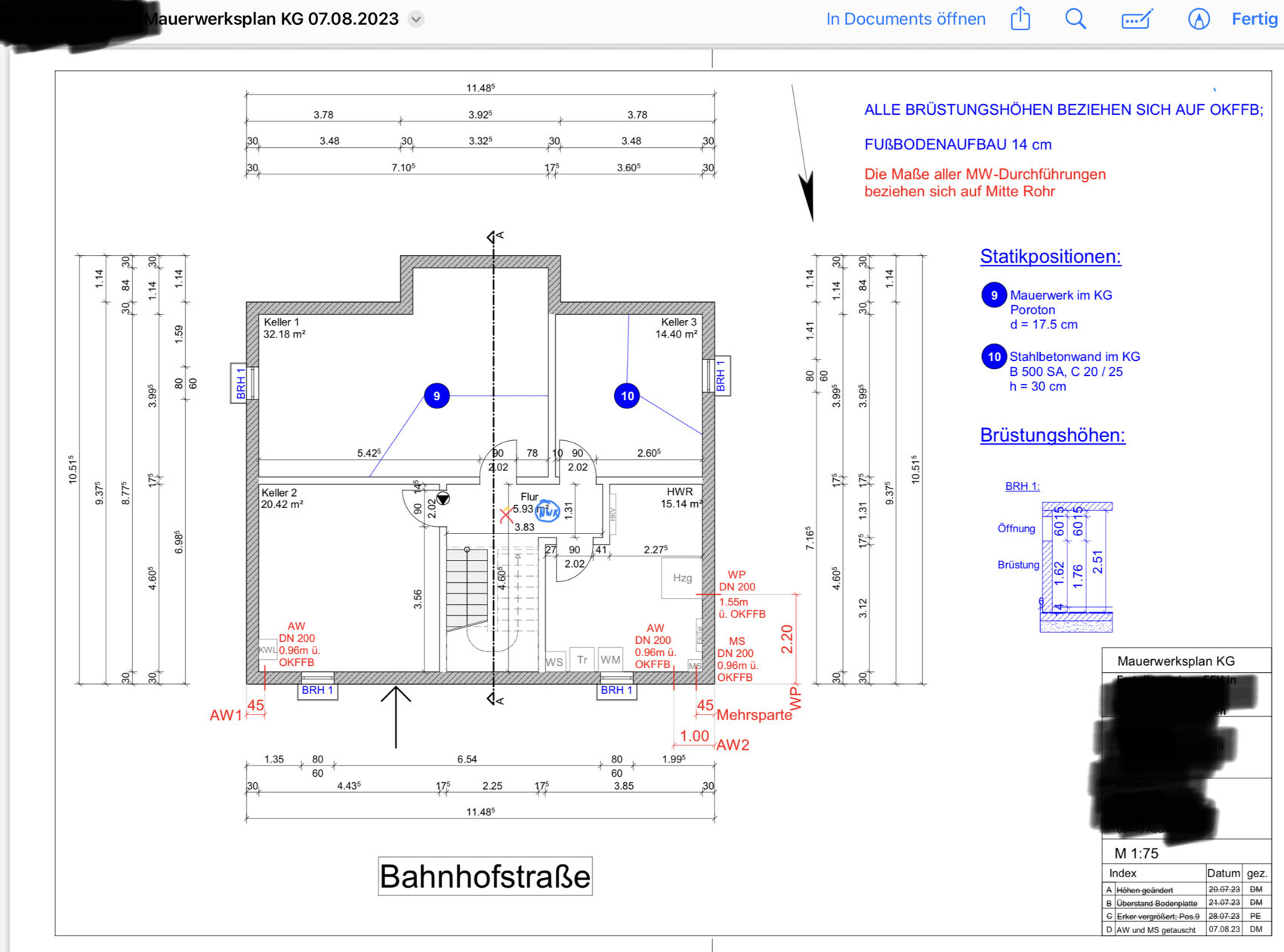
I am particularly uncertain about the kitchen, main bathroom, and staircase areas.
About the house:
- 3 floors: basement + ground floor + upper floor
- approximately 258 sqm (2773 sq ft) of living space on each of the 3 floors
- ceiling height on ground and upper floors: about 2.55 m (8.4 ft)
- ceiling height in basement: about 2.38 m (7.8 ft)
Questions:
Should I really install 5 ceiling light outlets in the kitchen? Although a lot of light is needed, I wonder if this might be too many.
What do you think about the wall outlets in the staircase area?
For rooms of at least 16 sqm (172 sq ft), I have always planned two ceiling outlets. Do you think it is also necessary if the room is, for example, 16.5 sqm (178 sq ft)?
Should I run a cable for illuminated washbasins?
Is a 50 mm (2 inches) empty conduit sufficient for photovoltaics?
N
NatureSys20 Sep 2023 22:11Gregor_K schrieb:
What do you think about the wall outlets in the stairwell? Is the lighting sufficient with the 2 wall outlets?
Two wall outlets should be enough for the staircase. However, I would position them more on the sides rather than directly in front. This will provide better illumination.
In the kitchen, the lighting needs to be above the countertop. That is where the ceiling outlets should be placed. Additionally, ceiling lights should be arranged so that the tall cabinet wall can be illuminated. And a light over the island. What kind of lighting does the kitchen planner have in mind?
Personally, I find the kitchen layout somewhat suboptimal. You always have to go around the corner of the island from the cooktop to the sink. Why is there no window on the sink side?
Personally, I find the kitchen layout somewhat suboptimal. You always have to go around the corner of the island from the cooktop to the sink. Why is there no window on the sink side?
I’ve reviewed the network planning and generally think it’s okay.
How do the cables for the access points come out of the ceiling? Is there a junction box in the concrete ceiling or do you have a suspended ceiling there?
If the network cabinet is placed in the corner of the basement, there will only be access from one side. Sometimes it’s useful to have access from both sides, but it’s not essential.
What is the network outlet in the outdoor area for? How are you protecting it? Radius?
How do the cables for the access points come out of the ceiling? Is there a junction box in the concrete ceiling or do you have a suspended ceiling there?
If the network cabinet is placed in the corner of the basement, there will only be access from one side. Sometimes it’s useful to have access from both sides, but it’s not essential.
What is the network outlet in the outdoor area for? How are you protecting it? Radius?
I don’t understand the ceiling outlets in the kitchen (and elsewhere, like the bathroom) at all. Some of them look like billiard balls scattered around the room. If you place more outlets, you typically arrange them in a grid, halve distances, use diagonals, maintain equal distances from walls, align them on central or one-third lines, or something similar. But you can’t avoid having a logical pattern if you don’t want them to look awkward.
And yes, planning this can be very exhausting.
Basically, in the kitchen, you should already think about what you want to achieve with so many outlets. We don’t know if you really like spotlights or if you just think you need downlights everywhere now. Track lighting is flexible. Do you know what you want above the stove?
For example, countertop lighting is usually integrated under or inside wall cabinets. These are part of the kitchen order and only need one outlet per row since they are connected in series.
Open-plan area: I’ll just describe what we have and how often or rarely we use it:
2 ceiling outlets in the kitchen over nearly 5.5 meters (18 feet) length. Task lighting under the wall cabinet, a work light over the stove/island. A dimmed “table” lamp on a half-height cabinet. The task lighting is used very frequently, and between 8 and 11 p.m. the dimmed light is on. The ceiling lighting is used very, very rarely.
Dining area: one pendant light. A dimmed table lamp, which is on from dusk until bedtime.
Living area: at one outlet, three large pendant lights hang in the open ceiling at a central height—used about four times a year. On the TV side, dimmed lighting is on daily from dusk. The sofa often has a floor lamp for task lighting (sewing, knitting, reading, playing, etc.).
In the living and dining areas, I would definitely make the main ceiling outlets dimmable.
In bedrooms, I would plan one central ceiling outlet and two sockets for bedside and floor lamps.
The bigger the room, the more outlets you need. So I don’t understand your question.
Child bedroom 3 is fine with just one ceiling outlet, like child bedroom 1.
The main bedroom as well. But if you want the wardrobe lit, I would distribute four spots at window height parallel to the wardrobe, the fourth one centered near the door, and position the others evenly. A dresser is well served by a table lamp.
Definitely. That lighting is more important than harsh ceiling lighting.
Our situation is similar—we also still have the 160cm (5.25 feet) width. Similar because a dresser is planned on the right side like ours. Move the dresser away from the wall and then place the bed centered from there. Also place the switch centered to the bed. And if everything changes someday, the dresser is removed, or the bed is moved because aesthetically it looks better, that’s okay and not a problem.
And yes, planning this can be very exhausting.
Basically, in the kitchen, you should already think about what you want to achieve with so many outlets. We don’t know if you really like spotlights or if you just think you need downlights everywhere now. Track lighting is flexible. Do you know what you want above the stove?
For example, countertop lighting is usually integrated under or inside wall cabinets. These are part of the kitchen order and only need one outlet per row since they are connected in series.
Open-plan area: I’ll just describe what we have and how often or rarely we use it:
2 ceiling outlets in the kitchen over nearly 5.5 meters (18 feet) length. Task lighting under the wall cabinet, a work light over the stove/island. A dimmed “table” lamp on a half-height cabinet. The task lighting is used very frequently, and between 8 and 11 p.m. the dimmed light is on. The ceiling lighting is used very, very rarely.
Dining area: one pendant light. A dimmed table lamp, which is on from dusk until bedtime.
Living area: at one outlet, three large pendant lights hang in the open ceiling at a central height—used about four times a year. On the TV side, dimmed lighting is on daily from dusk. The sofa often has a floor lamp for task lighting (sewing, knitting, reading, playing, etc.).
In the living and dining areas, I would definitely make the main ceiling outlets dimmable.
In bedrooms, I would plan one central ceiling outlet and two sockets for bedside and floor lamps.
Gregor_K schrieb:
If the room is at least 16 square meters (172 square feet), I have always planned 2 ceiling outlets. Do you think that is necessary if the room is, say, 16.5 square meters (178 square feet)?
The bigger the room, the more outlets you need. So I don’t understand your question.
Child bedroom 3 is fine with just one ceiling outlet, like child bedroom 1.
The main bedroom as well. But if you want the wardrobe lit, I would distribute four spots at window height parallel to the wardrobe, the fourth one centered near the door, and position the others evenly. A dresser is well served by a table lamp.
Gregor_K schrieb:
Should I have a cable installed for illuminated washbasins?
Definitely. That lighting is more important than harsh ceiling lighting.
Gregor_K schrieb:
Bedroom:
We currently have a 1.6-meter (5.25 feet) bed.
Our situation is similar—we also still have the 160cm (5.25 feet) width. Similar because a dresser is planned on the right side like ours. Move the dresser away from the wall and then place the bed centered from there. Also place the switch centered to the bed. And if everything changes someday, the dresser is removed, or the bed is moved because aesthetically it looks better, that’s okay and not a problem.

ypg schrieb:
In the living and dining area, I would definitely make the main ceiling outlets dimmable. We solved that with E27/E14 bulbs,
three-step dimmable LED lights (10-40-100%) and that works for us.
kbt09 schrieb:
What kind of lighting is the kitchen planner proposing?The kitchen planner hasn’t planned any lighting.
hanse987 schrieb:
How do the cables for the access points come out of the ceiling? Is there an electrical box in the concrete ceiling, or do you have a suspended ceiling there?
If the network cabinet is placed in the basement corner like that, there will be access only from one side. Sometimes it's useful to be able to access from both sides, but it's not a must.
What is the network outlet outside for? How will you secure it? Radius?The network cables come out of the ceiling as standard cables. I plan to mount a UniFi access point on the ceiling and connect it via RJ45 with PoE. Does the ceiling need to be suspended for something like that?
I wanted a network outlet outside in case someone wants to work on the terrace. 🙂 Maybe this could also be handled via Wi-Fi, but honestly, I’m not sure how good the Wi-Fi quality is with Poroton blocks. How should I protect this network outlet?
Similar topics