
ᐅ Work on the Base/Foundation at the Garage and Sidewalk Edging
Created on: 21 Aug 2017 12:06
Q
quiknikHello everyone,
I’ve already gathered a lot of information here, but now I need to ask a question.
The paint on my garage is peeling, and I want to apply new paint before winter. I was able to remove the loose parts with a scraper, but there are still some paint remnants that are holding on quite well. The paint is quite thick, I’d estimate about half to one millimeter (0.02 to 0.04 inches) thick. I think it’s just regular base paint, which is probably somewhat thicker? When I scraped it off, large pieces came off, and I even found some insects underneath. Anyway, now I’m not sure if I can just paint over it and how it looks if there are still some old paint spots remaining. I probably shouldn’t use a pressure washer, but somehow I need to clean it before painting. There is also a fair amount of moss further down. I have the same problem on the fence base along the walkway. I’d like to paint the garage at the same time. There are a few peeling spots and some cracks, but in some areas, the paint is still holding up quite well.
I’d like to know how you would approach this? It doesn’t have to look perfect but should be practical to protect the plaster and stone. By the way, the plaster is slightly sandy but still firm.
I’ve attached some pictures.
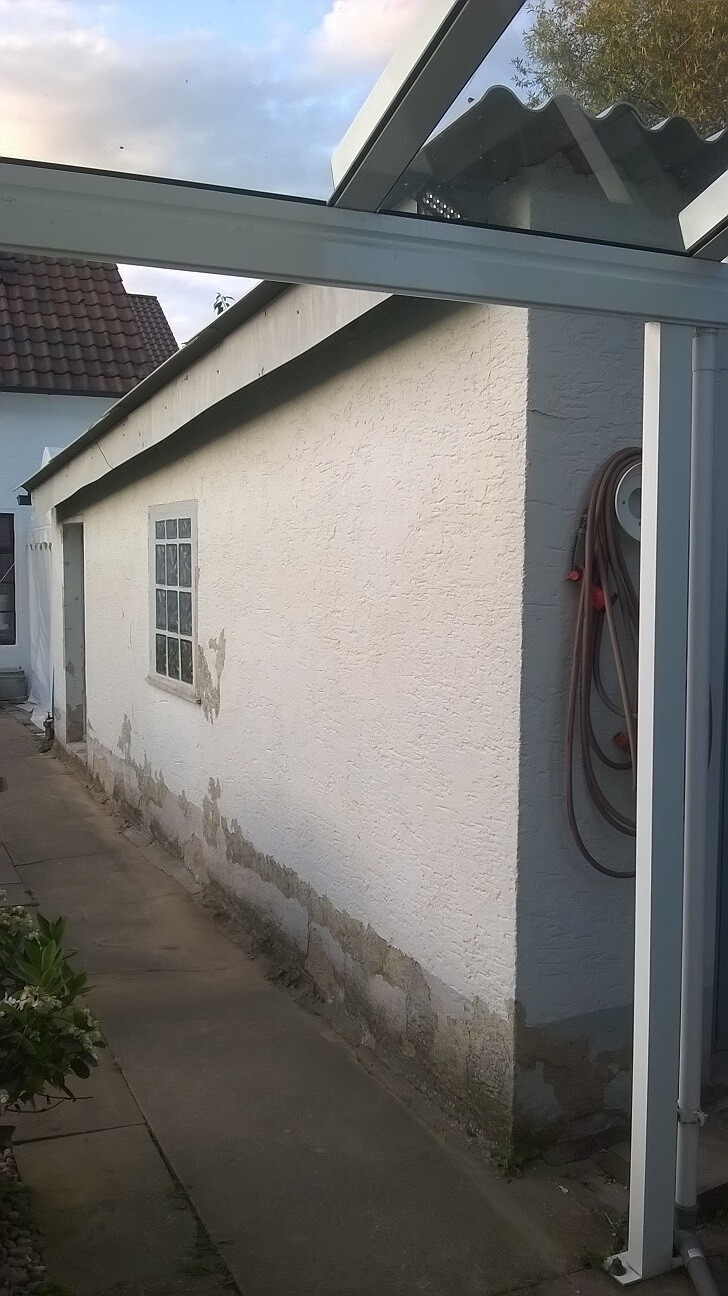
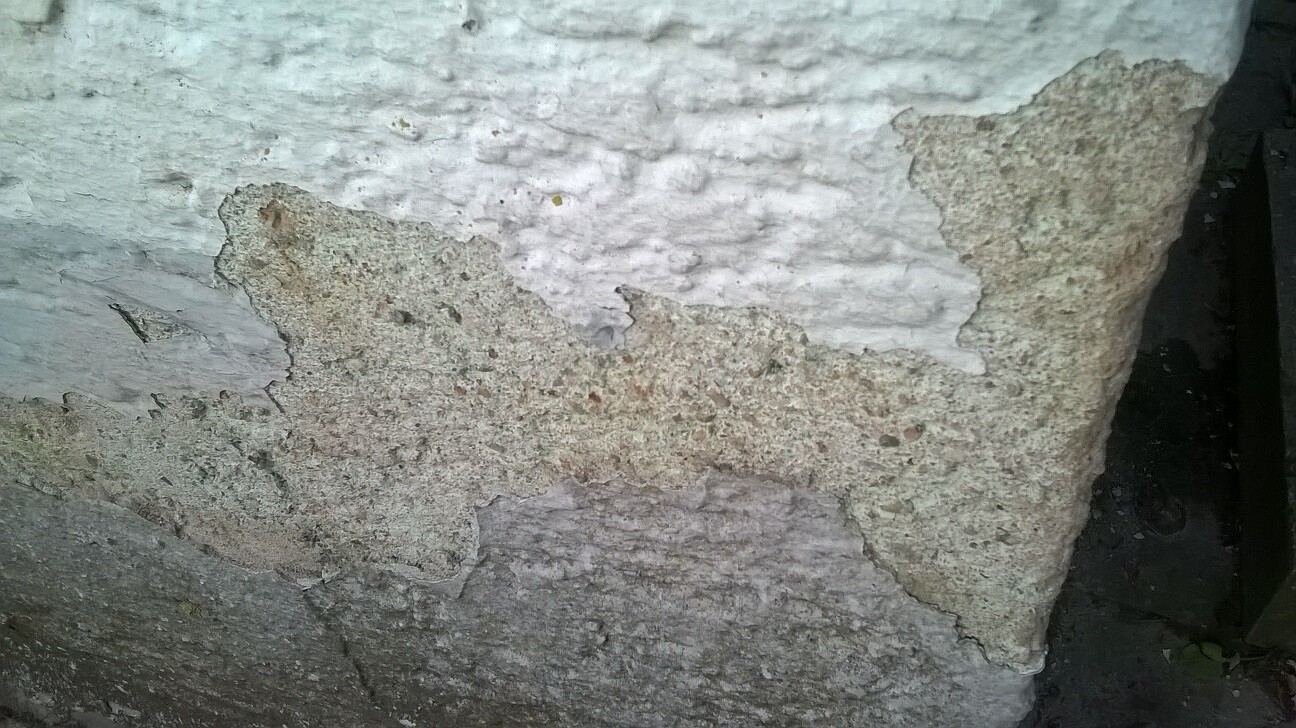
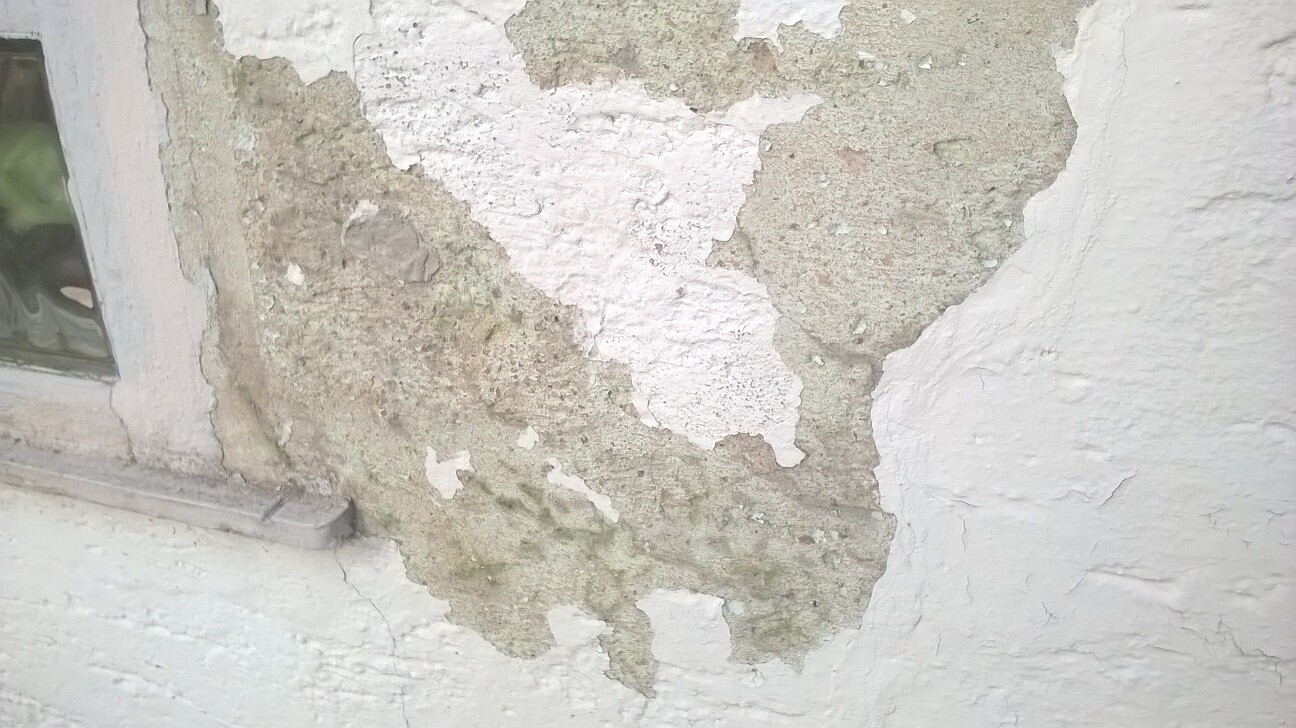
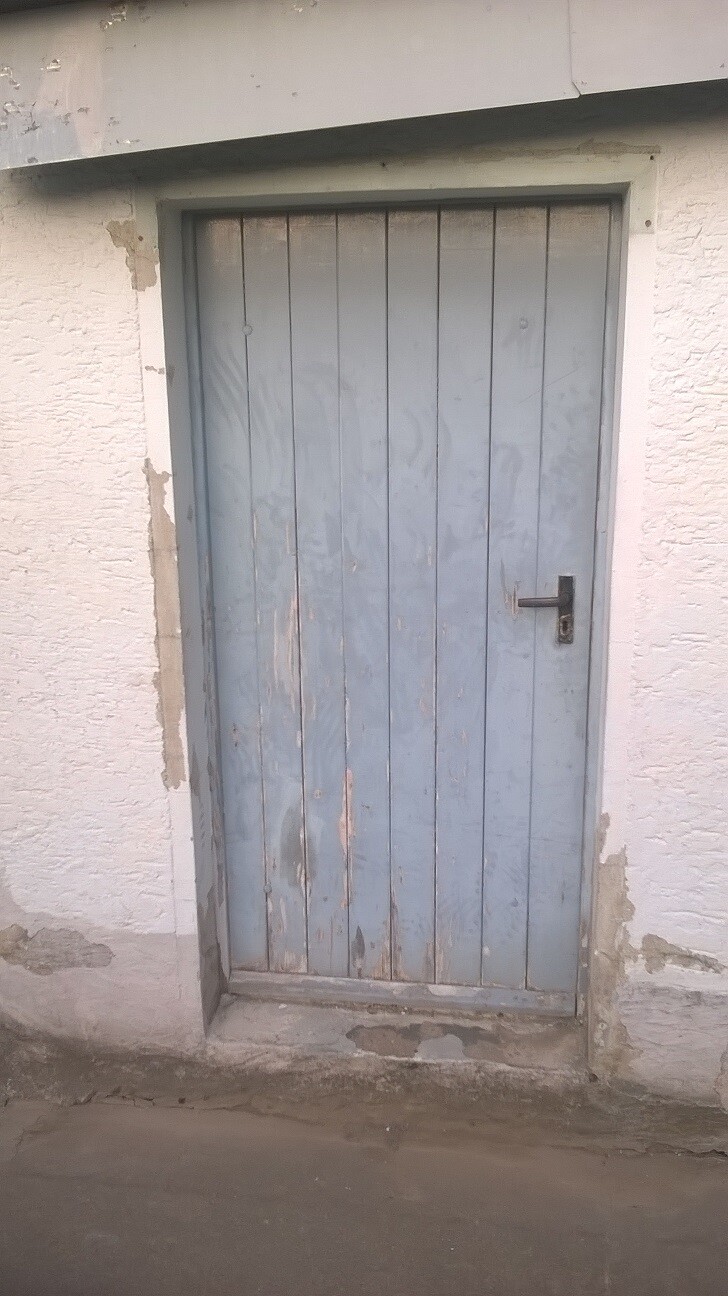
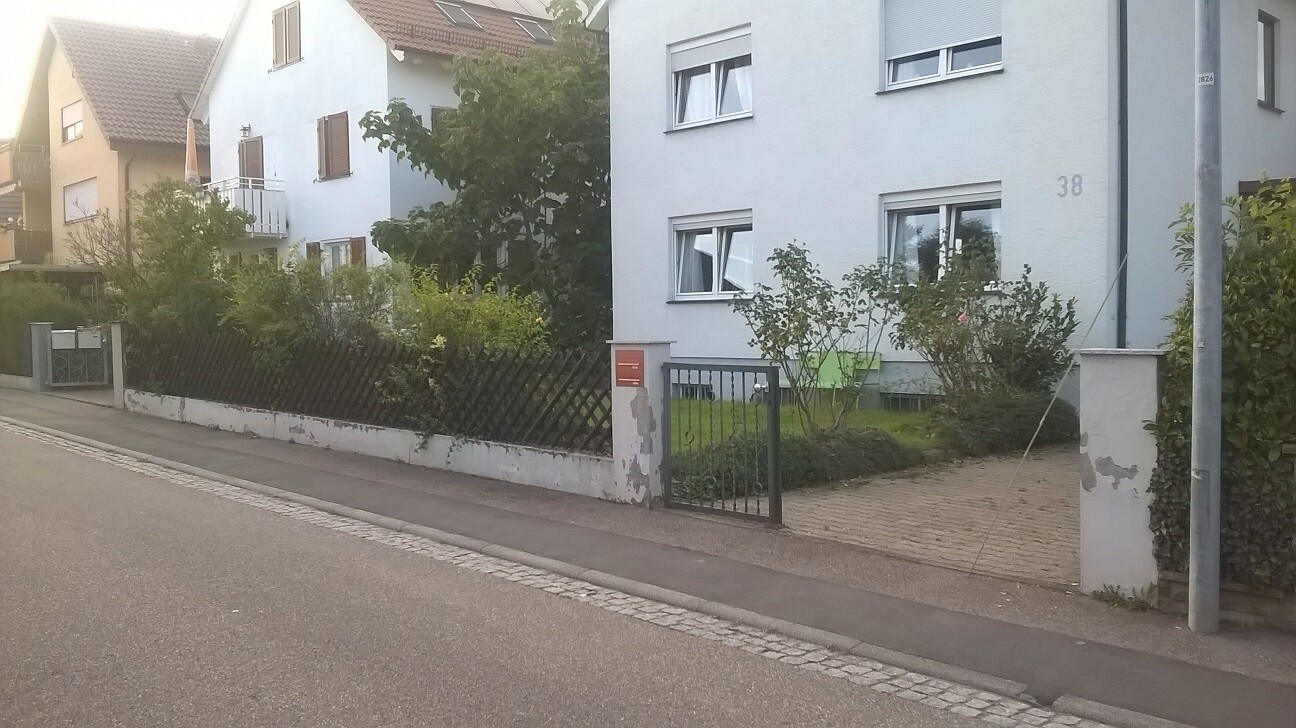
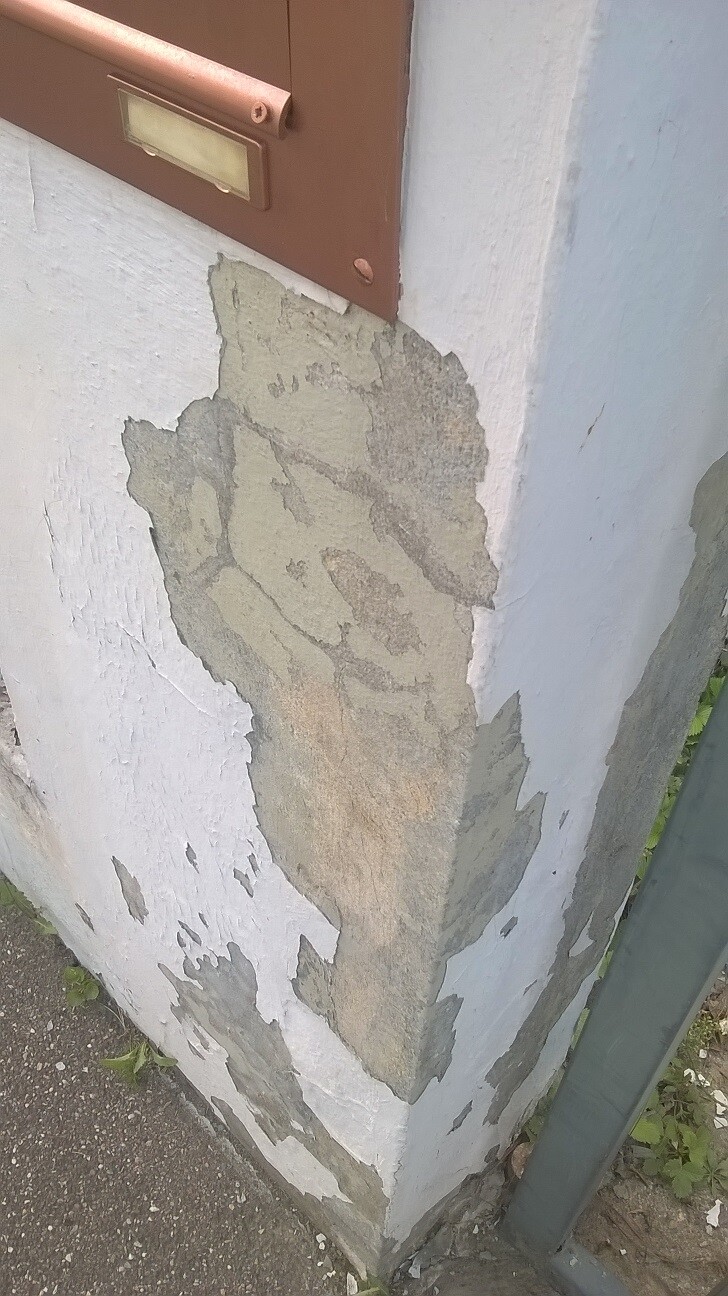
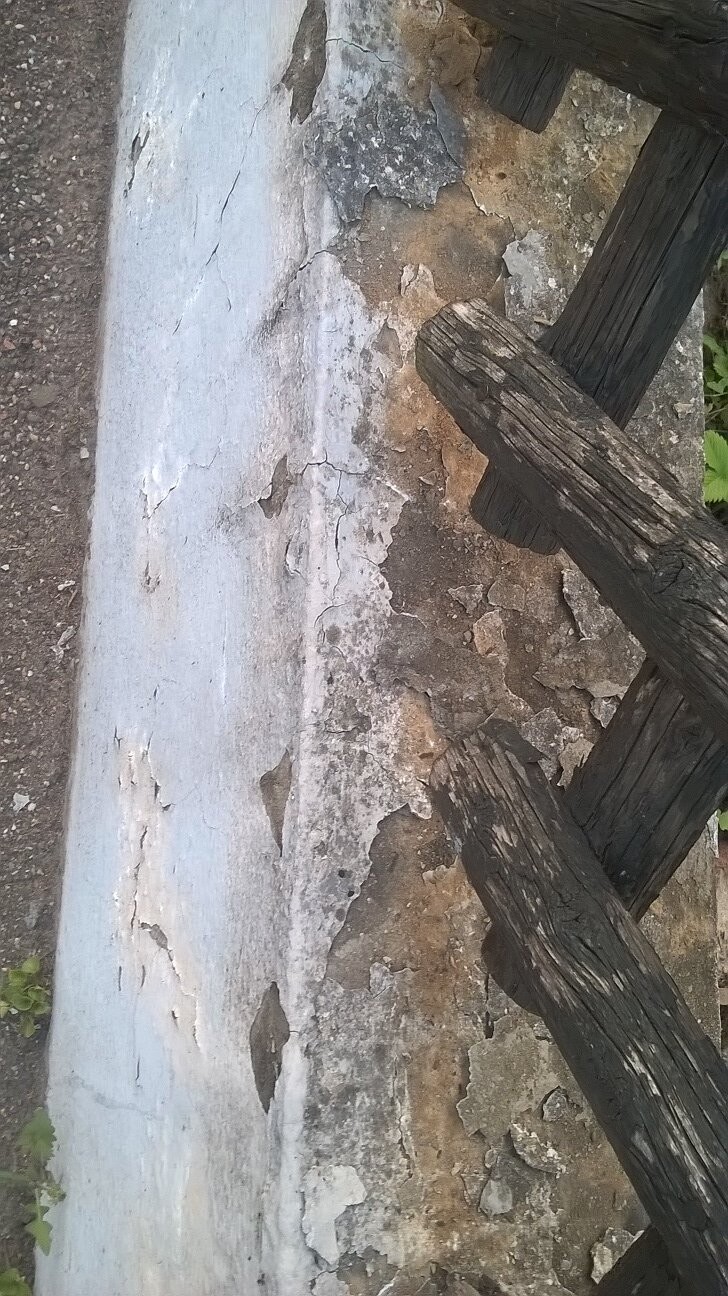
I’ve already gathered a lot of information here, but now I need to ask a question.
The paint on my garage is peeling, and I want to apply new paint before winter. I was able to remove the loose parts with a scraper, but there are still some paint remnants that are holding on quite well. The paint is quite thick, I’d estimate about half to one millimeter (0.02 to 0.04 inches) thick. I think it’s just regular base paint, which is probably somewhat thicker? When I scraped it off, large pieces came off, and I even found some insects underneath. Anyway, now I’m not sure if I can just paint over it and how it looks if there are still some old paint spots remaining. I probably shouldn’t use a pressure washer, but somehow I need to clean it before painting. There is also a fair amount of moss further down. I have the same problem on the fence base along the walkway. I’d like to paint the garage at the same time. There are a few peeling spots and some cracks, but in some areas, the paint is still holding up quite well.
I’d like to know how you would approach this? It doesn’t have to look perfect but should be practical to protect the plaster and stone. By the way, the plaster is slightly sandy but still firm.
I’ve attached some pictures.

If the plaster slightly crumbles, it will also absorb water.
Base layers should be made of cement render, so remove everything that is not firmly attached and repair any damaged areas accordingly.
Treat old plaster with a consolidating primer.
To make the plaster properly waterproof afterwards, use an organic filler compound for sealing.
You can then paint over it with base paint.
Base layers should be made of cement render, so remove everything that is not firmly attached and repair any damaged areas accordingly.
Treat old plaster with a consolidating primer.
To make the plaster properly waterproof afterwards, use an organic filler compound for sealing.
You can then paint over it with base paint.
Alternative approach: Remove all material at the base area and apply two layers of waterproof slurry. Please mix it so that it can be applied with a brush, not too stiff, more like thick pea soup. Apply twice to ensure sufficient layer thickness. This is the most cost-effective option.
Hello, thanks in advance for the information. You both say that the old paint in the base area needs to be removed—what is the best way to do this without significantly damaging the plaster?
@Nordlys: Can the waterproof slurry also be applied directly onto the plaster, or does the plaster need to be removed as well? Would it be possible to simply paint over the areas where the paint still adheres well, or would that render it ineffective?
Regards,
Nik
@Nordlys: Can the waterproof slurry also be applied directly onto the plaster, or does the plaster need to be removed as well? Would it be possible to simply paint over the areas where the paint still adheres well, or would that render it ineffective?
Regards,
Nik

OK, I can see the paint needs to be removed :-( I’m not sure how to manage that since in some areas it’s still really firmly attached. I don’t know if a pressure washer is the right tool for this? The demolition hammer seems too rough here and would probably damage the plaster. Maybe a multi-tool? Could the plaster possibly be treated first with a bonding primer or something similar to make it firmer?
Similar topics