
ᐅ Roof Overhang on a Gable Roof as a Protection for the Building Façade?
Created on: 13 Sep 2016 21:00
B
baschdieh
We are currently building a single-family house. The roof is designed as a gable roof with an 18° pitch and a 30cm (12 inches) eave overhang.
Personally, I think a roof without an overhang looks more modern. However, my architect believes that the eave overhang protects the house from weathering and is more cost-effective because it requires less complex sealing.
I find it hard to imagine that a) a 30cm (12 inches) eave overhang actually protects the facade and b) that the house would require significantly more sealing work and therefore higher costs without it.
What is your opinion on eave overhangs?
Thank you very much and best regards!
Personally, I think a roof without an overhang looks more modern. However, my architect believes that the eave overhang protects the house from weathering and is more cost-effective because it requires less complex sealing.
I find it hard to imagine that a) a 30cm (12 inches) eave overhang actually protects the facade and b) that the house would require significantly more sealing work and therefore higher costs without it.
What is your opinion on eave overhangs?
Thank you very much and best regards!
We have a 30° (degrees) gable roof without eaves, but with a brick facade.
However, we invested in verge tiles (for Braas Turmalin) and a zinc sheet cladding on the bargeboards to reduce the frequency of repainting.
Everything stays warm and dry – and here in the north, rain often comes at a sideways angle.
To protect against rain or sun, an overhang of about 50 cm (20 inches) is probably necessary.
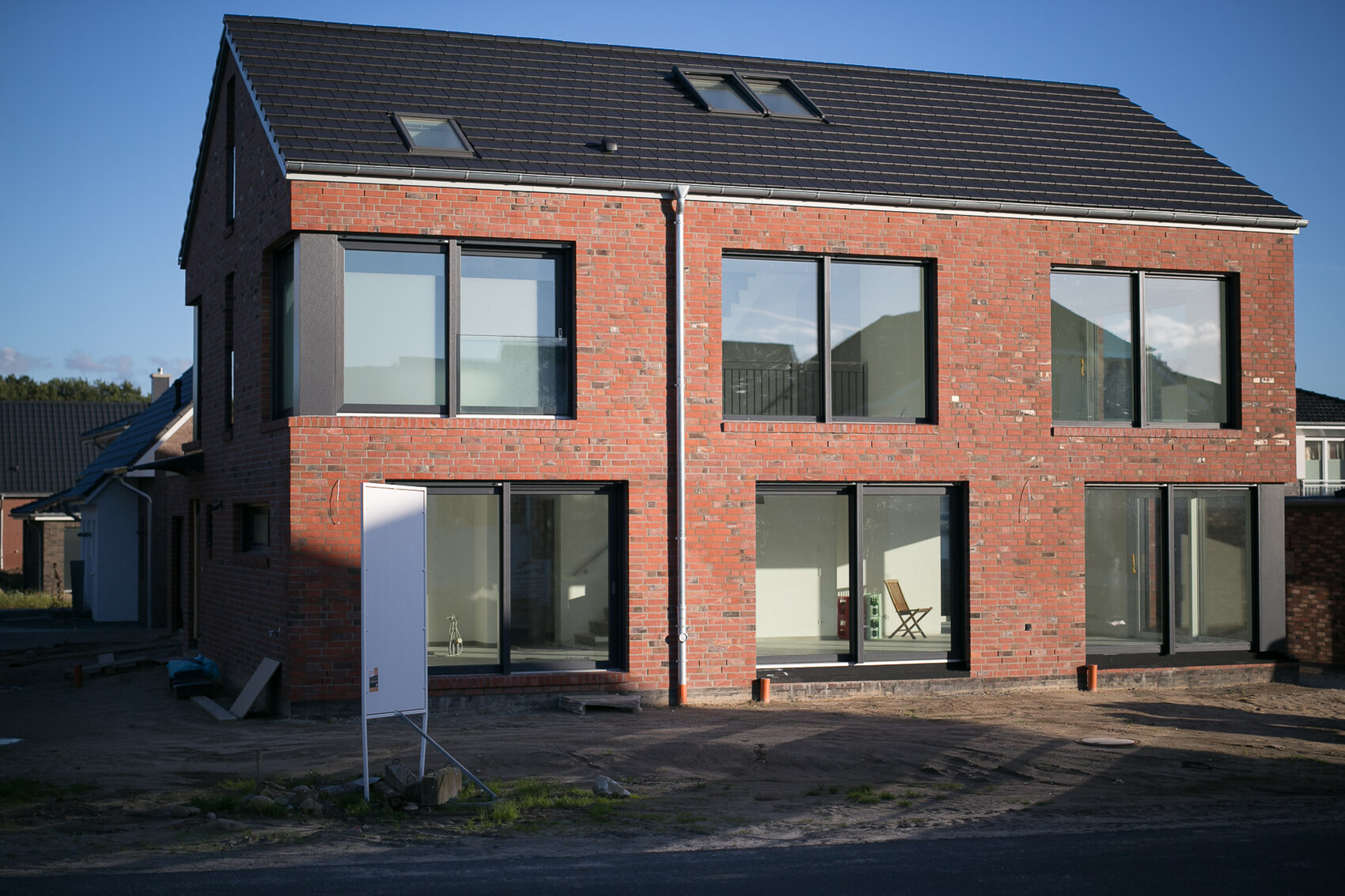
However, we invested in verge tiles (for Braas Turmalin) and a zinc sheet cladding on the bargeboards to reduce the frequency of repainting.
Everything stays warm and dry – and here in the north, rain often comes at a sideways angle.
To protect against rain or sun, an overhang of about 50 cm (20 inches) is probably necessary.
C
Changeling24 Nov 2017 14:00Nordlys schrieb:
Clear decision: No, don’t do it. The 2500 saved is on superficial things, not on the structure. (Simpler kitchen, cheaper paving outside, no upgraded tiles, etc.) Okay, but why? Simply saying "structure" is too vague for me—sorry. I’m really interested in the details: What are the pros and cons? There are also many others who build with little or no roof overhang, like @Otus11, and that seems to be fine too?
C
Changeling24 Nov 2017 14:25As far as I understand from the planner's information, no steel sheet should be applied around the 10cm (4 inches). Am I incorrectly informed?
I prefer the 50cm (20 inches) option visually. But not enough to justify a 2500€ surcharge. Do the 40cm (16 inches) difference really make a difference to the building structure, and if so, what kind?
I prefer the 50cm (20 inches) option visually. But not enough to justify a 2500€ surcharge. Do the 40cm (16 inches) difference really make a difference to the building structure, and if so, what kind?
I believe you can’t generalize on this. 10 cm (4 inches) probably looks like it was an intentional design choice rather than well executed. On the other hand, 50 cm (20 inches) can overwhelm the side walls, and anything larger might appear like a mushroom.
Additionally, whether it’s the gable or eaves side, as well as the weather exposure, plays a role. The gable side can also have different dimensions than the eaves side.
Additionally, whether it’s the gable or eaves side, as well as the weather exposure, plays a role. The gable side can also have different dimensions than the eaves side.