
ᐅ Regarding the final inspection: does this comply with the electrical standards according to the relevant DIN norm?
Created on: 5 Mar 2024 15:55
E
Elwood62
Hello everyone,
in April, the inspection of my semi-detached house, which I purchased from the developer, is scheduled.
The construction description states the following:
Installation carried out according to DIN 18015-1+2 (electrical system) + standard-enhancing basic installations (“standard equipment” as described in DIN 18015 Part 2)
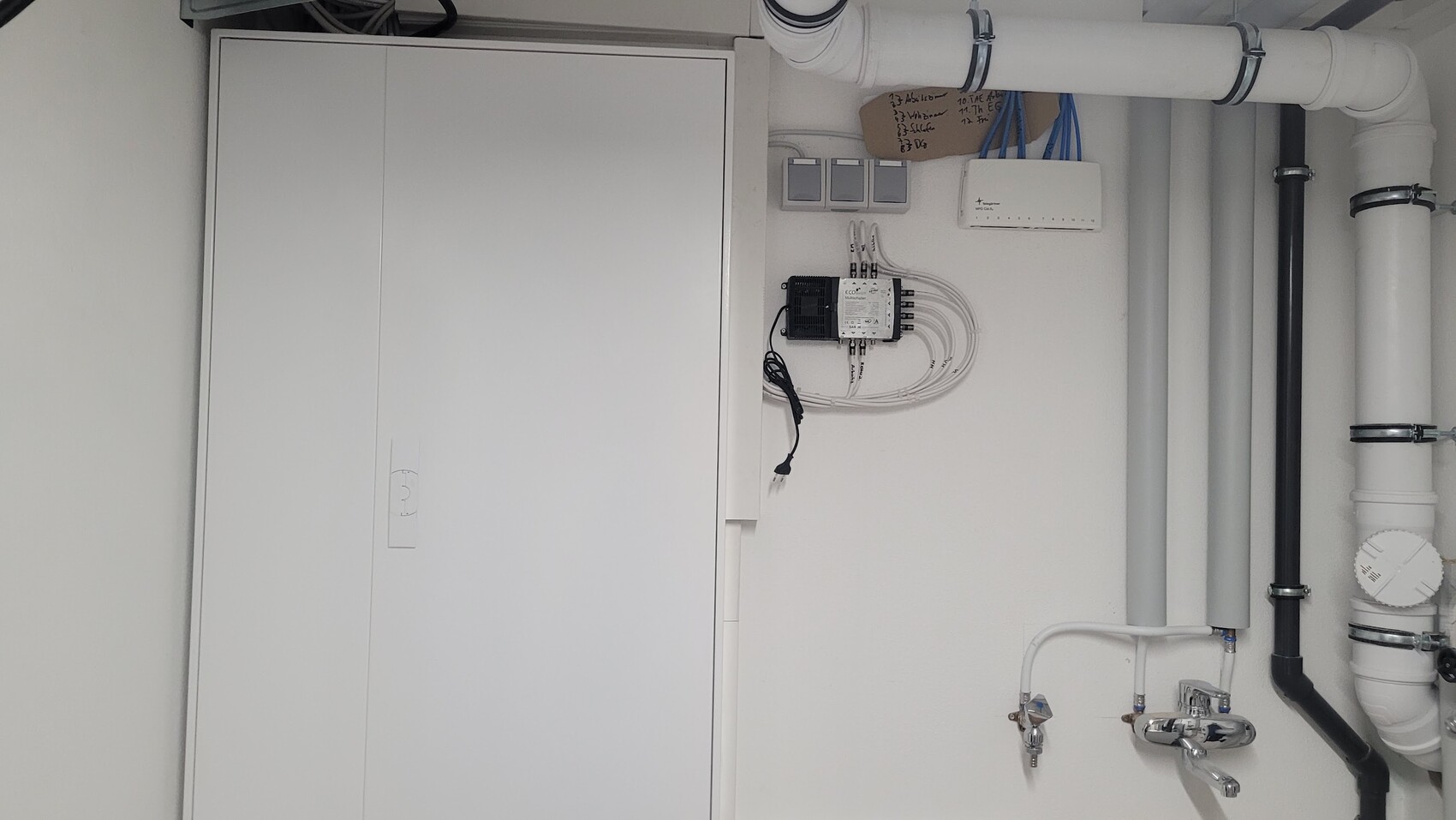
Maybe someone knows whether this rather amateurish installation for LAN and satellite complies with the DIN standard (see attached).
Or should this be inside the distribution box?
I would appreciate any advice.
Best regards
in April, the inspection of my semi-detached house, which I purchased from the developer, is scheduled.
The construction description states the following:
Installation carried out according to DIN 18015-1+2 (electrical system) + standard-enhancing basic installations (“standard equipment” as described in DIN 18015 Part 2)
Maybe someone knows whether this rather amateurish installation for LAN and satellite complies with the DIN standard (see attached).
Or should this be inside the distribution box?
I would appreciate any advice.
Best regards
Elwood62 schrieb:
Maybe someone knows whether this rather amateur installation for LAN and SAT complies with the DIN standard (see attachment). The term equipotential bonding has already been mentioned, but not in relation to the satellite antenna. It is not clear from the pictures whether the information and communication technology (ICT) and building automation cables were installed as required to be strain-relieved and replaceable, or whether the requirement for empty conduits between the attic and basement has been met.
According to DIN EN IEC 60728-11 (VDE 0855-1):2023-10, which is primarily responsible for antenna safety, the equipotential bonding must be maintained even when the multiswitch is removed on the shields of all coaxial cables. This implies the use of grounding blocks or a grounding bracket, none of which are visible. If, as a rare exception, the 4 LNB cables were connected normatively near the antenna mast after the cable entry into the building to an antenna requiring grounding, the protection against electric shock would at least be ensured.
It is positive to note that modern compression connectors were used, rather than F-type screw-on connectors that damage the braid. The example image shows how grounding and equipotential bonding according to IEC 60728-11 should be implemented. The depicted external down conductor and support ground rod are optional and not mandatory. However, it may take a long time before it becomes widely known among low voltage electricians that not only the grounding conductors but also the connectors and lightning protection arresters (HES/PAS) must be capable of carrying lightning currents.
Elwood62 schrieb:
Or should that be installed inside the enclosure? Formally, yes, but this was decided by the staff of the relevant national building committee (NABau) without consulting the colleagues responsible for antenna technology at the national DKE committee. Therefore, the international IEC 60728-11 standard and its national versions still include example images showing headends installed in the attic.
Installing the multiswitch next to the network components also allows for media consolidation in this way.