
Hello,
The cement screed has been installed for about three weeks now, and small black spots are gradually appearing on the drywall panels upstairs.

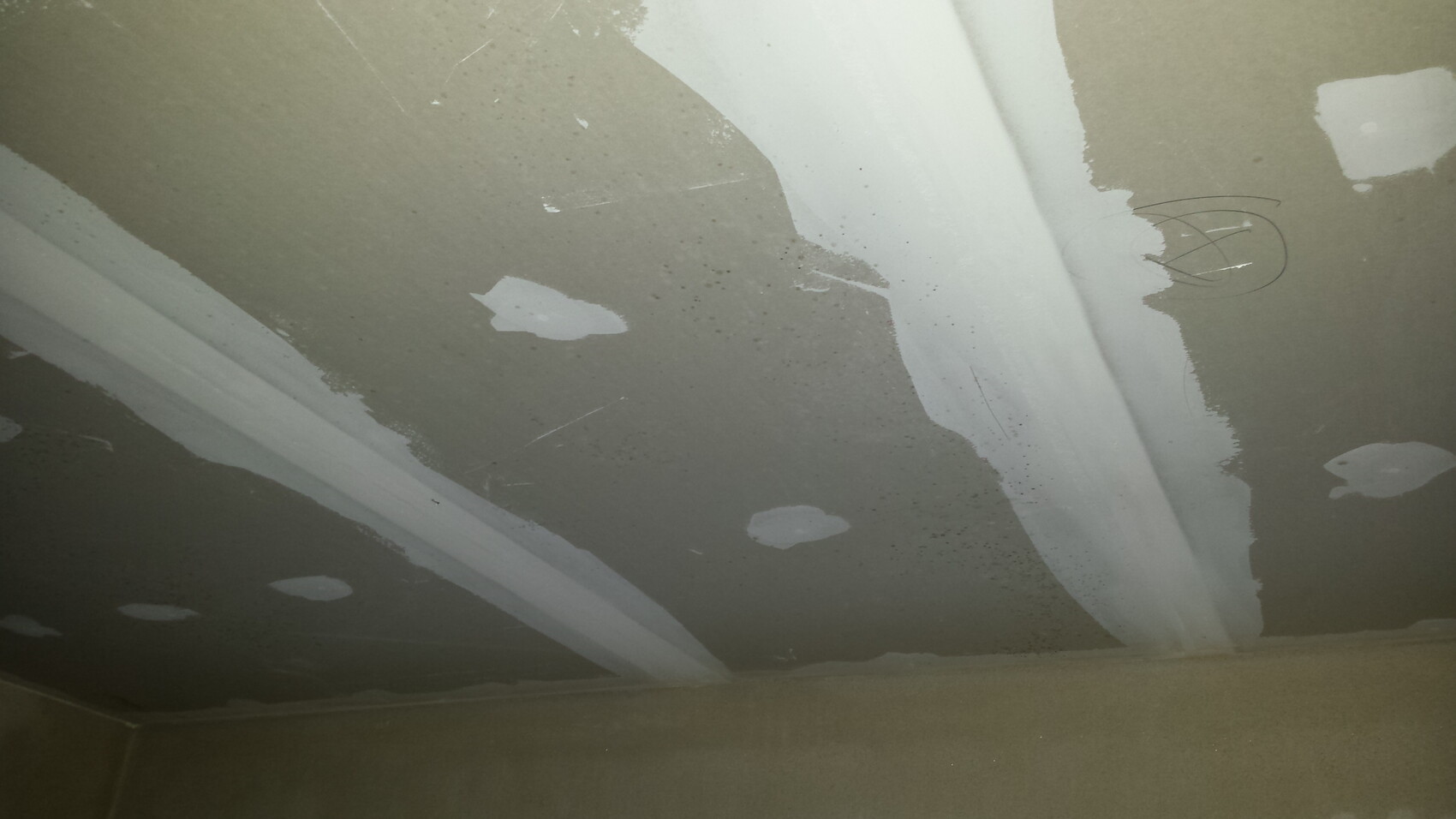
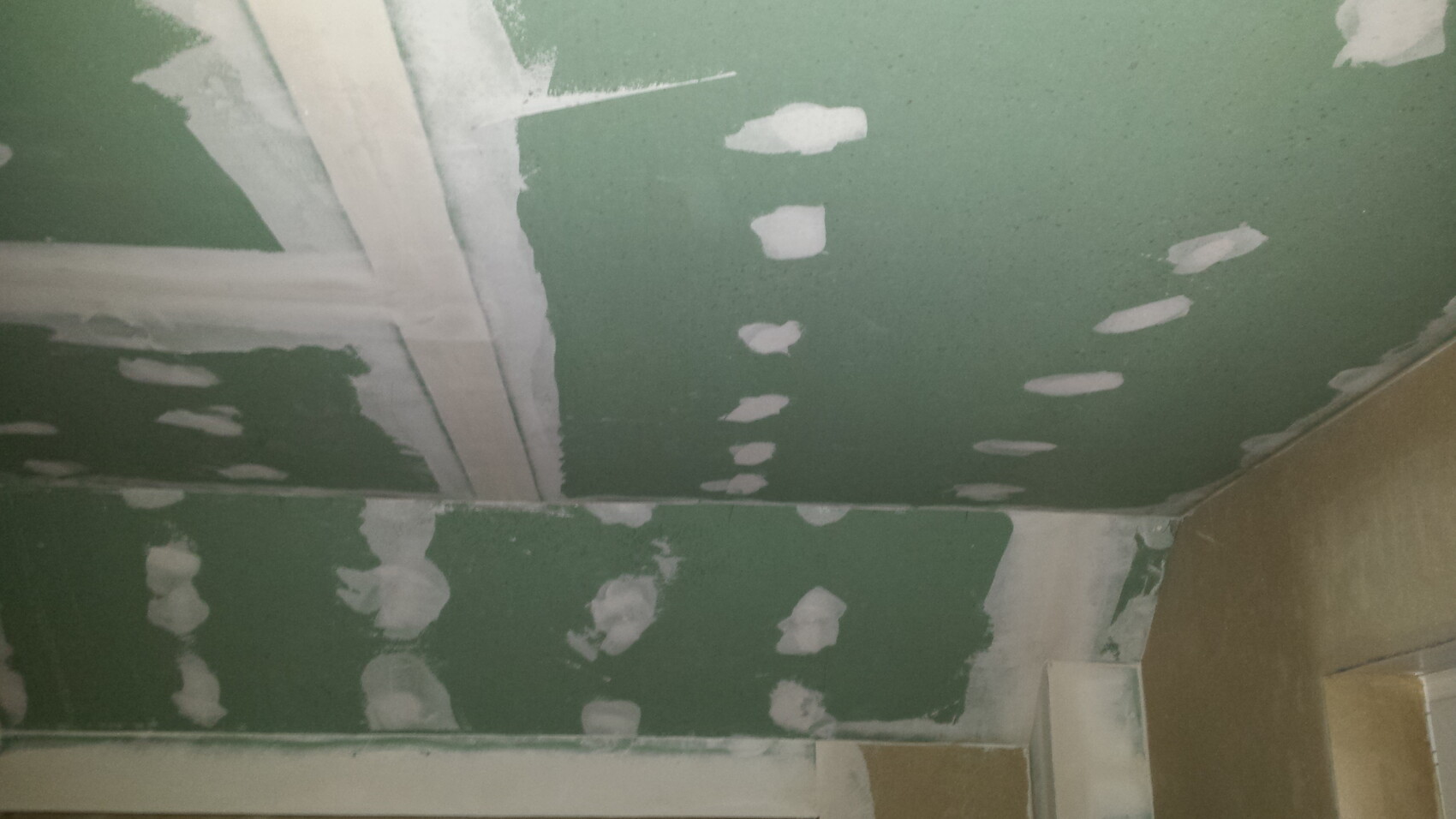
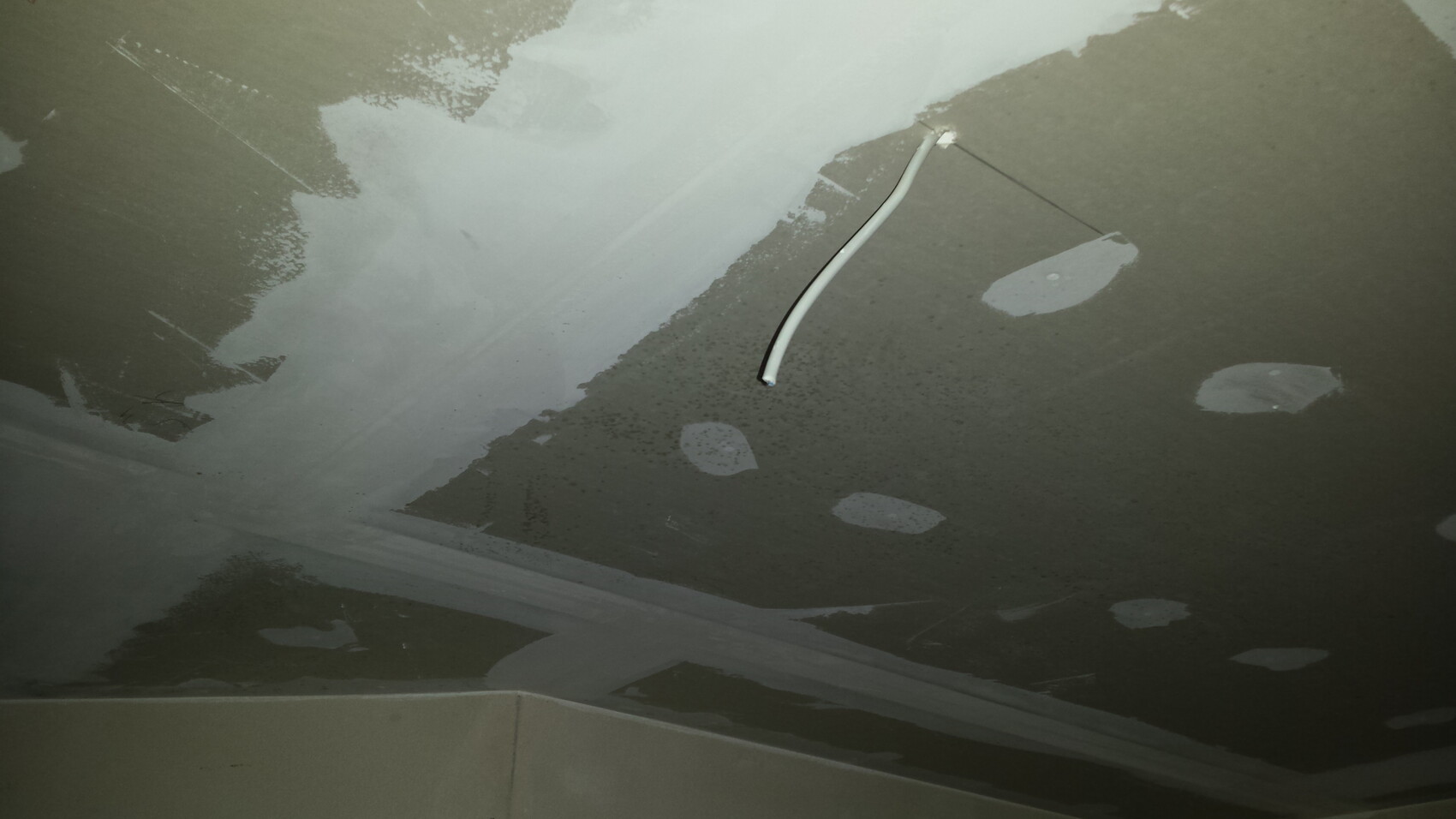
Is this mold? It looks like mold to me.
The cement screed has been installed for about three weeks now, and small black spots are gradually appearing on the drywall panels upstairs.
Is this mold? It looks like mold to me.
B
Bieber081523 Feb 2016 23:09Sebastian79 schrieb:
I would be surprised if your heating system is supposed to operate at 55°C (131°F) flow temperature under design conditions – the screed will not appreciate that This is about drying the screed. It is common practice to heat up to 55°C (131°F) for this purpose. Apparently, this is the only way to achieve the required residual moisture for the flooring readiness.
S
Sebastian7924 Feb 2016 05:56Nonsense, the heating phase is done as a stress test for the screed – the floor heating for installation readiness comes afterward and is considered normal heating. His values refer to the first phase.
You use the highest possible supply temperature. Nowadays, this is very rarely still 55 degrees Celsius (131°F) – and at that temperature, the screed will definitely crack. It will be repaired, but unnecessarily so.
You use the highest possible supply temperature. Nowadays, this is very rarely still 55 degrees Celsius (131°F) – and at that temperature, the screed will definitely crack. It will be repaired, but unnecessarily so.
B
Bieber081524 Feb 2016 07:01Sebastian79 schrieb:
Nonsense, the heating up is used as a stress test for the screed – the final heating before flooring installation follows afterwards and is normal heating. His values refer to the first case. Do you know more than what has been posted here in the thread? In my opinion, oggear51’s description fits very well with the final heating before flooring installation.
oggear51 schrieb:
The screed has been in place for about 3 weeks now (cement screed)oggear51 schrieb:
The heating was switched on today, for the first 3 days at 20°C (68°F) flow temperature, then increased stepwise up to 55°C (131°F) in increments of 5°C (9°F)This corresponds with the description in "Cement Data Sheet; Concrete Technology; B 19 7.2015: Cement Screed." Quote:
The heating is usually started only three weeks after the screed has been installed. [...] The flow temperature should initially be +25°C (77°F) and increased daily by a maximum of 10 K (turn off night setback!), until the maximum flow temperature of 55°C (131°F) is reached. This temperature is maintained until the screed reaches the required strength for covering. After that, the temperature is gradually reduced in steps of 10 K.S
Sebastian7924 Feb 2016 07:15I don’t remember exactly, but if the screed has been in place for 21 days, what is done is not surface drying heating, but operational heating – and that is exactly what was described here.
Your information sheet is fine, but with operational heating, the maximum flow temperature is usually reached – which today is typically between 35-45°C (95-113°F), not 55°C (131°F). Any good screed installer will be happy if, with modern heating systems, the screed only needs to reach around 35-40°C (95-104°F).
Also, the maximum temperature is definitely not maintained until the screed is ready for covering; rather, it is held for, as far as I recall, a maximum of 2 days. So...
Your information sheet is fine, but with operational heating, the maximum flow temperature is usually reached – which today is typically between 35-45°C (95-113°F), not 55°C (131°F). Any good screed installer will be happy if, with modern heating systems, the screed only needs to reach around 35-40°C (95-104°F).
Also, the maximum temperature is definitely not maintained until the screed is ready for covering; rather, it is held for, as far as I recall, a maximum of 2 days. So...
Similar topics