
ᐅ Design for Extension/Renovation of a Single-Family House into a Zero Energy Building (ZEB)
Created on: 1 May 2021 15:13
G
Gudeen.
Hello,
We have been planning for a long time to extend/convert my parents’ single-family house into a two-family home, with a ground-floor unit for my parents and a unit spanning the ground and upper floors for my family with two children. Because of various restrictions related to the zoning plan and setback rules, the floor plan is unfortunately not as straightforward as it would be with a free design. However, since there are practically no available building plots here, a new build is not an option. Together with an architect, we have now created a design that does not fully comply with all details of the zoning plan but has been discussed with the building authority regarding its likelihood of approval.
Since it was quite complicated to create a suitable design and many changes have been necessary since our initial ideas, I wanted to share the result here for discussion.
The entire roof will be replaced and the ridge shifted, raising the building height and providing more space. The part added onto the garden side was originally intended to have a shed roof, but after consulting with the building authority, the gable roof must at least be indicated. At the same time, the house will be renovated to meet KfW-85 energy efficiency standards and the gas heating system will be replaced with a ground-source heat pump. The existing building is a timber frame construction with solid masonry exterior walls (built in 1989). Currently, there is a 2x2m (6.5x6.5 ft) spiral staircase in the center, which will be closed off. The extension is planned as a timber frame structure, provided the current wood prices don’t disrupt the plan.
We are still uncertain about the heating method for the upper floor. The new rooms will have underfloor heating, but I am unsure if the structure can support it in the existing upper-floor rooms (the design has not yet been reviewed by a structural engineer). Alternatively, we could consider heating the wall across the entire upper floor using a wall heating system.
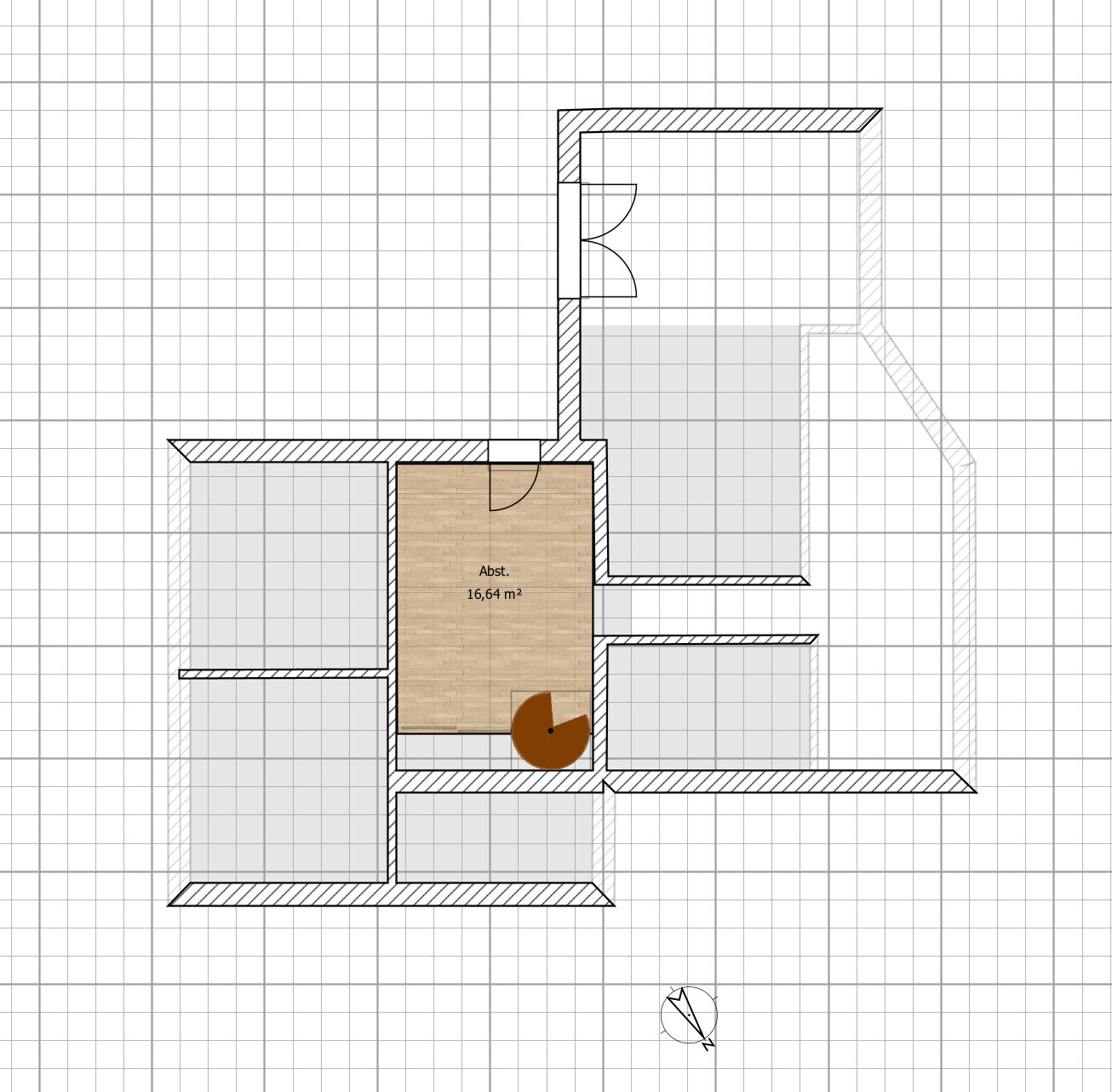
To provide enough natural light to the kitchen in the extension, we plan to leave the air space above the kitchen open and install a roof window. The bathroom upstairs and possibly the bedroom will have double casement windows. I suspect the structural support for the parents’ bedroom above the kitchen could be a problem (since there are hardly any load-bearing walls underneath), although the architect has not yet mentioned this. What might be the best solution without closing off the mentioned air space above the kitchen?
Zoning Plan / Restrictions
Plot size: approx. 750m² (8,073 sq ft)
Slope: No
Site coverage ratio (Grundflächenzahl): 0.4
Floor area ratio (Geschossflächenzahl): 0.6
Building envelope, building line and boundary: 5m (16.5 ft) to street (excluding carport), 3m (10 ft) to neighboring plots
Max. wall height at boundary build: 3m (10 ft)
Number of parking spaces: 2
Number of floors: 1.5
Roof style: gable roof
Orientation: NE-SW
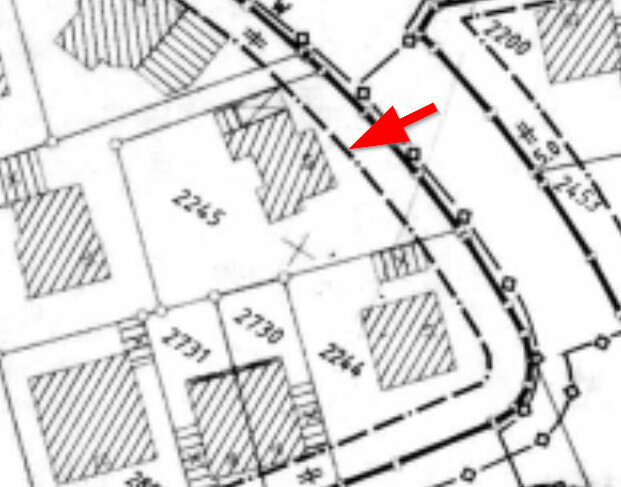
Additional requirements: On the NW side is the driveway to the rear plot. There are existing easements granted by the neighbor, so the driveway can only be partially counted as a setback area.
Client Requirements
Style, roof shape, building type:
No basement, ground floor and upper floor, attic not developed as living space
Number and age of occupants:
1st unit: 2 persons >60 years old,
2nd unit: 2 adults (35 years) and 2 children (6/8 years)
Room requirements on ground and upper floors:
Ground floor: one fully accessible unit suitable for elderly occupants with a guest room; living room, kitchen, and garden access/terrace for the second unit
Upper floor: 2 children’s rooms, bedroom, bathroom, and utility room
Office: a workspace in a quiet room (semi-separated part of the bedroom) that will be used partly as a home office
Guest stays per year: rare, so not important in the planning, but the ground-floor unit must have a guest room
Additional wishes/particulars/daily routine, including reasons why some features are wanted or not:
A highlight of the existing building is the large conservatory, which makes the house bright and open. This should be preserved, and the new rooms should also have large windows facing the garden.
An open exposed wooden beam ceiling is valued, creating a higher spatial impression.
The garden should not be strictly divided (no fence) but should still provide some privacy.
House Design
By whom: architect, with some modifications by us
What do you like most? Why? Optimal use of space within the setback rules without taking too much garden area, large windows/sliding doors.
What do you like less? Why? Some rooms are very small (e.g., technical room), which cannot be changed due to the existing building. The living room in the new unit might feel small and cramped.
Estimated cost according to architect/planner: 450,000
Preferred heating technology: ground-source heat pump
If you had to give up anything, which details/finishes
- Can you live without: double casement window in the bedroom
- Cannot do without: adequate daylight in the kitchens, large windows in living rooms, open wooden beam ceiling on the ground floor
Why is the design the way it is now? For example
Our and the architect’s attempt to accommodate all wishes without violating setback rules and zoning plan requirements.
Both units should be clearly separate but maintain the character of the house and not look like an appended box.
What is the most important/basic question about the floor plan in 130 characters?
What have we overlooked? We had to make many compromises during planning and would like to know if we are saving too much somewhere, risking regrets later, or if more could be made out of the available space.

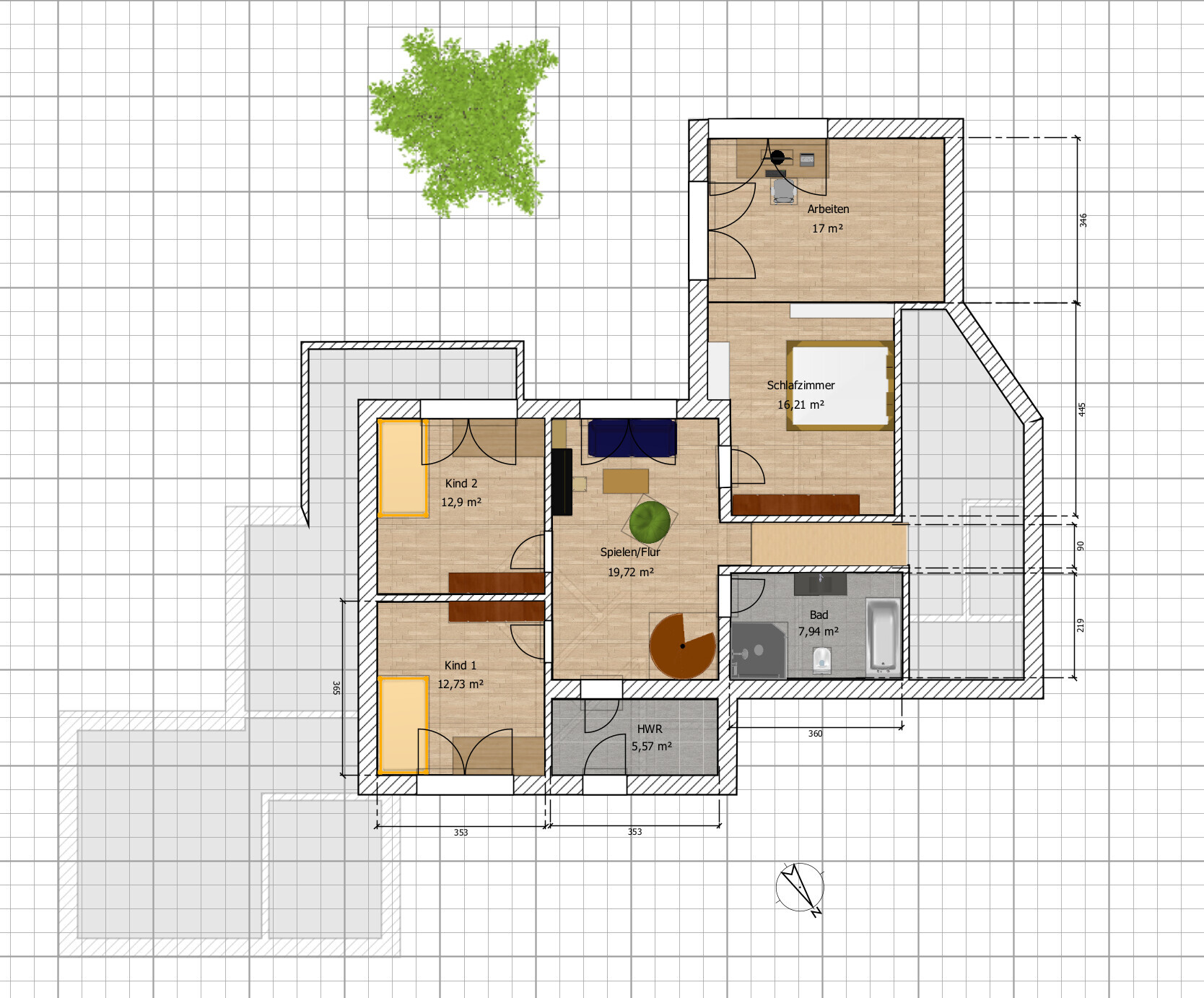
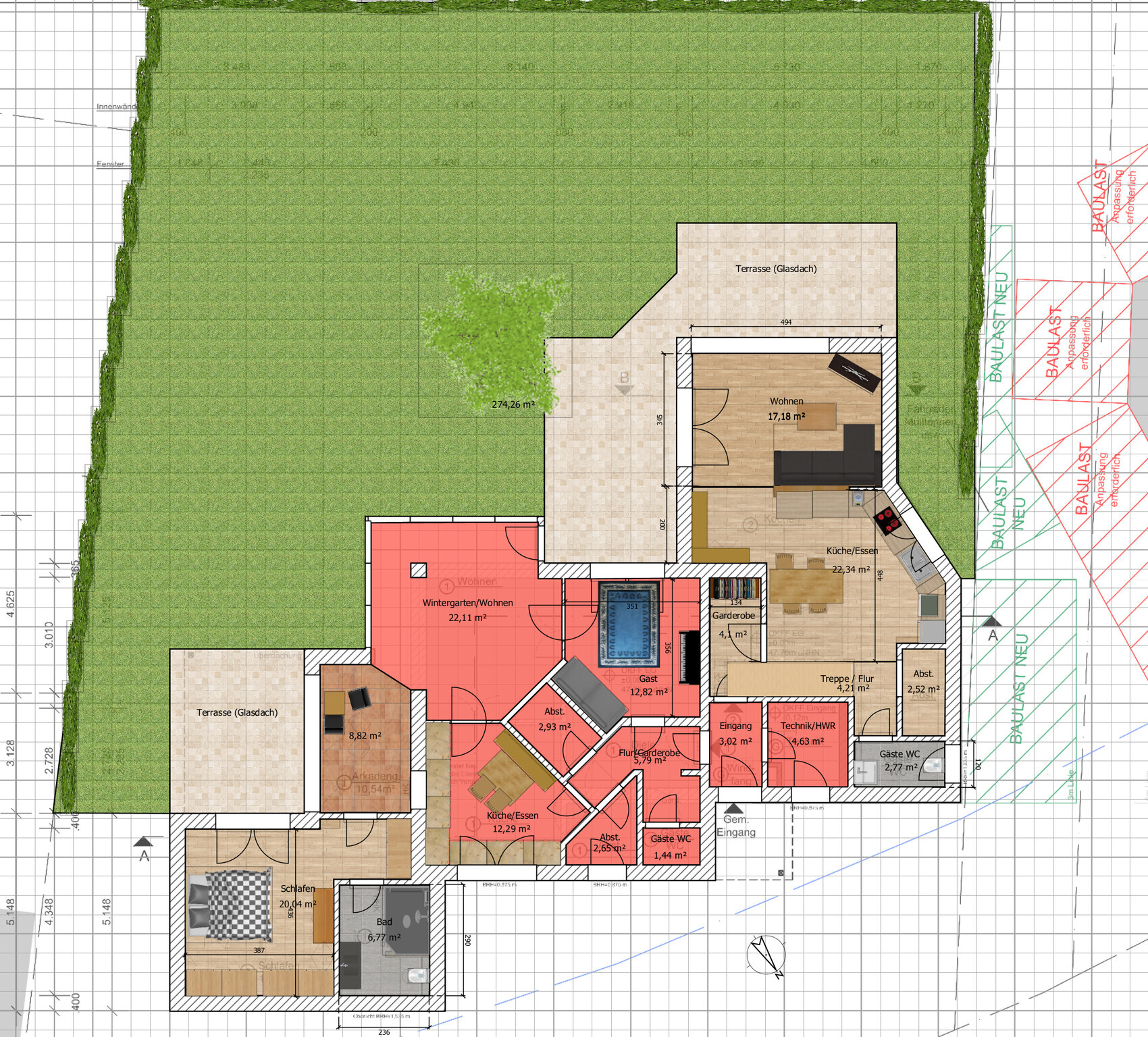
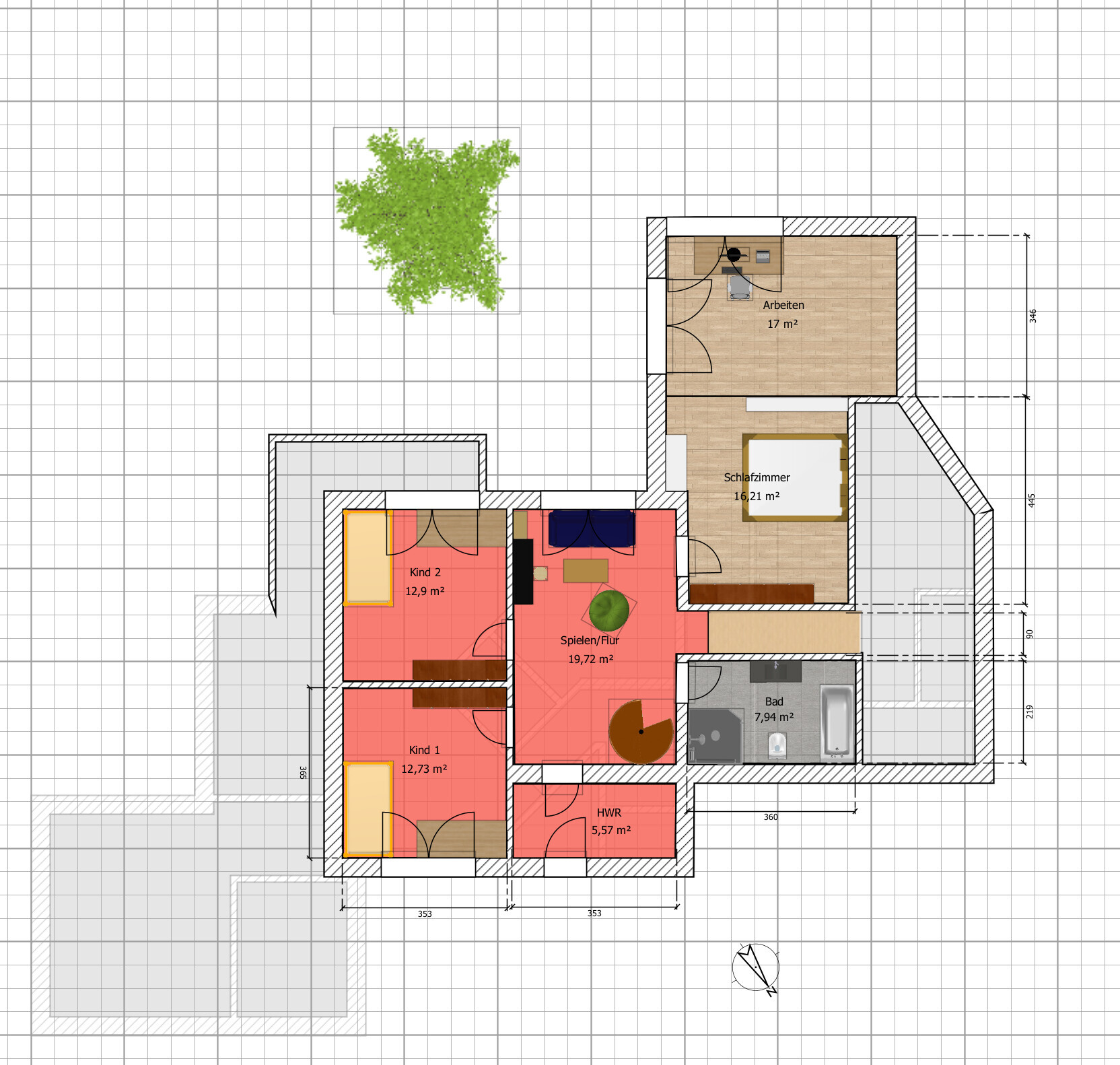
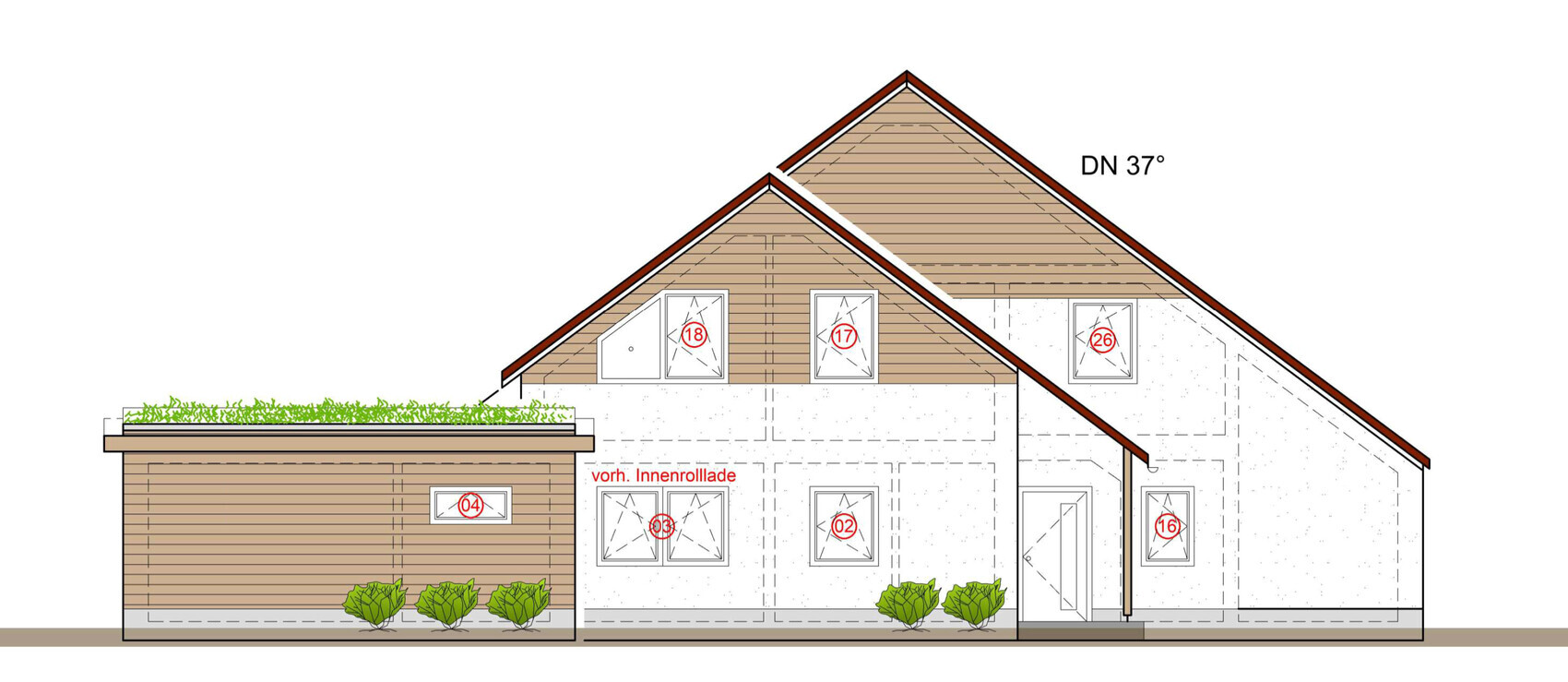
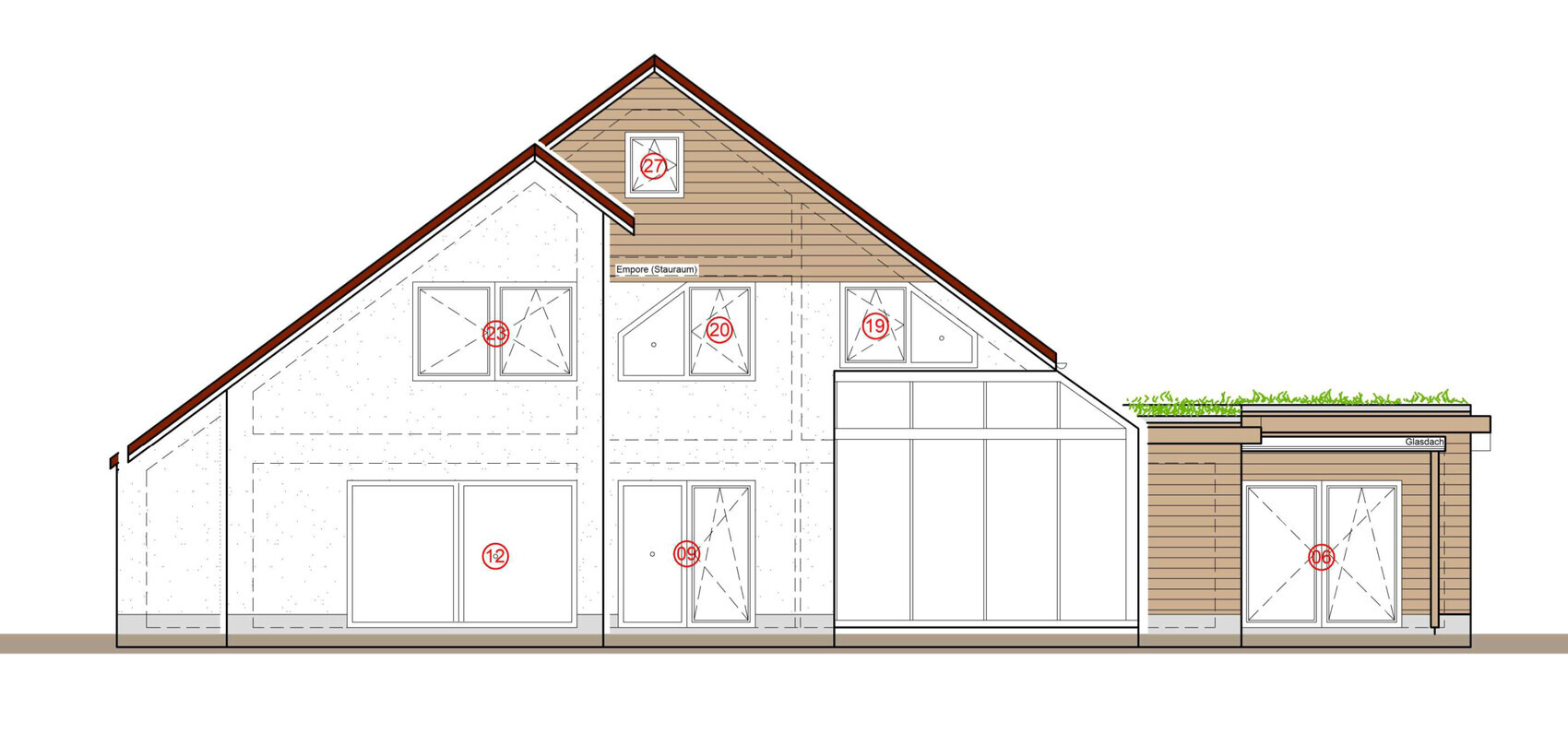
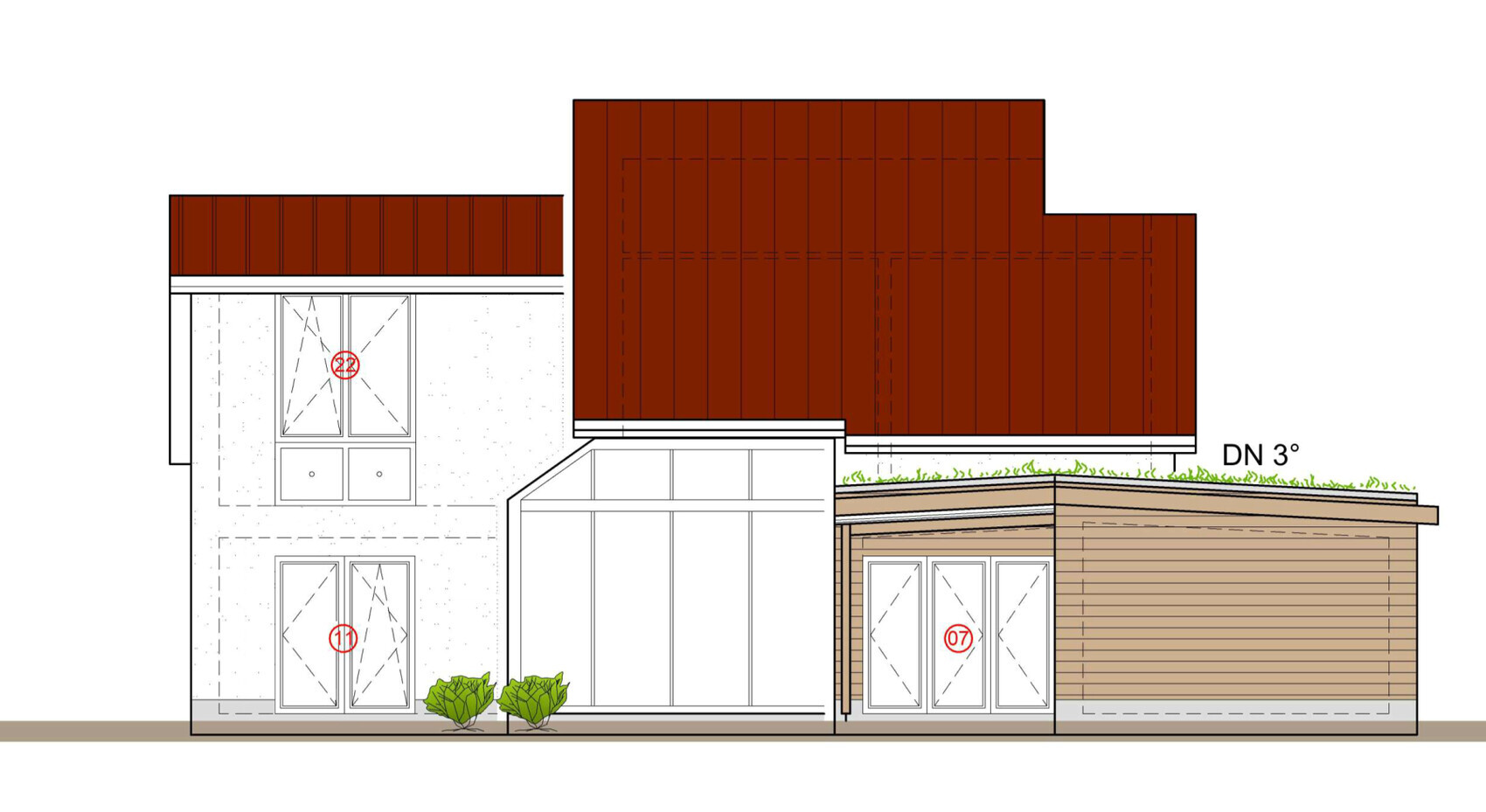
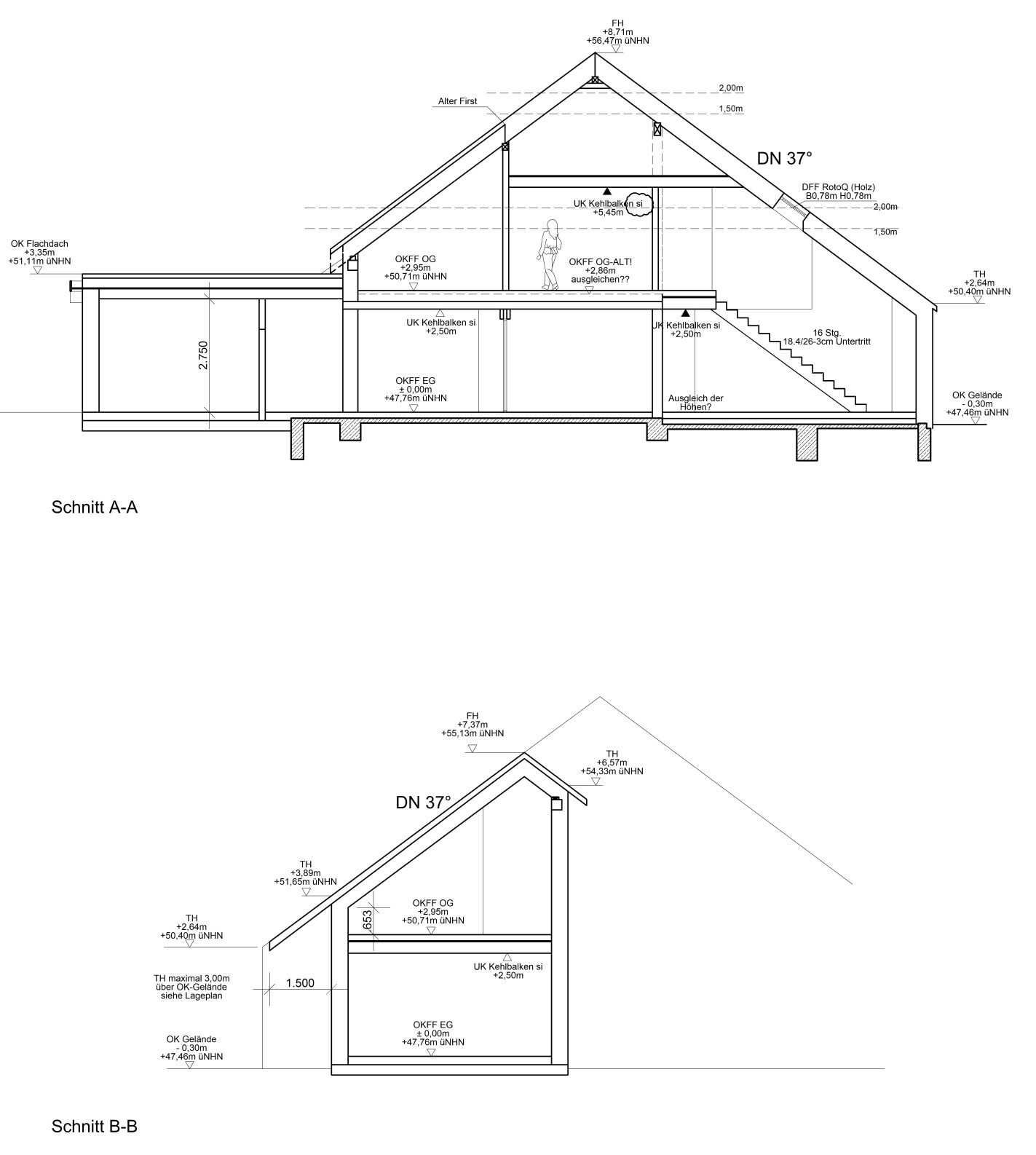
We have been planning for a long time to extend/convert my parents’ single-family house into a two-family home, with a ground-floor unit for my parents and a unit spanning the ground and upper floors for my family with two children. Because of various restrictions related to the zoning plan and setback rules, the floor plan is unfortunately not as straightforward as it would be with a free design. However, since there are practically no available building plots here, a new build is not an option. Together with an architect, we have now created a design that does not fully comply with all details of the zoning plan but has been discussed with the building authority regarding its likelihood of approval.
Since it was quite complicated to create a suitable design and many changes have been necessary since our initial ideas, I wanted to share the result here for discussion.
The entire roof will be replaced and the ridge shifted, raising the building height and providing more space. The part added onto the garden side was originally intended to have a shed roof, but after consulting with the building authority, the gable roof must at least be indicated. At the same time, the house will be renovated to meet KfW-85 energy efficiency standards and the gas heating system will be replaced with a ground-source heat pump. The existing building is a timber frame construction with solid masonry exterior walls (built in 1989). Currently, there is a 2x2m (6.5x6.5 ft) spiral staircase in the center, which will be closed off. The extension is planned as a timber frame structure, provided the current wood prices don’t disrupt the plan.
We are still uncertain about the heating method for the upper floor. The new rooms will have underfloor heating, but I am unsure if the structure can support it in the existing upper-floor rooms (the design has not yet been reviewed by a structural engineer). Alternatively, we could consider heating the wall across the entire upper floor using a wall heating system.
To provide enough natural light to the kitchen in the extension, we plan to leave the air space above the kitchen open and install a roof window. The bathroom upstairs and possibly the bedroom will have double casement windows. I suspect the structural support for the parents’ bedroom above the kitchen could be a problem (since there are hardly any load-bearing walls underneath), although the architect has not yet mentioned this. What might be the best solution without closing off the mentioned air space above the kitchen?
Zoning Plan / Restrictions
Plot size: approx. 750m² (8,073 sq ft)
Slope: No
Site coverage ratio (Grundflächenzahl): 0.4
Floor area ratio (Geschossflächenzahl): 0.6
Building envelope, building line and boundary: 5m (16.5 ft) to street (excluding carport), 3m (10 ft) to neighboring plots
Max. wall height at boundary build: 3m (10 ft)
Number of parking spaces: 2
Number of floors: 1.5
Roof style: gable roof
Orientation: NE-SW
Additional requirements: On the NW side is the driveway to the rear plot. There are existing easements granted by the neighbor, so the driveway can only be partially counted as a setback area.
Client Requirements
Style, roof shape, building type:
No basement, ground floor and upper floor, attic not developed as living space
Number and age of occupants:
1st unit: 2 persons >60 years old,
2nd unit: 2 adults (35 years) and 2 children (6/8 years)
Room requirements on ground and upper floors:
Ground floor: one fully accessible unit suitable for elderly occupants with a guest room; living room, kitchen, and garden access/terrace for the second unit
Upper floor: 2 children’s rooms, bedroom, bathroom, and utility room
Office: a workspace in a quiet room (semi-separated part of the bedroom) that will be used partly as a home office
Guest stays per year: rare, so not important in the planning, but the ground-floor unit must have a guest room
Additional wishes/particulars/daily routine, including reasons why some features are wanted or not:
A highlight of the existing building is the large conservatory, which makes the house bright and open. This should be preserved, and the new rooms should also have large windows facing the garden.
An open exposed wooden beam ceiling is valued, creating a higher spatial impression.
The garden should not be strictly divided (no fence) but should still provide some privacy.
House Design
By whom: architect, with some modifications by us
What do you like most? Why? Optimal use of space within the setback rules without taking too much garden area, large windows/sliding doors.
What do you like less? Why? Some rooms are very small (e.g., technical room), which cannot be changed due to the existing building. The living room in the new unit might feel small and cramped.
Estimated cost according to architect/planner: 450,000
Preferred heating technology: ground-source heat pump
If you had to give up anything, which details/finishes
- Can you live without: double casement window in the bedroom
- Cannot do without: adequate daylight in the kitchens, large windows in living rooms, open wooden beam ceiling on the ground floor
Why is the design the way it is now? For example
Our and the architect’s attempt to accommodate all wishes without violating setback rules and zoning plan requirements.
Both units should be clearly separate but maintain the character of the house and not look like an appended box.
What is the most important/basic question about the floor plan in 130 characters?
What have we overlooked? We had to make many compromises during planning and would like to know if we are saving too much somewhere, risking regrets later, or if more could be made out of the available space.

Yes, the conservatory is inside the building’s thermal envelope, so it is not a cold or add-on conservatory.
However, this part is existing, and we prefer to make minimal changes to keep the budget under control (straightening it out would mean tearing down all the walls, installing a new floor, etc.).
My main focus is on the extension to the right. The carport and old bedroom there will be demolished; only the utility/technical room needs to remain.
With about 55sqm (590 sq ft), the extension is already close to the maximum possible size; this is not enough for a fully single-story apartment. For that reason, switching sides is rather not an option, so we are trying to design the right extension and upper floor as nicely as possible.
However, this part is existing, and we prefer to make minimal changes to keep the budget under control (straightening it out would mean tearing down all the walls, installing a new floor, etc.).
My main focus is on the extension to the right. The carport and old bedroom there will be demolished; only the utility/technical room needs to remain.
With about 55sqm (590 sq ft), the extension is already close to the maximum possible size; this is not enough for a fully single-story apartment. For that reason, switching sides is rather not an option, so we are trying to design the right extension and upper floor as nicely as possible.
An extension on both the right AND left sides is the ultimate challenge in terms of complexity and cost. In comparison, new flooring and (possibly even lightweight) walls are really straightforward. Therefore, I would try to manage with an extension on the right side only. Possibly even without having to use up the setback areas and keeping the carport as it is...
Gudeen. schrieb:
With approximately 55 sqm (590 sq ft), the extension is already close to the maximum size possible, which is not sufficient for a fully single-level apartment. Yes, because the extension for the parents is added on top.
You are allowed to build up to 300 sqm (3,229 sq ft) in total. That’s not a small amount... The parents basically keep their single-level space. What they originally used as an extension on the right side of the plan will simply be built on the other side, since you need to add something for yourselves somewhere. Am I understanding this correctly?
However, I don’t understand why a relatively large guest room is placed in the original living room and the access to the bedroom is arranged with a foyer. Usually, it makes more sense to connect the bedroom directly to the conservatory/sunroom. So what is the purpose of this “extension” that reduces your limited floor area? A small hallway could fit here instead, which could also accommodate a small guest room.
As for the current living room, I see it more as part of the family area, which can be expanded towards the top of the plan rather than as an open kitchen living area.
The entrance for the senior couple could be made from the pantry, including a cloakroom and WC, while the stairs would remain for the family. It would be interesting to see what the site plan shows to the south, meaning the left side of the plan.
Am I right in assuming everything is basically finalized?
As others have mentioned, there are significant cost drivers for us non-experts, for example, the stairs being decommissioned and a new one added, which seems out of place.
But I trust the planner must have thought everything through?!
Similar topics