
ᐅ Does flooring made from tar and wool need to be disposed of as hazardous waste?
Created on: 28 Dec 2017 13:59
R
rocky041288R
rocky04128828 Dec 2017 13:59Hello everyone,
Since I’m not sure where to post this topic, I’m placing it in Off-Topic.
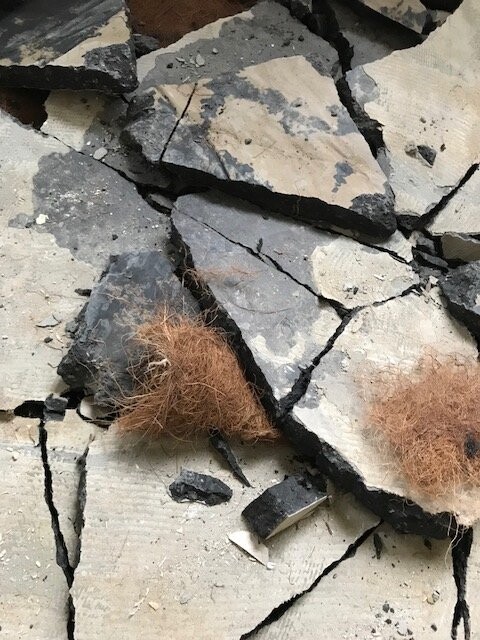
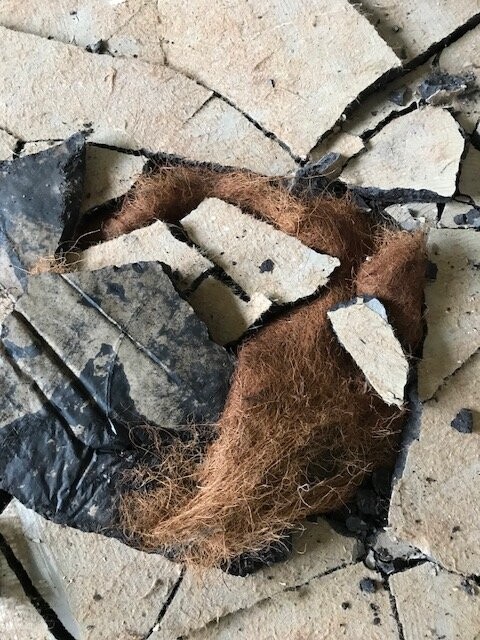
Attached are two pictures. My questions are:
-> Can this "tar" go into a construction debris container?
-> Is the red "wool" hazardous waste (and therefore cannot go into a construction debris container)?
I would really appreciate it if someone could help me with this.
Thank you in advance.
Best regards,
Tim
Since I’m not sure where to post this topic, I’m placing it in Off-Topic.
Attached are two pictures. My questions are:
-> Can this "tar" go into a construction debris container?
-> Is the red "wool" hazardous waste (and therefore cannot go into a construction debris container)?
I would really appreciate it if someone could help me with this.
Thank you in advance.
Best regards,
Tim

R
rocky04128828 Dec 2017 15:28Is that tar or standard screed?
And what about the "wool"?
And what about the "wool"?

Hello Tim.
Tar is not and has never been used in residential construction!
What the photos show is a mastic asphalt screed.
The "red wool" you mentioned is most likely the jute backing of a rather old linoleum floor covering.
Both are unproblematic and should definitely not be classified as hazardous waste in terms of pollutant contamination.
However, not every landfill accepts bituminous building materials.
So that would need to be clarified!
Greetings from vacation
KlaRa
Tar is not and has never been used in residential construction!
What the photos show is a mastic asphalt screed.
The "red wool" you mentioned is most likely the jute backing of a rather old linoleum floor covering.
Both are unproblematic and should definitely not be classified as hazardous waste in terms of pollutant contamination.
However, not every landfill accepts bituminous building materials.
So that would need to be clarified!
Greetings from vacation
KlaRa