
Hello everyone,
We have a concrete slab with a strip foundation, and the external thermal insulation composite system (ETICS) only extends halfway down the slab. It is generally said that the insulation should go down 80cm (31 inches) below ground level. However, our site manager says that, given our ground structure, this is not necessary and that no thermal bridge would form. He mentioned that there are specifications about how deep cold affects a building, and that this is sufficient. Is there anyone here who can confirm this?
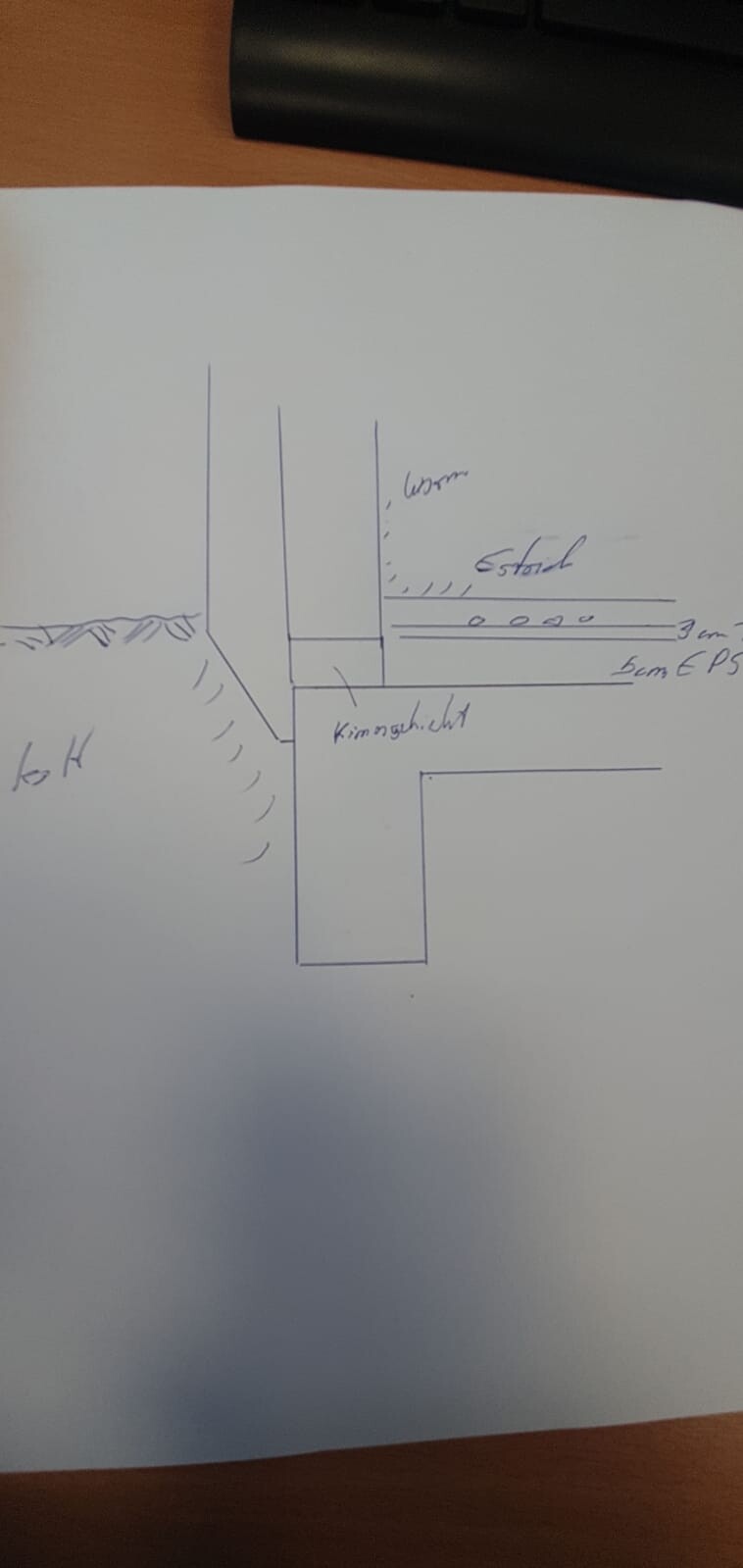
The leveling layer is not an insulating leveling layer but a standard masonry layer.
I am a bit uncertain because, on the one hand, the site manager has explicitly planned it this way, but on the other hand, it is generally advised to insulate all the way down.
We have a concrete slab with a strip foundation, and the external thermal insulation composite system (ETICS) only extends halfway down the slab. It is generally said that the insulation should go down 80cm (31 inches) below ground level. However, our site manager says that, given our ground structure, this is not necessary and that no thermal bridge would form. He mentioned that there are specifications about how deep cold affects a building, and that this is sufficient. Is there anyone here who can confirm this?
The leveling layer is not an insulating leveling layer but a standard masonry layer.
I am a bit uncertain because, on the one hand, the site manager has explicitly planned it this way, but on the other hand, it is generally advised to insulate all the way down.
Hello,
These issues are usually addressed in an energy efficiency calculation.
If your drawing is correct and there is no insulation beneath the slab, I would argue that the missing ISO fillet is already a mistake.
Whether the insulation needs to be extended 80cm (31.5 inches) downwards, I prefer not to judge here. I believe this statement is not universally valid but rather the “safe way.” Personally, I would have extended it further down, but I can only provide a professionally sound statement after doing the proper research.
What is clear to me, however, is that the cold from the ground will anyway be transferred through the reinforced concrete (whether slab or foundation) into the masonry, which in my opinion will cause a problem there.
You write “The construction manager planned it” – Is the construction manager an architect? Who is responsible for the planning?
All I can say is that, if this planning were presented to me in my role as construction manager, I would have issued a notice of concern.
Best regards,
Jann
These issues are usually addressed in an energy efficiency calculation.
If your drawing is correct and there is no insulation beneath the slab, I would argue that the missing ISO fillet is already a mistake.
Whether the insulation needs to be extended 80cm (31.5 inches) downwards, I prefer not to judge here. I believe this statement is not universally valid but rather the “safe way.” Personally, I would have extended it further down, but I can only provide a professionally sound statement after doing the proper research.
What is clear to me, however, is that the cold from the ground will anyway be transferred through the reinforced concrete (whether slab or foundation) into the masonry, which in my opinion will cause a problem there.
You write “The construction manager planned it” – Is the construction manager an architect? Who is responsible for the planning?
All I can say is that, if this planning were presented to me in my role as construction manager, I would have issued a notice of concern.
Best regards,
Jann
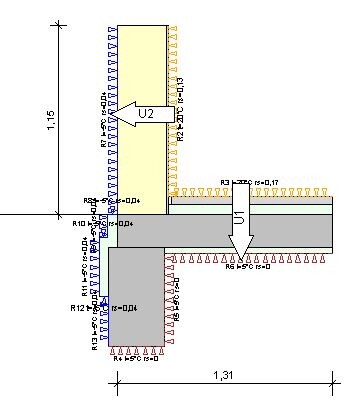
That’s nonsense; a thermal bridge always occurs.
Either the detail complies with DIN 4108 Part 2 and equivalence is demonstrated in the energy savings regulation/building energy act verification,
or the thermal bridge must be calculated.
Even Category A according to DIN 4108 Part 2 extends 50cm (20 inches) into the ground, even if no exterior wall insulation system (EWI) is used.
Excerpt from the PSI-Therm equivalence verification.
Either the detail complies with DIN 4108 Part 2 and equivalence is demonstrated in the energy savings regulation/building energy act verification,
or the thermal bridge must be calculated.
Even Category A according to DIN 4108 Part 2 extends 50cm (20 inches) into the ground, even if no exterior wall insulation system (EWI) is used.
Excerpt from the PSI-Therm equivalence verification.
Similar topics