
Hello,
we are currently building a KfW40 Plus house. The house will be so well insulated that we will need a maximum of 15 kWh/m² (1.4 kWh/sq ft) heating energy per year.
At the moment, we are considering whether to install a nice fireplace. The issue is that it requires a high-quality masonry heater or storage fireplace, which releases only a small amount of energy immediately and stores the rest, then emits it evenly over many hours as radiant heat.
We have two quotes so far, ranging from 15,000 to 20,000 euros per fireplace. The negative pressure monitor, which is also necessary (we have a ventilation system), is not yet included in this cost.
My question is: who has a very well-insulated house and a fireplace? How often do you actually use it? Do you experience any problems with overheating in the rooms?
What is your opinion on this? Should we plan for it or leave it out?
we are currently building a KfW40 Plus house. The house will be so well insulated that we will need a maximum of 15 kWh/m² (1.4 kWh/sq ft) heating energy per year.
At the moment, we are considering whether to install a nice fireplace. The issue is that it requires a high-quality masonry heater or storage fireplace, which releases only a small amount of energy immediately and stores the rest, then emits it evenly over many hours as radiant heat.
We have two quotes so far, ranging from 15,000 to 20,000 euros per fireplace. The negative pressure monitor, which is also necessary (we have a ventilation system), is not yet included in this cost.
My question is: who has a very well-insulated house and a fireplace? How often do you actually use it? Do you experience any problems with overheating in the rooms?
What is your opinion on this? Should we plan for it or leave it out?
T
toxicmolotof10 Mar 2016 11:16Yes.
Almost every day in winter.
Yes.
Windows open.
Hobby.
Almost every day in winter.
Yes.
Windows open.
Hobby.
N
nordanney10 Mar 2016 11:26Yes, we use it quite often.
The stove has no heat-retaining stones; the heat is released directly into the room and is almost wasted (power output over 10kW). The temperature in the large, open living/dining area rises by about 2-3 degrees Celsius (4-5°F) over the evening. So no overheating, no window open, just enjoying the fireplace. This is what the combustion chamber looks like (with a pressure monitor, which is no longer visible later), during construction and finished. Total cost was around €10,000 (approximately T€ 10).
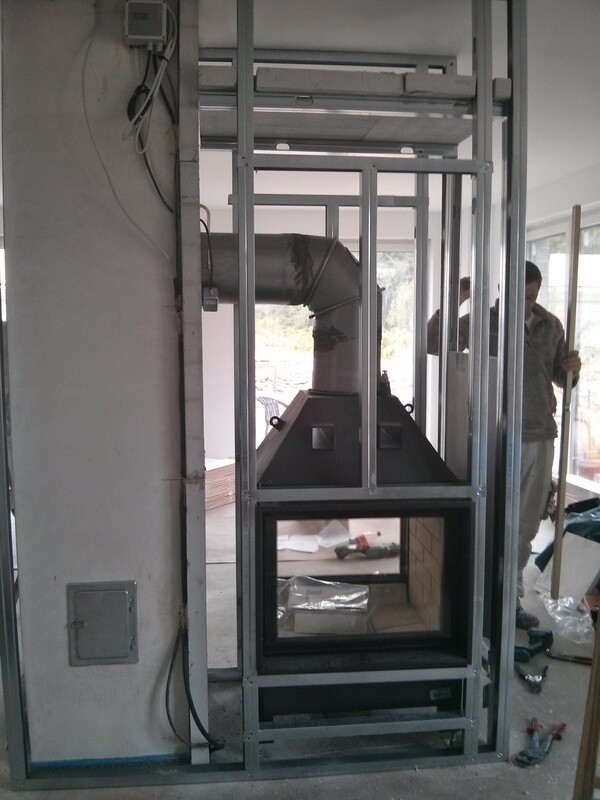
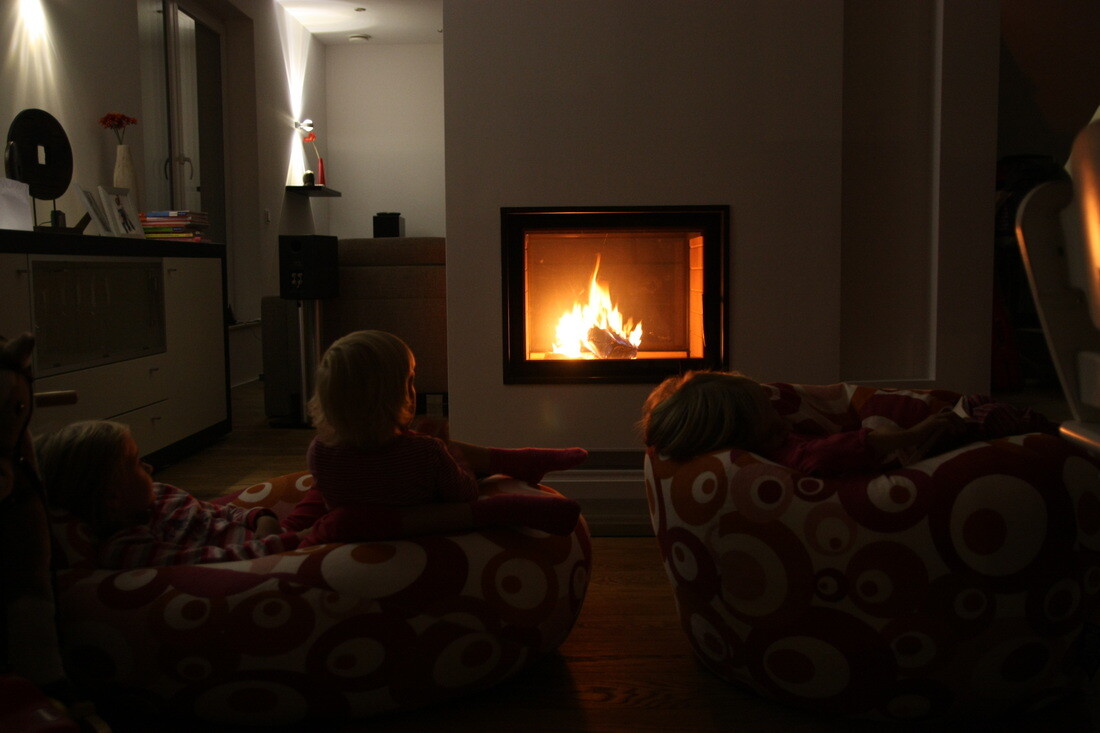
The stove has no heat-retaining stones; the heat is released directly into the room and is almost wasted (power output over 10kW). The temperature in the large, open living/dining area rises by about 2-3 degrees Celsius (4-5°F) over the evening. So no overheating, no window open, just enjoying the fireplace. This is what the combustion chamber looks like (with a pressure monitor, which is no longer visible later), during construction and finished. Total cost was around €10,000 (approximately T€ 10).

We use it almost every day (although we've only been in the house for a few weeks, so we'll see how it performs next winter).
It’s an inset fireplace with fireclay bricks, so it also stores "a bit" of heat.
The temperature increase over the evening is currently about 3 degrees Celsius (5°F), although this definitely depends on how much and how often you add fuel. After a few hours, you can still feel the warmth, but by the next morning, it's usually gone.
Our calculated heating load is just slightly below the one you mentioned above.
The price for the stove, including installation, was around 9,000 EUR.
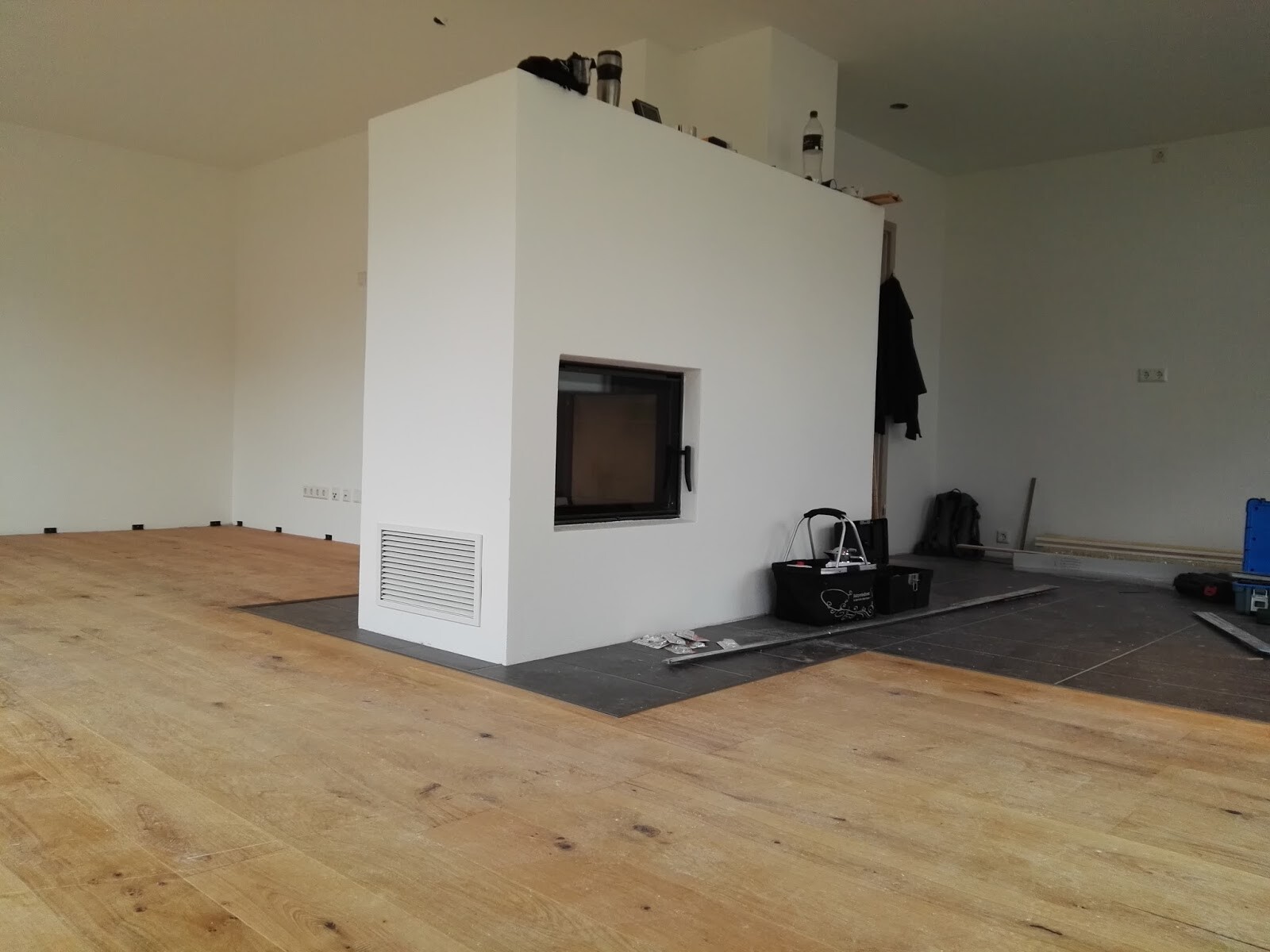
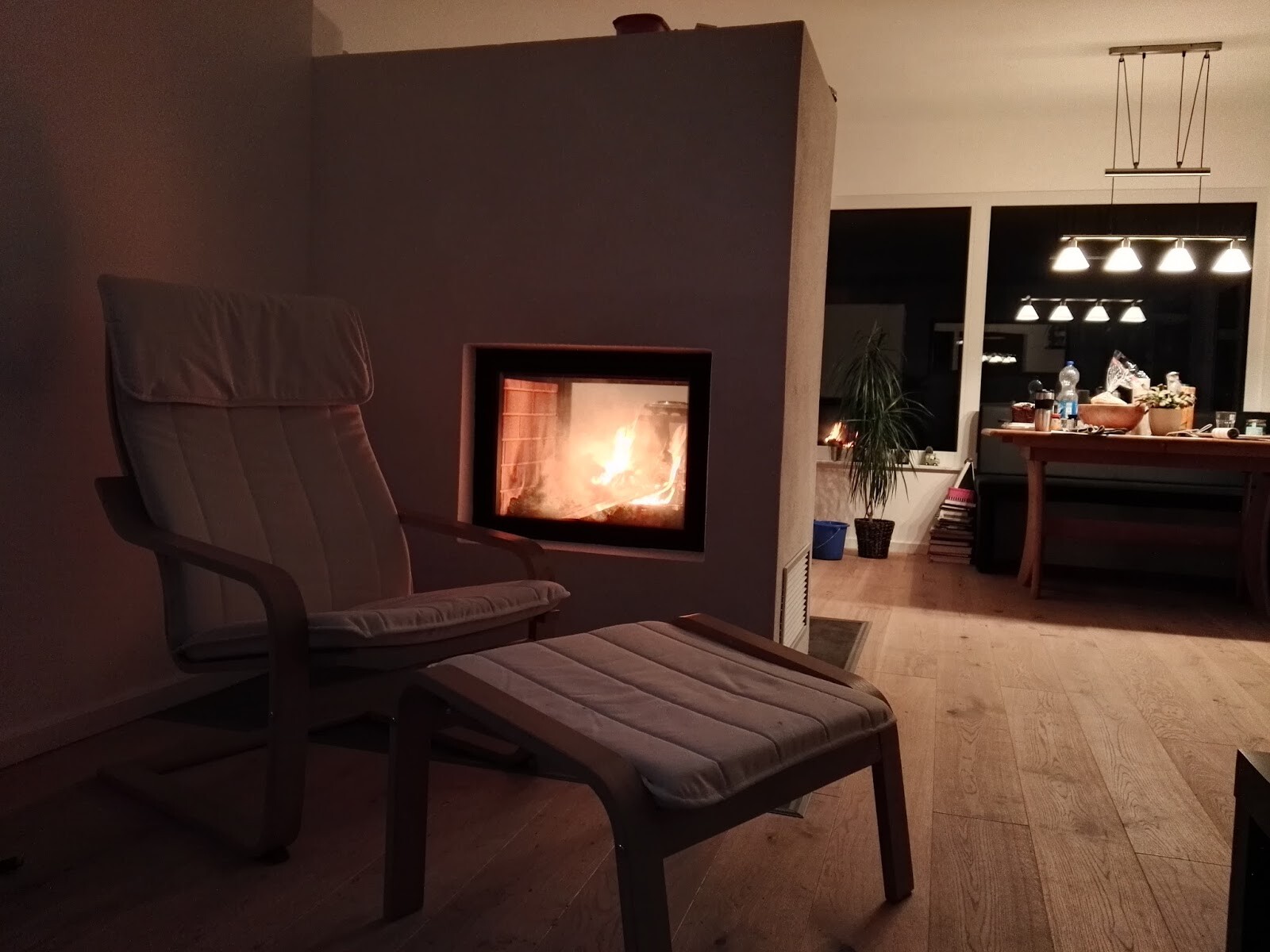
It’s an inset fireplace with fireclay bricks, so it also stores "a bit" of heat.
The temperature increase over the evening is currently about 3 degrees Celsius (5°F), although this definitely depends on how much and how often you add fuel. After a few hours, you can still feel the warmth, but by the next morning, it's usually gone.
Our calculated heating load is just slightly below the one you mentioned above.
The price for the stove, including installation, was around 9,000 EUR.

N
nordanney11 Mar 2016 09:02wrobel schrieb:
Hello,
Did your chimney sweeps recommend or require the solution with the differential pressure monitor? Why?
OlliIt was a requirement from our chimney sweeper. Why? The stove is certified, includes an outside air supply, and a recirculation hood, but the manufacturer of the mechanical ventilation with heat recovery (MVHR) cannot guarantee that the MVHR will never create a negative pressure greater than 4 Pa (the chimney sweep override button for temporarily disabling ventilation is not sufficient). Therefore, the chimney sweep wanted to be on the safe side and requested the differential pressure monitor.
Similar topics